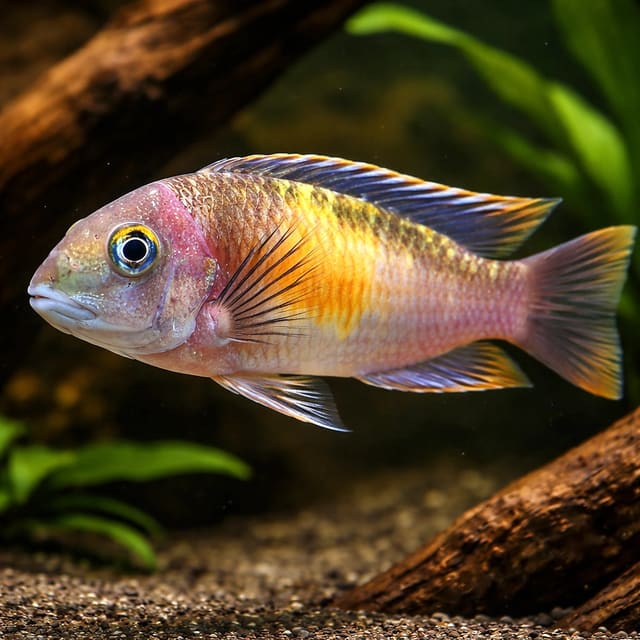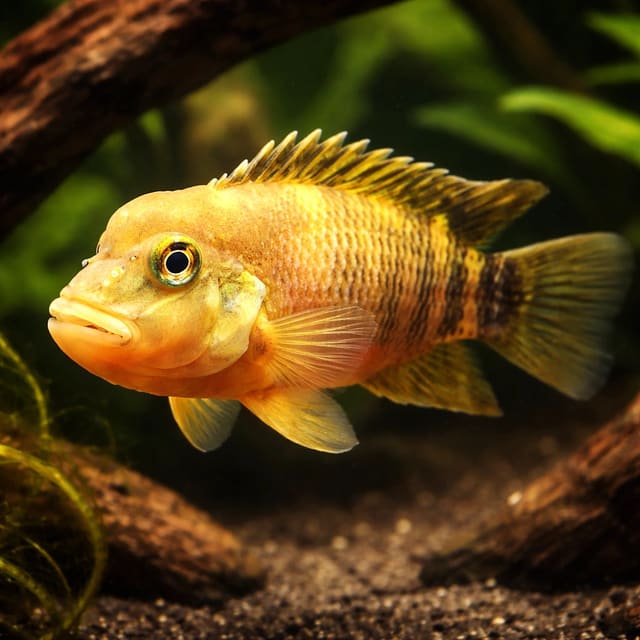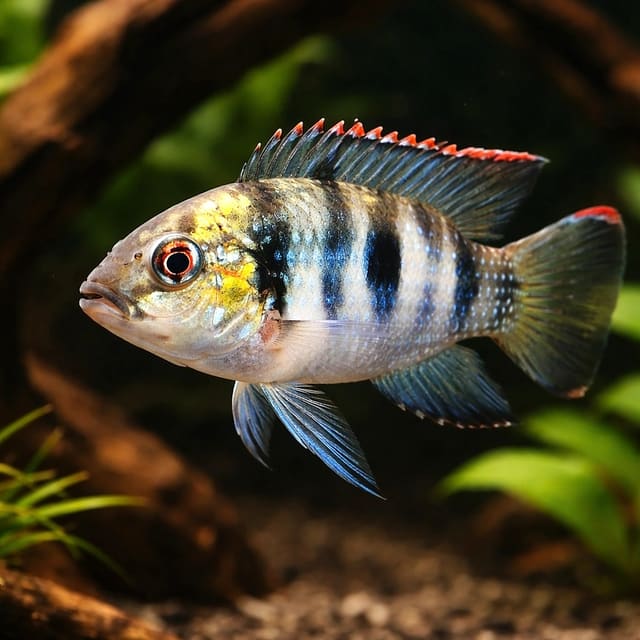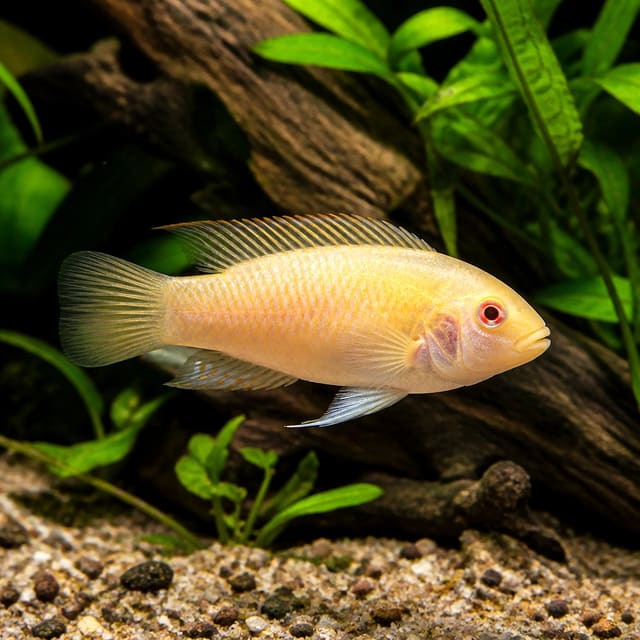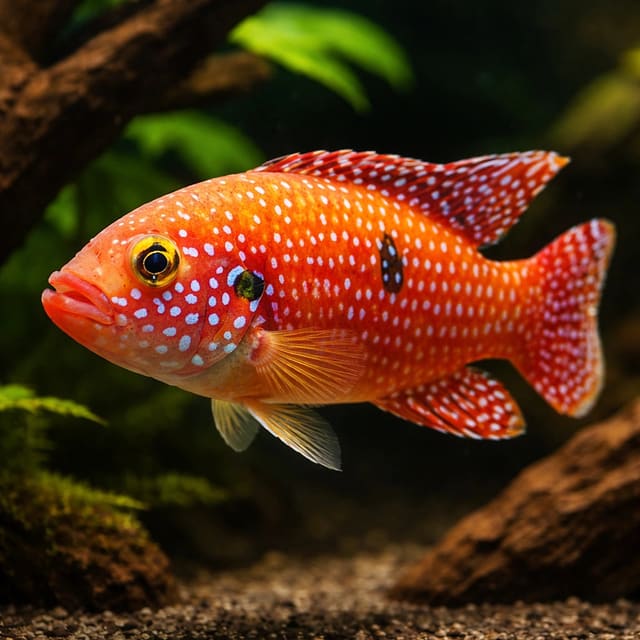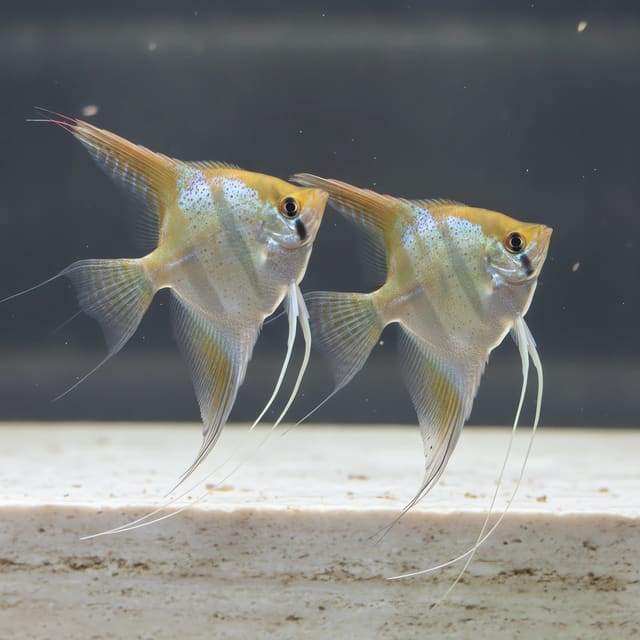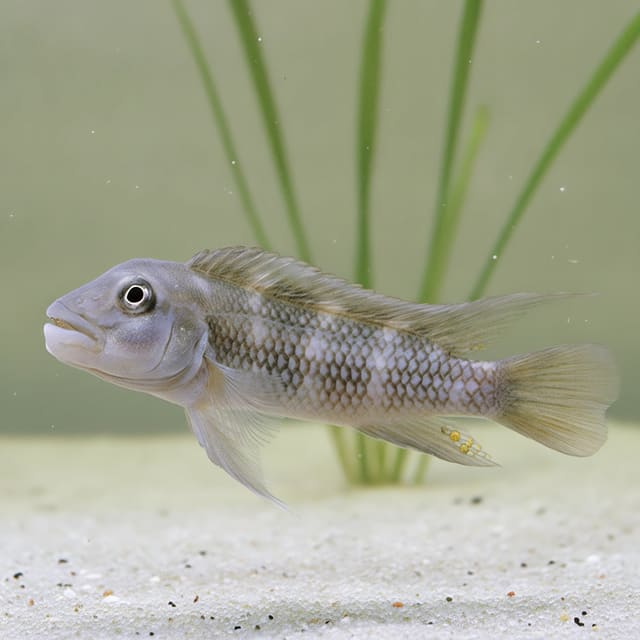
Humphead Cichlid (Steatocranus gibbiceps)
24–27°C · pH 6–8
£19.99

A tiny, colorful Congo cichlid with bold personality and fascinating cave-breeding behavior. Moderate care, semi-aggressive. 24-28C, pH 6.0-7.5.
Adult size is the maximum length this species reaches at full maturity (scientific sources). The livestock you receive will be younger and smaller — pick a size above for the actual shipping size. Product-photo provenance and any image-specific limitations are stated on the listing.
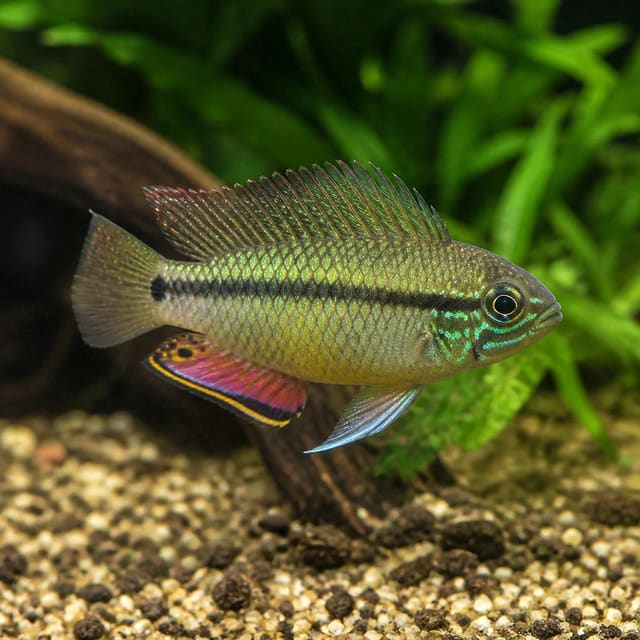
Nanochromis parilus
Save when buying multiple fish. Each quantity is one fish; sex and pair formation are not guaranteed unless the selected variant explicitly states them.
A tiny, colorful Congo cichlid with bold personality and fascinating cave-breeding behavior. Moderate care, semi-aggressive. 24-28C, pH 6.0-7.5.
Adult size is the maximum length this species reaches at full maturity (scientific sources). The livestock you receive will be younger and smaller — pick a size above for the actual shipping size. Product-photo provenance and any image-specific limitations are stated on the listing.
Cichlids are a family of roughly 1,800 accepted species, not one care type. Before buying, identify the exact species and source, then compare adult measurement, usable tank dimensions, social system, territory, tested water, diet and an exit plan. No family-wide minimum tank, water range or tank-mate list is safe.
Maintain these water conditions for optimal health and vibrant colors
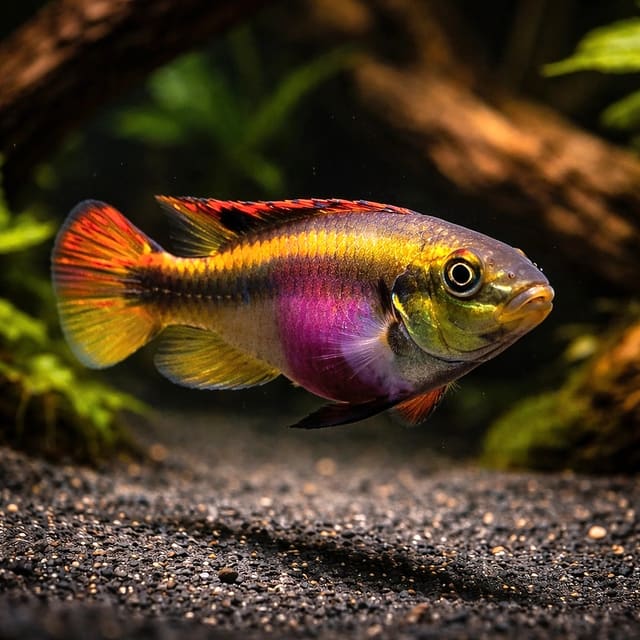
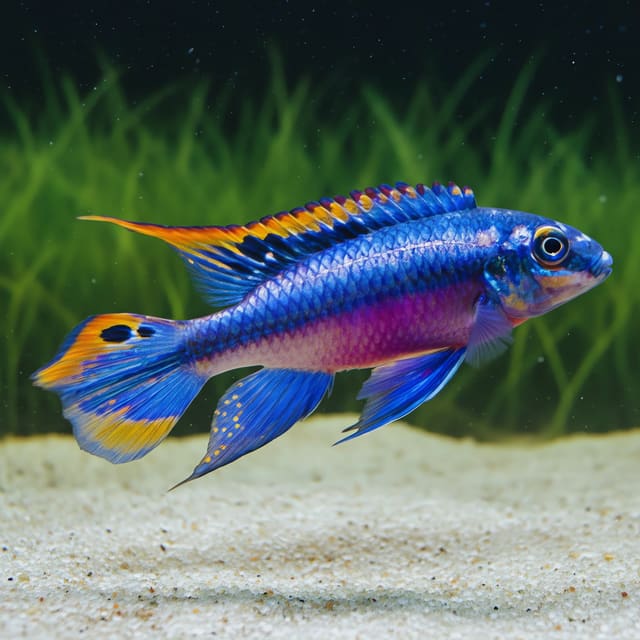
The Blue Kongo Cichlid is a compact Congo-basin dwarf cichlid for aquarists who enjoy natural behaviour, cave territories and soft-water aquarium keeping. This listing covers Blue Kongo variants sold under the Nanochromis name, including Nanochromis parilus and the red-bellied Nanochromis transvestitus type. They are small fish, but they are not background fish: a settled pair will inspect caves, defend a chosen patch of the lower aquarium and show the alert, intelligent behaviour that makes West and Central African dwarf cichlids so rewarding.
Blue Kongo Cichlids are best for a mature aquarium with soft, clean water, stable temperature and plenty of shelter. They suit keepers who want something more unusual than a standard community cichlid, without moving into large or destructive species. The key is to treat them as specialist soft-water fish rather than generic mixed-community stock. Give them cover, calm tank mates and carefully maintained water, and they become confident, colourful centrepiece fish for the lower part of the aquarium.
This Shopify product contains more than one supplier variant. The variant selector is therefore important: SKU 1257 and SKU 1259 are listed in the trade as Nanochromis parilus, while SKU 1255 and SKU 1256 are listed in the trade as the transvestitus/transvertitus Blue Kongo line. Some supplier feeds spell this second name as "transvertitus"; the spelling most commonly used in aquarium references is Nanochromis transvestitus.
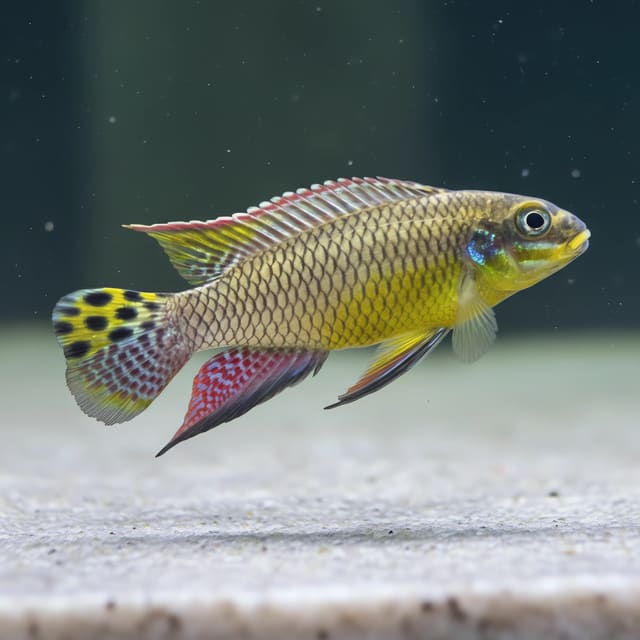
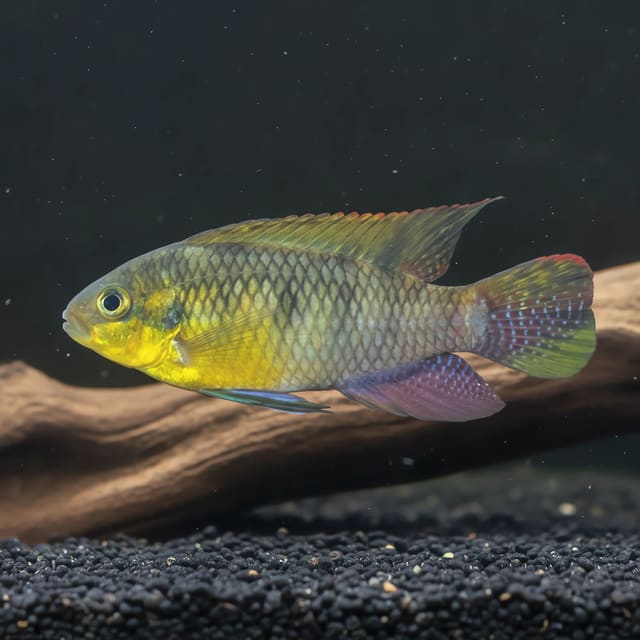
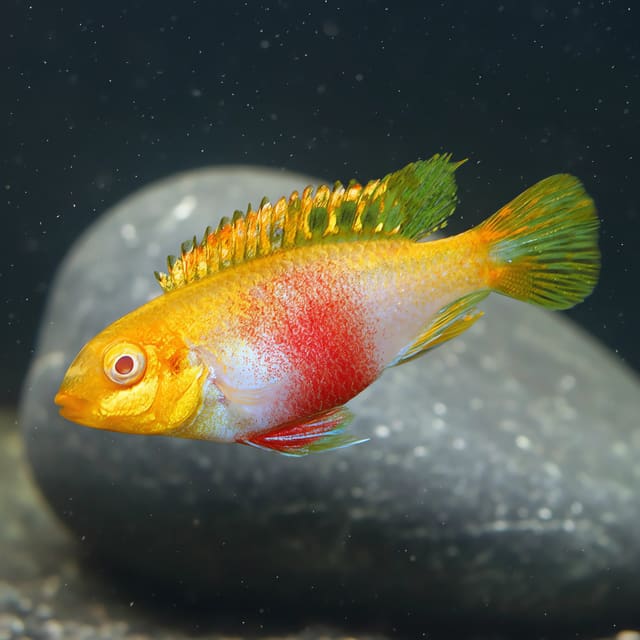
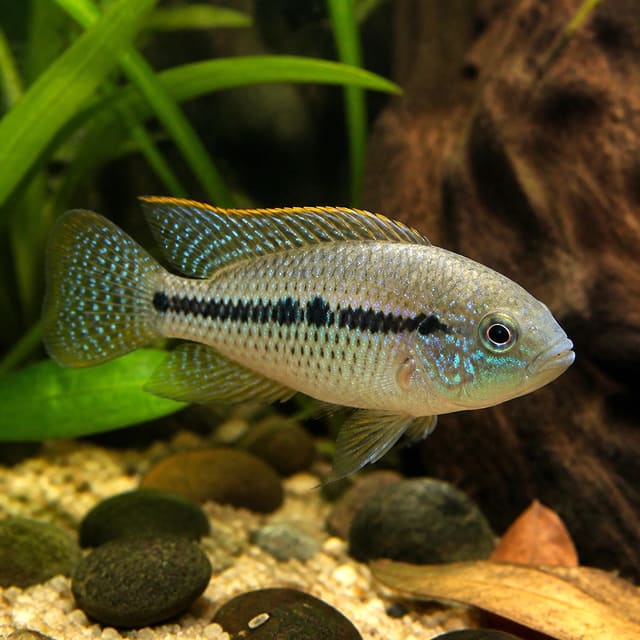
The care overlap is strong enough for the variants to share one parent listing, but the colour and water preferences are not identical. N. parilus is associated with the lower Congo River area and usually shows a slimmer, blue-green body with patterned fins. The transvestitus type is famous for the female's stronger red belly and a preference for softer, more acidic water. If your tap water is hard or alkaline, plan RO water, rainwater mixed safely, or another controlled soft-water method before buying.
| Variant | Shopify SKUs | Planning Notes |
|---|---|---|
| Nanochromis parilus | 1257, 1259 | Blue-green Congo dwarf cichlid; allow caves, soft water and lower-tank territories. |
| Nanochromis transvestitus type | 1255, 1256 | Red-bellied Blue Kongo line; aim for the softer, more acidic end of the range. |
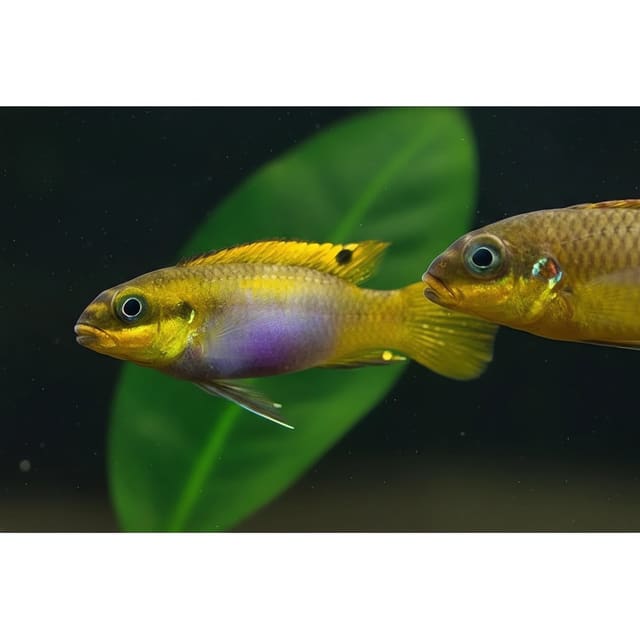
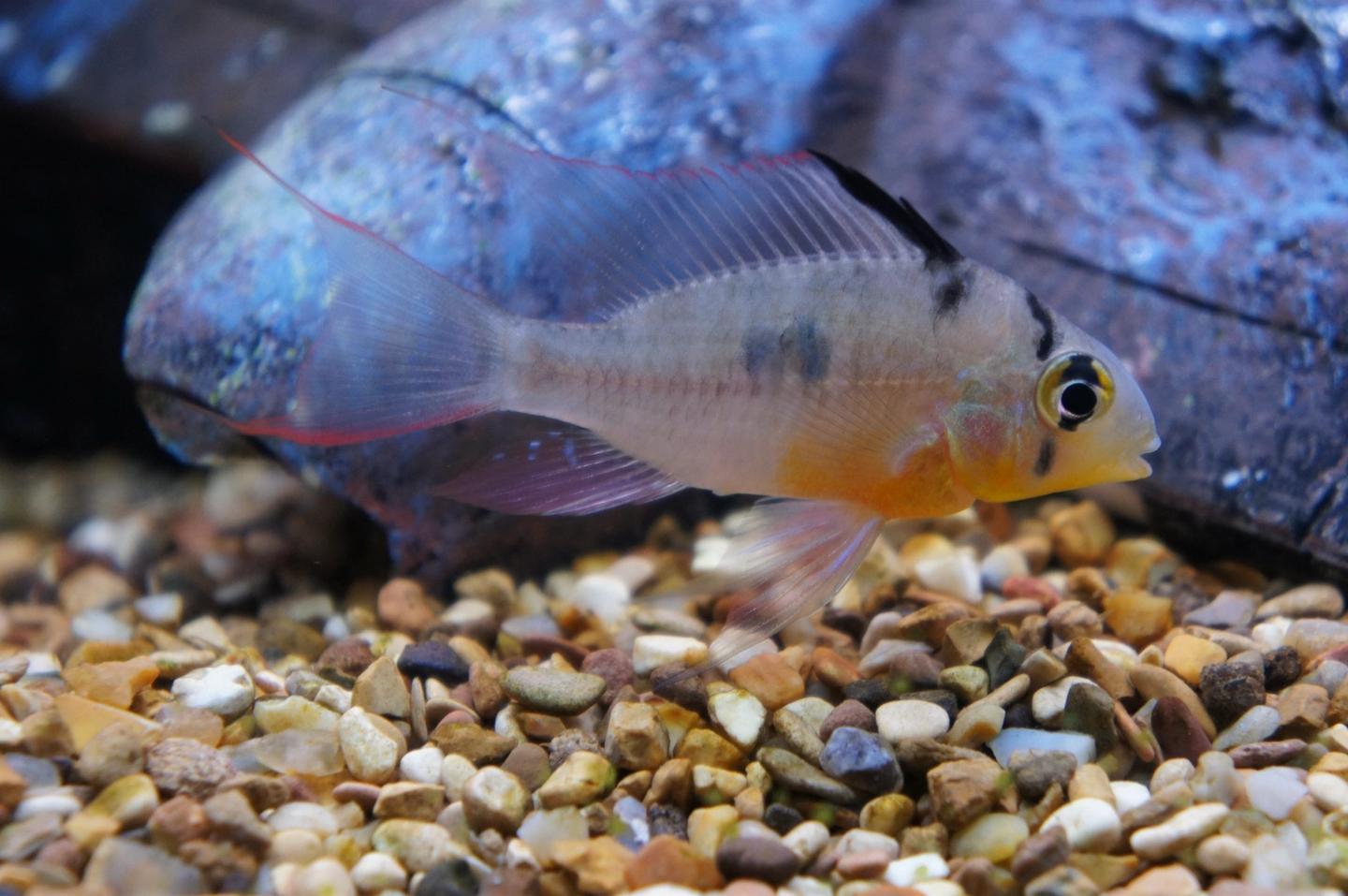
The parilus form is a slender dwarf cichlid with a pale olive to blue-green body, iridescent sheen and fine striping or colour in the fins. Mature males can look especially elegant when displaying, with a longer body line and more confident posture. The transvestitus type is more famous for reversed colour roles: females can show a strong red belly and become the more visually intense fish, especially when settled or breeding.
Both forms are much more interesting in a well-arranged aquarium than in a bare shop tank. They use cover, pause under wood, examine the substrate and return repeatedly to favourite caves. Their appeal is subtle rather than flashy: you buy them for behaviour, pair interaction and rarity, not just for a single bright colour. Darker substrate, botanicals and shaded planting help the body colours show without making the fish feel exposed.
Nanochromis parilus is recorded from the lower Congo region, including areas around Kinshasa and Brazzaville, where it uses calmer margins, bank areas and shelter rather than open water. The transvestitus type is associated with the Congo basin and blackwater-style habitats such as Lake Mai-Ndombe, where water is very soft, acidic and stained by organic material. In the aquarium, this means they appreciate structure: roots, caves, leaf litter, smooth stones, plants and shaded breaks in the layout.
Do not set this fish up as a bright, hard-water Rift Lake cichlid. It is a Congo dwarf cichlid, so the goal is clean, oxygenated, soft water with hiding places and low stress. A small amount of botanicals can help create a more natural feel, but stability matters more than making the water extremely dark. Avoid sudden pH swings, large unconditioned water changes or aggressive tank mates that force the fish out of shelter.
Start with a mature, cycled aquarium of at least 80 litres for a pair. A 90 litre or larger tank is better if you want other fish in the aquarium, because the Blue Kongo Cichlid will claim space near caves. Use fine sand or smooth small gravel, add several caves with small entrances, and break the line of sight with wood, plants and stones. One cave is not enough; provide multiple options so the fish can choose and so tank mates are not pinned into one corner.
Plants such as Java fern, Anubias, Cryptocoryne and floating plants work well because they tolerate the shaded, softer-water style. Keep flow moderate rather than blasting directly into caves. These fish like clean water, but they also need quiet places where they can hover and guard territory. A dark background and a calmer lighting schedule will usually make them bolder than bright, exposed aquascapes.
The safest shared target for this mixed Blue Kongo listing is warm, soft, slightly acidic water. Aim for 23-27°C, pH around 5.5-6.8 and low general hardness. N. parilus can usually tolerate water closer to neutral if it is clean and stable, while the transvestitus type should be kept toward the softer and more acidic end. If your water naturally sits above pH 7.5 or is very hard, this is not a casual tap-water fish.
Keep ammonia and nitrite at zero and nitrate as low as practical. Weekly water changes are better than occasional large corrections. If using RO water, remineralise consistently and match the new water before adding it to the aquarium. The fish are small, so water quality problems can show quickly through clamped fins, hiding, rapid breathing or loss of appetite.
Feed small, varied foods that reach the lower half of the aquarium. Good options include quality micro pellets, soft granules, frozen cyclops, daphnia, brine shrimp, mosquito larvae and small bloodworm portions. They are adapted to picking at small invertebrates and edible particles, so avoid oversized food that the fish have to fight with. Two small meals per day are better than one heavy feed that pollutes the water.
For best condition, rotate foods through the week. Frozen and live foods can bring out colour and breeding behaviour, while a good staple pellet keeps nutrition steady. Watch that midwater tank mates do not take everything before food reaches the bottom. A feeding ring, target feeding or sinking food can help a new pair settle.
Blue Kongo Cichlids are peaceful compared with large cichlids, but they are still cichlids. Expect territory around caves, stronger defence during breeding and occasional chasing if another bottom dweller ignores their space. They are not suitable for tiny shrimp colonies, delicate fry or tanks packed with other territorial bottom fish.
Good companions are calm, soft-water fish that occupy the middle or upper levels and do not bully them at feeding time. Small African characins, suitable tetras, pencilfish or quiet surface fish can work if their water requirements match. Avoid aggressive cichlids, fin nippers, large predatory fish and boisterous bottom feeders. If breeding behaviour begins, be ready to move tank mates or add more visual barriers.
These are cave-spawning dwarf cichlids. A compatible pair may choose a cave, clean the inside and guard eggs or fry closely. Females often take the closest role around eggs and young, while males may patrol the outer territory. This behaviour is one of the best reasons to keep them, but it also explains why the aquarium must have enough space and shelter.
If you want to breed them, focus on soft acidic water, calm surroundings, high-quality small foods and stable conditions rather than constant interference. Fry usually need tiny live foods once free-swimming. A breeding pair may become much less tolerant of other fish, so a species-focused setup is often easier than a busy community aquarium.
Order this fish only when the aquarium is mature and ready. Check the live variant selector for the exact SKU, size and availability before checkout. Prices and stock are controlled by Shopify and supplier sync, so the selector is the source of truth for what is available today.
Every eligible livestock order is packed for UK delivery with oxygenated bags, insulation and heat protection when needed. The order is also covered by our Live Arrival Guarantee when the delivery conditions are followed. First-time customers can use the 10% first-order code WELCOME10 at checkout where eligible. If you are unsure which Blue Kongo variant suits your water, ask before ordering and we will help you choose the safer option.
Nanochromis parilus and Nanochromis transvestitus, Aquarium Glaser notes on both species, and UK aquarium-care references for soft-water transvestitus husbandry. The care range above is deliberately written for the mixed Shopify variant group rather than pretending every size option is the same fish.
Max adult size is the length this species reaches at full maturity (from scientific sources). The livestock you receive will be younger and smaller — pick a size on the buy box for the actual shipping size. Product-photo provenance and any image-specific limitations are stated on the listing.
Can become territorial.
Always research specific species before adding them to your tank. Consider:
No reviews for this item yet. Bought one? Honest reviews only, good or bad.
What customers say about ordering from us
I have a small group of long finned mountain minnows. So was delighted to be able to order ten of this variety to increase the genetics in my tank . The ones I recieved are healthy but it’s to early to give a verdict on wether they are of a long finned type since they are small currently.
Gordon Walker · 23 Sept 2026
100% success travel and "installation". Pleased with quality of purchase. The Siamese fighter a bit "shy" so have not yet seen him at his best yet but looking good. Happy customer. GG
George E Garratt · 21 Sept 2026
Reviews of our shop, collected by Judge.me, an independent third-party review collector. Newest first.