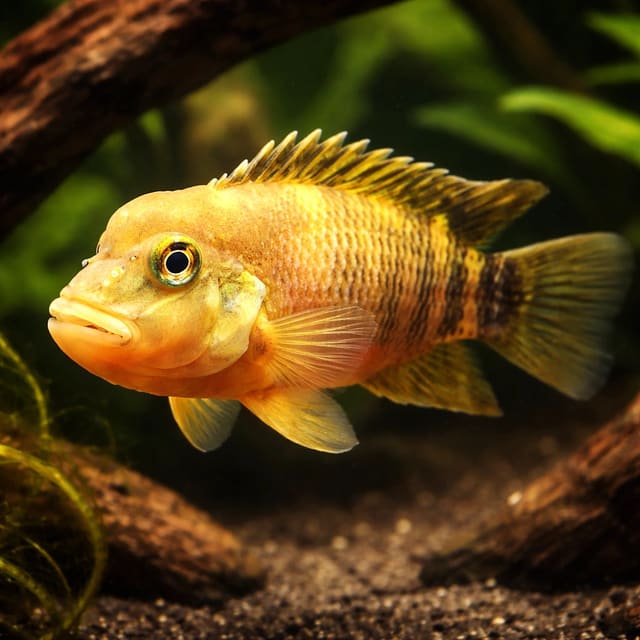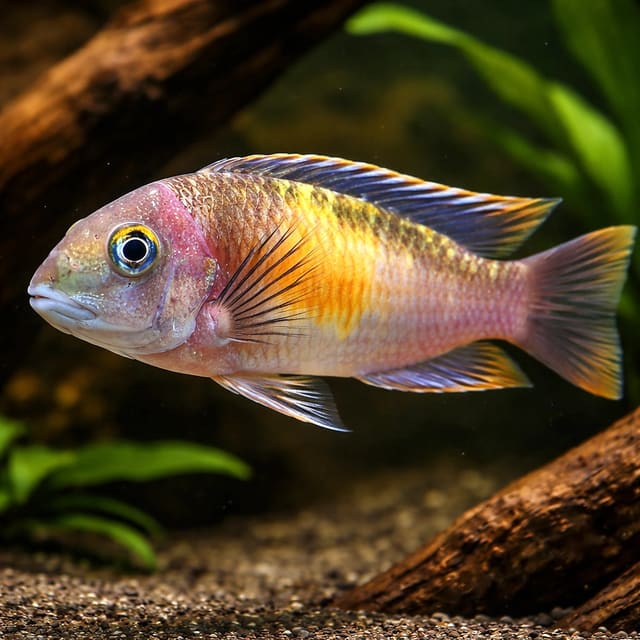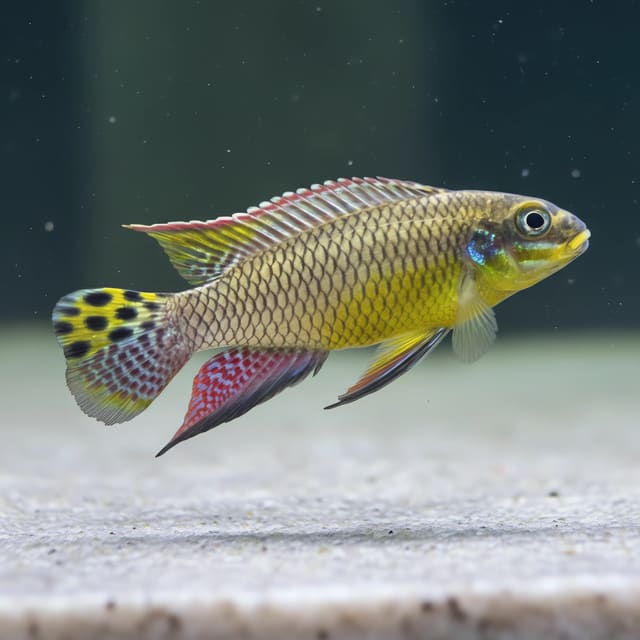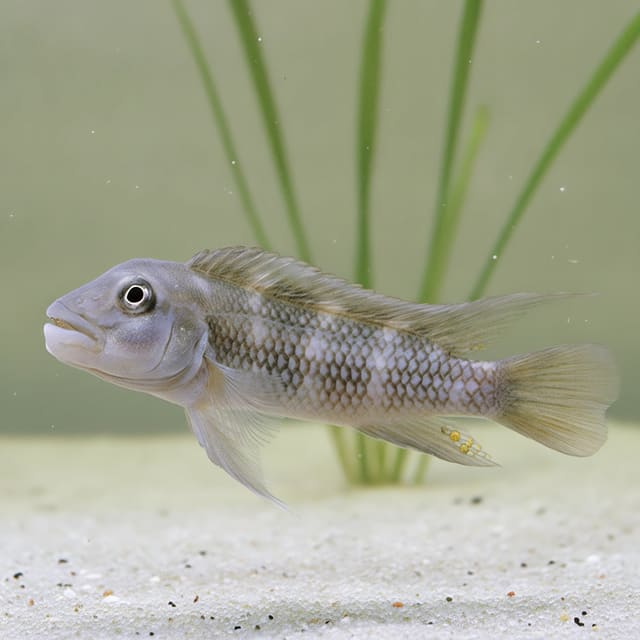
Humphead Cichlid (Steatocranus gibbiceps)
24–27°C · pH 6–8
£19.99

Add the rare African Blockhead Cichlid to your tank. Steatocranus tinanti is a distinctive moderate-care cichlid, available for UK delivery today.
Adult size is the maximum length this species reaches at full maturity (scientific sources). The livestock you receive will be younger and smaller — pick a size above for the actual shipping size. Product-photo provenance and any image-specific limitations are stated on the listing.
Save when buying multiple fish. Each quantity is one fish; sex and pair formation are not guaranteed unless the selected variant explicitly states them.
Confirm your email, then we’ll send an availability message for this exact item if it returns within 180 days.
This request is only for this product—no newsletter or other promotions. A mail-provider retry may very rarely duplicate the same availability message. Unconfirmed addresses are removed after 48 hours. See our privacy policy.
Add the rare African Blockhead Cichlid to your tank. Steatocranus tinanti is a distinctive moderate-care cichlid, available for UK delivery today.
Adult size is the maximum length this species reaches at full maturity (scientific sources). The livestock you receive will be younger and smaller — pick a size above for the actual shipping size. Product-photo provenance and any image-specific limitations are stated on the listing.
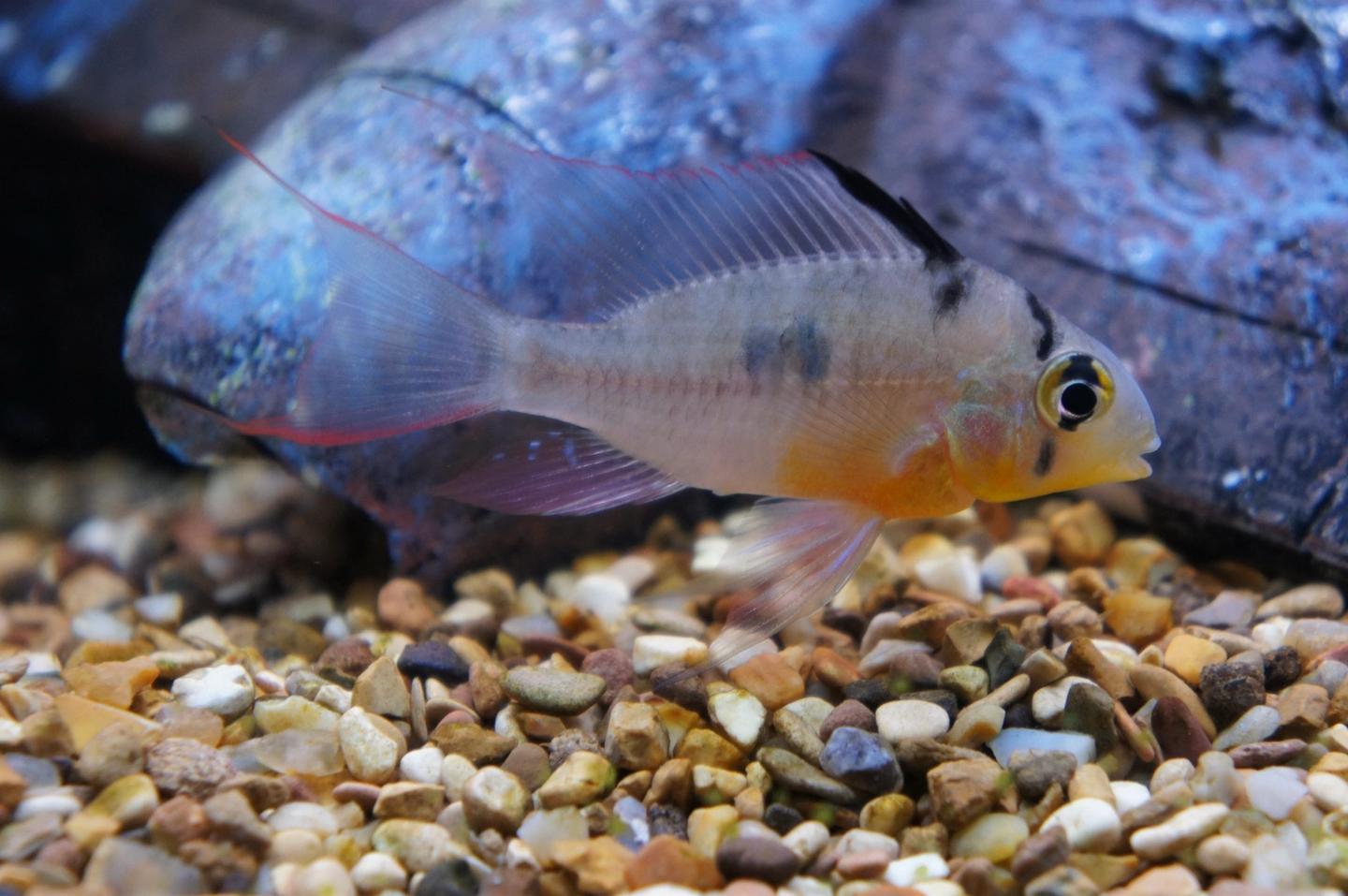
Cichlids are a family of roughly 1,800 accepted species, not one care type. Before buying, identify the exact species and source, then compare adult measurement, usable tank dimensions, social system, territory, tested water, diet and an exit plan. No family-wide minimum tank, water range or tank-mate list is safe.
Maintain these water conditions for optimal health and vibrant colors
The African Blockhead Cichlid, Steatocranus tinanti, is one of the most characterful small African cichlids in the hobby. Known as the Slender Lionhead Cichlid, Tinanti Dwarf Cichlid, or even a buffalo head cichlid in some shops, this species stands out for its chunky forehead, bottom-hugging posture, and surprisingly thoughtful behaviour. Unlike many larger, more boisterous cichlids, Steatocranus tinanti combines personality with a manageable adult size of around 12 cm, making it a compelling choice for aquarists who want a bottom-dwelling African cichlid with real presence. With the right Steatocranus tinanti tank setup, stable Steatocranus tinanti water parameters, and a sensible choice of tinanti cichlid tank mates, this species can thrive for up to 8 years.
For fishkeepers searching for rare tropical fish UK listings, a rare African dwarf cichlid UK option, or a distinctive freshwater cichlid UK species that is not seen in every shop, the African Blockhead Cichlid offers something genuinely different. It suits aquarists who enjoy watching territorial cave use, pair bonding, and riverine cichlid behaviour rather than open-water schooling. See our detailed photos showing the head shape, compact body, and subtle earthy colour tones of this stunning tinanti lionhead cichlid. If you want a fish with brains, boldness, and a strong natural look, this Steatocranus UK favourite is a rewarding long-term choice.
Steatocranus tinanti belongs to a group of African river cichlids adapted to life close to the substrate in flowing water. In the aquarium hobby, it is valued as one of the best African riverine cichlid choices for aquarists who want cichlid behaviour without the sheer size and aggression of Rift Lake species. It is closely related to other lionhead-type cichlids, especially Steatocranus casuarius, but remains slimmer and more understated in profile.
Steatocranus tinanti comes from Central African river systems, where it lives in flowing freshwater habitats with rocky structure, crevices, and oxygen-rich conditions. In the wild, the tinanti cichlid habitat is very different from a still, muddy pond. These fish are associated with river margins and broken rock zones where they can shelter from current, defend a small territory, and pick food from the bottom. That river influence explains a lot about their aquarium needs, especially their preference for good filtration, stable oxygen levels, and secure caves.
As a bottom-dwelling African cichlid, the species spends much of its time close to stones and substrate rather than cruising the upper water column. In nature, it likely feeds on a mixed diet of insect larvae, small crustaceans, biofilm, and organic matter trapped among rocks. That makes the Steatocranus tinanti diet naturally omnivorous, but with a strong leaning toward meaty foods and natural foraging. Aquarists who understand this origin usually have better results with feeding, breeding, and long-term behaviour.
The wild habitat also helps explain Steatocranus tinanti water flow preference. This is not a fish for stagnant water. It does not need a torrent blasting through the tank, but it does appreciate circulation, oxygenation, and clean water. When the aquarium mirrors these conditions, tinanti cichlid behaviour becomes more confident and natural. Fish are more likely to claim caves, display to one another, and show steady appetite.
Because this species is less common than many community cichlids, it has become popular among keepers of rare tropical fish UK species and collectors looking for a rare African dwarf cichlid UK option with genuine character. It is often described as one of the best African dwarf cichlid species for aquarists who want something unusual but still practical for home aquariums.
Mimicking the natural habitat of Steatocranus tinanti improves health and brings out natural behaviours. Use smooth rocks, shaded caves, moderate current, and open bottom space. Fish kept in bare, still tanks often become more nervous and less interesting to watch.
A successful Steatocranus tinanti care guide always starts with structure. These fish are not demanding in the sense of needing exotic chemistry, but they are very particular about layout. A proper Steatocranus tinanti tank setup should provide caves, rockwork, visual barriers, and enough floor space for a pair or carefully chosen community. The published Steatocranus tinanti tank size minimum is 115 litres, and that is a sensible baseline for a single fish or settled pair. For a more stable setup with more choice in blockhead cichlid tank mates, 150-180 litres is even better.
The recommended buffalo head cichlid tank size depends on whether you are keeping one fish, a bonded pair, or a mixed community. A lone specimen can live in the minimum volume, but a pair needs extra floor area because both fish will establish and defend space around caves. If you are considering a Steatocranus tinanti pair for breeding, choose a tank with several cave options so the pair can select a site and reduce pressure on the weaker fish during courtship.
Adult Steatocranus tinanti size reaches about 12 cm, so while this is often sold as an African dwarf cichlid UK species, it is better thought of as a compact river cichlid rather than a tiny nano fish. The blockhead cichlid size and body shape mean it needs territory more than sheer water depth.
The ideal Steatocranus tinanti temperature is 24-27°C, which also defines the practical tinanti cichlid temperature range for long-term care. The best Steatocranus tinanti pH range is 6.5-7.5, and Steatocranus tinanti water hardness should sit between 5 and 15 dGH. These Steatocranus tinanti water parameters are forgiving enough for many UK homes, but stability matters more than chasing an exact number. Sudden swings in pH or temperature are more harmful than being slightly off the midpoint.
Good filtration is essential because this species comes from moving water. The ideal answer to Steatocranus tinanti water flow preference is moderate, steady circulation with strong oxygen exchange, not a harsh jet that batters the fish. A quality external canister filter or a well-sized internal filter with spray bar works well. Aim for clean water and visible surface movement. If the tank is heavily stocked, add an air stone or powerhead to increase oxygen.
Because this is a community cichlid UK option only under the right conditions, filtration also helps reduce territorial stress. Cleaner water supports stronger immune function, better colour, and more reliable feeding in this Tinanti Cichlid.
Use fine sand or smooth small gravel. Sharp substrate can damage the underside of a fish that spends much of its life on or near the bottom. Rock piles, slate caves, ceramic tubes, and driftwood all work well. The best layouts break line of sight, giving each fish a retreat. This is especially important in tinanti cichlid care when keeping a pair.
Many aquarists ask whether this is a tinanti cichlid for planted aquarium setups. The answer is yes, with planning. Choose hardy plants attached to wood or rock, such as aquarium plants, Anubias, Java fern, or Bolbitis. Rooted plants can be used if protected by stones. A planted layout softens aggression and gives the aquarium a more natural riverbank feel.
Useful equipment for this species includes a dependable aquarium filter, a stable aquarium heater, a natural sand substrate, and secure fish tank decorations that form caves. These details matter far more than bright ornaments.
Moderate lighting is ideal. Very bright light can make the fish more cautious unless the tank is heavily structured. If you are keeping a tinanti cichlid for planted aquarium display, run lights for 7-9 hours daily and provide shaded zones under wood and rock.
Always cycle the tank for 4-6 weeks before adding Steatocranus tinanti. This species tolerates stable mature aquariums far better than newly set up tanks with fluctuating ammonia or nitrite.
The Steatocranus tinanti diet is best described as omnivorous, but not indiscriminate. In captivity, these fish do best on a varied menu that combines quality cichlid pellets with frozen and live foods. A good feeding routine supports growth, colour, breeding condition, and overall resilience. If you are researching Steatocranus tinanti feeding, the key is variety without excess.
Use a high-quality sinking cichlid pellet or granule as the base diet. Because this is a bottom-dwelling African cichlid, foods that sink quickly are more suitable than floating flakes. A balanced staple should include fish meal, insect protein, and some plant content. This keeps the digestive system working well while matching the species' natural mixed feeding style.
Supplement 3-4 times weekly with frozen bloodworm, brine shrimp, mysis, daphnia, or chopped krill. These foods encourage stronger feeding response and can help condition a Steatocranus tinanti pair for breeding. For convenience, pair staple pellets with foods from our tropical fish food collection, including quality cichlid pellets and frozen bloodworm.
Occasional live foods are excellent for stimulating natural hunting behaviour. This is particularly useful if a newly imported Steatocranus tinanti seems shy. A fish that ignores dry food at first will often take frozen or live foods and then transition more easily onto pellets.
Feed adults once or twice daily in portions they finish within 1-2 minutes. Juveniles can be fed smaller amounts 2-3 times daily. Overfeeding is one of the fastest ways to damage water quality in a freshwater cichlid UK aquarium, especially with territorial fish that may gorge when food appears.
| Time | Food | Amount |
|---|---|---|
| Morning | Sinking cichlid pellet | Small pinch, fully eaten in 1 minute |
| Evening | Frozen bloodworm or brine shrimp | Small portion, no leftovers |
Avoid fatty mammal meats, very large dried foods, and constant feeding of bloodworm as the only diet. Also avoid letting food rot in caves. Balanced feeding is a major part of any serious Steatocranus tinanti care guide.
Overfeeding causes ammonia spikes, excess waste, and territorial stress. Because Steatocranus tinanti stays near the bottom, uneaten food can collect in caves and under rocks where it quickly degrades water quality.
The African Blockhead Cichlid has a compact, muscular body with a distinctively enlarged forehead that gives the species its common name. Adult lionhead cichlid size and blockhead cichlid size in this species usually top out around 12 cm, though mature males often look larger because of their head profile and heavier build. The body is elongated compared with Steatocranus casuarius, which is why many aquarists prefer the name Slender Lionhead Cichlid.
Base colour is usually earthy: brown, grey-brown, tan, or smoky olive, often with subtle iridescence and darker fin edging. In good condition, the fish develops richer contrast, especially when housed over dark substrate with shaded decor. Our photos show the natural, understated beauty of this stunning tinanti lionhead cichlid, including the heavy brow, low-slung posture, and strong pectoral fins used to hold position near the bottom.
Males are generally larger, with a more pronounced forehead and longer finnage. Females remain slightly smaller and rounder, especially when carrying eggs. During pair formation, colour can intensify and body posture becomes more expressive. The species does not rely on bright neon tones like a ram cichlid; instead, it offers texture, shape, and behaviour-driven appeal.
If you want to bring out the best appearance in a Tinanti Dwarf Cichlid, focus on three things: varied diet, stable water quality, and a tank with rockwork that creates contrast. This is one of those fish that looks better the longer it is settled.
The biggest question buyers ask is simple: what are the best blockhead cichlid tank mates? The answer depends on tank size, layout, and whether the fish is single or paired. Tinanti cichlid behaviour is territorial rather than wildly aggressive. They usually defend a cave or patch of substrate, especially at feeding time or during spawning. That means the best lionhead cichlid tank mates are calm midwater fish or similarly robust species that do not constantly invade the bottom territory.
Good companions include peaceful Congo-region or West/Central African fish that enjoy similar water conditions. Suitable examples include Congo Tetra, African Red Eye Tetra, Synodontis Petricola, Bristlenose Pleco, and in larger tanks, Kribensis with caution. These species generally occupy different levels or are sturdy enough to avoid conflict.
If you are planning a Steatocranus tinanti for community tank setup, choose tank mates that are not hyperactive fin nippers and not tiny enough to be bullied. This fish can work as a community cichlid UK option, but it is not a community fish in the soft, passive sense. Think structured community, not random mix.
Avoid other cave-dwelling bottom cichlids in small tanks, very aggressive mbuna, and delicate nano species. Shrimp are risky, especially juveniles. Snails are usually ignored unless the fish is breeding. Very pushy bottom fish can trigger constant disputes, while timid species may never settle if the Tinanti Cichlid claims the entire lower zone.
In a 115-litre tank, one specimen with a small group of upper-level tetras can work. In a 150-180 litre aquarium, a bonded pair with a shoal of Congo tetras and one bristlenose is more realistic. For larger displays, a pair can coexist with carefully chosen African catfish and robust dither fish.
| Species | Compatible? | Notes |
|---|---|---|
| Congo Tetra | ✅ Yes | Active midwater fish that rarely challenge bottom territory |
| Synodontis Petricola | ⚠️ Caution | Works in larger tanks, but both species use the lower levels |
| Small shrimp | ❌ Avoid | May be hunted, especially after moulting |
Many shoppers comparing lionhead cichlid tank mates, blockhead cichlid tank mates, and tinanti cichlid tank mates are really asking the same thing: can this fish live peacefully with others? Yes, but only if the aquarium gives it territory and the companions respect that space. This is why Steatocranus tinanti for beginners can be true in a well-planned tank, but not in a cramped or chaotic one.
Always quarantine new arrivals for 2-4 weeks before adding them to a settled cichlid tank. New fish that arrive stressed or weak are more likely to be chased, and quarantine also protects your established stock from parasites.
Steatocranus tinanti breeding is very achievable for aquarists who can provide a stable pair, clean water, and secure caves. This is not the hardest cichlid to breed, but it is not a random spawner either. Success usually begins with selecting a compatible Steatocranus tinanti pair for breeding rather than forcing two adults together in a small tank.
Use a species tank or a quiet community setup of at least 115 litres, though more space is safer. Maintain the usual Steatocranus tinanti water parameters: 24-27°C, pH 6.5-7.5, and moderate hardness. Add several cave options made from rock, coconut shells, or ceramic tubes. Feed a varied, protein-rich Steatocranus tinanti diet with frozen foods to condition the pair.
When a pair forms, they become more site-focused and may excavate around a cave entrance. Courtship includes body quivering, close circling, and cave inspection. The female lays eggs inside the cave, where they are protected from light and disturbance. The male usually guards the wider territory while the female stays close to the spawn.
Eggs are laid on the cave roof or wall and hatch in a few days depending on temperature. The parents may move wrigglers deeper into the cave. Keep disturbance low and avoid moving decor once spawning begins. Strong filtration is useful, but direct flow should not blast into the nest site.
Once free swimming, fry can be fed newly hatched brine shrimp, microworms, and crushed fine foods. Frequent small water changes help growth. Parents may continue guarding fry for a period, though behaviour varies by pair. If the pair becomes stressed, remove other fish rather than the fry where possible.
The biggest problems in Steatocranus tinanti breeding are incompatible pairs, poor cave choice, and unstable water quality. If a pair fights constantly, separate them and retry with more visual barriers. If eggs disappear, the pair may be inexperienced or disturbed by tank mates.
Offer at least three cave styles with different entrance sizes. Experienced keepers often find that Steatocranus tinanti spawns more reliably when the pair can choose a cave that feels secure rather than being forced into a single breeding site.
Comparison matters because many aquarists looking at Steatocranus tinanti are also considering kribs, rams, or other lionhead cichlids. The most useful comparisons are Steatocranus tinanti vs Steatocranus casuarius, Steatocranus tinanti vs Pelvicachromis, and even tinanti vs ram cichlid. Each offers a different balance of colour, behaviour, and tank style.
| Feature | African Blockhead Cichlid | Steatocranus casuarius |
|---|---|---|
| Max Size | About 12 cm | About 10-11 cm, heavier-bodied |
| Care Level | Moderate | Moderate |
| Temperature | 24-27°C | 24-27°C |
| Price | £15.99 | Varies |
| Best For | Riverine setups, peaceful but structured communities | Specialist lionhead displays |
| Feature | African Blockhead Cichlid | Pelvicachromis / Kribensis |
|---|---|---|
| Body Type | Bottom-hugging, heavy forehead | More typical dwarf cichlid shape |
| Temperament | Territorial around caves | Generally peaceful, but defensive when breeding |
| Colour | Earthy, subtle, natural | Brighter reds and purples |
| Flow Preference | Moderate current preferred | Milder flow acceptable |
| Best For | Keepers wanting unusual behaviour | Keepers wanting brighter colour |
So which should you choose? Pick Steatocranus tinanti if you want a best African riverine cichlid candidate with unusual posture, cave pair behaviour. Choose kribs if you want brighter colour and slightly easier community integration. Choose a ram if you prefer South American dwarf cichlids and softer, warmer water. For aquarists asking about tinanti vs lionhead cichlid, remember that tinanti is itself one of the lionhead-type cichlids, just slimmer and often better suited to a refined river-style display.
Buyers also often compare Steatocranus tinanti price UK, tinanti cichlid price UK, and availability against more common species. While it may cost more than mass-produced dwarfs, the appeal lies in rarity, longevity, and behaviour rather than bright colour alone.
A healthy Tinanti Cichlid is alert, steady on the bottom, interested in food, and confident around its chosen shelter. Fins should be intact, breathing should be even, and the fish should not rock, clamp up, or scrape against decor. Because this species is strongly tied to the substrate, poor bottom hygiene often shows up first as stress, loss of appetite, or hiding.
Look for clear eyes, full body shape, good balance, and regular foraging behaviour. A settled African Blockhead Cichlid will often watch activity outside the tank and return repeatedly to the same cave. Strong feeding response is one of the best signs that your Steatocranus tinanti lifespan potential is being supported by good care.
Like many tropical cichlid UK species, this fish can suffer from ich, bacterial infections, fin damage from fighting, and stress-related digestive issues. Newly imported or poorly acclimated fish may also show internal parasite symptoms such as weight loss despite eating. Because the species likes caves, unnoticed injuries can worsen if water quality drops.
The first treatment step is always to test water. Ammonia and nitrite must be zero, and nitrate should be kept low with weekly changes. Stable Steatocranus tinanti water parameters, a varied diet, and low social stress prevent most problems. If medication is needed, use a separate hospital tank when possible. This allows accurate dosing and protects the display tank biofilter.
Quarantine is especially important for any fish sold as a rare tropical fish UK species, because availability can be sporadic and replacement is not always easy. A 2-4 week quarantine period lets you monitor appetite, waste, breathing, and skin condition before introducing the fish to a territorial setup.
Never use copper-based medications in tanks containing shrimp or other sensitive invertebrates. While African Blockhead Cichlids are usually not kept with ornamental shrimp, mixed systems do exist, and copper can be lethal to non-fish livestock.
Tinanti cichlid behaviour is one of the main reasons people fall in love with this species. It is not a frantic swimmer. Instead, it moves with purpose, inspecting caves, claiming a patch of substrate, and watching the room with surprising awareness. This fish often appears more thoughtful than flashy, which is exactly why experienced keepers rate it so highly.
Most of the time, the fish stays in the lower third of the tank, making full use of rockwork and cover. It may perch on stones, shuffle substrate, or hold position in gentle current. During feeding, the African Blockhead Cichlid becomes bolder and more active. During breeding, behaviour intensifies, with pair coordination and stronger defence of the chosen cave.
To encourage natural behaviour, provide structure, moderate flow, and a tank that is not overcrowded. In sparse aquariums, the fish often hides. In a well-designed river-style layout, Steatocranus tinanti for community tank displays can be fascinating because the fish remains visible while still feeling secure.
When buying a species like Steatocranus tinanti, quality matters more than impulse. This is not a disposable community fish. It is a long-lived, territorial river cichlid that does best when sourced, settled, and packed properly. Our focus with the African Blockhead Cichlid is to offer strong, feeding fish that are already adapted to aquarium life and ready for careful acclimation into UK home aquariums.
Each fish is observed before sale for body condition, feeding response, and stability in normal tropical conditions. We pay close attention to signs that matter with this species: confident bottom posture, interest in caves, intact fins, and a reliable response to food. That is especially important for customers searching African blockhead cichlid buy UK, buy Steatocranus tinanti UK, Steatocranus tinanti buy online UK, Steatocranus tinanti for sale UK, tinanti cichlid for sale UK, or tinanti dwarf cichlid for sale UK, because availability can be limited and buyers want fish that settle well on arrival.
For shipping, fish are packed in insulated boxes with professional bagging methods, and heat packs are used in cold weather when needed. Delivery is tracked, and the fish are protected to reduce temperature swings and transit stress. We also include practical acclimation guidance so customers understand how to introduce a Steatocranus tinanti into a mature tank without triggering territorial shock.
If you are comparing lionhead cichlid for sale, buffalo head cichlid for sale, buy African lionhead cichlid UK, or buy slender lionhead cichlid UK listings, the real difference is not just price. It is whether the fish has been assessed for the traits that matter in this species. Order your African Blockhead Cichlid today with confidence if you want a genuinely unusual freshwater cichlid UK fish with long-term appeal.
Build a better river-style setup around your Steatocranus tinanti with a few carefully chosen additions. A shoal of Congo Tetra adds movement to the upper levels without crowding the bottom. Synodontis Petricola can work in larger tanks for a more African-themed display. For filtration and stability, explore our aquarium filters and aquarium heaters. To complete the layout, browse sand substrate and secure fish tank decorations that create caves and line-of-sight breaks. For feeding, keep quality cichlid pellets and frozen bloodworm on hand for daily nutrition and conditioning.
No reviews for this item yet. Bought one? Honest reviews only, good or bad.
What customers say about ordering from us
I have a small group of long finned mountain minnows. So was delighted to be able to order ten of this variety to increase the genetics in my tank . The ones I recieved are healthy but it’s to early to give a verdict on wether they are of a long finned type since they are small currently.
Gordon Walker · 23 Sept 2026
100% success travel and "installation". Pleased with quality of purchase. The Siamese fighter a bit "shy" so have not yet seen him at his best yet but looking good. Happy customer. GG
George E Garratt · 21 Sept 2026
Reviews of our shop, collected by Judge.me, an independent third-party review collector. Newest first.