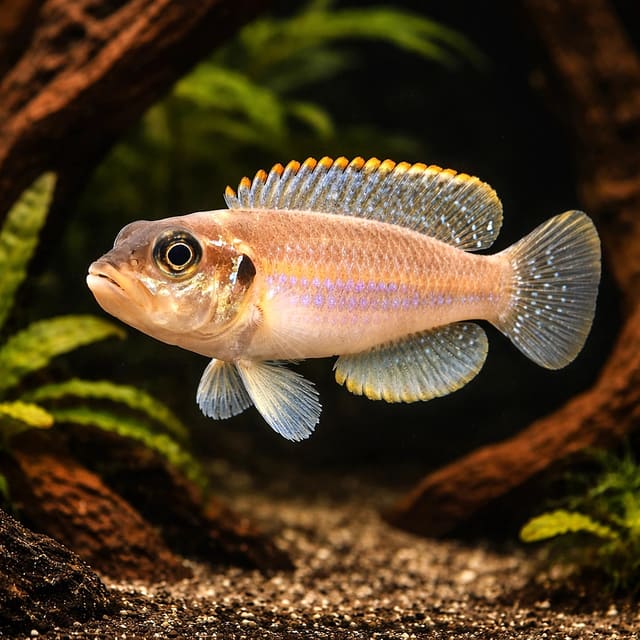
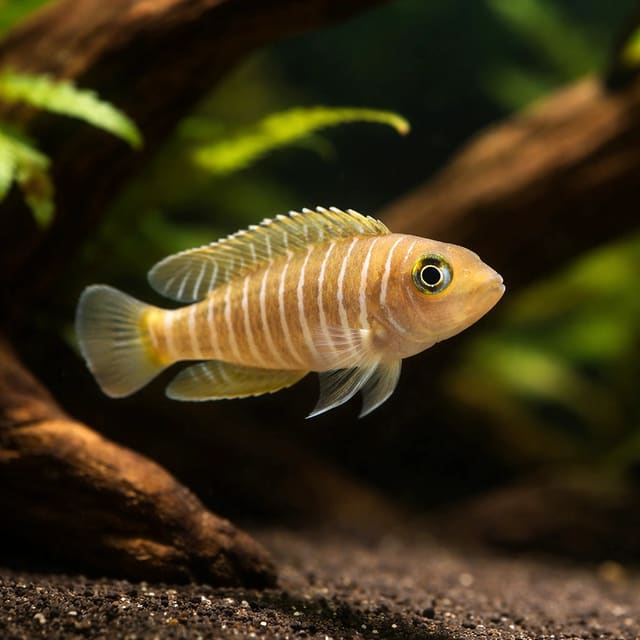
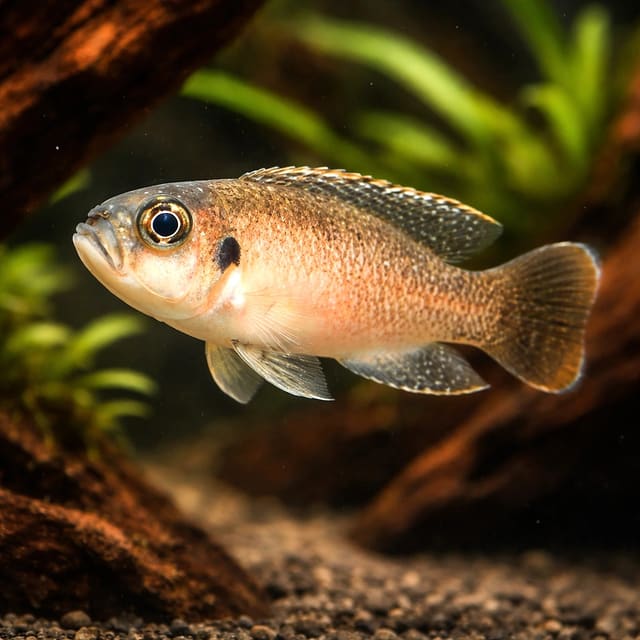
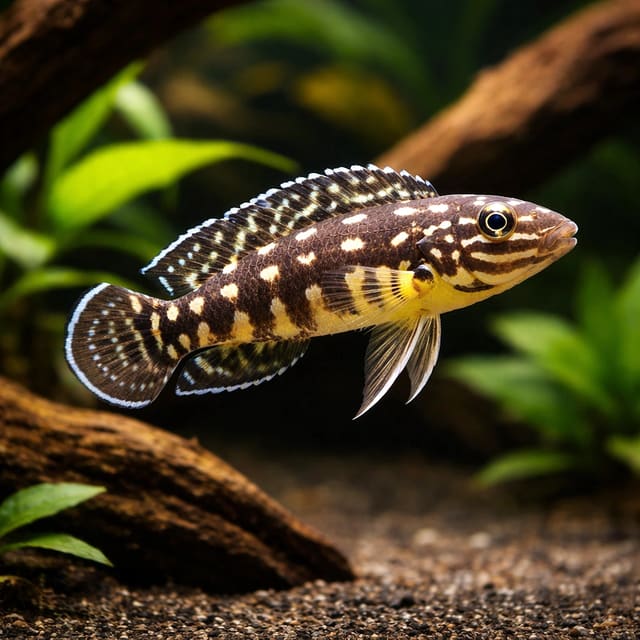
Moderate
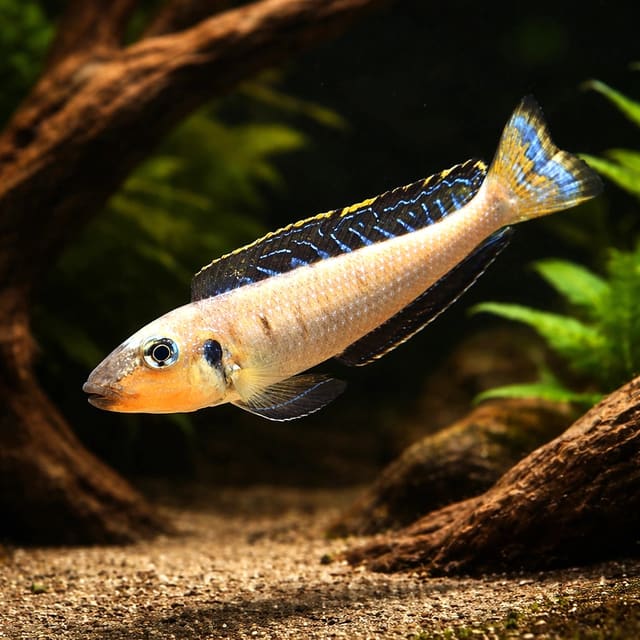
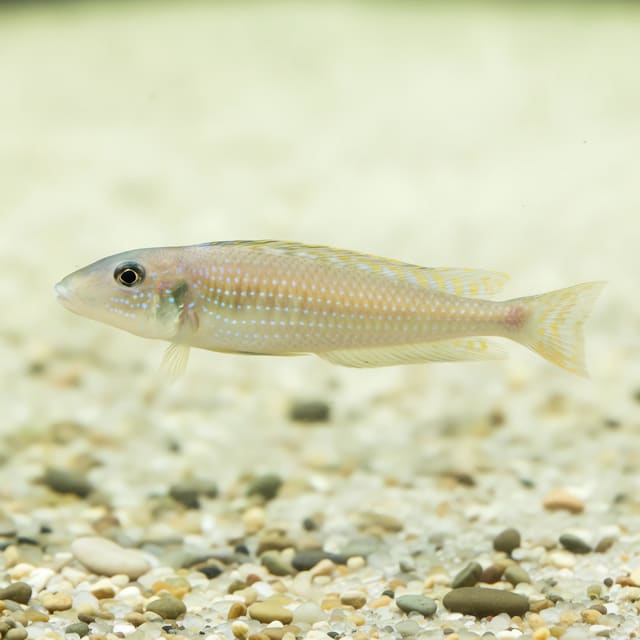
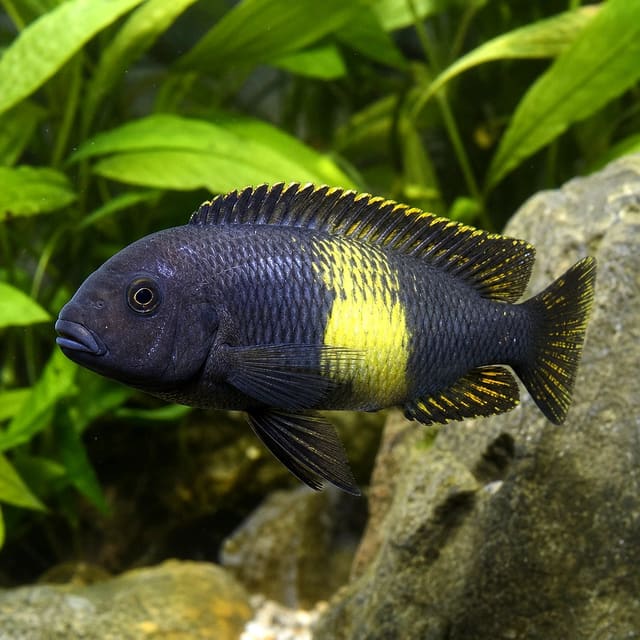
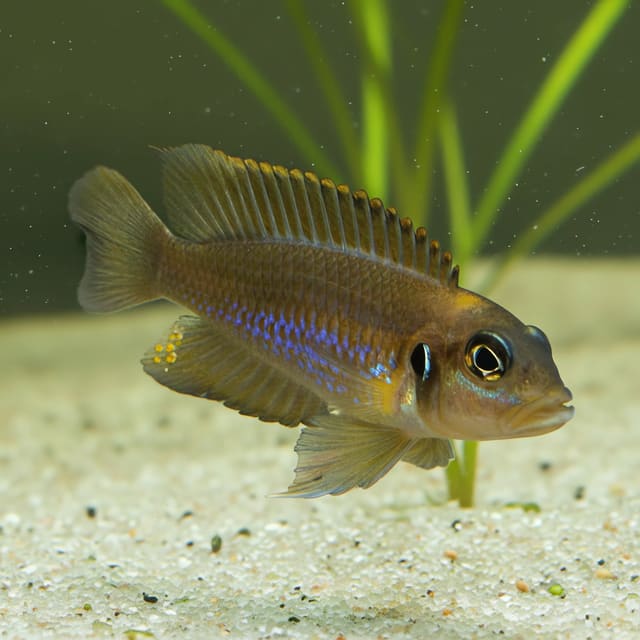
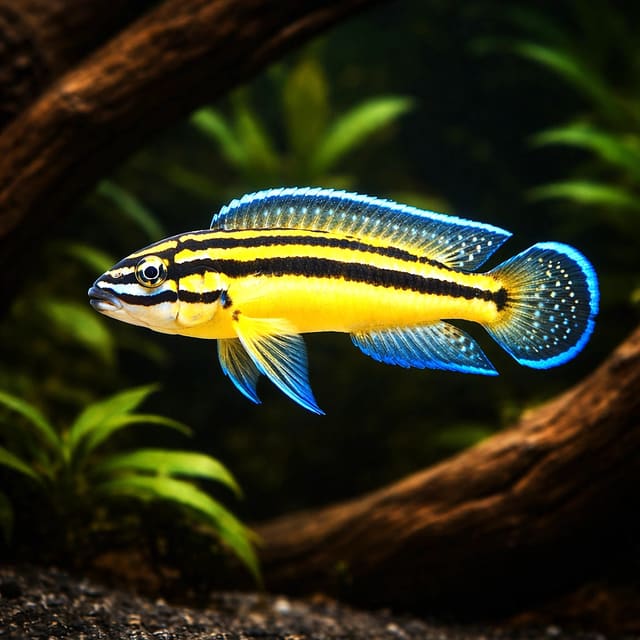
Five Bar Cichlid (Lamprologus tretocephalus)
24–26°C · pH 8–8 · 108L
£17.99

Frontosa Cichlid (Cyphotilapia frontosa) is a large, social Lake Tanganyika cichlid for advanced keepers. One purchase supplies one fish in the size chosen, without a sex guarantee; plan for a 33 cm TL adult, a group of at least five and an aquarium of at least 864 litres with a 240 × 60 cm base.
Adult size is the maximum length this species reaches at full maturity (scientific sources). The livestock you receive will be younger and smaller — pick a size above for the actual shipping size. Product-photo provenance and any image-specific limitations are stated on the listing.
Cyphotilapia frontosa
Save when buying multiple fish. Each quantity is one fish; sex and pair formation are not guaranteed unless the selected variant explicitly states them.
Frontosa Cichlid (Cyphotilapia frontosa) is a large, social Lake Tanganyika cichlid for advanced keepers. One purchase supplies one fish in the size chosen, without a sex guarantee; plan for a 33 cm TL adult, a group of at least five and an aquarium of at least 864 litres with a 240 × 60 cm base.
Adult size is the maximum length this species reaches at full maturity (scientific sources). The livestock you receive will be younger and smaller — pick a size above for the actual shipping size. Product-photo provenance and any image-specific limitations are stated on the listing.
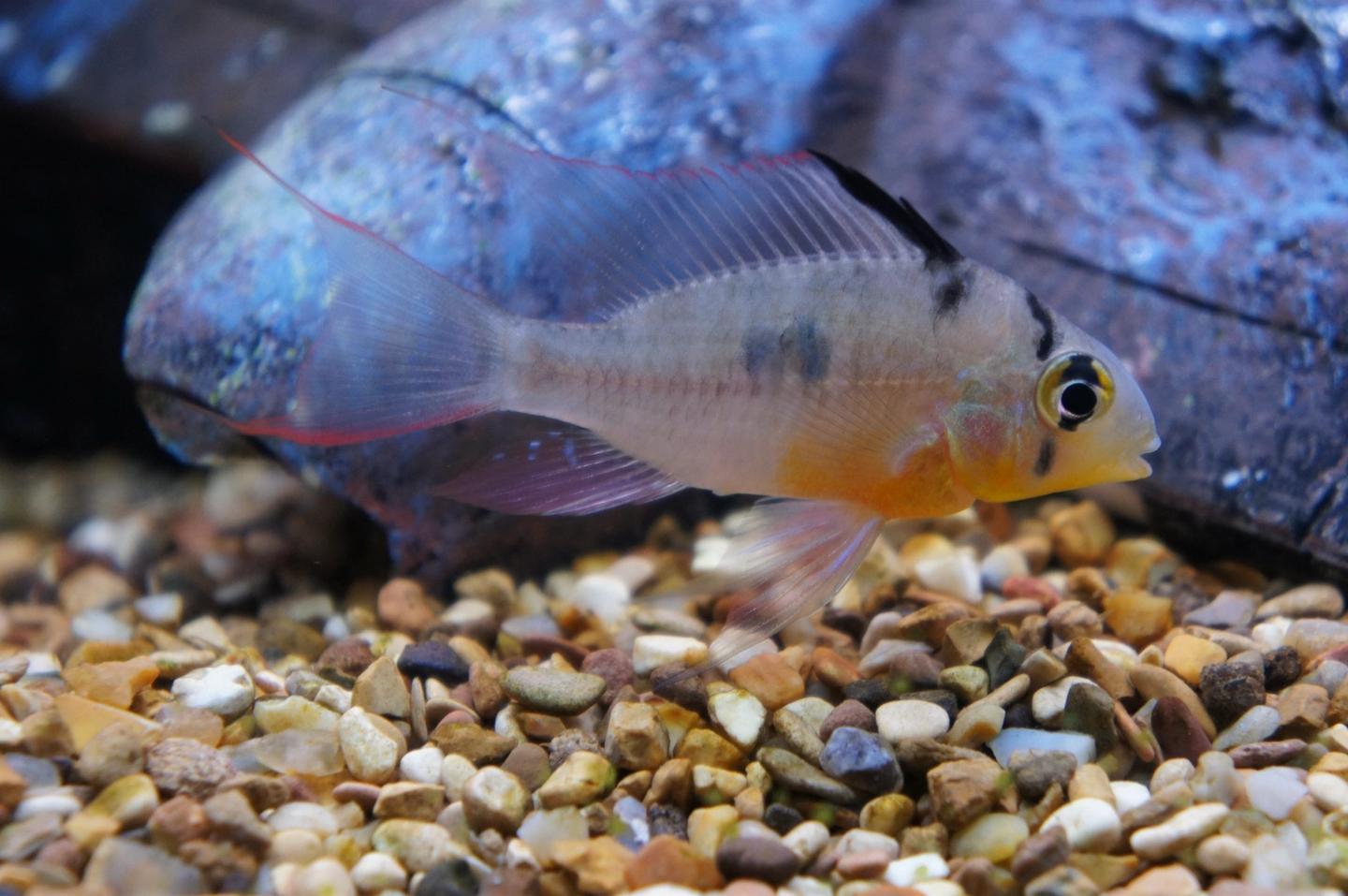
Cichlids are a family of roughly 1,800 accepted species, not one care type. Before buying, identify the exact species and source, then compare adult measurement, usable tank dimensions, social system, territory, tested water, diet and an exit plan. No family-wide minimum tank, water range or tank-mate list is safe.
Maintain these water conditions for optimal health and vibrant colors
Frontosa Cichlid (Cyphotilapia frontosa) is a large, gregarious Lake Tanganyika cichlid for the keeper who can provide an adult group with truly substantial space. It combines deliberate movement, a deep body and the characteristic humphead profile with the social interest of a fish that lives in an aggregation and forms a dominance order. One purchase supplies one live fish in the size chosen. The genuine supplied size bands span 2–3 cm, 3–4 cm, 4–5 cm, 6–8 cm, 9–13 cm and over 14 cm. The size you select is the size supplied, not the adult size.
Buying a small Frontosa does not create a small-aquarium phase that can safely be planned in isolation. FishBase records a maximum of 33 cm total length, and the species aquarium profile calls for a base of at least 240 × 60 cm and about 864 litres for long-term maintenance. It should also live in a group of at least five, ideally ten or more. Those facts make this an advanced, long-term project: the adult aquarium, filtration, group structure and compatible companions should be decided before the first juvenile comes home.
| Suits | Needs |
|---|---|
| Experienced keepers planning a large Tanganyikan display | At least a 240 × 60 cm base and approximately 864 litres |
| A social group of at least five, ideally ten or more | 23–27 °C, pH 8.0–9.0 and 10–25 dGH |
| Keepers who enjoy measured group behaviour | Sand, large smooth refuges, open swimming room and excellent filtration |
| One fish per purchase, with a choice of supplied sizes | No assumption of sex from size, hump or gallery image |
Sex is guaranteed only when the selected option explicitly states male or female. This Frontosa Cichlid listing has no sex-guaranteed option.
Cyphotilapia frontosa is a member of the cichlid family Cichlidae and is also known as the humphead cichlid or simply Frontosa. FishBase records it as endemic to the northern half of Lake Tanganyika. It is a freshwater, benthopelagic rock-dweller often found in aggregations. This identity matters when judging advice: a photograph or trade label resembling another barred cichlid does not make care for a different species interchangeable.
Two credible adult records use different length conventions. FishBase gives 33 cm total length, while the species aquarium profile gives 255 mm standard length. The larger numerical figure, 33 cm TL, is the prudent planning value. It prevents the retail dispatch size from becoming the basis of adult housing and keeps much smaller companions out of a predatory fish’s reach. Exact growth rate is not promised; the practical point is that even the smallest offered fish must be treated as a future large cichlid.
The familiar common name refers to the forehead profile that becomes especially prominent in mature males. The specialist profile notes that adult males grow larger, develop more extended fins and form a larger nuchal hump than females, while juveniles cannot be sexed accurately. That distinction is useful for understanding adults but not for promising the sex of a young fish. This offer remains unsexed unless a future selected choice explicitly says otherwise.
Wild records describe rock-associated groups and a diet that includes shellfish and fish. In the aquarium, the species can appear calm compared with fast, quarrelsome cichlids, but calm movement should not be confused with low space needs or harmlessness towards small fish. Its strongest display comes from a correctly proportioned group moving between open water and large refuges, not from squeezing one specimen into a generic community.
Use the current African cichlid collection when comparing specialist hard-water fish. A nearby product is an alternative to research, not an automatic companion. Lake of origin, adult size, diet, swimming style and group behaviour must all be considered before two cichlids share an aquarium.
Gallery images have been digitally enhanced to improve image quality. Natural colour, pattern, size and maturity can vary between live animals.
The species aquarium profile sets 240 × 60 × 60 cm, about 864 litres, as the minimum dimensions for long-term maintenance and recommends still greater width and particularly front-to-back depth. FishBase independently gives a minimum aquarium length greater than 200 cm. The species is both large and social, so the minimum is not a generous mixed-community allowance; it is the starting point for accommodating the fish itself over the long term.
Footprint and usable shape matter more than a headline litre figure. A tall, narrow aquarium can hold a great deal of water without offering the long open lanes or broad refuge entrances that a group needs. Before purchase, confirm the internal dimensions after rockwork is installed, the load-bearing capacity of the floor and stand, access for maintenance, and a safe plan for moving a large volume of water. These are practical parts of husbandry, not optional extras after the fish has grown.
If you are building a first aquarium, begin with the first tropical tank guide and establish biological filtration before any livestock arrives. A clear new aquarium is not automatically cycled. The filter must contain enough beneficial bacteria to convert toxic ammonia to nitrite and then to nitrate, and capacity must rise gradually as a Frontosa group and its feeding load increase.
A naturalistic layout can use fine sand with piles of smooth water-worn rocks, large boulders and cave-like refuges. The aquarium profile also allows smooth gravel or large earthenware refuges, but warns against sharp edges that could injure these deep-bodied fish. Place heavy structures securely and leave enough space around them for the largest adult to enter, turn and leave without scraping its flanks or trapping a subordinate fish.
Balance shelter with open swimming room. Alpha males tend to choose a cave or sheltered area, and brooding females can use smaller caves, but a wall of narrow crevices is not an adult Frontosa habitat. Build several separated refuges of useful size and preserve long lanes where the group can move without repeatedly crossing the dominant fish’s chosen shelter.
Lighting can be moderate rather than harsh. Sheltered areas and open space are the priorities; a dense planted aquarium is not required. If plants are used, they must not reduce the already demanding swimming footprint or block inspection and cleaning around rockwork. Choose the layout for fish access, stability and waste removal before decorative fashion.
For routine aquarium care, the species profile gives 23–27 °C, pH 8.0–9.0 and 10–25 dGH. FishBase records wild environmental values of 24–26 °C, hardness 8–12 dH and a pH record beginning at 8.0 without an upper value. The aquarium profile therefore provides the complete captive target used here, while the wild record confirms the species’ association with warm, alkaline, mineral-rich water.
Choose a stable point within the aquarium range instead of pushing readings between extremes. Measure source water before deciding whether it is naturally suitable or needs a controlled mineral strategy. The water chemistry guide explains what the principal tests mean, while the water matcher helps compare real readings with the care range.
Water quality is especially important for a large group of substantial cichlids. At around the cited minimum volume, the species profile uses turnover of four to five times the aquarium volume per hour and illustrates this with three filters each rated around 1,150–1,440 litres per hour. Printed ratings fall once media, pipework and head height are involved, so judge the system by actual circulation, oxygenation, waste collection and test results.
Design redundancy into a system of this scale. Multiple appropriately sized filters can preserve some circulation while one unit is serviced, and more than one heater reduces dependence on a single device. Position outlets to move oxygenated water across the surface and around large rock structures without turning the whole aquarium into a torrent. Check sheltered corners for settled food and waste, and ensure every fish has somewhere to rest away from a direct jet.
Size the maintenance routine for the adult group rather than the first small fish. Rockwork must leave room to reach intakes, siphon open sand and recover equipment without dismantling the aquarium every week. Check flow at more than one point across the tank and watch how food moves: particles that vanish behind one boulder can become a persistent waste pocket. A large display is easiest to keep stable when filter access, drainage and replacement-water preparation are planned into its position from the beginning.
At least once every week, carry out a partial water change of 25%. Use conditioned replacement water matched sensibly for temperature and mineral conditions, siphon debris from accessible sand and inspect intakes for blockages. Test at least weekly and after any meaningful increase in stock or feeding. When filter media needs cleaning, rinse it lightly in removed aquarium water rather than under the tap, where chlorine or chloramine can harm the established bacteria.
Record temperature, pH, ammonia, nitrite and nitrate alongside the water-change date. A large volume can appear stable while a slow trend develops, and a brief log makes that trend visible. Pair the numbers with fish observations: breathing, swimming, appetite, body condition, fin damage and use of shelter provide context that a test result alone cannot.
FishBase records shellfish, including snails and mussels, and fish in the wild diet. The species aquarium profile describes Frontosa as a generalised predator taking smaller fish, macro-invertebrates and molluscs, with some algae and organic detritus picked up while browsing. Captive feeding should reflect that breadth without relying on live prey.
Offer high-quality prepared foods in sizes the fish can swallow comfortably, plus suitable live or frozen Artemia, mosquito larvae and shrimp. Some dried foods should contain a meaningful vegetable component such as spirulina, and chopped peas are a suitable supplement. Distribute food so slower or subordinate fish are not excluded by the dominant individuals, and remove leftovers before they decay behind the rockwork.
Never offer mammalian or avian meat such as beefheart or chicken. The species source warns that some of those lipids cannot be properly metabolised and may contribute to excess fat deposits and organ damage. Feeder livebearers or goldfish bring no benefit and add nutritional and disease risks. A varied, controlled prepared-and-frozen diet is more predictable and safer.
Broad African lake guidance suggests feeding only what the fish finish within a few minutes, twice daily. Adjust the portion to fish size, group condition and actual consumption rather than treating the clock as permission to overfeed. Frontosa can put a large food load through an aquarium, so appetite, body shape, faeces, leftover food and nitrate trend should all inform the next portion.
Healthy fish should have clear eyes, intact fins and scales, controlled swimming, regular breathing and an appropriate interest in food. Investigate changes such as surface hanging, bottom sitting, erratic swimming, unusual hiding, faster gill movement, colour becoming markedly darker or paler, white spots, fluffy growths, damaged fins or loss of condition. Test water first when several fish change together.
Social welfare deserves the same attention. A dominance order is normal for this species, but one animal should not be permanently denied food or refuge. Watch the group before and during feeding. Note which fish leads movement, which individuals hang back and whether any newcomer remains isolated. Persistent damage or exclusion requires a stocking or housing response rather than more food.
Prepare the aquarium before delivery and make sure someone is present to receive the parcel. Use the current delivery and Live Arrival Guarantee policy. Tropical Fish Co hand-bags the fish in oxygen, uses an insulated box and adds a heat pack when weather calls for it; transport is by a licensed live-animal courier.
The recording protects a claim; it is not a care treatment. The receiving system still needs the correct hard alkaline water, mature filtration and enough physical space for the selected fish. Avoid using arrival day to make an abrupt chemistry change or to add several unrelated species without a complete stocking plan.
The species aquarium profile describes Cyphotilapia frontosa as gregarious and sets a minimum group of five, with ten or more ideal. FishBase records the species in wild aggregations and advises several females for one male in aquarium keeping. These are not interchangeable with keeping one solitary specimen because it is visually striking. The social group is part of the animal’s basic planning requirement.
Within that group, males form a distinct dominance order rather than holding the sharply bounded territories typical of many cichlids. One or more alpha individuals can develop depending on group size and available space. A larger group can distribute social pressure, but only when the aquarium is large enough to give subordinate fish room to move away, rest and feed. Adding fish to a cramped system to “spread aggression” would solve the wrong problem.
For a sex-aware adult group, several females for one male is the sensible direction. The breeding profile is more specific, advising at least three to four females for each adult male. Juveniles cannot be sexed accurately, however, and this offer has no sex guarantee. Anyone whose plan depends on a precise ratio should use explicitly sexed adults rather than treating hump size, body size or a picture as proof.
Frontosa can form part of a carefully chosen Lake Tanganyika community when the aquarium is large enough. Suitable companions must tolerate the same hard alkaline conditions, remain too large to be eaten and avoid constant frantic competition. A shared lake name is not enough by itself: different Tanganyikan species can have very different diets, group structures and use of rockwork.
Broad African lake guidance recommends keeping species with others from the same location and says routine mixing of Malawi and Tanganyikan cichlids is generally unsuitable because their behaviour differs. That is a useful first filter. The species profile adds the predation warning: much smaller fish may be eaten. Together, those points favour robust, appropriately sized Tanganyikan companions chosen for the entire aquarium rather than a random collection of African cichlids.
| Consider | Avoid |
|---|---|
| The complete Frontosa group before any companion | Keeping one Frontosa as a solitary ornament |
| Robust, appropriately sized Tanganyikan fish with matching water needs | Small fish that may be swallowed |
| Companions using space and food without constant harassment | Routine Malawi and Tanganyika mixing |
| Aquarium dimensions beyond the species minimum when mixing | Timid fish unable to compete or escape social pressure |
No named species is a universal tank mate. Individual size, maturity and temperament change over time, and a fish that coexists as a juvenile may become vulnerable or disruptive later. Review adult dimensions for every planned companion and consider where each will feed, shelter and swim when all are fully grown.
Frontosa’s measured movement can be misleading. It is a generalised predator and may consume fish small enough to take. Do not use small schooling fish as decorative companions or assume speed will protect them. Predation risk is a size relationship, not a judgement about whether the cichlid looks peaceful during the day.
At the other extreme, very active or aggressive fish can keep Frontosa away from food and shelter. Observe the entire feeding period rather than only the first strike. Every group member should get an appropriate portion, and no companion should monopolise the feeding zone. Sinking or slowly descending food can help reach fish that feed lower in the water, but it cannot rescue a fundamentally incompatible community.
Only add fish after confirming that the biological filter can support the extra waste. Broad care guidance warns against raising stock too quickly because the nitrifying bacterial population must expand as animal numbers and feeding increase. A large aquarium is not immune to ammonia or nitrite if several substantial fish are added at once.
Where possible, plan the Frontosa group together instead of repeatedly placing one small newcomer into an established dominance order. Provide several large refuges and keep open movement routes between them. Observe closely through the first meals and rest periods. A fish that will not leave shelter, repeatedly misses food or shows fresh damage needs prompt intervention.
Make additions from a written adult-stock plan. List each species’ maximum size, number, water range, diet and main swimming or shelter zone, then compare the combined demand with the actual footprint after décor. This catches weak ideas early: a companion may share alkaline water yet remain small enough to be prey, or may reach a suitable size but compete too aggressively at every meal. Only add it when the complete adult arrangement still leaves room for the core Frontosa group.
Frontosa is a maternal mouthbrooder. Adult males are polygynous, and the species profile recommends at least three to four females per male for breeding groups. Sexual maturity takes several years, so young fish should not be bought with an expectation of quick breeding. The source also records large eggs, relatively small broods and an extended brooding period, all of which reinforce the need for patience and stable group conditions.
A brooding female benefits from smaller refuges and reduced disturbance. Because she may feed while carrying young, watch her condition without repeatedly netting or isolating her on guesswork. Breeding information explains social behaviour; it does not change the retail offer into a sexed or breeding-guaranteed product. Any deliberate project also needs space for offspring before spawning is encouraged.
Reassess the group if one fish loses condition, remains excluded, suffers repeated damage or cannot feed. Also revisit the plan as juveniles mature and sex differences become clearer. Removing or adding one animal can alter the dominance order, so monitor the whole group after an intervention rather than assuming the problem ended with one move.
If the aquarium cannot accommodate at least five adults at the species minimum dimensions, Frontosa is the wrong choice for that system. Responsible keeping begins with accepting that this impressive fish is a group-scale commitment, not finding a temporary way to fit a juvenile into available space.
After any change, observe more than the dominant fish. Check the smallest and most hesitant individuals at feeding, then again once the group has settled. A workable arrangement lets every animal use shelter, open water and food without constant displacement. If that standard cannot be restored by a careful layout or stocking adjustment, use the prepared separation or rehoming route rather than waiting for visible injury.
A Frontosa Cichlid is best planned around the FishBase maximum of 33 cm total length. The aquarium profile records 25.5 cm standard length, so the 33 cm figure is the conservative choice for adult space and companion planning.
Cyphotilapia frontosa needs at least a 240 × 60 cm base and approximately 864 litres for long-term maintenance. Greater width and front-to-back depth are strongly preferable, especially for a full social group.
Keep at least five Frontosa, with ten or more ideal when the aquarium is large enough. Plan several females for one male, and remember that a proper group requires far more space and filtration than one juvenile suggests.
A Frontosa Cichlid is an advanced commitment because of its adult size, minimum group, very large aquarium, hard alkaline water and need for excellent long-term filtration. It suits an experienced keeper who can plan the whole adult group before buying.
Use high-quality prepared foods with suitable live or frozen foods such as Artemia, mosquito larvae and shrimp. Include some dried food with vegetable matter, and never offer beefheart, chicken or feeder fish.
The Frontosa species aquarium profile gives 23–27 °C, pH 8.0–9.0 and 10–25 dGH. Keep these conditions stable with mature biological filtration, vigorous oxygenation and zero measurable ammonia and nitrite.
Cyphotilapia frontosa is comparatively measured for a large cichlid, but it forms a dominance order and can intimidate weaker group members. It may also eat much smaller fish, so crowding it with timid or bite-sized companions is unsafe.
A sufficiently large aquarium can support a carefully chosen Tanganyikan community of robust fish too large to be eaten and able to share the same hard alkaline water. Avoid small fish and routine mixing with Malawi cichlids; every companion still needs an individual assessment.
Tropical Fish Co hand-bags the fish in oxygen, uses an insulated box and adds a heat pack when conditions call for it, then sends it with a licensed live-animal courier. Be present, record one continuous unboxing video from the still-sealed parcel before anything is disturbed, inspect the fish that day, float the sealed bag for 20–30 minutes, and transfer the fish without adding transport water to the aquarium.
These sources support the identity, natural history, species care and welfare guidance used above. Wild environmental records, species aquarium ranges and broad group advice are kept distinct.
Sources were accessed through the reviewed listing evidence dated 20 September 2026. The current delivery policy governs delivery and claim steps if those terms change.
No reviews for this item yet. Bought one? Honest reviews only, good or bad.
What customers say about ordering from us
I have a small group of long finned mountain minnows. So was delighted to be able to order ten of this variety to increase the genetics in my tank . The ones I recieved are healthy but it’s to early to give a verdict on wether they are of a long finned type since they are small currently.
Gordon Walker · 23 Sept 2026
100% success travel and "installation". Pleased with quality of purchase. The Siamese fighter a bit "shy" so have not yet seen him at his best yet but looking good. Happy customer. GG
George E Garratt · 21 Sept 2026
Reviews of our shop, collected by Judge.me, an independent third-party review collector. Newest first.