−13%
Moderate
Ocellated Shell-Dweller (Lamprologus ocellatus)
23–27°C · pH 7.5–9 · 40L
£16.52£18.99

Buy Kigoma Humphead Cichlid for sale in the UK. A bold Tanganyikan cichlid with unique shape and colour, suited to experienced aquarists.
Adult size is the maximum length this species reaches at full maturity (scientific sources). The livestock you receive will be younger and smaller. Product-photo provenance and any image-specific limitations are stated on the listing.
Cyphotilapia frontosa
Save when buying multiple fish. Each quantity is one fish; sex and pair formation are not guaranteed unless the selected variant explicitly states them.
Confirm your email, then we’ll send an availability message for this exact item if it returns within 180 days.
This request is only for this product—no newsletter or other promotions. A mail-provider retry may very rarely duplicate the same availability message. Unconfirmed addresses are removed after 48 hours. See our privacy policy.
Buy Kigoma Humphead Cichlid for sale in the UK. A bold Tanganyikan cichlid with unique shape and colour, suited to experienced aquarists.
Adult size is the maximum length this species reaches at full maturity (scientific sources). The livestock you receive will be younger and smaller. Product-photo provenance and any image-specific limitations are stated on the listing.
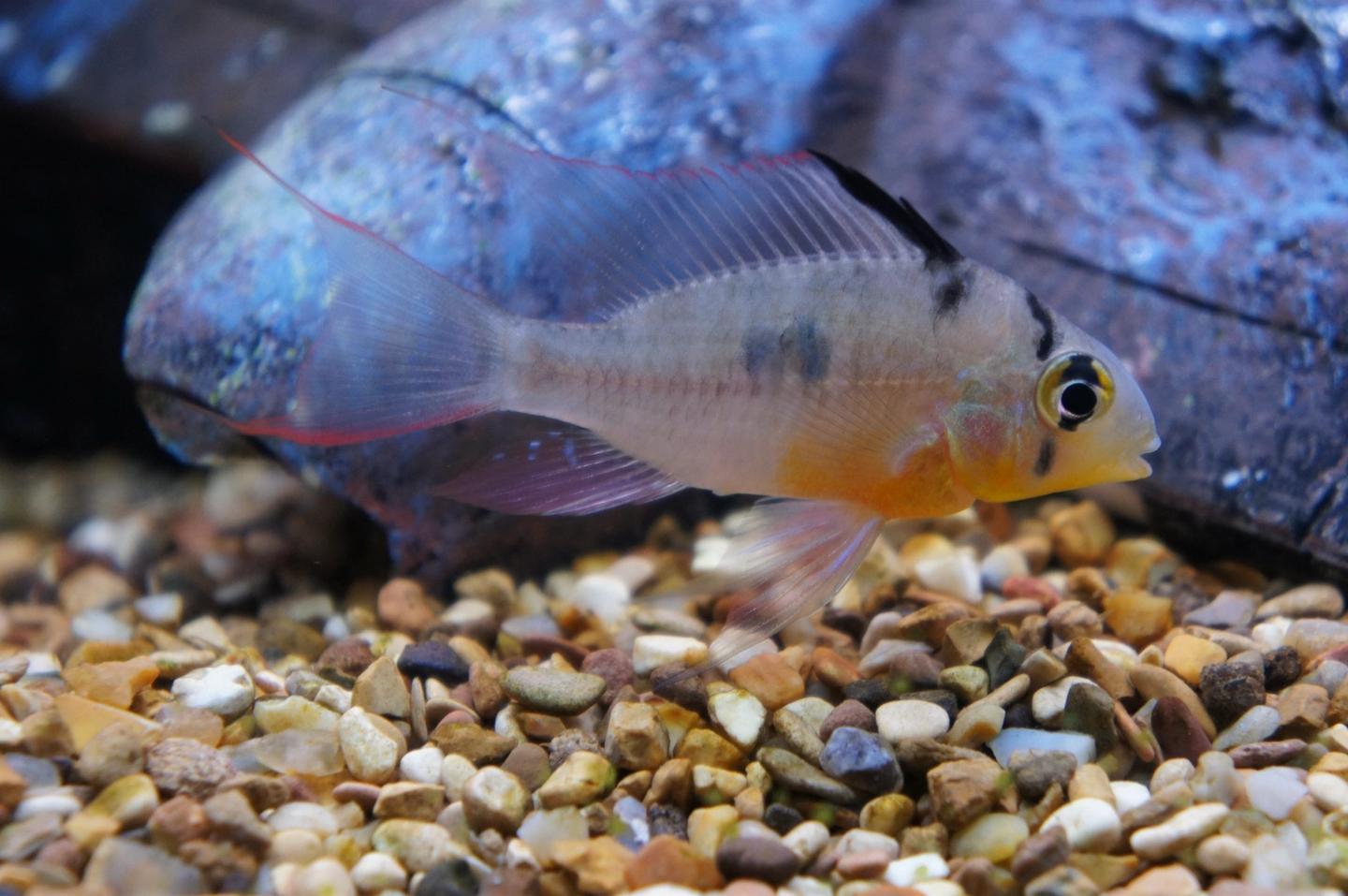
Cichlids are a family of roughly 1,800 accepted species, not one care type. Before buying, identify the exact species and source, then compare adult measurement, usable tank dimensions, social system, territory, tested water, diet and an exit plan. No family-wide minimum tank, water range or tank-mate list is safe.
Maintain these water conditions for optimal health and vibrant colors
The Kigoma Humphead Cichlid, Cyphotilapia frontosa, is one of the most recognisable tropical fish for sale UK hobbyists can keep. With its bold vertical bars, deep blue-white sheen, and the famous forehead hump that gives the species its name, this is a true show fish for large aquariums. Native to Lake Tanganyika in East Africa, the Kigoma Humphead Cichlid Fish is a slow-growing, long-lived cichlid that can reach around 35cm and may live for 20-25 years with proper care. Its temperament is best described as semi-aggressive rather than outright hostile, making it a thoughtful choice for aquarists who want a commanding centrepiece rather than a busy mixed community. If you are searching for a tropical fish shop near me, comparing tropical fish shops near me, or planning to buy fish online, this species stands out for its intelligence, presence, and relatively steady behaviour once settled into the right setup.
See our detailed photos showing the mature hump, bar pattern, and body depth that make the Kigoma variant so desirable among Lake Tanganyika cichlid UK keepers. This is not a fish for a tiny display, but in a correctly planned aquarium it becomes a calm, majestic focal point. For aquarists looking at tropical fish for sale, tropical fish for sale near me, tropical fish for sale online, or wanting to buy live fish online uk, the Kigoma Humphead offers something many common species cannot: size, longevity, and a stately personality that rewards patient fishkeeping. It is also a species that teaches excellent habits in tropical fish tank care, water quality management, and long-term stocking discipline.
Cyphotilapia frontosa is one of the classic deep-water cichlids from Lake Tanganyika and has been prized in the aquarium hobby for decades. The Kigoma form is especially admired for its clean bar pattern and elegant blue tones. Within the cichlid family, Frontosa are unusual because they combine large adult size with a surprisingly deliberate, almost slow-motion swimming style. That makes them very different from faster, more frantic Rift Lake species and a favourite among keepers building a specialist Tanganyika display.
The Kigoma Humphead Cichlid comes from Lake Tanganyika, one of the oldest and deepest lakes in the world. The Kigoma locality refers to fish associated with the Tanzanian side of the lake, where rocky slopes, broken stone shelves, and deep open water create the habitat these cichlids prefer. In the wild, Frontosa are often found at depth, where light is lower, the water is highly oxygenated, and mineral content remains stable. This matters in the aquarium because a proper kigoma humphead cichlid Tanganyika setup should aim to copy those stable, alkaline, hard-water conditions rather than a generic mixed tropical tank.
Lake Tanganyika is not a planted jungle stream. It is a mineral-rich, rocky environment, so when people ask what is tropical fish tank care for a Tanganyika species, the answer is that it is very different from soft-water Amazon fishkeeping. You need to think in terms of a balanced tropical fish tank ecosystem with strong filtration, high oxygen, and open swimming lanes. If you are wondering what do you need for a tropical fish tank for this species, start with volume, rock structure, and chemistry before decoration. A keeper asking what ph for tropical fish tank conditions should aim high here: pH 7.8 to 9.0 is ideal. Likewise, what should my tropical fish tank levels be and what should tropical fish tank levels be are easy to answer for Frontosa: ammonia and nitrite at zero, nitrate kept low through maintenance, and hardness firmly in the alkaline Rift Lake range.
Because these fish come from a habitat with little plant growth, questions such as what plants for tropical fish tank need a realistic answer. Use only hardy species attached to rock, or skip plants entirely and focus on stonework. The Kigoma Humphead is a specialist fish, not a random choice from community tropical fish uk lists. It is also not comparable to browsing tropical fish pond uk or tropical fish pond royal oak; this is a deep-water cichlid that belongs indoors in a large, heated aquarium with stable chemistry.
Mimicking the natural habitat improves confidence, colour, and feeding response. Keep décor rocky but uncluttered, use subdued lighting, and provide secure caves with open water in front. Frontosa often settle faster when they can retreat into shade and then glide out to feed.
Tank planning is where this species succeeds or fails. Many aquarists first discover Frontosa while searching tropical fish for beginners, but the truth is more nuanced: they are manageable in behaviour, yet their size and lifespan mean the setup must be right from the start. If you are asking what size tank for tropical fish, what size tropical fish tank, or even the awkward search phrase who tropical fish tank size, the key point is simple: this species needs floor space as much as water volume. The kigoma humphead cichlid minimum tank size is 400 litres for a young group, but adults do far better in 500-700 litres or more.
A 400-litre aquarium is the realistic minimum, and a tank at least 150cm long is strongly recommended. Common searches like 50cm tropical fish tank, 60cm tropical fish tank, 80cm tropical fish tank, or even a 100cm tropical fish tank simply do not provide enough long-term room for adult Frontosa. The correct kigoma humphead cichlid tank size depends on group size, but a breeding group of 1 male with 3-5 females needs substantial width and depth. This is a kigoma humphead cichlid for large tank, not a fish for compact cabinets or starter kits.
The ideal kigoma humphead cichlid temperature is 24-27°C. In practical terms, the best tropical fish temperature for this species is 25-26°C, which sits comfortably within the recommended range. If you are comparing tropical fish tank ideal temperature, tropical fish tank best temperature, and the general temperature of tropical fish tank, remember that Frontosa prefer stability over fluctuation. The tropical fish tank water temperature should not swing day to night. A reliable heater and thermometer are essential because tropical fish tank temperature drift can stress this slow-moving cichlid.
Many buyers ask versions of the same question: can tropical fish tank temperature vary, does tropical fish tank temperature matter that much, must tropical fish tank temperature stay exact, or how often tropical fish tank temperature should be checked? For Frontosa, check daily and keep variation within about 1°C. The useful tropical fish tank temperature range is 24-27°C, and tropical fish tank temperature uk celsius guidance is especially helpful for UK homes where room temperature can change between seasons. If the tropical fish tank temperature too hot rises above 28°C for long periods, oxygen drops and stress increases.
A large external filter is strongly recommended. The species produces a significant bioload, especially when fed a rich kigoma humphead cichlid diet. Aim for turnover around 5-8 times tank volume per hour, with biological media prioritised over excessive current. If you are planning a tropical fish tank complete setup, include both a robust canister filter and a dependable heater. Searches such as tropical fish tank filter and heater, tropical fish tank heater and filter, and tropical fish tank heater all point to the same need: stable, clean, warm water.
The tropical fish tank heater temperature should be set with a separate thermometer, not trusted blindly. Good tropical fish tank heater setting practice is to set the heater slightly below your target and adjust gradually. The tropical fish tank heater position should be near filter outflow so heated water circulates evenly. This species does not suit a small tropical fish tank with heater; the heater is only one part of the equation, and volume is the real safeguard against instability.
Use sand or fine smooth gravel with piles of stable rock. Avoid sharp stone that can damage flanks during territorial disputes. Décor should create line-of-sight breaks without filling every inch of swimming space. When aquarists ask may tropical fish tank setup include plants, the answer is yes, but sparingly. This is not the ideal kigoma humphead cichlid for planted aquarium, though hardy species attached to rock can work if your lighting is modest and your fish do not uproot them.
For a specialist cichlid collection, you may also enjoy browsing our wider Lake Tanganyika cichlid selection, or comparing Rift Lake fish such as the Kiriza Yellow Cichlid - Tropheus Moorii and Orange I Blunthead Cichlid - Tropheus for a different style of Tanganyika display.
Always cycle the aquarium for 4-6 weeks before adding Frontosa. If you are following a tropical fish tank beginner's guide or learning tropical fish tank how to set up, remember that this species is far less forgiving of immature filtration than many smaller fish.
The kigoma humphead cichlid diet should be based on high-quality cichlid pellets supported by occasional frozen or fresh protein foods. In the wild, Frontosa are opportunistic predators and dusk feeders, taking smaller fish and invertebrates. In captivity, they do best on a measured omnivorous diet with a strong carnivorous lean. Their slow, deliberate feeding style means food should sink or remain in the midwater zone long enough for them to take it comfortably.
A quality cichlid pellet should be the staple. Choose formulas designed for large cichlids rather than random pond foods. This is also why searches like pet fish food shop near me matter less than choosing species-appropriate nutrition. A specialist cichlid pellet gives more reliable results than generic flakes. If you are comparing options while looking to buy tropical fish UK, plan the food before the fish arrives.
Supplement the staple diet with krill, mysis, chopped prawn, and occasional white fish fillet. These foods help maintain body condition and support breeding. Avoid fatty mammal meats and excessive live feeder fish, which can introduce parasites. People sometimes ask what tropical aquarium fish eat snails; Frontosa are not snail-control specialists, so do not buy them for that purpose. They may take small snails opportunistically, but that is not their role.
Feed juveniles twice daily in small portions. Adults usually do well once or twice per day, with only as much as they finish within a few minutes. Because they are large fish, overfeeding quickly leads to waste buildup. That in turn contributes to tropical fish tank algae, tropical fish tank green algae, tropical fish tank brown algae, and even tropical fish tank hair algae or tropical fish tank black hair algae. If you are wondering why is my tropical fish tank going green, excess food and rising nitrate are common causes.
| Time | Food | Amount |
|---|---|---|
| Morning | High-quality sinking cichlid pellets | Small portion eaten in 2-3 minutes |
| Evening | Krill, mysis, or chopped prawn | Light supplemental feed 3-4 times weekly |
Good feeding links directly to maintenance. If you are dealing with tropical fish tank algae treatment, start by reducing excess food, improving water changes, and checking lighting duration before adding any so-called cure. Frontosa are not ideal companions for most tropical fish tank algae eaters because many algae grazers are too small or require different water chemistry. The same caution applies to many tropical fish tank bottom feeders; choose only robust Tanganyika-compatible catfish.
Choose staple pellets and occasional frozen foods that match the slow, protein-focused feeding style of adult Frontosa.
Overfeeding causes ammonia spikes, cloudy water, and long-term digestive stress. A large cichlid begging at the glass is not always hungry. Feed by body condition and water quality, not by enthusiasm.
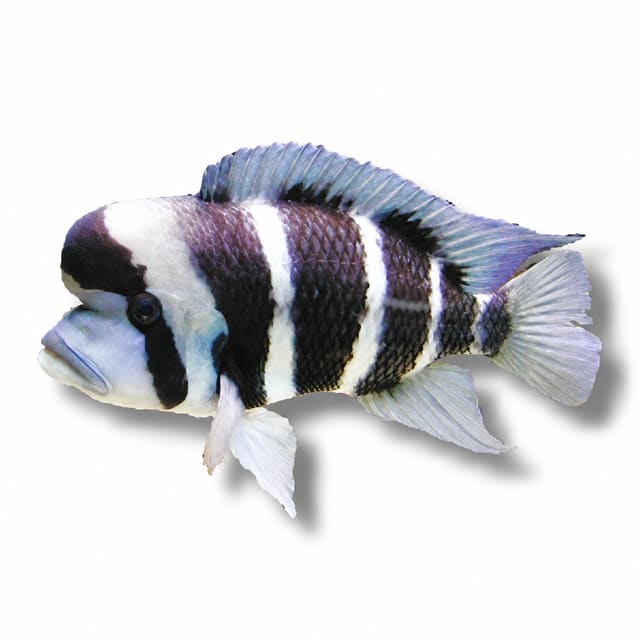
The Kigoma Humphead is a thick-bodied cichlid with a broad head, long flowing fins, and 5-7 dark vertical bars over a pale blue to bluish-white base colour. Mature fish develop the characteristic nuchal hump, especially males, though females can show a smaller hump as they age. Adult size can reach around 35cm, so the fish seen in juvenile dealer tanks only hint at the final look. This is why the kigoma humphead cichlid minimum tank size and final kigoma humphead cichlid tank size planning are so important.
Young fish are often more silver and contrasty, while adults develop richer blue tones and a heavier forehead profile. Males are usually larger, with a more pronounced hump and longer finnage. Females tend to remain slightly smaller and rounder. If you are searching what size tank for tropical fish because you have fallen for juvenile colour, remember that these are not nano cichlids. They outgrow the sort of tank associated with tropical fish for beginners starter kits.
Our photos show the clean bar spacing and body depth that make the Kigoma locality popular with collectors. Compared with some other Frontosa variants, Kigoma fish often present a balanced mix of blue sheen and dark barring. Strong diet, low stress, and dark rock backgrounds help bring out the best contrast. If you are comparing display options with species such as the Yellow Elongatus Cichlid - Chindongo Elongatus or Rubin Red Peacock Cichlid - Aulonocara, Frontosa offer a more stately, less hyperactive visual style.
The best approach to kigoma humphead cichlid compatible fish is to think in terms of size, temperament, and water chemistry. Frontosa are not ideal for a classic mixed kigoma humphead cichlid community tank full of small schooling fish. They are calmer than many cichlids, but they are still large predators that can eat anything small enough to fit in the mouth. So when buyers ask whether this is a kigoma humphead cichlid for community tank, the honest answer is yes only in a specialist, large Tanganyika community with carefully chosen tank mates.
The most reliable best tank mates for kigoma humphead cichlid are other robust Tanganyika species of similar size and temperament. Synodontis catfish, especially petricola types, are classic companions because they occupy different areas and tolerate similar hard, alkaline water. Tropheus species can work in very large systems with experienced management, though their feeding needs differ. If you want to compare other cichlids, you may like the Kiriza Yellow Cichlid - Tropheus Moorii, Orange I Blunthead Cichlid - Tropheus, or the eye-catching Aulonocara Sp Neon Red Calico Peacock, but avoid mixing fish with very different aggression patterns or dietary needs without a clear plan.
Avoid small tetras, guppies, shrimp, and most snails. This species is not suitable for the sort of community tropical fish uk setup built around peaceful nano fish. Searches such as tetras for sale uk or tetra fish for sale uk may appeal to new keepers, but tetras are not sensible tropical fish tank mates for adult Frontosa. The same applies to delicate species. Frontosa also should not be mixed casually with Malawi mbuna, which are far more boisterous and can create constant stress.
A practical setup is one male Frontosa with 3-5 females in a 500-litre or larger aquarium, plus a small group of robust Synodontis. In a very large display, experienced keepers may combine Frontosa with selected Tanganyika cichlids that occupy other zones. If you are building a tropical fish tank mates chart, note that compatibility is not only about aggression. It also depends on feeding speed, water chemistry, and whether smaller fish will eventually become prey.
| Species | Compatible? | Notes |
|---|---|---|
| Kiriza Yellow Cichlid - Tropheus Moorii | ⚠️ Caution | Possible in very large Tanganyika tanks, but diet and temperament differ. |
| Orange I Blunthead Cichlid - Tropheus | ⚠️ Caution | Works only with careful stocking density and expert feeding management. |
| Small tetras, guppies, shrimp | ❌ Avoid | Too small and likely to be harassed or eaten. |
Maintenance supports compatibility too. Learning how to clean tropical fish tank, how to clean small tropical fish tank, how to keep tropical fish tank clean, how to maintain tropical fish tank, and how to change tropical fish tank water reduces conflict because fish kept in cleaner, more stable water show less stress. Regular testing matters as well, so know how to test tropical fish tank water and keep a simple routine. A general tropical fish tank temperature chart is useful, but remember that tropical fish tank temperature for tetras or tropical fish tank temperature guppies is not especially relevant to a Tanganyika predator.
Always quarantine new arrivals for 2-4 weeks before adding them to a Frontosa aquarium. A calm, established group can be badly disrupted by introducing fast, stressed, or parasite-carrying newcomers.
kigoma humphead cichlid breeding is considered moderate rather than easy. These fish are maternal mouthbrooders, and success depends on maturity, patience, and stable conditions. Because they are slow-growing, breeding often begins only after several years. A proper kigoma humphead cichlid breeding pair is less common than a breeding group, as one male with several females usually works best.
Use a large tank with stable rockwork, hard alkaline water, and a tropical fish tank water temperature around 25-26°C. The kigoma humphead cichlid ideal temperature for breeding sits within the normal maintenance range, so there is no need for dramatic heat changes. Keep the tropical fish tank temperature range steady and avoid sudden spikes. If the tropical fish tank temperature too hot climbs, brooding females may spit eggs early.
The male courts a female over a chosen spawning site. After spawning, the female collects the eggs in her mouth. If you are searching terms like tropical fish tank eggs or yellow eggs in tropical fish tank, Frontosa eggs are usually not seen for long because the female picks them up quickly. Incubation in the mouth can last around 4-6 weeks, depending on temperature and individual fish. During this period, the female often eats little or nothing.
Once released, fry are relatively large and can take baby brine shrimp, crushed pellets, and fine cichlid foods. Growth is steady but slow. Good water quality is more important than pushing rapid growth with heavy feeding. Questions like what chemicals do i need for a tropical fish tank or what chemicals do you need for a tropical fish tank have a simple answer here: dechlorinator, test kits, and possibly Tanganyika mineral support if your tap water is very soft. Fancy additives are less useful than consistency.
Some search phrases, such as what day tropical fish tank is best, what day tropical fish tank open, what day tropical fish tank temperature, or what day tropical fish tanks, are not really breeding questions, but they reflect a common concern about timing. In practice, water quality, maturity, and low stress matter far more than any specific day. The best results come from stable routines, not constant intervention.
Experienced breeders often leave the female with the group until she is close to release, then move her gently to a quiet rearing tank with matching water chemistry. Moving her too early can cause her to swallow or spit the brood, so timing and calm handling are critical.
Comparison matters because many buyers looking for tropical fish for sale UK are choosing between several large cichlids with very different care needs. The Kigoma Humphead is best for aquarists who want a slower, more majestic fish with long-term presence. If you prefer brighter, more active fish, a peacock cichlid may suit you better. If you want a Tanganyika specialist with more constant movement, Tropheus are another route.
| Feature | Kigoma Humphead Cichlid | Rubin Red Peacock Cichlid |
|---|---|---|
| Max Size | 35 cm | 15 cm |
| Care Level | Moderate | Moderate |
| Temperature | 24-27°C | 24-28°C |
| Price | £25.16 | £25-£40 typical |
| Best For | Large Tanganyika show tank | Colourful Malawi display |
| Feature | Kigoma Humphead Cichlid | Kiriza Yellow Cichlid - Tropheus Moorii |
|---|---|---|
| Max Size | 35 cm | 12-15 cm |
| Care Level | Moderate | Moderate to advanced |
| Temperature | 24-27°C | 24-27°C |
| Price | £25.16 | Varies by size |
| Best For | Calm, stately display fish | Active colony behaviour |
Choose the Kigoma Humphead if you want a fish that becomes the visual anchor of the aquarium, not just one more colourful swimmer. It is especially appealing if you are building a specialist Lake Tanganyika cichlid UK display and value longevity. If you are still weighing a kigoma humphead cichlid or alternative species, compare your tank size, patience level, and preferred behaviour. For more options, see the Rubin Red Peacock Cichlid - Aulonocara, Aulonocara kandeense, and Thorichthys Maculipinnis - Elliot'S Cichlid -.
A healthy Frontosa is alert, thick-bodied, steady in the water, and interested in food without frantic darting. Colour should be clear, fins open, and breathing slow and regular. Because this species is long-lived, prevention matters more than crisis treatment. A good kigoma humphead cichlid care guide always starts with water quality, not medication.
Common problems include bloat linked to poor diet or stress, external parasites introduced by new fish, and bacterial infections following injury. Poor water chemistry is a major trigger, especially in soft or unstable water. That is why kigoma humphead cichlid hard water care is so important. If you are asking which tropical fish tank temperature is safest, stay in the 24-27°C range and avoid swings. The correct kigoma humphead cichlid ideal temperature supports digestion and immunity.
Use a tropical fish quarantine tank for all new arrivals. Quarantine protects established fish from parasites and lets you observe feeding response before introduction. Keep ammonia and nitrite at zero, perform regular water changes, and avoid mixing incompatible species. If you are comparing online sellers while searching best place to buy tropical fish uk, buy aquarium fish online uk, or live fish for sale uk, health protocols matter as much as price.
Never medicate the main display without checking water chemistry and diagnosis first. Many problems that look like disease are actually stress caused by poor compatibility, unstable pH, or dirty substrate. Also, never use copper-based medications in systems that contain sensitive invertebrates.
Some search terms, like tropical fish shops near me richmond va, are clearly not relevant for UK fishkeeping, but they highlight a real concern: buyers want trustworthy livestock, not stressed imports. That is exactly why quarantine, acclimation, and specialist packing matter when ordering a large cichlid online.
Frontosa behaviour surprises many first-time keepers. Despite their size, they are not constantly frantic or hyper-territorial. Instead, they spend much of the day hovering calmly in the middle region, often retreating to rock shade before gliding out to inspect the room. This slower style is one reason the species appeals to aquarists who want a thoughtful, almost regal display fish.
Socially, they do best in a structured group rather than as random singles mixed with unsuitable companions. The recommended kigoma humphead cichlid school size is not a true school in the tetra sense, but a social group built around one male and several females. Males may posture, display fins, and claim preferred areas, especially during breeding. Females are usually calmer but still appreciate secure retreats.
To encourage natural behaviour, keep lighting moderate, provide caves, and avoid fast tank mates that outcompete them at feeding time. In a proper setup, they become confident and interactive, often recognising the keeper. This is one of the reasons the species remains popular among aquarists who want more than just colour from their fish.
When people search tropical fish shop near me, tropical fish shops near me, tropical fish for sale, or tropical fish for sale UK, they are usually trying to solve one problem: finding healthy fish that arrive in good condition and match the description. With Kigoma Humphead Cichlids, that matters even more because juvenile quality, body shape, and bar pattern vary. Our selection focuses on active, well-started specimens with clear eyes, straight body lines, and strong feeding response, so buyers looking to buy fish online, buy live fish online uk, or buy tropical fish UK can order with confidence.
Each fish is observed before dispatch and acclimated to aquarium life, not shipped straight from a stressed import box. We use insulated packaging, season-appropriate heat packs in winter, and professional bagging methods designed for large cichlids. Tracked delivery helps reduce transit uncertainty, and clear acclimation guidance is included because a fish of this size deserves a careful introduction. That is a major difference between specialist livestock and generic listings that appear when people search tropical fish for sale online, best place to buy tropical fish uk, or even unrelated terms like free tropical fish.
We also know buyers compare categories, including cold water fish for sale, cold water fish for sale uk, and buy cold water fish online uk. Frontosa are not cold water fish, and we would rather say that clearly than oversell them to the wrong setup. If you have questions about tank size, compatibility, or whether this fish suits your plans better than home aquarium sharks uk searches, we recommend choosing the species that genuinely fits your aquarium, not the one with the loudest listing.
If you are building a Rift Lake collection, compare the Kigoma Humphead with the Aulonocara Sp Neon Red Calico Peacock for brighter Malawi colour, or the Aulonocara kandeense for another elegant cichlid option. For a different Tanganyika style, the Kiriza Yellow Cichlid - Tropheus Moorii and Orange I Blunthead Cichlid - Tropheus offer active colony behaviour. If you prefer a non-Rift comparison, the Guianacara Dacrya - South American Cichlid and Thorichthys Maculipinnis - Elliot'S Cichlid - show how different cichlid personalities can be. You can also browse our wider tropical fish for sale UK collection to plan a complete large-tank stocking list.
No reviews for this item yet. Bought one? Honest reviews only, good or bad.
What customers say about ordering from us
I have a small group of long finned mountain minnows. So was delighted to be able to order ten of this variety to increase the genetics in my tank . The ones I recieved are healthy but it’s to early to give a verdict on wether they are of a long finned type since they are small currently.
Gordon Walker · 23 Sept 2026
100% success travel and "installation". Pleased with quality of purchase. The Siamese fighter a bit "shy" so have not yet seen him at his best yet but looking good. Happy customer. GG
George E Garratt · 21 Sept 2026
Reviews of our shop, collected by Judge.me, an independent third-party review collector. Newest first.