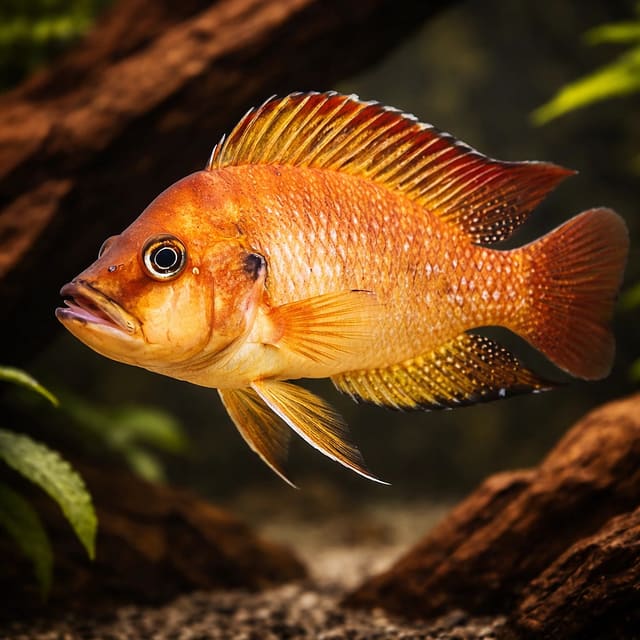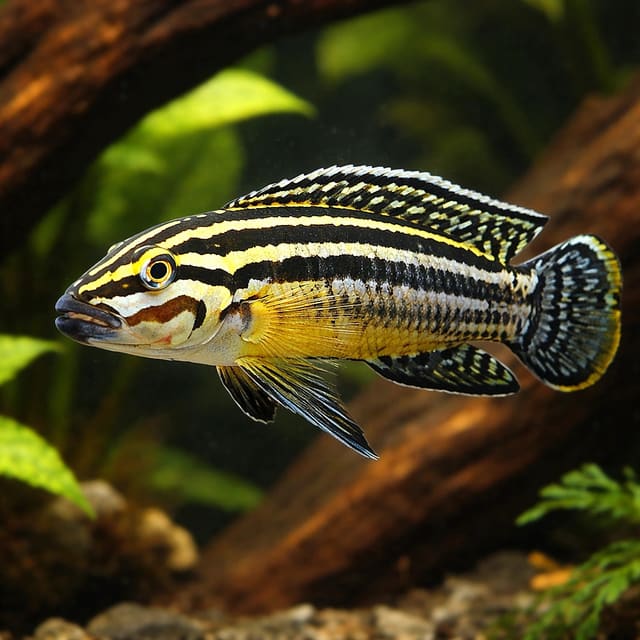
Moderate
Striped Julie (Julidochromis regani)
24–27°C · pH 7.8–9 · 75L
£8.99

A specialist Lake Tanganyika goby cichlid for hard, alkaline, highly oxygenated rockwork aquariums. Best for keepers who can provide current, grazing surfaces and a vegetable-rich diet.
Adult size is the maximum length this species reaches at full maturity (scientific sources). The livestock you receive will be younger and smaller — pick a size above for the actual shipping size. Product-photo provenance and any image-specific limitations are stated on the listing.
Eretmodus cyanostictus
Save when buying multiple fish. Each quantity is one fish; sex and pair formation are not guaranteed unless the selected variant explicitly states them.
Confirm your email, then we’ll send an availability message for this exact item if it returns within 180 days.
This request is only for this product—no newsletter or other promotions. A mail-provider retry may very rarely duplicate the same availability message. Unconfirmed addresses are removed after 48 hours. See our privacy policy.
A specialist Lake Tanganyika goby cichlid for hard, alkaline, highly oxygenated rockwork aquariums. Best for keepers who can provide current, grazing surfaces and a vegetable-rich diet.
Adult size is the maximum length this species reaches at full maturity (scientific sources). The livestock you receive will be younger and smaller — pick a size above for the actual shipping size. Product-photo provenance and any image-specific limitations are stated on the listing.
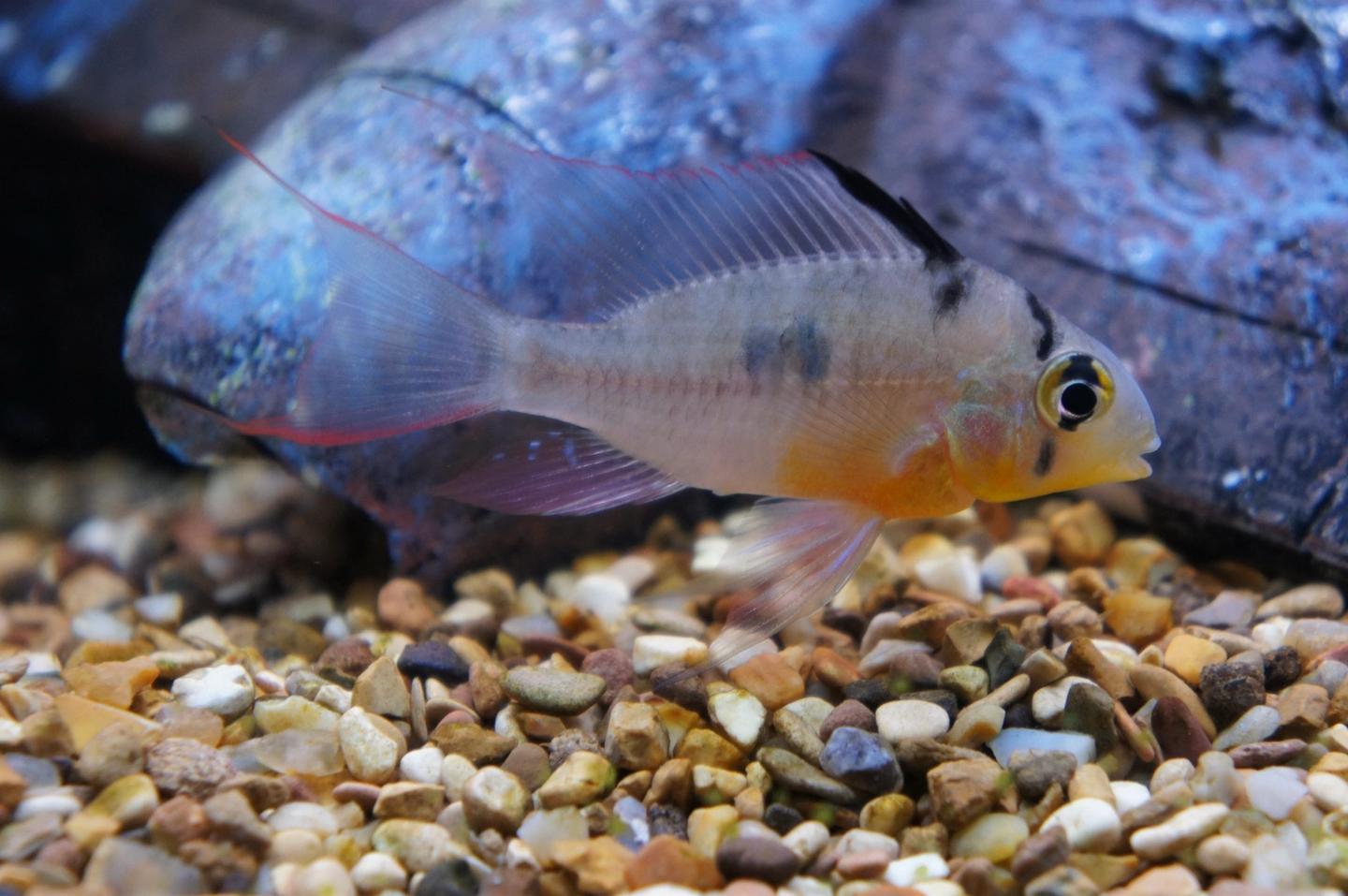
Cichlids are a family of roughly 1,800 accepted species, not one care type. Before buying, identify the exact species and source, then compare adult measurement, usable tank dimensions, social system, territory, tested water, diet and an exit plan. No family-wide minimum tank, water range or tank-mate list is safe.
Maintain these water conditions for optimal health and vibrant colors
The Kigoma Goby Cichlid is a locality/trade form of Eretmodus cyanostictus, one of Lake Tanganyika's specialised rock-grazing goby cichlids. It is not a general community fish and it should not be sold with rushed keyword copy: its real appeal is the way it lives. This compact cichlid hugs rockwork, browses surfaces, holds small territories and shows blue spotting across the head and upper body when settled. The current Shopify parent covers the size options listed on the page, from small juveniles through larger fish when available.
Use the variant selector for the current stock state. If a size is out of stock, treat the page as care and planning guidance until that variant returns; when stock is available, checkout will show the active live-fish delivery options and terms.
FishBase describes Eretmodus cyanostictus as a Lake Tanganyika species found in rocky areas, including turbulent, oxygen-rich shallow water where rocks and some sand meet. Practical Fishkeeping gives the same practical message for Tanganyikan goby cichlids: they are adapted for hard, alkaline, wave-swept shorelines, with a reduced swim bladder and teeth suited to picking food from rounded rocks. The supplier name "Kigoma" is useful because many hobbyists search locality forms, but the care requirement is the wider Tanganyika goby-cichlid requirement: mineral-rich water, strong aeration, stable filtration and rock surfaces for grazing.
This is a small cichlid with a heavy, low-slung body and a purposeful way of moving across the bottom. The verified product photo shows the bronze-brown body, pale edging, blue head spotting and barred flank pattern that make the fish more interesting up close than in a quick catalogue thumbnail. It is a fish for aquarists who enjoy behaviour as much as colour. A settled individual will work over stones, pause on ledges, dart short distances and return to grazing surfaces rather than cruising the open water like a hap or tetra.
Juveniles may look more subdued than mature fish. Sale size is not adult size, and colour can change with maturity, diet, lighting, stress and social position. A darker rockscape, clean water and steady routine usually show the fish better than a bright, busy mixed display.
Build the aquarium around Lake Tanganyika conditions. Use stable hard, alkaline water, strong biological filtration and generous aeration. A long aquarium of at least 90 cm is a sensible floor for the species, while around 200 litres or more gives a much kinder margin for territories, water stability and tank-mate planning. Use rounded stones, caves, ledges and grazing faces, leaving some sand between the rocks so the layout resembles the rocky shorelines these fish use naturally.
Do not make the tank a cramped wall of sharp rock. Sight-line breaks are useful, but the fish also needs open contact with the substrate and rock faces. Moderate to strong water movement is appropriate, provided the layout still offers calmer pockets. Keep temperature around 24-26 C, pH around 8.0-9.0, and hardness roughly 9-19 dGH or similarly buffered Tanganyika-style conditions. Stability matters more than chasing a perfect number every day.
In nature this species scrapes algae and aufwuchs from rocks. In the aquarium, keep the staple diet vegetable-led: spirulina flakes or granules, algae wafers, aufwuchs-style grazing foods and small portions of quality herbivore or Tanganyika cichlid foods. Add variety carefully with small amounts of appropriate frozen foods, but avoid making rich, meaty foods the regular staple. Goby cichlids have a reputation for digestive trouble when fed too heavily or too narrowly, so frequent small feeds and a clean tank are much safer than one large protein-heavy meal.
Kigoma Goby Cichlids are territorial specialists. They can be fascinating as a single fish or bonded pair in the right Tanganyika aquarium, but they should not be crowded with several similar goby cichlids in a small tank. Practical Fishkeeping specifically warns that goby cichlids are aggressive towards each other and other goby cichlids, so give them space to form territories and avoid forcing them into a busy rock-dweller mix.
Good companions are carefully chosen Tanganyika species that use different parts of the tank and enjoy the same water chemistry, such as suitable open-water or shell/rock-associated species in a large enough layout. Avoid soft-water community fish, delicate slow fish, fin nippers, very aggressive mbuna-style cichlids, and any fish that will compete directly for the same grazing territory. If you are new to Tanganyika cichlids, plan the whole aquarium first rather than adding this fish to an existing mixed community.
Eretmodus cyanostictus is a biparental mouthbrooder. FishBase notes that both parents brood the young in the mouth, which is one of the behaviours that makes the species so rewarding for specialist keepers. A compatible pair needs stable water, quiet territory and low stress. Do not expect breeding success in a cramped tank where the pair is constantly challenged by other territorial fish.
Choose this fish if you want a compact Tanganyika cichlid with unusual bottom-hugging behaviour, specialist rock-grazing habits and real personality. It suits experienced keepers, Tanganyika-focused aquariums and aquarists who value correct water chemistry over quick impulse buying. Skip it if your aquarium is soft, acidic, lightly filtered, heavily planted for soft-water species, or already busy with aggressive rock fish.
No reviews for this item yet. Bought one? Honest reviews only, good or bad.
What customers say about ordering from us
I have a small group of long finned mountain minnows. So was delighted to be able to order ten of this variety to increase the genetics in my tank . The ones I recieved are healthy but it’s to early to give a verdict on wether they are of a long finned type since they are small currently.
Gordon Walker · 23 Sept 2026
100% success travel and "installation". Pleased with quality of purchase. The Siamese fighter a bit "shy" so have not yet seen him at his best yet but looking good. Happy customer. GG
George E Garratt · 21 Sept 2026
Reviews of our shop, collected by Judge.me, an independent third-party review collector. Newest first.