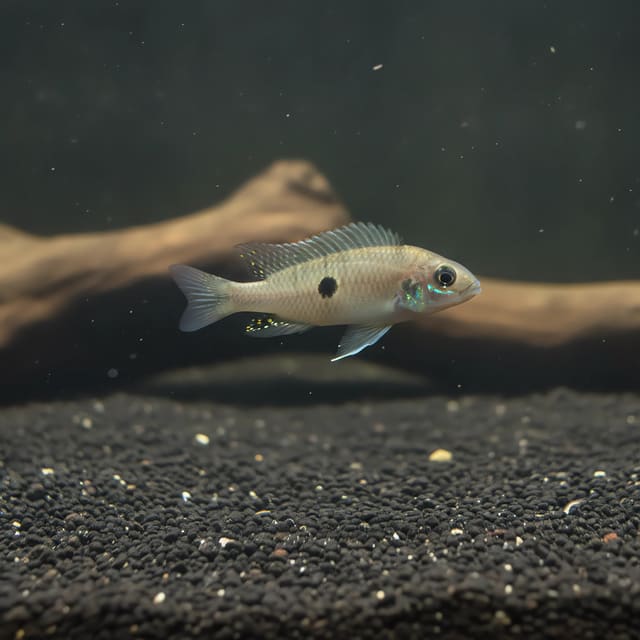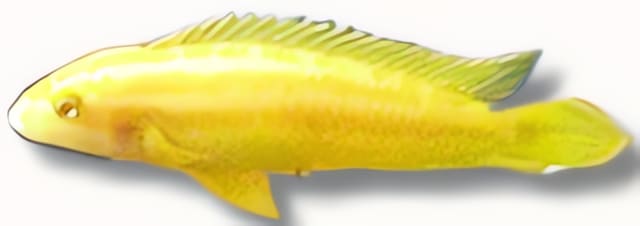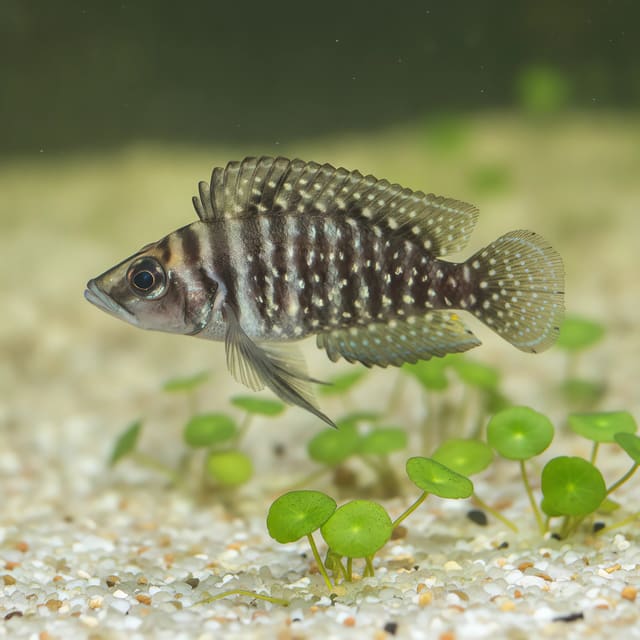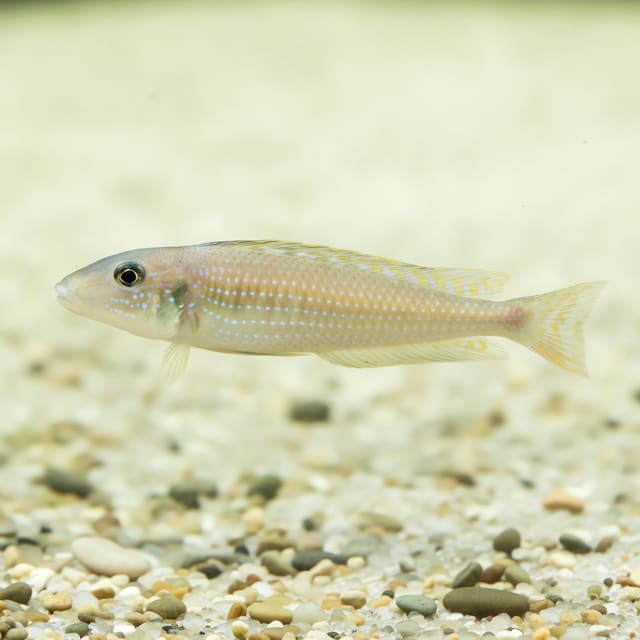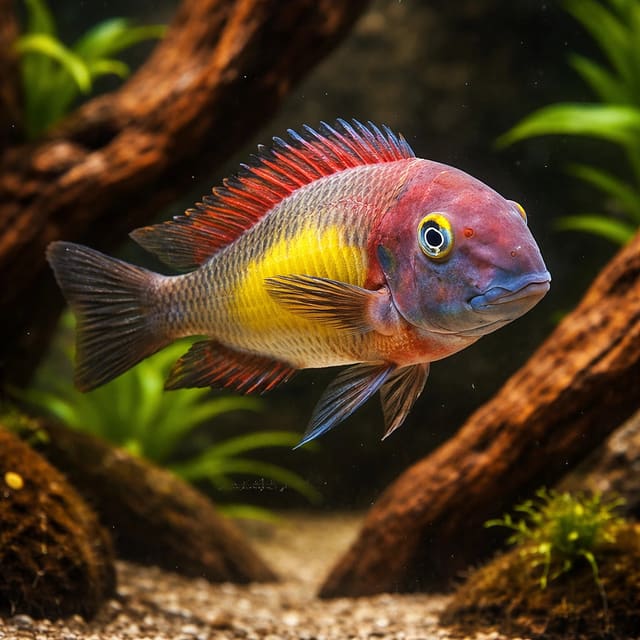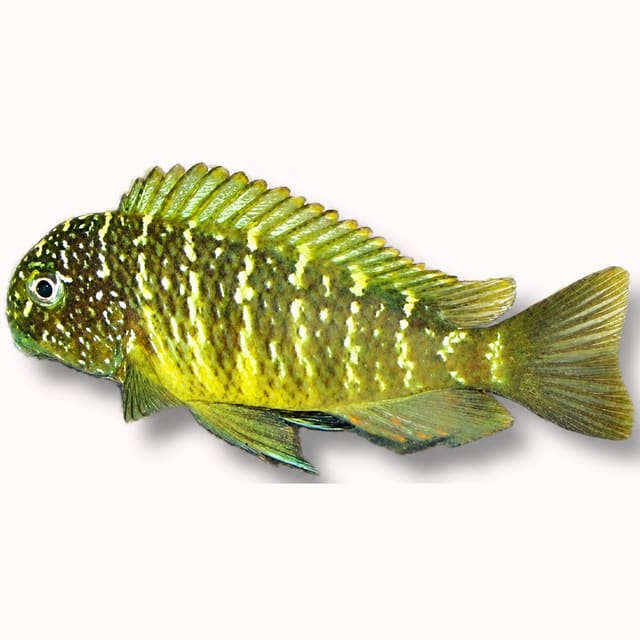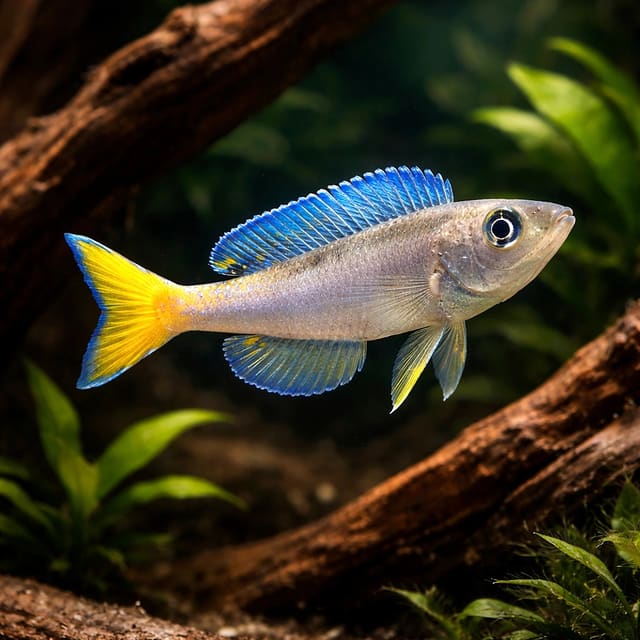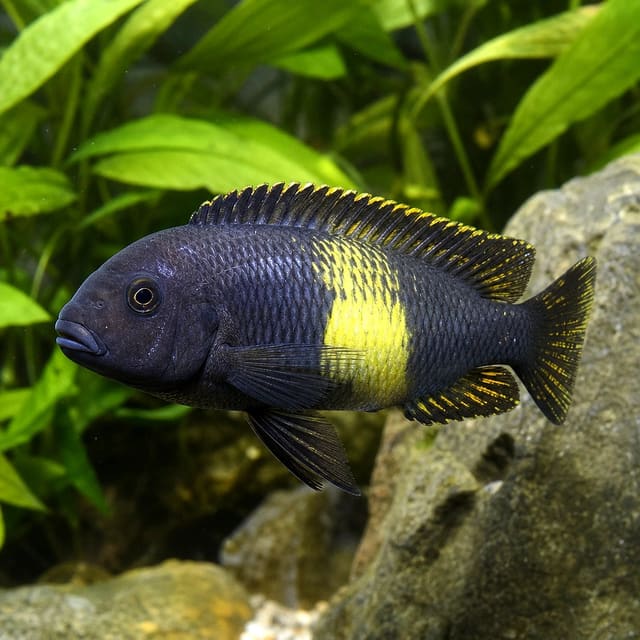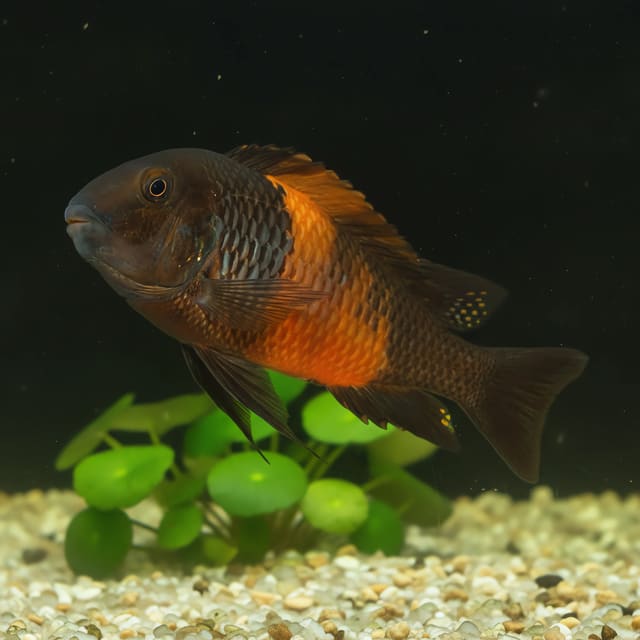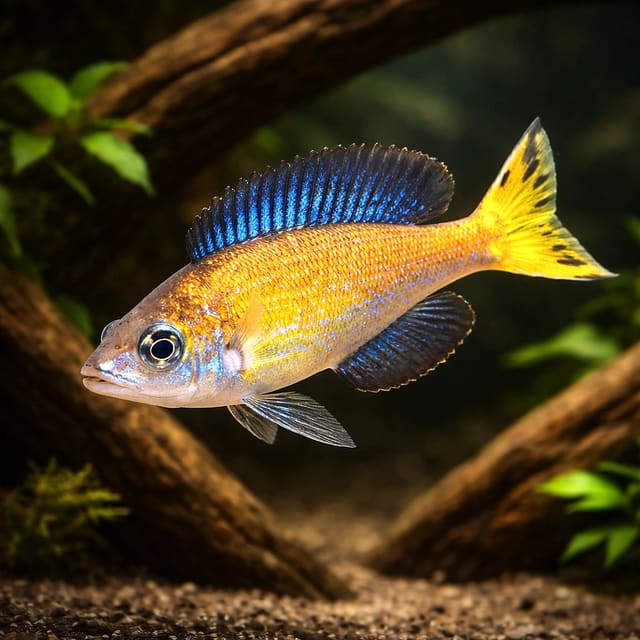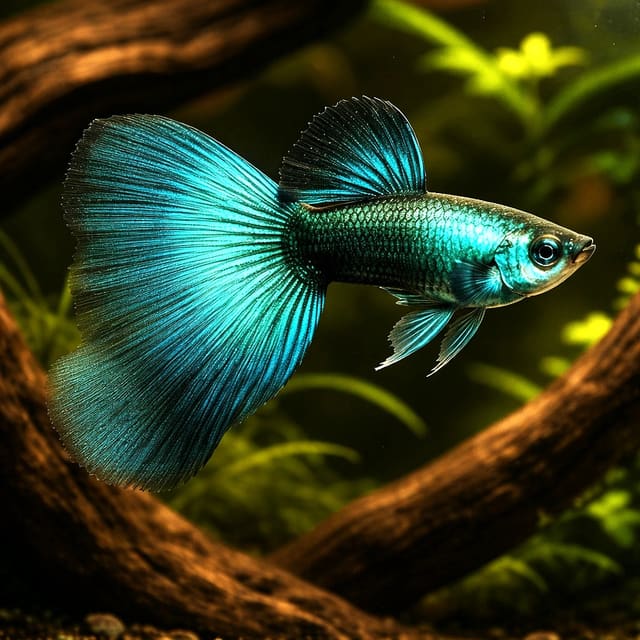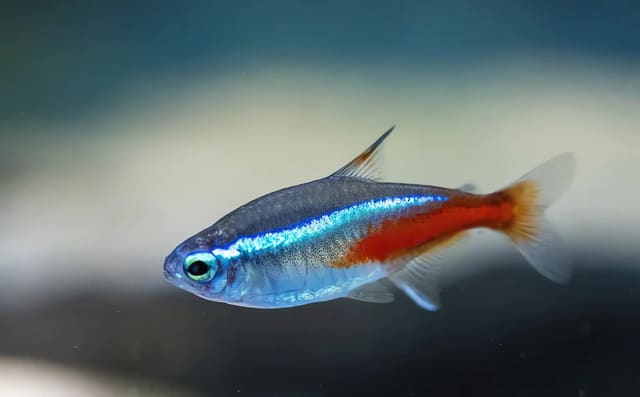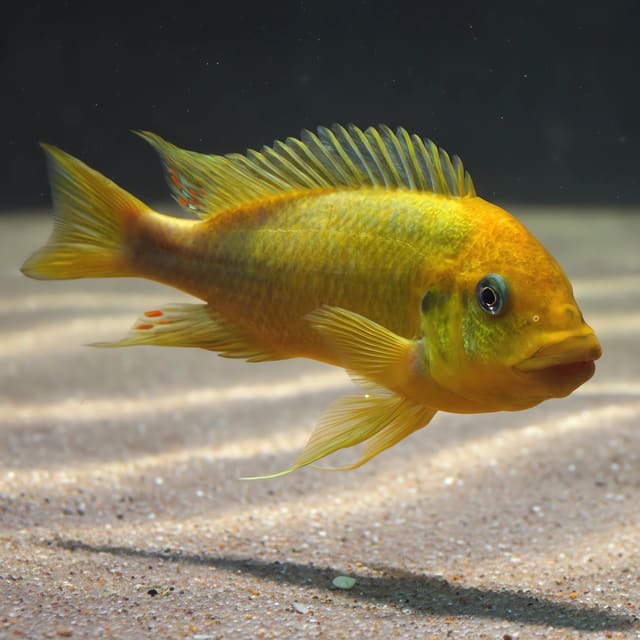
Moshi Yellow Petrochromis (Petrochromis sp.)
23–27°C · pH 8–8.6
£107.99
Photo coming soon
The size, price and care details on this page are for this listing.
The Albino Blue Neon Cichlid (Paracyprichromis nigripinnis) is a peaceful Lake Tanganyika cichlid that reaches 11 cm. We rate it intermediate: plan at least eight fish in about 205 litres, at 24–25°C—the FishBase, Seriously Fish and OATA overlap—and pH 8.0–8.6, the Seriously Fish and OATA overlap. Sold individually at a dispatch size of 4–5 cm.
Adult size is the maximum length this species reaches at full maturity (scientific sources). The livestock you receive will be younger and smaller. Product-photo provenance and any image-specific limitations are stated on the listing.
Paracyprichromis nigripinnis
Save when buying multiple fish. Each quantity is one fish; sex and pair formation are not guaranteed unless the selected variant explicitly states them.
The Albino Blue Neon Cichlid (Paracyprichromis nigripinnis) is a peaceful Lake Tanganyika cichlid that reaches 11 cm. We rate it intermediate: plan at least eight fish in about 205 litres, at 24–25°C—the FishBase, Seriously Fish and OATA overlap—and pH 8.0–8.6, the Seriously Fish and OATA overlap. Sold individually at a dispatch size of 4–5 cm.
Adult size is the maximum length this species reaches at full maturity (scientific sources). The livestock you receive will be younger and smaller. Product-photo provenance and any image-specific limitations are stated on the listing.
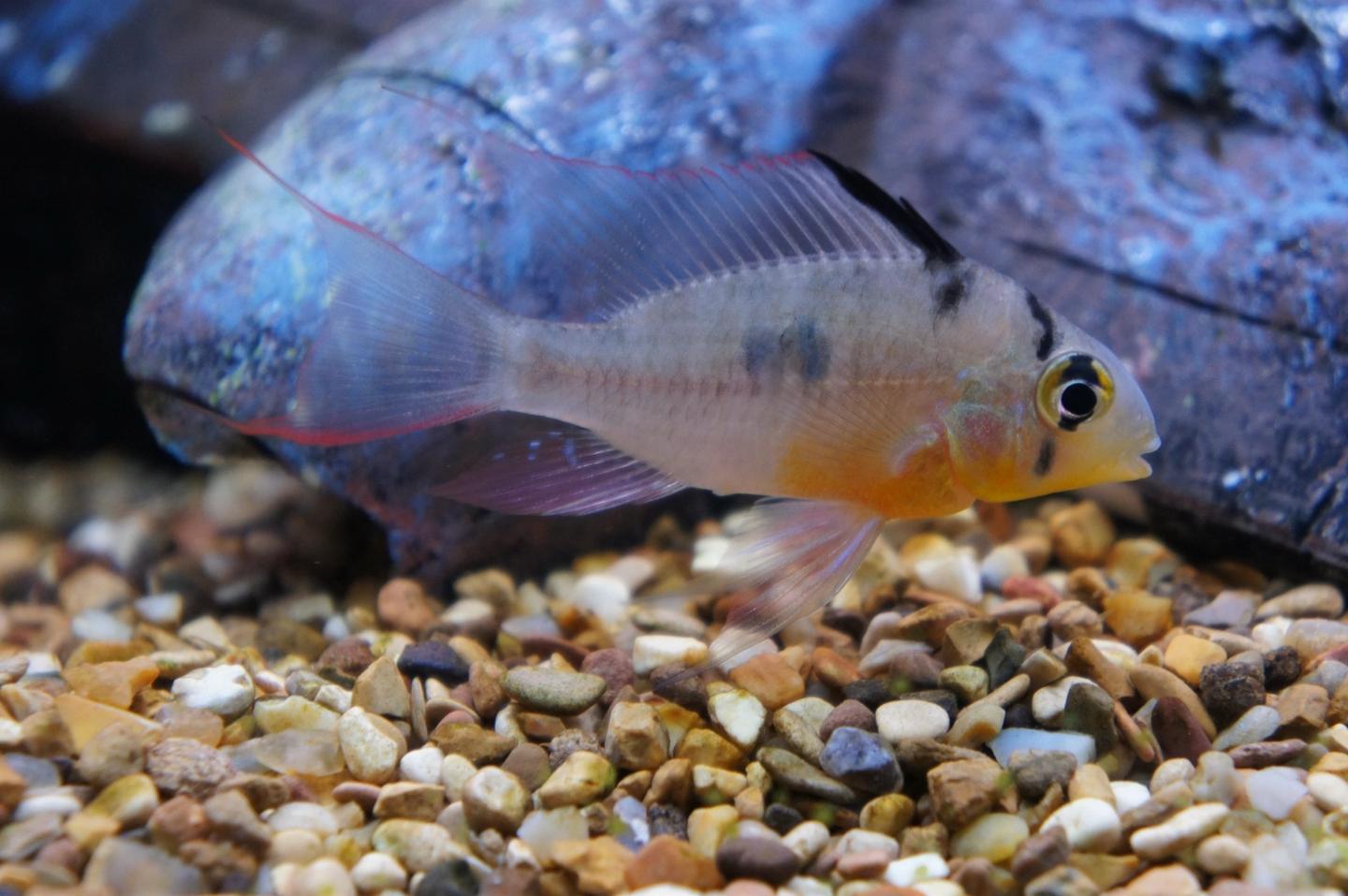
Cichlids are a family of roughly 1,800 accepted species, not one care type. Before buying, identify the exact species and source, then compare adult measurement, usable tank dimensions, social system, territory, tested water, diet and an exit plan. No family-wide minimum tank, water range or tank-mate list is safe.
Maintain these water conditions for optimal health and vibrant colors
The Albino Blue Neon Cichlid (Paracyprichromis nigripinnis) is a freshwater cichlid from Lake Tanganyika in Africa. It reaches 11 cm, and we rate it intermediate because it needs hard, alkaline water, a spacious aquarium and a shoal of at least eight. This is a peaceful, retiring fish rather than a robust choice for a mixed African-cichlid display.
FishBase records the species in the cichlid family and describes wild fish as gregarious zooplankton feeders. They form schools of several hundred fish and feed in the open water above rocky substrate. That biology explains the central aquarium decisions: keep a group, preserve open swimming room above the rocks and make small live and frozen foods the main diet.
The albino fish is an aquarium sport of P. nigripinnis. The Seriously Fish species profile describes the fish as very peaceful and retiring, with most activity in the upper levels of the aquarium. It also notes that aquarium shoals are looser than those formed by similar Cyprichromis species. Expect individuals to spread through the upper water and regroup rather than remain in one tight formation throughout the day.
A practical plan starts with an aquarium base of at least 120 × 45 cm and about 205 litres for a small shoal. Arrange substantial rocky areas with caves, overhangs and vertical faces, but retain open water above them. Keep the routine water at 24–25°C, pH 8.0–8.6 and 12–18 dGH. These narrower working values sit within the species aquarium ranges while also matching African lake cichlid guidance.
One purchase supplies one Albino Blue Neon Cichlid at a dispatch size of 4–5 cm. This is the size of the fish when dispatched, not its eventual length. Plan the aquarium, shoal and filtration around the recorded 11 cm adult size from the beginning; a smaller fish still needs a home prepared for its full growth.
Sex is guaranteed only when the selected option explicitly states male or female. This Albino Blue Neon Cichlid listing has no sex-guaranteed option.
Build the shoal deliberately because the species should be kept in a group of at least eight. A single purchase remains one fish, so the number ordered must be considered alongside any P. nigripinnis already living in the aquarium. About 205 litres with a 120 × 45 cm base suits a small shoal, not an unlimited group. If the planned group is larger, increase space rather than assuming the same aquarium will suit every number.
This albino form belongs in a carefully planned Lake Tanganyika setup. Browse the African cichlid collection for broader context, but do not treat every African cichlid as a suitable companion. Temperament, swimming area and lake of origin all matter, and the avoid list for this peaceful fish comes first.
We rate this fish intermediate because its needs must be met together: a shoal of at least eight, about 205 litres, hard alkaline water, restrained companions and food small enough for a zooplankton feeder. None of those tasks is complicated in isolation, but the aquarium must be planned around all of them rather than adapted after the fish arrive.
| Suits | Not suited to |
|---|---|
| Keepers planning at least eight fish | Single-fish housing |
| About 205 litres with a 120 × 45 cm base | Small aquariums without upper swimming room |
| Hard, alkaline Lake Tanganyika conditions | Water outside the stated temperature, pH and hardness ranges |
| Peaceful species-only or screened communities | Boisterous communities, including mbuna |
| Rockwork with caves and open water above | Layouts without retreats or open upper water |
| Small live and frozen foods as the dietary bulk | Feeding plans that do not account for its small mouth |
A species aquarium is the clearest route because it removes competition from more forceful fish and lets the shoal use its preferred upper zone. A community can work with screened Lake Tanganyika species such as Julidochromis, Neolamprologus and Altolamprologus after their temperament, space and water needs have been checked. Avoid using a general “African cichlid” label as a compatibility shortcut.
Subdued lighting and overhanging or vertical rocks also help the fish display its best colour and characteristic posture. Males often hang upside down beneath overhangs or align vertically against rock walls. Those positions can be normal for territorial males when suitable retreats are present; judge health alongside breathing, appetite, colour, condition and changes from the fish’s usual behaviour.
Use an aquarium with a base of at least 120 × 45 cm and a volume of about 205 litres for a small shoal. Seriously Fish gives those dimensions for Paracyprichromis nigripinnis and stresses that upper-level swimming space is important. The footprint and usable open water matter alongside the litre figure, so do not substitute a tall but narrow aquarium merely because its nominal volume looks similar.
Keep at least eight. This is a social minimum, not a stocking formula for fitting any number into 205 litres. FishBase records very large wild schools, while the aquarium profile recommends a shoal of at least eight and says larger groups are preferable where space permits. Assess the intended total group against the aquarium dimensions, filtration and other occupants before adding fish.
Do not interpret the 4–5 cm dispatch size as permission to begin in a smaller temporary aquarium. The adult plan applies from the outset because the biological filter, shoal structure and permanent layout all need to be ready together. Moving a growing group between unsuitable temporary setups adds another transition without changing its eventual space requirement.
Before livestock is added, prepare and mature the biological filter so it can process waste. Our first tropical aquarium guide explains the preparation sequence. Confirm that ammonia and nitrite are both zero before introducing the group, then increase the aquarium population slowly so the filter bacteria can respond to additional waste and feeding.
Keep the aquarium at 24–25°C, pH 8.0–8.6 and 12–18 dGH. The temperature is the overlap of FishBase’s 23–25°C recorded environment, the Seriously Fish aquarium range of 24–27°C and OATA’s 23–27°C African lake cichlid range. The pH and general hardness are the overlap of Seriously Fish’s pH 7.5–9.0 and 8–25 dGH with OATA’s pH 8.0–8.6 and 12–18 dGH.
OATA’s African lake cichlid sheet sets water targets for African lake cichlids as a group. It also gives carbonate hardness of 10–15 dKH, ammonia at zero, nitrite at zero and nitrate no more than 20 mg per litre above the normal tap-water level. Use those waste readings as firm water-quality targets while keeping the species within the narrower working temperature, pH and general-hardness values above.
| Measure | Working target |
|---|---|
| Temperature | 24–25°C |
| pH | 8.0–8.6 |
| General hardness | 12–18 dGH |
| Carbonate hardness | 10–15 dKH |
| Ammonia | 0 mg/l |
| Nitrite | 0 mg/l |
| Nitrate | Up to 20 mg/l above the normal tap-water level |
Measure the source water as well as the aquarium so that a water change does not introduce an unexpected difference. The water chemistry guide explains what each reading means, and the water matcher helps compare measured aquarium values with these targets.
Test at least weekly and record the results consistently. A stable reading within range is more useful than reacting to one number without checking the rest. If ammonia or nitrite is detectable, pause further stocking and investigate filtration and waste before adding more fish. Maintain the shoal in water that already meets its requirements rather than trying to shift unsuitable water after introduction.
Run a well-established biological filter at all times. The RSPCA explains that aquarium filters process toxic ammonia: beneficial bacteria convert ammonia into nitrite and then into the safer nitrate. This makes filter maturity and maintenance central to the welfare of a shoaling cichlid, not an optional equipment upgrade.
For an aquarium of about 205 litres, Seriously Fish recommends turnover of four to five times the aquarium volume per hour. That corresponds to a filter rated at 820–1025 litres per hour. OATA also recommends oversized filtration and vigorous aeration for African lake cichlid aquariums, helping maintain water quality and dissolved oxygen as the fish population and feeding load increase.
For a room around 20°C, Seriously Fish estimates roughly 100–175 W divided across two heaters to maintain 24–27°C in a tank of this size. The working target for this fish is 24–25°C. Select and position equipment so that the whole aquarium remains within that range, then confirm the actual temperature by measurement rather than relying only on a heater setting.
Do not use apparent clarity as the only measure of water quality. Ammonia and nitrite can threaten fish even when the aquarium looks clean, so regular testing remains necessary. A working filter, suitable turnover, aeration and measured water values form one system; none replaces the others.
Make suitably small live and frozen foods the bulk of the diet. FishBase records wild Paracyprichromis nigripinnis feeding on zooplankton in open water above rocky substrate, while Seriously Fish says live and frozen varieties should form most of its aquarium diet. Choose pieces that its small mouth can take easily and distribute them where the upper-level shoal can feed.
Feed twice a day, offering only what the fish can finish within a few minutes. That schedule and portion rule come from OATA’s African lake cichlid routine. It limits waste while leaving enough time to check whether every member of this retiring shoal is getting food. Stop adding more when food remains after the feeding period.
If one fish loses interest while others continue feeding, check its breathing, posture and condition, then test ammonia, nitrite, nitrate, temperature and pH. Reduced intake is one of OATA’s warning signs and can be an early indication that the fish or its environment needs attention.
Do not compensate for a missed fish by adding a large general portion. Place appropriately small food where that individual can reach it and observe the result. This protects the water from excess food while addressing the species’ combination of a small mouth and retiring behaviour.
Change 25% of the water at least once every week. Treat replacement tap water with conditioner to remove harmful chlorine or chloramine before adding it to the aquarium. Keep the replacement water compatible with the aquarium’s 24–25°C, pH 8.0–8.6 and hard-water conditions so maintenance preserves stability rather than creating a sudden shift.
Test ammonia and nitrite at least weekly and keep both at zero. Check nitrate against the limit of no more than 20 mg per litre above the normal tap-water level. Record temperature, pH, general hardness and carbonate hardness alongside those waste readings so a gradual change can be recognised before it moves outside the working targets.
| If you notice | Action |
|---|---|
| Surface hanging, bottom sitting or erratic swimming | Test the water and compare the behaviour with the fish’s normal upper-level swimming |
| Faster or slower gill movement | Check water quality, filtration and aeration |
| Darker or paler colour | Review lighting, retreats, companions and water readings |
| More hiding or a temperament change | Check for boisterous companions and competition around caves |
| White spots, fluffy growths, damaged fins or missing scales | Test the water and check the fish’s condition before choosing any treatment |
| Weight change or reduced feeding | Observe the next small meal and confirm that the fish can reach suitable food |
Healthy fish should have clear, bright eyes, intact scales and undamaged fins, without ulcerations or bumps. Use each feeding period to notice appetite and group behaviour, then make the weekly maintenance session a closer physical and water-quality check. A change from the individual fish’s normal pattern matters even when another member of the shoal appears unaffected.
If you are concerned about a health change, test the water first and contact us for further guidance. Report the readings, aquarium size, group number, tank mates, feeding response and the change observed. Do not choose a disease treatment from appearance alone; assess water quality and the fish’s condition first.
Expect the shoal to spend much of its time in the upper part of the aquarium. Males form territories under overhangs where these are available and can often be seen hanging upside down beneath them or vertically against rock walls. These characteristic positions should be judged alongside breathing, appetite and the fish’s usual movement rather than treated as a problem by themselves.
Provide subdued lighting. Seriously Fish notes that this deep-water cichlid shows much better colour under subdued lighting and will rapidly lose its best colour when kept under bright lighting, without suitable retreats or alongside boisterous fish. If colour fades, review those environmental pressures together with the measured water values.
The species is gregarious, but its aquarium shoal is looser than that of similar Cyprichromis. Do not expect all eight or more fish to maintain a tight formation continually. Instead, look for normal use of the shared upper water, access to retreats and a consistent feeding response across the group.
Males tend to grow larger, become more colourful and develop longer caudal extensions than females, but these tendencies do not change the terms of the offer. Plan the aquarium around an 11 cm adult and a mixed, unsexed group rather than building the stocking plan around an assumed sex from colour or size.
The delivery and Live Arrival Guarantee policy explains the packing and arrival process. Fish are hand-bagged in pure oxygen and placed in an insulated poly box, with a heat pack when the weather calls for one. A licensed live-animal courier carries the parcel, and someone must be at the address to receive it.
Prepare the aquarium before the parcel arrives. Confirm that ammonia and nitrite are zero and that the water is already at 24–25°C, pH 8.0–8.6 and 12–18 dGH. OATA advises increasing fish numbers slowly because the beneficial bacteria in a mature filter must respond whenever livestock and feeding increase.
Keep the unboxing recording and order number. If anything has gone wrong, contact us on the day the fish arrive with the order number and continuous video showing the sealed parcel, the opening and the fish inside the sealed bag. Those items allow a Live Arrival Guarantee claim to be assessed promptly.
After release, use the species’ normal behaviour as the comparison point. It may seek rocky cover or remain retiring, but water quality, breathing and condition still need attention. Do not add forceful companions during the same transition; the aquarium should already have the planned shoal structure, open upper water and appropriate retreats.
A species aquarium is the preferred choice for the Albino Blue Neon Cichlid. It gives a shoal of at least eight access to the upper swimming zone, caves and overhangs without competition from fish that are more active or assertive. This approach also makes it easier to check whether every small-mouthed, retiring fish is feeding.
Seriously Fish names Julidochromis, Neolamprologus and Altolamprologus species as possible tank mates. Before combining them, compare the chosen species’ adult size, temperament, water needs, territory and swimming area with this aquarium. The tank must still provide about 205 litres for a small P. nigripinnis shoal, and another species adds its own space and filtration demands.
When stocking a Lake Tanganyika community, OATA advises adding the more peaceful species first, so introduce the P. nigripinnis shoal before any screened companion. OATA also advises that rearranging décor can reduce aggression as fish establish new territories, but any rearrangement must retain the caves, overhangs, vertical rock faces and open upper water required by P. nigripinnis.
For invertebrates or fish outside the named genera, treat compatibility as a case-by-case decision. Their suitability remains uncertain until water, temperament, adult space and aquarium-area use have been assessed together. Contact us with the aquarium dimensions, measured water values, complete stock list and proposed group numbers for a stocking assessment.
Avoid boisterous species such as mbuna. Seriously Fish specifically warns against keeping P. nigripinnis with them, and OATA generally advises against mixing Malawi and Tanganyikan cichlids because their temperaments and behaviours differ. Hard, alkaline water alone is therefore not enough to make mbuna compatible with this retiring fish.
Avoid Cyprichromis species because they occupy similar aquarium areas. They inhabit the same areas of the aquarium, so matching water chemistry does not make them compatible. Preserve the upper zone for the Albino Blue Neon Cichlid shoal.
Do not mix different colour morphs of Paracyprichromis nigripinnis. Seriously Fish says the morphs will hybridise in aquaria. Keep the albino form separate from other colour forms rather than treating matching species identity as permission to combine them.
| Compatibility decision | Action |
|---|---|
| Another albino P. nigripinnis | Count it towards the shoal after checking total space |
| Another colour morph | Avoid mixing because the forms will hybridise |
| Mbuna or another boisterous fish | Avoid |
| Cyprichromis | Avoid because it uses similar aquarium areas |
| Julidochromis, Neolamprologus or Altolamprologus | Consider only after screening the exact species and aquarium |
| Any other fish or invertebrate | Assess individually; do not assume compatibility |
Watch the established community for increased hiding, colour loss, changed aggression, abnormal swimming or reduced feeding. Those signs can indicate that a peaceful fish is under pressure even without visible injury. Test the water as well as reviewing companions, because behavioural and environmental problems can occur together.
When adding fish to an existing community, increase numbers slowly so the biological filter can respond. Do not solve a compatibility problem by crowding this species beyond the aquarium’s planned capacity. Start from a shoal of at least eight in about 205 litres, and add space and filtration for every other occupant.
It reaches 11 cm as an adult; plan its aquarium around that adult length rather than the 4–5 cm dispatch size.
Use a base of at least 120 × 45 cm and about 205 litres for a small shoal; Seriously Fish gives those species-level planning figures, and swimming room above rockwork is important.
Keep a shoal of at least eight; Seriously Fish recommends that minimum, while FishBase records the wild species forming much larger schools.
We rate it intermediate because it needs a shoal of at least eight, about 205 litres, hard alkaline water, restrained companions and small live or frozen foods.
Feed suitably small live and frozen foods as the dietary bulk, twice daily in portions finished within a few minutes; FishBase records wild fish eating zooplankton.
Keep it at 24–25°C—the FishBase, Seriously Fish and OATA overlap—and pH 8.0–8.6 with 12–18 dGH, the Seriously Fish and OATA overlap.
Seriously Fish describes it as very peaceful and retiring; its main compatibility risk is being overwhelmed by boisterous fish or species using the same upper swimming area.
A species aquarium is preferred; possible screened companions are Julidochromis, Neolamprologus and Altolamprologus, while mbuna, Cyprichromis and other colour morphs should be avoided.
Tropical Fish Co hand-packs it in pure oxygen inside an insulated box for a licensed live-animal courier; receive it in person, film from the sealed parcel, inspect it that day and float the bag for 20–30 minutes before release.
No reviews for this item yet. Bought one? Honest reviews only, good or bad.
What customers say about ordering from us
Easy website plenty of info on fish your buying great to pick a time slot
TRACEY DURRANT · 7 Oct 2026
Got some lovely fish thank you
Kevin Mackie · 7 Oct 2026
Reviews of our shop, collected by Judge.me, an independent third-party review collector. Newest first.