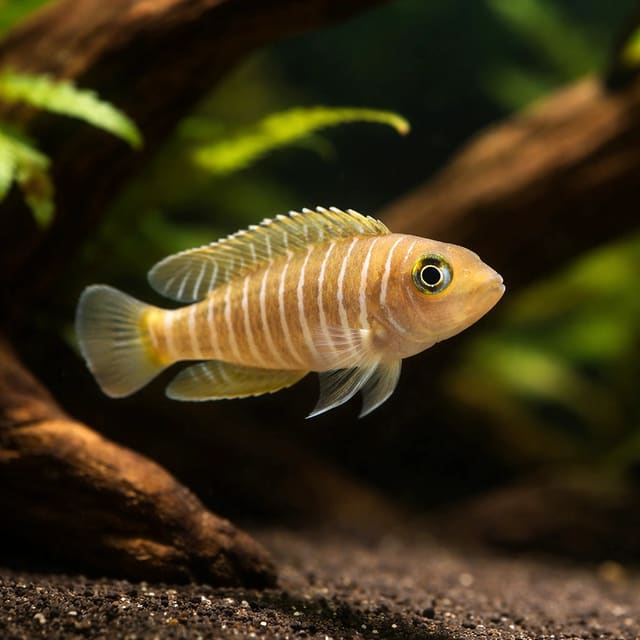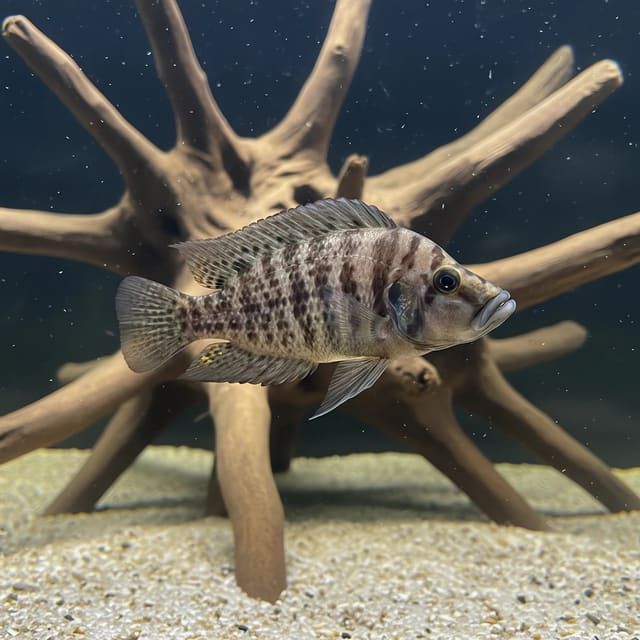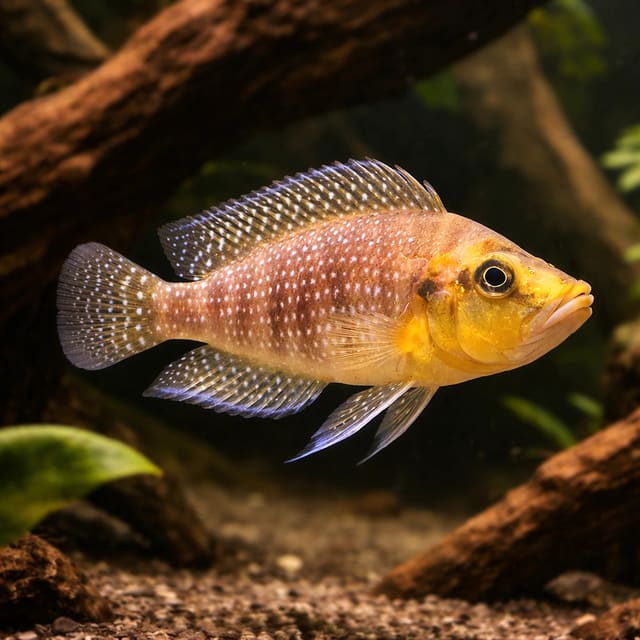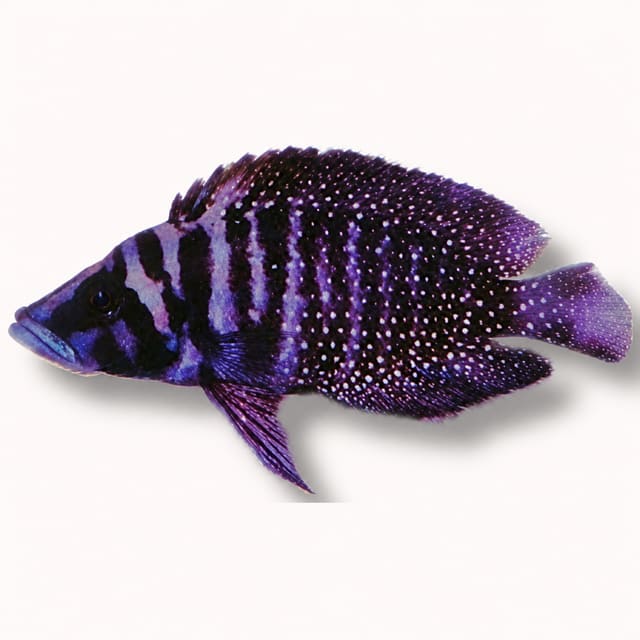
Pearly Compressiceps Zaire (Altolamprologus calvus) – Black Fin
24–27°C · pH 7.5–9
£23.99

A peaceful, open-water Lake Tanganyika cichlid, the Katete Jumbo Sardine Cichlid (Cyprichromis leptosoma) is a graceful schooling species for spacious 200L+ aquariums. Best kept in a group of 10 or more in hard, alkaline water. Order online with tracked UK delivery and a live arrival guarantee.
Adult size is the maximum length this species reaches at full maturity (scientific sources). The livestock you receive will be younger and smaller. Product-photo provenance and any image-specific limitations are stated on the listing.
Cyprichromis leptosoma
Shoaling fish: kept in a group they feel safer, stay calmer and show their best colour.
Confirm your email, then we’ll send an availability message for this exact item if it returns within 180 days.
This request is only for this product—no newsletter or other promotions. A mail-provider retry may very rarely duplicate the same availability message. Unconfirmed addresses are removed after 48 hours. See our privacy policy.
A peaceful, open-water Lake Tanganyika cichlid, the Katete Jumbo Sardine Cichlid (Cyprichromis leptosoma) is a graceful schooling species for spacious 200L+ aquariums. Best kept in a group of 10 or more in hard, alkaline water. Order online with tracked UK delivery and a live arrival guarantee.
Adult size is the maximum length this species reaches at full maturity (scientific sources). The livestock you receive will be younger and smaller. Product-photo provenance and any image-specific limitations are stated on the listing.
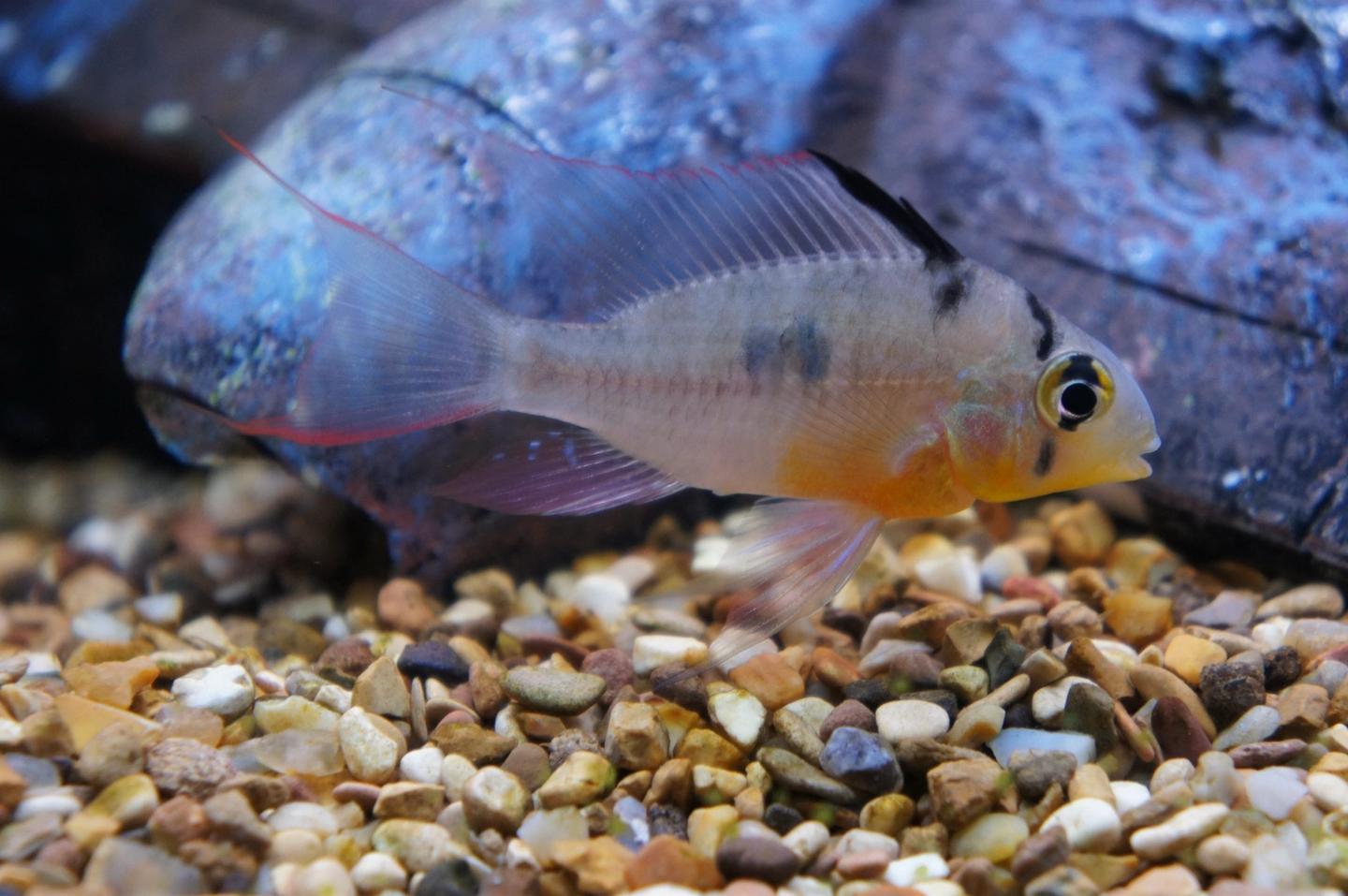
Cichlids are a family of roughly 1,800 accepted species, not one care type. Before buying, identify the exact species and source, then compare adult measurement, usable tank dimensions, social system, territory, tested water, diet and an exit plan. No family-wide minimum tank, water range or tank-mate list is safe.
Maintain these water conditions for optimal health and vibrant colors
If you want a Lake Tanganyika cichlid that behaves very differently from the usual rock-hugging species, the Katete Jumbo Sardine Cichlid is a standout choice. Cyprichromis leptosoma "Katete Jumbo" is an elegant open-water schooling cichlid prized for its peaceful nature, shimmering body, and constant mid-to-top level activity. For aquarists searching for tropical fish for sale UK, this species offers cichlid character without the relentless aggression seen in many Rift Lake fish. Adults reach around 12 cm, can live up to 8 years, and are best described as moderate care because they need stable alkaline water, excellent oxygenation, and the confidence that comes from a proper group.
This is one of the most rewarding African cichlid UK options for aquarists who enjoy natural behaviour. A well-kept group shows courtship displays in open water, loose shoaling, and a clear social structure. The Katete Jumbo is ideal for a spacious Tanganyika display and can work in a carefully planned community cichlid UK setup with the right companions. If you have been comparing freshwater cichlid UK options or browsing cichlid for sale UK listings, this peaceful open-water species brings movement, colour, and genuine Tanganyika authenticity to a large aquarium. If you want to buy tropical fish UK-wide, you can order the Katete Jumbo here with tracked delivery and a live arrival guarantee.
For broader background on keeping Rift Lake cichlids well, see our cichlid care guide.
Cyprichromis leptosoma belongs to a fascinating group of pelagic Lake Tanganyika cichlids that spend much of their time in open water rather than defending caves or rocky territories. In the aquarium hobby, the Katete Jumbo form is especially valued for its larger size, graceful schooling behaviour, and suitability for a carefully planned Tanganyika display. It sits alongside other admired open-water species such as the Jumbo Yellow Sardine Cichlid - Cyprichromis, Black Smallscale Cyprichromis - Cyprichromis Microlepidotus, and Kasai Smallscale Cyprichromis - Cyprichromis Microlepidotus.
The Katete Jumbo Sardine Cichlid comes from Lake Tanganyika, East Africa, one of the oldest, deepest, and most mineral-rich freshwater lakes in the world. In the wild, these fish inhabit open-water zones near rocky shorelines, where they feed on plankton and tiny suspended food items carried by currents. This natural setting explains much of their aquarium care: they need clean, well-oxygenated water, room to move, and the security of a group. The most important point of any katete jumbo sardine cichlid care guide is that this is not a solitary cichlid and not a fish for cramped tanks.
Wild water chemistry in Tanganyika is alkaline and hard, so the katete jumbo sardine cichlid water conditions you provide should reflect that. Aiming for a pH of 7.8 to 9.0 and hardness of 10-25 dGH helps support long-term health, colour, and breeding behaviour. The katete jumbo sardine cichlid ideal temperature is 24-27°C, which closely matches the stable tropical conditions of its native lake. Because the lake is exceptionally clear and chemically stable, sudden swings in pH, temperature, or dissolved waste are far more dangerous than many beginners expect.
When choosing this fish, its natural history matters more than convenience. It is not interchangeable with soft-water community fish, nor is it a good substitute for species sold in general mixed displays. If you are comparing the Katete Jumbo against other Tanganyika cichlids, think about whether you want open-water schooling behaviour or a more territorial rock-dwelling setup.
Mimicking the natural habitat of open-water Tanganyika cichlids improves both health and behaviour. In practice, that means hard alkaline water, broad swimming space, strong gas exchange at the surface, and a social group large enough that no single fish absorbs all the attention.
The best aquarium for this species is long rather than tall, with open swimming room across the front and upper levels. The katete jumbo sardine cichlid minimum tank size is 200 litres, but that is a true minimum for a young or modest group. For adult fish, a larger footprint is better, especially if you want a stable social group and compatible Tanganyika tank mates. For katete jumbo sardine cichlid tank size, we usually recommend starting at 240-300 litres for a proper display. This is very much a katete jumbo sardine cichlid for large tank, not a compact community aquarium species.
A group of 10 or more is strongly recommended, and that directly affects stocking decisions. The natural katete jumbo sardine cichlid school size in captivity should be large enough to spread social pressure and encourage confident movement. A small group often becomes nervous, while a proper shoal looks active and coordinated. This species is not the best match for a first small aquarium; it needs room first, then numbers.
The katete jumbo sardine cichlid temperature should remain stable between 24 and 27°C, with around 25-26°C ideal for display and general maintenance. Stability matters more than chasing an exact number. Hard alkaline water is essential, and regular testing is wise if your tap water is naturally soft.
Use oversized biological filtration and good surface movement. These fish are active, feed in the water column, and appreciate high oxygen levels. A strong external filter is ideal for a 200L+ Tanganyika aquarium. Mechanical filtration should remove fine waste before it breaks down, and weekly water changes are not optional.
For a Tanganyika setup, consider a robust external canister filter, a dependable aquarium heater, and mineral-supportive substrate choices. If you are also exploring other lake species, the same equipment approach works well for the Mutondwe Compressiceps - Altolamprologu and Blue Mpimbwe Humphead Cichlid - Cyphotilapia.
Fine sand or smooth light gravel works best. These fish spend most of their time in open water, but a Tanganyika aquarium still benefits from rock structures at the back or ends to create visual security and define zones for other species. Leave the centre open for swimming. The question of the katete jumbo sardine cichlid for planted aquarium comes up often, and the honest answer is: only sometimes. They are not plant-destroyers, but true Tanganyika conditions do not suit every plant. Tough species such as Vallisneria can work if lighting and minerals are balanced. If you want a heavily planted soft-water display, choose a different fish.
Moderate lighting is usually best. Too much harsh light in a sparsely decorated tank can make schooling fish nervous. A 7-9 hour photoperiod suits most displays. Good lighting helps show off the metallic sheen of this species, especially when contrasted against darker rockwork and open blue water.
Always cycle the aquarium for 4-6 weeks before adding Tanganyika cichlids. These fish do badly in immature systems, and even low ammonia or nitrite can trigger stress, loss of colour, and erratic schooling.
The katete jumbo sardine cichlid diet is best described as omnivorous with a strong plankton-feeding bias. In the wild, they pick tiny suspended prey from open water, so in captivity they do best on small, high-quality foods that stay in the water column long enough to be taken naturally. Good staples include quality cichlid flakes, small granules, cyclops, daphnia, and baby brine shrimp. The aim of good katete jumbo sardine cichlid feeding is not heavy bulk feeding but frequent, clean, digestible meals.
A practical routine is two small meals per day. Offer only what the group can consume in a minute or two. This species is active and eager at feeding time, but overfeeding quickly harms water quality. That matters even more in hard alkaline tanks, where a sudden rise in dissolved waste can stress the entire group. Planning the diet before purchase gives the best results.
Use a high-quality flake or micro-pellet as the base diet. Small particle size is important because these fish are built for midwater feeding, not crushing large sinking pellets. If you want to buy fish online and set them up properly from day one, have suitable foods ready before delivery.
Frozen cyclops, baby brine shrimp, and fine krill-based foods help improve condition and encourage stronger colour and courtship. These are especially useful if you are conditioning a katete jumbo sardine cichlid breeding pair or trying to trigger katete jumbo sardine cichlid breeding behaviour in a group.
Avoid oversized pellets, fatty meats, and foods intended for large bottom-feeding carnivores. These fish are small midwater planktivores and should not be fed like large predatory species. Their feeding is easy once the tank is right, but the tank itself is not beginner-small.
| Time | Food | Amount |
|---|---|---|
| Morning | Quality flake or micro granule | Small portion eaten in 60-90 seconds |
| Evening | Frozen cyclops or baby brine shrimp | Light feed, no leftovers |
If you enjoy feeding active open-water Tanganyika fish, this closely related species thrives on a similar small-particle diet and suits comparable feeding routines.
Another elegant midwater Tanganyika cichlid that benefits from frequent small meals of planktonic frozen and prepared foods.
Overfeeding causes ammonia spikes, excess nitrate, and falling water quality. With Tanganyika cichlids, poor water often shows up first as clamped fins, faded colour, or nervous darting rather than obvious disease.
The Katete Jumbo Sardine Cichlid has a slim, torpedo-shaped body built for life in open water. Adults reach about 12 cm, with males often appearing longer and more refined due to fin extension and stronger colour. The body is laterally compressed, giving the fish a sleek profile when viewed head-on and a graceful, almost hovering look when the group turns together.
Colour varies with mood, hierarchy, and lighting, but the overall effect is clean, metallic, and elegant rather than heavy or blotchy. Males usually show the best contrast, with more vivid body sheen and stronger fin colour. Females are typically subtler and slightly rounder in build. The fish's appearance improves dramatically in a proper group: single fish rarely show the same confidence or colour.
To enhance colour, use a dark background, moderate lighting, and a varied diet rich in quality proteins. The best displays often combine open water in front with darker rockwork behind, which makes the fish stand out as they school near the surface and upper midwater.
The great appeal of this species is that it is a peaceful cichlid with a true schooling instinct. That makes it one of the better choices for a katete jumbo sardine cichlid community tank, provided the setup is still Tanganyika-focused. Its katete jumbo sardine cichlid behaviour is active, social, and generally non-destructive, but it can be intimidated by rough tank mates. When planning a tank for the katete jumbo sardine cichlid for community tank role, think "calm, compatible, lake-matched" rather than generic mixed tropicals.
The best tank mates for katete jumbo sardine cichlid are peaceful or moderately assertive Tanganyika species that occupy different zones. Good options include shell dwellers, smaller sand sifters, and carefully chosen rock dwellers that will not harass the open-water group. Strong candidates include the Utinta Black-Chinned Xenotilapia - Enantiopus Melanogenys for the lower levels, and selected Altolamprologus such as the Gold Compressiceps - Altolamprologu, Black Zaire Calvus - Altolamprologu, and Mutondwe Compressiceps - Altolamprologu in larger, carefully structured aquariums. Other open-water companions can include the Jumbo Yellow Sardine Cichlid - Cyprichromis or Kasai Smallscale Cyprichromis - Cyprichromis Microlepidotus where space allows.
Whether a species is one of the katete jumbo sardine cichlid compatible fish should always be judged through water chemistry and temperament. This is not a fish to mix casually with soft-water tetras, random livebearers, or hyper-aggressive mbuna, which generally need very different water conditions.
Avoid aggressive mbuna, large predatory cichlids, and any species likely to chase or pin the group into corners. Also avoid fish that need soft, acidic water. This species should not be treated as a generic add-on to a mixed tank. It needs a deliberate stocking plan.
In a 240-litre tank, a sensible starting point is a group of 10-12 Katete Jumbo Sardine Cichlids with one compatible bottom or rock-dwelling Tanganyika species. In a 300-litre or larger aquarium, you can create a more layered community cichlid UK display with open-water Cyprichromis, a sand-area species, and a carefully selected cave-associated species. This is where the fish really shines as a katete jumbo sardine cichlid tank mates candidate.
Snails are usually fine. Shrimp are not ideal in most Tanganyika cichlid systems, particularly if they are small enough to be viewed as food, so a shrimp-focused tank is a very different stocking path from a Tanganyika cichlid aquarium.
| Species | Compatible? | Notes |
|---|---|---|
| Utinta Black-Chinned Xenotilapia - Enantiopus Melanogenys | Yes | Peaceful Tanganyika species using lower areas of the tank |
| Gold Compressiceps - Altolamprologu | Caution | Possible in larger tanks with structure and careful observation |
| Aggressive Mbuna | Avoid | Too boisterous and likely to stress open-water schooling fish |
Always quarantine new arrivals for 2-4 weeks before adding them to a Tanganyika display. Even peaceful fish can introduce parasites that spread quickly through active schooling species.
Katete jumbo sardine cichlid breeding is moderate rather than easy, but very achievable in a settled species group. This fish is a maternal mouthbrooder. Males display in open water, females collect fertilised eggs, and the brood is carried in the mouth until release. The best route to success is not forcing a pair too early, but maintaining a healthy group and letting natural pairing occur. Breeding success depends far more on group dynamics and water quality than on anything else.
A dedicated breeding group in a 240-litre or larger tank works best. Keep water hard, alkaline, and very clean. Condition fish with varied small foods and avoid overcrowding with incompatible species. If you are trying to establish a katete jumbo sardine cichlid breeding pair, remember that natural pairing is often less fixed than in substrate-spawning cichlids. A group with several females per male is more natural.
Males intensify in colour and display in open water, often selecting a loose area rather than a fixed cave or rock. Females respond when in condition, and spawning can be surprisingly subtle if you are used to cave spawners. The fish's open-water courtship is one of the most interesting parts of this species.
Because the female mouthbroods, external egg care is minimal. The challenge is avoiding stress that causes premature swallowing or spitting. Once released, fry are large enough to accept newly hatched brine shrimp and fine powdered foods. Gentle filtration and spotless water are vital. Many breeders separate holding females late in the process, but only if they can do so without excessive stress.
Common issues include too-small groups, unstable water, overhandling females, and overstocked tanks. Stability is the single most important factor in raising a brood successfully.
For the best fry survival, condition the group heavily on small frozen planktonic foods for 2-3 weeks, then perform larger cool-matched water changes to simulate a fresh influx. If moving a holding female, transfer her only after lights-out and provide a calm tank with identical water chemistry.
If you are deciding between open-water Tanganyika cichlids, comparison matters. The Katete Jumbo is ideal for aquarists who want a larger, elegant schooling fish with peaceful behaviour and clear display value. A close comparison is the Jumbo Yellow Sardine Cichlid - Cyprichromis, which offers a similar body plan but a different visual feel. Another alternative is the Black Smallscale Cyprichromis - Cyprichromis Microlepidotus, which appeals to keepers wanting a slightly different texture and pattern within the same general niche.
| Feature | Katete Jumbo Sardine Cichlid | Jumbo Yellow Sardine Cichlid |
|---|---|---|
| Max Size | About 12 cm | About 10-12 cm |
| Care Level | Moderate | Moderate |
| Temperature | 24-27°C | 24-27°C |
| Best For | Peaceful open-water Tanganyika groups | Colourful schooling Tanganyika displays |
| Feature | Katete Jumbo Sardine Cichlid | Black Smallscale Cyprichromis |
|---|---|---|
| Swimming Style | Active upper open water | Active mid-to-upper water |
| Temperament | Peaceful | Peaceful to mildly assertive |
| Group Need | 10+ | Group preferred |
| Best Tank Style | Long Tanganyika setup | Structured Tanganyika community |
| Best For | Elegant shoaling display | Collectors of Cyprichromis variants |
Choose the Katete Jumbo if you want a refined, peaceful species that delivers constant motion without dominating the tank. It is especially good for aquarists seeking tropical fish for sale UK that are unusual, social, and suitable for a specialised lake setup rather than a generic mixed aquarium. If you are building a display around open-water behaviour, this fish is often the better choice over more territorial Tanganyika cichlids.
A healthy Katete Jumbo Sardine Cichlid is alert, schooling confidently, feeding eagerly, and holding its fins well. The body should look streamlined rather than pinched, and the fish should not isolate for long periods. Because this is a sensitive open-water species, stress often appears as skittish movement, faded colour, or hanging near corners before more obvious disease signs develop.
Common problems include stress-related bacterial issues, external parasites introduced by new fish, and digestive trouble caused by poor diet or overfeeding. In soft or unstable water, chronic stress can lead to long-term decline. Transport and source matter less than quarantine and correct water once the fish arrive, which is one reason experienced keepers prefer to buy fish online from specialists who understand Tanganyika handling.
Prevention is built on three things: stable mineral-rich water, group security, and clean feeding practices. Weekly water changes, strong filtration, and a proper quarantine protocol dramatically reduce problems. The Katete Jumbo Sardine Cichlid is not especially disease-prone when kept correctly, but it does react badly to poor conditions.
If illness appears, move affected fish to a hospital tank where possible, confirm water chemistry first, and avoid random medication. Many "disease" symptoms in Tanganyika cichlids are actually environmental stress. Test ammonia, nitrite, nitrate, pH, and temperature before treating.
Never medicate blindly. Sudden pH shifts, incorrect salt unnecessary broad-spectrum treatments can do more harm than the original problem. If invertebrates are present, remember that copper-based medications are lethal to shrimp and unsafe for many mixed systems.
Katete jumbo sardine cichlid behaviour is one of the main reasons people fall in love with this fish. Unlike many cichlids, it spends much of the day cruising the upper levels in a loose shoal. It is active, visible, and always seems to be interacting with the group. In the right numbers, the fish show confidence, coordinated movement, and regular display behaviour from males.
This species is not truly solitary and should never be treated as a single "feature fish." The best results come from keeping a proper group, which reduces stress and encourages natural movement. In too-small numbers they can become jumpy or withdrawn. In good conditions, they are among the most elegant examples of a peaceful Tanganyika cichlid.
If you want to encourage natural behaviour, prioritise open swimming space, group size, and calm compatible tank mates. This is why the fish works so well as a katete jumbo sardine cichlid for community tank species in the right setup, but poorly in random mixed aquariums. For aquarists wanting something more dynamic than static rock dwellers, this species delivers constant motion and social interaction.
When you order a Katete Jumbo Sardine Cichlid from us, the focus is not just on sending a fish out quickly. This species is selected for aquarists who want a genuine Tanganyika schooling cichlid with the size, shape, and calm temperament expected from the Katete Jumbo form. Because open-water Cyprichromis can stress easily if mishandled, each fish is observed for feeding response, posture, and group behaviour before dispatch.
Fish are packed for UK transit in insulated boxes, with heat packs in cold weather and secure professional bagging to protect fins and maintain temperature. We include practical acclimation guidance because Tanganyika fish do best when introduced slowly to matching mineral-rich water. Specialist preparation matters far more than simple distance to a local shop.
This is a specialised, rewarding Tanganyika species for aquarists ready for the right tank, rather than a beginner community fish. Order your katete jumbo sardine cichlid buy online UK with confidence if you want a peaceful schooling cichlid that rewards correct care with constant activity and elegant display behaviour.
Build a stronger Tanganyika display with carefully matched species. The Jumbo Yellow Sardine Cichlid - Cyprichromis is an excellent alternative if you enjoy open-water schooling fish with a different colour tone. The Kasai Smallscale Cyprichromis - Cyprichromis Microlepidotus suits collectors wanting another graceful midwater species. For lower-level contrast, consider the Utinta Black-Chinned Xenotilapia - Enantiopus Melanogenys. If you prefer a more predatory Tanganyika look in a larger aquarium, explore the Black Zaire Calvus - Altolamprologu or Gold Compressiceps - Altolamprologu. For aquarists browsing a broader tropical fish for sale UK collection, these related species help create a balanced, authentic Rift Lake setup.
No reviews for this item yet. Bought one? Honest reviews only, good or bad.
What customers say about ordering from us
I have a small group of long finned mountain minnows. So was delighted to be able to order ten of this variety to increase the genetics in my tank . The ones I recieved are healthy but it’s to early to give a verdict on wether they are of a long finned type since they are small currently.
Gordon Walker · 23 Sept 2026
100% success travel and "installation". Pleased with quality of purchase. The Siamese fighter a bit "shy" so have not yet seen him at his best yet but looking good. Happy customer. GG
George E Garratt · 21 Sept 2026
Reviews of our shop, collected by Judge.me, an independent third-party review collector. Newest first.