Kasanga Striped Goby Cichlid (Eretmodus cyanostictus Kasanga) - Live aquarium fish for sale UK

Eretmodus cyanostictus

Kasanga Striped Goby Cichlid - UK

Moderate Care
Semi-Aggressive
£53.99In Stock

Add the Kasanga Striped Goby Cichlid to your tank for bold stripes and lively behaviour. Best for experienced keepers. Order online with UK delivery.

CichlidsDisplay FishFishFreshwater FishModerate CareTropical FishUK Delivery

Care at a Glance

Scientific Name
Eretmodus cyanostictus
Adult Size
8 cm
Lifespan
8 years
Care Level
Moderate
Temperament
Semi-aggressive
Temperature
24–27°C
pH Range
7.8–9
Hardness
10–25 dGH
Minimum Tank
80L
Diet
Spirulina, algae-based foods, small frozen foods

Premium Quality

Healthy, vibrant fish from trusted suppliers

Expert Care

Detailed care guides and support

Live Arrival Guarantee

Your fish arrives healthy or we'll replace it

Acclimated

Properly quarantined and ready for your tank

Quick Care Guide

Temperature
24–27°C
pH Range
7.8–9
Minimum Tank
80L
Adult Size
8 cm
Lifespan
8 years
Care Level
Moderate
Temperament
Semi-aggressive
Diet
Spirulina, algae-based foods, small frozen foods
Water Hardness
10–25 dGH
Tank Region
Middle

Water Parameters

Maintain these water conditions for optimal health and vibrant colors

Temperature
24–27°C
24°CIdeal Range27°C
pH Level
7.8–9
7.8Ideal Range9
Water Hardness
10–25 dGH
10 dGHIdeal Range25 dGH

Why Choose This Fish?

Add the Kasanga Striped Goby Cichlid to your tank for bold stripes and lively behaviour. Best for experienced keepers. Order online with UK delivery.

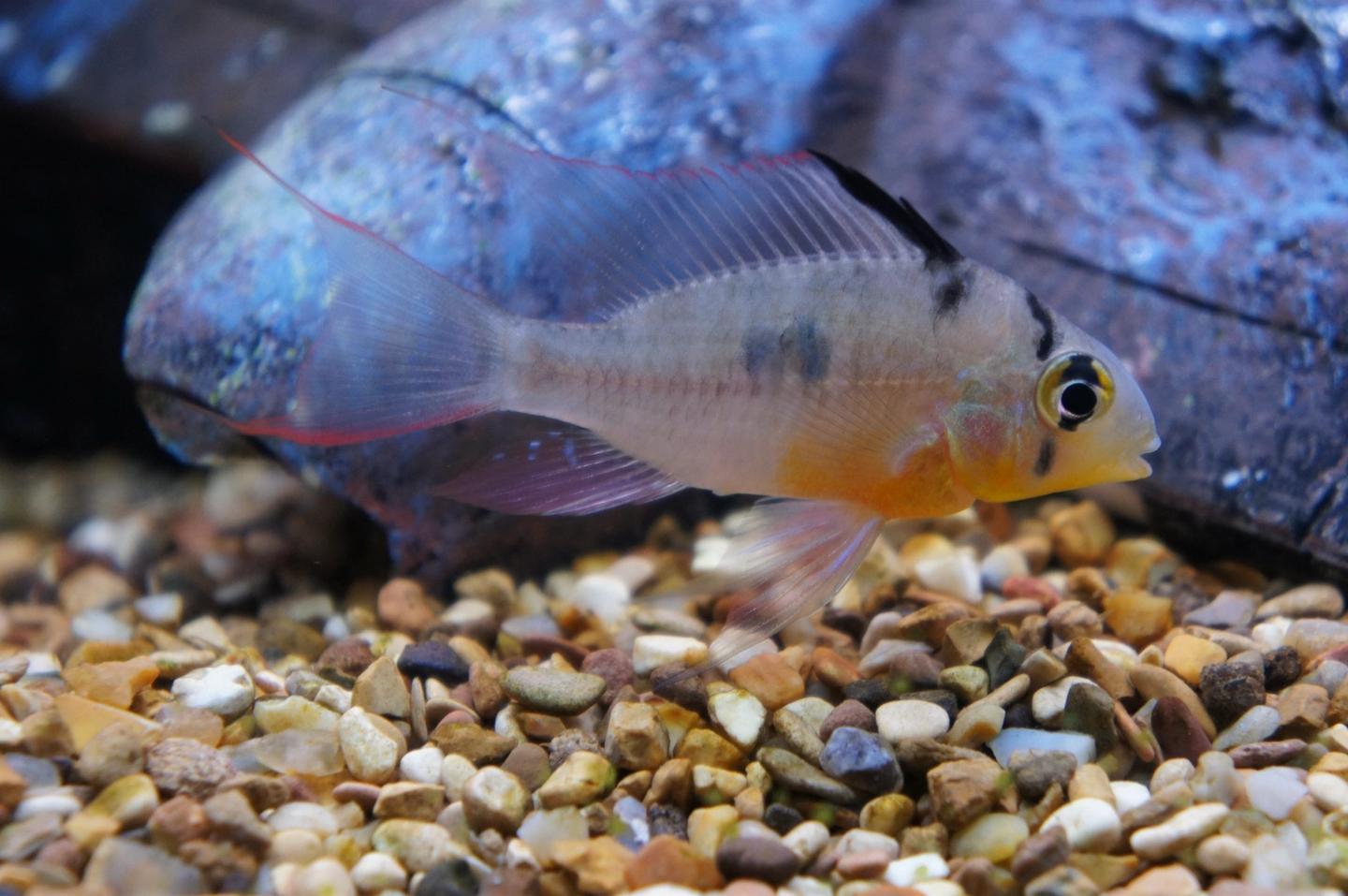
The Kasanga Striped Goby Cichlid is one of the most distinctive aquarium fish UK hobbyists can keep. Known scientifically as Eretmodus cyanostictus, this Tanganyika specialist does not swim like a typical cichlid. Instead, it perches, scoots, and hops over rockwork in a goby-like way, constantly grazing surfaces for algae and biofilm. That unusual movement, combined with its bold striping, compact 8 cm adult size, and pair-bonding nature, makes it a standout choice for keepers building a serious freshwater fish aquarium uk display. Native to Lake Tanganyika in East Africa, it prefers hard, alkaline water, a stable tropical fish tank temperature, and a mature setup with strong oxygenation. With a lifespan of up to 8 years, moderate care level, and semi-aggressive temperament, this is a species for aquarists who enjoy behaviour as much as colour. See our detailed photos showing the body shape, facial profile, and rock-grazing posture of this remarkable Kasanga Striped Goby Cichlid Fish. If you want freshwater fish uk stock that looks different from standard community species and brings authentic tanganyika fish character to the aquarium, this fish offers real personality, fascinating breeding, and a rewarding long-term project.

🔹 Quick Facts

  • Scientific Name: Eretmodus cyanostictus
  • Care Level: Moderate
  • Min Tank Size: 80 litres (around 18 gallons)
  • Temperature: 24-27°C (75-81°F)
  • pH Range: 7.8-9.0
  • Lifespan: Up to 8 years
  • Temperament: Semi-aggressive
  • Diet: Herbivore

Classification

  • Order: Cichliformes
  • Family: Cichlidae
  • Genus: Eretmodus

Eretmodus cyanostictus belongs to a specialised group of Lake Tanganyika cichlids adapted for life on wave-washed rocky shorelines. In the aquarium hobby, goby cichlids are valued less for flashy speed and more for their posture, grazing behaviour, pair bonding, and unusual body shape. They are a favourite among aquarists building authentic Tanganyikan rock habitats rather than mixed African cichlid tanks.

Where Do Kasanga Striped Goby Cichlids Come From? Natural Habitat Explained

The Kasanga locality form comes from Lake Tanganyika, one of the oldest and deepest rift lakes in the world. This lake stretches across several East African countries and is famous for producing highly specialised cichlids found nowhere else. Unlike many small river fish species sold in general shops, goby cichlids evolved in clear, mineral-rich water with strong wave action and extensive rocky shorelines. Their body shape, blunt head, and reduced swim bladder all make sense when you see how they live in nature: close to rocks, scraping algae, and resisting surge.

In the wild, these fish inhabit shallow to mid-depth rocky zones where oxygen is high and surfaces are coated with algae, diatoms, and tiny invertebrates. This is why a healthy fish tank ecosystem matters so much in captivity. A newly set up tank with sterile décor rarely suits them as well as a mature aquarium with established biofilm. Their natural diet is not based on rich meaty foods or random tropical fish flakes; it is mostly vegetable matter, attached algae, and small organisms picked from rock surfaces.

Many buyers compare this type of setup to a pond or river display, but this species is not for cool-water systems, and it is very different from fish sold under searches like buy pond fish online, which fish pond, or how fish pond construction. It also does not belong in novelty searches such as what fish pond stardew, how many fish pond stardew, or how much fish pond stardew. Instead, think of a purpose-built rocky Tanganyika aquarium with bright light, high circulation, and stable chemistry.

Because Lake Tanganyika is extremely alkaline and hard, the kasanga striped goby cichlid ph level should stay high in captivity. Soft, acidic water often leads to stress, poor feeding response, and long-term health issues. If you have ever wondered why aquarium fish from specialist lakes need more exact conditions than mass-market species, this fish is a perfect example. It rewards accuracy.

💡 Expert Tip

Mimicking the natural shoreline habitat improves health and brings out natural behaviour. Use rounded rock piles, open grazing surfaces, and strong water movement. Mature algae growth on décor is a benefit for this species, not a flaw.

How to Set Up the Perfect Tank for Kasanga Striped Goby Cichlids

The kasanga striped goby cichlid minimum tank size is 80 litres for a bonded pair, but that is a true minimum. A larger aquarium gives better territory structure, more stable water quality, and safer pairing. For long-term success, many keepers prefer 100-120 litres or more, especially in a lake tanganyika community tank. If you are comparing fish tank sizes, a footprint with more floor and rock area matters more than sheer height. Hobbyists asking what fish tanks are 36 inches long are often on the right track, because a 36-inch tank gives useful horizontal territory for this species.

Tank Size Requirements

A single pair can live in 80 litres, but a carefully aquascaped 90-120 litre setup is more forgiving. The right kasanga striped goby cichlid tank size depends on whether you want a species pair or mixed Tanganyika stocking. These fish defend grazing patches and spawning areas, so cramped tanks often increase stress. If you are shopping for a tropical fish tank, an 80cm tropical fish tank can work well if filtration and rock layout are planned properly. Searches like fish tank 75 gallons for sale or fish tank 100 gallon for sale are more relevant for larger cichlid communities than for one pair, but extra space is never wasted.

Water Parameters

The ideal kasanga striped goby cichlid temperature is 24-27°C, with 25-26°C being a practical everyday target. If customers ask for the kasanga striped goby cichlid ideal temperature, that middle range is where feeding, activity, and breeding tend to be strongest. The correct fish tank temperature matters because this is not a cool-water species. Questions like what tropical fish don't need a heater do not apply here. In most UK homes, you will need a heater to maintain a stable tropical fish aquarium temperature. The preferred tropical fish temperature range is narrow enough that swings should be avoided. Aim for pH 7.8-9.0 and hardness 10-25 dGH. These are classic kasanga striped goby cichlid water parameters for Tanganyika fish.

24-27°C
Temperature
7.8-9.0
pH
10-25 dGH
Hardness
80L+
Minimum Volume

Filtration and Flow

If you are wondering what fish tank filter is best, choose a filter that provides steady biological filtration and good oxygen exchange without blasting the fish off the rocks. A quality external canister or oversized internal filter works well. High dissolved oxygen is more important than extreme current. If you ever notice poor circulation and ask why fish tank filter not working, check for clogged media, reduced impeller performance, or blocked spray bars. Maintenance timing matters too: people often ask when to clean fish tank filter and how to clean small fish tank filter. For this species, rinse filter media gently in old tank water only when flow drops, so you preserve beneficial bacteria.

Heating

Questions like what fish tank heater and what fish tank heater do i need come up often with Tanganyika cichlids. Use a reliable adjustable heater sized to the aquarium volume and room temperature. Many keepers ask are fish tank heaters safe, can fish tank heaters be fully submerged, and can fish tank heater burn fish. The answer depends on the model, placement, and guard use. In a rocky cichlid tank, position the heater where water moves well and fish cannot trap themselves against it. Stable warmth explains why do tropical fish need a heater in UK homes: room temperature changes too much for consistent tropical care.

Substrate, Rocks, and Plants

Use sand or fine gravel with plenty of stable rockwork. The fish spend much of their time on lower and middle levels, picking at surfaces. Stack rocks securely on the tank base before adding substrate. Open grazing faces are more useful than decorative clutter. This species is often described for rocky displays rather than lush planted tanks, though hardy alkaline-tolerant plants can be used sparingly. If you want compatible Tanganyika companions, consider browsing Neolamprologus Falcicula - Lake Tanganyika Cichlid or Titcha Mandarin Compressiceps - Altolamprologu for ideas on layout and stocking style.

Cleaning and Routine Maintenance

New keepers often ask how to clean small fish tank, how to clean small fish tank at home, how to change small fish tank water, and when to clean fish tank gravel. For goby cichlids, the rule is simple: keep water clean without stripping the tank of all natural grazing surfaces. Change 25-35% weekly, siphon waste from open areas, and avoid over-scrubbing every rock. If why fish tank water turn green becomes a problem, reduce excess light and nutrients. If why fish tank water turns yellow, check tannins, trapped waste, or old organics. Clean, mineral-rich water is one reason which fish aquarium is best for this species usually means a mature, purpose-built Tanganyika setup rather than a mixed beginner tank.

Quick Setup Checklist

  • 80 litres minimum for a bonded pair
  • Temperature held steadily at 24-27°C
  • pH 7.8-9.0 with hard, alkaline water
  • Strong biological filtration and good oxygenation
  • Sand or fine gravel with secure rock piles
  • Mature tank with algae and biofilm on surfaces

💡 Pro Tip

Always cycle the aquarium for 4-6 weeks before adding goby cichlids. They are far less forgiving of immature water than many common tropical fish for beginners.

What Do Kasanga Striped Goby Cichlids Eat? Complete Feeding Guide

The kasanga striped goby cichlid diet is strongly herbivorous. In nature they graze algae and associated microorganisms from rocks, so their digestive system is built for fibre-rich foods rather than heavy protein. This is one of the biggest care points in any serious kasanga striped goby cichlid care guide. If buyers ask what do small tropical fish eat, the answer varies by species, and this fish should not be treated like a generic community omnivore.

Staple Foods

Base the diet around spirulina flakes, algae wafers, herbivore pellets, and vegetable-rich prepared foods rather than standard tropical fish food flakes alone. They will also graze naturally in the tank. Rich meaty feeding every day can cause digestive trouble in herbivorous Tanganyika cichlids.

Supplemental Foods

Small portions of frozen cyclops, daphnia, or finely chopped brine shrimp can be used occasionally. Many people ask can tropical fish eat bloodworms; technically they may accept them, but bloodworms should be rare or avoided because they are too rich for regular feeding. Questions like can tropical fish eat cucumber are more useful here: blanched spinach, spirulina gel foods, and occasional vegetable matter are much more appropriate.

Treats and Foods to Avoid

Avoid feeding them as if they were general pet-shop fish. Searches such as can tropical fish eat betta food, can tropical fish eat goldfish flakes, can tropical fish eat goldfish food, and can goldfish have tropical fish food highlight a common problem: using whatever food is on hand. For this species, choose foods designed for herbivorous cichlids. Also ignore irrelevant searches like what tropical fish can you eat; this is an ornamental aquarium species, not a food fish.

Feeding Frequency

If you are wondering when to feed tropical fish, feed this species 2 small meals daily rather than one large meal. Watch body shape and grazing activity. Hobbyists often ask how do you know when tropical fish are hungry; with goby cichlids, healthy fish spend much of the day picking at surfaces even when well fed. That is normal behaviour, not a sign of starvation. Another common concern is how long aquarium fish live without food or how long tropical fish live without food. Healthy adults can usually tolerate short gaps, but regular underfeeding weakens them quickly because they are adapted to frequent grazing.

Time Food Amount
Morning Spirulina flake or herbivore pellet Small portion eaten in 1-2 minutes
Evening Algae-based food with occasional frozen supplement Light second feed
Neolamprologus Falcicula - Lake Tanganyika Cichlid

If you are planning a Tanganyika setup with similar feeding demands, this related cichlid is worth comparing for stocking balance and dietary planning.

Five-Barred Lamprologus - Neolamprologus Tretocephalus -

A useful comparison species when planning feeding zones and territory use in a rocky cichlid aquarium.

⚠️ Feeding Warning

Overfeeding causes ammonia spikes, excess waste, and digestive stress. Herbivorous Tanganyika cichlids do best on small, frequent meals with a strong algae component rather than heavy protein.

Kasanga Striped Goby Cichlid Appearance: Colors, Patterns & Varieties

The Kasanga Striped Goby Cichlid has a compact, muscular body that reaches about 8 cm. Its profile is blunt-headed and slightly hunched compared with streamlined open-water cichlids. The pelvic and pectoral fin structure helps it brace against rock surfaces, giving it that famous hopping, perching look. In a good kasanga striped goby cichlid tank size with strong light and mature rockwork, this body shape becomes one of the fish’s main attractions.

Colour varies by mood, locality, and dominance, but the Kasanga form typically shows earthy brown, cream, and dark banding with subtle blue spotting or sheen. This is a case study in why tropical fish are colorful even when they are not neon-bright; the pattern is functional, helping the fish blend into rocky backgrounds while still signalling to rivals and mates. Our photos show the contrast best when the fish are settled, feeding well, and kept over pale sand with darker rocks.

Sexing is not always easy. Males and females are similar, though mature pairs often reveal differences through behaviour more than colour alone. During disputes or spawning, tones intensify and body posture changes. If you notice pale speckling and wonder when tropical fish have white spots, distinguish normal reflective spotting from disease such as ich. This is where good observation matters more than relying on generic tropical fish diseases pictures.

For display, use lighting that highlights natural striping rather than washing it out. Our product image, aquarium-fish-uk.webp, is useful for seeing the goby-like stance and locality patterning that make this fish different from common freshwater fish with red fins or more typical cichlid shapes.

What Fish Can Live With Kasanga Striped Goby Cichlids? Compatibility Guide

The short answer is: choose tank mates carefully. This is not a random mixed-community fish. If you are asking what tropical fish can live together, which tropical fish can live together, or looking for a general tropical fish compatibility chart, remember that Tanganyika cichlids follow their own rules. The kasanga striped goby cichlid for community tank question only has a positive answer when the tank is built around compatible lake species, water chemistry, and territory structure.

Ideal Tank Mates

The best kasanga striped goby cichlid tank mates are other Tanganyika fish of similar size and temperament that do not compete too aggressively for the same exact rock-grazing niche. Good examples include Neolamprologus Falcicula - Lake Tanganyika Cichlid, Titcha Mandarin Compressiceps - Altolamprologu, and carefully selected Synodontis species. You can also compare with Five-Barred Lamprologus - Neolamprologus Tretocephalus - if you are planning a more structured cichlid display, though that species may be too assertive for smaller tanks.

When buyers ask what small tropical fish can live together or what tropical fish that can live together, they often mean peaceful community fish. That is not the right framework here. This fish belongs in a specialist setup, not with tetras, guppies, or random mixed stock. The best kasanga striped goby cichlid compatible species are Tanganyika fish that share hard alkaline water and respect territory boundaries.

Species to Avoid

Avoid Malawi mbuna in most cases, despite both being African cichlids. For example, Bumblebee Cichlid - Pseudotropheus Crabro - and Dwarf Golden Mbuna Cichlid - Melanochromis are from a different lake, often more boisterous, and not ideal companions. Likewise, larger predators such as Polystigma Hap Cichlid - Nimbochromis Polystigma or open-water Malawi species such as Firefish Cichlid Lake Malawi Aulonocara are not good matches. If you are wondering what tropical fish are aggressive, many African cichlids can be, but aggression style matters. Goby cichlids are territorial and persistent rather than simply fast and violent.

Also avoid shrimp and most small invertebrates. Searches like tropical invertebrates for sale uk may bring up tempting additions, but this species is not shrimp-safe. Questions such as what fish tank fish eat snails, what tropical fish eat snails, what tropical fish eat snails in a tank, what small tropical fish will eat snails, and what small aquarium fish eat snails do not really describe this fish. It is not a reliable snail-control species.

Do not mix them with goldfish. Searches like what tropical fish can live with goldfish, which tropical fish can live with goldfish, and can tropical fish and goldfish live together are common, but the answer here is no. The temperature, diet, and water chemistry are completely different. The same goes for what tropical fish can live with bettas; this is not a betta companion.

Species Compatible? Notes
Neolamprologus Falcicula - Lake Tanganyika Cichlid ✅ Yes Good in larger Tanganyika rock setups with defined territories.
Titcha Mandarin Compressiceps - Altolamprologu ⚠️ Caution Can work in spacious tanks; watch predatory behaviour toward very small tank mates.
Bumblebee Cichlid - Pseudotropheus Crabro - ❌ Avoid Malawi aggression style and stocking approach differ too much.

Community Stocking Examples

For an 80-100 litre setup, keep one bonded pair only. In larger tanks, a pair can be combined with carefully chosen shell dwellers, small rock dwellers, or catfish, but always monitor the dynamic. A true lake tanganyika community tank should be planned by niche: rock grazer, shell dweller, open swimmer, and scavenger. If you are used to standard community advice about what tropical fish can live together, Tanganyika stocking is more specialised.

💡 Compatibility Tip

Always quarantine new arrivals for 2-4 weeks before adding them to a Tanganyika display. This reduces disease risk and gives you time to observe feeding, waste output, and temperament before mixing fish.

How to Breed Kasanga Striped Goby Cichlids: Complete Breeding Guide

Kasanga striped goby cichlid breeding is one of the most rewarding parts of keeping this species. They are biparental mouthbrooders, which means both parents may take turns carrying eggs or fry. That alone makes them more interesting than many common cichlids. The overall difficulty is moderate: not impossible, but definitely easier in a mature species-focused tank.

Breeding Setup

A proper kasanga striped goby cichlid breeding guide starts with a stable pair, mature rockwork, excellent water quality, and a strong herbivorous feeding regime. Use a tank of at least 80 litres for the pair, though more space helps. Keep temperature around 25-26°C, pH high, and avoid disruptive tank mates. Unlike random internet searches such as tropical fish breeding minecraft, tropical fish minecraft breeding, are tropical fish breedable in minecraft, can tropical fish breed in minecraft, do tropical fish breed in minecraft, when do tropical fish spawn minecraft, or why do tropical fish despawn in minecraft, real fish breeding depends on pair compatibility, nutrition, and territory security.

Spawning Behaviour

If you wonder when do tropical fish spawn, for this species the answer is usually after a settled period with strong feeding, stable parameters, and minimal stress. They clean a site, display to one another, and then spawn. This species does not match searches like what tropical fish lay eggs on the glass; eggs are handled through mouthbrooding rather than being left exposed. After spawning, one parent collects the eggs, and later the other may take over.

Egg and Fry Care

Brooding adults may eat less and become more secretive. Avoid netting or disturbing them. Once fry are released, offer very fine prepared foods, crushed spirulina flakes, and newly hatched brine shrimp in moderation. If you are asking when tropical fish have babies, release timing varies, but patience is essential. Healthy fry need pristine water and gentle feeding rather than heavy intervention.

Common Challenges

Pair incompatibility is the main issue. Another is overfeeding rich foods, which weakens adults. Snails may reproduce in the breeding tank, and people sometimes ask can fish tank snails have babies; yes, many can, but they are not usually a direct problem unless overfeeding is also happening. Questions like do tropical fish despawn or why do tropical fish despawn belong to gaming, not fishkeeping. In real aquariums, losses are usually due to stress, poor water, or aggression.

Advanced Breeding Tip

Once a pair is proven, keep décor changes to a minimum. Goby cichlids rely heavily on site familiarity, and even small rearrangements can interrupt courtship or cause a brooding parent to abandon the spawn.

Kasanga Striped Goby Cichlid vs Similar Species: Which Should You Choose?

Choosing between Tanganyika cichlids depends on what you value most: unusual behaviour, bold patterning, easier community mixing, or stronger colour. The Kasanga Striped Goby Cichlid is ideal for aquarists who want personality and niche behaviour rather than a fast-swimming display fish. It is especially attractive to keepers searching for something more specialised than standard tropical fish for beginners.

Feature Kasanga Striped Goby Cichlid Neolamprologus Falcicula
Max Size 8 cm Approx. 9-10 cm
Care Level Moderate Moderate
Temperature 24-27°C 24-27°C
Price £53.23 Varies
Best For Rock grazing behaviour and pair bonding Tanganyika cichlid collectors wanting a different body shape
Feature Kasanga Striped Goby Cichlid Titcha Mandarin Compressiceps
Body Shape Compact, goby-like Elongated predator profile
Temperament Semi-aggressive Predatory, more specialised
Diet Herbivore Carnivore
Tank Style Rocky grazing zones Rocky ambush zones
Best For Behaviour-focused Tanganyika aquariums Advanced species displays

Choose the Kasanga form if you want a fish that interacts closely with the décor and rewards observation. Choose Neolamprologus Falcicula - Lake Tanganyika Cichlid if you want a different Tanganyika profile with easier visual contrast. Choose Titcha Mandarin Compressiceps - Altolamprologu if you are building a more predatory specialist setup. If you are searching tropical fish for sale UK, freshwater fish uk for sale, or tropical fish for sale near me, this species stands out because it offers a genuine niche experience rather than a generic shop fish.

Common Health Problems in Kasanga Striped Goby Cichlids & How to Prevent Them

Healthy fish are alert, firmly balanced on rocks, eager to graze, and free from clamped fins or rapid breathing. A settled pair will patrol a territory and feed throughout the day. If fish hide constantly, lose weight, or stop grazing, investigate quickly. Many cases where people ask when aquarium fish die or why aquarium fish die come down to unstable water, wrong diet, or bullying.

Common Diseases and Symptoms

Like many cichlids, they can suffer from ich, bacterial infections, intestinal issues, and stress-related wasting. Searches for tropical fish diseases, tropical fish diseases pictures, and tropical fish ulcer treatment are common, but diagnosis should start with water testing and observation. White grains may indicate ich; pits, sores, or red areas can suggest bacterial problems; stringy waste often points to digestive trouble or inappropriate diet.

Treatment and Quarantine

Use a separate tropical fish quarantine tank or fish tank quarantine box when needed, especially for observation of new arrivals or injured fish. Quarantine is also the best answer when customers ask whether can fish aquarium make you sick or can fish tanks make you sick; the tank itself is not the issue, but poor hygiene and unsafe handling can be. Wash hands after maintenance, avoid splashing contaminated water into the mouth or eyes, and keep equipment clean. Questions like can fish tanks cause breathing problems are usually unrelated to healthy aquariums, though mould, aerosols, or poor room ventilation should always be addressed.

⚠️ Health Warning

Never medicate blindly. Test water first, confirm symptoms, and remember that many Tanganyika fish react badly to unnecessary or overly harsh treatments. Copper-based medications should be used with extreme caution in mixed systems containing invertebrates.

Quarantine Protocol

  • Isolate new fish for 2-4 weeks in a separate tank
  • Match pH, hardness, and temperature to the main aquarium
  • Observe feeding, waste, respiration, and skin condition daily
  • Use dedicated nets and siphons to prevent cross-contamination
  • Only move fish once they are feeding strongly and symptom-free

Well-run aquariums can be deeply calming, which is why many people ask are fish tanks good for mental health or why fish aquarium at home. A stable Tanganyika tank can be especially engaging because the fish show such intricate behaviour. Prevention is simple: maintain stable what fish tank temperature, feed correctly, and avoid incompatible tank mates.

Understanding Kasanga Striped Goby Cichlid Behavior in the Aquarium

The most memorable part of kasanga striped goby cichlid behaviour is the way these fish move. Rather than cruising in open water, they hop, brace, and graze across rocks. They are active during the day, highly aware of territory, and most comfortable when kept as a bonded pair. This makes them very different from shoaling fish or flashy open-water cichlids.

They are not ideal kasanga striped goby cichlid for beginners if the beginner wants a simple mixed community, but they are manageable for aquarists willing to learn water chemistry and species-specific feeding. In a settled tank, they spend much of the day grazing and interacting with one another. During breeding, pair coordination becomes even more impressive because of their shared mouthbrooding behaviour.

To encourage natural behaviour, provide secure rock surfaces, visual barriers, and stable pair housing. Avoid overcrowding. A mature setup often reveals more personality than a bare quarantine-style display. This is one reason specialist keepers often choose them over more common barbel freshwater fish uk searches or standard community species.

Why Buy from Tropical Fish Co?

When you buy fish online, species like this need more than basic packing. Kasanga Striped Goby Cichlids are selected for condition, body weight, and feeding response before sale. Because this is a specialist herbivorous Tanganyika cichlid, we focus on fish that are already settled onto prepared foods and showing normal grazing behaviour. That matters far more than simply listing another name under tropical fish for sale.

Each fish is held, observed, and checked for signs of stress before dispatch. We pay close attention to respiration, body fullness, and skin condition because goby cichlids can decline quickly if moved on too soon. For customers searching buy aquarium fish online, buy tropical fish UK, or an online aquarium store uk with unusual Tanganyika stock, this species is exactly the kind of fish that benefits from careful preparation.

Orders are packed in insulated boxes with professional fish bags, and heat packs are used in winter conditions when required. Tracked delivery helps reduce transit uncertainty. On arrival, slow acclimation is important because of the high pH and mineral demands of this species. If you have been comparing fish for sale pets at home, tropical fish pets at home, 888 tropical fish, or even niche searches such as telmatochromis dhonti for sale uk, the key difference is not just availability but species-specific handling.

This fish is not a match for searches like cold water fish for sale uk, predator fish for sale uk, or free tropical fish. It is a specialist Tanganyika cichlid for aquarists who want authentic behaviour and proper long-term care. If you are browsing tropical fish tank for sale listings at the same time, make sure the aquarium is mature, heated, and designed for hard alkaline water before ordering.

Order your Kasanga Striped Goby Cichlid today with confidence if you want an uncommon, behaviour-rich Tanganyika species that rewards careful fishkeeping.

Why Choose Tropical Fish Co for Kasanga Striped Goby Cichlids

  • Selected with close attention to body condition and active grazing behaviour
  • Held and observed before dispatch so delicate Tanganyika species are not moved on too quickly
  • Packed for UK transit with insulation and seasonal heat protection where needed

To build a stronger Tanganyika display, consider adding Neolamprologus Falcicula - Lake Tanganyika Cichlid for another authentic lake species with complementary appeal. For a more unusual predator profile, Titcha Mandarin Compressiceps - Altolamprologu offers a very different body shape and hunting style. If you want to compare assertive rock dwellers, look at Five-Barred Lamprologus - Neolamprologus Tretocephalus -. For contrast with Malawi species, browse Firefish Cichlid Lake Malawi Aulonocara or Dwarf Golden Mbuna Cichlid - Melanochromis to see why lake-specific stocking matters. If you are exploring more aquarium fish UK options for a specialist cichlid room, our wider Lake Tanganyika collection is the best next step.