Moderate
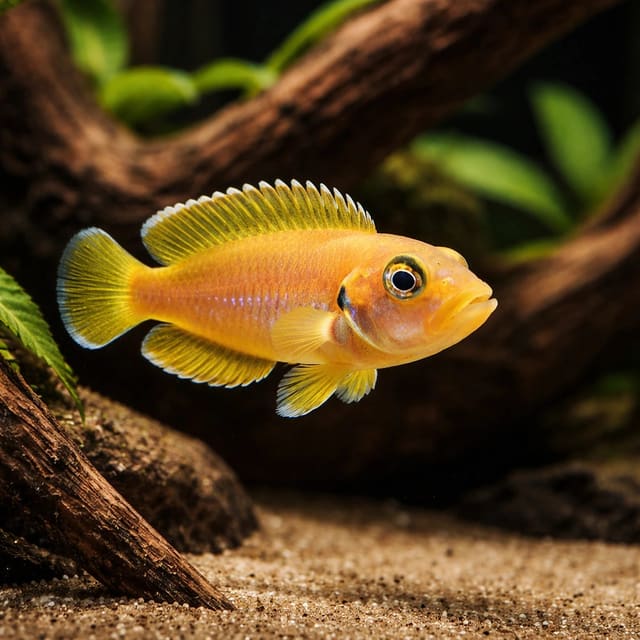
Gold Ocellatus Shell-Dweller (Neolamprologus ocellatus)
23–25°C · pH 8–9
£16.59
The Pearly Compressiceps (Lamprologus calvus) is a laterally compressed cichlid from south-western Lake Tanganyika that reaches a recorded 13.5 cm total length. It suits an intermediate keeper planning a pair or colony; keep it at 24–27°C, while OATA’s African lake cichlid guidance narrows the plan to pH 8.0–8.6 and 12–18 dGH. Sold individually in sizes from 3–3.5 cm to 7.5–10 cm.
Adult size is the maximum length this species reaches at full maturity (scientific sources). The livestock you receive will be younger and smaller — pick a size above for the actual shipping size. Product-photo provenance and any image-specific limitations are stated on the listing.
Lamprologus calvus
Save when buying multiple fish. Each quantity is one fish; sex and pair formation are not guaranteed unless the selected variant explicitly states them.
The Pearly Compressiceps (Lamprologus calvus) is a laterally compressed cichlid from south-western Lake Tanganyika that reaches a recorded 13.5 cm total length. It suits an intermediate keeper planning a pair or colony; keep it at 24–27°C, while OATA’s African lake cichlid guidance narrows the plan to pH 8.0–8.6 and 12–18 dGH. Sold individually in sizes from 3–3.5 cm to 7.5–10 cm.
Adult size is the maximum length this species reaches at full maturity (scientific sources). The livestock you receive will be younger and smaller — pick a size above for the actual shipping size. Product-photo provenance and any image-specific limitations are stated on the listing.
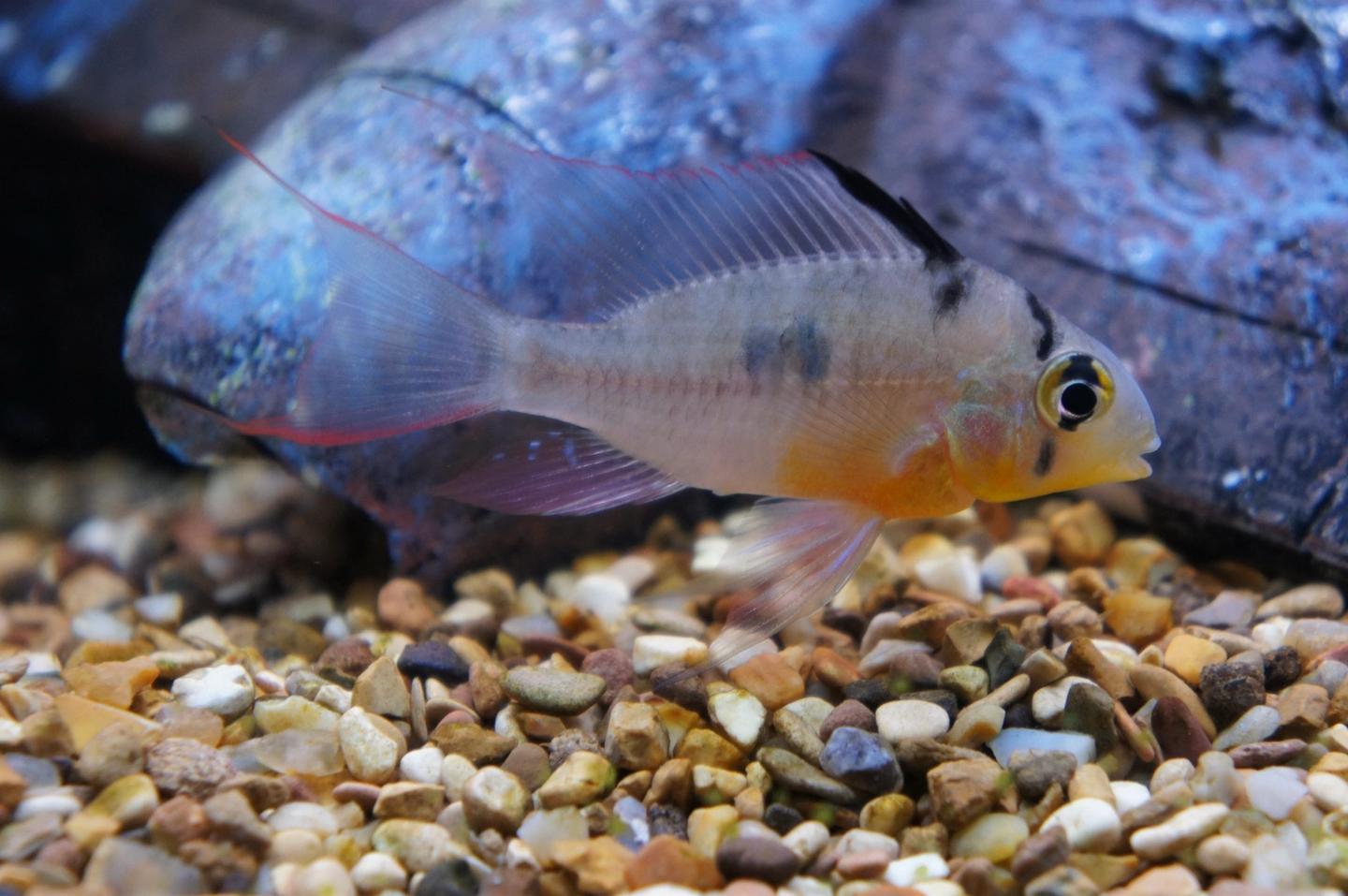
Cichlids are a family of roughly 1,800 accepted species, not one care type. Before buying, identify the exact species and source, then compare adult measurement, usable tank dimensions, social system, territory, tested water, diet and an exit plan. No family-wide minimum tank, water range or tank-mate list is safe.
Maintain these water conditions for optimal health and vibrant colors
Pearly Compressiceps (Lamprologus calvus) is a freshwater cichlid from Lake Tanganyika with a recorded maximum of 13.5 cm total length. Its deep, laterally compressed body is more than an unusual outline: it allows the fish to enter narrow cracks and shallow caves within rocky habitat. That body plan should shape the aquarium, feeding plan and choice of companions.
FishBase records the wild fish as a benthopelagic stalker that cruises through rocky habitat while keeping roughly 30–100 cm from the substrate. It feeds mainly on shrimps and other crustaceans. In an aquarium, expect a deliberate predator that uses cover and watches its surroundings rather than a constantly active open-water cichlid.
FishBase now lists it as Altolamprologus calvus. It belongs to the cichlid family and is endemic to the south-western part of Lake Tanganyika. Keep that specialised origin in mind when comparing it with fish from general tropical communities or with more forceful African cichlids.
| Suits | Not suited to |
|---|---|
| Keepers prepared to maintain hard, alkaline water | Soft, acidic community aquariums |
| Cave-rich rock layouts with secure retreats | Layouts without usable rock cover |
| Meaty frozen or live feeding plans | Plans based mainly on dried food |
| Carefully screened Tanganyikan communities | Aggressive or very vigorous companions such as mbuna |
Our care assessment is intermediate because stable chemistry, specialist feeding and considered stocking matter more than elaborate daily routines. You can compare this specialist with the wider African cichlid collection, but match water, temperament, adult size and feeding behaviour before combining species.
FishBase records a maximum of 13.5 cm total length for a male or unsexed fish. Treat that figure as an adult planning reference rather than a promise that every individual will reach exactly the same length. The decisive question is whether the aquarium can still provide rock retreats, broken sight lines and usable swimming space when the fish is near that recorded maximum.
The Seriously Fish husbandry profile recommends a Lake Tanganyika-style arrangement with piles of rocks forming caves across much of the aquarium. Choose the aquarium by its usable layout: it needs enough floor area for separate retreats, clear routes and practical maintenance rather than a volume figure alone.
| Planning point | Decision |
|---|---|
| Adult reference | Allow for up to 13.5 cm total length. |
| Rock structure | Build several caves and narrow retreats, not one contested shelter. |
| Open room | Leave clear routes around the rockwork for cruising and feeding. |
| Social space | Increase usable territory before planning a pair, colony or community. |
| Water | Prepare stable, hard and alkaline conditions before introduction. |
A tall pile of stone in a cramped footprint is not equivalent to a genuinely usable territory. Look from both ends of the aquarium: if every fish would remain visible to every other fish, add visual barriers or reconsider the stocking plan. The completed layout must also remain practical to siphon and inspect.
Rockwork should be stable before the fish enters the aquarium. Arrange it so normal movement, maintenance or territorial activity cannot easily dislodge a cave. Dim lighting may encourage this shy fish to appear more often, while a dark substrate can show the black colour form particularly well.
One purchase quantity supplies one animal of the selected option. Use the live size selector to choose between the labelled dispatch grades: “3 - 3,5 cm”, “3,5 - 4,5 cm”, “5,5 - 7 cm” and “7,5 - 10 cm”.
The size you select is the size supplied, not the adult size. Plan every grade around the recorded maximum of 13.5 cm total length and around the same cave-rich Tanganyikan care.
Sex is guaranteed only when the selected option explicitly states male or female. This Pearly Compressiceps listing has no sex-guaranteed option.
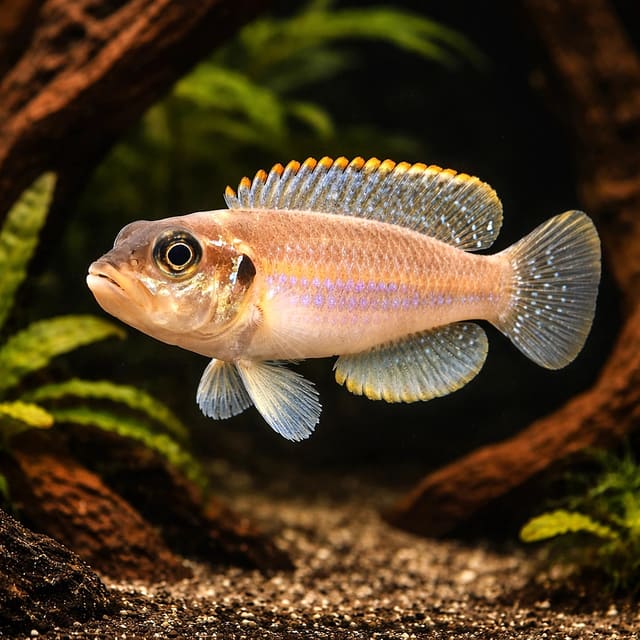
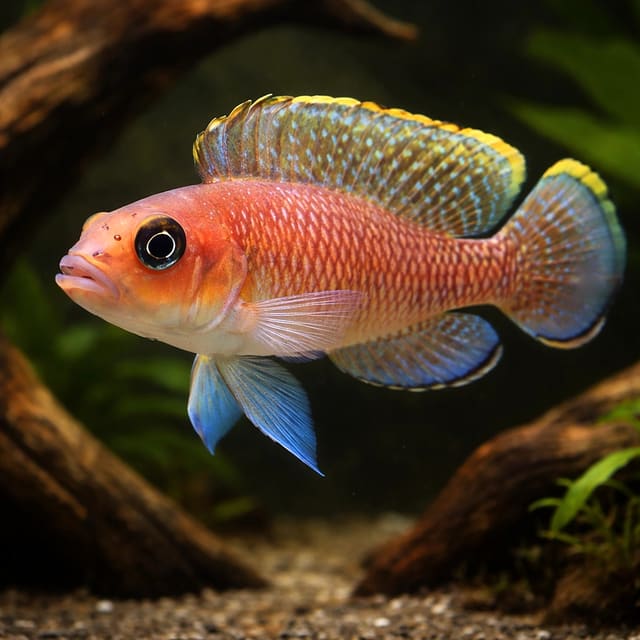
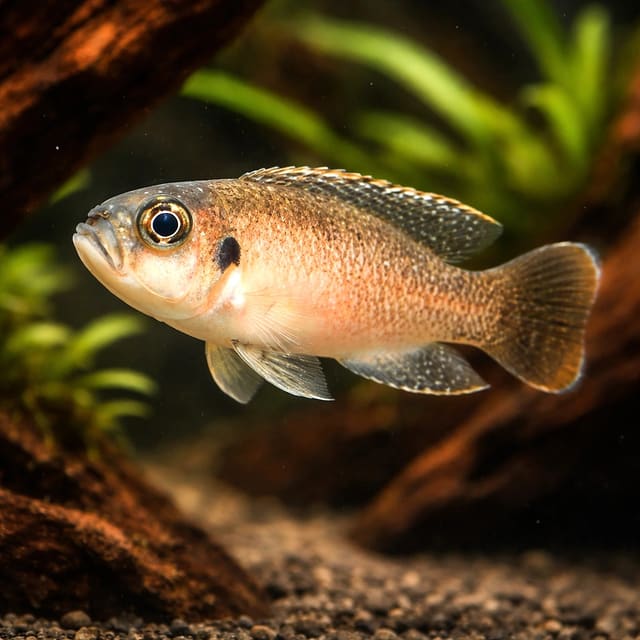
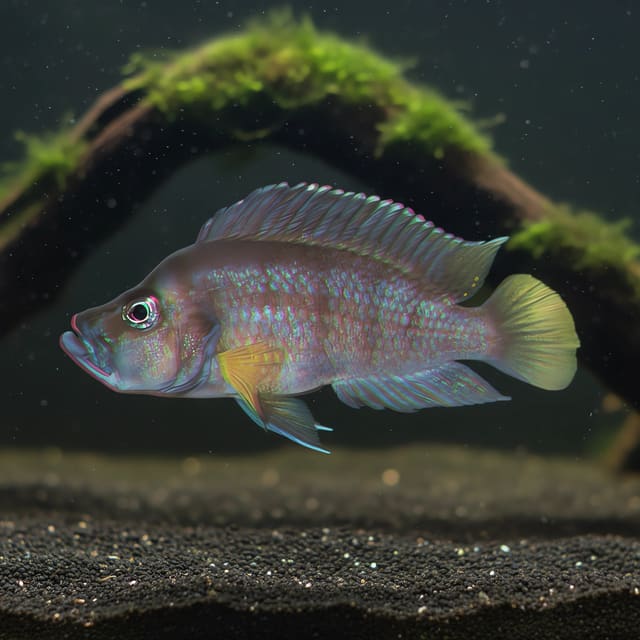
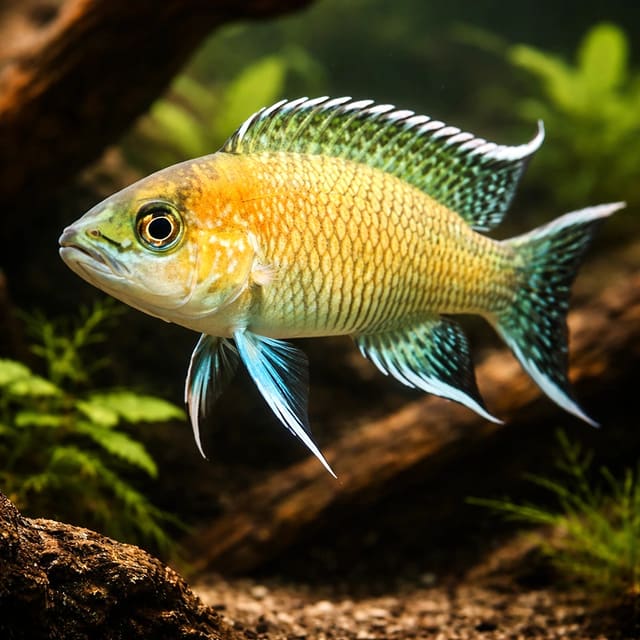
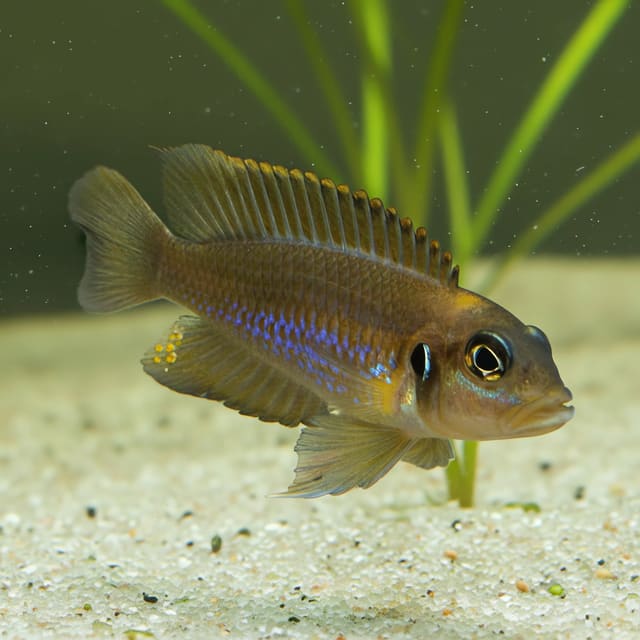
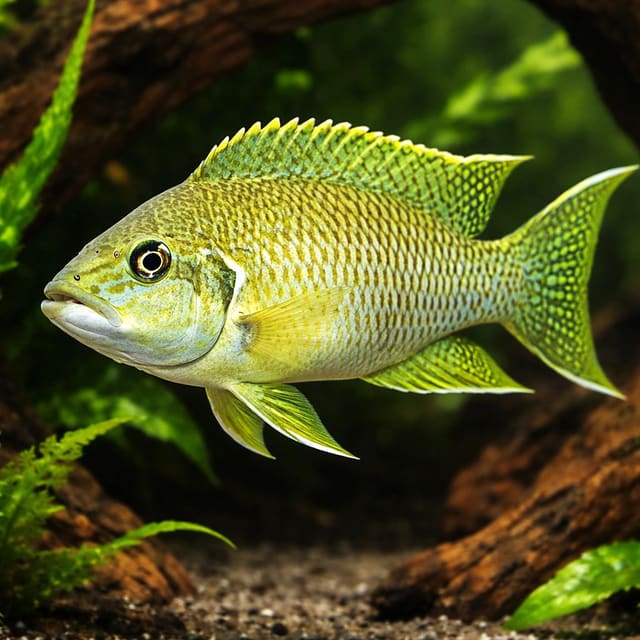
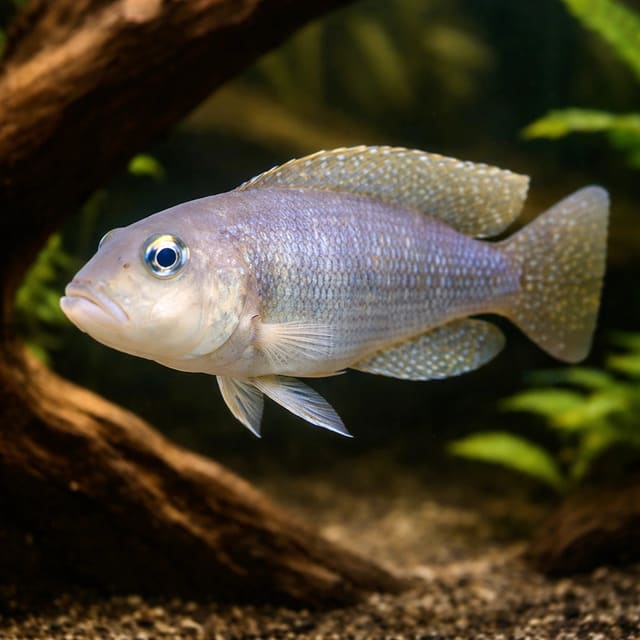
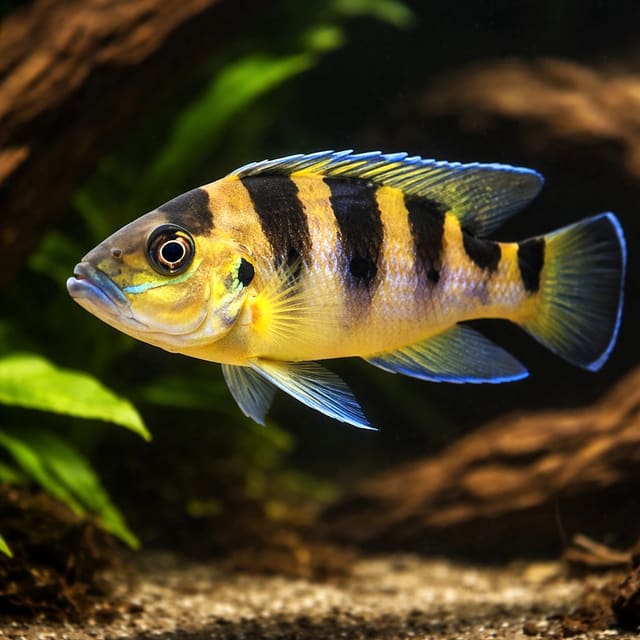
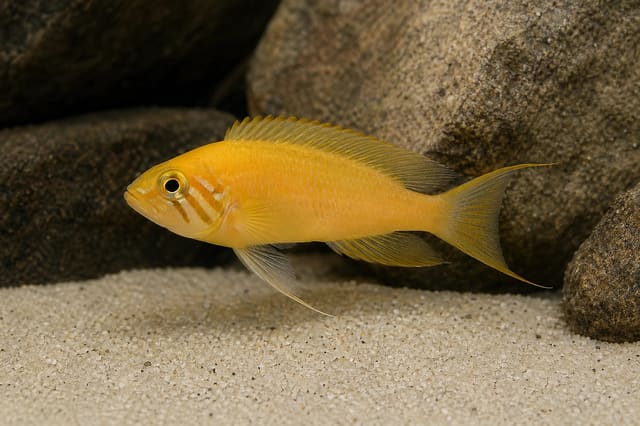
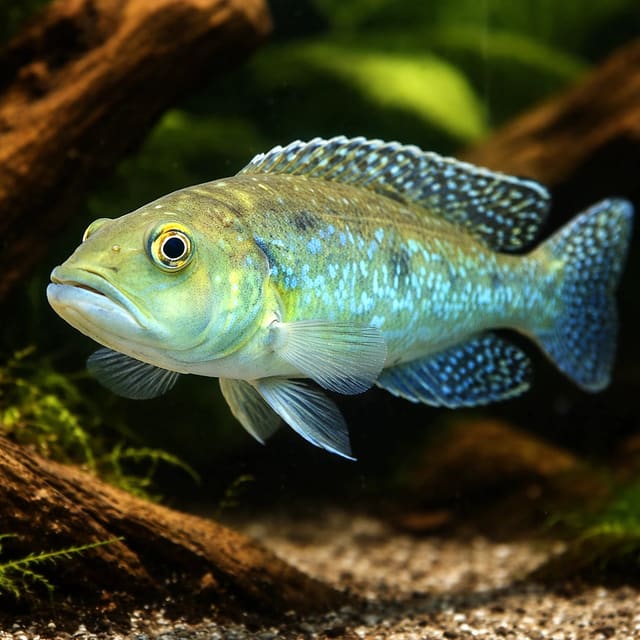
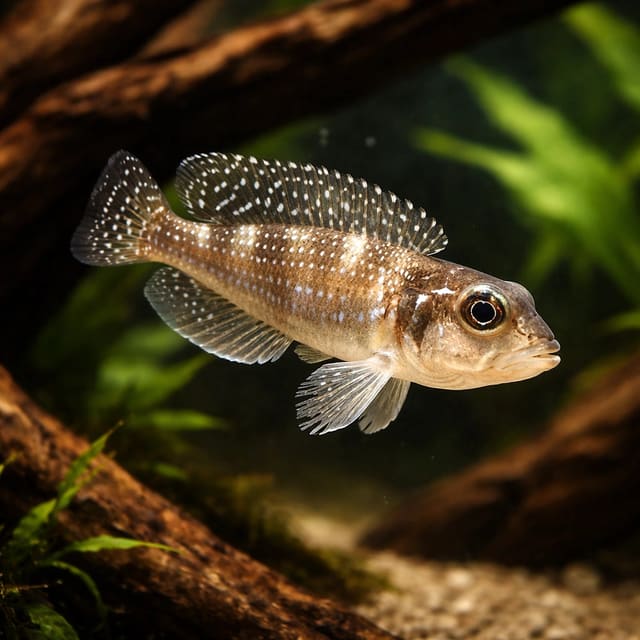
The gallery images are representative, based on reference photographs of this species, so colours can look slightly different from the live animal.
Base the purchase on the live size selector, the adult planning figure and the aquarium’s established conditions.
Make rockwork the foundation of the aquarium rather than an ornament added after stocking. Pearly Compressiceps uses a compressed body to investigate tight crevices, and the aquarium should offer secure retreats of different shapes while retaining open routes around them.
The aim is not to fill every centimetre. Rock piles should occupy much of the setup while leaving enough clear space for the fish to cruise, turn and approach food. A cave that traps waste or cannot be inspected creates a maintenance problem, while a single exposed arch provides little protection for a shy fish.
Use the fish’s behaviour to assess the arrangement. Regular use of several retreats is consistent with the species’ rock-associated biology. If one individual controls the central cave and repeatedly displaces another, add a distinct territory, improve the visual barriers or reduce the social pressure rather than simply adding more fish.
Dimmer lighting may encourage the fish to spend more time in view. Give it the choice to retreat rather than trying to remove hiding places to force visibility. A secure cichlid can investigate its surroundings on its own terms; an exposed one may remain withdrawn or struggle to feed beside vigorous companions.
Substrate colour is primarily an aesthetic decision here. Seriously Fish notes that the black form displays particularly well over a dark substrate. Whatever colour you choose, keep the layout compatible with weekly siphoning and stable rock placement.
Seriously Fish gives 24–27°C, pH 7.5–9.0 and 8–20 dGH for aquarium husbandry. FishBase records 23–25°C, pH 8.0–9.0 and 9–19 dH for the wild environment. OATA’s African lake cichlid sheet gives 23–27°C, pH 8.0–8.6 and 12–18 dGH as group guidance rather than a species-specific optimum.
For routine aquarium planning, use 24–27°C, pH 8.0–8.6 and 12–18 dGH. This keeps the temperature within the aquarium range while using the narrower alkaline pH and hard-water guidance. Stability inside those limits matters more than repeatedly moving the chemistry towards one exact midpoint.
| Value | Routine target |
|---|---|
| Temperature | 24–27°C |
| pH | 8.0–8.6 |
| General hardness | 12–18 dGH |
| Carbonate hardness | 10–15 dKH |
| Ammonia | 0 mg/l |
| Nitrite | 0 mg/l |
| Nitrate | Up to 20 mg/l above the normal tap-water level |
Measure the aquarium and the replacement water rather than relying on a regional assumption about tap water. Our water chemistry guide explains what each reading means, and the water matcher helps compare measured values with this target.
Recheck the test and compare it with the aquarium’s recent readings before making a change. Correct the cause steadily and avoid a sudden swing. If ammonia or nitrite appears, treat it as an immediate water-quality warning: check the filter, reduce the waste load and carry out an appropriate conditioned-water change.
A working biological filter is essential. The RSPCA explains that beneficial filter bacteria convert toxic ammonia into nitrite and then into the safer nitrate. The aquarium must complete that process reliably before Pearly Compressiceps is introduced.
Prepare and mature the aquarium in advance rather than using the fish to start the filter. Our first tropical aquarium guide sets out the preparation sequence. Test before introduction and proceed only when ammonia and nitrite are both 0 mg/l and the water is within the required temperature, pH and hardness range.
When filter media needs attention, rinse it lightly in aquarium water removed during the partial water change. Do not rinse established biological media beneath the tap, because chlorine or chloramine may kill beneficial bacteria. Avoid cleaning every biological component aggressively at the same time.
OATA recommends an oversized filter and vigorous aeration for crowded African lake cichlid communities. Greater capacity does not excuse overstocking or missed maintenance, but it gives the biological system more room to process the waste associated with fish and twice-daily feeding. Ensure the outlet and aeration provide circulation without preventing this deliberate fish from reaching its food.
A detectable ammonia or nitrite result means the biological system is not keeping pace with waste. Check for uneaten food, filter interruption, blocked flow, excessive stocking or a recent sharp increase in feeding. Change conditioned water, restore filtration and continue testing until both readings return to 0 mg/l.
Wild Pearly Compressiceps feeds mainly on shrimps and other crustaceans. In the aquarium, Seriously Fish reports that most meaty live and frozen foods are readily accepted and that dried varieties are not usually taken. Build the diet around suitable meaty frozen or live foods rather than expecting flakes or dry granules to form the main ration.
OATA’s routine for African lake cichlids is to offer only what the fish can eat within a few minutes, twice a day. Its carnivore examples include frozen brine shrimp, prawns and cockles. Choose pieces appropriate to the mouth of the selected dispatch size and vary the suitable foods rather than relying on one item.
| What you see | What to do |
|---|---|
| Food remains after a few minutes | Remove the excess and reduce the next portion. |
| A vigorous companion takes everything | Change the feeding position or reconsider that companion. |
| The fish watches but does not approach | Offer an accepted meaty food close to secure cover. |
| Interest in food falls suddenly | Test water and compare breathing, colour and behaviour. |
| Waste begins accumulating | Reduce excess feeding and restore the maintenance routine. |
The feeding window is a limit, not a target that requires food to remain present for several minutes. Stop when the fish has eaten an appropriate portion. Uneaten food breaks down and adds to the ammonia load, so portion control protects both body condition and water quality.
Watch each individual in a pair, colony or community. A fish may be healthy enough to approach food yet still lose every item to faster tank mates. Feeding in more than one suitable position can reveal whether the problem is access, food type or a wider health change. Do not respond by scattering a large surplus through inaccessible rock gaps.
Before the delivery window, confirm that someone can receive the parcel and that the aquarium is ready. Test for ammonia and nitrite at 0 mg/l, check 24–27°C, pH 8.0–8.6 and 12–18 dGH, and make sure the rockwork is stable. A last-minute setup does not give the biological filter time to mature.
Follow our delivery and Live Arrival Guarantee policy when the parcel arrives. Keep the fish attended throughout unpacking and acclimatisation.
Send the continuous unboxing video with the order number if making a Live Arrival Guarantee claim. Open and inspect the parcel on the day it arrives.
Do not combine arrival with a major rearrangement of filtration, water chemistry or heating. The aquarium should already be operating at the intended values. If territorial fish are present, any planned décor adjustment should be completed before release so territories are not being rebuilt around a newly introduced fish.
A newly introduced cichlid and an established aquarium both need observation. The fish’s behaviour shows whether the layout and community are working, while the tests show whether the filter is processing the additional load.
Learn the fish’s normal pattern of movement, hiding and feeding. Pearly Compressiceps is naturally associated with rock crevices and can be shy, so using a cave is not automatically a warning. A clear change from its own usual behaviour carries more meaning than one isolated moment beneath the rockwork.
| Change | First response |
|---|---|
| Hanging at the surface or sitting unusually | Test water and check circulation and aeration. |
| Erratic swimming | Check water, equipment and aggression immediately. |
| Faster or slower gill movement | Test ammonia and nitrite and inspect aeration. |
| Darker or paler colour | Compare water, social pressure and recent changes. |
| More hiding or aggression | Review territories, sight lines and companions. |
| White spots, fluffy growths or damaged fins | Test water and contact us for health guidance. |
| Reduced feeding or body condition | Confirm food access, portioning and water quality. |
Begin with measured water values because even small amounts of ammonia or nitrite can stress African lake cichlids. Check whether the filter has stopped, become blocked or recently been cleaned too aggressively. Also look for uneaten food trapped around rocks and for a companion preventing access to a retreat or feeding position.
Do not treat every hiding period by dismantling the aquarium. First establish whether the fish is feeding, breathing normally and using more than one part of its territory. If the problem follows the addition of another fish, review compatibility and visual barriers before adding further livestock.
Compare the aquarium with the adult plan. Confirm that growth has not made caves unusable, narrowed swimming routes or increased predation risk for smaller companions. Review filter flow, aeration, water-test trends and the condition of each fish. This regular check prevents a once-suitable arrangement from becoming restrictive as the community changes.
Seriously Fish states that Pearly Compressiceps can be maintained as a pair or as a colony in a suitably sized aquarium. A pair or colony needs multiple usable retreats, broken sight lines, feeding access and room for territories, not simply a larger number on the aquarium label.
Do not use a fixed stocking formula. Start with the adult reference of 13.5 cm and inspect the finished rock layout. Each additional fish increases the need for distinct caves and escape routes, while twice-daily feeding increases the biological load. The filter, maintenance routine and available territory must all support the plan.
OATA advises adding livestock slowly because filter bacteria must increase as waste and feeding increase. It also recommends adding more peaceful African lake cichlids before more aggressive species. Do not add several unfamiliar territorial fish at once merely to complete a planned display.
Watch whether every individual can leave cover, eat and move through the aquarium without persistent displacement. If one fish controls the food and central shelters, improve the structure or reduce social pressure. More fish are not a reliable cure for aggression in this species.
For a stocking and compatibility assessment, contact us with the aquarium dimensions, measured water values, rock layout, current species and sizes. Those details allow a useful decision instead of a generic yes or no.
Pearly Compressiceps is territorial but generally peaceful towards fish it cannot fit into its mouth. Its natural diet and hunting shape make eggs, fry and small fish vulnerable, while its shy behaviour makes forceful feeders and highly vigorous cichlids a poor match.
Avoid aggressive or very vigorous tank mates such as mbuna. OATA also advises against mixing Malawi and Tanganyikan cichlids because their behaviour and temperament differ. Keep different colour forms of this species apart because Seriously Fish warns that the forms should not be allowed to hybridise.
Seriously Fish names Julidochromis, Neolamprologus, Cyprichromis and Tanganyikan Synodontis as possible choices. These names are a starting point, not universal approval. Compare the exact species, adult size, temperament, water needs, territory and feeding speed before purchase.
| Screen | Pass only when |
|---|---|
| Predation | The companion is too large to fit into the cichlid’s mouth. |
| Temperament | It is not aggressive or so vigorous that it suppresses a shy feeder. |
| Water | It suits 24–27°C, pH 8.0–8.6 and 12–18 dGH. |
| Territory | The finished aquarium provides distinct usable areas and retreats. |
| Feeding | Every fish can receive an appropriate diet without a large surplus. |
| Origin | A Tanganyikan community remains the default African lake plan. |
Small community fish, fry and eggs carry a clear predation risk. Fish requiring soft, acidic water fail the water screen even if their behaviour appears calm. A companion that shares the chemistry may still fail because it is too aggressive, too small or too fast at feeding time.
Reassess compatibility as fish grow. A combination that appears calm at dispatch size may change as mouth size, territorial reach and competition increase. Plan for adult dimensions and retain a practical way to separate fish if persistent aggression develops.
It reaches a recorded maximum of 13.5 cm total length. Plan the aquarium and rock caves around that adult reference rather than the dispatch size.
Choose an aquarium with enough floor area for several stable rock caves, separate territories, broken sight lines and clear swimming and feeding routes. Assess usable space rather than relying on litres alone.
It can be maintained as a pair or colony in a suitably sized aquarium. Provide several usable retreats, watch every fish at feeding time and add livestock slowly so the biological filter can adjust.
Our care assessment is intermediate because it requires stable hard, alkaline water, cave-rich rockwork, meaty frozen or live food and carefully screened companions.
Offer suitable meaty frozen or live foods, such as appropriately sized brine shrimp, prawn or cockle, twice a day. Feed only what it can eat within a few minutes and do not rely on dried food.
Keep it at 24–27°C; OATA’s African lake cichlid group guidance narrows the plan to pH 8.0–8.6 and 12–18 dGH. Keep ammonia and nitrite at 0 mg/l.
It is territorial but generally peaceful towards fish it cannot fit into its mouth. Avoid aggressive or very vigorous tank mates such as mbuna, and provide separate retreats to reduce territorial pressure.
Conditionally consider calm Julidochromis, Neolamprologus, Cyprichromis or Tanganyikan Synodontis that are too large to be eaten and match its water, territory and feeding needs. Avoid mixing Malawi and Tanganyikan cichlids.
Start filming while the parcel is still sealed, before opening or floating the bag, and continue through opening until the fish is shown inside the sealed bag. Receive it in person, float the bag for 20–30 minutes before release and send the video with the order number if making a Live Arrival Guarantee claim.
No reviews for this item yet. Bought one? Honest reviews only, good or bad.
What customers say about ordering from us
Easy website plenty of info on fish your buying great to pick a time slot
TRACEY DURRANT · 7 Oct 2026
Got some lovely fish thank you
Kevin Mackie · 7 Oct 2026
Reviews of our shop, collected by Judge.me, an independent third-party review collector. Newest first.