Advanced
Petrochromis sp. "Kazumbe" Cape Kabogo
23–27°C · pH 8–8.6
£62.99

The Red Bulu Point Cichlid (Petrochromis sp.) is an African cichlid kept to Lake Tanganyika cichlid care, for an experienced keeper planning a Tanganyika community. OATA’s African lake cichlid guidance gives 23–27°C, pH 8.0–8.6 and hard water, and notes that very few, if any, lake cichlids do well kept singly. Sold as one fish per purchase, supplied at 4-5 cm.
Petrochromis sp.
Save when buying multiple fish. Each quantity is one fish; sex and pair formation are not guaranteed unless the selected variant explicitly states them.
The Red Bulu Point Cichlid (Petrochromis sp.) is an African cichlid kept to Lake Tanganyika cichlid care, for an experienced keeper planning a Tanganyika community. OATA’s African lake cichlid guidance gives 23–27°C, pH 8.0–8.6 and hard water, and notes that very few, if any, lake cichlids do well kept singly. Sold as one fish per purchase, supplied at 4-5 cm.

Cichlids are a family of roughly 1,800 accepted species, not one care type. Before buying, identify the exact species and source, then compare adult measurement, usable tank dimensions, social system, territory, tested water, diet and an exit plan. No family-wide minimum tank, water range or tank-mate list is safe.
Maintain these water conditions for optimal health and vibrant colors
The Red Bulu Point Cichlid (Petrochromis sp.) is an African cichlid of the family Cichlidae, traded as red bulu point and kept to the care of the Lake Tanganyika cichlids. WoRMS records Petrochromis as an accepted genus in the cichlid family. It belongs in a hard-water aquarium planned around Tanganyika fish, and it suits an experienced keeper who is ready to design that community before the first fish arrives.
The UK trade body’s care sheet for African lake cichlids sets the frame for everything that follows. It describes these fish as usually undemanding and easy to keep once their needs are met, but it also stresses that they vary in size and temperament, that they need particular water, and that very few, if any, do well when kept singly. Those three points decide whether this fish is right for you.
| Suits | Not suited to |
|---|---|
| A community built from Lake Tanganyika species | A mixed tank of fish from other lakes or regions |
| Hard, alkaline water, pH 8.0–8.6 in OATA’s group guidance | Soft or acidic water |
| Life alongside other lake cichlids | Being kept singly |
| A keeper who plans the stocking order in advance | An impulse addition to an established tank |
| A large aquarium with an oversized filter | A small or lightly filtered tank |
If you already keep Tanganyika cichlids, the questions below are about fit: tank size, companions and the order of introduction. If you are starting from scratch, read the aquarium and water sections first, because both need to be settled before this fish is ordered.
One purchase supplies one live Red Bulu Point Cichlid, sent at 4-5 cm. That is its length at dispatch, not the size it will reach, so the aquarium and the stocking plan are built for an adult from the start.
The exact species has not been identified, so the care advice here follows the genus Petrochromis and its care group. The name on the label reflects that: “sp.” after Petrochromis means the species has not been pinned down, and red bulu point is the trade name the fish is sold under. For you, the practical result is that water, feeding and stocking follow OATA’s guidance for African lake cichlids, applied carefully, and that the choices which depend on the species, such as diet and group size, are settled with us before ordering.
Sex is guaranteed only when the selected option explicitly states male or female. This Petrochromis red bulu point listing has no sex-guaranteed option. Keep that in mind when you plan the rest of the community, and do not count on a particular male-to-female make-up among the fish you buy.
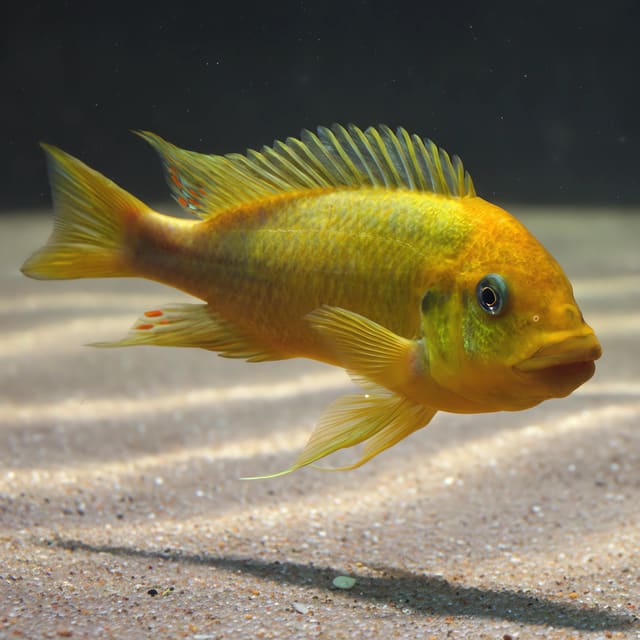
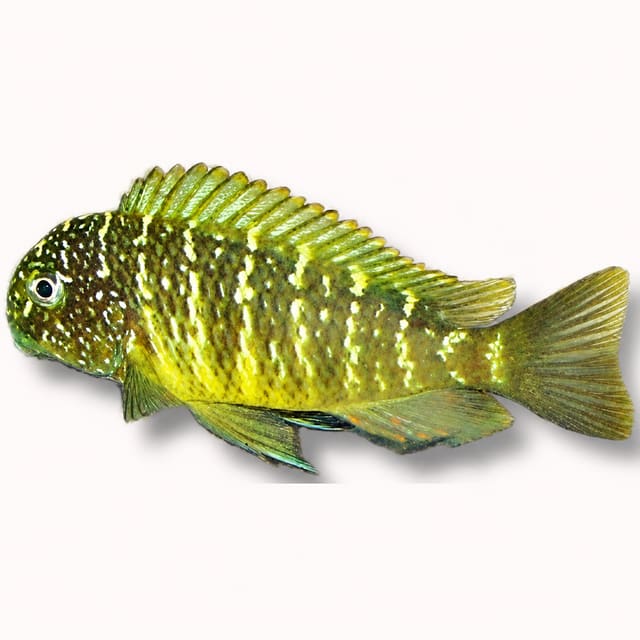
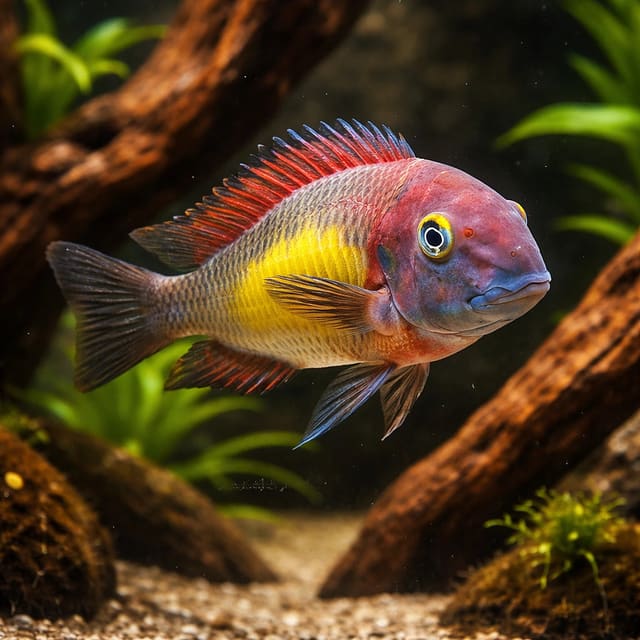
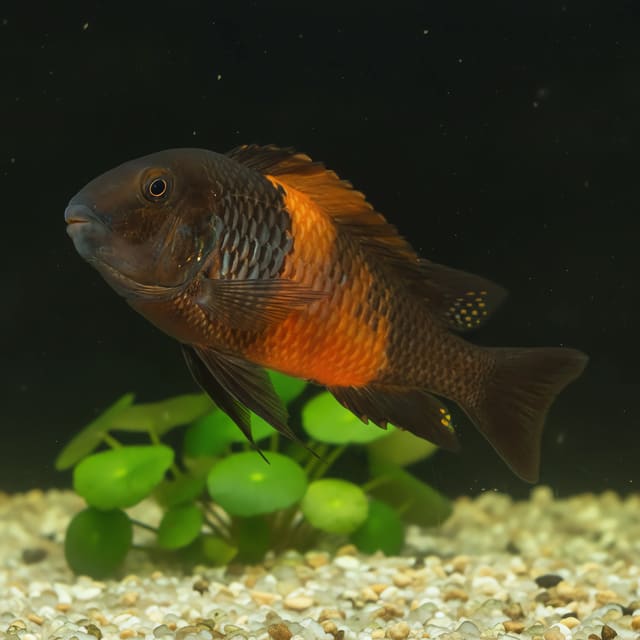
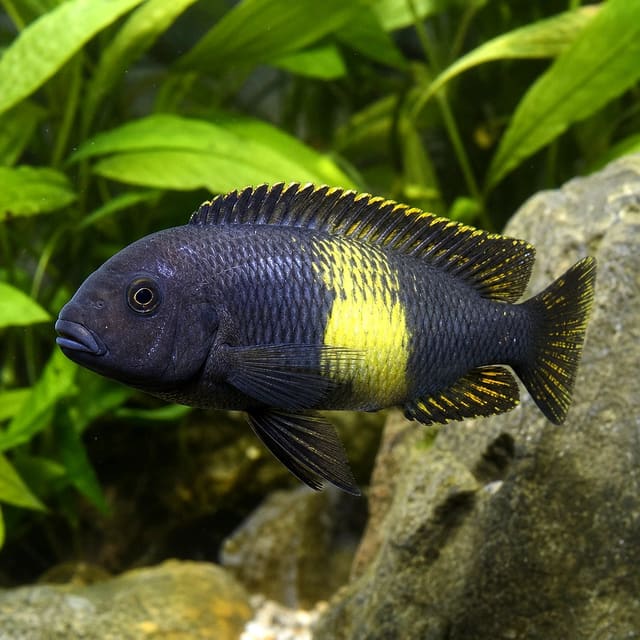
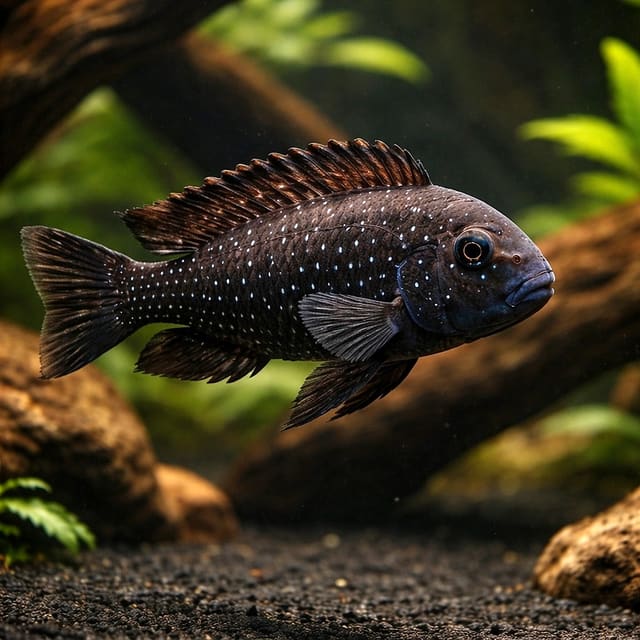
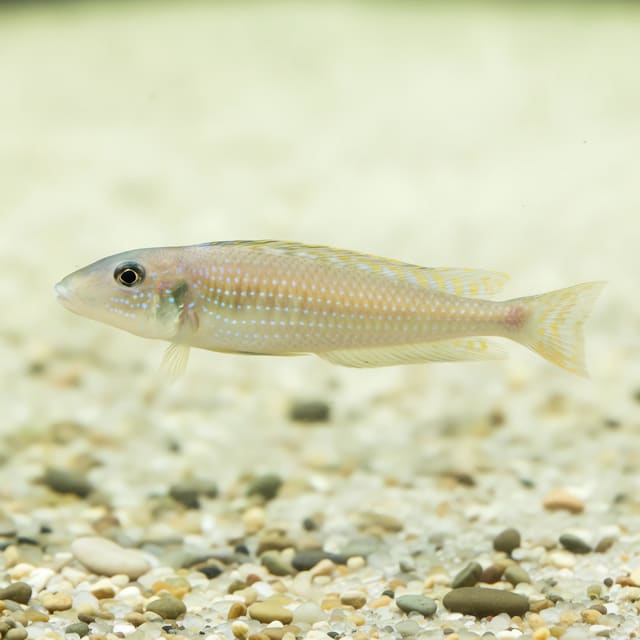
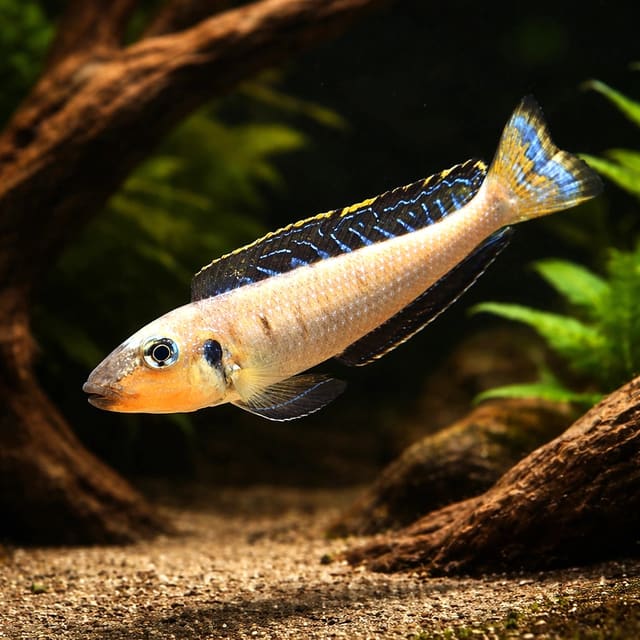
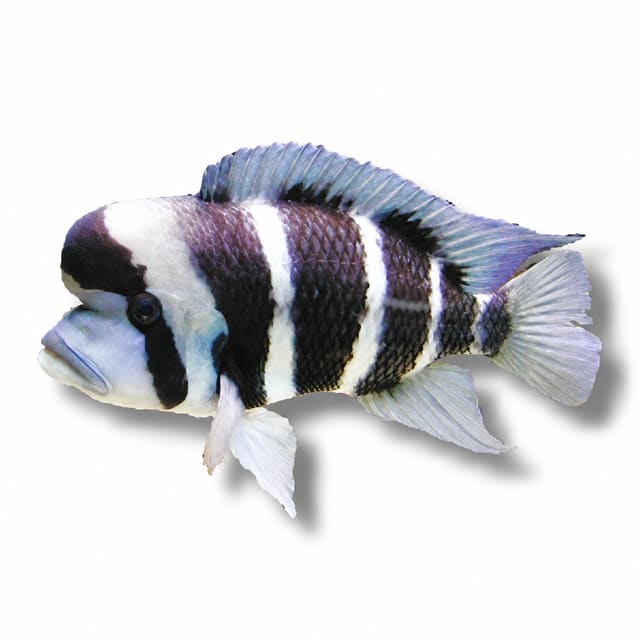
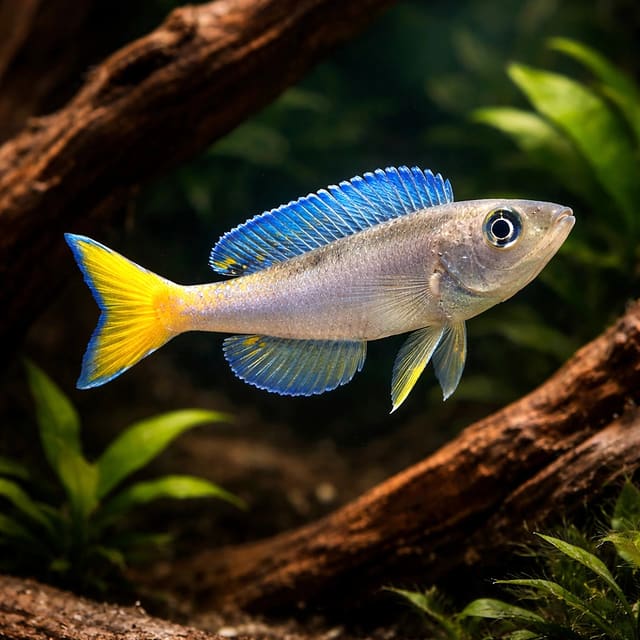
The gallery shows a single orange-red fish with a grey head, resting above sand and rocks with driftwood behind it. Gallery images have been digitally enhanced to improve image quality. Natural colour, pattern, size and maturity can vary between live animals. A young fish at 4-5 cm may look quite different from the fish in the picture.
Because very few, if any, African lake cichlids do well when kept singly, one fish on its own is rarely the right purchase unless it is joining an established Tanganyika community. The right number depends on the species, so agree it with us alongside the tank size before you order, then buy the fish you plan to add together at the same time.
| Your situation | The sensible approach |
|---|---|
| An established Lake Tanganyika community with room to spare | This fish can join it. Check the tank size for the extra fish with us, and move some décor as it goes in. |
| A new aquarium being set up for Tanganyika fish | Mature the filter first, agree the whole stocking list, and add the more peaceful species before this fish. |
| A tank of Lake Malawi cichlids | Not a good match: OATA does not generally recommend mixing Malawi and Tanganyikan cichlids. |
| A single display fish kept alone | Not a good match: very few, if any, African lake cichlids do well when kept singly. |
As a general rule, OATA advises buying an aquarium as large as possible, within reason, for African lake cichlids. The size a community needs varies with the species you keep, and OATA’s own examples show how wide that range is.
| Example from OATA | Aquarium needed |
|---|---|
| A pair of the smallest shell dwellers, which grow to 6 cm | At least 45 cm in length |
| Large species such as frontosa, which can grow to over 30 cm | About 180 cm long, and possibly more as they grow and need room for territories |
With the species unidentified, plan towards the larger end of OATA’s range rather than the smaller. A 4-5 cm fish at dispatch does not change that: the tank is chosen for the fish it will become. OATA also asks keepers to seek advice before adding fish, to make sure the aquarium is an appropriate size for the number of lake cichlids planned. Ask us for that check with your tank dimensions and the species you intend to keep, and we will work through it with you.
The larger the aquarium, the more stable the temperature and water quality, which matters for fish that can be stressed by even the smallest amounts of ammonia. A generous volume also leaves room for territories, which OATA links directly to how much space larger species need as they grow.
OATA links space and territory directly: larger lake cichlids may need even more room as they grow, to accommodate territories, and rearranging the aquarium décor can help reduce aggression as fish find new territories. Both points shape how the tank should be furnished.
Choose décor you can move in sections without stripping the whole aquarium. When a new fish goes in, or when one fish starts to dominate, shifting part of the layout means every fish has to find its place again at the same time, which is the purpose of OATA’s advice.
Stand heavy pieces directly on the tank base before the coral sand goes in, so that they stay firm when neighbouring pieces are moved and cannot shift if the substrate is disturbed.
A 4-5 cm fish uses little space at first, but the layout should already allow for the territories an adult community will need. Planning the décor for the finished community now saves rebuilding the aquarium around fish that have already settled.
Hold the aquarium at 23–27°C and pH 8.0–8.6, in hard water of 12–18°dH general hardness and 10–15°dKH carbonate hardness. OATA gives these as a general guide for African lake cichlids as a group, not a species-specific optimum, so they are the working values for a Petrochromis whose species is unknown.
| Test | Keep it at |
|---|---|
| Temperature | 23–27°C |
| pH | 8.0–8.6 |
| General hardness (GH) | 12–18°dH |
| Carbonate hardness (KH) | 10–15°dKH |
| Ammonia | Zero |
| Nitrite | Zero |
| Nitrate | Up to 20 mg per litre above your tap water, no more |
pH, general hardness and carbonate hardness tell you whether your tap water can reach these values easily. Run all three on a sample of tap water, then enter the results in our water parameter matcher to see how far they sit from the targets. If the gap is large, work out how you will raise and hold the values, and have it running steadily, before the fish is ordered. Our water parameter guide explains what each reading means.
The nitrate ceiling moves with your tap water. If the tap reads 5 mg per litre, keep the aquarium at or below 25 mg per litre; if it reads 15 mg per litre, the limit is 35. Test the tap now and then, because the figure you work from is only as good as that reading.
Neither is a range to sit inside. Any detectable ammonia or nitrite means waste is outpacing the filter. Stop adding fish, feed less, check the filter for blockages and make a partial water change with conditioned water, then retest the following day until both read zero again.
Fish release ammonia into the water, and it is toxic. The RSPCA’s guidance on aquarium filters explains that a working biological filter lets beneficial bacteria grow and break that waste down: ammonia becomes nitrite, which is also toxic, and then nitrate, which is safer. No fish should be kept without a well set up and maintained filter.
That bacterial population has to exist before a fish arrives. Follow our guide to setting up a tropical tank safely to mature the filter, and do not order until ammonia and nitrite read zero with the aquarium running at its target temperature and hardness.
OATA explains that the bacteria established while the filter matured need to increase every time more fish are added and feeding increases, so numbers should only rise slowly. Overstocking, or stocking too quickly, can cause ‘new tank syndrome’: there are not enough nitrifying bacteria to cope with the extra waste, ammonia and nitrite climb to unhealthy levels, and fish may become ill or die.
This holds whether the newcomer is one fish or a group: a community built in careful stages protects every fish already in the tank as well as the new arrival.
OATA is clear that the dietary requirements of African lake cichlids vary. Some species, such as tropheus, are herbivorous and appreciate specialised cichlid feeds with a high algae content alongside fresh vegetables. Some of the larger, more predatory species are carnivorous and need pellets with a higher animal content, with frozen foods such as brine shrimp, prawns or cockles.
Those two patterns point in opposite directions, and this fish is identified only to its genus, so the food type is the one feeding decision not to guess. Ask us when you order which pattern to follow, and have the right food ready before the fish arrives.
Whatever the food, offer only what the fish can eat within a few minutes, twice a day. Overfeeding leaves uneaten food that breaks down and releases toxic waste into the water, and in a mature Tanganyika aquarium that shows up as extra work for the filter.
| If you notice | Adjust |
|---|---|
| Food left on the sand after a few minutes | Offer less at the next feed and siphon out the remains. |
| One fish not reaching the food | Spread the food more widely and watch that fish at the next few feeds. |
| Reduced interest in food or a change in body condition | Test the water, then compare with the warning signs below. |
An African lake cichlid community can include species from both of OATA’s feeding patterns. Tell us what the other fish eat when you order, so that the advice for this fish takes the whole tank into account, and feed so that each fish reaches the food that suits it rather than simply the food nearest to it.
Keep any change of food gradual and one at a time, so that you can see its effect before making another.
OATA strongly recommends a partial water change of 25% at least once every week for African lake cichlids, with a siphon to lift solid waste from the substrate, and testing at least once per week so that ammonia and nitrite do not build up. Good husbandry matters because these fish can be stressed by even the smallest amounts of ammonia.
If the filter needs cleaning, do not run it under the tap: any chlorine or chloramine present may kill the beneficial bacteria established in the media. Rinse it lightly in the tank water you have just removed, which keeps losses to a minimum.
In a 300-litre aquarium, a 25% change is 75 litres; in a 450-litre aquarium it is about 112 litres. Knowing the figure in advance makes it easy to have enough conditioned, temperature-matched water ready.
After four weekly changes, compare the readings side by side. Steady figures mean the routine suits the stocking level. Nitrate creeping towards your limit, or pH and hardness drifting down between changes, are early signs that the tank needs a closer look; the responses in the water section apply, and spotting the trend early avoids a larger correction later.
Before your fish reaches you, our team hand-bags it in pure oxygen and packs it in an insulated poly box, with a heat pack when the weather calls for it. You receive an email with the tracking number and the confirmed delivery date, and a licensed live-animal courier carries it to your door. Full details are on our delivery and Live Arrival Guarantee page.
Record every delivery in this way, not only when something looks wrong. The Live Arrival Guarantee depends on someone being at the address to receive the parcel, the parcel being opened and inspected the same day, and a continuous unboxing video showing it still sealed; our courier may ask for that continuous evidence when a claim is raised.
Separately from the parcel steps, OATA’s introduction advice is to check that ammonia and nitrite are zero before adding any fish. A healthy fish has clear, bright eyes, undamaged fins, intact scales, no ulcerations or bumps and normal swimming, so look for those signs as the fish settles and note anything that differs.
Every fish varies a little in behaviour and appearance, so learn what is normal for yours in the first days. OATA lists the changes that help you spot a problem before it becomes a real health issue.
| Watch | What a change looks like |
|---|---|
| Swimming | Hanging at the surface, sitting on the bottom or swimming erratically |
| Colour | Darker or paler than normal |
| Temperament | More or less aggressive than usual, or hiding more |
| Breathing | Gill covers moving faster or slower than normal |
| Appearance | White spots, fluffy growths, or lost fins or scales |
| Condition | Gaining or losing body weight |
| Feeding | Eating less or losing interest in food |
Test the water before anything else; that is OATA’s first step when you are concerned about the health of your fish, and water quality is the one cause you can measure and correct straight away. Then contact us with the readings and what you have seen, and we will help you decide the next step.
A fish that is suddenly hiding more than usual in a mixed community may be on the receiving end of aggression. Rearranging the décor, as described under compatibility, is one of the steps OATA suggests.
A short written log turns the first fortnight into a clear picture of how the fish and the filter are coping. Record the readings and what you see at each point below.
| When | What to check |
|---|---|
| Arrival day | Ammonia and nitrite before release; then how the fish looks and swims, using OATA’s healthy-fish signs as the baseline. |
| The next two days | Whether it has started to feed and where it settles; offer small portions and remove anything left after a few minutes. |
| End of the first week | Ammonia, nitrite and nitrate, and a check of the warning signs against your arrival-day notes. |
| Second week | The first full weekly water change and the same tests; watch how the resident fish treat the newcomer at feeding time. |
| Before any further addition | Ammonia and nitrite reading zero, and no fish being singled out. |
If a reading rises or a fish starts hiding, the log shows when it began and what changed around then. That makes the cause far easier to find, and it gives us real figures to work from if you need help.
As a general rule, OATA says African lake cichlids should only be stocked with other species from the same location, giving a Lake Tanganyikan community as the example. It does not generally recommend mixing Malawi and Tanganyikan cichlids, because of differences in temperament and behaviour. The Red Bulu Point Cichlid belongs in a Tanganyika tank.
These fish vary in size and temperament, so OATA advises researching species compatibility before adding anything, and it expects the retailer to help. When you browse our African cichlid range, keep to fish from Lake Tanganyika and check each candidate’s size and temperament against the community you are building. Alternatives listed on this page are other options to consider, not confirmed tank mates.
| Group | Guidance |
|---|---|
| Other Lake Tanganyika species | Suitable once size and temperament have been checked against the community |
| More aggressive Tanganyika species | Take care: add them after the more peaceful ones |
| Lake Malawi cichlids | Avoid; mixing them with Tanganyikan cichlids is not generally recommended |
| Fish from other lakes or regions | Avoid; lake cichlids are stocked with species from the same lake |
How many lake cichlids you keep depends on the species, but OATA is clear that very few, if any, do well when kept singly, and that they are likely to become stressed on their own. Plan this fish as one member of a community rather than as a solitary centrepiece.
Suppose you are building a new Tanganyika community around this fish. Mature the filter, confirm the water values, and agree the full stocking list and numbers with us. Add the more peaceful species first as a group, wait for ammonia and nitrite to read zero again, then introduce the Red Bulu Point Cichlid with any others planned for the same stage, moving some of the décor as they go in. Later, more aggressive additions follow the same pattern.
Keep the slight overstocking some species need within what the filter can process, so that stocking for behaviour never outruns the water quality the whole community depends on.
Buy as large an aquarium as you reasonably can. OATA explains that the right size depends on the species of African lake cichlid: a pair of the smallest shell dwellers will need a tank at least 45 cm long, while larger species such as frontosa will need one of about 180 cm and may need even more space as they grow. With this Petrochromis identified only to its genus, plan towards the larger end and settle the size with us before buying.
Plan on keeping it with other fish rather than alone. OATA notes that very few, if any, African lake cichlids do well when kept singly and that they are likely to become stressed, while the right number depends on the species. Build it into a planned Lake Tanganyika community and agree the numbers before you order.
It is better suited to an experienced cichlid keeper, and we rate it advanced. OATA describes African lake cichlids as usually undemanding and easy to keep once their needs are met, but this fish is identified only to its genus, so its diet, space and group size all need planning before it arrives.
Feed only what it can eat within a few minutes, twice a day, and choose the food type before the first feed. OATA explains that some African lake cichlids, such as tropheus, are herbivorous and appreciate specialised cichlid feeds with a high algae content and fresh vegetables, while some larger, more predatory species are carnivorous and need pellets with a higher animal content plus frozen brine shrimp, prawns or cockles. Confirm with us which pattern to follow when you order.
Hold it at 23–27°C and pH 8.0–8.6, in hard water of 12–18°dH general hardness and 10–15°dKH carbonate hardness. These are OATA’s general values for African lake cichlids as a group, not a species-specific optimum, and the same care sheet asks for zero ammonia and nitrite and nitrate no more than 20 mg per litre above your tap water.
African lake cichlids vary in temperament, and OATA’s stocking advice is built around keeping aggression in check. Some species need a slight overstocking so that no individual is overly aggressive to weaker members of the group, it may be best to add fish in groups, the more peaceful species should go in first, and rearranging the décor can help reduce aggression as fish find new territories.
Other species from Lake Tanganyika, chosen after checking their size and temperament against the rest of the community. OATA’s general rule is to stock African lake cichlids only with species from the same lake, and it does not generally recommend mixing Malawi and Tanganyikan cichlids because of differences in temperament and behaviour.
Film first: before the parcel is opened, start a continuous unboxing video that shows the sealed parcel, the opening and the fish still inside the sealed bag, because any Live Arrival Guarantee claim needs it. Someone must be at the address to receive the parcel, and it must be opened and inspected the same day. The fish travels hand-bagged in pure oxygen inside an insulated poly box, with a heat pack when the weather calls for it, carried by a licensed live-animal courier with tracking. Float the bag for 20–30 minutes before releasing it, and never pour the bag water into your tank.
No reviews for this item yet. Bought one? Honest reviews only, good or bad.
What customers say about ordering from us
I have a small group of long finned mountain minnows. So was delighted to be able to order ten of this variety to increase the genetics in my tank . The ones I recieved are healthy but it’s to early to give a verdict on wether they are of a long finned type since they are small currently.
Gordon Walker · 23 Sept 2026
100% success travel and "installation". Pleased with quality of purchase. The Siamese fighter a bit "shy" so have not yet seen him at his best yet but looking good. Happy customer. GG
George E Garratt · 21 Sept 2026
Reviews of our shop, collected by Judge.me, an independent third-party review collector. Newest first.