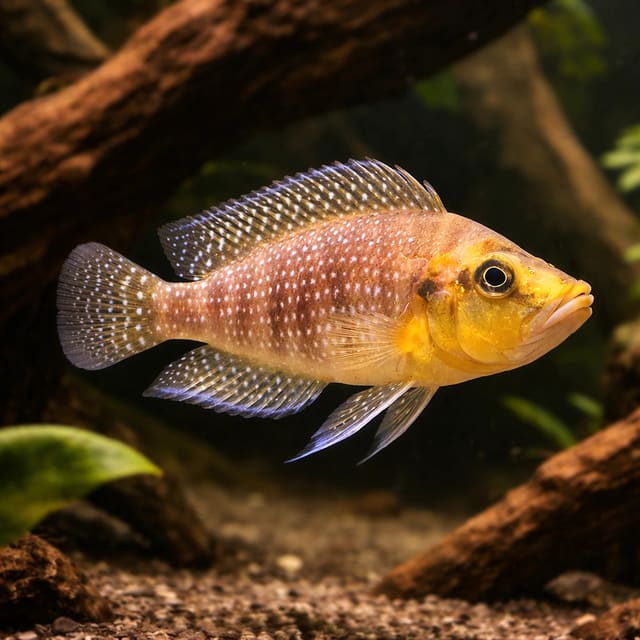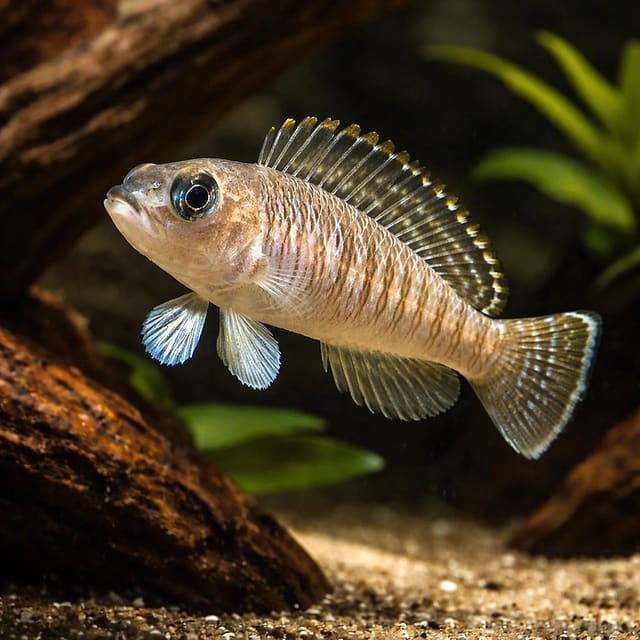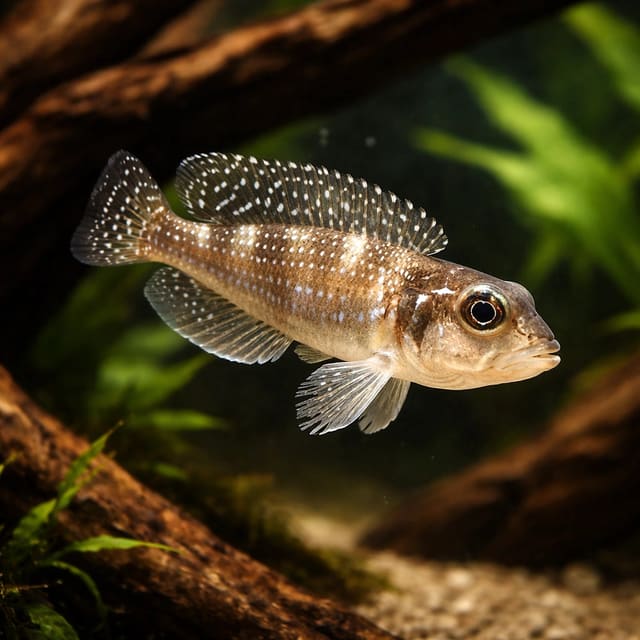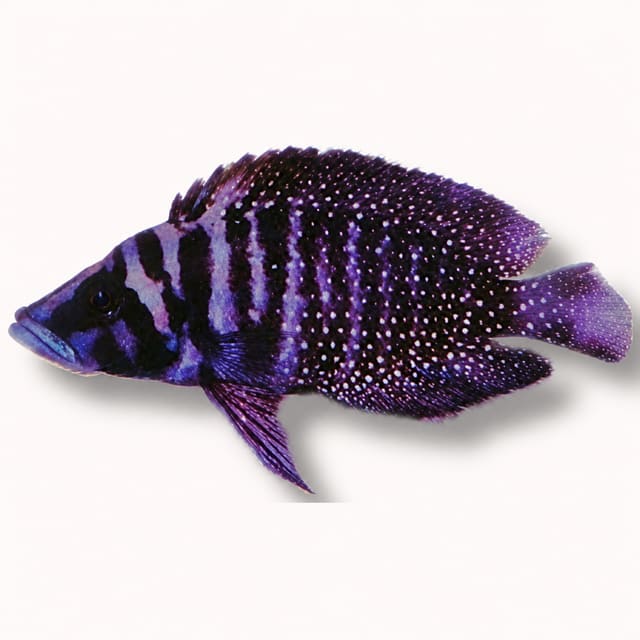
Pearly Compressiceps Zaire (Altolamprologus calvus) – Black Fin
24–27°C · pH 7.5–9
£23.99

Red strain of Lamprologus compressiceps, a 4.5cm Tanganyikan bottom-dweller for 100L+ tanks with rocky territories. Semi-aggressive carnivore.
Adult size is the maximum length this species reaches at full maturity (scientific sources). The livestock you receive will be younger and smaller — pick a size above for the actual shipping size. Product-photo provenance and any image-specific limitations are stated on the listing.
Lamprologus compressiceps
Save when buying multiple fish. Each quantity is one fish; sex and pair formation are not guaranteed unless the selected variant explicitly states them.
Confirm your email, then we’ll send an availability message for this exact item if it returns within 180 days.
This request is only for this product—no newsletter or other promotions. A mail-provider retry may very rarely duplicate the same availability message. Unconfirmed addresses are removed after 48 hours. See our privacy policy.
Red strain of Lamprologus compressiceps, a 4.5cm Tanganyikan bottom-dweller for 100L+ tanks with rocky territories. Semi-aggressive carnivore.
Adult size is the maximum length this species reaches at full maturity (scientific sources). The livestock you receive will be younger and smaller — pick a size above for the actual shipping size. Product-photo provenance and any image-specific limitations are stated on the listing.
Cichlids are a family of roughly 1,800 accepted species, not one care type. Before buying, identify the exact species and source, then compare adult measurement, usable tank dimensions, social system, territory, tested water, diet and an exit plan. No family-wide minimum tank, water range or tank-mate list is safe.
Maintain these water conditions for optimal health and vibrant colors
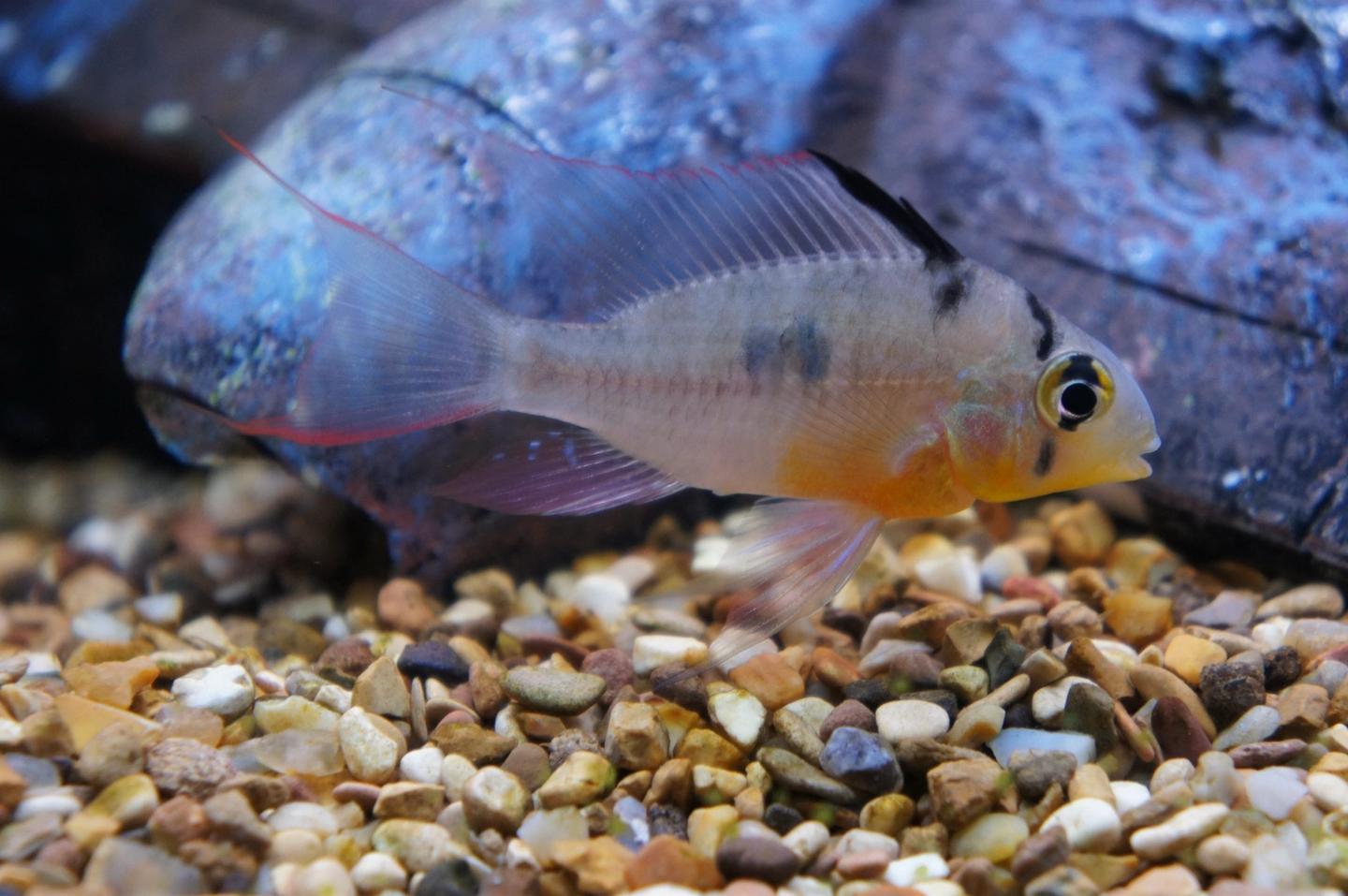
Red colouration on a compressiceps-type body is an unusual combination, and that is exactly what the Compressed Cichlid Red (Lamprologus compressiceps red) offers: the strain's red tones over the narrow body shape the Compressed Cichlid name refers to. At about 4.5 cm when grown, it is a small fish that reads as anything but ordinary in a Tanganyika display.
The care record asks for committed hard-water conditions — 24–27 °C, pH 7.8–9.0 and 10–20 dGH — and a slightly larger footprint than its size might suggest, with 100 litres the recorded minimum. The extra room matters because this bottom-dweller is semi-aggressive and territorial by inclination; its compatibility notes specify tankmates only in a suitably large tank with territories, so generous rockwork with clear boundaries is part of the specification, not a styling choice. Diet is carnivorous, care is moderate, and lifespan is recorded at eight years.
Compare our two compressiceps listings and the differences are instructive. The red form's record asks for 100 litres against the standard form's 80, reflecting compatibility notes that lean harder on space and structure. If your rockwork budget runs to one large pile in a modest tank, take the standard fish; if you can build several distinct territories, the red strain repays the effort every time the light catches it. Either way the water spec is identical, so nothing is lost by upgrading the plan later.
Compatible company includes other Lake Tanganyika cichlids of similar size and temperament — given space and defined territories — and rock-dwelling Tanganyikan species under the same conditions. Avoid small peaceful fish that could be bullied or eaten, slow long-finned fish, aggressive species larger than this cichlid, soft-water community fish, and tiny invertebrates such as shrimp and small snails.
Plan the rockwork before the fish arrives; this strain settles fastest where boundaries already exist on day one. We deliver across the UK by licensed live-animal courier, and live arrival is guaranteed.
No reviews for this item yet. Bought one? Honest reviews only, good or bad.
What customers say about ordering from us
I have a small group of long finned mountain minnows. So was delighted to be able to order ten of this variety to increase the genetics in my tank . The ones I recieved are healthy but it’s to early to give a verdict on wether they are of a long finned type since they are small currently.
Gordon Walker · 23 Sept 2026
100% success travel and "installation". Pleased with quality of purchase. The Siamese fighter a bit "shy" so have not yet seen him at his best yet but looking good. Happy customer. GG
George E Garratt · 21 Sept 2026
Reviews of our shop, collected by Judge.me, an independent third-party review collector. Newest first.