Moderate
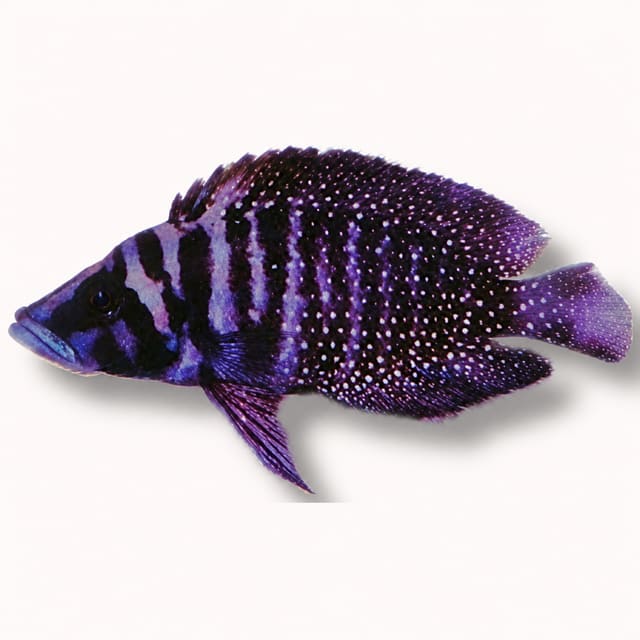
Mutondwe Compressiceps (Altolamprologus compressiceps), 3-4cm
24–27°C · pH 8–8.6 · 243L
£18.99
The Tanzania Red Fin Compressiceps (Altolamprologus compressiceps) is a Lake Tanganyika cichlid with adult-length records of 125 mm standard length in Seriously Fish and 12.3 cm total length in FishBase. It suits intermediate keepers able to maintain a pair in at least 243 litres at 24–28°C and pH 8.0–9.0. Sold individually at the 3–4 cm dispatch grade.
Altolamprologus compressiceps
Save when buying multiple fish. Each quantity is one fish; sex and pair formation are not guaranteed unless the selected variant explicitly states them.
The Tanzania Red Fin Compressiceps (Altolamprologus compressiceps) is a Lake Tanganyika cichlid with adult-length records of 125 mm standard length in Seriously Fish and 12.3 cm total length in FishBase. It suits intermediate keepers able to maintain a pair in at least 243 litres at 24–28°C and pH 8.0–9.0. Sold individually at the 3–4 cm dispatch grade.
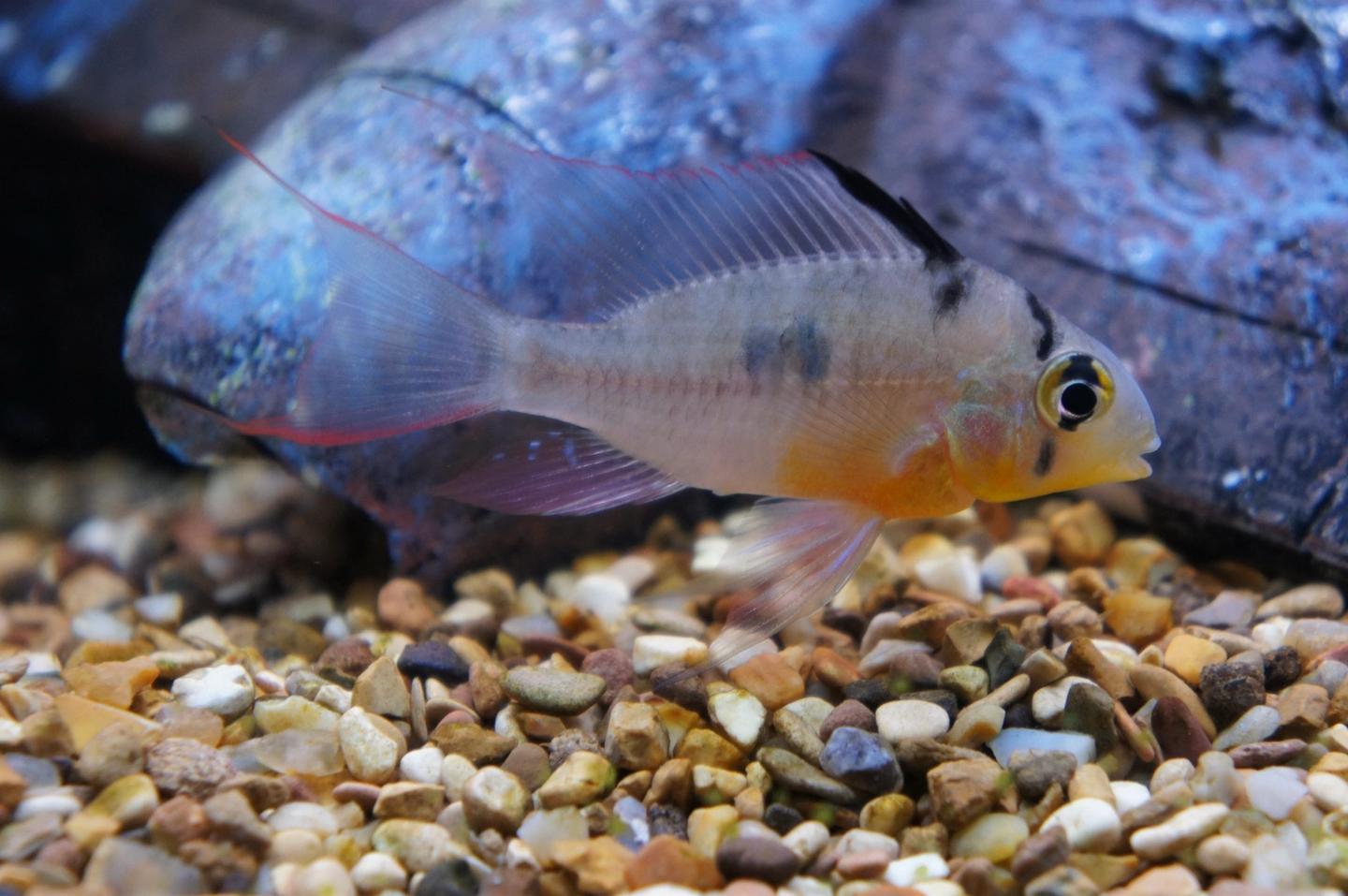
Cichlids are a family of roughly 1,800 accepted species, not one care type. Before buying, identify the exact species and source, then compare adult measurement, usable tank dimensions, social system, territory, tested water, diet and an exit plan. No family-wide minimum tank, water range or tank-mate list is safe.
Maintain these water conditions for optimal health and vibrant colors
Tanzania Red Fin Compressiceps (Altolamprologus compressiceps) is a specialised cichlid from Lake Tanganyika for keepers who enjoy building an aquarium around the animal rather than fitting an animal into a general community. FishBase places the species in the family Cichlidae and records it as endemic to the lake. Its laterally compressed body and elongate mouth are suited to searching narrow rock crevices for animal prey. The red-fin trade form adds locality-associated colour to that distinctive body plan, but the practical buying decision is the same as for the species: allow generous floor space, hard alkaline water and a rock structure full of usable gaps.
Adult length is recorded under two different measurement standards. The Seriously Fish species profile records 125 mm standard length (SL). FishBase separately records 12.3 cm total length (TL). Because SL and TL use different endpoints, keep them as separate source records rather than selecting the larger number as one adult maximum. A fish supplied at the smaller dispatch grade therefore still needs the full adult layout from the start.
This is an intermediate keeper's fish. It does not need constant intervention, yet it does need a stable mineral-rich aquarium, high water quality, a secure rockscape and tank mates chosen around its predatory feeding behaviour. A keeper who can test water, complete substantial weekly maintenance and resist overstocking will see far more natural use of crevices and open rock faces than someone trying to make the fish adapt to a soft-water mixed tank.
Choose this fish when the planned aquarium is a Tanganyika system with at least a 120 × 45 cm base. If the tank is smaller, soft or acidic, or its residents are small enough to be prey, change the stocking plan before the fish arrives. That single decision prevents most avoidable compromises later. Commitment to that purpose-built environment is what makes the fish a rewarding choice rather than a difficult compromise.
One purchase supplies one live fish at the 3–4 cm dispatch grade. That is the size supplied, not the adult size. Prepare the permanent aquarium around the 120 × 45 cm minimum base; the species length records are 125 mm SL in Seriously Fish and 12.3 cm TL in FishBase, not one merged maximum.
Sex is guaranteed only when the selected option explicitly states male or female. This Tanzania Red Fin Compressiceps listing has no sex-guaranteed option. Mature males can grow larger and may develop slightly extended fins, but neither colour, size nor a gallery view determines the sex supplied.
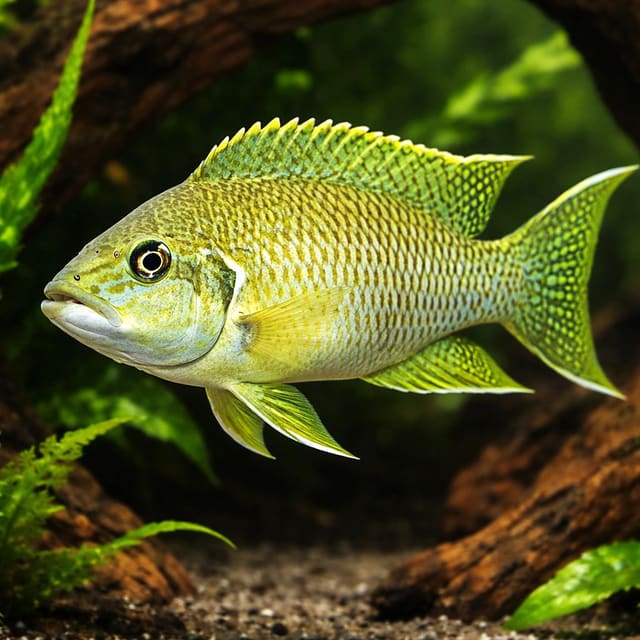
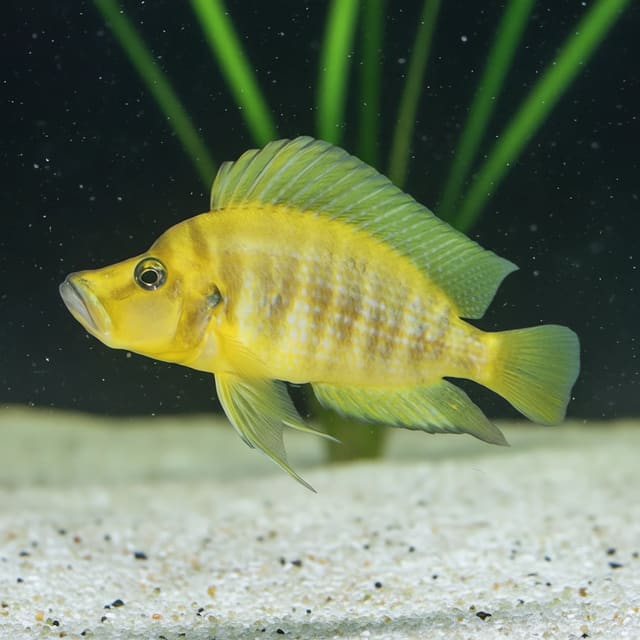
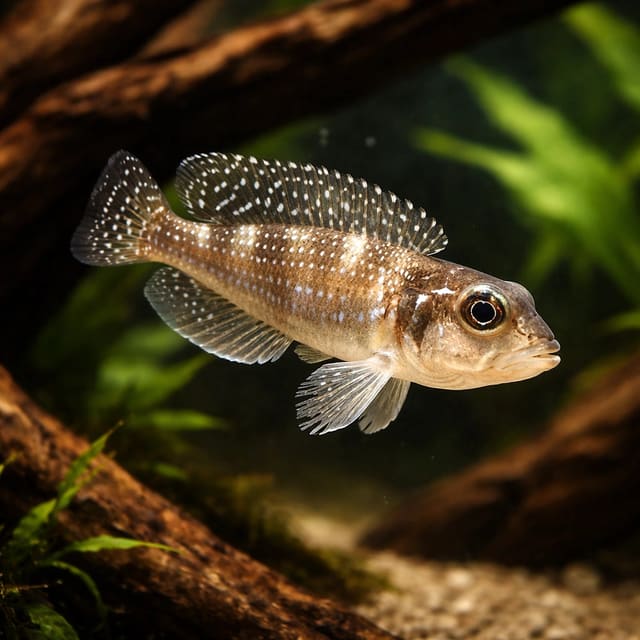
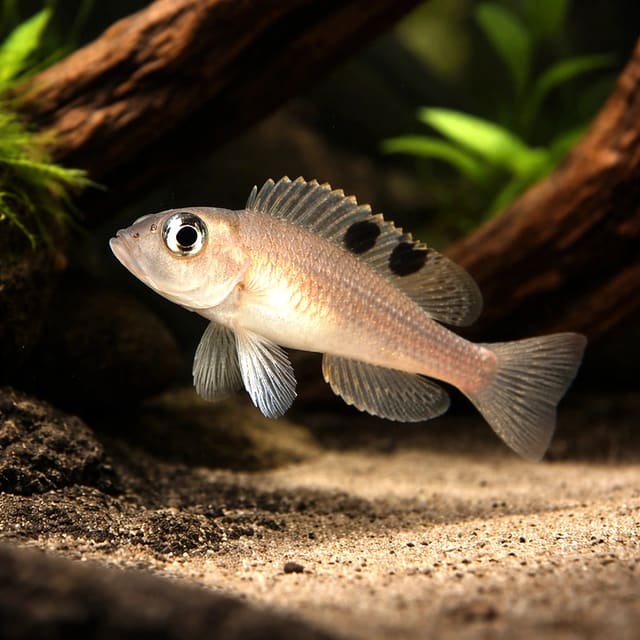
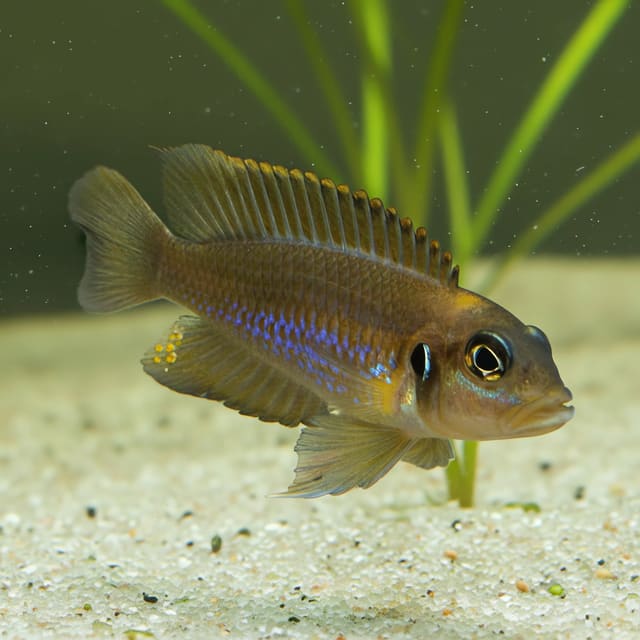
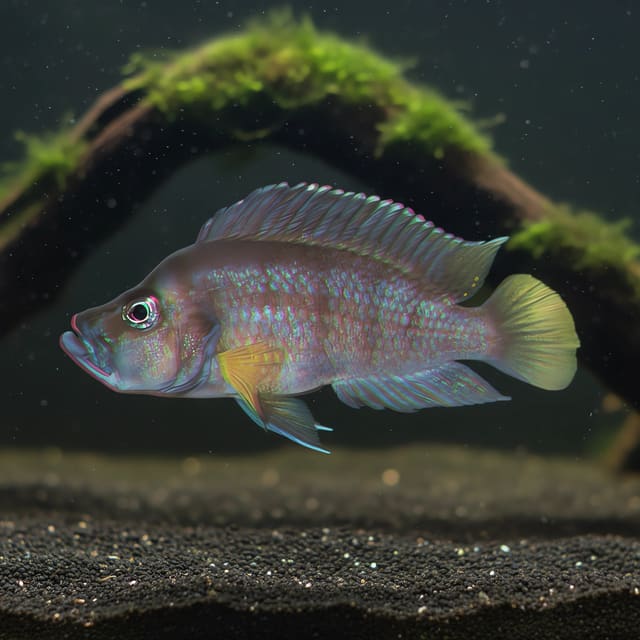
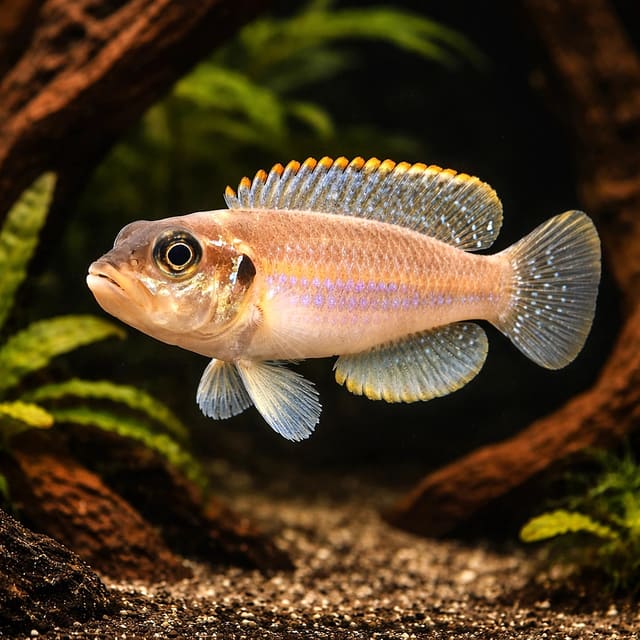
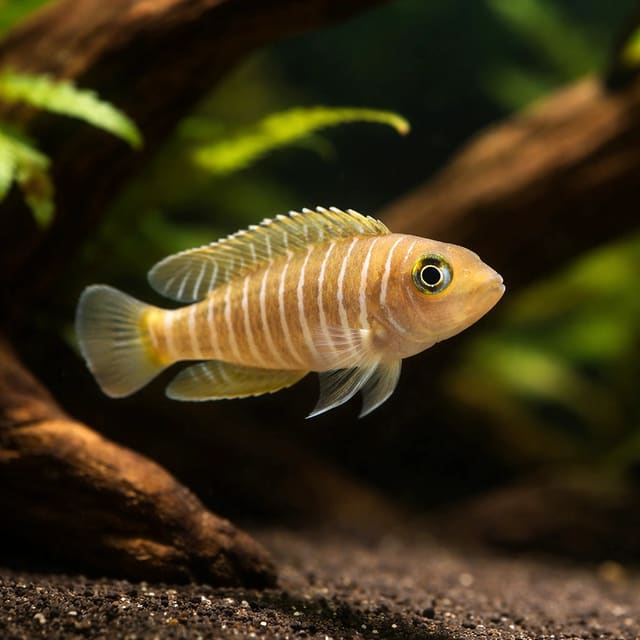
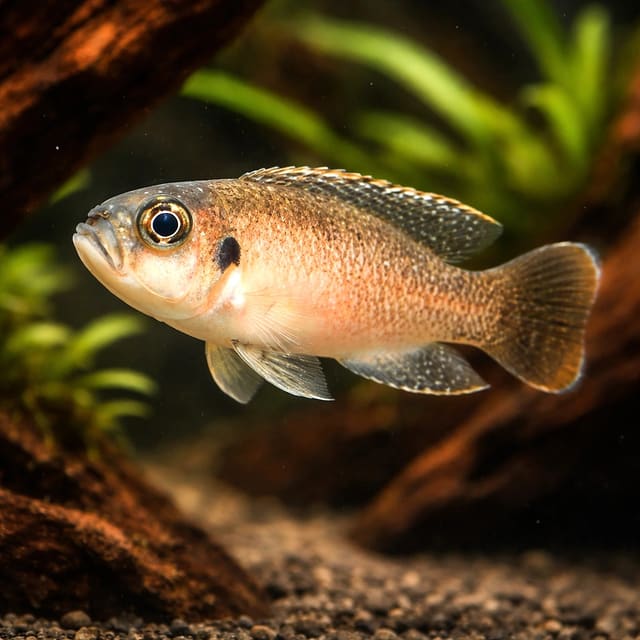
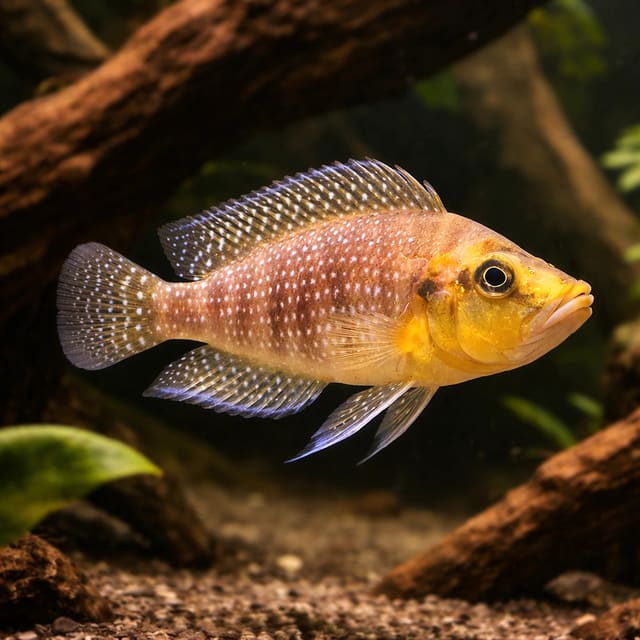
Gallery images have been digitally enhanced to improve image quality. Natural colour, pattern, size and maturity can vary between live animals. Locality forms of Altolamprologus compressiceps can differ in colour pattern, so keep the Tanzania Red Fin identity clear and avoid mixing differently labelled locality forms where preserving a form matters.
| Suits | Not suited to |
|---|---|
| Intermediate keepers able to hold hard, alkaline water steady | Soft, acidic general communities |
| A pair in a rock-rich aquarium of about 243 litres | Small aquaria without a 120 × 45 cm base |
| A carefully chosen Lake Tanganyika community | Fish small enough to be viewed as food |
| Keepers prepared for weekly water-quality work | Tropheus or other fish needing a low-protein diet |
Browse the African cichlid collection to compare animals by adult needs, not as a list of automatic companions. The right alternative may need a different diet, social plan or territory even when it comes from the same lake.
Start with an aquarium base of at least 120 × 45 cm, equivalent to roughly 243 litres in the species profile. Floor area matters because this cichlid reads the aquarium as rock faces, crevices, approach routes and retreat spaces. A tall but narrow tank cannot replace the required base. Groups need a larger aquarium than a pair, and a community needs spare territory rather than every gap being claimed on day one.
Place the main rocks directly on the tank base before adding the sandy substrate. The fish can disturb material around the structure, so a rock balanced on loose sand can become unsafe. Build low, stable piles with several narrow passages, shaded cavities and broken lines of sight. Test every stone by hand before filling the aquarium; if it rocks under gentle pressure, rebuild that part. Leave an open route around the structure so maintenance does not require dismantling the fish's whole environment.
If this is a new system, follow the first tropical aquarium setup guide before choosing an arrival date. A functioning biological filter is essential because fish waste becomes toxic ammonia and nitrite before established bacteria process it. The RSPCA's aquarium environment guidance explains why the filter must be set up and maintained as living biological equipment, not treated merely as a pump.
Plants are optional in this rock-led design. If used, position them where maintenance and digging will not loosen the rock structure. The core habitat is sand, complex rock and clean moving water; decorative additions should support that plan rather than reduce usable floor space.
Keep the aquarium at 24–28°C, pH 8.0–9.0 and 7–25 dGH. These are the species-level aquarium values in the Seriously Fish profile. FishBase records a different environmental range from Lake Tanganyika observations, while OATA's African lake cichlid sheet gives broad group guidance of 23–27°C, pH 8.0–8.6 and 12–18 dGH. For day-to-day aquarium care, use the species aquarium range and choose a stable point that also suits every confirmed tank mate.
Measure the source water before buying the fish. The water chemistry guide explains what pH, hardness, ammonia, nitrite and nitrate tell you, while the water matcher helps compare measured values with the intended range. Recheck after any change to substrate, rock, water source or maintenance routine; a tank that once matched can drift.
A worked example makes the risk clear. If the aquarium is kept at 25°C and pH 8.3, then replacement water should be conditioned and brought close to those values before it enters the tank. A sudden swing is not made safer simply because both the old and new readings fall somewhere inside a wide range. Stability means repeating a controlled process, not accepting any number between the limits on different days.
Mineral-rich water does not excuse poor filtration. Provide vigorous aeration and enough circulation to prevent still waste pockets behind the rocks. Keep the surface moving and make sure the fish can choose both sheltered crevices and well-oxygenated open water.
At roughly 243 litres, the species profile uses a turnover of four to five times the aquarium volume per hour and illustrates that with a filter rated around 970–1,215 litres per hour. Treat this as a planning check, then allow for the resistance created by media, pipework and the rockscape. The goal is clean, oxygenated water throughout the aquarium, not a strong jet that pins the fish into one corner.
Position the outlet so surface movement is obvious and water travels around, rather than only across, the rock piles. Place the intake where debris can reach it but where the fish cannot be trapped. After feeding, watch where small particles settle. A dead spot behind a rock wall is a layout problem: adjust the flow or structure rather than accepting a permanent waste pocket.
Check the filter for blockages during the weekly routine. When media needs cleaning, rinse it lightly in water removed from the aquarium; do not run it under the tap. This preserves the bacterial population that processes ammonia and nitrite. Clean only what is needed to restore flow.
Strong filtration and aeration work alongside, not instead of, water changes. The filter processes waste, but it does not remove every dissolved end product or reset mineral balance. A stable cichlid aquarium comes from the combined routine: appropriate stocking, measured feeding, uninterrupted biological filtration, oxygenation and regular replacement of conditioned water.
Observe the fish as part of the flow check. Normal use of both crevices and open areas suggests the layout gives choice. Repeated surface hanging, unusually rapid gill movement or a sudden refusal to leave one low-flow corner calls for immediate water tests and equipment checks. Those signs do not identify one cause by themselves, but they tell you to verify oxygenation, temperature and toxic nitrogen compounds before making speculative changes.
Excellent water quality is a central requirement for this species. Seriously Fish says weekly water changes of up to 50% should be considered mandatory. Choose a consistent proportion within that instruction that keeps the aquarium stable, and increase attention after any event that adds waste, such as a feeding mistake or filter-flow reduction. Replacement water must be treated for chlorine or chloramine before it enters the aquarium.
Do not turn each maintenance session into a redesign. Stable boundaries help fish use the rockscape confidently, while constant rearrangement removes established retreats. Change the structure when safety or persistent conflict requires it, not simply because the aquarium looks different from week to week.
Use the record to spot gradual drift. If nitrate rises faster over several weeks, the answer may be excess food, reduced filter flow, increased biomass or waste trapped behind rock. Deal with the cause rather than compensating with an unexplained chemical adjustment. If pH or hardness moves away from the chosen target, compare the source water, substrate and replacement-water process before changing several factors at once.
OATA advises watching for changes in swimming, colour, temperament, breathing, body condition and feeding. A single observation can be temporary; a cluster or a persistent change deserves water tests and prompt advice. This approach keeps care based on visible checkpoints and measured water rather than waiting for a severe symptom.
Altolamprologus compressiceps is a specialised carnivore. Seriously Fish describes wild feeding on invertebrates, crustaceans and smaller fishes, with the narrow mouth used to reach prey between rocks. In captivity, many accept dried food, but the diet is better built around appropriate live or frozen foods such as bloodworm, Tubifex, Artemia, chopped prawn, small earthworms and similar items. A good dried food can add variety; it should not turn the plan into a plant-heavy ration.
Do not use feeder fish. The species profile notes the risk of introducing parasites or disease and the poor nutritional value of feeder fish that have not been properly conditioned. Frozen and prepared foods give a more controllable route to dietary variety without adding a live fish of uncertain health to the aquarium.
OATA's African lake cichlid guidance recommends feeding only what the fish consume within a few minutes, twice a day. Apply that frequency with the species' carnivorous food choices and the actual condition of the fish. Two modest feeds are easier to observe than one excessive feed that vanishes into the structure.
Body condition and feeding response are useful trends. A fish that approaches food but repeatedly misses it may be under pressure or facing an unsuitable food size. A fish that abruptly stops feeding while breathing faster needs water checks before more food is added. The aim is a steady, varied ration that supports condition without turning the hidden parts of a rockscape into a waste store.
Tropheus and other fish requiring low-protein diets are poor companions because one feeding plan cannot honestly meet both needs. Compatibility begins with diet as well as temperament and water chemistry.
A single pair is the clearest social plan. The species can be maintained in groups in larger aquaria, but extra fish require extra floor area and rock structure rather than merely extra water depth. Do not assume two young fish will become a compatible pair, and do not use a smaller temporary aquarium while waiting to see how they develop. Build the adult environment first and keep a separation plan available if persistent pressure appears.
Males can grow considerably larger than females and may develop slightly extended fins with maturity. Those biological differences can help an experienced keeper interpret mature fish, but they do not identify the sex of this offer and they do not justify selecting by a juvenile photograph. The sex statement in the offer remains the only promise.
The species varies in colour pattern around Lake Tanganyika. Seriously Fish lists several named forms and notes that the red-fin Kigoma form comes from Tanzania. It recommends keeping different populations apart and clearly labelled to avoid hybridisation. Treat Tanzania Red Fin as a locality-form identity to preserve, not as a claim that every fish will show identical colour or maturity.
Growth is slow, and the profile notes that sexual maturity can take a year or more. Use that as a reason for patient planning, not as a guaranteed timetable for one fish. The aquarium should already provide adult space, stable water and feeding access while the fish grows. A 3–4 cm dispatch grade describes what arrives; it does not define the final territory or prove age.
If breeding behaviour develops, the female selects a narrow rock crevice that the male may not be able to enter. That makes the quality of the rockwork relevant even when breeding is not the goal: varied crevice widths give the fish choices. Keep rocks secure, avoid repeatedly opening the chosen cavity, and watch that the other fish retains access to food and retreat space.
Finish the aquarium, confirm stable water and decide where the fish will be released before the delivery day. The delivery and Live Arrival Guarantee policy sets the evidence and acclimatisation steps. Follow them in order so the animal is handled calmly and any problem can be assessed fairly.
Before release, confirm that the aquarium remains within the planned 24–28°C and pH 8.0–9.0 range and that ammonia and nitrite are zero. Those aquarium checks come from the care plan, not from adding extra steps to the parcel procedure. Keep the route to the intended rock area clear so the fish can move into shelter without being chased through the whole tank.
Observe breathing, posture, use of crevices and willingness to feed. Offer a small, familiar carnivorous food and confirm the fish takes it before increasing the ration. Check that established residents do not block every entrance or intercept every feed. Test water more often after adding livestock because the biological filter must process the extra waste.
A newly introduced fish may spend time close to cover; the important checks are whether it can breathe normally, move without persistent pursuit and reach food. If behaviour changes sharply, test the water and review compatibility before repeatedly moving rocks or adding treatments.
A well-chosen Lake Tanganyika community can work because the species is not described as particularly territorial. That does not make every Tanganyikan fish compatible. Screen each candidate through three questions: does it share the 24–28°C, pH 8.0–9.0 and 7–25 dGH plan; is it too large to be treated as prey; and can it eat an appropriate diet without conflict?
| Screen | Decision |
|---|---|
| Small enough to be food | Avoid |
| Needs a low-protein diet, including Tropheus | Avoid |
| Lake Tanganyika species with matching water and diet | Consider only after space and behaviour checks |
| Another compressiceps locality form | Keep separate to protect locality identity |
Occupying a different part of the aquarium can reduce direct competition, but it does not override water, food or prey risk. Likewise, sharing the same lake does not prove that two species should be kept together. Use the tank's actual base area, rock access and feeding routes to decide whether the combination has enough resources.
Add peaceful residents before more assertive cichlids where a community is being built, and avoid filling every territory immediately. OATA notes that rearranging decor can reduce aggression as fish establish new territories. Use that intervention when behaviour shows a real need, while keeping every rock stable and preserving several usable retreats.
Watch interactions at feeding and at crevice entrances. A fish that cannot leave cover to eat, is repeatedly driven across the aquarium or loses condition is not benefiting from a theoretically compatible list. Separate the fish or revise the layout before the pattern becomes normal.
Compatibility remains conditional on the individual fish, available territory and aquarium size. The species profile supports a pair, groups in larger aquaria and a carefully chosen Tanganyikan community. Use those as boundaries, then judge the actual aquarium by observable access to space, food and shelter.
Begin with the least disruptive effective response. Spread food across suitable locations, check water and verify that every cave has a usable exit. If the structure concentrates conflict, carefully rearrange part of it while maintaining stability. If persistent pressure or prey behaviour continues, separation is the responsible outcome.
Do not solve a space problem by adding more fish. Group keeping is explicitly tied to larger aquaria, and community success depends on deliberate selection. A calm display comes from spare capacity: unclaimed crevices, open approach routes, strong filtration and enough time to observe before the next addition.
Seriously Fish records 125 mm standard length (SL), and FishBase separately records 12.3 cm total length (TL). They use different endpoints, so neither should be selected as one combined maximum; the fish supplied at 3–4 cm still needs the supported adult aquarium layout.
Use an aquarium with a base of at least 120 × 45 cm, about 243 litres, for a pair. Groups and mixed Tanganyika communities need more room so every fish can use rock crevices without being crowded.
A single pair is the clearest starting point. The species can be kept in groups only in larger aquaria, with extensive rockwork and enough separate crevices for the fish to choose their own spaces.
It is best suited to an intermediate keeper who can maintain hard, alkaline water, excellent water quality and secure rockwork. The work is manageable, but the water chemistry and compatibility decisions are specialised.
Build its diet around suitable meaty foods. Captive fish may accept quality dried food, but live or frozen bloodworm, Artemia, chopped prawn, small earthworms and similar foods match the specialist carnivorous diet described for the species.
Keep the aquarium at 24–28°C, pH 8.0–9.0 and 7–25 dGH. These are the species aquarium values in the Seriously Fish profile, so stability within that range matters more than chasing daily fluctuations.
It is not described as especially territorial, but it is a predator of small animals and needs a carefully planned community. Give each fish rock crevices, watch feeding access and separate fish if persistent pressure develops.
Choose a well-planned Lake Tanganyika community whose members share the water conditions and are too large to be viewed as food. Avoid Tropheus and other fish that require a low-protein diet, because their feeding needs conflict.
Start filming every parcel while it is still sealed, then open it in one continuous take with the fish still in the sealed bag. Be present to receive it, inspect it the same day, float the bag for 20–30 minutes before releasing the fish, and contact Tropical Fish Co the same day with your order number and video if anything is wrong.
No reviews for this item yet. Bought one? Honest reviews only, good or bad.
What customers say about ordering from us
Easy website plenty of info on fish your buying great to pick a time slot
TRACEY DURRANT · 7 Oct 2026
Got some lovely fish thank you
Kevin Mackie · 7 Oct 2026
Reviews of our shop, collected by Judge.me, an independent third-party review collector. Newest first.