Moderate
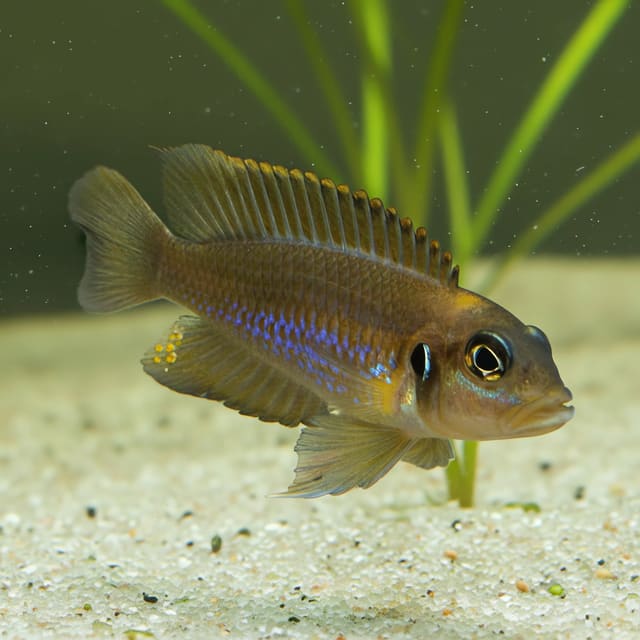
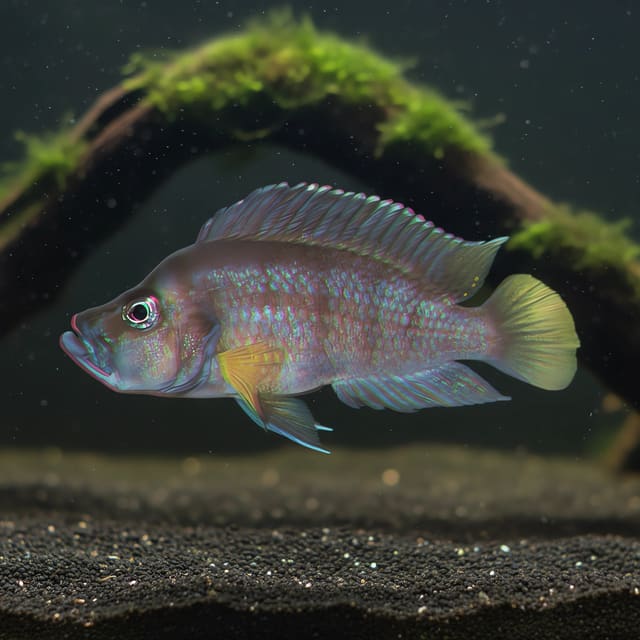
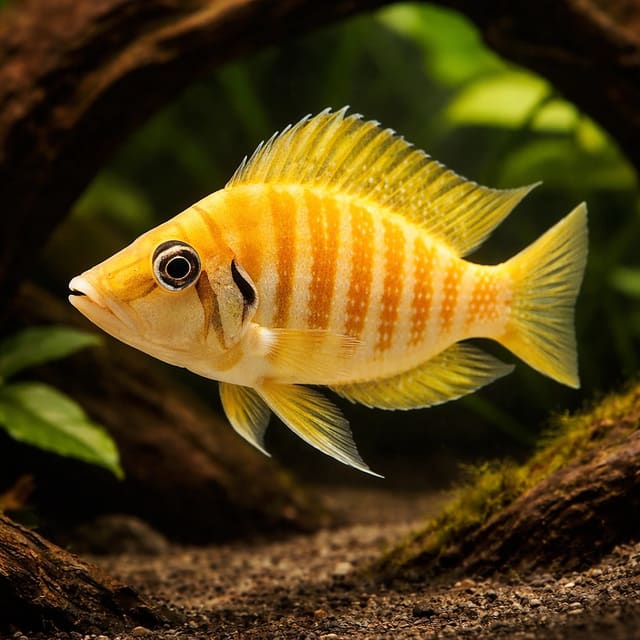
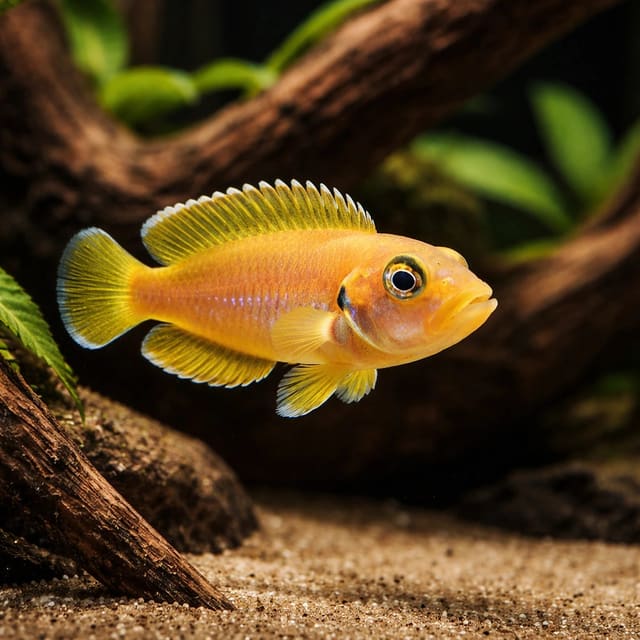
Gold Ocellatus Shell-Dweller (Neolamprologus ocellatus)
23–25°C · pH 8–9
£16.59

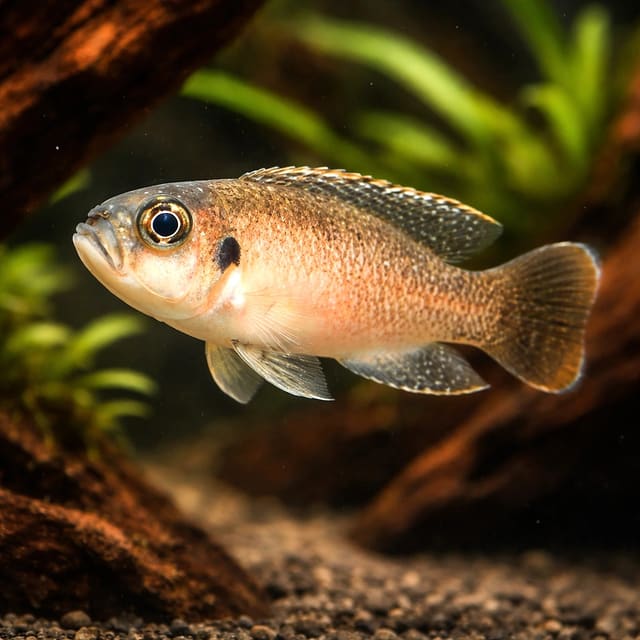
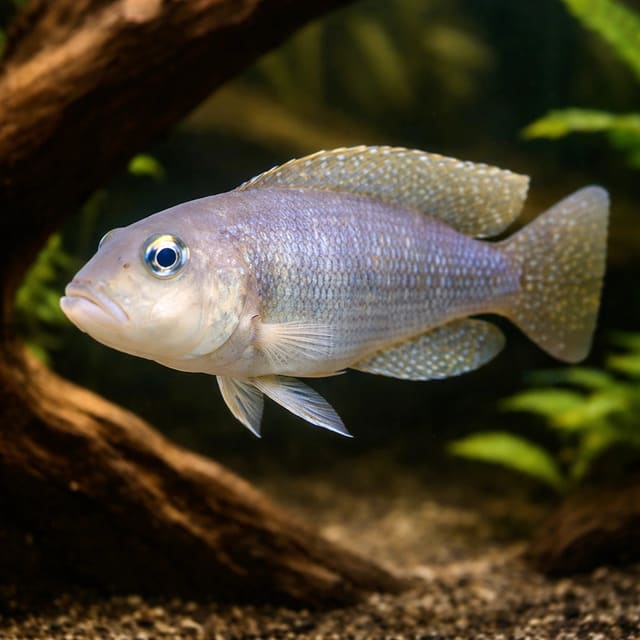
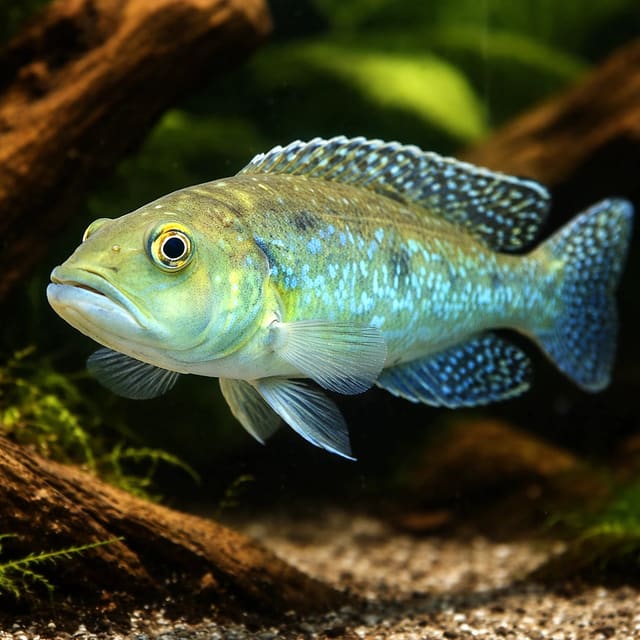
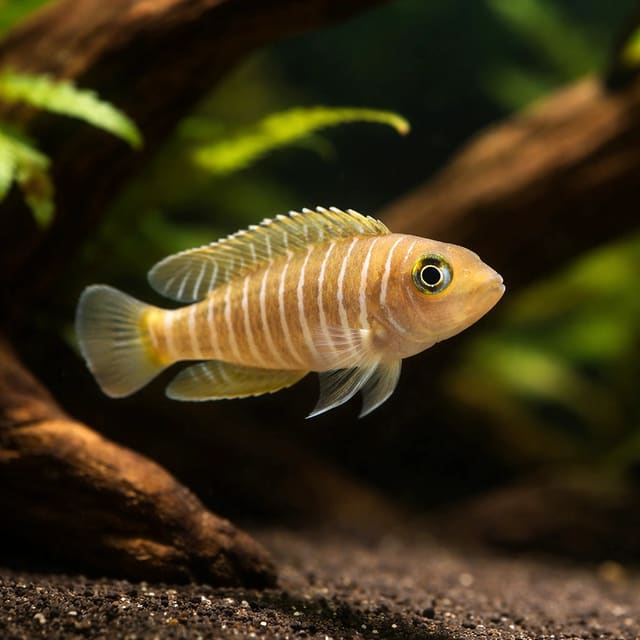
Ocellated Shell-Dweller (Lamprologus ocellatus) is a compact Lake Tanganyika cichlid with bold territorial behaviour. It suits a mature hard-water aquarium built around fine sand, plentiful empty shells and enough floor space to separate territories. One purchase supplies one live fish in the chosen dispatch size.
Adult size is the maximum length this species reaches at full maturity (scientific sources). The livestock you receive will be younger and smaller — pick a size above for the actual shipping size. Product-photo provenance and any image-specific limitations are stated on the listing.
Lamprologus ocellatus
Save when buying multiple fish. Each quantity is one fish; sex and pair formation are not guaranteed unless the selected variant explicitly states them.
Ocellated Shell-Dweller (Lamprologus ocellatus) is a compact Lake Tanganyika cichlid with bold territorial behaviour. It suits a mature hard-water aquarium built around fine sand, plentiful empty shells and enough floor space to separate territories. One purchase supplies one live fish in the chosen dispatch size.
Adult size is the maximum length this species reaches at full maturity (scientific sources). The livestock you receive will be younger and smaller — pick a size above for the actual shipping size. Product-photo provenance and any image-specific limitations are stated on the listing.

Cichlids are a family of roughly 1,800 accepted species, not one care type. Before buying, identify the exact species and source, then compare adult measurement, usable tank dimensions, social system, territory, tested water, diet and an exit plan. No family-wide minimum tank, water range or tank-mate list is safe.
Maintain these water conditions for optimal health and vibrant colors
Ocellated Shell-Dweller (Lamprologus ocellatus) is a tiny Lake Tanganyika cichlid that behaves as though its shell bed is the centre of the world. It digs, rearranges sand, buries chosen shells and defends the small patch immediately around its home. That combination makes it absorbing to watch, but it also means that its modest body length must never be mistaken for modest space or social needs.
One purchase supplies one live fish in the size chosen at the time of ordering. The listing carries 2–3 cm, 3.5–4 cm and 4.5–5 cm dispatch sizes; the live selector shows which can actually be ordered. The size you select is the size supplied, not the adult size. A species profile records around 6 cm standard length, while FishBase records 5.8 cm total length. Those are different measuring conventions, so the practical message is simply to plan for an adult of about 6 cm rather than building the aquarium around a juvenile dispatch grade.
| Suits | A keeper prepared to provide hard alkaline water, fine sand, several shells per fish and a deliberate territory plan |
|---|---|
| Less suitable for | An uncycled aquarium, a generic soft-water community or a cramped mixed bottom-dweller setup |
| Adult planning size | About 6 cm; allow for behaviour and territory, not body length alone |
| Routine aquarium range | 23–27 °C, pH 7.5–9.0 and 10–25 dGH from the species husbandry profile |
| Key furnishing | Deep fine sand and more suitable empty shells than fish |
| Feeding style | Small live and frozen invertebrate foods as the mainstay, with suitable fine dried foods accepted |
For many cichlids, rocks, caves or broad open territory dominate the plan. Here, the shell is the centre of shelter, courtship and defence. FishBase describes the species living in, or at least breeding in, Neothauma shells in Lake Tanganyika. In an aquarium, that biology becomes a very practical design brief: give each fish real shell choices on a sand bed, leave room between likely territories and expect the arrangement to change as the fish digs.
The species is benthopelagic, but its day-to-day interest is concentrated close to the bottom. A shell that looks like decoration to us is valuable living space to the fish. One individual may bury a shell until little more than its entrance remains, patrol a surprisingly small but fiercely defended boundary and object when a hand, tool or neighbouring fish enters it. That is normal shell-dweller behaviour, not a reason to squeeze more fish into the same footprint.
This is a specialist miniature cichlid rather than a universal nano fish. The water must remain mineral-rich and alkaline, the biological filter must already be mature and the footprint needs to support territories. A 40-litre aquarium measuring about 45 × 30 × 30 cm is given for a pair or one male with two or three females by the species profile, while FishBase gives a 60 cm minimum aquarium. A colony needs more room. When deciding between those references, favour the plan that gives the actual fish more usable sand area, not the smallest number that can be found.
Fine sand matters because digging and shell placement are part of the fish's normal behaviour. Rough gravel works against that behaviour and traps waste around the very area the fish uses most. Provide a sand depth of roughly 5 cm and more shells than individuals, with shell entrances that the fish can inspect and enter. The extra shells reduce the pressure to fight over a single resource, although they do not remove territorial behaviour.
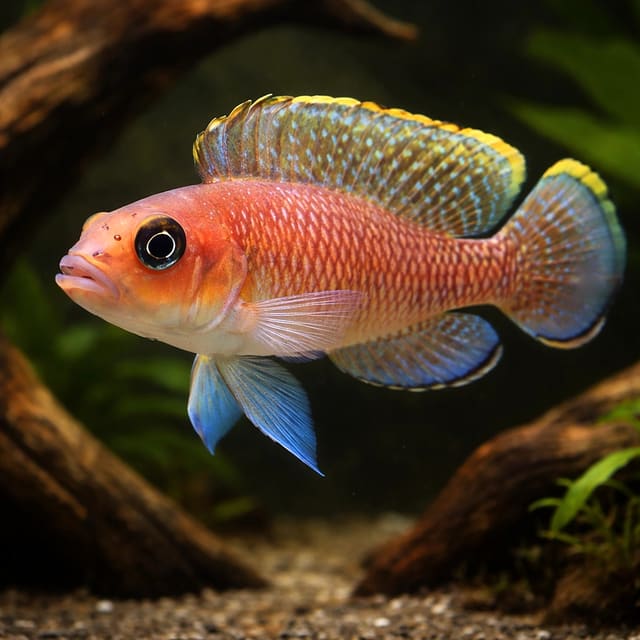
Sexual differences are described in specialist literature: males become larger, with gold edging to the dorsal and anal fins, while females have white edging. Those observations can help an experienced keeper assess mature fish, but they are not a retail sex guarantee. Sex is guaranteed only when the selected option explicitly states male or female. This Ocellated Shell-Dweller listing has no sex-guaranteed option. Plan the aquarium so that an unexpected sex balance can be managed, including a larger alternative space or a safe separation plan if conflict develops.
The fish is sold as one animal, not a pair or colony. If the intended plan needs several individuals, calculate the total footprint, number of shells, filtration capacity and likely adult territories before ordering the group. The most useful purchase decision is not “how many small fish fit today?” but “how many adult territories can this mature aquarium support without one fish being pinned away from food or shelter?”
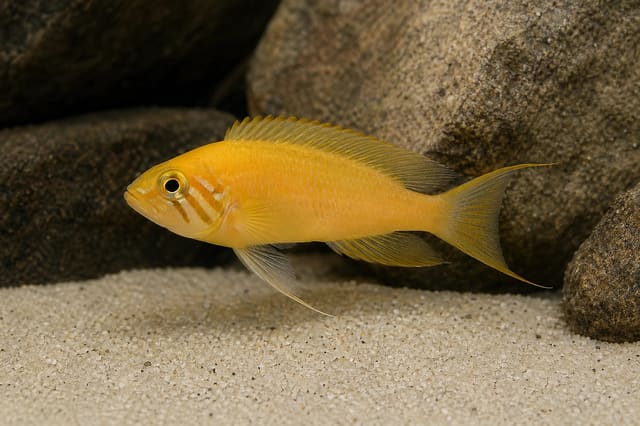
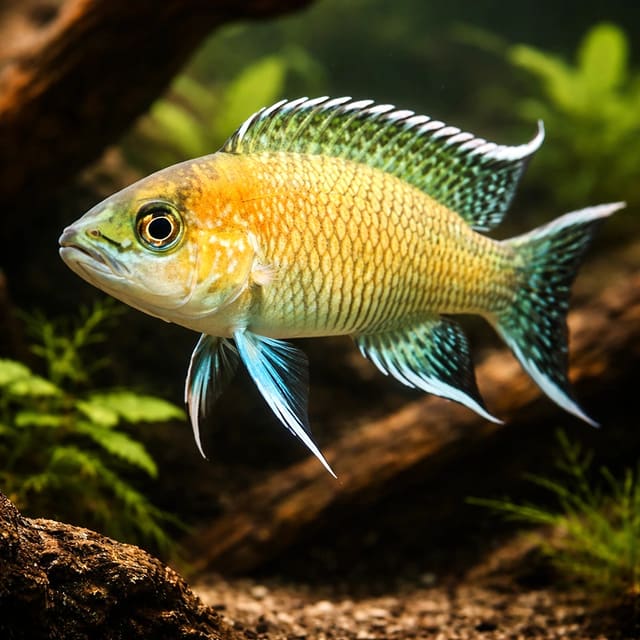
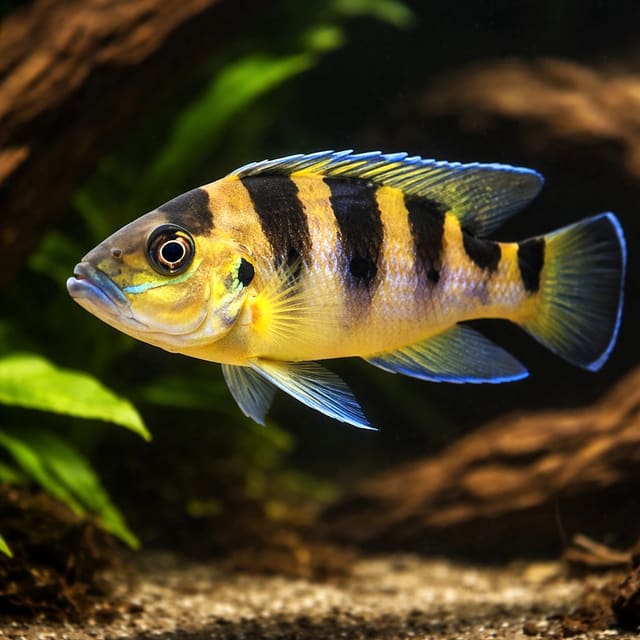
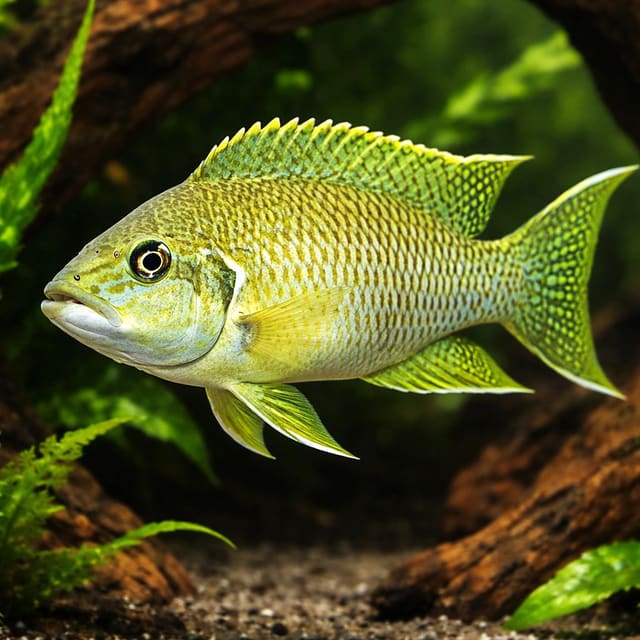
Gallery images have been digitally enhanced to improve image quality. Natural colour, pattern, size and maturity can vary between live animals.
Set up and mature the aquarium before the fish is dispatched. A working biological filter converts toxic ammonia first to nitrite and then to the less harmful nitrate, but that bacterial population takes time to establish and can be overwhelmed by a sudden increase in feeding or livestock. The first tropical aquarium guide explains the preparation sequence; use liquid tests to confirm zero detectable ammonia and nitrite rather than assuming that clear water is safe.
Lake Tanganyika cichlids are adapted to alkaline, mineral-rich water. For this species, the detailed husbandry profile gives 23–27 °C, pH 7.5–9.0 and 10–25 dGH. FishBase records wild environmental values of 23–25 °C, pH 8.0–9.0 and 9–19 dGH. Wild records describe where the species has been found; they do not automatically replace an aquarium husbandry range. Choose a stable point within the species-care range that also suits every other animal in the aquarium.
Test the actual source water and aquarium. UK tap water differs widely, and a label such as “hard water area” is not precise enough for a Tanganyika plan. The water chemistry guide covers pH, hardness and nitrogen waste, while the water matcher can help compare measured values with the range stated here. If adjustment is necessary, make it deliberately and gradually; avoid chasing a precise pH with rapid chemical swings.
| Parameter | Practical target |
|---|---|
| Temperature | 23–27 °C for routine aquarium care |
| pH | 7.5–9.0, kept stable and alkaline |
| General hardness | 10–25 dGH from the species profile |
| Ammonia and nitrite | Zero detectable before introduction and during routine care |
| Nitrate | Controlled through suitable stocking, feeding, plants where appropriate and regular maintenance |
Use fine sand at least about 5 cm deep across the territory area. The fish must be able to scoop and move it without scraping itself. Add more clean, aquarium-safe empty snail shells than there are fish. Suitable shells need an opening the fish can enter and enough internal room to turn; shells with sharp damage, residues or unsuitable coatings do not belong in the aquarium.
Spread the shells rather than stacking every one into a single tight pile. Visual breaks made with carefully placed rockwork can help divide the footprint, but the rock structure must be stable before sand is added so digging cannot undermine it. Keep enough open sand for normal excavation and enough clear space around each likely shell entrance for the fish to leave, feed and display.
The fish may bury a shell, pile sand around it or even cover neighbouring shells. Resist the urge to restore a showroom layout every time. Observe which changes are normal and which indicate that one fish has lost access to shelter or food. When maintenance is needed, work slowly around occupied shells. A territorial adult may nip a hand that enters its boundary, so use an appropriate tool and avoid crushing or blocking a fish inside a shell.
A 45 × 30 × 30 cm aquarium of roughly 40 litres is cited for a pair or one male with two or three females by the species profile. A colony requires a larger aquarium. FishBase gives a 60 cm minimum aquarium length. Both references remind us that the shell bed's usable base matters more than nominal litres alone. A tall, narrow aquarium can hold the same volume while providing less territorial floor space.
For a single display group, start conservatively and watch access to shells and food. If keeping several fish, provide more shells than fish and favour more females than males where sex can be reliably established as adults. That social guidance is not a promise that every group will settle. Individual temperament, the aquarium's shape and the distribution of shells all matter. Keep a mature separation option available before aggression becomes an emergency.
A lid is sensible even though the species uses the lower aquarium. Fit equipment so there are no escape gaps, maintain reliable heating and ensure the filter produces oxygenation without turning the shell bed into a high-current channel. Broad African lake cichlid guidance recommends strong filtration and good aeration, especially when several fish share the system. Direct the return so every area receives circulation while the fish can still rest and feed normally near the bottom.
FishBase describes L. ocellatus as a microfeeder on invertebrates. The species profile says live and frozen foods should form the bulk of the diet, while good dried foods are usually accepted. Use foods small enough for the mouth: appropriately sized frozen or live invertebrate items can form the main variety, supported by a quality fine cichlid pellet or granule that the fish readily takes.
Offer portions that are consumed promptly and distribute food so every fish can leave its shell and eat without entering a neighbour's defended entrance. Watch shy or subordinate individuals rather than judging the meal by the boldest fish. Uneaten food lodged between shells or under rockwork decomposes where it is difficult to see, so siphon carefully around the shell bed and reduce the next portion if leftovers appear.
A varied diet is more useful than an elaborate timetable. Appetite, body condition and behaviour give feedback: a settled fish should respond to food, maintain a normal outline and return to ordinary shell activity after feeding. A fish that remains hidden, cannot approach food or is repeatedly driven away needs investigation of territory and social pressure as well as water testing.
General African lake cichlid guidance recommends a partial water change of 25% at least once every week, along with regular testing. Treat that as a routine starting point and adjust to the real nitrate trend and stocking load without making abrupt chemistry changes. Dechlorinate replacement tap water and bring it close to the aquarium temperature before adding it slowly.
Check the filter for reduced flow, but preserve its biological community. Rinse dirty filter media lightly in water removed from the aquarium rather than under the tap, and avoid replacing every biological medium at once. Siphon exposed waste while respecting occupied shells. The aim is a clean, stable system, not a sterile shell bed rebuilt every week.
Keep a simple log of temperature, pH, hardness, ammonia, nitrite and nitrate, especially during the first weeks after adding fish. Notes make gradual drift visible and help separate a social problem from a water-quality problem. If breathing quickens, colour changes abruptly, fins become damaged or a fish stops feeding, test the water immediately and review aggression, equipment and recent maintenance before guessing at a treatment.
Have the aquarium ready and someone present to receive the parcel. The current delivery and Live Arrival Guarantee policy is the authority for postcode coverage, confirmed delivery day and claim terms. For an arrival that protects both the fish and any potential claim, follow this order:
After introduction, give the fish space to find shelter and monitor breathing, balance and access to a shell. Test the aquarium if behaviour is concerning. Do not make several large changes at once; a stable prepared system and quiet observation are more informative than reacting to every brief hiding response.
Once the fish is feeding, note which shell it uses, how far it patrols and which routes it takes to food. That map is more informative than assuming that every shell has equal value. A shell close to the front glass may remain empty while one beside a rock boundary becomes the focus of repeated defence. If several fish are present, each needs a route from refuge to food that does not always pass another fish's entrance.
Normal settling can include digging, short displays and a quick retreat into a shell. Concern rises when one fish cannot emerge, misses repeated feeds, breathes rapidly, loses condition or carries damage. Test ammonia, nitrite, nitrate, temperature and pH before treating the problem as behavioural. If the water is stable, review shell distribution and usable floor area. A second mature aquarium is safer than waiting for a trapped fish to become visibly weak.
When a territory arrangement is failing, make one clear change and observe the result. Adding several suitable shells is more useful than moving a single contested shell a few centimetres. A stable rock boundary can divide sight lines, but it must not create a narrow dead end or a structure that digging can undermine. Keep an open feeding route and make sure every shell opening remains clear.
Do not clean every shell or flatten every sand mound during routine maintenance. Those structures carry the fish's current territory information. Remove visible waste with a narrow siphon, work in sections and leave occupied shells undisturbed wherever possible. If a shell has to move, check carefully that no fish or fry is inside before lifting it from the water.
A 2–3 cm juvenile occupies little physical volume, but adult behaviour develops as it grows. Revisit shell sizes, territory spacing and feeding access rather than assuming the original juvenile layout will remain adequate. The largest dispatch grade on the listing is still not a promise of maturity or sex, and a fish bought small may reveal a different social role later.
Keep records of introductions, layout changes and conflict. If chasing begins after a new fish arrives or after shells are rearranged, the timing helps identify the trigger. If it persists despite sensible space and structure, separation is a welfare response rather than a failure. The goal is not to force a visually pleasing colony; it is to maintain fish that can shelter, feed and behave normally without continual exclusion.
The Ocellated Shell-Dweller is territorial around its shell and the immediate sand patch. A fish does not need to cross the whole aquarium to make life difficult for a neighbour; it only needs to control the route between that neighbour and a shell, feeding spot or safe retreat. Compatibility therefore begins with the base area and territory map rather than a list of species names.
Provide more shells than fish and space them so one dominant fish cannot guard every entrance from a single position. Break sight lines without filling the sand bed with unstable structures. During the first days and after any layout change, watch where each fish sleeps, feeds and retreats. Repeated chasing, damaged fins, a fish pinned into an upper corner or one individual missing meals means the arrangement needs intervention.
The species profile describes 40 litres for a pair or one male with two or three females, and recommends more females than males when several fish are kept. It also says a colony needs a larger aquarium. Those are planning patterns, not a guarantee that any randomly purchased group will have the intended sex ratio or temperament. This offer is not sex-selected, so build in room to adapt as the fish mature.
A larger colony layout needs multiple shell clusters, clear gaps between clusters and enough feeding access that lower-ranking fish do not have to cross a dominant territory at every meal. Additions to an established colony can be difficult because existing fish already own the best sites. Quarantine and introduction should be planned before purchase, with a second mature aquarium or divider available if the social arrangement fails.
The specialist profile names rock-dwelling Neolamprologus brichardi, smaller Julidochromis and open-water Cyprichromis as possible companions because they use different areas. That does not make them universal tank mates. Each has its own social group and territory requirements, so the aquarium must be large enough to hold all of those needs after adult growth, not merely large enough for the shell-dwellers alone.
A well-planned Lake Tanganyika community separates the shell bed from rock territories and preserves open water for species that use it. Water chemistry overlap is only the first test. Adult size, aggression, feeding speed, group size and available footprint must also overlap. Add the area required by every social group; do not count unused height as a substitute for contested bottom space.
Other shell-dwellers are especially risky simply because they value the same resource. FishBase notes that L. ocellatus occurs with L. brevis in the wild and may compete for shell piles. That ecological observation is not permission to combine them in a small aquarium. A keeper attempting more than one shell-dwelling species needs a substantially larger shell field, clear territorial divisions and a separation plan.
The African cichlid collection is useful for browsing, but a shared category is not a compatibility verdict. Check the care record for every candidate and choose a combination because the adult animals, chemistry and zones fit the actual aquarium.
Even a sensible paper plan must be tested by behaviour. At feeding time, every fish should emerge and eat. At rest, each should have access to a shell or other appropriate retreat. Brief displays and boundary disputes can occur, but persistent pursuit, hiding, weight loss or physical damage require action. Rearranging shell positions may reset territories, yet a fish that remains excluded may need permanent separation rather than repeated décor changes.
Breeding can intensify defence around a shell. If fry appear, filtration, feeding and population pressure all change. Decide in advance whether young could be housed and rehomed responsibly. Do not rely on adults or tank mates eating fry as a population-management plan, and do not add another fish to “spread aggression” without first solving the underlying space and territory problem.
This process is deliberately stricter than matching two temperature ranges. A rock-dwelling Tanganyika cichlid may use a different zone, yet its own aggression and group needs still demand a larger aquarium. An open-water species may stay above the shell bed, yet the total bioload and feeding competition still matter. Compatibility is the outcome of the entire setup, not a property attached permanently to a species name.
Territories can shift when a fish matures, a partner is added, breeding begins or the shell layout changes. Observe at several times of day and during feeding. A fish seen briefly in open water is not proof that it is thriving if it spends the rest of the day excluded. Look for full feeding access, ordinary breathing, intact fins and repeated use of a safe retreat.
If the arrangement stops working, remove the pressure rather than adding more livestock. Extra fish do not reliably dilute aggression in a small footprint, and new décor cannot compensate for too little usable space. The same rule applies to a species-only group: a name on every label does not make every individual compatible.
Plan for about 6 cm. Seriously Fish records 60 mm standard length, while FishBase records 5.8 cm total length. The chosen dispatch size describes the fish supplied, not its adult planning size.
Seriously Fish gives about 40 litres with a 45 × 30 cm base for a pair or one male with two or three females, and says a colony needs more room. FishBase also lists a 60 cm minimum aquarium. Prioritise usable sand footprint, shell spacing and adult territories rather than litres alone.
A pair or one male with two or three females is a documented small-group plan, while a colony needs a larger aquarium. Because this offer is not sex-selected, provide extra shells and a mature separation option in case the group develops an unsuitable balance or persistent conflict.
It suits a prepared keeper who can maintain hard alkaline water, mature filtration and a carefully planned shell bed. Its small size is convenient, but the specialised chemistry and territorial behaviour make it less forgiving than a general community fish.
It is a microfeeder on invertebrates. Small live and frozen foods should form the bulk of the diet, with a good fine dried food also commonly accepted. Feed portions the fish can finish promptly and check that every territory holder can reach food.
For routine aquarium care, the species profile gives 23–27 °C, pH 7.5–9.0 and hard water at 10–25 dGH. Keep the values stable, test the actual aquarium and avoid rapid pH correction.
It is strongly territorial around its shell and may chase or nip intruders within that boundary. More shells than fish, sensible spacing and enough floor area reduce forced contact, but they do not remove the need to observe and separate fish if pursuit becomes persistent.
In a suitably larger Lake Tanganyika aquarium, the species profile names smaller Julidochromis, Neolamprologus brichardi and open-water Cyprichromis as possibilities because they use different zones. Every combination still needs matched water, adult space, social groups and a separation plan.
Tropical Fish Co hand-packs livestock in oxygenated bags inside an insulated box, using a heat pack when conditions call for it, and sends it by a licensed live-animal courier. Be present to receive it and begin a continuous unboxing video while the parcel is still sealed; keep the fish in the sealed bag during the opening record and follow the current delivery policy for the Live Arrival Guarantee.
Water ranges and behaviour are applied at the scope given by each reference. Store delivery terms can change, so use the linked policy in the care section for current arrival instructions and claim conditions.
No reviews for this item yet. Bought one? Honest reviews only, good or bad.
What customers say about ordering from us
I have a small group of long finned mountain minnows. So was delighted to be able to order ten of this variety to increase the genetics in my tank . The ones I recieved are healthy but it’s to early to give a verdict on wether they are of a long finned type since they are small currently.
Gordon Walker · 23 Sept 2026
100% success travel and "installation". Pleased with quality of purchase. The Siamese fighter a bit "shy" so have not yet seen him at his best yet but looking good. Happy customer. GG
George E Garratt · 21 Sept 2026
Reviews of our shop, collected by Judge.me, an independent third-party review collector. Newest first.