Moderate
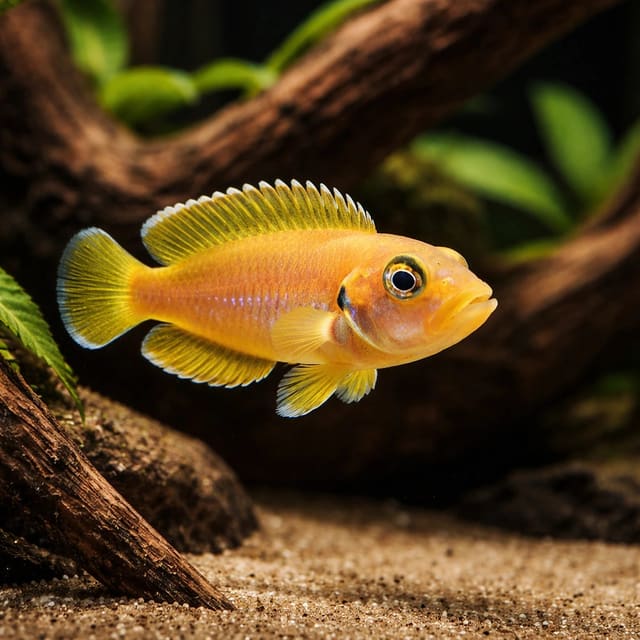
Gold Ocellatus Shell-Dweller (Neolamprologus ocellatus)
23–25°C · pH 8–9
£16.59

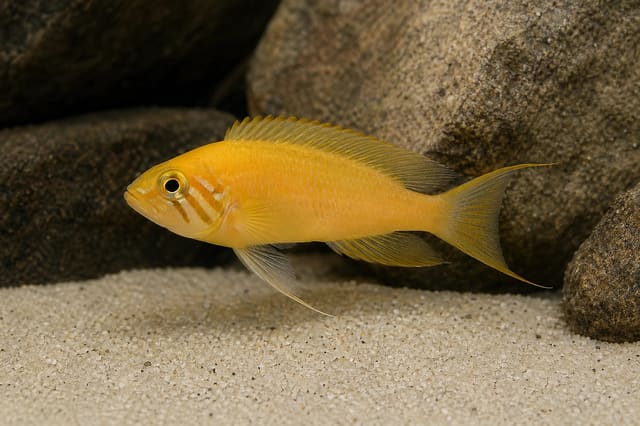
The Lemon Cichlid (Lamprologus leleupi) is a cichlid from the southern half of Lake Tanganyika that reaches 10 cm. It suits keepers planning a rock-filled aquarium for no more than one pair unless the tank is very large; the overlap of FishBase, Seriously Fish and OATA’s African lake cichlid group guidance is 24–26°C, pH 8.0 and 12–15 dGH. Sold individually in size grades from 3 cm to over 7.5 cm, plus S.
Adult size is the maximum length this species reaches at full maturity (scientific sources). The livestock you receive will be younger and smaller — pick a size above for the actual shipping size. Product-photo provenance and any image-specific limitations are stated on the listing.
Lamprologus leleupi
Save when buying multiple fish. Each quantity is one fish; sex and pair formation are not guaranteed unless the selected variant explicitly states them.
The Lemon Cichlid (Lamprologus leleupi) is a cichlid from the southern half of Lake Tanganyika that reaches 10 cm. It suits keepers planning a rock-filled aquarium for no more than one pair unless the tank is very large; the overlap of FishBase, Seriously Fish and OATA’s African lake cichlid group guidance is 24–26°C, pH 8.0 and 12–15 dGH. Sold individually in size grades from 3 cm to over 7.5 cm, plus S.
Adult size is the maximum length this species reaches at full maturity (scientific sources). The livestock you receive will be younger and smaller — pick a size above for the actual shipping size. Product-photo provenance and any image-specific limitations are stated on the listing.
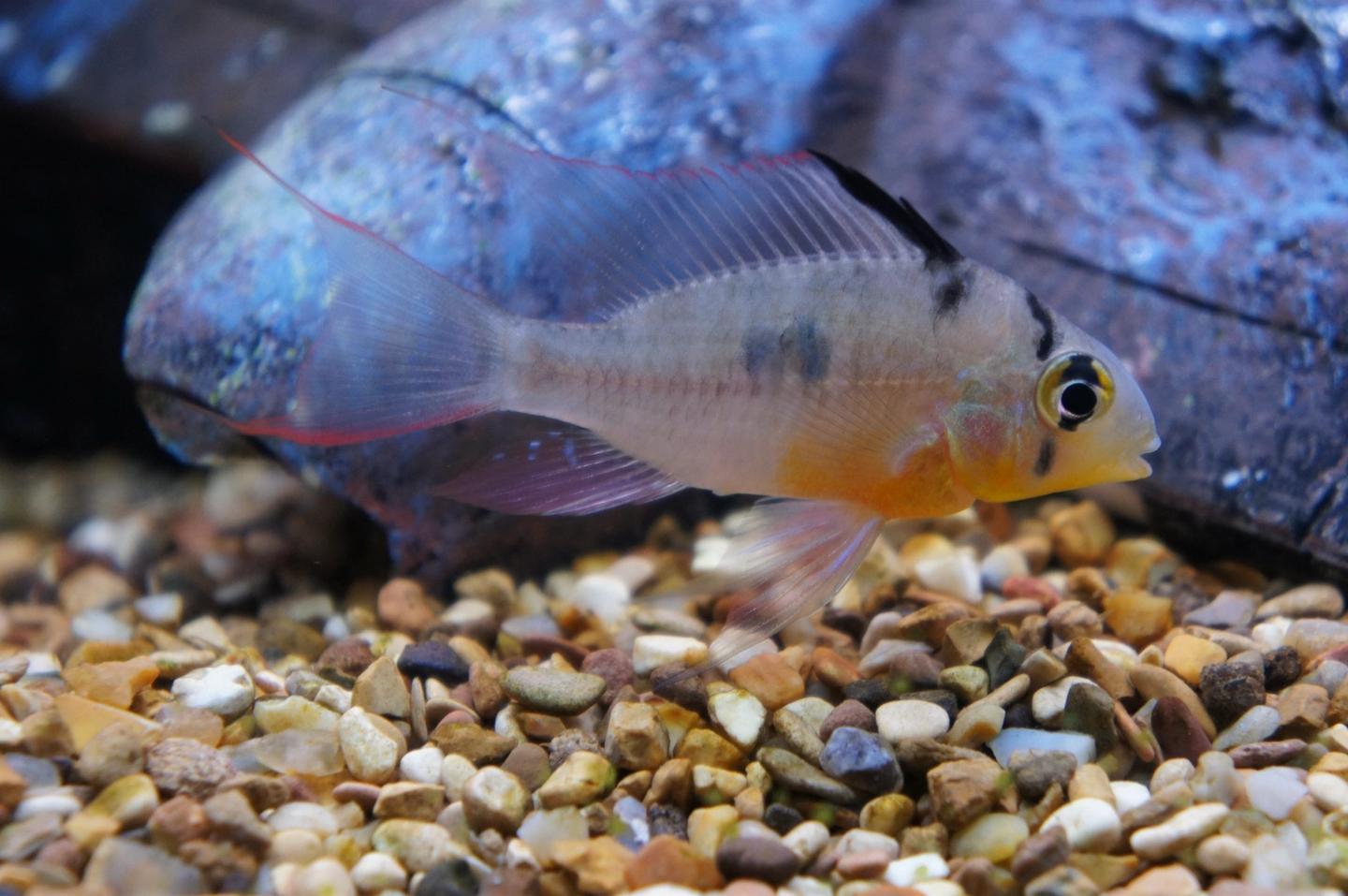
Cichlids are a family of roughly 1,800 accepted species, not one care type. Before buying, identify the exact species and source, then compare adult measurement, usable tank dimensions, social system, territory, tested water, diet and an exit plan. No family-wide minimum tank, water range or tank-mate list is safe.
Maintain these water conditions for optimal health and vibrant colors
The Lemon Cichlid (Lamprologus leleupi) is a freshwater cichlid from the southern half of Lake Tanganyika in Africa. It reaches 10 cm and suits a keeper prepared to maintain hard, alkaline water, build substantial rockwork and manage territorial behaviour carefully.
FishBase places the species in the Cichlidae family and now lists it as Neolamprologus leleupi, treating Lamprologus leleupi as a synonym. It records the fish as endemic to the southern half of Lake Tanganyika, with a maximum length of 10 cm.
In nature, this benthopelagic fish usually occupies recesses in the biotope and feeds on invertebrates taken from the biological covering on surfaces or from deep gaps in the substrate. Those traits make caves, rock crevices and an invertebrate-led diet central to aquarium planning. The fish should have sheltered places it can occupy without having to compete continuously for the same recess.
This is not a fish to add to a mixed aquarium on colour alone. Adult dimensions, water chemistry, territorial layout and the identity of every proposed companion all matter. Plan for the 10 cm adult fish from the beginning, even when selecting a much smaller dispatch grade.
Start with the adult aquarium rather than the fish’s dispatch size. Use an aquarium at least 80 cm long and at least 70 litres for a single pair, then fill much of the footprint with stable rock piles that form numerous caves and hiding places. Sand is the recommended substrate.
Seriously Fish describes a 75 × 30 × 30 cm, 70-litre aquarium as suitable for a single pair, while FishBase gives a minimum aquarium length of 80 cm. Meeting both figures means choosing at least 70 litres and at least 80 cm in length. A larger footprint gives more room to separate territories but does not remove the need to monitor aggression.
| Suits | Not suited to |
|---|---|
| Hard, alkaline freshwater at 24–26°C, pH 8.0 and 12–15 dGH | Soft or acidic aquarium conditions |
| An aquarium at least 80 cm long with sand, rock piles and many caves | A sparsely furnished aquarium without sheltered recesses |
| No more than a single pair unless the aquarium is very large | Several conspecifics sharing a modest aquarium |
| Carefully screened Tanganyikan companions using different areas | Mbuna or other boisterous species |
Its popularity should not be mistaken for tolerance of deteriorating conditions. The species is sensitive to declining water quality and particularly difficult with its own kind. It rewards deliberate aquarium design, weekly maintenance and close observation rather than casual community stocking.
One purchase supplies one Lemon Cichlid in the size selected on the live selector. The customer-facing grades include 3 cm, 4–5 cm, 5–7 cm, over 7.5 cm and S. The S grade has no stated centimetre measurement, so use its label as shown rather than treating it as a particular length.
The size you select is the size supplied, not the adult size. Every grade should enter an aquarium planned for a fish that reaches 10 cm. A small dispatch grade does not make a smaller permanent aquarium suitable, and the eventual care requirements do not change with the selected grade.
Sex is guaranteed only when the selected option explicitly states male or female. This Lemon Cichlid listing has no sex-guaranteed option. External sexing is difficult, so colour, apparent size or the fish shown in the gallery should not be used to assign sex.
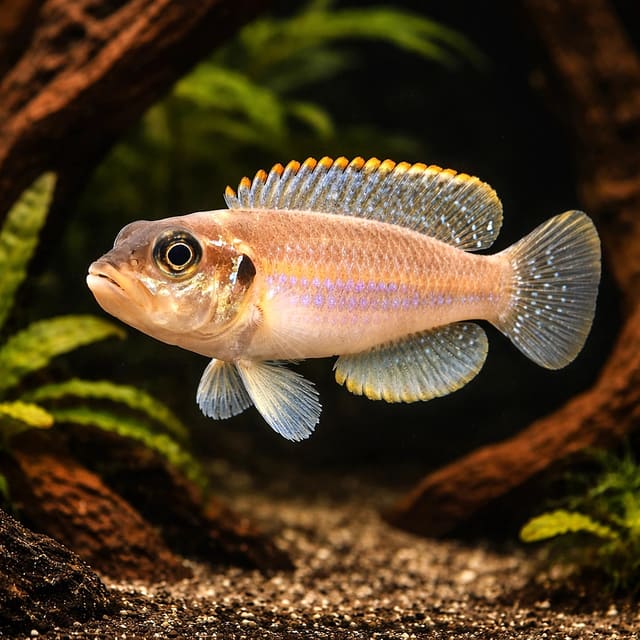
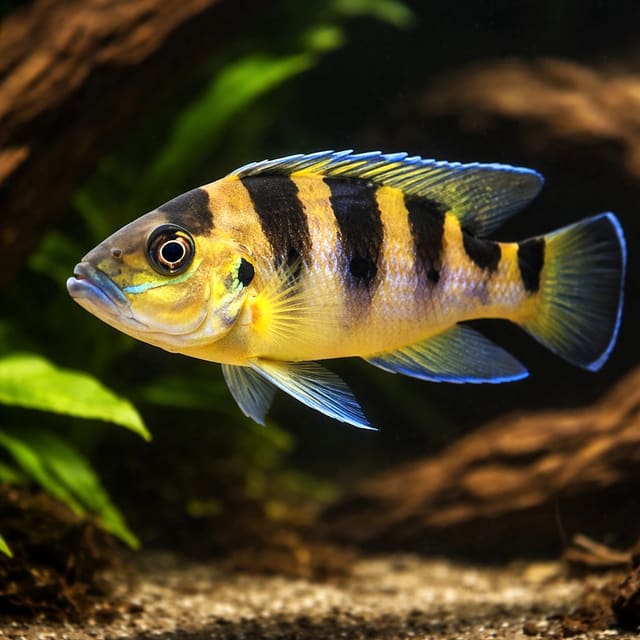
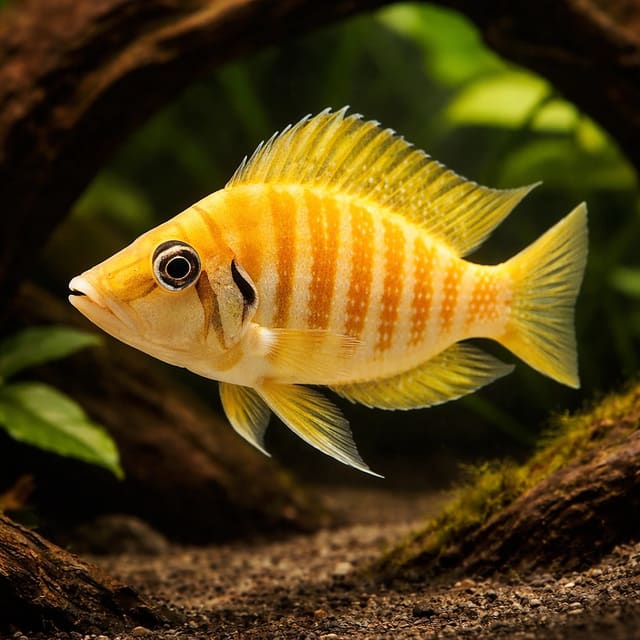
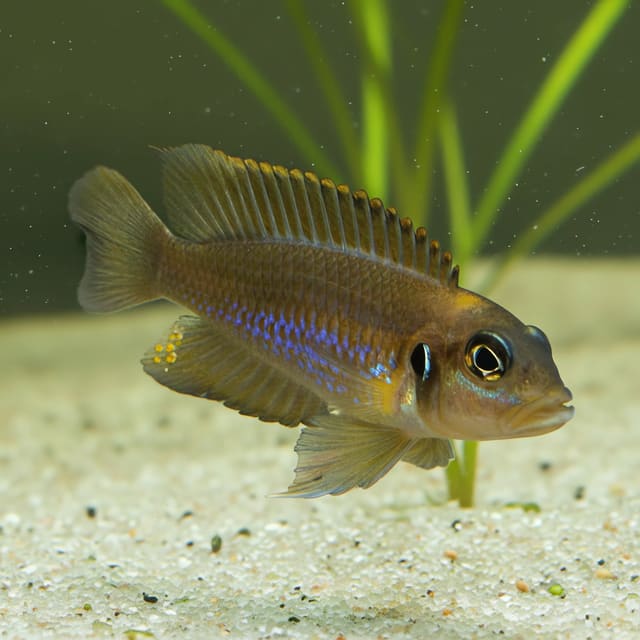
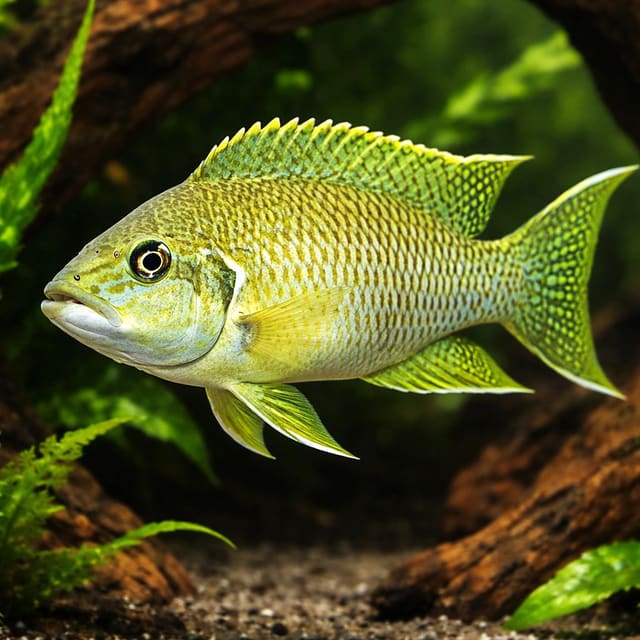
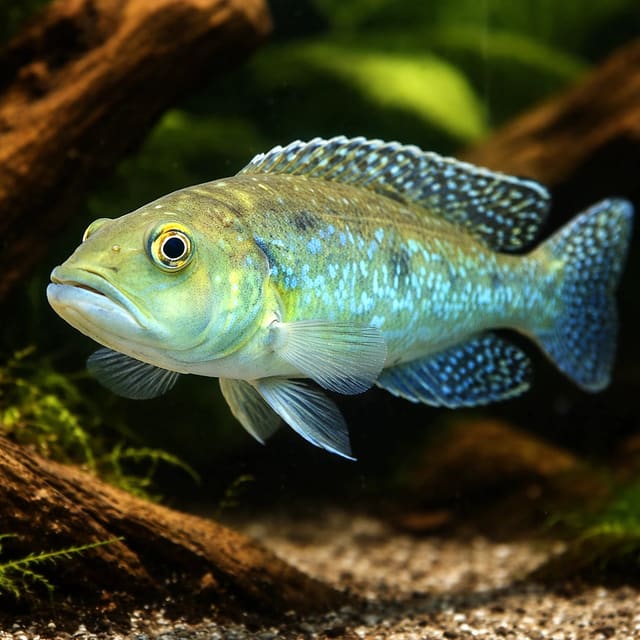
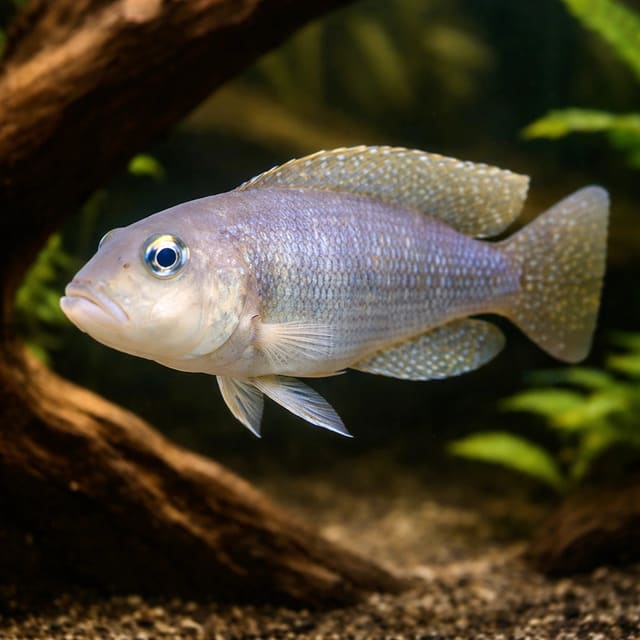
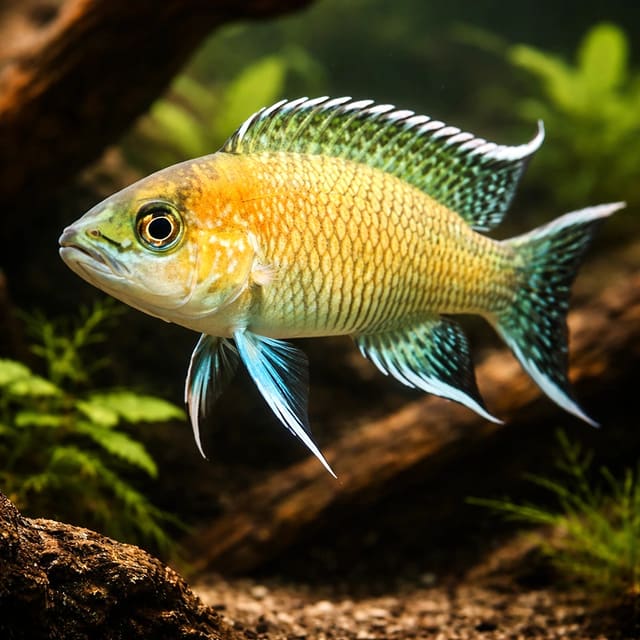
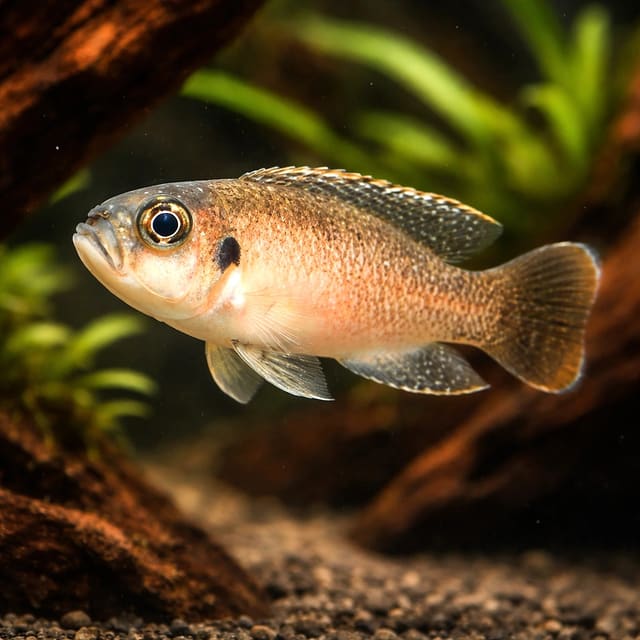
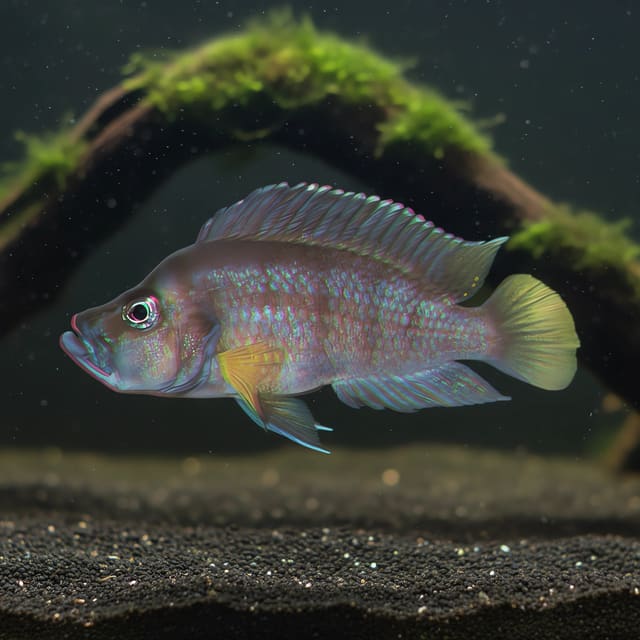
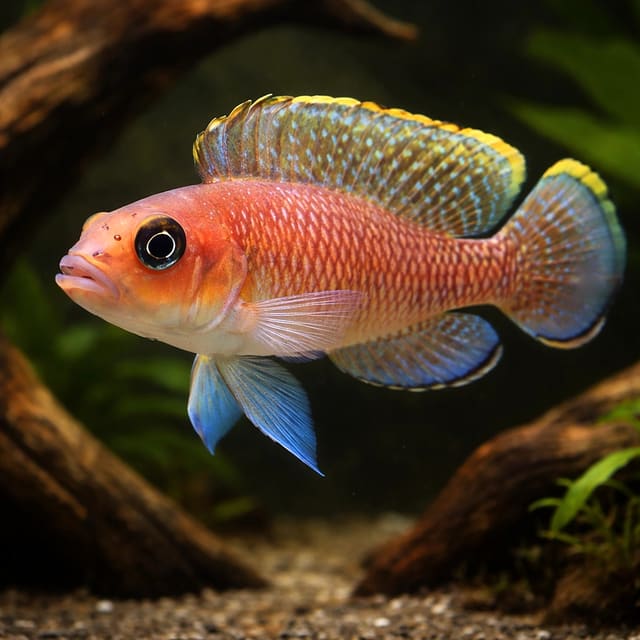
The gallery images are representative, based on reference photographs of this species, so colours can look slightly different from the live animal. The scene showing two fish illustrates visible form and setting; the purchase unit remains one animal.
Use the size selector to choose the dispatch grade, then base the stocking decision on adult space, water chemistry and territorial layout. For broader category comparison, browse our African cichlid collection and assess every species against the same aquarium.
Use an aquarium at least 80 cm long and at least 70 litres for a single pair. The litre figure comes from the Seriously Fish species profile, while FishBase gives the stricter minimum length. Choose a tank that meets both measurements rather than using volume alone.
The layout follows the fish’s association with recesses and the species guidance for extensive rockwork. Hiding places are especially important because territorial aggression rises during breeding and a male may become intolerant of a female between spawning periods. A cave is therefore functional territory, not decoration.
Place rock piles so the structure remains stable around a digging cichlid. Seriously Fish notes that a spawning pair often excavates its own cave, so avoid relying on loose sand to hold heavy pieces upright. Keep sand as the substrate and check that every cave stays usable.
A nominal 70-litre aquarium that is shorter than 80 cm does not meet both planning figures. Likewise, an 80 cm aquarium should still hold at least 70 litres for the single-pair reference. If companions are being considered, the tank also needs enough additional territory for each rock-dwelling species and separate areas for fish such as Cyprichromis.
Do not treat extra caves as permission to add several Lemon Cichlids to a modest aquarium. The species is very aggressive towards conspecifics, and no more than one pair should be kept unless the aquarium is very large.
Keep the aquarium at 24–26°C, pH 8.0 and 12–15 dGH. These values are the overlap of FishBase’s recorded environment, the Seriously Fish aquarium profile and OATA’s African lake cichlid guidance. OATA gives 23–27°C, pH 8.0–8.6 and 12–18 dGH for the group; the narrower targets here remain within the species-level ranges as well.
| Value | Routine instruction |
|---|---|
| Temperature | Keep between 24°C and 26°C |
| pH | Hold at pH 8.0 |
| General hardness | Keep between 12 and 15 dGH |
| Ammonia | Keep at 0 mg/l |
| Nitrite | Keep at 0 mg/l |
| Nitrate | Do not exceed 20 mg/l above the normal tap-water level |
Measure the aquarium and tap water before choosing livestock. Our water chemistry guide explains what the measurements mean, while the water matcher lets you compare the tested aquarium with these targets.
If pH or hardness falls outside the target, resolve the water mismatch before introducing the fish. If ammonia or nitrite is detectable, pause any planned addition and restore the biological filter’s ability to process waste. Adding fish increases feeding and waste, so increase the population slowly enough for the filter bacteria to adjust.
Test again after changes instead of assuming that a correction has held. Stable readings matter because African lake cichlids require particular chemistry and this species is sensitive to deteriorating water conditions.
Use a well-established biological filter before adding the fish. The RSPCA explains that fish release toxic ammonia, which filter bacteria convert first to toxic nitrite and eventually to safer nitrate. A clean-looking aquarium is not enough; the biological process must be functioning.
Prepare the system in advance with our first tropical aquarium guide. Confirm that ammonia and nitrite are both 0 mg/l and that the aquarium is holding 24–26°C, pH 8.0 and 12–15 dGH before the fish enters.
Add fish gradually. The bacterial population established while the filter matures must increase when more fish and food enter the system. Stocking too quickly can create new tank syndrome, with ammonia and nitrite rising because the bacteria cannot yet process the increased waste.
Check circulation around rock piles. The caves must remain useful, but the structures should not prevent the filter from moving and cleaning water through the aquarium. Keep the vigorous aeration OATA recommends so there is enough dissolved oxygen around the rockwork.
The aquarium is ready for the stocking decision when its temperature, pH and hardness repeatedly match the target and tests read 0 mg/l ammonia and 0 mg/l nitrite. If either waste reading rises after livestock is added, stop further additions, test the water and restore safe conditions before continuing.
Carry out a 25% partial water change at least once every week, as OATA’s African lake cichlid care sheet strongly recommends. Test ammonia and nitrite at least weekly, monitor nitrate, inspect the filter for blockages and treat replacement tap water with conditioner before it enters the aquarium.
Chlorine or chloramine may kill beneficial bacteria in filter media, which is why removed aquarium water is used for light rinsing. Avoid over-cleaning the filter and aquarium together: the aim is to remove accumulated waste without stripping away the bacteria responsible for processing ammonia and nitrite.
An ammonia or nitrite result above 0 mg/l requires prompt attention to water quality and filtration. A nitrate level approaching 20 mg/l above the normal tap-water level indicates that maintenance, feeding and stocking should be reviewed. Do not solve a waste problem by adding more fish or food.
Keep a short record of test results and water changes. The record makes gradual deterioration easier to notice, because a visually clear aquarium can still contain harmful dissolved waste. This matters for a species described as sensitive to declining water conditions.
After rearranging rockwork or adding a companion, continue the same schedule and compare the readings with the established baseline. Physical changes can alter circulation, while new livestock increases the load placed on the biological filter.
Make live and frozen foods a large proportion of the diet. FishBase records wild Lemon Cichlids feeding on invertebrates taken from surface growth and deep substrate recesses, while Seriously Fish says live and frozen foods should make up a large proportion of the diet.
Offer dried food less often and include some vegetable matter, such as a good-quality spirulina flake. This is a mixed feeding plan: invertebrate-based live or frozen foods remain prominent, dried foods provide occasional variety, and the vegetable component complements rather than replaces the recorded animal diet.
OATA’s group feeding schedule is two meals per day, with only as much food as the fish can eat within a few minutes. Use that limit for every food type. Uneaten food breaks down and releases waste, which works directly against the zero-ammonia and zero-nitrite targets.
| Feeding decision | Action |
|---|---|
| Live or frozen food | Use for a large proportion of the varied diet |
| Dried food | Feed less often |
| Vegetable matter | Include some, such as spirulina flake |
| Portion | Give only what is eaten within a few minutes |
| Frequency | Feed twice a day |
Watch whether the fish approaches food and finishes the normal portion. Reduced intake or a loss of interest in food can accompany a health or water-quality problem. Test the water when appetite changes rather than compensating with a larger feed.
If food remains after a few minutes, reduce the next portion and remove the excess. If one fish monopolises food in a pair or community, review territory and aggression as well as the menu; food variety cannot correct an unsafe social arrangement.
Learn the fish’s normal swimming, colour, breathing, appetite and use of caves. Compare future observations with that baseline, because a change is more useful than a single isolated posture.
| If you see | Do this |
|---|---|
| Hanging at the surface, sitting on the bottom or erratic swimming | Test water quality and inspect filtration and aeration |
| Faster or slower gill movement | Check water values and dissolved-oxygen support promptly |
| Darker or paler colour than normal | Review water quality, hiding places and recent stocking changes |
| More aggression or hiding | Check territorial access and whether companions are being excluded |
| White spots, fluffy growths, lost fins, scales, ulcers or bumps | Test the water and seek health guidance |
| Reduced food intake or changing body condition | Check water quality, social pressure and the feeding routine |
Water testing is the first practical response because ammonia and nitrite are toxic and this species is sensitive to deteriorating conditions. Record the readings before making several changes at the same time; that makes the immediate problem clearer.
Behaviour also needs a territorial interpretation. Remaining inside a recess can be normal for a fish associated with gaps and caves, while a sudden increase in hiding may indicate stress. Persistent chasing, exclusion from shelter or blocked access to food calls for a prompt review of the stocking plan.
Inspect the fish, then inspect the system supporting it: filter flow, aeration, cave access, temperature and recent maintenance. If a fish is injured or its condition continues to change after water and social problems are addressed, seek appropriate health guidance rather than guessing at a treatment.
Prepare the aquarium and test it before the parcel arrives. It should already be holding 24–26°C, pH 8.0 and 12–15 dGH, with ammonia and nitrite at 0 mg/l. Do not use the arrival period to make major corrections to an unsuitable aquarium.
These steps come from the current Tropical Fish Co delivery and Live Arrival Guarantee policy. The fish is packed in an oxygen-filled bag inside an insulated box, with a heat pack when the weather calls for it, and carried by a tracked courier licensed to transport live fish.
After release, check breathing, posture, colour and access to a sheltered recess. OATA advises increasing fish numbers slowly because every addition increases the amount of waste and food the biological filter must process. Test ammonia and nitrite after the addition and pause further stocking if either rises above 0 mg/l.
Watch interactions closely when the aquarium already contains fish. A new Lemon Cichlid must be able to reach shelter and food without continuous pursuit. OATA notes that rearranging the décor can help reduce aggression as fish find new territories, but it does not make Mbuna, boisterous species or an excessive number of conspecifics suitable.
Keep no more than a single pair unless the aquarium is very large. Seriously Fish describes the species as very aggressive towards conspecifics, despite being otherwise quite placid outside breeding. During breeding it becomes aggressive and territorial.
Do not interpret “pair” as two fish that will automatically tolerate one another. External sexing is difficult, and Seriously Fish warns that buying an adult male and female will not guarantee a pair bond and often results in the female being harassed to death; it advises buying a group of young fish, letting a pair form naturally and removing the other fish once a pair forms, which may take a year or more. The source describes the bond as weak and notes that a male may become intolerant of the female between spawning periods. Multiple caves and hiding places remain essential even when two fish appear settled.
If those patterns appear, treat the social arrangement as unsafe rather than waiting for the weaker fish to adapt. Review whether both fish have usable shelter and whether the aquarium genuinely has enough territorial separation.
The natural behaviour helps explain the risk. Seriously Fish describes the species as solitary in nature, with males entering females’ caves during reproduction rather than maintaining a permanently close social group. Aquarium planning should therefore prioritise separation and escape routes rather than forcing several fish into constant proximity.
A very large aquarium may permit more than one pair, but “very large” is not a substitute for observation. Every additional fish needs territory, and the aquarist must be ready to respond if one fish is excluded. For the 70-litre and 80 cm minimum plan, keep to one pair at most.
Avoid Mbuna and other boisterous species. Do not mix Malawi and Tanganyikan cichlids as a general community plan. For companions, start with small to medium Tanganyikan cichlids that occupy different areas of the aquarium and share the required hard, alkaline water.
| Candidate | Decision rule |
|---|---|
| Cyprichromis species | Possible because they occupy a different aquarium area; still check space and water requirements |
| Julidochromis species | Possible only when the aquarium is large enough and sufficient territories exist |
| Altolamprologus species | Possible only when the aquarium is large enough and sufficient territories exist |
| Additional Lemon Cichlids | No more than one pair unless the aquarium is very large |
| Mbuna or other boisterous species | Avoid |
“Tanganyikan” alone is not enough to approve a companion. Compare adult size, temperament, water requirements, feeding access, aquarium area and territorial needs. Rock-dwelling candidates need territory beyond the caves already claimed by the Lemon Cichlid.
OATA recommends adding more peaceful African lake species before more aggressive ones and notes that rearranging décor can reduce aggression as fish establish new territories. Use that sequence only after the species have passed the compatibility screen; rearrangement cannot correct an incompatible mixture.
Compatibility with other fish or invertebrates depends on the exact species and aquarium. Do not infer safety from similar size or water values alone. Contact us with the aquarium dimensions, current livestock and proposed animal for a stocking assessment.
After any addition, watch for continuous chasing, blocked cave access, altered feeding and a fish being held at the surface or edge of the aquarium. Those signs call for action even when the species looked compatible on paper.
It reaches 10 cm. Plan the aquarium around that adult length rather than the selected dispatch grade.
Use at least 70 litres and at least 80 cm in length for one pair. Seriously Fish gives 70 litres for a single pair, while FishBase gives a minimum aquarium length of 80 cm.
Keep no more than a single pair (two fish) unless the aquarium is very large. The species is very aggressive towards its own kind, and Seriously Fish warns that putting an adult male and female together often ends with the female harassed to death, so even a pair needs several caves and hiding places.
It suits a careful keeper who can maintain hard, alkaline water, protect water quality and manage territorial aggression. Its sensitivity to deteriorating conditions and aggression towards its own kind make deliberate planning essential.
Live and frozen foods should form a large proportion of its varied diet, with dried food used less often and some vegetable matter such as spirulina flake. OATA’s African lake cichlid group guidance says to feed only what is eaten within a few minutes, twice a day.
Keep it at 24–26°C, pH 8.0 and 12–15 dGH. These figures are the overlap of FishBase’s recorded environment, the Seriously Fish aquarium profile and OATA’s African lake cichlid group guidance.
Its documented risk is aggression and territoriality, especially during breeding and towards its own kind. Avoid Mbuna and other boisterous species, provide numerous caves and act if another fish is persistently chased or injured.
Possible companions include small to medium Tanganyikan cichlids using different aquarium areas, such as Cyprichromis species. Julidochromis or Altolamprologus species are possibilities only in an aquarium large enough to provide sufficient territories.
Tropical Fish Co packs it in an oxygen-filled bag inside an insulated box, adding a heat pack when the weather calls for it, and uses a tracked courier licensed for live fish. Be present to receive the parcel, film continuously from the sealed parcel, inspect it that day and float the bag for 20–30 minutes before release.
No reviews for this item yet. Bought one? Honest reviews only, good or bad.
What customers say about ordering from us
I have a small group of long finned mountain minnows. So was delighted to be able to order ten of this variety to increase the genetics in my tank . The ones I recieved are healthy but it’s to early to give a verdict on wether they are of a long finned type since they are small currently.
Gordon Walker · 23 Sept 2026
100% success travel and "installation". Pleased with quality of purchase. The Siamese fighter a bit "shy" so have not yet seen him at his best yet but looking good. Happy customer. GG
George E Garratt · 21 Sept 2026
Reviews of our shop, collected by Judge.me, an independent third-party review collector. Newest first.