Moderate
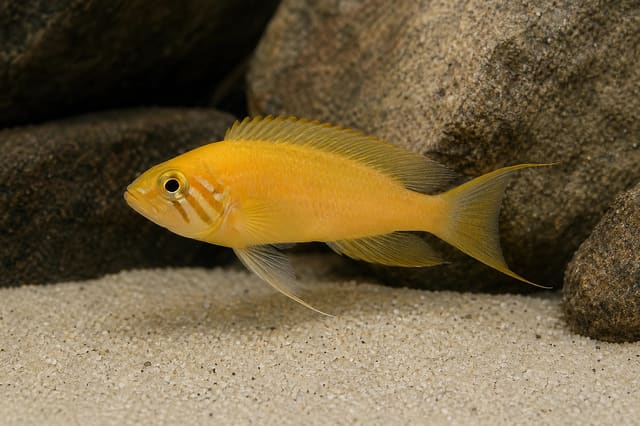
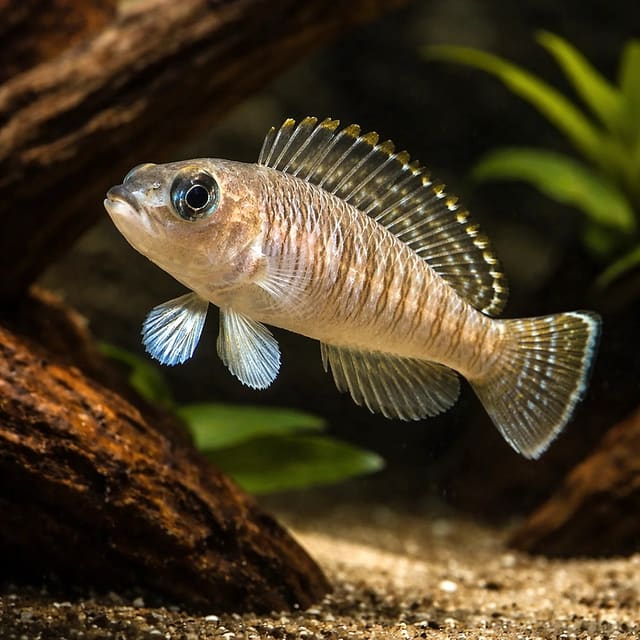
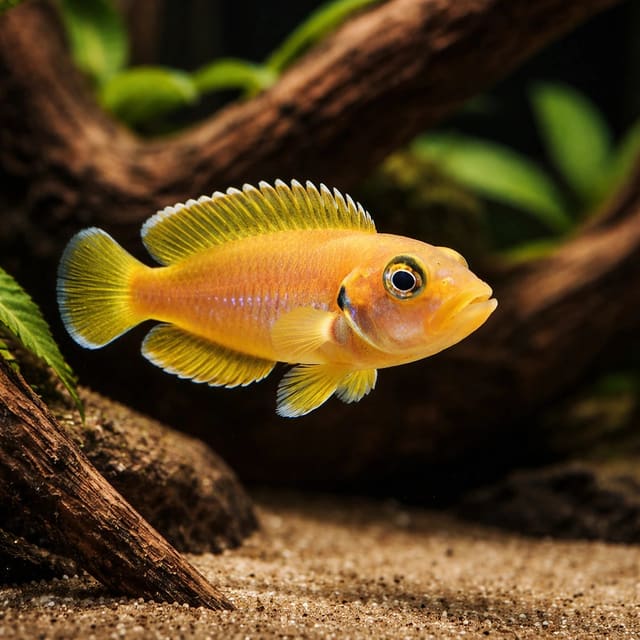
Gold Ocellatus Shell-Dweller (Neolamprologus ocellatus)
23–25°C · pH 8–9
£16.59
Lamprologus speciosus is a compact Lake Tanganyika shell-dwelling cichlid supplied as one live fish in the selected 2.5–3 cm or 3.5–4 cm size. It suits an intermediate keeper able to provide hard, alkaline water, a deep sandy bed, more shells than fish and room around each shell territory.
Lamprologus speciosus
Save when buying multiple fish. Each quantity is one fish; sex and pair formation are not guaranteed unless the selected variant explicitly states them.
Lamprologus speciosus is a compact Lake Tanganyika shell-dwelling cichlid supplied as one live fish in the selected 2.5–3 cm or 3.5–4 cm size. It suits an intermediate keeper able to provide hard, alkaline water, a deep sandy bed, more shells than fish and room around each shell territory.
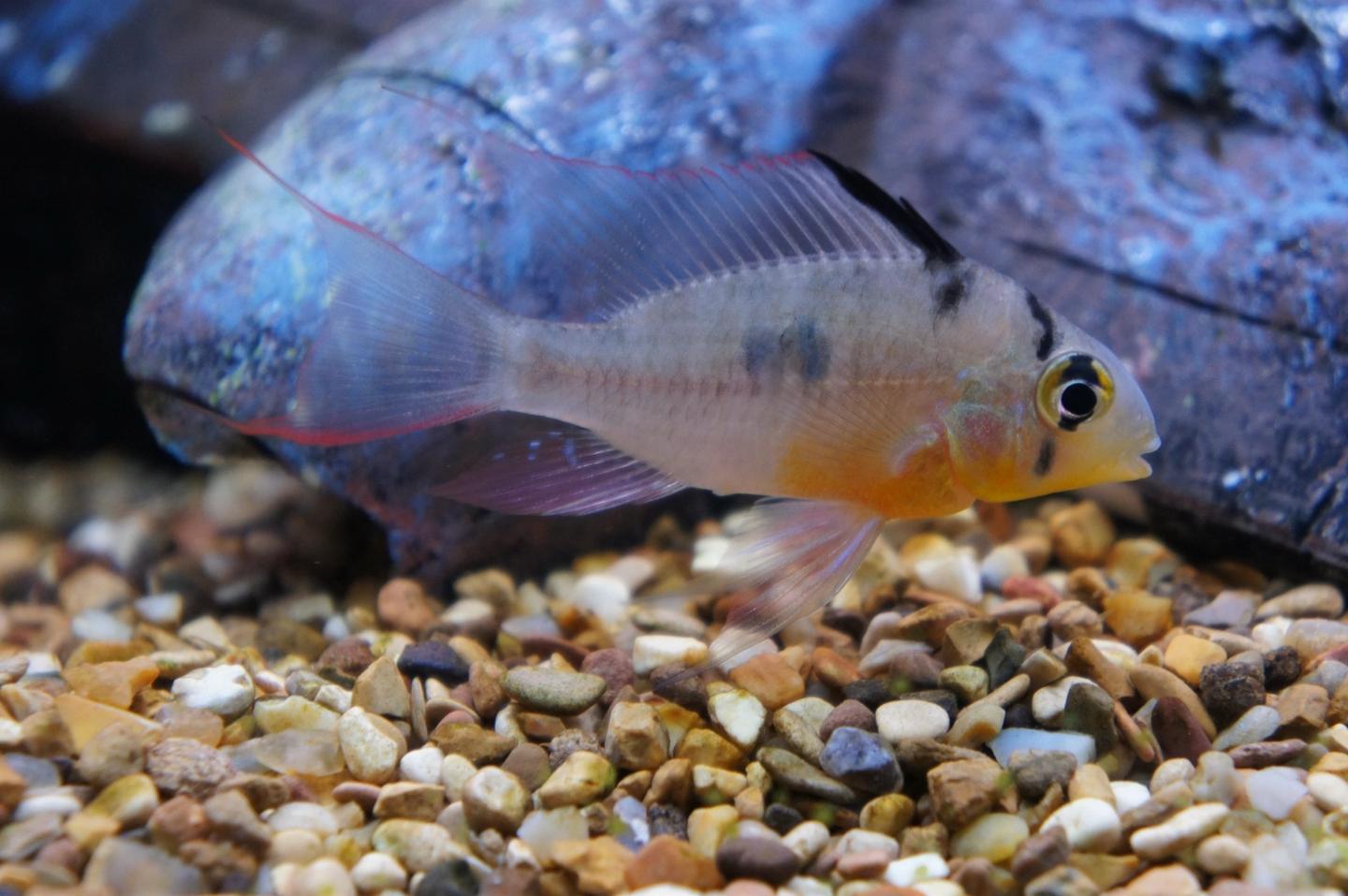
Cichlids are a family of roughly 1,800 accepted species, not one care type. Before buying, identify the exact species and source, then compare adult measurement, usable tank dimensions, social system, territory, tested water, diet and an exit plan. No family-wide minimum tank, water range or tank-mate list is safe.
Maintain these water conditions for optimal health and vibrant colors
Lamprologus speciosus is a small Lake Tanganyika cichlid whose daily life is organised around snail shells. It uses a shell as shelter and a spawning site, digs in the sand around it and defends the small patch immediately outside. That combination makes it absorbing to watch and practical for a compact, purpose-built Tanganyikan aquarium, but it is not a casual addition to a soft-water community. The keeper needs to plan the water, substrate, shells and neighbours as one joined system.
One purchase supplies one live fish in the selected size. The listed sizes are 2.5–3 cm and 3.5–4 cm. The size you select is the size supplied, not the adult size. FishBase records a maximum length of 5 cm total length, while the specialist aquarium profile uses a different published length figure. The 5 cm FishBase value is the cautious growth-planning figure used here; more important than length alone is the floor plan, because even a small fish needs a shell and a defensible patch of sand.
| Suits | An intermediate keeper planning a dedicated shell zone in hard, alkaline water |
|---|---|
| Starting aquarium | At least 40 litres for a pair, with a 45 × 30 cm footprint; use a larger aquarium for a colony |
| Routine water target | 23–27 °C, pH 7.5–9.0 and 8–25 dGH |
| Core layout | Open sand at least 5 cm deep, more empty snail shells than fish, filtration and aeration |
| Feeding | Live and frozen foods as the main diet, with an appropriate quality dried food also accepted |
| Temperament | Territorial around the shell; combine only with carefully chosen species using other zones |
This is a strong choice when the point of the aquarium is behaviour rather than a crowded display. A shell bed gives the fish meaningful choices: which shell to occupy, where to pile sand and how far to patrol. Leave useful open ground instead of filling every centimetre with ornaments. More shells than fish reduce competition for the only suitable refuge, while a deeper sandy bed allows the digging behaviour described for the species.
This check is intentionally practical. The fish does not need an elaborate show tank, but it does need the right fundamentals from the first day. Buying shells or a test kit after arrival leaves the keeper solving predictable problems while the animal is already settling.
It is less suitable where the tap water is soft and acidic, where coarse gravel prevents digging, or where fast and forceful fish will cross the shell zone repeatedly. It is also a poor match for a new aquarium whose filter has not matured. If this is your first specialist setup, use the first tropical tank guide to prepare the aquarium and establish its biological filter before the fish is due to arrive. The small adult length does not make water quality less important: a compact water volume can change quickly, and Lake Tanganyika fish benefit from stable mineral-rich conditions.
Sex is guaranteed only when the selected option explicitly states male or female. This Lamprologus speciosus listing has no sex-guaranteed option. Do not choose a size in the hope that it confirms sex, and do not use colour in a photograph as a guarantee. Seriously Fish notes that males are much larger than females, but a general difference between mature adults is not a reliable promise about an individual animal supplied at a dispatch size.
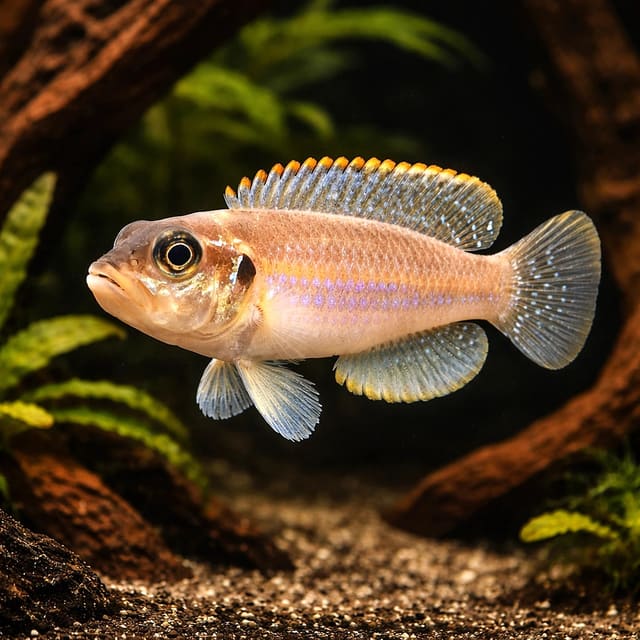
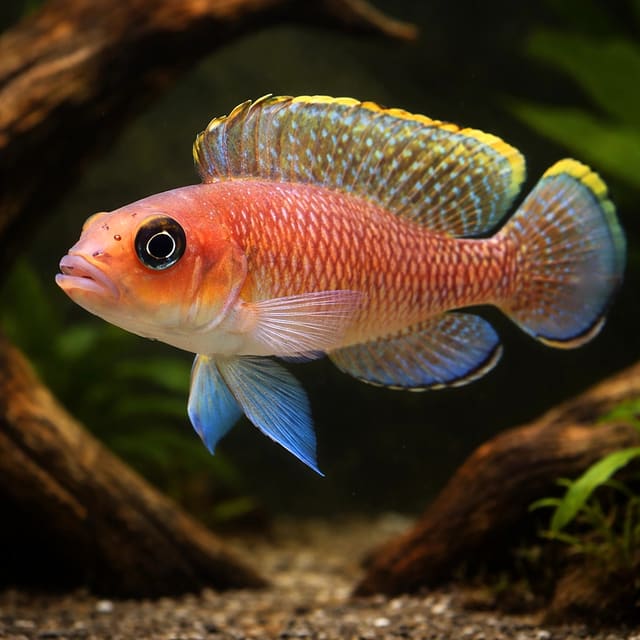
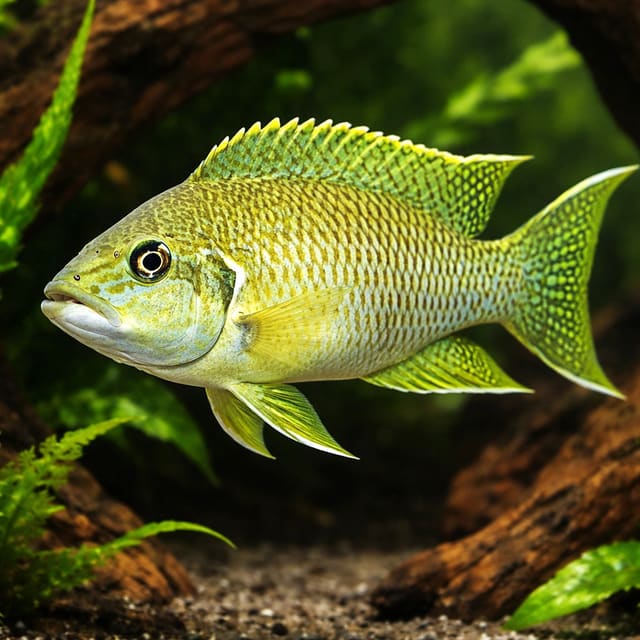
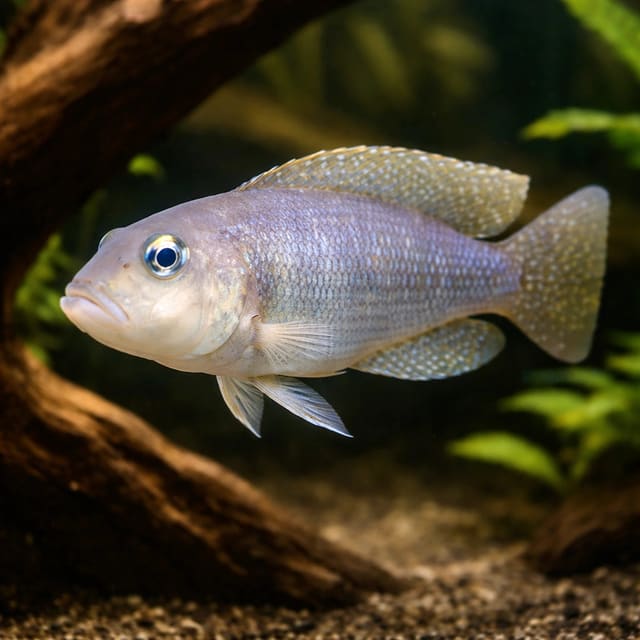
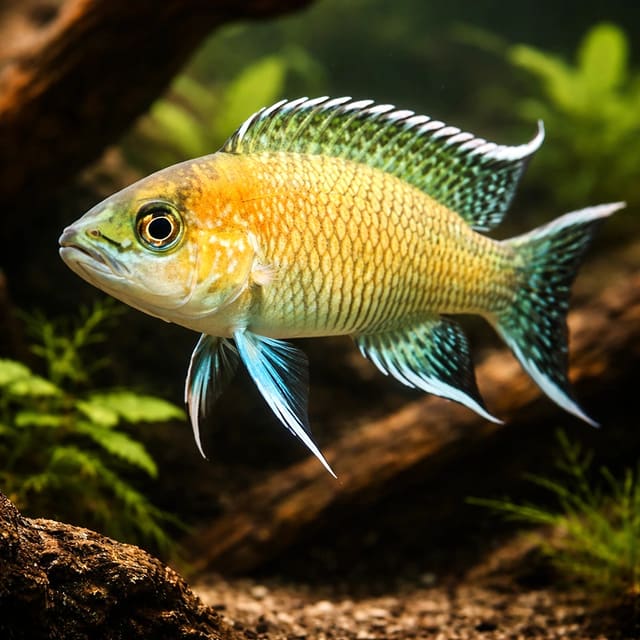
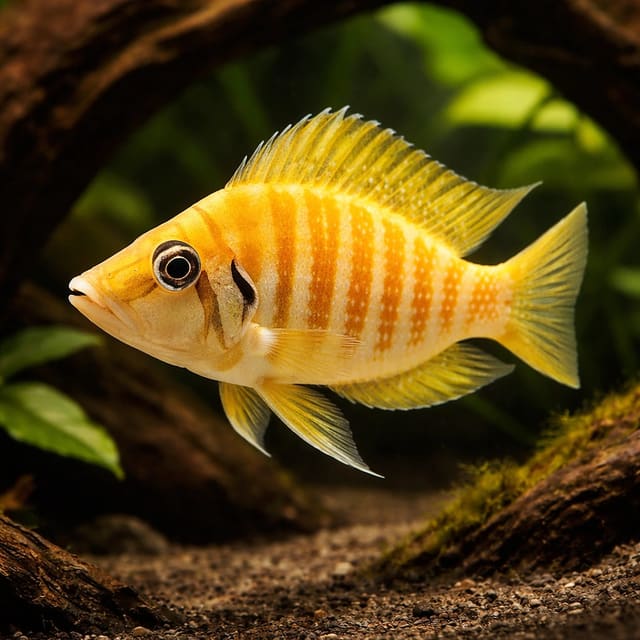
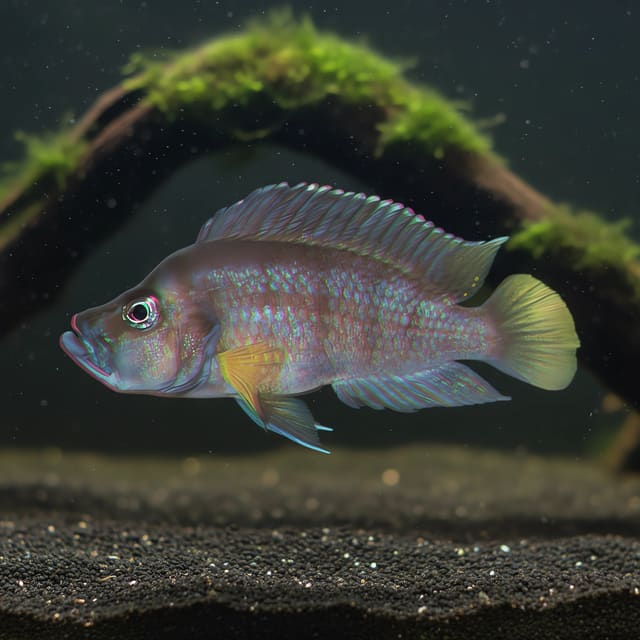
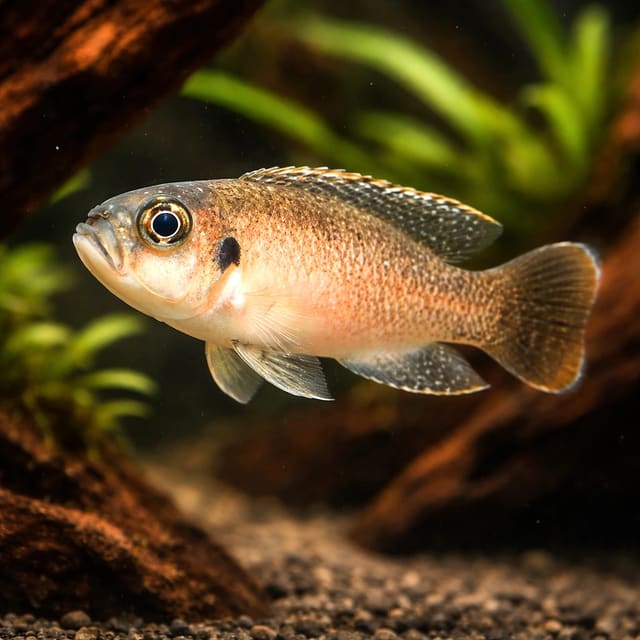
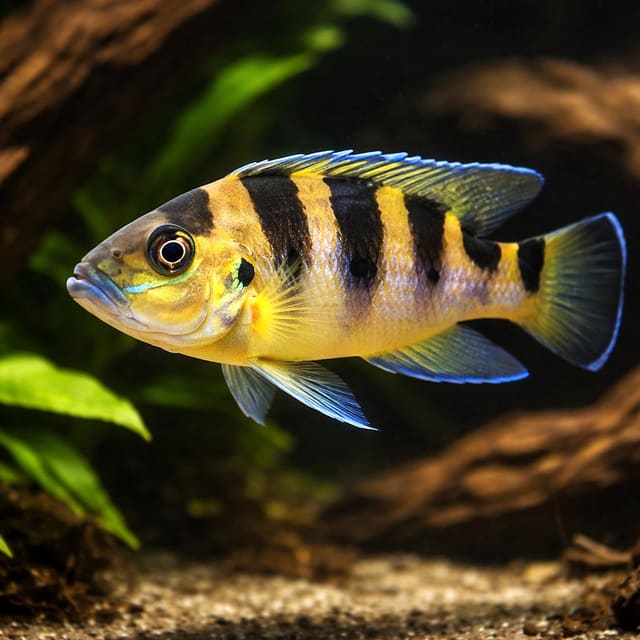
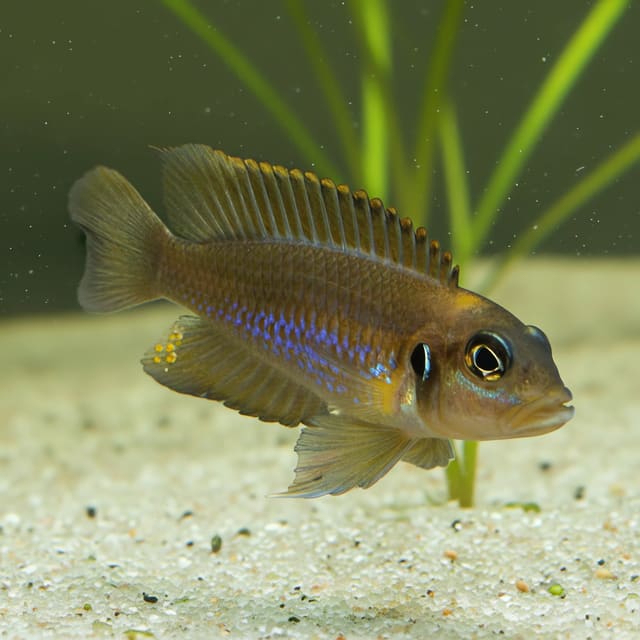
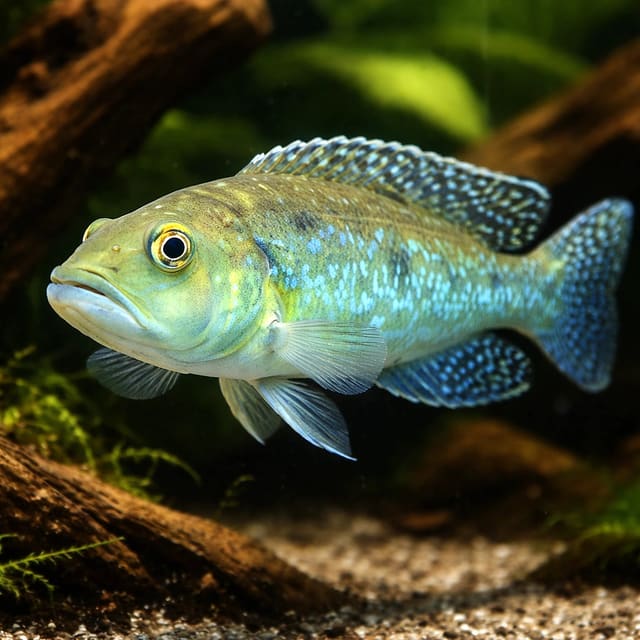
Gallery images have been digitally enhanced to improve image quality. Natural colour, pattern, size and maturity can vary between live animals. Use the written identity and care information to plan the aquarium; expect each living fish to show individual variation as it settles, matures and responds to its surroundings.
Keep this page open while you measure the footprint, test the source water and count the available shells. Those three checks tell you far more than the nominal litre figure alone. Once the shell zone is mapped, browse the wider African cichlid collection only if another aquarium or a genuinely compatible Tanganyikan plan is available; another cichlid is not automatically a companion for this one.
The working aquarium range for this species is 23–27 °C, pH 7.5–9.0 and 8–25 dGH. Those figures come from the Seriously Fish species profile and are used as routine captive targets. FishBase records a wild environmental pH range of 7.4–8.4 and hardness of 7–30 dH; those habitat observations are useful context, not a reason to chase the widest endpoints in an aquarium. Stability inside the aquarium range is the goal.
Test the water that will actually go into the aquarium. A label such as “hard water” is less useful than a pH, general hardness and carbonate hardness reading. Carbonate hardness helps the system resist abrupt pH movement, while general hardness describes dissolved minerals. Use the water chemistry guide to understand the readings, then compare your measured values in the water parameter matcher. If the source water is far from the required range, make a deliberate mineral-management plan before ordering rather than attempting a large correction after the fish arrives.
The OATA African lake cichlid care sheet gives broader group guidance of pH 8.0–8.6, 12–18 dGH and 10–15 dKH. That group range sits within much of the species profile and is a useful cross-check, but the species profile governs the care card. Avoid repeatedly dosing against a test result without understanding the tap water and the materials already in the aquarium. Sudden change is harder on fish than a well-managed, steady value within the routine range.
A reading matters because it changes an action. Zero ammonia and zero nitrite support normal observation; any detectable result calls for prompt water-quality action and a check of filtration and stocking. A pH that stays steady inside the target range is preferable to daily movement caused by repeated corrections. A nitrate trend rising faster than the weekly routine can manage points to excess food, accumulated waste, insufficient maintenance or too much livestock for the system.
Record results with the date, water-change amount and any equipment change. Three weeks of notes reveal whether a value is stable far better than memory. They also help separate a one-off test error from a real trend. When replacement water differs from the aquarium, prepare it consistently and avoid a sudden chemistry swing during a routine change.
A practical shell-dweller aquarium starts at the bottom. Use fine sand rather than coarse, sharp gravel and provide a bed at least 5 cm deep. The species digs, shifts sand and partially buries shells, so the substrate is part of the habitat rather than decoration. Keep broad open areas where a fish can move sand without undermining unstable rockwork.
Provide more empty snail shells than fish. The opening must allow the animal to enter, turn and retreat, while the shell should be robust and clean. Extra shells matter because each individual can choose a refuge without having to take the only usable one from a neighbour. Scatter or loosely group them with clear sand between territories. The best layout is not necessarily symmetrical: it gives several usable choices and makes it possible to observe which patches are claimed.
Rockwork is optional as visual structure, but it should never compete with safe shell access. If rocks are used to separate zones, make them secure before the fish begins excavating. Plants are also optional. Choose only forms that tolerate hard alkaline water and position them away from the main digging patches. The behavioural centre of this aquarium remains the shell bed.
Seriously Fish gives a 45 × 30 × 30 cm aquarium, about 40 litres, for a pair and says a larger aquarium is required for a colony. Treat 40 litres as a pair minimum, not as a universal colony capacity. Footprint becomes especially important when several shell territories are expected. A taller aquarium with the same volume does not create the same usable bottom area as a longer, wider one.
A usable shell is a piece of habitat, not a decoration. Check that its opening is unobstructed, that the shell sits steadily on the sand and that the fish can approach it without squeezing past a rock. Prepare several broadly suitable choices before filling the aquarium. Once the fish has begun digging, observe which forms it actually uses rather than trying to force a preferred display arrangement.
Count shell entrances during weekly observations. Sand movement can partly close an entrance or tip a shell into an awkward position. Restore access gently when necessary, but avoid repeatedly resetting an occupied area simply to make it look tidy. The fish's arrangement reflects active digging and territorial use. In a multi-fish setup, spread additional shells beyond the dominant individual's immediate patch so that a quieter fish has a realistic alternative.
Shell hygiene matters before use. Start with empty, clean shells suitable for aquarium use, without residues or sharp broken edges. A shell should not wobble against unsecured stone, and no heavy item should depend on loose sand for support. These checks are simple, but they turn the headline requirement of “more shells than fish” into a safer, genuinely usable habitat.
Use a properly established biological filter and dependable aeration. The RSPCA fish environment guidance explains why filtration is essential: fish release toxic ammonia, beneficial bacteria convert it to nitrite and then to the safer nitrate. A filter does not remove the need for water changes; it makes the nitrogen cycle manageable while regular maintenance removes accumulated waste.
OATA strongly advises a partial water change of 25% at least once every week for African lake cichlids. Match replacement water for temperature and prepare it with an appropriate conditioner before it enters the aquarium. Test ammonia and nitrite at least weekly, and also test whenever behaviour, breathing or appetite changes. Siphon exposed waste, but do not strip the shell bed so aggressively that every occupied boundary is destroyed at once.
Retain the established biological filter during ordinary maintenance. Protecting its bacterial colony helps avoid a sudden loss of ammonia-processing capacity. After any power interruption or equipment failure, test rather than assuming the system is unchanged. A small aquarium gives early warning through test results and fish behaviour, but only if those signs are checked consistently.
Routine maintenance is planned: the same day each week, a measured water change, a visual equipment check and removal of accessible waste. Troubleshooting begins when a test result, reduced flow or altered behaviour shows that something has changed. At that point, verify the reading, inspect the filter and heater, and correct the identified cause without dismantling the whole habitat. Keeping the two modes separate reduces unnecessary disruption to both the bacterial colony and the fish's shell territory.
Watch for faster gill movement, a fish staying at the surface, unusual time on the bottom, erratic swimming, reduced feeding, pale or dark colour, damaged fins, white spots or fluffy growths. These signs do not identify one cause by themselves. Start with water tests and equipment checks, because a heater or filter problem can affect every inhabitant. If the animal is unwell, obtain experienced aquatic-veterinary or retailer guidance rather than adding several treatments blindly.
In nature this shell-brooder feeds mainly on insect larvae. In the aquarium, live and frozen foods should form the bulk of the diet, and an appropriate quality dried food is usually accepted. Offer items small enough for the fish to take cleanly. Suitable choices can include appropriately sized live or frozen invertebrate foods alongside a good small cichlid food.
Use appetite as an observation tool. A fish that emerges readily, takes food and returns to its shell is easier to assess than one presented with a large cloud of food. Distribute food so that a quieter individual can feed without leaving its territory for a long chase. Remove obvious leftovers before they decay among the shells or below rock edges.
When several fish are present, watch the full feeding window rather than only the first strike. A confident territory holder can make the group appear well fed while a quieter fish remains close to its shell. Delivering small amounts across the shell zone lets the keeper see who feeds and reduces the amount disappearing into the substrate. Stop when interest falls instead of adding food to tempt one reluctant individual.
More food is not a remedy for shyness, aggression or poor water. If one fish consistently misses food, review territories, shell numbers and the path food takes through the aquarium. If all fish lose interest, test the water and check temperature and filter operation promptly. Feeding behaviour is one of the clearest day-to-day indicators available to the keeper.
Arrange to be at the delivery address. Tropical Fish Co hand-packs fish in oxygenated bags inside an insulated box, adding a heat pack when conditions call for it, and uses a tracked licensed live-animal courier. Read the current delivery and Live Arrival Guarantee policy before the delivery day because the evidence needed for a claim begins while the parcel is still sealed.
Floating equalises temperature; it does not make different pH or hardness values identical. This is why the aquarium should already be inside the species range and stable before the parcel arrives. Avoid rebuilding the shell bed or making a large chemistry adjustment on delivery day. The fish should enter a prepared system with open access to a usable shell.
If a Live Arrival Guarantee claim is needed, contact Tropical Fish Co the same day with the order number and the continuous video. The film should show the sealed parcel, the box being opened and the fish still in its sealed bag. Recording from the beginning protects that evidence while also letting the keeper concentrate on the fish once the parcel is open.
A newly introduced shell-dweller may spend long periods close to cover. The useful question is whether it gradually establishes a routine: leaving the shell to feed, returning to it normally, breathing steadily and responding to activity outside the aquarium without frantic movement. Watch from a distance before repeatedly disturbing the shell to check whether the fish is inside.
Keep maintenance predictable. Test ammonia and nitrite, confirm the heater reading, check that the filter is moving water and look for uneaten food near the shell entrance. Do not add more fish simply because the aquarium appears empty above the bottom. This species uses a small vertical slice of the tank by choice, and the open water above a shell bed is not spare capacity for any convenient community fish.
Make one evidence-based adjustment at a time. Adding an extra usable shell is different from repeatedly moving every shell; correcting a blocked filter is different from replacing its mature media. Consistency makes it easier to tell whether an intervention helped. If behaviour deteriorates or visible disease signs appear, test the water immediately and seek appropriate help.
Lamprologus speciosus is territorial. It defends its shell and the small area around it vigorously, so compatibility depends on the aquarium's footprint and on where each species lives. The most promising companions are species that use other zones and share the same hard, alkaline conditions. Even then, the keeper must provide enough space that the open-water or rock-dwelling fish do not have to pass through every shell territory.
Seriously Fish names small rock-dwellers such as Neolamprologus brichardi, smaller Julidochromis species and open-water Cyprichromis as possible choices. These are conditional examples for a suitably large, structured Tanganyikan aquarium, not universal tank mates. Check the adult size, social needs and aquarium dimensions of the proposed companion in its own right. A fish that uses another zone still adds waste and may need much more space than the shell-dweller.
| Potentially suitable | Named small Tanganyikan rock-dwellers or open-water species in a larger aquarium with distinct zones |
|---|---|
| Use caution | Additional shell-dwellers or a colony, because every individual needs shells, sand and territory |
| Avoid | Soft-water community fish, large aggressive cichlids and any stocking plan that forces fish through the shell bed |
OATA advises keeping African lake species with fish from the same location and generally avoiding a Malawi-and-Tanganyika mixture because behaviours and temperaments differ. Matching a pH range alone is not enough. A geographically coherent Tanganyikan plan makes it easier to align water chemistry, habitat structure and behaviour.
For a species-only setup, a pair can start in at least 40 litres with a 45 × 30 cm footprint. A colony needs a larger aquarium, more shells than fish and, where sexes are known in mature animals, more females than males. This listing carries no sex guarantee, so do not build a fixed sex-ratio promise into the buying plan. Observe how territories form and retain a safe contingency aquarium if individuals cannot share the available floor.
A pair project is the clearest route for a compact specialist aquarium. It still needs multiple usable shells, because a spare refuge is valuable even when only two fish are planned. The 40-litre figure belongs to a pair layout with a 45 × 30 cm footprint. A colony is a different project: more fish create more boundaries, and a larger tank is required rather than merely adding shells to the same floor.
The fish can form a colony when several are kept and space is adequate. Do not assume that a group will distribute itself evenly or that every encounter will be harmless. Watch whether each individual can reach food, retreat into a suitable shell and occupy an area without being driven continually across the aquarium. Persistent exclusion is a stocking problem even when no fin damage is yet visible.
Breeding behaviour can intensify defence around a shell. The species is a shell-brooder, and a female lays within a selected shell. If fry rearing is the aim, a separate aquarium gives the keeper more control than hoping a general community will protect a brood. The page does not promise that any supplied fish will form a pair or breed; it explains the habitat and social planning that make natural behaviour possible.
Before combining species, write down the adult size, water range, preferred zone and social requirement for each one. Then draw the aquarium footprint and mark the shell bed, rockwork and open-water route. This simple exercise reveals conflicts hidden by a litre total: two species may accept the same chemistry while competing for the same bottom territory.
Do not use the related-product field as a compatibility list. Other shell-dwelling cichlids are useful alternatives when choosing the focus of a setup, but they may compete directly if combined. One well-planned species project is better than a collection of similar fish forced into overlapping territories.
FishBase records Lamprologus speciosus at a maximum of 5 cm total length. Plan for that adult figure rather than the dispatch size. The selected 2.5–3 cm or 3.5–4 cm size describes the fish supplied, while the adult still needs a shell territory and usable floor space.
Use at least 40 litres with a 45 × 30 cm footprint for a pair of Lamprologus speciosus. Provide fine sand at least 5 cm deep and more shells than fish. A larger aquarium is required for a colony or for a carefully planned Tanganyikan community.
A pair can be kept in the stated pair setup, while several fish can form a colony only in a larger aquarium with enough shells and territory. Lamprologus speciosus should not be kept as a crowd in the pair minimum. This offer does not guarantee sex, so do not assume a selected fish completes a particular ratio.
Lamprologus speciosus is best treated as an intermediate fish. Its small size is manageable, but the aquarium must be mature and stable, with hard alkaline water, fine sand, appropriate shells and a stocking plan that respects territorial behaviour.
Lamprologus speciosus feeds mainly on insect larvae in nature. In an aquarium, live and frozen varieties should form the bulk of the diet, while an appropriately sized quality dried food is usually accepted. Offer variety, watch that every fish eats and remove leftovers.
Keep the aquarium at 23–27 °C, pH 7.5–9.0 and 8–25 dGH, using the species aquarium profile as the routine target. Test the source water and keep values stable; ammonia and nitrite should remain at zero.
It is territorial and will defend its shell and the nearby patch of sand vigorously. The main risk is repeated chasing around a claimed territory rather than a promise that every individual will nip fins. Provide clear zones, spare shells and enough footprint, then separate fish if one is persistently excluded.
In a suitably large Tanganyikan aquarium, named possibilities include small rock-dwellers such as Neolamprologus brichardi, smaller Julidochromis species and open-water Cyprichromis. They are conditional choices, not universal companions: each needs its own space, and shell territories must remain clear.
Tropical Fish Co hand-packs each fish in an oxygenated bag inside an insulated box, with a heat pack when conditions call for it, and sends it by a tracked licensed live-animal courier. Be home to receive it. Before opening, record a continuous unboxing video showing the sealed parcel, the box being opened and the fish still in its sealed bag; keep the video and order number if a same-day Live Arrival Guarantee claim is needed.
The care plan brings together species records, specialist aquarium husbandry, UK industry guidance, welfare guidance and the store's current arrival policy. Each source has a defined job so that a habitat record is not mistaken for a routine aquarium target.
Measurements are reported using the units used by the respective references. The structured care card uses the FishBase maximum total length and the specialist aquarium profile for routine captive water and pair planning. Broader African lake values are retained as context for testing and maintenance, not substituted for the species aquarium range.
No reviews for this item yet. Bought one? Honest reviews only, good or bad.
What customers say about ordering from us
Easy website plenty of info on fish your buying great to pick a time slot
TRACEY DURRANT · 7 Oct 2026
Got some lovely fish thank you
Kevin Mackie · 7 Oct 2026
Reviews of our shop, collected by Judge.me, an independent third-party review collector. Newest first.