Moderate
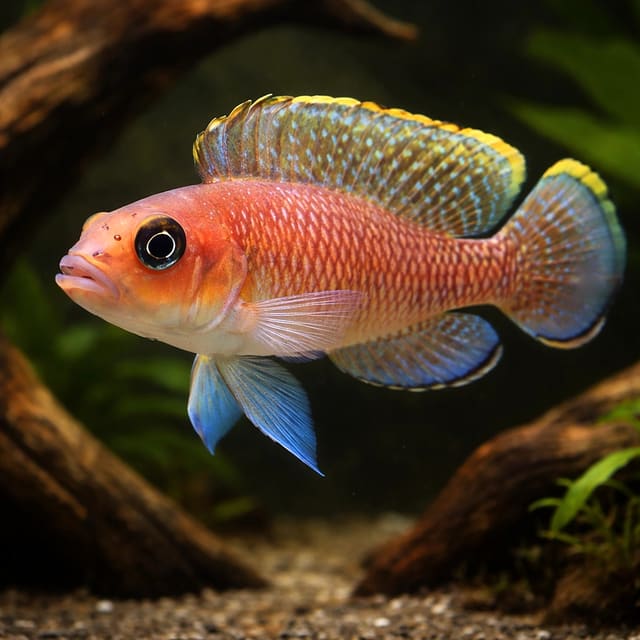
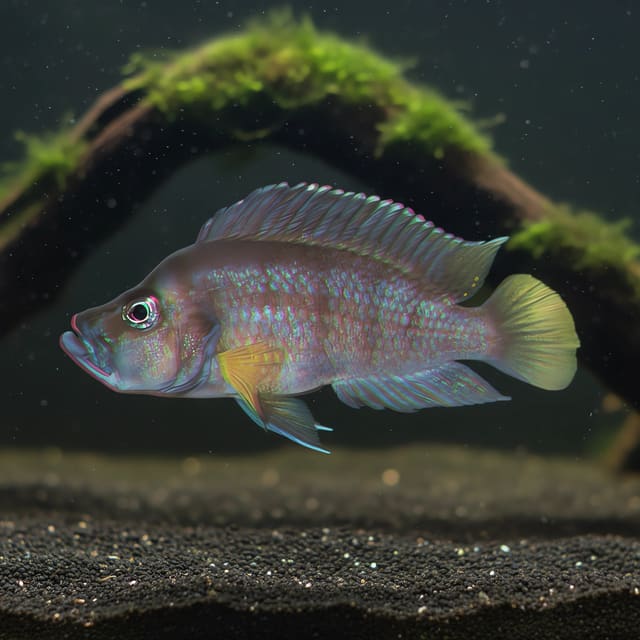
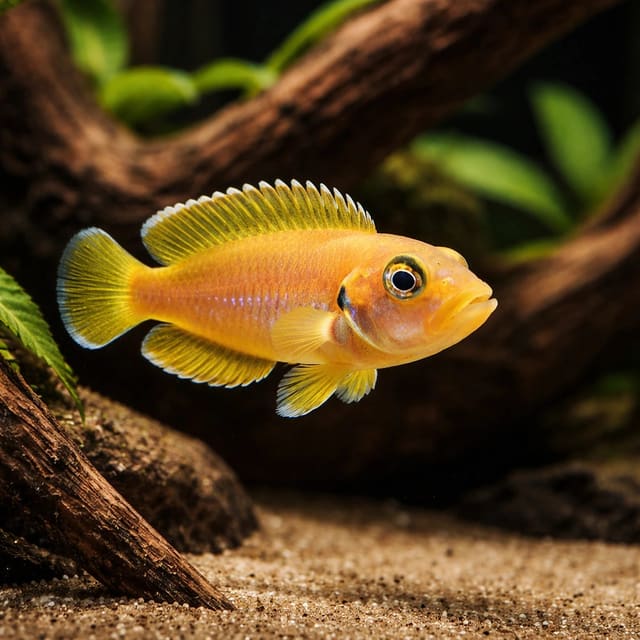
Gold Ocellatus Shell-Dweller (Neolamprologus ocellatus)
23–25°C · pH 8–9
£16.59

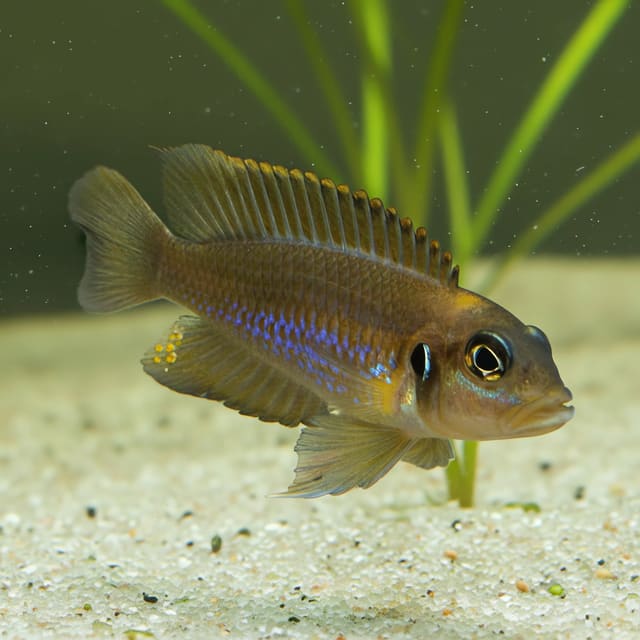
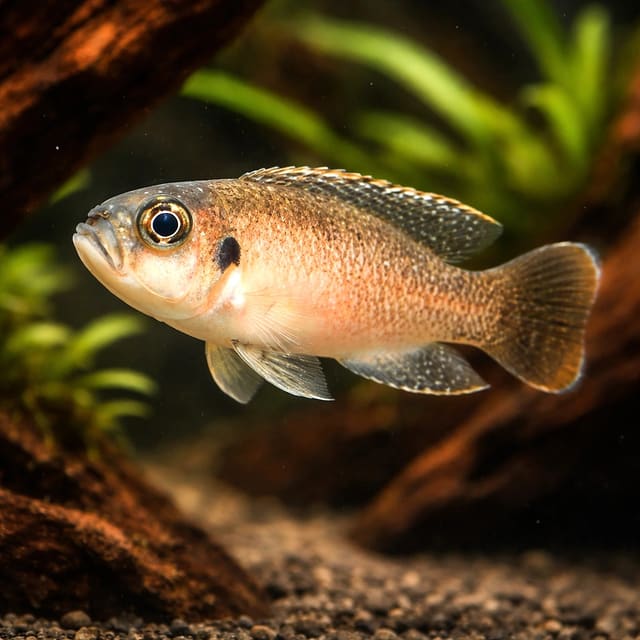
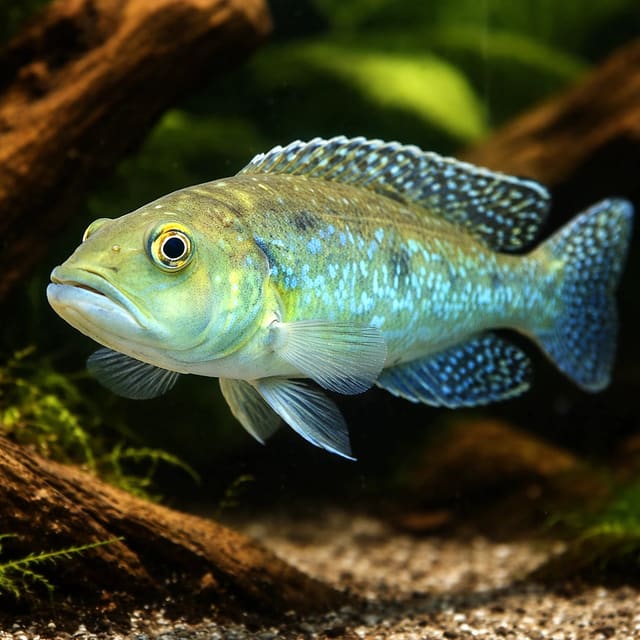
Olive Lamprologus (Lamprologus olivaceus) is supplied as one live cichlid with a recorded 4–5 cm dispatch grade. Best for an intermediate keeper able to prepare a mature, hard, alkaline aquarium and plan a Lake Tanganyika-focused community.
Lamprologus olivaceus
Save when buying multiple fish. Each quantity is one fish; sex and pair formation are not guaranteed unless the selected variant explicitly states them.
Olive Lamprologus (Lamprologus olivaceus) is supplied as one live cichlid with a recorded 4–5 cm dispatch grade. Best for an intermediate keeper able to prepare a mature, hard, alkaline aquarium and plan a Lake Tanganyika-focused community.
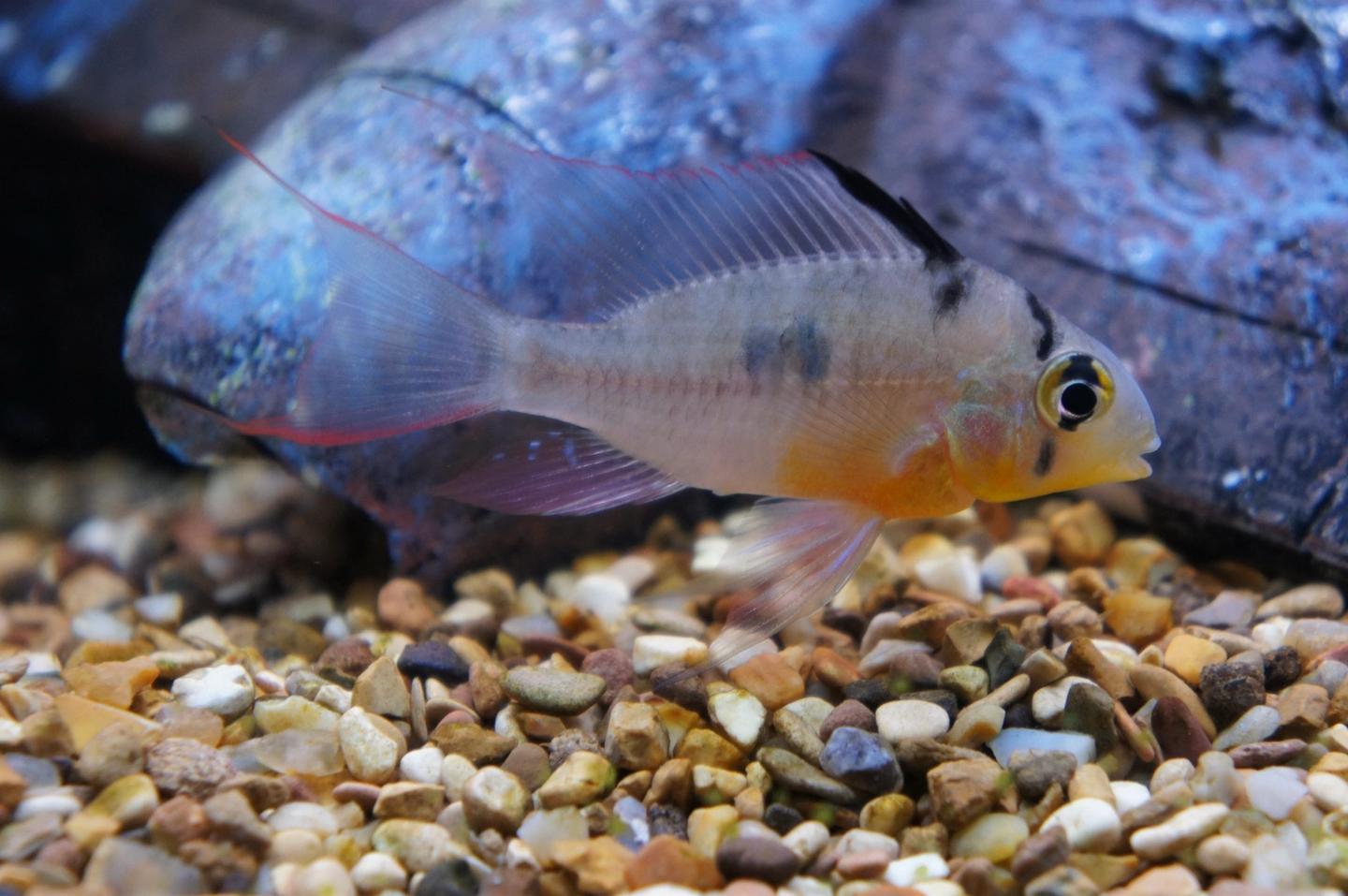
Cichlids are a family of roughly 1,800 accepted species, not one care type. Before buying, identify the exact species and source, then compare adult measurement, usable tank dimensions, social system, territory, tested water, diet and an exit plan. No family-wide minimum tank, water range or tank-mate list is safe.
Maintain these water conditions for optimal health and vibrant colors
Olive Lamprologus (Lamprologus olivaceus) is listed as a Lake Tanganyika cichlid and is supplied as one live fish per purchase. The recorded supplier grade is 4–5 cm. That figure describes the fish at dispatch; it is not an adult-length promise and it should not be used to choose permanent housing. Sex is guaranteed only when the selected option explicitly states male or female. This Olive Lamprologus listing has no sex-guaranteed option.
This is a more considered purchase than the modest dispatch size might suggest. The important decisions are the mature space requirement, the social number, the right feeding mode and how the fish will fit into a hard-water Tanganyika-focused aquarium. Those questions should be settled before purchase, because the broad care sheet for African lake cichlids covers a group with very different adult sizes and temperaments. A young fish is not a shortcut around adult planning.
| Suits | Think carefully if |
|---|---|
| An intermediate keeper who already tests water and maintains a mature biological filter | You are looking for a general soft-water community fish |
| A hard, alkaline African lake aquarium planned around compatible Tanganyika inhabitants | You need a fish with a fixed group number or adult tank minimum stated on this page |
| Someone prepared to confirm adult size, diet and social structure before finalising the aquarium | You are choosing the permanent tank from the 4–5 cm dispatch grade alone |
The trade identity joins the common name Olive Lamprologus with Lamprologus olivaceus. The genus Lamprologus belongs to the cichlid family and includes fishes associated with Lake Tanganyika and the Congo River basin. The genus is also described as being under taxonomic revision, which is a good reason to keep the label precise and resist borrowing detailed claims from a similarly named species. This guide therefore separates what is known about the offered fish from broad African lake cichlid practice.
For shoppers comparing hard-water cichlids, the African cichlid collection is a useful place to see other current choices. It is a comparison route, not a compatibility list: two fishes can come from the same broad region and still differ in social behaviour, territory and eventual space needs.
Start with the finished aquarium rather than the fish's present length. Confirm the animal's mature dimensions and social pattern, decide how many territories the completed stock will need, and then choose equipment and layout. OATA's African lake cichlid guidance ranges from small shell dwellers to frontosa over 30 cm, demonstrating why a group label cannot set this product's permanent minimum. A tank that looks generous around a 4–5 cm fish may become unsuitable as the keeper learns more about the adult animal.
The practical baseline is a fully matured, filtered aquarium with hard, alkaline water, strong oxygenation and space to manage interactions. The recorded group range of 23–27 °C, pH 8.0–8.6, 12–18 °dH general hardness and 10–15 °dKH carbonate hardness is a planning framework for African lake cichlids, not a narrow species optimum. Stability, zero ammonia, zero nitrite and steady maintenance matter more than repeatedly chasing a number.
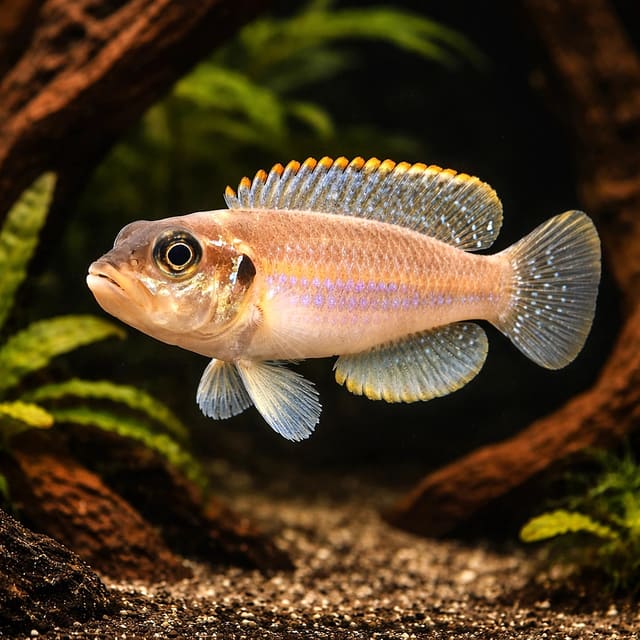
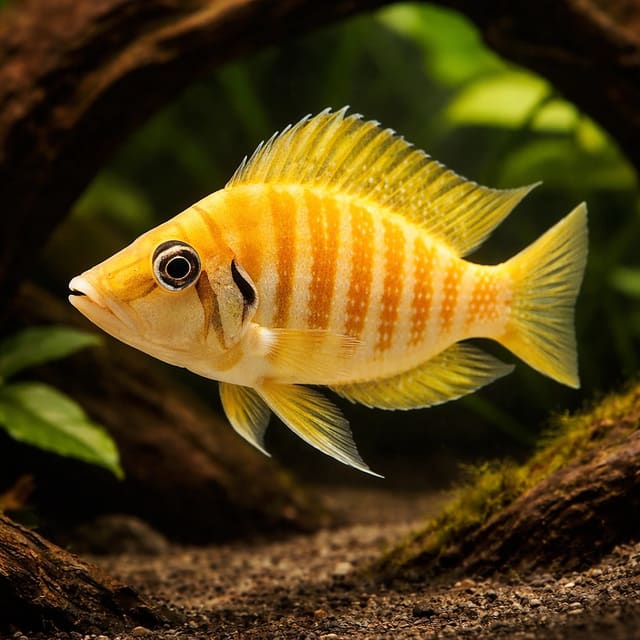
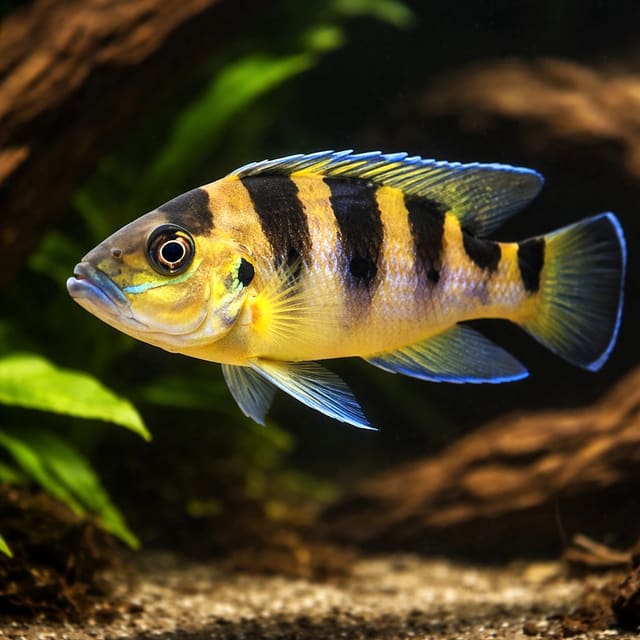
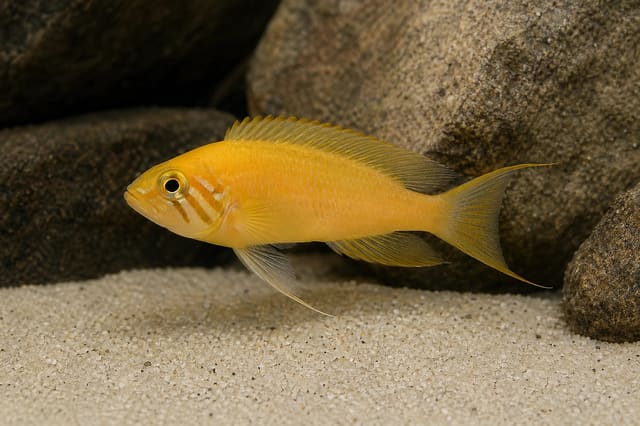
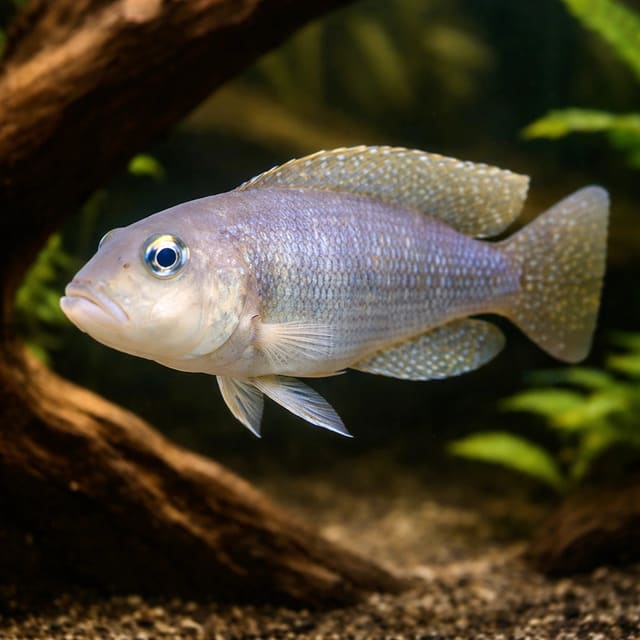
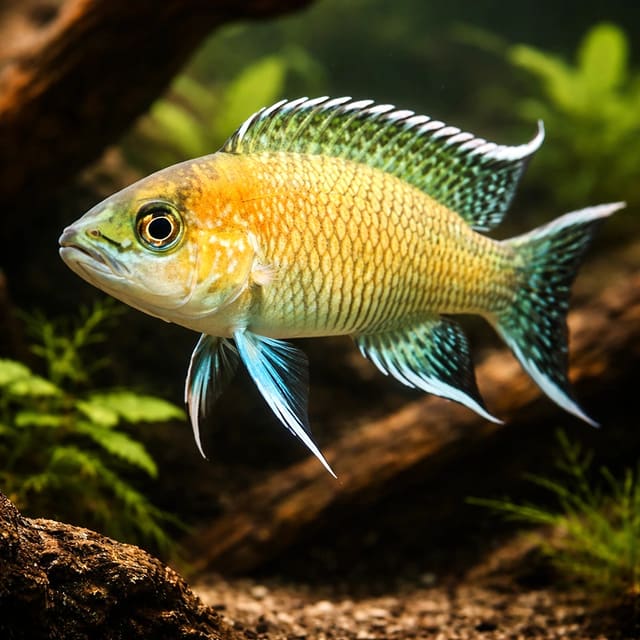
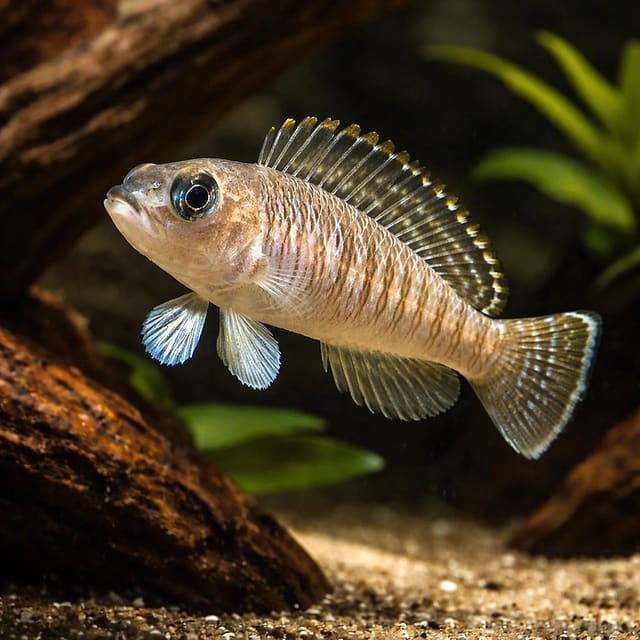
Gallery images have been digitally enhanced to improve image quality. Natural colour, pattern, size and maturity can vary between live animals.
Before ordering, be able to answer three questions in practical terms. First, what confirmed adult requirement is the permanent aquarium built around? Second, what social arrangement will be used, including a safe response if individuals do not settle? Third, what food type will meet this animal's needs without borrowing a menu from another cichlid? If any answer is still only an assumption, keep planning. The right moment to resolve uncertainty is before a live fish depends on the result.
Then check the system rather than the shopping list. The filter should be mature, ammonia and nitrite should test at zero, replacement water should be prepared consistently, and the intended stocking should suit the hard, alkaline range. Confirm that the aquarium has both usable space and service access: a layout can look impressive yet make it difficult to siphon waste, inspect equipment or separate a pressured fish.
A sound plan begins with the adult fish, the complete stock list and the footprint of the aquarium. The 4–5 cm figure belongs to dispatch, so it answers “what size is supplied?” rather than “how large will this fish become?”. Keep those questions separate. Before committing, establish a reliable adult-length requirement for Lamprologus olivaceus, then allow for the way cichlids use horizontal space and defend areas. Equipment, décor and maintenance should be chosen for that finished plan, not for the juvenile phase.
Tank volume by itself is only part of the decision. Length and floor area affect how easily fish can move around one another; internal décor changes lines of approach; the number and behaviour of companions affect pressure on any one individual. OATA advises buying as large an aquarium as is reasonable and stresses that the correct size depends on the African lake cichlid species. Larger water volume also changes more slowly, giving the keeper a better chance to detect and correct a problem before it becomes acute.
If the mature requirement remains uncertain, pause at the planning stage. Avoid filling the aquarium with temporary companions that may be difficult to rehome later. A simple written stock plan is useful: expected adult length for every species, intended number, region of the tank used, water range, feeding access and territorial needs. The exercise reveals conflicts before living animals are involved.
OATA's African lake cichlid care sheet gives the following broad parameters. They provide a sensible framework for preparing and testing a hard-water system, while the eventual operating target should be confirmed for this fish. Wild extremes, a shop bag reading or a value copied from another cichlid should not become the routine target.
| Measure | Broad African lake cichlid guidance |
|---|---|
| Temperature | 23–27 °C |
| pH | 8.0–8.6 |
| General hardness | Hard, 12–18 °dH |
| Carbonate hardness | Hard, 10–15 °dKH |
| Ammonia | 0 mg/l |
| Nitrite | 0 mg/l |
| Nitrate | Not more than 20 mg/l above the normal tap-water level |
Measure the tap water as well as the aquarium. That gives the water-change baseline and shows whether the local supply is already close to a hard, alkaline African lake system. The water chemistry guide explains what the common tests mean, while the water matcher helps compare measured values with the stated group range. Record results over time so that a trend is visible rather than reacting to a single isolated reading.
Stability is the aim. Sudden changes in temperature, pH or hardness can be stressful even when both the starting and finishing figures fall inside a broad interval. Make changes deliberately, test their effect and keep water-change practice consistent. Carbonate hardness is particularly relevant to buffering in an alkaline aquarium; a falling value can signal that the system is losing its ability to resist a pH shift.
The RSPCA explains why every fish aquarium needs a properly established biological filter. Fish release ammonia, which is toxic. Beneficial bacteria convert it first to nitrite, also toxic, and then to the less harmful nitrate that maintenance controls. A new-looking filter is not the same as a mature filter: it needs an established bacterial population and enough capacity for the eventual livestock and feeding load.
Prepare the aquarium before the fish arrives. The first tropical tank guide covers the foundation of setting up and maturing a system. Test ammonia and nitrite rather than judging readiness by clear water. Clear water can still contain harmful dissolved waste, while a biologically stable tank can carry a little harmless visual colour from natural materials.
OATA recommends an oversized filter for the crowded conditions sometimes used in African lake cichlid communities and also recommends vigorous aeration. Those points should be interpreted through the actual stock plan rather than as permission to crowd fish. Filtration handles waste; it does not create territorial space. Aeration supports dissolved oxygen and gas exchange; it does not compensate for ammonia or nitrite. Give each safeguard its proper job.
Arrange the outlet so the whole aquarium circulates without trapping waste in quiet pockets. Check that fish can rest away from the strongest flow. Keep the intake protected and accessible for inspection, and make sure the filter can be serviced without dismantling the entire layout. Good access makes regular care more likely to happen on time.
OATA recommends fine coral sand or a similar substrate for African lake cichlids because it can help buffer the water. Rinse suitable substrate before use and build a stable, serviceable layout. The aim is not a decorative imitation that ignores the fish; it is an aquarium whose water chemistry and usable space remain manageable as the stock matures.
Because exact territory and shelter requirements vary by species, keep the first layout adaptable. Use secure aquarium-safe structures and retain open access for siphoning. Heavy items should sit safely rather than relying on loose sand for support. Check every gap for the possibility of a fish becoming trapped as it grows. These are general construction precautions, while the number and form of shelters should follow confirmed behaviour for this animal.
Visual separation can be helpful where cichlids establish areas. It lets a fish move out of direct view instead of remaining continuously exposed to another animal. At the same time, the keeper needs clear observation points for feeding and health checks. Balance cover with visibility and water movement rather than filling every centimetre.
African lake cichlid diets are diverse. OATA notes that some, such as tropheus, are herbivorous, while larger predatory species need animal-rich foods. That range makes a generic “cichlid food” label an incomplete feeding plan. Establish whether this fish needs a plant-rich, animal-rich or mixed diet before selecting a staple, and do not assume that the diet of a neighbouring Tanganyika species applies.
Once the correct food type is established, OATA's broad feeding practice is simple: offer only what the fish can consume within a few minutes, twice a day, and take care not to overfeed. Watch the individual actually eat. In a community, food can disappear while one shy or lower-positioned fish receives little. Distribute suitable food so intended animals have access, then remove the cause of persistent leftovers rather than increasing portions blindly.
Uneaten food breaks down and adds to the filter's workload. It can raise nitrogenous waste and encourage poor substrate hygiene. A feeding record is useful during the first weeks: food used, portion, response and any leftovers. This makes it easier to distinguish reluctance after transport from an unsuitable food or competition at feeding time.
OATA strongly recommends a partial water change of 25% at least once every week for African lake cichlids. Follow that as a 25% partial change carried out at least weekly, rather than automatically increasing the proportion changed. Match replacement water sensibly for temperature and chemistry, and treat it with a tap-water conditioner to remove chlorine or chloramine before it enters the aquarium.
Use the water change to siphon solid waste from accessible substrate, inspect equipment and look for areas where debris accumulates. Test ammonia and nitrite at least weekly, and track nitrate against the normal tap-water level. A log turns maintenance from guesswork into trend management. Unexpected movement in pH or hardness is a prompt to investigate rather than to add products at random.
Check the filter for blockages. If media needs cleaning, rinse it lightly in aquarium water removed during the partial change; do not run biological media under the tap, because chlorine or chloramine can kill the bacteria that process waste. Avoid turning every maintenance job into one major disruption. Preserve biological stability while keeping water flow and mechanical collection effective.
Daily observation is shorter but equally valuable. Confirm that the filter and aeration are operating, the temperature is stable, every fish is present, breathing looks normal and food response has not changed. A few minutes of calm observation often reveals a developing issue earlier than a scheduled deep clean.
OATA advises watching swimming, colour, temperament, breathing, external appearance, body condition and feeding. Concern signs include hanging at the surface, remaining on the bottom in an unusual way, erratic swimming, an unexpected colour change, increased hiding or aggression, unusually fast or slow gill movement, white spots, fluffy growths, damaged fins or scales, changing body condition and reduced interest in food.
Start with water testing when behaviour changes. Ammonia, nitrite, temperature and pH can explain a problem that looks like disease, and treating blindly while water remains poor adds stress. Record what changed and when, isolate facts from assumptions, and seek appropriate guidance once water and equipment have been checked. This page does not prescribe disease treatments.
Read the current delivery and Live Arrival Guarantee policy before the delivery day. Be at the confirmed address so live fish are not left unattended. Have the mature aquarium ready, clear space to inspect the parcel and make sure a phone can record continuously before the box is touched.
The temperature-equalisation step comes after the sealed-parcel video and bag inspection. Avoid opening first and deciding later whether evidence is needed. Calm preparation protects both the fish and the customer's ability to use the guarantee.
Keep the first week focused on stability and observation. Check that the fish finds cover, breathes normally, responds to the correct food and is neither relentlessly pursued nor blocking another inhabitant's access. Test water after the new bioload is added, because the filter's bacterial population must respond to additional waste and feeding.
Do not add several further fish in quick succession. OATA warns that stocking too rapidly can produce new tank syndrome when the bacteria cannot process the increased waste. Additions should follow the planned social arrangement while allowing time to observe water quality and interactions. If the plan calls for a particular group introduction, prepare that deliberately rather than building an accidental mixture one fish at a time.
Growth changes how much room the fish occupies, how easily it reaches food and how strongly it affects the aquarium's waste load. Revisit the stock plan rather than waiting for a visible crisis. Compare present behaviour with earlier notes, check that retreats and routes through the aquarium remain usable, and make sure equipment still suits the actual livestock. This review is particularly important when the fish was bought young and the permanent layout was prepared around an adult-size requirement confirmed separately.
Keep husbandry changes traceable. Alter one practical element at a time where possible, record the date and watch water values and behaviour. A clear record helps distinguish a real improvement from a temporary response and prevents repeated changes from obscuring the cause of a problem.
A water test is useful only when it changes what the keeper does. If ammonia or nitrite is detected, stop treating the reading as a normal variation: review the recent stocking and feeding load, confirm filter flow and take prompt corrective action appropriate to the aquarium. If nitrate rises faster than usual, compare feeding, waste removal and the interval since the last partial change. If pH or carbonate hardness trends down, check the replacement water and the buffering role of the substrate rather than chasing pH with repeated quick additions.
Write the normal range for the aquarium beside the test log. That makes gradual drift easier to notice. Record temperature at a consistent time, because a one-off reading taken immediately after maintenance may not represent the daily pattern. Note equipment changes, new livestock and unusual feeding in the same log; otherwise a useful cause-and-effect clue is easily lost.
Filter maintenance should protect both water movement and biological bacteria. A slowing outlet, debris around the intake or waste collecting in previously clean areas can show that mechanical media needs attention. Clean only as required, use removed aquarium water for biological media and restore the unit carefully so flow and aeration resume. Check the aquarium after restarting it rather than assuming that a running motor means normal circulation.
As livestock grows, the same feeding portion and service interval may no longer produce the same results. Use the weekly readings and visible waste pattern to decide whether mechanical cleaning, siphoning access or filter capacity needs revision. This is another reason to plan from the adult stock: buying filtration for the initial 4–5 cm fish can leave the mature system underprepared.
Keep water conditioner, test supplies and a suitable siphon available before the fish arrives. Check expiry dates and replace exhausted reagents; a neat log built on unreliable tests is false reassurance. Know how much water 25% represents in the actual aquarium after displacement by substrate and décor, and prepare a safe method for matching replacement water. Maintenance becomes calmer and more consistent when the basic quantities and tools are already understood.
Also plan for interruption. A filter blockage, heater concern or aggressive interaction needs a prompt response, not a shopping trip for the first bucket or test kit. The response should protect water quality and fish welfare while avoiding improvised chemical changes. Practical preparation is especially valuable in a specialist aquarium where hard, alkaline conditions and territorial stocking leave less room for casual substitutions.
OATA's broad rule is that African lake cichlids are normally stocked with species from the same location. For this listing, that points towards a Lake Tanganyika-focused plan rather than mixing fish from different African lake systems. OATA specifically advises against combining Malawi and Tanganyika cichlids because behaviour and requirements differ.
Shared origin still does not prove compatibility. Two Tanganyika fishes may need different territory, social numbers, adult space or feeding access. Compare those features side by side for every proposed combination. A fish that tolerates the same water can still be a poor companion if it monopolises shelter, prevents another animal feeding or keeps it under constant pressure.
One purchase is one fish; that is the retail unit, not advice to keep the species singly. OATA notes that very few African lake cichlids do well alone and may become stressed, but also says the correct number depends on the species. Confirm the social structure for Lamprologus olivaceus before purchase, then design the aquarium for the complete group rather than assuming that adding a second fish later will create a safe pair.
Do not infer sex from colour, finnage, size or gallery images. This listing does not guarantee male or female. That matters when a stocking plan depends on a particular sex ratio or established pair. Build a plan that remains responsible when the fish arrives unsexed.
OATA advises adding more peaceful species before more aggressive ones and notes that rearranging décor can reduce established territorial pressure as fish find new areas. Use those ideas only after the actual species combination has been assessed. A new layout is a management tool, not a guarantee that an unsuitable combination will work.
Observe the whole aquarium during and after introduction. Watch access to shelter, food and calmer water as well as obvious chasing. A fish can be disadvantaged without visible injury if it is repeatedly displaced. Have a separation plan ready before adding fish; waiting until persistent pressure occurs leaves fewer safe choices.
| Planning route | Reason |
|---|---|
| Assess only carefully matched Lake Tanganyika inhabitants | They begin with a more relevant regional water and behaviour context |
| Avoid mixing Malawi and Tanganyika cichlids | OATA advises against it because temperament and behaviour differ |
| Confirm group number and adult space first | The sale unit and dispatch size do not answer social or permanent-space questions |
| Monitor feeding and refuge access | Compatibility includes resource access, not merely the absence of fighting |
The two related products shown elsewhere on the page are shopping alternatives, not endorsed companions. Evaluate any animal independently before combining it with Olive Lamprologus.
Treat the recorded 4–5 cm supplier grade as dispatch size only, not mature length. Base the permanent aquarium on a confirmed adult-size requirement for Lamprologus olivaceus before the fish comes home; the size supplied cannot by itself tell you how much long-term space the animal will need.
Choose the aquarium after confirming mature size, social number and likely territorial use for this fish. OATA's African lake cichlid guidance explains that tank size varies greatly by species, while larger aquariums give more stable conditions and more room to separate territories. The examples for other Tanganyika cichlids should not be reused as a minimum for Olive Lamprologus.
One purchase supplies one fish, but that sale unit is not a social recommendation. OATA notes that very few African lake cichlids do well when kept singly, while the correct number depends on the species. Confirm a suitable grouping for this animal and design the aquarium around the whole intended group before buying.
It is best treated as an intermediate choice. The keeper needs a mature filtered aquarium, consistently hard and alkaline water, regular testing, vigorous aeration and a stocking plan built around Tanganyika cichlids rather than a general soft-water community.
African lake cichlid diets range from plant-rich to animal-rich foods, so establish the correct feeding mode for this fish before choosing a staple. Once the right food is known, OATA advises feeding only what the fish consume within a few minutes, twice a day, and removing the causes of uneaten-food build-up rather than overfeeding.
Use 23–27 °C and pH 8.0–8.6 as broad OATA guidance for African lake cichlids, alongside hard water of 12–18 °dH and carbonate hardness of 10–15 °dKH. These are group-level planning values rather than a species-specific optimum, so hold them steady and confirm the animal's narrower needs before making adjustments.
Temperament varies among African lake cichlids and a categorical fin-nipping label is not used here. Plan distinct areas, enough room and visual separation, then watch interactions closely. OATA notes that rearranging décor can reduce established territorial pressure when fish are introduced.
Build around animals from Lake Tanganyika only after checking their adult size, water needs, temperament and social structure together. OATA advises against mixing Malawi and Tanganyika cichlids because their behaviour and requirements differ. An alternative product is not automatically a suitable tank mate.
Tropical Fish Co hand-packs live fish in oxygen with an insulated box and a heat pack when weather calls for it, then uses a licensed live-animal courier. Be present, film the sealed parcel being opened in one continuous unboxing video, inspect the fish in the sealed bag, float the bag for 20–30 minutes, transfer carefully without adding transport water, and contact the store the same day with the order number and video if a Live Arrival Guarantee claim is needed.
The delivery policy is linked in the arrival section beside the steps it governs. Group guidance is kept clearly scoped because African lake cichlids vary widely; exact adult size, social number and feeding mode should be settled for this animal before the permanent aquarium and stock list are finalised.
No reviews for this item yet. Bought one? Honest reviews only, good or bad.
What customers say about ordering from us
I have a small group of long finned mountain minnows. So was delighted to be able to order ten of this variety to increase the genetics in my tank . The ones I recieved are healthy but it’s to early to give a verdict on wether they are of a long finned type since they are small currently.
Gordon Walker · 23 Sept 2026
100% success travel and "installation". Pleased with quality of purchase. The Siamese fighter a bit "shy" so have not yet seen him at his best yet but looking good. Happy customer. GG
George E Garratt · 21 Sept 2026
Reviews of our shop, collected by Judge.me, an independent third-party review collector. Newest first.