
Moderate
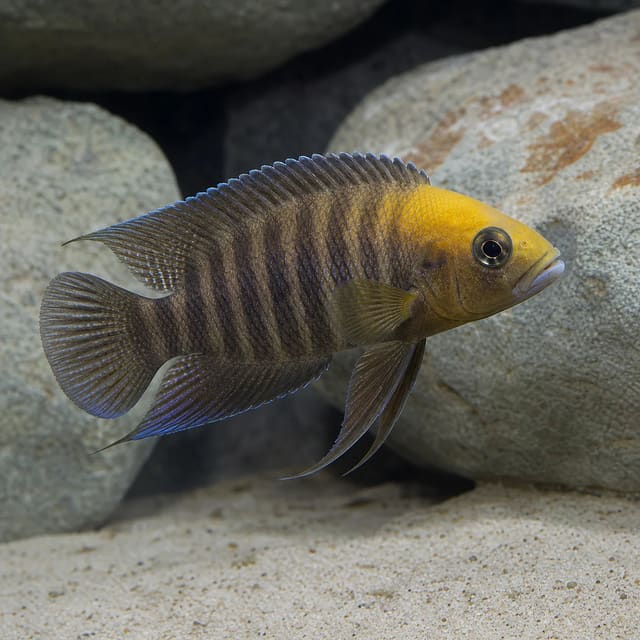
Gold Head Compressiceps (Altolamprologus compressiceps)
23–27°C · 200L
£20.99
A striking orange Tanganyikan cichlid with bold personality, best kept in hard, alkaline water with rocky shelter. Moderate care, semi-aggressive. 24-27C, pH 7.5-8.5.
Adult size is the maximum length this species reaches at full maturity (scientific sources). The livestock you receive will be younger and smaller — pick a size above for the actual shipping size. Product-photo provenance and any image-specific limitations are stated on the listing.
Telmatochromis dhondti
Save when buying multiple fish. Each quantity is one fish; sex and pair formation are not guaranteed unless the selected variant explicitly states them.
Confirm your email, then we’ll send an availability message for this exact item if it returns within 180 days.
This request is only for this product—no newsletter or other promotions. A mail-provider retry may very rarely duplicate the same availability message. Unconfirmed addresses are removed after 48 hours. See our privacy policy.
A striking orange Tanganyikan cichlid with bold personality, best kept in hard, alkaline water with rocky shelter. Moderate care, semi-aggressive. 24-27C, pH 7.5-8.5.
Adult size is the maximum length this species reaches at full maturity (scientific sources). The livestock you receive will be younger and smaller — pick a size above for the actual shipping size. Product-photo provenance and any image-specific limitations are stated on the listing.

Cichlids are a family of roughly 1,800 accepted species, not one care type. Before buying, identify the exact species and source, then compare adult measurement, usable tank dimensions, social system, territory, tested water, diet and an exit plan. No family-wide minimum tank, water range or tank-mate list is safe.
Maintain these water conditions for optimal health and vibrant colors
The Telmatochromis dhondti orange variant is a striking, small cichlid from Lake Tanganyika in East Africa. This captivating species is highly sought after in the African cichlid for sale UK market, prized for its brilliant orange coloration and fascinating shell-dwelling behavior. With an adult size of just 4.5 cm, T. dhondti is an excellent choice for nano and moderate-sized Tanganyikan aquariums, where its bold personality and vibrant color make it a standout despite its diminutive stature. This species thrives in hard, alkaline water and is best kept in species-appropriate setups that replicate the rocky, shell-strewn habitats of Lake Tanganyika. For aquarists seeking a unique, colorful, and behavior-rich cichlid, the orange Telmatochromis dhondti delivers exceptional value and visual impact.
The orange variant of Telmatochromis dhondti displays vivid, fiery orange coloration that intensifies in breeding adults, particularly males. The body is compact and slightly elongated, with large, expressive eyes and a slightly pointed snout. Finnage is well-proportioned, and the dorsal fin often shows subtle barring or spotting. Females and juveniles may be less intensely colored, but adults in breeding condition are truly spectacular. The overall appearance is bold and eye-catching, making this tiny fish a visual centerpiece in any Tanganyikan aquarium. Their constant activity and expressive behavior add to their appeal.
Endemic to Lake Tanganyika, Telmatochromis dhondti is associated with rocky and shell-covered substrates in shallow to moderate depths. The lake's water is hard, alkaline, and exceptionally clear, with stable temperatures and high mineral content. Rocky crevices and empty snail shells provide shelter from predators and serve as spawning sites. The environment is well-oxygenated and highly stable, with minimal seasonal variation. Replicating these conditions in the aquarium—hard, alkaline water, rocky structure, and stable parameters—is essential for the health and breeding success of this species.
Provide a well-structured aquarium with plenty of rockwork to create caves, crevices, and visual barriers. Empty snail shells (such as Neothauma or escargot shells) should be scattered across a sand substrate to serve as spawning sites and shelter. A minimum tank size of 60 litres is suitable for a pair or small group, though larger tanks allow for better territory distribution and reduced aggression. Strong filtration is essential to maintain pristine water quality, and moderate to strong water flow mimics the well-oxygenated lake environment. Regular partial water changes are critical for maintaining stable, hard, alkaline water parameters.
As an omnivore, Telmatochromis dhondti requires a varied diet of high-quality cichlid pellets or flakes supplemented with frozen and live foods. Offer brine shrimp, mysis, daphnia, and small insect larvae regularly, along with some vegetable matter such as spirulina flakes or blanched vegetables. Feed small portions multiple times per day to ensure all individuals receive adequate nutrition. Avoid overfeeding, as uneaten food degrades water quality rapidly. A varied diet supports optimal health, coloration, and breeding behavior.
Telmatochromis dhondti is semi-aggressive, with territorial behavior intensifying during breeding. Males defend small territories around preferred shells or rock crevices, displaying to rivals and potential mates. Females are less territorial outside of breeding but will fiercely guard eggs and fry. Despite their small size, these fish have bold personalities and should be housed with appropriately robust tankmates. In a well-structured Tanganyikan setup with ample hiding places, aggression is manageable and their natural behavior becomes a highlight of the aquarium.
House T. dhondti with other small Tanganyikan cichlids of similar temperament, such as species from the genera Neolamprologus, Julidochromis, or Lamprologus. Tanganyikan catfish like Synodontis petricola can also coexist successfully. Avoid small peaceful community fish, which will be bullied, as well as very aggressive large cichlids that may dominate the tank. Fin-nipping species and slow-moving or delicate fish are entirely unsuitable. A species-appropriate Tanganyikan setup is always the best approach for ensuring long-term success.
Telmatochromis dhondti is typically a cave or crevice spawner, though they may also use empty snail shells. Provide rockwork with sheltered spawning sites and keep a bonded pair in stable Tanganyikan water conditions. The female lays eggs in a chosen shelter, and both parents may guard the eggs and fry, though the female typically takes the primary role. Fry are small and require infusoria or newly hatched brine shrimp as first foods. Breeding success improves with excellent water quality, stable parameters, and minimal disturbance during the spawning cycle.
At Tropical Fish Co, we specialize in sourcing healthy, vibrant Lake Tanganyika cichlids, including the stunning orange Telmatochromis dhondti. Every fish is carefully quarantined, health-checked, and acclimated to ensure it arrives in peak condition. Our expert team is available to provide guidance on water parameters, tank setup, and compatible tankmates, helping you create a thriving Tanganyikan biotope aquarium. With nationwide UK delivery, a live arrival guarantee, and a commitment to sustainable fishkeeping practices, Tropical Fish Co is your trusted partner for premium African cichlids. Order today and bring the beauty of Lake Tanganyika into your home.
No reviews for this item yet. Bought one? Honest reviews only, good or bad.
What customers say about ordering from us
Easy website plenty of info on fish your buying great to pick a time slot
TRACEY DURRANT · 7 Oct 2026
Got some lovely fish thank you
Kevin Mackie · 7 Oct 2026
Reviews of our shop, collected by Judge.me, an independent third-party review collector. Newest first.


