Moderate
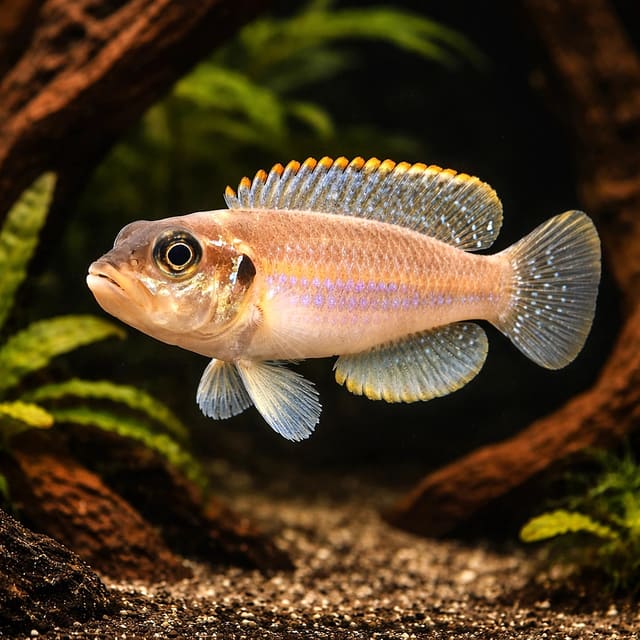
Dickfeld's Julie (Julidochromis dickfeldi)
23–27°C · pH 8–9.2 · 68L
£10.99

Bright Kiriza Yellow Cichlid for vibrant African cichlid tanks. Moderate care and full of character. Buy online today with UK delivery.
Adult size is the maximum length this species reaches at full maturity (scientific sources). The livestock you receive will be younger and smaller — pick a size above for the actual shipping size. Product-photo provenance and any image-specific limitations are stated on the listing.
Tropheus moorii
Save when buying multiple fish. Each quantity is one fish; sex and pair formation are not guaranteed unless the selected variant explicitly states them.
Confirm your email, then we’ll send an availability message for this exact item if it returns within 180 days.
This request is only for this product—no newsletter or other promotions. A mail-provider retry may very rarely duplicate the same availability message. Unconfirmed addresses are removed after 48 hours. See our privacy policy.
Bright Kiriza Yellow Cichlid for vibrant African cichlid tanks. Moderate care and full of character. Buy online today with UK delivery.
Adult size is the maximum length this species reaches at full maturity (scientific sources). The livestock you receive will be younger and smaller — pick a size above for the actual shipping size. Product-photo provenance and any image-specific limitations are stated on the listing.

Cichlids are a family of roughly 1,800 accepted species, not one care type. Before buying, identify the exact species and source, then compare adult measurement, usable tank dimensions, social system, territory, tested water, diet and an exit plan. No family-wide minimum tank, water range or tank-mate list is safe.
Maintain these water conditions for optimal health and vibrant colors
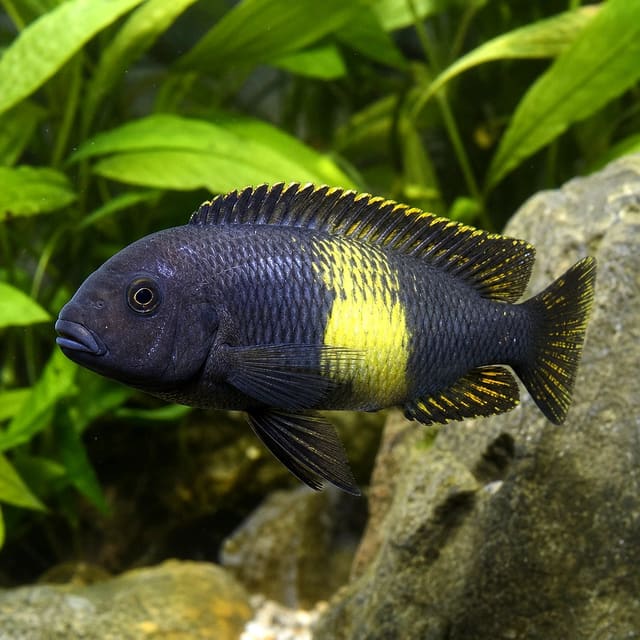
The Kiriza Yellow Cichlid, Tropheus moorii "Kiriza Yellow", is one of the most striking Lake Tanganyika cichlids in the tropical fish for sale UK market. Its deep charcoal body and bold yellow band create a high-contrast look that stands out in large rockwork displays with strong filtration and open swimming lanes. This is a specialised herbivorous African cichlid chosen by keepers who want active behaviour, social interaction, and a true colony species rather than a casual community fish. Adults reach around 14 cm, can live up to 10 years, and show complex pecking-order behaviour that rewards careful planning. Our photos show the body shape, colour-band intensity, and robust build typical of a healthy Kiriza Yellow Cichlid.
If you want to buy tropical fish UK hobbyists respect for personality as much as colour, the Kiriza Yellow Cichlid is a serious option for aquarists ready to build a dedicated Lake Tanganyika cichlid UK display. It is best suited to a large, hard-water Tanganyika colony rather than a mixed community aquarium. Kept correctly, this freshwater cichlid UK favourite delivers constant movement, bold territorial displays, and superb long-term colour.
Tropheus moorii is one of the best-known grazing cichlids from Lake Tanganyika. In the aquarium hobby, Tropheus are famous for their regional colour forms, colony dynamics, and demanding dietary needs. The Kiriza Yellow locality is especially valued because the yellow saddle contrasts sharply against the dark body, giving the fish a dramatic, almost hand-painted appearance. Other Tanganyikan cichlids keepers often compare it with include the Black Widow Humphead Cichlid - Cyphotilapia, though their care style and temperament differ significantly.
The Kiriza Yellow Cichlid comes from Lake Tanganyika in East Africa, one of the oldest and deepest freshwater lakes in the world. This makes it a true Lake Tanganyika cichlid UK hobbyists prize for authenticity and colour locality. In the wild, Tropheus live along rocky shorelines where wave action keeps oxygen levels high and rock surfaces coated with algae and biofilm. These fish spend much of the day grazing, defending feeding spots, and interacting with their colony.
That natural setting explains why this species needs a tank built around rocks, stable water chemistry, and strong circulation rather than soft acidic water or a heavily planted layout. Kiriza Yellow Cichlid water conditions should be alkaline, mineral-rich, and very stable. In nature these fish feed on algae films, the tiny organisms trapped in aufwuchs, and vegetable matter scraped from rock surfaces, which is why protein-heavy feeding in captivity often causes digestive trouble.
This is strictly an indoor, heated-aquarium species. It is not a pond or cold-water fish and must have warm, hard, clean water year-round. While Tropheus do graze soft algae films as part of their normal behaviour, they are not a clean-up crew and are no substitute for proper tank maintenance.
Mimicking the natural rocky shoreline of Lake Tanganyika improves confidence, colour, and social stability. In our experience, Kiriza Yellow colonies settle faster when the tank has multiple rock breaks, broad grazing surfaces, and strong oxygenation rather than sparse décor.
A proper Kiriza Yellow Cichlid Tanganyika setup starts with scale. The Kiriza Yellow Cichlid minimum tank size is 300 litres, but many keepers get better long-term results in larger systems because this species should be kept in a colony of 12 or more to spread aggression. When you are deciding what size tank you need for Tropheus, the answer is always bigger than beginners expect: a stable colony needs a long footprint and plenty of open swimming space, so longer tanks are better.
Kiriza Yellow Cichlid tank size is one of the biggest success factors. These fish are active, territorial, and socially intense. In small groups, dominant individuals often harass weaker fish relentlessly; in large colonies, aggression is diffused. A complete setup should include a long aquarium, secure rock piles, and enough open front space for the group to move together.
The Kiriza Yellow Cichlid ideal temperature is 24-28°C, with 25-26°C working well for day-to-day maintenance. Aim for the middle of that range and avoid swings. UK room temperatures often drop too low without heating, so use a reliable aquarium heater, confirm the setting with a separate thermometer, and place the heater where flow is strong for even heat distribution. Stability matters more than chasing tiny daily adjustments.
Kiriza Yellow Cichlid water parameters should stay alkaline and hard. This species needs a very different profile from soft-water community fish, so the priority is a stable, mineral-rich, high-pH environment that mirrors Lake Tanganyika.
Because these fish are active grazers kept in groups, waste output is high. Use robust biological filtration with good oxygen exchange; many keepers prefer an external canister plus a circulation pump. Arrange the filter and heater to eliminate dead spots behind rocks. If the tank runs too warm in summer, increase aeration and cool the room rather than making sudden temperature drops.
Fine sand or smooth gravel works well, but the real focus should be rockwork. Build stable piles directly on the tank base before adding substrate, leaving open grazing faces and line-of-sight breaks. For Tropheus, plants are optional and must tolerate hard, alkaline water; tough species such as Anubias attached to rock can work, but a Kiriza Yellow Cichlid planted aquarium is never as straightforward as a peaceful community setup. Keep any planting sparse and durable, and avoid over-dosing nutrients, which can fuel nuisance algae.
Always cycle the aquarium for four to six weeks before adding Tropheus. Patience at the start prevents most losses later, especially in a larger cichlid system.
The Kiriza Yellow Cichlid diet is herbivorous, and getting this right is essential. In the wild these fish graze algae films and associated microorganisms all day. In captivity, the safest routine is a high-fibre, vegetable-based menu built around spirulina flakes, quality herbivore pellets, and occasional blanched greens. Feed little and often. Heavy protein foods, rich frozen mixes, and fatty treats are common causes of the digestive stress and "bloat" seen in Tropheus.
Use spirulina flake or a dedicated herbivore cichlid pellet as the main food. Feed small portions two to three times daily so every fish gets a chance to eat without polluting the tank. A little natural grazing on rock surfaces is helpful and should not be scrubbed away completely.
Supplement with blanched spinach, courgette, shelled peas in moderation, and high-quality algae wafers designed for herbivorous cichlids. Tropheus are not reliable snail hunters and should not be bought for pest control.
Avoid bloodworm, tubifex, beefheart, and high-protein carnivore pellets, which are poor matches for the digestive tract of Tropheus moorii. Manage any algae through lighting, nutrient control, and filtration rather than by adding random algae-eating species, which are generally unsuitable tank mates here.
| Time | Food | Amount |
|---|---|---|
| Morning | Spirulina flake | Small pinch, eaten in 30-60 seconds |
| Evening | Herbivore pellet or algae wafer | Light portion, no leftovers after 2 minutes |
Use a good water conditioner (dechlorinator) for every water change, plus buffering support if your tap water is soft. Feed lightly after maintenance days and watch the colony for any fish that stops grazing.
Overfeeding causes ammonia spikes, cloudy water, and digestive problems. With Tropheus, too much rich food is often more dangerous than too little. If a fish isolates itself, clamps its fins, or stops eating, review diet and water quality immediately.
The Kiriza Yellow Cichlid is a compact, muscular cichlid with a blunt head, strong jawline, and a deep body built for constant grazing and short bursts of territorial movement. Adults usually reach around 14 cm, making them a medium-sized but visually powerful freshwater cichlid UK aquarists often choose as a centrepiece colony. The base colour is dark brown to near-black, while the signature yellow band or saddle runs across the midsection. In top-quality fish, this band is bold, clean-edged, and highly saturated.
Colour quality also depends on diet, social ranking, and low stress. Our photos show the intense dark base tone and bright yellow marking achieved through stable hard-water care, correct herbivore feeding, and strong water movement. Fish held in unstable conditions often look washed out or nervous.
Sexing is not easy. Males may become slightly larger, more assertive, and thicker through the head, but females can be just as colourful, which is why many keepers buy a group first rather than trying to select a guaranteed pair. The appeal of this species lies in its locality-based colour consistency and the visual impact of a whole colony moving together.
Few Tanganyika fish combine this exact yellow-on-dark pattern with the same social colony behaviour, which makes the Kiriza Yellow Cichlid especially attractive for aquarists who want something different from standard peacocks or community species.
Compatibility is where many buyers make mistakes. Kiriza Yellow Cichlid compatible fish options are limited because this species is territorial, fast-moving, and best managed in a species-focused colony. The best tank mates for a Kiriza Yellow Cichlid are usually other Tropheus of the same species and similar size, or, in very large expert systems, carefully chosen Tanganyikan companions that handle the same water chemistry and social pressure. For most keepers, a true mixed community tank is not recommended.
Many people expect a community setup with tetras, livebearers, and bottom dwellers, but that is not how this fish thrives. Kiriza Yellow Cichlid tank mates should be selected for temperament, speed, and water chemistry, not colour alone, and a community-tank approach usually fails if the tank is too small or stocked with peaceful fish.
For dedicated African displays, related cichlids can be considered only with care. Species keepers compare include the Orange I Blunthead Cichlid - Tropheus for another Tropheus-style colony fish, the Black Widow Humphead Cichlid - Cyphotilapia for a Tanganyika specialist in much larger tanks, and Malawi species such as the Yellow Elongatus Cichlid - Chindongo Elongatus, Rubin Red Peacock Cichlid - Aulonocara, Aulonocara kandeense, or Aulonocara Sp Neon Red Calico Peacock if you are planning a different African cichlid route. These are not automatic mix-and-match choices, but they show the range of cichlid options available.
Avoid slow fish, long-finned fish, most small bottom dwellers, shrimp, and delicate community species. Most will be stressed, bullied, or simply incompatible with the hard alkaline conditions. Snails may survive but are not always safe from pecking, and small catfish and algae eaters are usually poor choices.
| Species | Compatible? | Notes |
|---|---|---|
| Orange I Blunthead Cichlid - Tropheus | ✅ Yes | Closest style match; best only for experienced keepers managing Tropheus groups carefully |
| Black Widow Humphead Cichlid - Cyphotilapia | ⚠️ Caution | Requires a much larger specialist Tanganyika setup and careful planning |
| Tetras, guppies, peaceful community fish | ❌ Avoid | Wrong water chemistry, too delicate, and likely to be harassed |
Maintenance also affects compatibility. Keeping water quality stable through regular testing, careful water changes, and consistent upkeep reduces social stress. Keep the chemistry simple: a reliable dechlorinator, buffering support if needed, and accurate test kits.
Always quarantine new arrivals for two to four weeks before introducing them. With Tropheus, social timing matters too: adding several fish together works better than dropping one weak newcomer into an established colony.
Kiriza Yellow Cichlid breeding is achievable in the home aquarium, but it is easier in a stable colony than in a forced pair. Buying a guaranteed breeding pair is difficult because sexing young fish is unreliable, so most successful breeders start with a large group, allow natural pair formation, and watch for courtship and mouthbrooding behaviour. This species is a maternal mouthbrooder, meaning the female carries the fertilised eggs in her mouth rather than leaving them exposed on décor.
Use a mature tank of at least the standard colony size, stable hard alkaline water, and a calm but well-structured rock layout. To breed Tropheus you mainly need pristine water, low stress, and a correct diet rather than special equipment. Keep the temperature around 25-27°C and feed a clean herbivore menu before conditioning.
The male will display intensely, circle the female, and defend a chosen spawning area. After spawning, the female gathers the eggs into her mouth, so they are usually not visible for long. A holding female may stop eating, spit food, and appear more secretive.
Because the female carries the brood, direct egg care is minimal. The key decision is whether to leave her in the colony or move her: many breeders leave experienced females in place if aggression is manageable, while others move them carefully to a separate tank near release time. Once the fry are free-swimming, offer crushed spirulina flake and finely powdered herbivore foods. Fry need excellent water quality and gentle but regular feeding.
Breeding success improves when the colony is not overcrowded beyond filtration capacity. Mostly it comes down to consistency: avoid chasing numbers, avoid stress, and do not strip brooding females unless you already have experience with mouthbrooders.
Condition the whole colony on small, frequent herbivore meals rather than trying to "fatten" breeders with rich foods. In Tropheus, stable digestion and low stress produce better spawning results than the high-protein conditioning used for other cichlids.
Many buyers comparing tropical fish for sale UK listings want to know whether the Kiriza Yellow is the right cichlid for them or whether another African species would be easier. It is highly rewarding but more specialised than many colourful cichlids sold online. If you want a colony-based grazer with strong social behaviour, it is a great choice; if you want a more flexible mixed setup, another species may suit you better.
| Feature | Kiriza Yellow Cichlid | Orange I Blunthead Cichlid - Tropheus |
|---|---|---|
| Max Size | 14 cm | About 12-14 cm |
| Care Level | Moderate to advanced | Moderate to advanced |
| Temperature | 24-28°C | 24-28°C |
| Diet | Herbivore | Herbivore |
| Best For | Dedicated Tanganyika colony display | Keepers wanting another Tropheus colour form |
| Feature | Kiriza Yellow Cichlid | Rubin Red Peacock Cichlid |
|---|---|---|
| Max Size | 14 cm | Usually larger-bodied display fish |
| Care Style | Herbivore colony grazer | Malawi peacock with different feeding and stocking strategy |
| Temperament | Social but aggressive | Assertive, often easier in planned Malawi communities |
| Water Type | Hard, alkaline Tanganyika | Hard, alkaline Malawi |
| Best For | Specialist Tropheus keeper | Colourful African display with more species options |
Choose the Kiriza Yellow if you want authentic Tropheus behaviour, constant grazing activity, and the visual impact of a coordinated colony. Choose the Orange I Blunthead Cichlid - Tropheus if you want a similar care pattern with a different colour form, or the Rubin Red Peacock Cichlid - Aulonocara or Aulonocara Sp Neon Red Calico Peacock if you prefer a more conventional African cichlid display. For a non-African contrast, species like the Thorichthys Maculipinnis - Elliot'S Cichlid - or Guianacara Dacrya - South American Cichlid offer very different behaviour and water needs.
Healthy Kiriza Yellow Cichlids are alert, constantly grazing, quick to feed, and socially engaged. Good specimens show full finnage, clear eyes, strong body weight, and steady respiration. If a fish hides constantly, stops eating, darkens excessively, or isolates itself, act quickly, as disease can spread fast in social cichlid colonies where fish are always interacting.
The biggest concern in Tropheus is digestive distress, often called bloat by hobbyists. It is usually linked to poor diet, overfeeding, stress, or deteriorating water quality. External parasites, bacterial infections, and injury from aggression can also occur, and many cases blamed on disease are really husbandry issues caused by unstable water conditions.
The best prevention is strict husbandry: stable temperature, regular testing, and a correct herbivore menu. Quarantine all new stock. If treatment is needed, move affected fish when possible and confirm the diagnosis before medicating, because broad-spectrum medication without a clear cause can do more harm than good in hard-water cichlid systems.
Never use medication casually in a stressed Tropheus colony. Correct the root problem first: diet, aggression, oxygen, or water quality. Copper-based medications should never be used in tanks with invertebrates, as they are lethal to shrimp and many snails.
Whether you are searching to buy Kiriza Yellow Cichlid UK stock or simply researching the species, health preparation matters more than an impulse buy. Serious UK cichlid buyers should focus on quarantine standards, acclimation, feeding history, and colony behaviour rather than just convenience.
Kiriza Yellow Cichlid behaviour is one of the main reasons experienced aquarists love this species. These fish are active from morning to evening, constantly grazing rock surfaces, posturing at rivals, and moving as a loose social group. They are not shy display fish that hide in corners; in a settled colony you will see chasing, pecking-order disputes, and surprisingly coordinated movement across the tank.
This is exactly why colony size matters. Although they are not schooling fish like tetras, a large group spreads aggression and creates more natural interaction. Kept in pairs or tiny groups, they often become far more dangerous to one another. The species can suit a beginner, but only one willing to follow specialist guidance rather than treating it like a standard community fish.
Natural behaviour improves when the tank has broad rock faces to graze, strong oxygenation, and enough room for subordinate fish to break line of sight. Stable colonies also show better colour and more confident feeding.
When people look for tropical fish for sale UK or the best place to buy tropical fish online, they usually want two things: healthy fish and reliable delivery. With a specialist species like the Kiriza Yellow Cichlid, that matters even more. These fish are not impulse buys; they need informed packing, careful holding, and realistic care advice.
Our Kiriza Yellow Cichlids are selected for body condition, active grazing response, and clean yellow-band definition. Before dispatch, fish are observed for feeding consistency and overall vigour, then packed in insulated boxes with oxygen-rich bags. Heat packs are used in winter when required, and tracked delivery helps reduce transit time. We also provide guidance for acclimation to UK home aquariums, especially for hard-water African cichlid systems.
If you want to buy live fish online UK or buy tropical fish UK from a seller that understands species-specific care, choosing expertise over the cheapest listing pays off. This is a warm-water, hard-water Tanganyika species, not a cold-water or community fish. Order your Kiriza Yellow Cichlid today if you are ready to build a proper Lake Tanganyika colony aquarium.
If you are planning a larger cichlid display, compare the colony-focused Orange I Blunthead Cichlid - Tropheus for a similar Tanganyika experience with a different colour form. For Malawi alternatives, consider the Rubin Red Peacock Cichlid - Aulonocara or Aulonocara kandeense for bright show-fish colour in hard-water systems. For a more unusual large-lake option, the Black Widow Humphead Cichlid - Cyphotilapia offers a very different Tanganyikan look. For keepers comparing other cichlid styles entirely, the Thorichthys Maculipinnis - Elliot'S Cichlid - and Guianacara Dacrya - South American Cichlid show how different New World cichlid care can be.
No reviews for this item yet. Bought one? Honest reviews only, good or bad.
What customers say about ordering from us
I have a small group of long finned mountain minnows. So was delighted to be able to order ten of this variety to increase the genetics in my tank . The ones I recieved are healthy but it’s to early to give a verdict on wether they are of a long finned type since they are small currently.
Gordon Walker · 23 Sept 2026
100% success travel and "installation". Pleased with quality of purchase. The Siamese fighter a bit "shy" so have not yet seen him at his best yet but looking good. Happy customer. GG
George E Garratt · 21 Sept 2026
Reviews of our shop, collected by Judge.me, an independent third-party review collector. Newest first.