Advanced
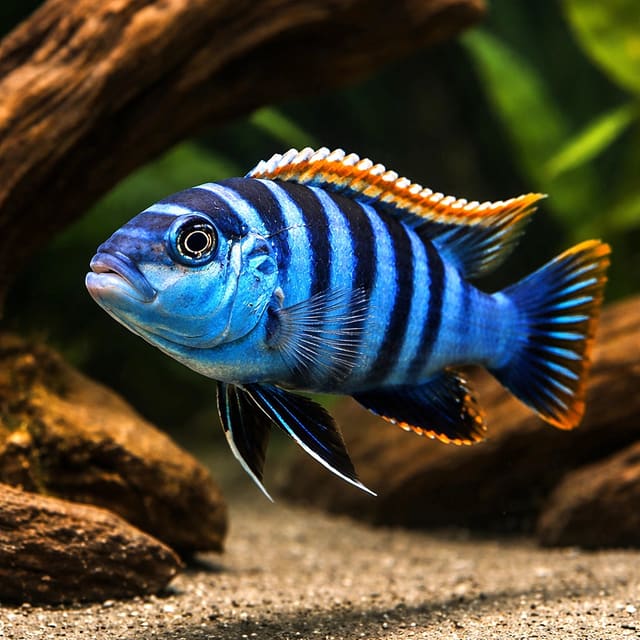
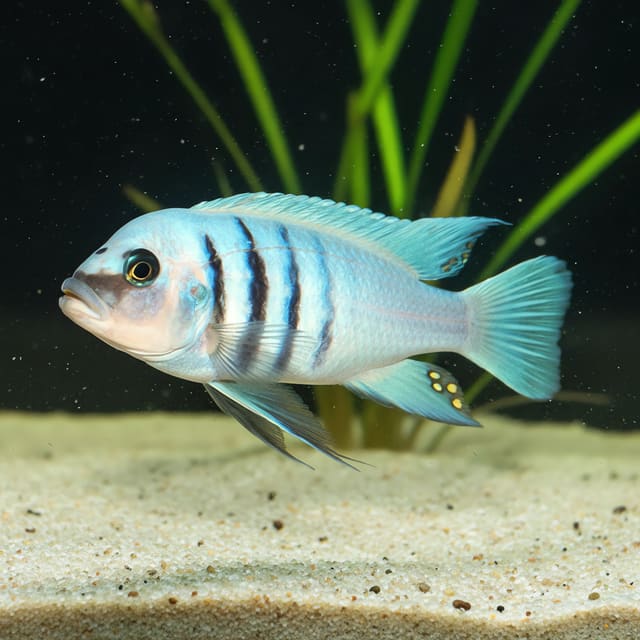
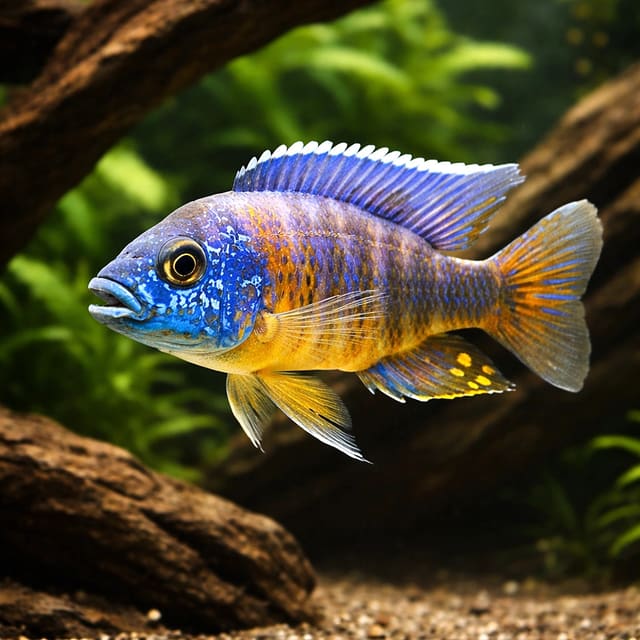
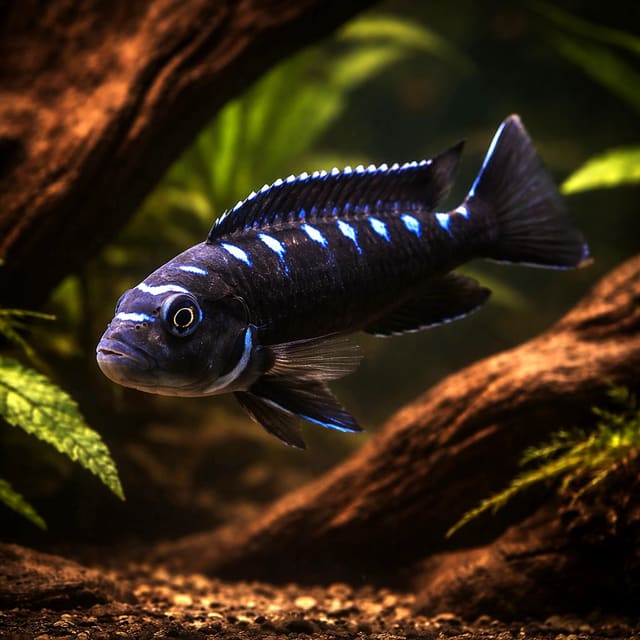
Neon Spot Mbuna (Chindongo sp. 'elongatus spot')
23–27°C · pH 8–8.6 · 250L
£13.99

A striking Madagascar cichlid with a dark, star-speckled pattern and bold personality, best suited to spacious species setups. Moderate care, semi-aggressive. 24-28C, pH 6.5-7.8.
Adult size is the maximum length this species reaches at full maturity (scientific sources). The livestock you receive will be younger and smaller. Product-photo provenance and any image-specific limitations are stated on the listing.
Paratilapia blekkeri
Save when buying multiple fish. Each quantity is one fish; sex and pair formation are not guaranteed unless the selected variant explicitly states them.
Confirm your email, then we’ll send an availability message for this exact item if it returns within 180 days.
This request is only for this product—no newsletter or other promotions. A mail-provider retry may very rarely duplicate the same availability message. Unconfirmed addresses are removed after 48 hours. See our privacy policy.
A striking Madagascar cichlid with a dark, star-speckled pattern and bold personality, best suited to spacious species setups. Moderate care, semi-aggressive. 24-28C, pH 6.5-7.8.
Adult size is the maximum length this species reaches at full maturity (scientific sources). The livestock you receive will be younger and smaller. Product-photo provenance and any image-specific limitations are stated on the listing.

Cichlids are a family of roughly 1,800 accepted species, not one care type. Before buying, identify the exact species and source, then compare adult measurement, usable tank dimensions, social system, territory, tested water, diet and an exit plan. No family-wide minimum tank, water range or tank-mate list is safe.
Maintain these water conditions for optimal health and vibrant colors
The Paratilapia blekkeri is a striking Madagascar cichlid with a dark, star-speckled pattern and bold personality, best suited to spacious species setups. Native to the freshwater rivers and lakes of Madagascar, this impressive species reaches up to 25 cm in adult length and is renowned for its unique coloration, territorial behavior, and powerful build. Now available for sale UK from Tropical Fish Co, P. blekkeri (also known as the Black Diamond Cichlid or Starry-Night Cichlid) represents an excellent choice for experienced aquarists seeking a rare, visually stunning, and highly interactive centerpiece fish for large aquariums.
Adult Paratilapia blekkeri are large, robust fish with a dramatic color pattern that immediately catches the eye. The body is typically deep black or dark grey, covered in hundreds of small white, yellow, or iridescent blue spots that create a striking starry-night effect. The intensity and distribution of spots vary by individual, locality, and condition, with healthy, well-fed adults displaying the most vivid patterns. Males are generally larger and more intensely colored than females, with more pronounced finnage and deeper body profiles. Juveniles are less boldly patterned, developing the characteristic star-speckled appearance as they mature. The powerful jaws, robust build, and continuous dorsal fin are characteristic of large predatory cichlids.
Madagascar is home to a unique and highly threatened freshwater fish fauna, with many endemic species found nowhere else on Earth. Paratilapia blekkeri is endemic to Madagascar, inhabiting rivers, lakes, and streams with sandy or rocky substrates, submerged roots, and aquatic vegetation. Water conditions in these habitats are typically warm, soft to moderately hard, and slightly acidic to neutral. The natural environment is characterized by moderate flow, clear to slightly turbid water, and abundant hiding places among rocks, roots, and vegetation. Habitat degradation and overfishing have led to population declines in the wild, making captive breeding efforts particularly important for conservation. Replicating these conditions is essential for the health, coloration, and breeding success of P. blekkeri in captivity.
A minimum tank size of 500 litres is essential for a single adult or pair of Paratilapia blekkeri. Larger tanks (600+ litres) are strongly recommended if tankmates are planned or if breeding is anticipated. The aquascape should feature sturdy, weighted decor such as large rocks, driftwood, heavy plant pots, and securely anchored hardscape, as this species is powerful and may rearrange lighter objects. Use a sandy or fine gravel substrate to allow natural foraging behavior. Avoid delicate live plants, as P. blekkeri may uproot or damage them; if plants are desired, use extremely robust species such as Anubias or Java Fern attached to hardscape. Strong filtration (canister or sump system rated for 8-10x tank volume per hour) and frequent water changes (40-50% weekly) are essential to manage the heavy waste load and maintain stable water quality. Ensure the tank is well-covered, as large cichlids can be powerful jumpers when startled.
Paratilapia blekkeri is omnivorous with a preference for meaty foods, feeding on insects, worms, crustaceans, small fish, and plant matter in the wild. In captivity, provide a varied diet based on high-quality large cichlid pellets, supplemented with frozen or live meaty foods such as shrimp, krill, earthworms, mussels, insect larvae, and occasional whole fish or fish fillets. Supplement with occasional vegetable matter or spirulina-based foods to support digestive health and provide dietary variety. Avoid overfeeding, as this species is prone to obesity and digestive issues if fed excessively. Feed one to two times daily, offering only what the fish can consume in 2-3 minutes. A varied, balanced diet will promote vibrant coloration, healthy growth, and conditioning for breeding.
Paratilapia blekkeri is classified as semi-aggressive to aggressive, with territorial behavior intensifying significantly during breeding. Males establish large territories and will aggressively defend them against rivals and perceived intruders, often displaying intense coloration and flaring fins to assert dominance. Females are generally less aggressive but can become defensive when guarding eggs or fry. Outside breeding periods, individuals can be relatively peaceful toward larger tankmates but may predate on smaller fish. This species is highly intelligent, curious, and interactive, often recognizing its keeper, responding to feeding cues, and investigating new objects or changes in the environment. The combination of size, power, and bold personality makes P. blekkeri a rewarding but demanding species best suited to experienced aquarists prepared to manage its needs.
Top Tip: Keep Paratilapia blekkeri as a single specimen or bonded pair in a large, well-filtered species tank. Their size, aggression, and predatory nature make them unsuitable for community setups with smaller or delicate fish. Provide plenty of open swimming space and sturdy decor to satisfy their active, territorial behavior.
Due to their size, territorial nature, and predatory tendencies, Paratilapia blekkeri are best kept singly or as a bonded pair in a large species tank. If tankmates are used, choose only very large, robust fish with similar water needs and plenty of space, such as large armored catfish (e.g. large Synodontis species or Pterygoplichthys), other large sturdy cichlids of comparable size and temperament, or other large, fast-moving fish that can hold their own. Avoid housing with small fish, shrimp, snails, slow-moving or long-finned fish, and delicate community species, as these will be bullied, harassed, or eaten. The safest and most rewarding approach is to keep this species alone or as a breeding pair in a spacious, well-filtered aquarium.
Paratilapia blekkeri typically forms pairs and spawns on a flat surface or cleaned rock, becoming highly territorial during breeding. Breeding is triggered by stable warm water (26-28°C), excellent water quality, and a high-quality, protein-enriched diet. Males establish territories and display intense coloration to attract females, often excavating pits or cleaning flat surfaces as spawning sites. Eggs are laid on a cleaned surface and guarded aggressively by both parents, who will attack any fish that ventures too close. Eggs hatch in 2-3 days, and fry become free-swimming within a week. Feed fry on newly hatched brine shrimp, finely crushed flake, or commercial fry powder. Provide a separate breeding tank if possible, as parents may become extremely aggressive toward tankmates during breeding. With proper care, fry grow rapidly and reach sexual maturity within 10-12 months.
The primary challenges in keeping Paratilapia blekkeri are managing their large size, heavy waste production, territorial aggression, and predatory nature. Strong filtration and frequent large water changes are non-negotiable, as poor water quality will lead to stress, disease, and shortened lifespan. This species is generally hardy and resistant to common diseases when kept in stable conditions, but remains susceptible to ich, fungal infections, and bacterial issues if water quality declines. Provide a varied, balanced diet to prevent obesity and digestive problems. Monitor for signs of aggression or stress, particularly during breeding, and be prepared to separate individuals if bullying becomes excessive. Avoid housing with small, delicate, or slow-moving fish, as these will be harassed or eaten. With proper care, stable conditions, and plenty of space, P. blekkeri is a long-lived, rewarding species that can thrive for a decade or more in captivity.
Tropical Fish Co is the UK's leading specialist in rare, healthy, and ethically sourced cichlids from around the world. Every Paratilapia blekkeri is carefully selected for health, coloration, and vitality, and shipped with expert care to ensure safe arrival. We provide comprehensive care guidance, ongoing support, and a live arrival guarantee on all livestock orders. Our commitment to quality, conservation, and customer satisfaction makes us the preferred choice for aquarists seeking unique, challenging, and rewarding species. Order your Paratilapia blekkeri today and experience the stunning beauty, intelligence, and bold personality of this iconic Madagascar cichlid.
No reviews for this item yet. Bought one? Honest reviews only, good or bad.
What customers say about ordering from us
I have a small group of long finned mountain minnows. So was delighted to be able to order ten of this variety to increase the genetics in my tank . The ones I recieved are healthy but it’s to early to give a verdict on wether they are of a long finned type since they are small currently.
Gordon Walker · 23 Sept 2026
100% success travel and "installation". Pleased with quality of purchase. The Siamese fighter a bit "shy" so have not yet seen him at his best yet but looking good. Happy customer. GG
George E Garratt · 21 Sept 2026
Reviews of our shop, collected by Judge.me, an independent third-party review collector. Newest first.