−13%
Moderate
Gold Ocellatus Shell-Dweller (Neolamprologus ocellatus)
23–25°C · pH 8–9
£17.39£19.99

The Daffodil Cichlid (Neolamprologus pulcher) is a freshwater cichlid endemic to Lake Tanganyika that reaches 7.2 cm. It suits intermediate keepers planning more than one fish; the FishBase species range and OATA group guidance overlap at 24–26°C, pH 8.0–8.5 and 18°dGH. Sold individually in sizes from 3–4 cm to >7.5 cm.
Adult size is the maximum length this species reaches at full maturity (scientific sources). The livestock you receive will be younger and smaller — pick a size above for the actual shipping size. Product-photo provenance and any image-specific limitations are stated on the listing.
Neolamprologus pulcher
Save when buying multiple fish. Each quantity is one fish; sex and pair formation are not guaranteed unless the selected variant explicitly states them.
The Daffodil Cichlid (Neolamprologus pulcher) is a freshwater cichlid endemic to Lake Tanganyika that reaches 7.2 cm. It suits intermediate keepers planning more than one fish; the FishBase species range and OATA group guidance overlap at 24–26°C, pH 8.0–8.5 and 18°dGH. Sold individually in sizes from 3–4 cm to >7.5 cm.
Adult size is the maximum length this species reaches at full maturity (scientific sources). The livestock you receive will be younger and smaller — pick a size above for the actual shipping size. Product-photo provenance and any image-specific limitations are stated on the listing.

Cichlids are a family of roughly 1,800 accepted species, not one care type. Before buying, identify the exact species and source, then compare adult measurement, usable tank dimensions, social system, territory, tested water, diet and an exit plan. No family-wide minimum tank, water range or tank-mate list is safe.
Maintain these water conditions for optimal health and vibrant colors
The Daffodil Cichlid (Neolamprologus pulcher) is a freshwater member of the Cichlidae family, endemic to Lake Tanganyika in Africa. FishBase records a maximum length of 7.2 cm total length. It suits an intermediate keeper who can establish hard, alkaline water, maintain a mature biological filter and plan around territorial breeding behaviour rather than treating it as an undemanding general community fish.
In its natural setting, this benthopelagic cichlid occurs in sediment-rich regions. Breeding takes place in pairs, with both fish jointly defending a territory and depositing eggs in crevices. Those details translate into clear aquarium decisions: provide protected crevices, leave enough space for territories and assess every companion before adding it.
The Daffodil Cichlid is also called the fairy cichlid, princess of Zambia and lyretail cichlid. These are alternative common names for the same identified species, not different colour forms or guaranteed appearances. The aquarium should be planned from the scientific identity, adult size, water requirements and behaviour rather than from a trade name alone.
This fish rewards observation because its pair-based territorial behaviour is central to how it uses the aquarium. Keepers who enjoy building a dedicated Lake Tanganyika plan can also browse our African cichlid collection, while screening each prospective species independently.
Keep the aquarium at 24–26°C, pH 8.0–8.5 and 18°dGH. These routine figures are the overlap between FishBase’s species environmental range and OATA’s African lake cichlid guidance, so they keep the aquarium inside both sets of values. OATA also advises zero ammonia, zero nitrite and nitrate not exceeding 20 mg per litre above the normal tap-water level.
Choose as large an aquarium as is practical and plan its length around the 7.2 cm adult size, the number of fish and the territories the layout must support. OATA explains that aquarium size varies by African lake cichlid species and stocking plan. A generic litre threshold would not account for the way a breeding pair defends its space, so assess usable floor area, shelter placement and the proposed community together.
Do not plan to keep this fish alone. OATA says very few, if any, African lake cichlids do well singly and that solitary fish are likely to become stressed. The correct number still depends on the species and aquarium, while FishBase specifically describes pair breeding and joint territorial defence for N. pulcher.
| Suits | Not suited to |
|---|---|
| Intermediate keepers prepared to maintain hard, alkaline water | An immature or unfiltered aquarium |
| A more-than-one-fish plan with territory space | A plan to keep one African lake cichlid alone |
| A screened Lake Tanganyika community | Mixing Malawi and Tanganyika cichlids |
| Regular testing and weekly maintenance | Water outside the stated temperature, pH and hardness targets |
One purchase supplies one Daffodil Cichlid in the size selected on the live size selector. The choices are labelled 3 - 4 cm, 4,5 - 5,5 cm, 6 - 7 cm and > 7,5 cm. Use the selector to choose the dispatch size that fits your planned introduction and aquarium.
The size you select is the size supplied, not the adult size. Dispatch size describes the fish when sent, while 7.2 cm is the FishBase maximum used for adult planning. Aquarium space, filtration and compatibility should therefore be assessed around the adult fish rather than only the selected dispatch grade.
Sex is guaranteed only when the selected option explicitly states male or female. This Daffodil Cichlid listing has no sex-guaranteed option.
Do not use colour, fin shape, image appearance or dispatch length to infer sex. The pair-breeding biology described for the species does not provide a reliable visual selection method for an unsexed retail fish.
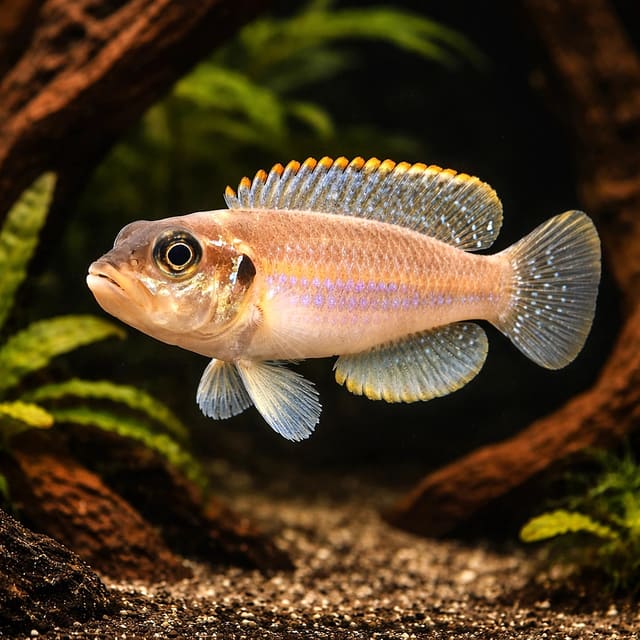
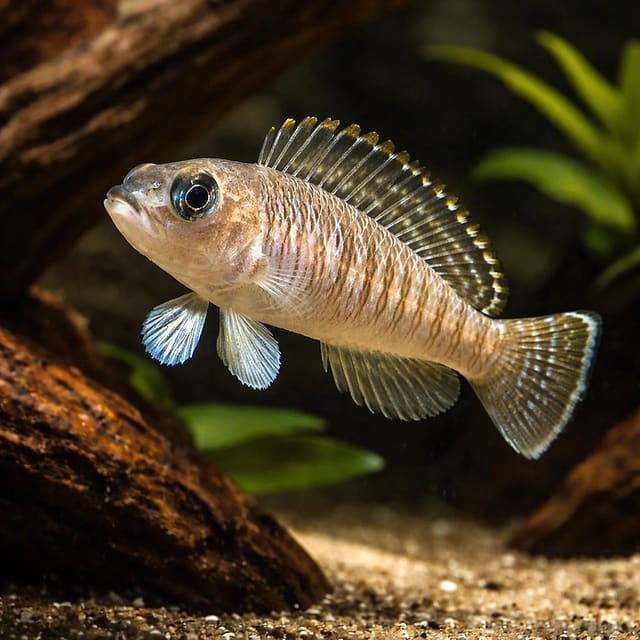
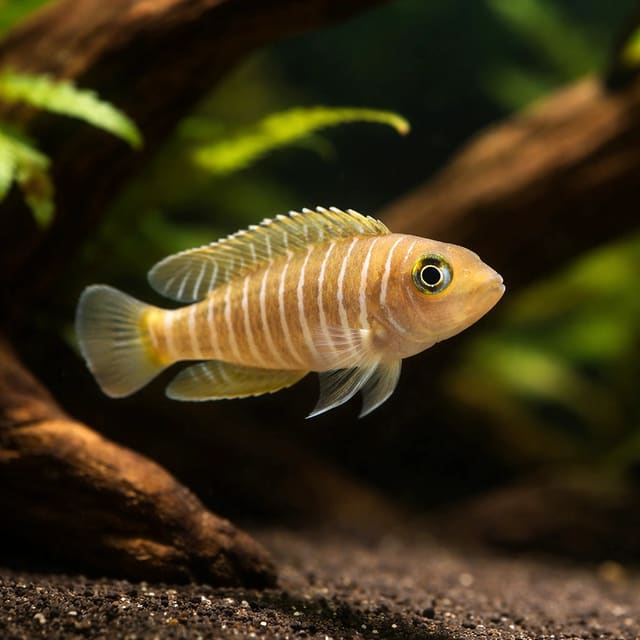
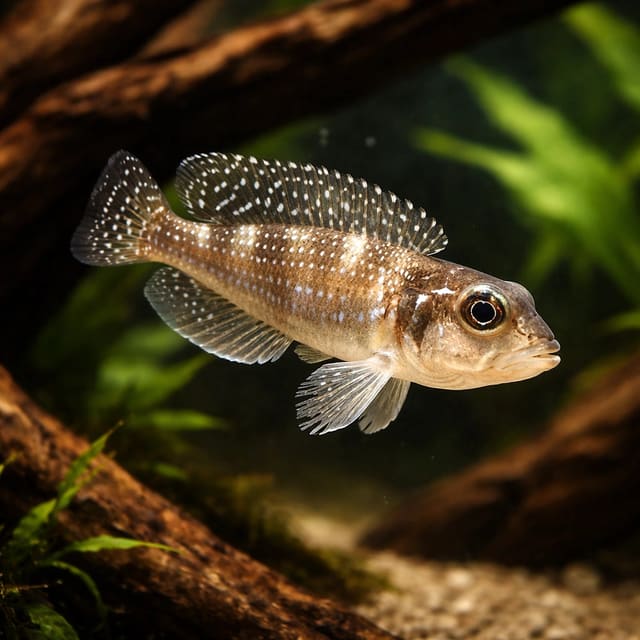
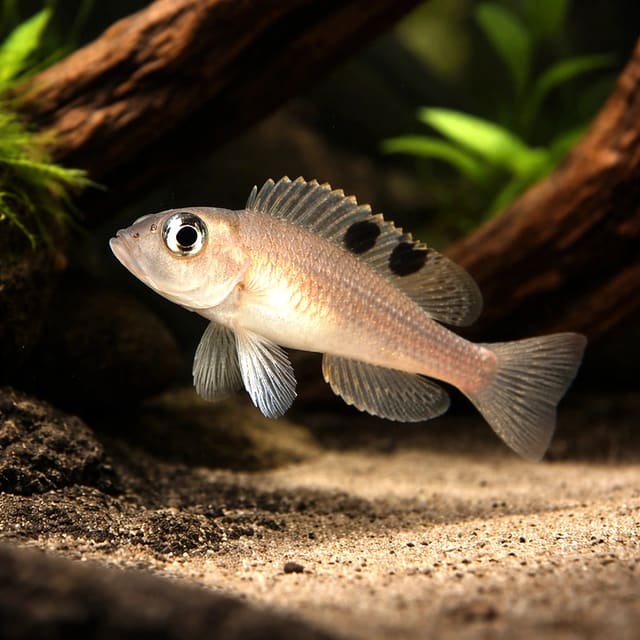
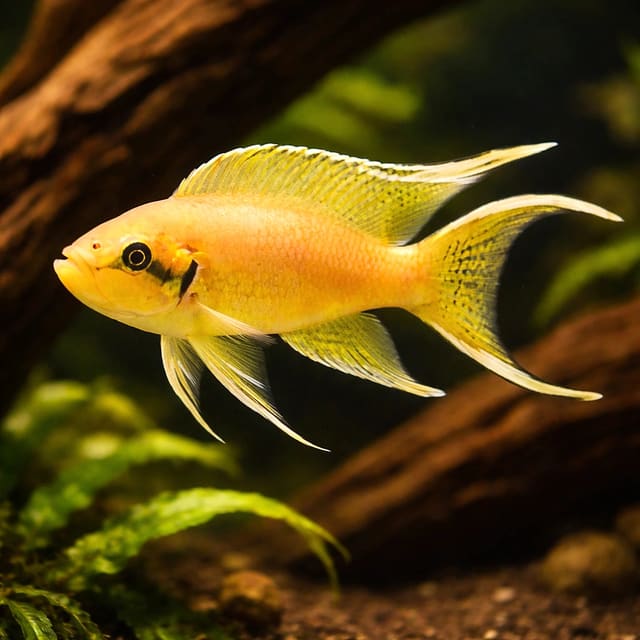
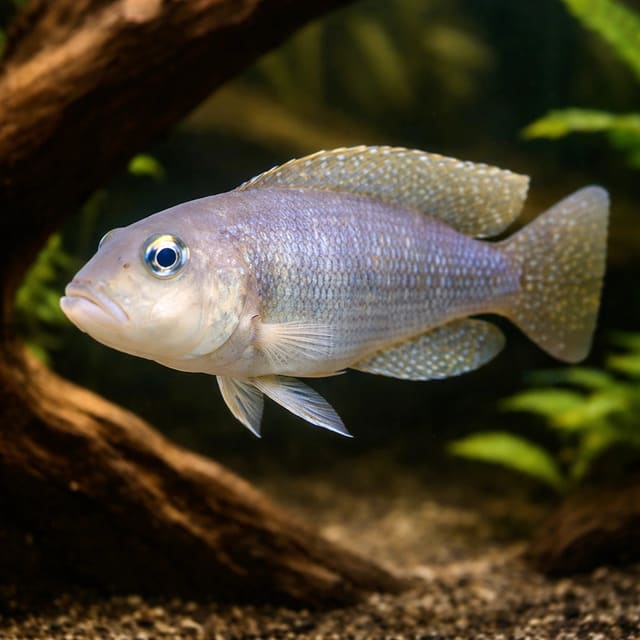
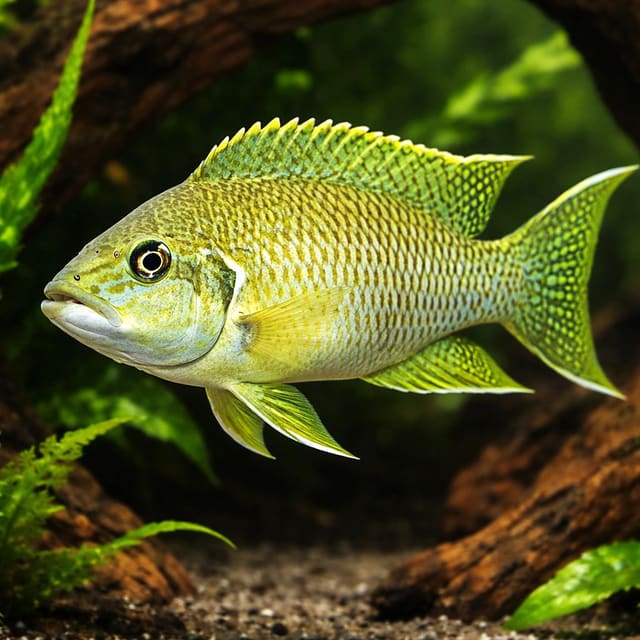
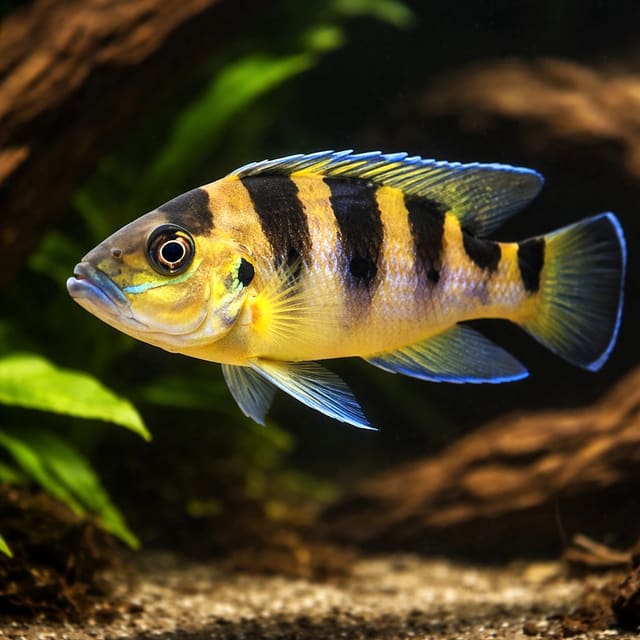
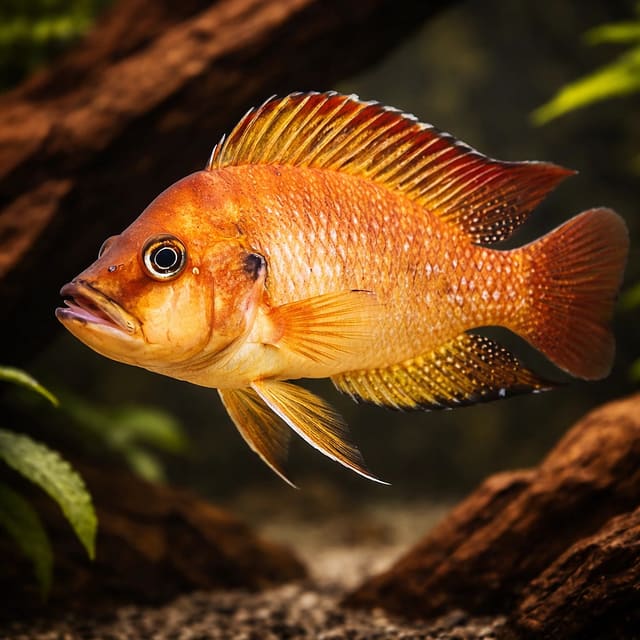
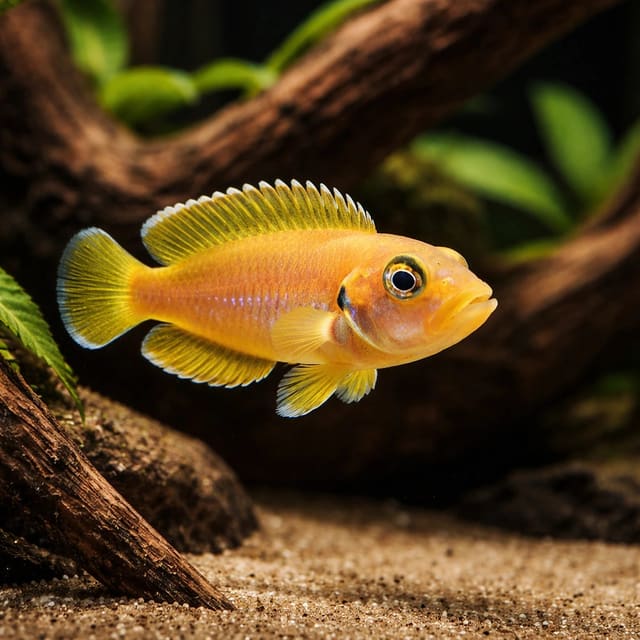
Some gallery images have been digitally enhanced to improve image quality. They show the listed type of animal rather than guaranteeing the exact markings of the individual supplied, so natural colour and pattern can vary.
The image showing two fish illustrates a scene rather than the purchase quantity. One purchase still supplies one animal of the selected size, so plan the number required and add each purchase quantity deliberately.
Use a fully established biological filter before adding the Daffodil Cichlid. The RSPCA explains that aquarium filters are vital because fish release toxic ammonia, which beneficial bacteria convert first to nitrite and then to the safer nitrate. Ammonia and nitrite must both read zero before this fish enters the aquarium.
A mature filter means the beneficial bacterial population can process the waste created by the fish and its food. Adding fish faster than that population can grow risks new tank syndrome, with ammonia or nitrite rising to levels that can cause illness or death. Prepare and mature the aquarium in advance; our first tropical aquarium guide explains the setup sequence.
OATA also recommends vigorous aeration for African lake cichlids so sufficient dissolved oxygen remains accessible. Filtration and aeration perform different jobs: the filter houses waste-processing bacteria, while water movement and aeration support oxygen availability. Build both into the plan instead of expecting one component to cover every requirement.
Increase the population slowly after the filter has matured. Each added fish and each increase in feeding creates more waste, so the bacterial population needs time to respond. Do not add the whole intended community in one step simply because the initial water test is clear.
Keep the water at 24–26°C, pH 8.0–8.5 and 18°dGH. FishBase places the species at 24–26°C, pH 7.3–8.5 and hardness beginning at 18°dH, while OATA gives African lake cichlids 23–27°C, pH 8.0–8.6 and 12–18°dGH. The routine target is the overlap of those ranges, keeping every stated value inside both.
OATA’s group guidance also gives carbonate hardness of 10–15°dKH, not a species-specific optimum. Use it as the alkalinity planning range alongside the pH target. A fine coral sand or similar substrate can help buffer an African lake cichlid aquarium, but regular measurement remains necessary because substrate appearance cannot tell you the actual pH, GH or KH.
Learn what each reading means with our aquarium water chemistry guide, then use the water matcher to compare measured aquarium values with the targets. Record results in consistent units so a change is visible before it becomes a health problem.
| Reading | Required action |
|---|---|
| Temperature, pH or GH outside target | Correct the preparation plan before adding further fish |
| Ammonia above zero | Pause stocking and address biological filtration |
| Nitrite above zero | Pause stocking and address biological filtration |
| Nitrate over 20 mg/l above tap level | Review water changes, feeding and waste removal |
Treat replacement water with tap-water conditioner before it enters the aquarium so chlorine or chloramine does not harm the fish or filter bacteria. Test at least once each week and compare the result with the normal tap-water baseline used for the nitrate limit.
Use 7.2 cm as the adult size for aquarium planning. That is FishBase’s maximum recorded total length for the species; Wikipedia also reports a length of up to 10 cm total length. Keep enough usable territory space around shelters rather than treating the selected dispatch size as the fish’s permanent footprint.
FishBase places the wild fish in sediment-rich regions and describes eggs being deposited in crevices. Build the aquarium around that behaviour with a fine substrate and protected crevices. OATA recommends fine coral sand or a similar buffering substrate for African lake cichlids, linking the physical layout with the hard, alkaline water plan.
Breeding pairs jointly defend a territory. FishBase records clutches of about 20–60 eggs placed in crevices, with both male and female taking part in defence. Treat that behaviour as a reason to preserve territorial space even when breeding is not an objective.
If aggression develops after a new introduction, OATA recommends rearranging the aquarium décor so fish establish new territories. Make that a targeted response rather than continually disturbing a settled layout. Test the water at the same time because hiding, altered aggression and changed swimming can also be warning signs that require a broader health check.
Choose aquarium dimensions after mapping the adult fish, intended number and shelter zones. A long, usable territorial layout is more informative than a litre figure considered without shape, décor or stocking.
Feed twice a day and offer only what the fish can eat within a few minutes. OATA applies this portion and frequency rule to African lake cichlids because uneaten food breaks down and releases toxic waste. Stop adding food when the timed portion is complete rather than allowing excess to disappear into the substrate or crevices.
Choose a cichlid staple intended for the dietary category being followed for Neolamprologus pulcher, then keep the portion controlled. African lake cichlids do not share one universal menu. OATA distinguishes high-algae feeds and fresh vegetables for herbivorous tropheus from higher-animal-content pellets and frozen foods such as brine shrimp, prawns or cockles for larger predatory species. Those examples belong to their stated dietary groups and should not be combined into a generic menu for every lake cichlid.
Reduced feeding interest is one of OATA’s health warning signs. If appetite changes, test ammonia, nitrite and the routine water values before changing foods repeatedly. Also observe swimming, breathing, colour, body condition and interactions, because appetite is most useful when considered with the fish’s other behaviour.
Controlled feeding protects both the animal and the biological filter. The planned food amount, the number of fish and the filter’s waste-processing capacity all interact, so any increase in stocking or feeding should be gradual.
At least once every week, change 25% of the aquarium water. Change 25% of the aquarium water at least once every week. Use a siphon to remove solid waste from the substrate while taking out the old water.
Test the water at least once per week. Ammonia and nitrite must remain at zero, while nitrate must not exceed 20 mg per litre above the normal tap-water level. Measure temperature, pH and hardness as part of the same routine so the hard, alkaline target remains connected to waste control.
Good husbandry matters because OATA warns that African lake cichlids can be stressed by even small amounts of ammonia or nitrite. Do not wait for cloudy water or visible dirt before testing; toxic nitrogen compounds can be present without an obvious visual warning.
Check the fish while carrying out maintenance. Warning signs include hanging at the surface, sitting on the bottom, erratic swimming, darker or paler colour, altered aggression, increased hiding, faster or slower gill-cover movement, white spots, fluffy growths, lost fins or scales, ulcers, bumps, changing body condition and reduced feeding.
If any of these changes appear, test the water first and message us for further guidance. Record what changed, the measured values and when the behaviour began so the next action can address the aquarium as well as the visible symptom.
Check that ammonia and nitrite are zero and that the aquarium matches the temperature, pH and hardness targets before adding the fish. OATA advises increasing African lake cichlid numbers slowly because every added fish and increase in feeding requires the established filter bacteria to process more waste.
Do not treat a mature filter as unlimited capacity. Adding too many fish too quickly can cause new tank syndrome, where the bacterial population cannot handle the increased waste and ammonia or nitrite rises. Pause further additions whenever either compound is detectable.
| Checkpoint | Decision |
|---|---|
| Before an addition | Confirm suitable water and zero ammonia and nitrite |
| At each feed | Check appetite, swimming, breathing and interactions |
| At the weekly test | Compare results with the routine targets and tap-water baseline |
| Before adding again | Proceed only when filtration and behaviour remain stable |
For a mixed Lake Tanganyika plan, OATA recommends adding more peaceful species first and more aggressive species later. That sequence still requires species-by-species compatibility screening; it does not assign the Daffodil Cichlid a universal position in every community.
Some African lake cichlids may be best added in groups so one newly introduced fish does not receive all the aggression while settling. Apply that only after deciding the correct number for this species and aquarium. OATA also recommends rearranging décor when territorial aggression needs to be reduced.
Observe changes in hiding, aggression, feeding and breathing alongside the water tests. If one fish receives concentrated pressure, pause further stocking, review the territory layout and rearrange décor where appropriate. A slow sequence makes each change easier to identify and gives the biological filter time to adjust.
Be present to receive the parcel; live fish cannot be left unattended. Fish are hand-bagged in pure oxygen and packed in an insulated box, with a heat pack when the weather calls for it. Read the current delivery and Live Arrival Guarantee policy before the delivery date.
Film every delivery from the sealed parcel onward. For a Live Arrival Guarantee claim, send us the order number and continuous unboxing video on the same day; the video must show the sealed parcel, its opening and the fish still inside the bag.
After release, keep the established filter running and continue adding further fish slowly only while ammonia and nitrite remain at zero.
At the next scheduled feed, offer only the normal few-minute portion and watch whether the fish shows interest. Continue observing swimming, breathing, colour and hiding, and test the water if any health or behaviour change appears.
Consider only other Lake Tanganyika species, and only after species-by-species compatibility screening. OATA’s general rule is to stock African lake species with others from the same location. A shared lake is the first filter, not an automatic compatibility guarantee, because African cichlids vary in size, temperament and behaviour.
Avoid Malawi cichlids and avoid mixing this fish with African lake species from other locations. OATA specifically advises against mixing Malawi and Tanganyika cichlids because their temperament and behaviour differ. Matching hard, alkaline water alone is not enough to override that rule.
| Screen | Decision |
|---|---|
| Location | Retain only Lake Tanganyika candidates |
| Species behaviour | Check how each candidate uses and defends space |
| Territory plan | Provide enough usable areas for the intended number |
| Water | Keep the final plan inside 24–26°C, pH 8.0–8.5 and 18°dGH |
| Introduction order | Add more peaceful species before more aggressive species |
FishBase describes Daffodil Cichlids breeding in pairs and jointly defending their territory. A proposed companion must therefore be assessed against a defended-space plan, not only against the fish’s 7.2 cm adult length.
Do not infer compatibility for shrimp, snails or other invertebrates from their water requirements alone. Keep the decision conditional until the animal’s behaviour, space use and interaction with a territorial cichlid have been assessed directly.
Plan more than one Daffodil Cichlid, but set the final number from the aquarium and territory assessment. OATA says very few, if any, African lake cichlids do well singly and that solitary fish are likely to become stressed, while the number to keep depends on the species. FishBase adds the species-specific fact that breeding occurs in pairs.
Do not turn those two facts into a universal colony size. A pair-based behaviour does not guarantee that any two unsexed fish will form a breeding pair, and this offer does not guarantee sex. Provide enough room to respond if the social arrangement creates pressure around a defended site.
Some African lake cichlids may be best introduced in groups to prevent one new fish receiving unnecessary aggression, but that permission is not a fixed instruction for every species. Decide the number first, then introduce only at a pace the mature filter and territorial layout can support.
Compatibility remains conditional throughout the fish’s life. Reassess the arrangement when breeding defence begins, when new fish are added or when hiding and aggression change. The practical aim is a Lake Tanganyika plan in which water, space and behaviour all remain manageable together.
FishBase records a maximum of 7.2 cm total length. Plan aquarium space, filtration and territories around that adult figure rather than the selected dispatch size.
Choose as large an aquarium as practical and plan its length around the 7.2 cm adult size, number of fish and separate territories. OATA says aquarium size varies with the African lake cichlid species and stocking plan, so do not rely on a generic litre threshold.
Plan more than one, but set the final number from the aquarium and territory assessment. OATA says very few, if any, African lake cichlids do well singly, while FishBase describes this species breeding in pairs.
We rate it intermediate because it needs stable hard, alkaline water, a mature filter and planned territorial space. It suits a keeper prepared to test weekly and screen every companion.
Feed only what it can finish within a few minutes, twice daily. OATA says African lake cichlid diets vary by species, so use a cichlid staple suited to the dietary category being followed and do not treat herbivore and predator examples as one universal menu.
Keep it at 24–26°C, pH 8.0–8.5 and 18°dGH. These routine figures are the overlap of FishBase’s species environmental range and OATA’s African lake cichlid guidance.
Breeding pairs jointly defend a territory, so allow separate territory space and observe every introduction. Do not assume routine fin nipping; watch for damaged fins, increased hiding or changed aggression and respond promptly.
Consider other Lake Tanganyika fish only after species-by-species compatibility screening. Avoid Malawi cichlids and African lake species from other locations, and assess any invertebrate separately rather than matching by water values alone.
Start filming the sealed parcel before opening it or floating the bag, and continue until the fish is shown inside the sealed bag. Be present to receive it, inspect it the same day, float the bag for 20–30 minutes, do not pour bag water into the aquarium, and message us the same day with the video and order number for a Live Arrival Guarantee claim.
Max adult size is the length this species reaches at full maturity (from scientific sources). The livestock you receive will be younger and smaller — pick a size on the buy box for the actual shipping size. Product-photo provenance and any image-specific limitations are stated on the listing.
Always research specific species before adding them to your tank. Consider:
No reviews for this item yet. Bought one? Honest reviews only, good or bad.
What customers say about ordering from us
I have a small group of long finned mountain minnows. So was delighted to be able to order ten of this variety to increase the genetics in my tank . The ones I recieved are healthy but it’s to early to give a verdict on wether they are of a long finned type since they are small currently.
Gordon Walker · 23 Sept 2026
100% success travel and "installation". Pleased with quality of purchase. The Siamese fighter a bit "shy" so have not yet seen him at his best yet but looking good. Happy customer. GG
George E Garratt · 21 Sept 2026
Reviews of our shop, collected by Judge.me, an independent third-party review collector. Newest first.