Advanced
Red Jewel Cichlid (Rubricatochromis bimaculatus)
22–27°C · pH 6–7.8 · 108L
£15.99

A West African cave-spawning cichlid sold in 4-5cm, 5-7cm and >8cm sizes. Plan for a territorial 8-13cm adult, stable 24-26C water and a structured 120L+ aquarium.
Adult size is the maximum length this species reaches at full maturity (scientific sources). The livestock you receive will be younger and smaller — pick a size variant above for the actual shipping size. Product-photo provenance and any image-specific limitations are stated on the listing.
Thysochromis ansorgii
Save when buying multiple fish. Each quantity is one fish; sex and pair formation are not guaranteed unless the selected variant explicitly states them.
Confirm your email, then we’ll send an availability message for this exact item if it returns within 180 days.
This request is only for this product—no newsletter or other promotions. A mail-provider retry may very rarely duplicate the same availability message. Unconfirmed addresses are removed after 48 hours. See our privacy policy.
A West African cave-spawning cichlid sold in 4-5cm, 5-7cm and >8cm sizes. Plan for a territorial 8-13cm adult, stable 24-26C water and a structured 120L+ aquarium.
Adult size is the maximum length this species reaches at full maturity (scientific sources). The livestock you receive will be younger and smaller — pick a size variant above for the actual shipping size. Product-photo provenance and any image-specific limitations are stated on the listing.

Cichlids are a family of roughly 1,800 accepted species, not one care type. Before buying, identify the exact species and source, then compare adult measurement, usable tank dimensions, social system, territory, tested water, diet and an exit plan. No family-wide minimum tank, water range or tank-mate list is safe.
Maintain these water conditions for optimal health and vibrant colors
Arnold's / Five Spot Cichlid is a characterful West African cichlid often traded under the supplier label Thysia ansorgei. The accepted scientific name to plan around is Thysochromis ansorgii, so both names are included here for clarity. It is a pair-bonding, cave-spawning fish from West African coastal river systems, not a South American cichlid and not a tiny nano species.
This product covers three size options: 4-5 cm, 5-7 cm and >8 cm. The smaller option is the sale size, not the final care size. FishBase records 8.8 cm standard length and also notes a 12-13 cm total-length record, so the safe aquarium plan is for a medium, territorial cichlid with enough footprint, structure and escape routes.
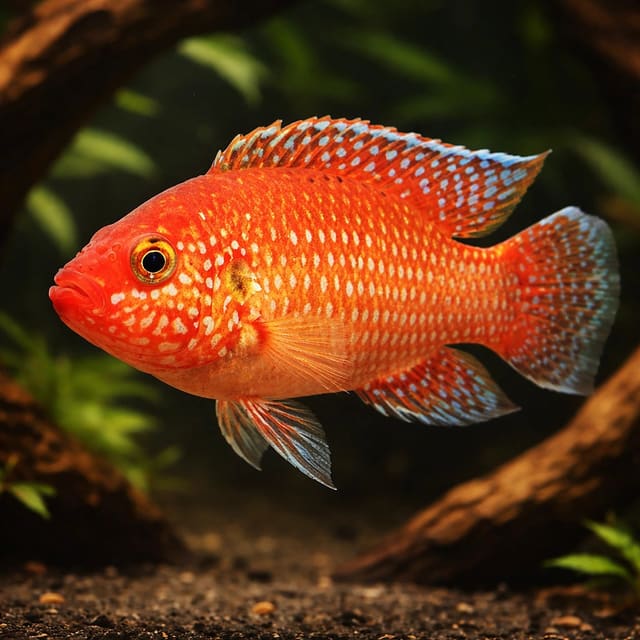
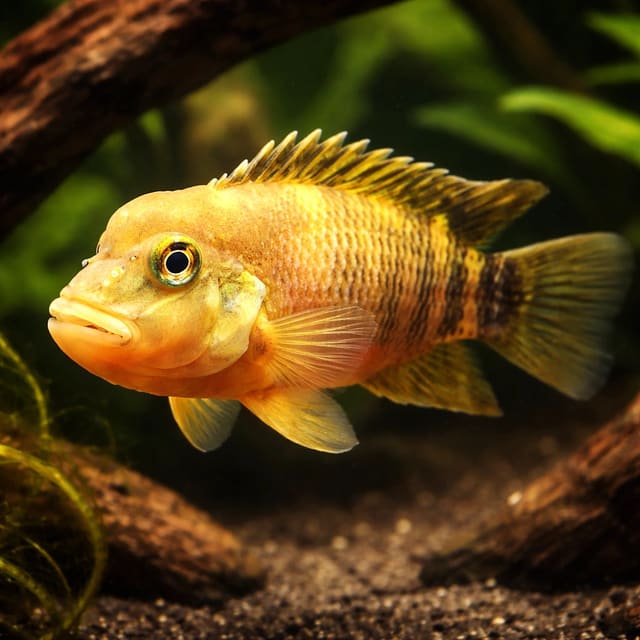
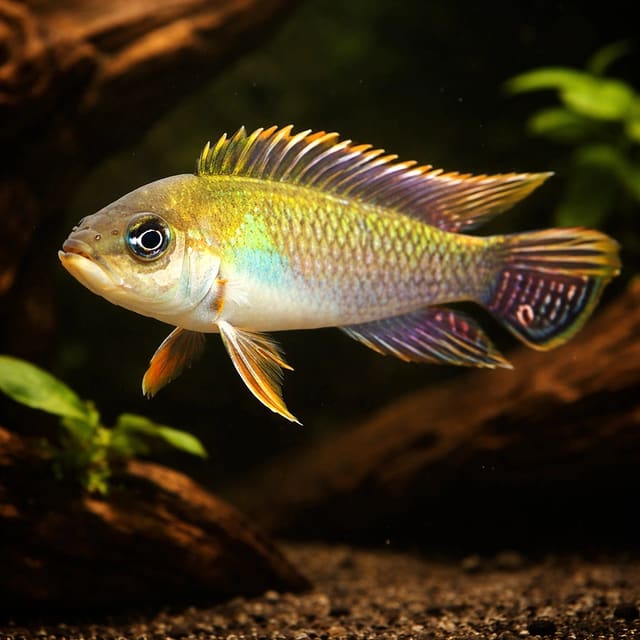
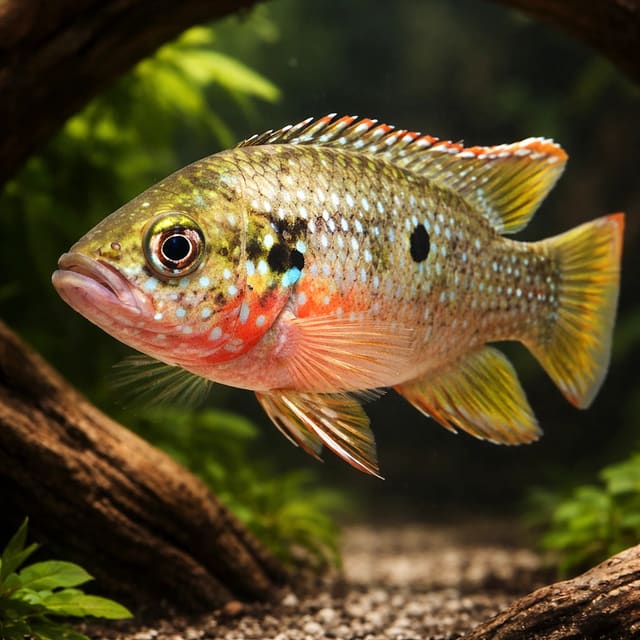
Five Spot Cichlids have a refined West African look rather than the high-contrast colour of many lake cichlids. Expect a laterally compressed body, pale gold to olive body colour, blue-green iridescence on the face and scales, and dark flank markings that give the fish its common name. Mature fish can show a stronger blue sheen across the head and flanks, while the dorsal, anal and caudal fins may display spotting, edging and reddish or yellowish warmth depending on mood, sex and condition.
The original reference image for SKU 0990 is also being added as an extra reference image, not as a replacement, so the page keeps both the old visual depth and the supplier trace.
Thysochromis ansorgii is a freshwater, demersal cichlid from West African coastal basins. FishBase lists records from Ivory Coast river systems including Agnebi, Me, Bia, Comoe and Tano, then east through forested coastal lowlands in Nigeria including the Ogun, Oshun, Niger delta, Ethiop, Calabar, Great Kwa and lower Cross, with Benin's Oueme included and a report from Gabon's Ogowe basin. That is a very different husbandry context from the old South American metafield.
In practical aquarium terms, think warm, planted or wood/rock structured freshwater with subdued spaces, cave entrances and broken sight lines. The species is not a blackwater-only specialist, but it does need clean, stable water and cover. It should feel able to hold a territory without being forced into constant face-to-face conflict.
Use at least 120 litres for an adult pair, and choose a larger aquarium if you want other cichlids or active mid-water fish in the same system. Footprint matters. A 90 cm or larger tank length gives the pair room to choose a cave and makes it easier to create visual breaks. The previous 60-litre guidance was too optimistic once the >8 cm sibling variant and recorded adult size are considered.
Build the layout with smooth rock, wood, caves, coconut shells, terracotta caves or other aquarium-safe shelters. Add sand or fine gravel, then place several cave-like structures so the fish are not forced to share one entrance. Hardy plants such as Anubias, Java fern and Cryptocoryne can work if protected from digging. Floating plants or shaded areas help shy fish settle, and a mature filter with good oxygenation keeps the territory clean.
FishBase gives a source range of pH 6.0-8.0, hardness 5-19 dH and 24-26C. Keep those numbers stable rather than chasing the edge of the range. For most UK aquariums, aim for neutral to slightly acidic or neutral to mildly alkaline water, moderate mineral content and a reliable temperature around 24-26C. Avoid sudden pH or hardness swings when using tap-water mixes, RO water or botanicals.
As with many cichlids, water quality is the difference between a confident fish and a stressed fish. Keep ammonia and nitrite at zero, manage nitrate with routine partial water changes and avoid heavy feeding in a cave-filled tank where leftovers can disappear behind decor. New arrivals should be acclimated slowly, with lights low and the tank already cycled.
Use a varied omnivorous cichlid diet. A quality small cichlid pellet or granule can be the staple, with spirulina or vegetable-rich foods included regularly. Supplement with frozen or live foods such as brine shrimp, daphnia, cyclops, mysis and occasional bloodworm. The goal is steady condition and breeding readiness, not over-rich feeding.
Feed small portions once or twice daily and watch where the food lands. Territorial cichlids often prefer to feed near cover, but uneaten food trapped in caves will quickly damage water quality. If tank mates are present, make sure this fish is not either bullying all food away or being pushed back from it.
This is a territorial but rewarding cichlid. FishBase describes it as a pair-bonding substrate brooder that spawns preferentially in caves or cave-like structures. A settled pair can patrol together, defend a chosen shelter and show excellent parental care. Outside breeding, well-kept fish can be calmer than the word cichlid sometimes suggests, but spawning mode can change the atmosphere quickly.
Good tank mates are robust fish that enjoy similar water and do not compete for exactly the same cave. In larger West African-style aquariums, possible companions include calm African tetras, suitable rainbowfish in harder neutral water, Synodontis or other robust catfish where size is appropriate, and other African cichlids only when the footprint and territories are planned. Avoid tiny fish, shrimp, very delicate species, slow long-finned fish, aggressive bruisers, and cramped mixes of cave-spawning cichlids.
Thysochromis ansorgii is best treated as a cave-spawning substrate brooder. Provide several tight shelters and let the pair choose. The female is likely to spend more time close to eggs and fry, while the male patrols the surrounding territory. Do not keep the pair in a busy community if breeding is the aim, because stress can lead to failed spawns, egg loss or aggression toward tank mates.
Clean water, a varied diet and quiet cover matter more than tricks. Fry are usually able to take tiny live foods such as newly hatched brine shrimp once free-swimming, with fine prepared fry foods used carefully as a backup. If you are raising fry intentionally, plan a separate grow-out tank and be ready to move young fish before territory pressure builds.
Prepare the aquarium before delivery day. The tank should be fully cycled, heated, filtered and already close to the target water chemistry. On arrival, keep the lights low, float the sealed bag to equalise temperature, then add small amounts of aquarium water gradually before release. Do not pour transport water into the display tank.
Watch the first week carefully. A healthy Five Spot Cichlid should hold itself upright, breathe steadily, investigate cover and begin feeding once settled. Hiding at first is normal for a new cave cichlid, but persistent rapid breathing, clamped fins, refusal to leave the surface, bullying or visible damage should trigger a water test and a review of tank mates. Quarantine is recommended where practical, especially if the fish will join a valuable established cichlid group.
Choose this fish if you want a less common West African cichlid with real behaviour, pair dynamics and a natural cave-territory lifestyle. It suits keepers who can provide a mature aquarium, stable water, structured decor and thoughtful tank mates. It is not the best choice for a tiny first aquarium, a delicate soft-water community, or a peaceful display where every fish must ignore every other fish.
It is also a useful choice for aquarists who enjoy the less common West African cichlid group rather than only the familiar lake species. The appeal is in the natural behaviour: cave selection, pair interaction, confident feeding and territorial displays that make the aquarium feel alive.
Tropical Fish Co supplies this Arnold's / Five Spot Cichlid with SKU-level tracking, preserved gallery images and a verified reference image. The important care points are shown clearly before checkout: accepted taxonomy, adult planning size, water parameters, feeding, compatibility, breeding behaviour and the difference between sale size and adult setup.
Live fish orders are packed for welfare and dispatched using a suitable live-animal courier service. Our Live Arrival Guarantee gives extra confidence when ordering online, while the care information on the page helps you decide whether the fish genuinely fits your aquarium before checkout.
Max adult size is the length this species reaches at full maturity (from scientific sources). The livestock you receive will be younger and smaller — pick a size variant on the buy box for the actual shipping size. Product-photo provenance and any image-specific limitations are stated on the listing.
Territorial around caves, especially during breeding. Build the layout around several shelters and visual breaks.
Always research specific species before adding them to your tank. Consider:
No reviews for this item yet. Bought one? Honest reviews only, good or bad.
What customers say about ordering from us
I have a small group of long finned mountain minnows. So was delighted to be able to order ten of this variety to increase the genetics in my tank . The ones I recieved are healthy but it’s to early to give a verdict on wether they are of a long finned type since they are small currently.
Gordon Walker · 23 Sept 2026
100% success travel and "installation". Pleased with quality of purchase. The Siamese fighter a bit "shy" so have not yet seen him at his best yet but looking good. Happy customer. GG
George E Garratt · 21 Sept 2026
Reviews of our shop, collected by Judge.me, an independent third-party review collector. Newest first.