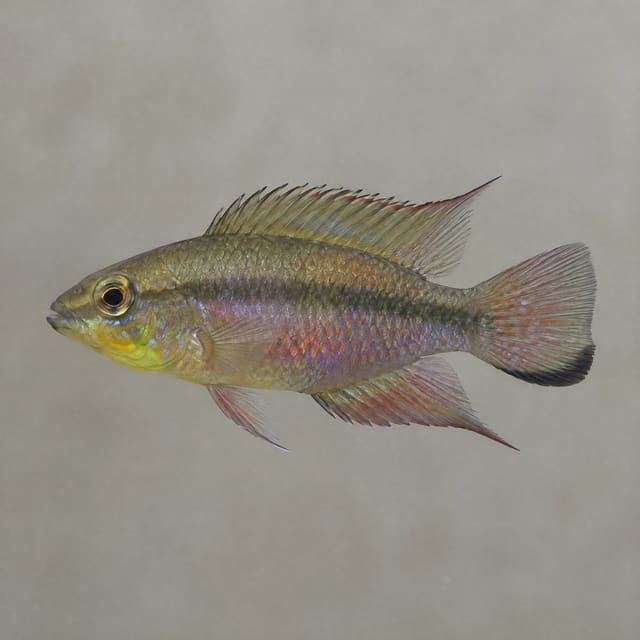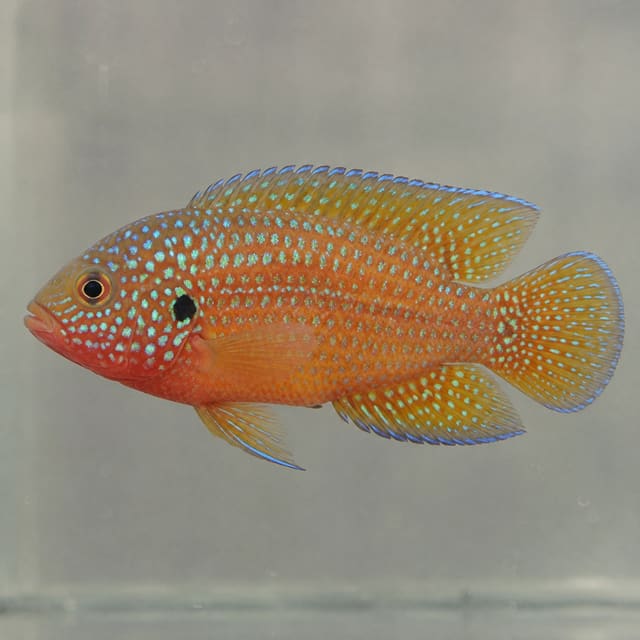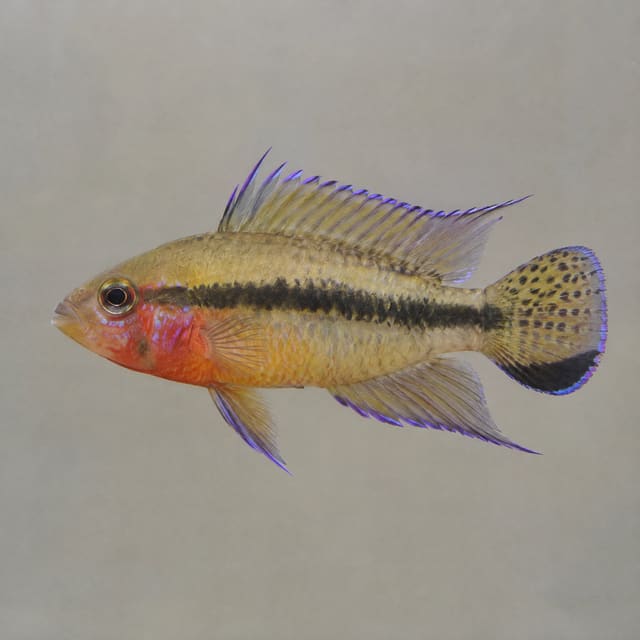
Nigeria Red Striped Kribensis (Pelvicachromis taeniatus 'Nigeria Red')
22–25°C · pH 6–7.5 · 71L
£17.99
The Polli Cichlid (Haplochromis polli, long sold as Ctenochromis polli) is a mouthbrooding cichlid from the lower and middle Congo River around Pool Malebo, not from Lake Tanganyika. Males develop a red throat, blue lips and a head hump and grow to about 8–11 cm. Keep one male with several females in a 100 cm aquarium with sand, roots and caves at 25–26°C. Sold individually as one live fish.
Adult size is the maximum length this species reaches at full maturity (scientific sources). The livestock you receive will be younger and smaller. Product-photo provenance and any image-specific limitations are stated on the listing.
Haplochromis polli
Save when buying multiple fish. Each quantity is one fish; sex and pair formation are not guaranteed unless the selected variant explicitly states them.
The Polli Cichlid (Haplochromis polli, long sold as Ctenochromis polli) is a mouthbrooding cichlid from the lower and middle Congo River around Pool Malebo, not from Lake Tanganyika. Males develop a red throat, blue lips and a head hump and grow to about 8–11 cm. Keep one male with several females in a 100 cm aquarium with sand, roots and caves at 25–26°C. Sold individually as one live fish.
Adult size is the maximum length this species reaches at full maturity (scientific sources). The livestock you receive will be younger and smaller. Product-photo provenance and any image-specific limitations are stated on the listing.
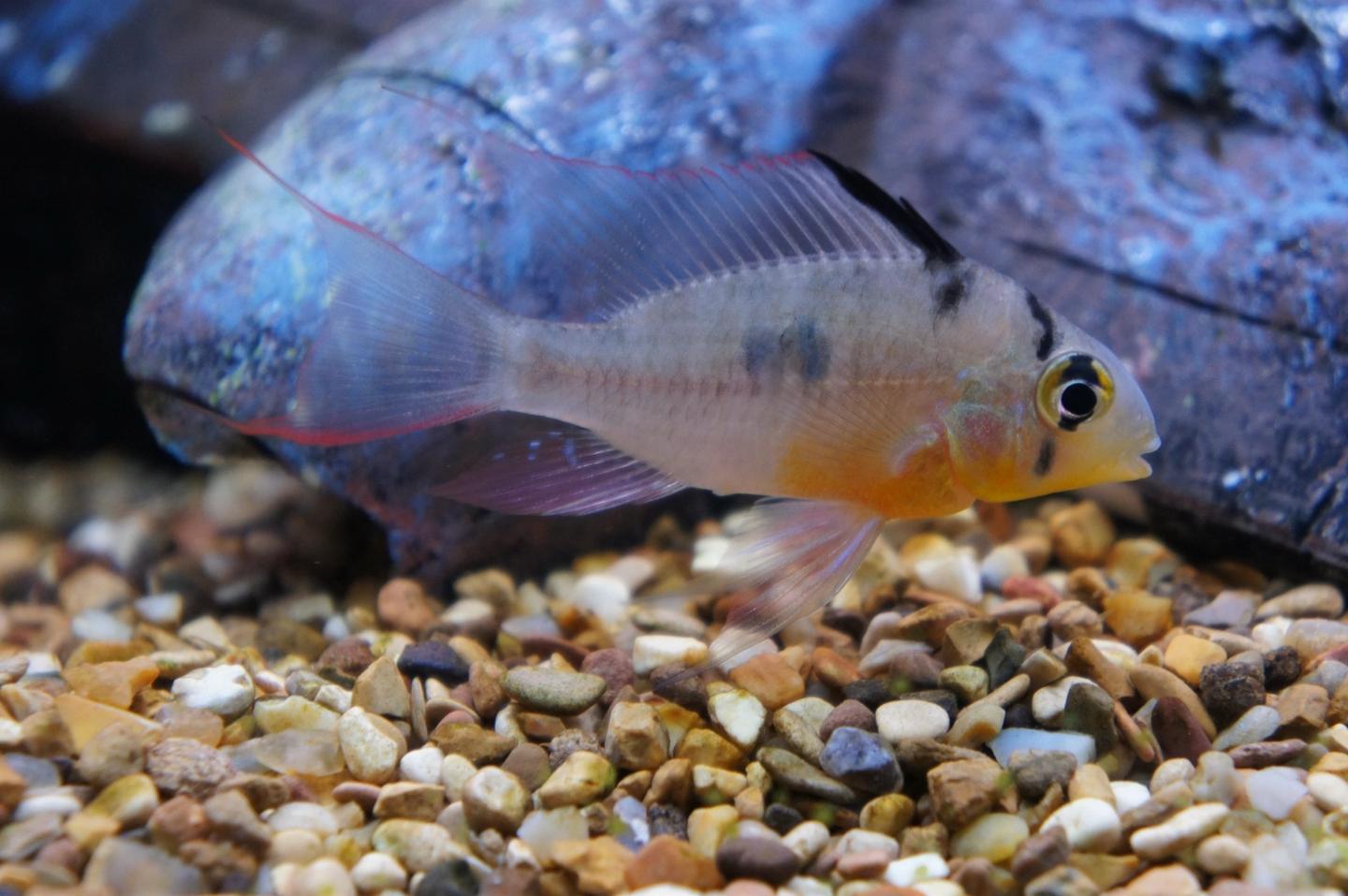
Cichlids are a family of roughly 1,800 accepted species, not one care type. Before buying, identify the exact species and source, then compare adult measurement, usable tank dimensions, social system, territory, tested water, diet and an exit plan. No family-wide minimum tank, water range or tank-mate list is safe.
The Polli Cichlid (Haplochromis polli, long sold as Ctenochromis polli) is a small haplochromine cichlid from the lower and middle Congo River. It was described from Stanley Pool, now Pool Malebo, the lake-like widening of the river between Kinshasa and Brazzaville. Seriously Fish records it as far south as Pioka and Maninga in the lower Congo and as far north as Kwamouth. It is a river fish, not a Lake Tanganyika cichlid, and it needs to be kept as one.
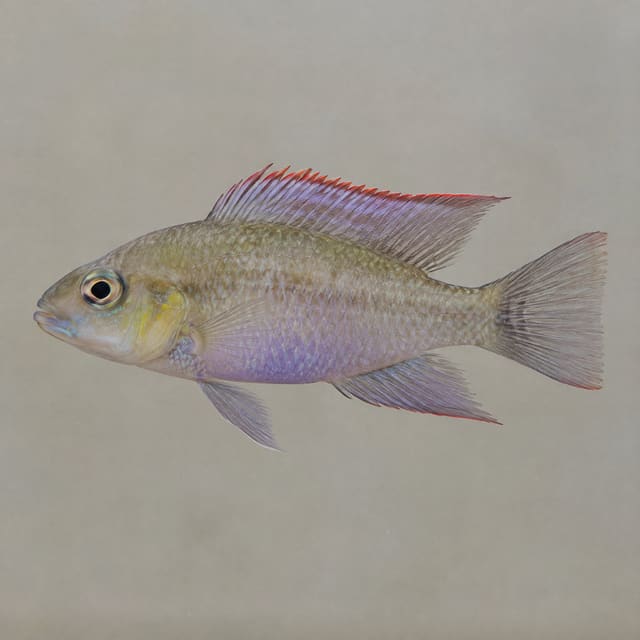
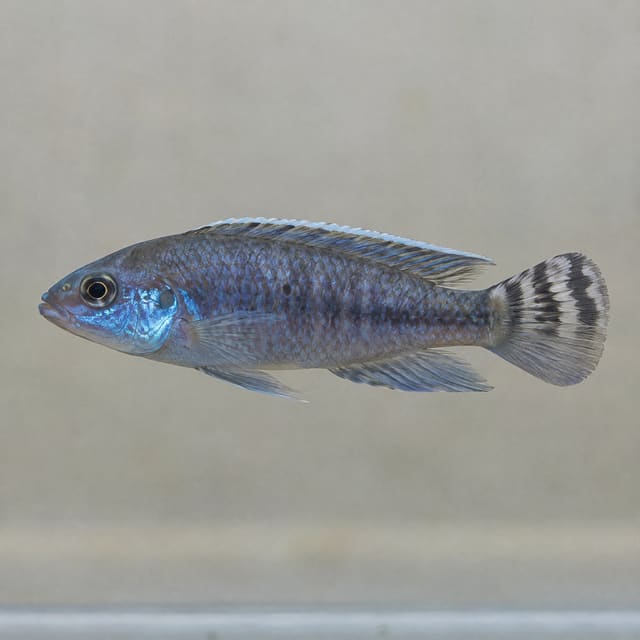
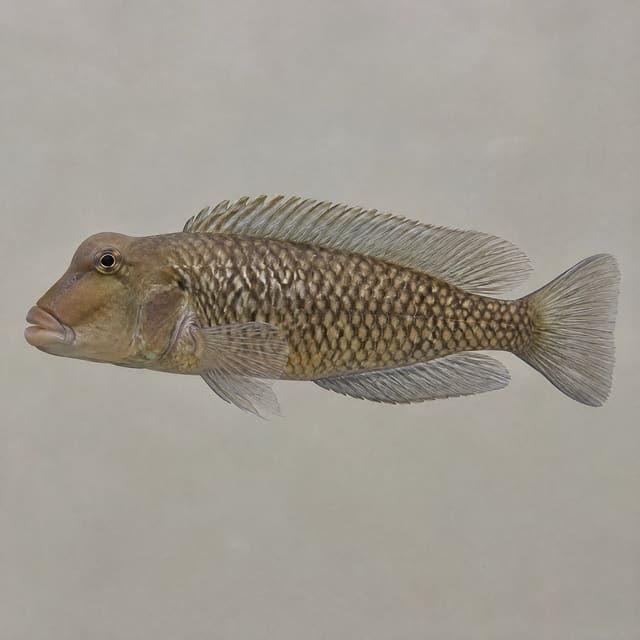
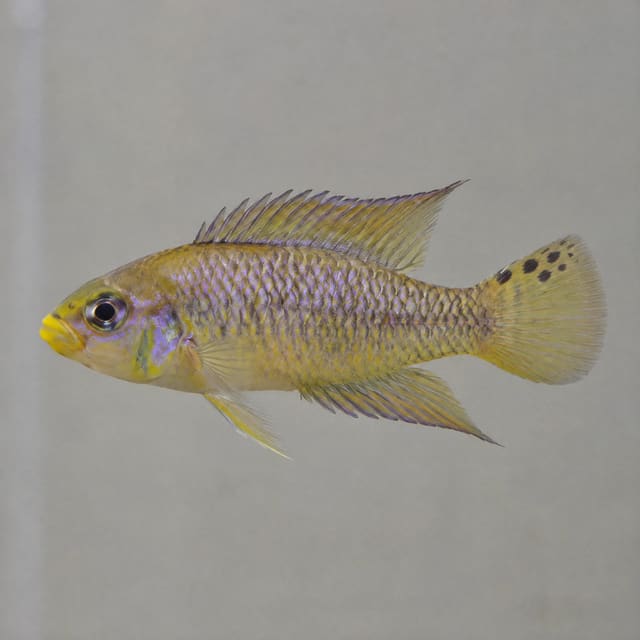
Adults are not brightly coloured overall, but mature males are striking up close. Aquarium Glaser describes a blood-red throat, bright blue lips and a hump on the head, and Seriously Fish notes that the reddish-orange marking under the head intensifies when a male displays or courts. Females are smaller and plainer. Glaser also reports that these Congo cichlids are common in the wild but rarely exported.
| Name | Status |
|---|---|
| Haplochromis polli Thys van den Audenaerde, 1964 | Current name in Eschmeyer's Catalog of Fishes, FishBase and Seriously Fish |
| Ctenochromis polli | Former name, still used by most shops and books |
| Polli Cichlid, Poll's Congo Cichlid | Trade names |
| Polli Tropheus (Tropheus annectens) | A different fish from Lake Tanganyika |
| Shuja horei (formerly Ctenochromis horei) | A different, larger Lake Tanganyika cichlid |
In 2022 a revision by Genner and colleagues restricted Ctenochromis to two species from the Pangani River in Tanzania and moved the Tanganyika species C. horei to the new genus Shuja, sold by us as the Red-Spotted Spothead Hap. The reference works now list the Congo fish as Haplochromis polli, its original name. Do not confuse it with the Polli Tropheus, a Tanganyika algae-grazer.
Some shops file this species with Lake Tanganyika cichlids. Following that would give it the wrong water and the wrong neighbours. OATA's care sheet for African lake cichlids gives pH 8.0–8.6 and a general hardness of 12–18°dH, while Seriously Fish gives pH 6.0–7.5 and 5–15 dGH for the Polli Cichlid.
| Feature | Lake Tanganyika aquarium | Polli Cichlid aquarium |
|---|---|---|
| pH | 8.0–8.6 (OATA) | 6.0–7.5 (Seriously Fish) |
| Hardness | 12–18°dH | 5–15 dGH |
| Substrate | Coral sand to buffer the water | Soft, plain sand |
| Decor | Complex rockwork | Roots, branches, caves and shade-tolerant plants |
| Tank mates | Fish from the same lake | Peaceful open-water characins and cyprinids |
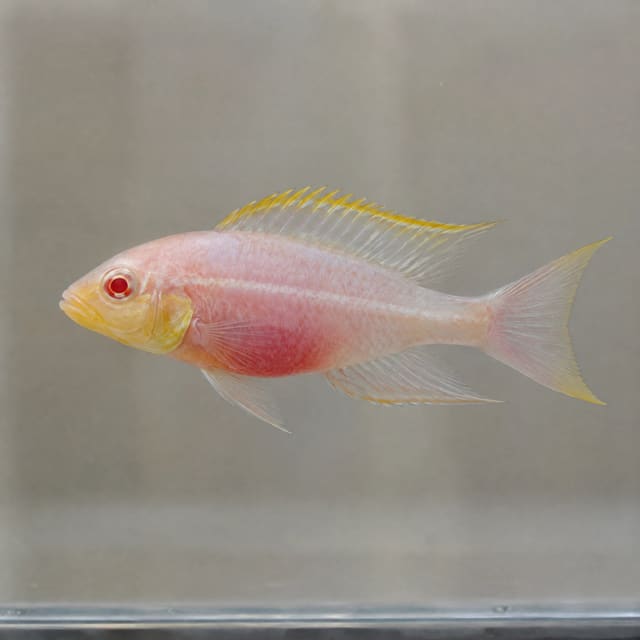
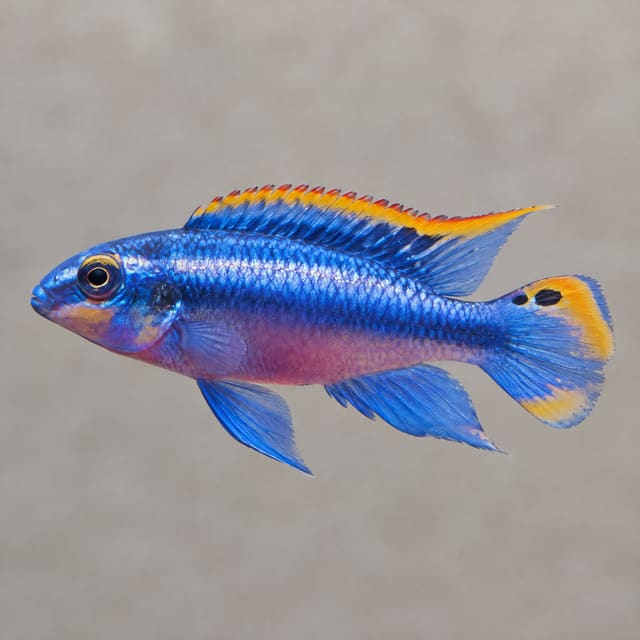
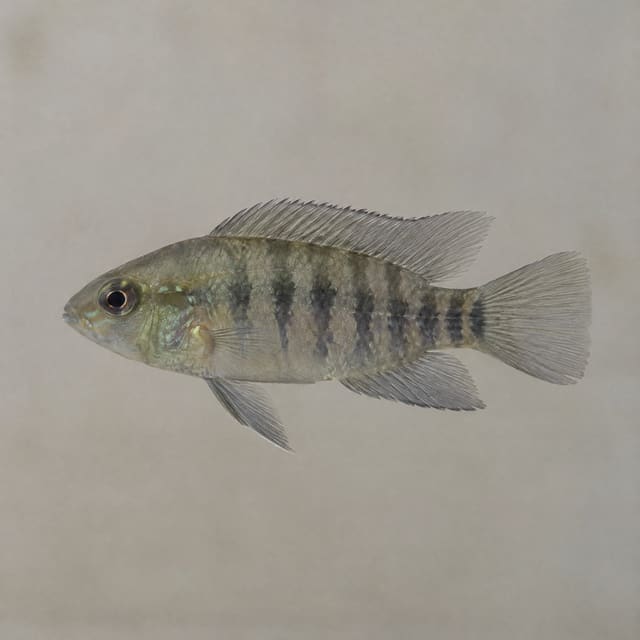
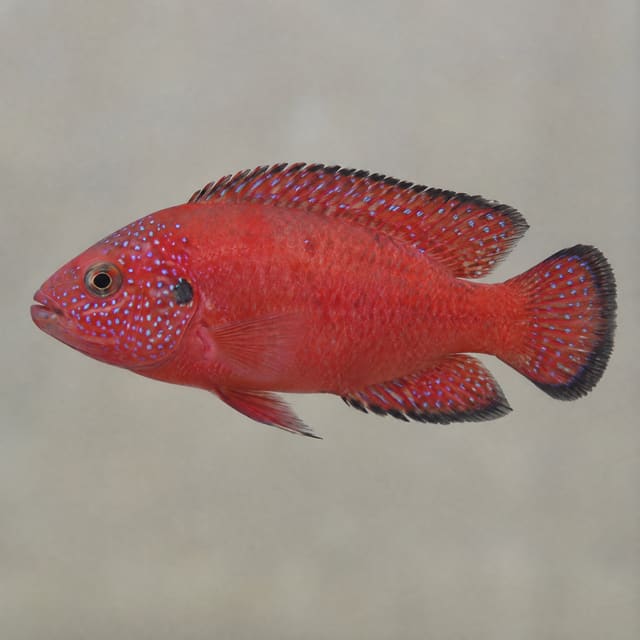
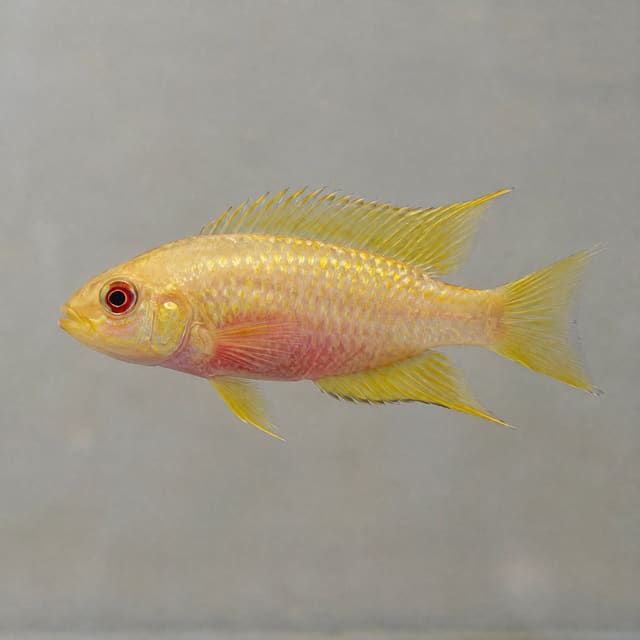
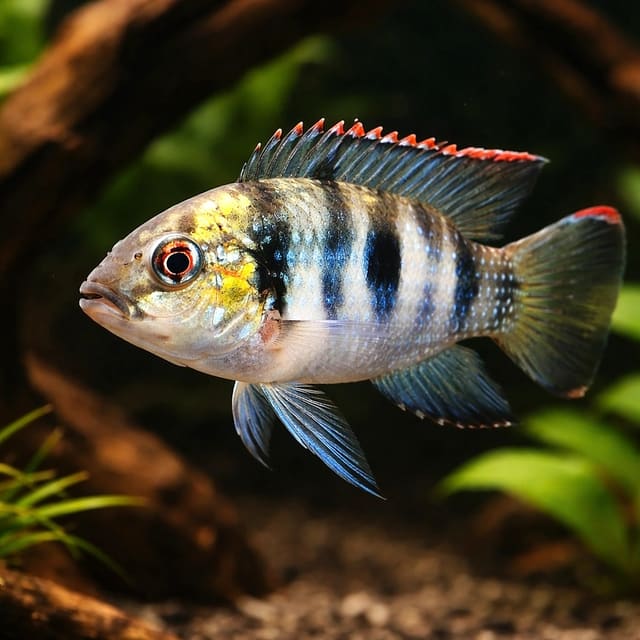
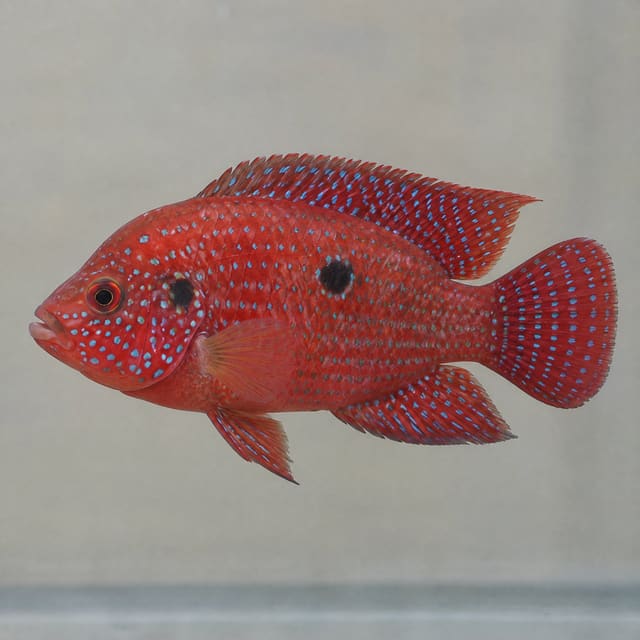
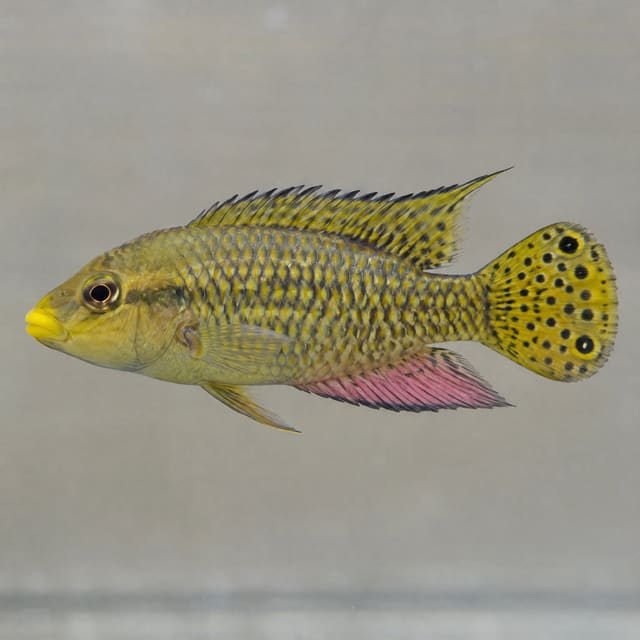
One purchase supplies one live Polli Cichlid. The size option is "Standard": the fish is sent at the size currently available, which is smaller than the adult. Sex is not chosen or guaranteed, and young fish show little of the male's red throat and blue lips. The photographs show the type of fish, not the individual you will receive; barring and colour change with mood, age and lighting.
Check our delivery and Live Arrival Guarantee information before ordering, and browse more rare and collector fish.
Published sizes vary. Aquarium Glaser described it as a dwarf cichlid of about 8 cm in 2015, FishBase gives 9.1 cm total length, and an earlier Aquarium Glaser note from 2007 gives a maximum of 11 cm. Adult males grow larger than females. Some shop descriptions quote 12–15 cm, which we have not found in any published source.
Seriously Fish recommends a base of at least 90 × 30 cm for a single pair. Aquarium Glaser advises against tanks smaller than 100 cm because males chase females and subordinate males. We suggest a tank of 100 cm or longer for one male with several females.
FishBase describes the species as very common in its range, preferring shallow, slow-flowing water near the river banks. Seriously Fish calls it mostly a bottom-living fish and not very gregarious. The aquarium should therefore be built around a soft floor with plenty of cover.
Seriously Fish recommends a soft, sandy substrate, driftwood roots and branches, and clay flowerpots, plastic pipe or halved coconut shells to give subordinate fish places to escape the dominant male. Lighting should be fairly dim, with floating plants to diffuse it. Suitable plants include Anubias, Microsorum (Java fern), Taxiphyllum (Java moss) and potted Cryptocoryne. Aquarium Glaser likewise recommends a well-structured tank with roots, stones and large plants.
| Area | Purpose |
|---|---|
| Open soft sand | Foraging ground for a bottom-living fish |
| Roots, branches and caves along the back | Refuges for females and subordinate fish |
| Anubias and Java fern on wood | Cover that does not need rooting in the sand |
| Floating plants | Dimmer light, which makes the fish bolder |
Seriously Fish gives 24–28.3°C, pH 6.0–7.5 and 5–15 dGH, and rates the species moderate to keep because it needs a well-established tank and stable water. FishBase gives 24–26°C and Aquarium Glaser 25–28°C. The targets below sit inside all three sources.
| Reading | Our target | Basis |
|---|---|---|
| Temperature | 25–26°C | Inside Seriously Fish, FishBase and Aquarium Glaser |
| pH | 6.5–7.5 | Inside Seriously Fish's 6.0–7.5 |
| General hardness | 5–15 dGH | Seriously Fish |
| Ammonia and nitrite | 0 mg/l | OATA limit |
| Nitrate | No more than 20 mg/l above tap water | OATA limit |
Medium-hard tap water, common across much of the UK, falls in this range once treated with a conditioner. Very hard, alkaline supplies may need mixing with reverse-osmosis water to bring the pH under 7.5. Compare your readings with our water matcher, and see our water chemistry guide for what each reading means.
Seriously Fish recommends gentle filtration with some surface agitation. Choose a filter rated for the tank, direct the outlet along the surface so it ripples without creating a strong current, and keep the water stable rather than chasing exact numbers. Add new fish slowly: our aquarium nitrogen cycle guide explains why a mature filter matters.
FishBase records that wild fish probably feed on detritus, algae and small insects or crustaceans. Aquarium Glaser notes that new fish prefer live and frozen food but accept flake and granules once settled. OATA advises feeding dwarf cichlids once a day, only as much as they eat within a few minutes.
Add the fish to a mature aquarium with ammonia and nitrite at zero. OATA's floating-bag method is to switch off the lights, float the sealed bag for 10 minutes, add small amounts of tank water over up to 20 minutes, then release the fish with as little bag water as possible. Our guide on how to acclimatise new fish covers each step.
| Checkpoint | What to do |
|---|---|
| Before arrival | Test the water, set 25–26°C and place roots, caves and floating plants |
| Arrival day | Acclimatise with lights off; leave the fish to explore |
| Days 2–3 | Offer a little frozen food near cover |
| Days 4–7 | Watch for a dominant fish pinning others; add refuges if needed |
| End of week | Retest the water and make the usual 25% change |
Seriously Fish says the Polli Cichlid can live in a community if tank mates are chosen carefully, and names peaceful open-water characins and cyprinids as ideal. Other cichlids are best avoided unless the tank is very large, and then only robust species. Aquarium Glaser describes males as quite aggressive towards females and subordinate males, so plenty of hiding places are essential.
| Suits | Avoid |
|---|---|
| Open-water characins such as the Congo Tetra and the Long-Finned African Tetra | Lake Tanganyika and Lake Malawi cichlids |
| Peaceful barbs and other cyprinids | A second male in a normal-sized tank |
| Catfish too large to be bothered | Small fish and shrimp that fit in its mouth |
| Fish that share 25–26°C and neutral water | Other cichlids unless the tank is very large |
If you enjoy Congo River cichlids, the Lionhead Cichlid and the Blue Kongo Cichlid come from the same river system; keep them in their own aquarium or a very large shared one. Check any mix with our tank mates tool, read our cichlid care guide, and browse all African cichlids or our African dwarf and river cichlids.
OATA describes a healthy fish as having clear, bright eyes, undamaged fins, intact scales, no ulcers or bumps, normal swimming and steady breathing. Clamped fins, flicking against decor and shimmying are warning signs, as are changes in colour, breathing, appetite or hiding. In a harem, check the females daily for torn fins.
| If you see | Do this |
|---|---|
| A female hiding constantly with torn fins | Add refuges and break sight lines, or add more females |
| Rapid breathing or hanging near the surface | Test ammonia, nitrite and temperature; increase surface movement |
| A female not eating, with a full throat | She may be holding a brood; leave her alone |
| Hollow belly in any fish | Spread food so subordinate fish can reach it |
| White spots or fluffy patches | Test the water and seek advice before treating |
FishBase describes the species as a maternal mouthbrooder, with the female caring for the brood. Aquarium Glaser calls the females delayed mouthbrooders, a term used for cichlids that lay their eggs on a surface and take the eggs or young into the mouth later, rather than straight after spawning. Glaser adds that the fry are not difficult to raise on newly hatched brine shrimp and small flake. Brood size and incubation time are not recorded in the sources we checked.
No. It lives in the lower and middle Congo River, including Pool Malebo (the old Stanley Pool) between Kinshasa and Brazzaville. It is sometimes filed with Tanganyika cichlids, but it needs softer, less alkaline water and different tank mates.
Both names refer to the same fish. It was described as Haplochromis polli in 1964 and later moved to Ctenochromis. After a 2022 revision restricted Ctenochromis to two Tanzanian species, Eschmeyer's Catalog of Fishes, FishBase and Seriously Fish returned it to Haplochromis.
No. The Polli Tropheus is Tropheus annectens, a Lake Tanganyika algae-grazer. This fish is a Congo River haplochromine with very different needs.
Published sizes vary: Aquarium Glaser gave about 8 cm in 2015 and up to 11 cm in 2007, and FishBase gives 9.1 cm total length. Males grow larger than females.
Seriously Fish suggests a base of at least 90 × 30 cm for a single pair, and Aquarium Glaser advises against tanks smaller than 100 cm. We suggest 100 cm or more for one male with several females.
Seriously Fish gives 24–28.3°C, pH 6.0–7.5 and 5–15 dGH. FishBase gives 24–26°C and Aquarium Glaser 25–28°C. We suggest 25–26°C, pH 6.5–7.5 and 5–15 dGH.
Only in a very large aquarium. Seriously Fish advises one male in all but the largest tanks, with several females so that his attention is spread, and Aquarium Glaser describes males as quite aggressive.
It is a maternal mouthbrooder: the female carries the brood in her mouth. Aquarium Glaser describes females as delayed mouthbrooders and says the fry are easy to raise on brine shrimp nauplii and fine flake.
One live fish of the standard size currently available. Sex is not chosen or guaranteed.
No reviews for this item yet. Bought one? Honest reviews only, good or bad.
What customers say about ordering from us
Easy website plenty of info on fish your buying great to pick a time slot
TRACEY DURRANT · 7 Oct 2026
Got some lovely fish thank you
Kevin Mackie · 7 Oct 2026
Reviews of our shop, collected by Judge.me, an independent third-party review collector. Newest first.
Moved by UK carriers licensed to handle live animals
Hand-packed with oxygen bags, poly box, heat pack
Email photos the same day; an optional unboxing video helps us review problems faster — claim terms apply
Klarna & PayPal Pay in 3 at checkout