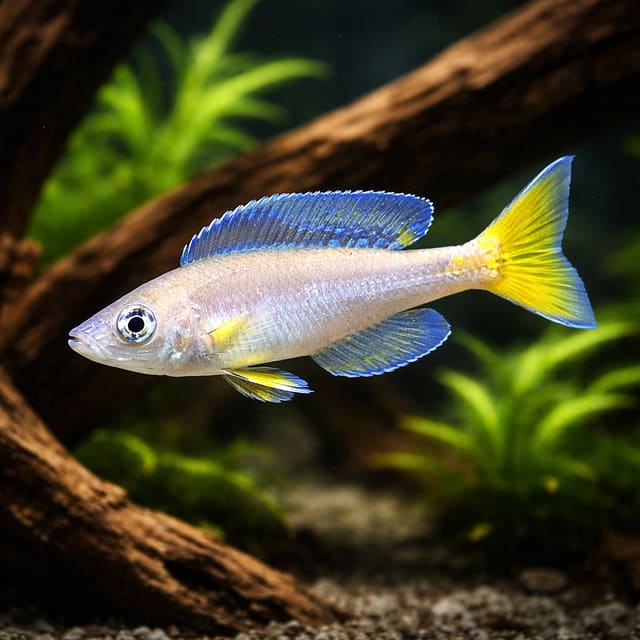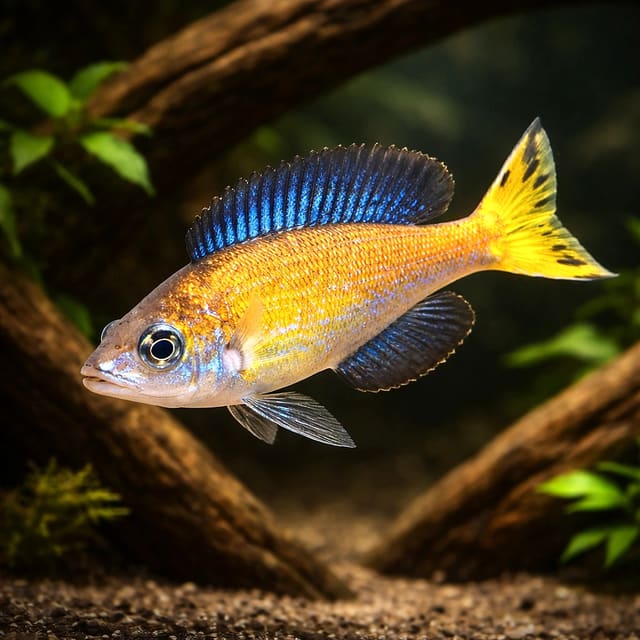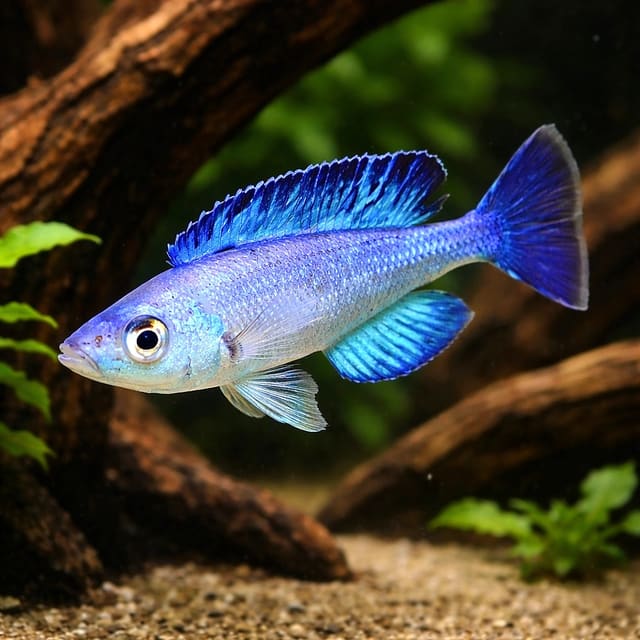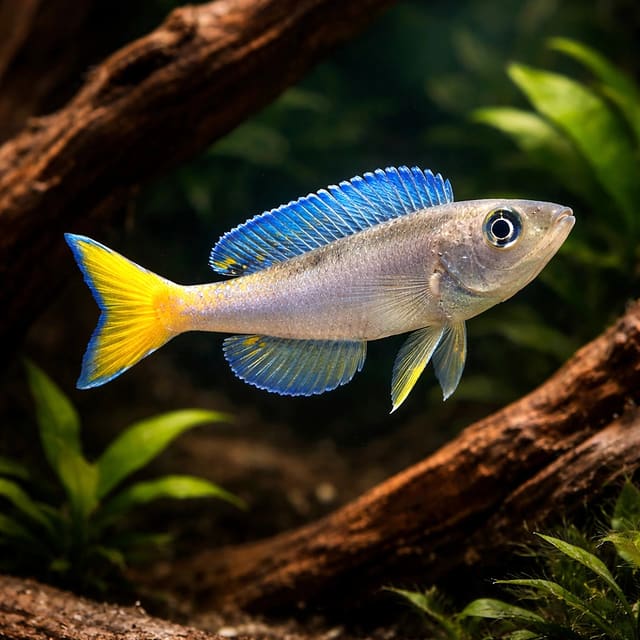
Gold Sardine Cichlid (Cyprichromis leptosoma)
24–27°C · pH 7.8–9 · 243L
£58.99

The Chipimbi Sardine Cichlid is a wild-type population of Cyprichromis leptosoma from Lake Tanganyika, about 11 cm, males with blue-edged fins and a yellow tail. Sold as one unsexed fish of about 4–5 cm per quantity for a long 300-litre-plus aquarium at 24–27°C, pH 7.8–9.0.
Adult size is the maximum length this species reaches at full maturity (scientific sources). The livestock you receive will be younger and smaller. Product-photo provenance and any image-specific limitations are stated on the listing.
Cyprichromis leptosoma 'Chipimbi'
Shoaling fish: kept in a group they feel safer, stay calmer and show their best colour.
Confirm your email, then we’ll send an availability message for this exact item if it returns within 180 days.
This request is only for this product—no newsletter or other promotions. A mail-provider retry may very rarely duplicate the same availability message. Unconfirmed addresses are removed after 48 hours. See our privacy policy.
The Chipimbi Sardine Cichlid is a wild-type population of Cyprichromis leptosoma from Lake Tanganyika, about 11 cm, males with blue-edged fins and a yellow tail. Sold as one unsexed fish of about 4–5 cm per quantity for a long 300-litre-plus aquarium at 24–27°C, pH 7.8–9.0.
Adult size is the maximum length this species reaches at full maturity (scientific sources). The livestock you receive will be younger and smaller. Product-photo provenance and any image-specific limitations are stated on the listing.
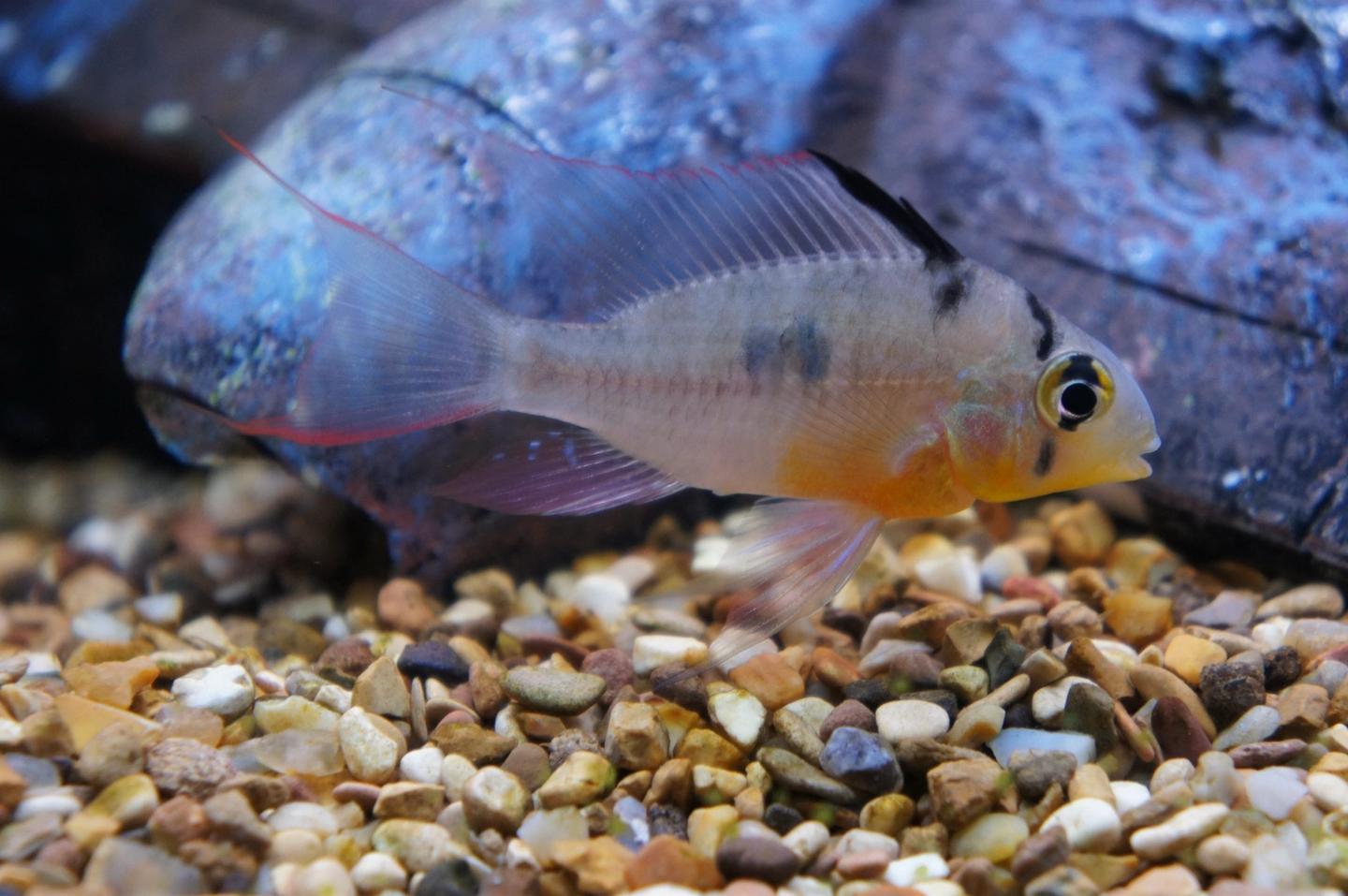
Cichlids are a family of roughly 1,800 accepted species, not one care type. Before buying, identify the exact species and source, then compare adult measurement, usable tank dimensions, social system, territory, tested water, diet and an exit plan. No family-wide minimum tank, water range or tank-mate list is safe.
Maintain these water conditions for optimal health and vibrant colors
Cyprichromis leptosoma is a slender, open-water cichlid from Lake Tanganyika that lives in large shoals near rocky shores, feeding on plankton. Chipimbi is a wild-type population named after its collecting locality; males show blue-edged dorsal and anal fins and a yellow tail over a grey-brown body, while females are plainer. FishBase gives a maximum length of about 11 cm.
This listing sells single, unsexed fish of the Chipimbi population.
| Scientific name | Cyprichromis leptosoma 'Chipimbi' |
|---|---|
| Family | Cichlidae |
| Origin | Lake Tanganyika |
| Adult size | About 11 cm |
| Temperature | 24–27°C |
| pH | 7.8–9.0 |
| Hardness | 10–25 dGH |
| Aquarium | A long aquarium of about 300 litres or more for a group |
| Sold as | One unsexed fish per quantity, about 4–5 cm |
One quantity is one live Chipimbi Cyprichromis of about 4–5 cm, unsexed. This is a shoaling fish: order a group, ideally ten or more, and expect colour to develop as the fish mature.
Provide a long aquarium of about 300 litres or more (around 150 cm long) with open midwater swimming space, rockwork along the back and a tight lid, as Cyprichromis can jump when startled. Keep hard, alkaline Tanganyika water — 24–27°C, pH 7.8–9.0 and 10–25 dGH, the range in Seriously Fish — with stable conditions and regular partial water changes.
A plankton feeder: offer small foods such as quality micro-pellets, crushed flake, and frozen Cyclops, Daphnia and brine shrimp in several small meals a day.
Peaceful towards other fish and best kept as a large group. Good with other Tanganyika species that use different parts of the aquarium, such as shell-dwellers, Julidochromis or Neolamprologus in a large tank. Avoid aggressive or large predatory cichlids that would intimidate or eat them.
Tropical Fish Co’s delivery and Live Arrival Guarantee policy explains the packing and arrival procedure. Livestock is hand-bagged in pure oxygen and placed in an insulated poly box, with a heat pack when the weather calls for it. Someone must be at the address to receive the parcel because live animals cannot be left unattended.
If a Live Arrival Guarantee claim is required, contact us on the same day with the order number and the continuous unboxing video. Before the parcel arrives, confirm that ammonia and nitrite read zero and that the aquarium matches the water values on this page.
No. This listing is the Chipimbi population of Cyprichromis leptosoma. Other forms are separate listings.
A group, ideally ten or more; one quantity is one unsexed fish.
About 11 cm.
Hard, alkaline Lake Tanganyika conditions: 24–27°C, pH 7.8–9.0 and 10–25 dGH.
No reviews for this item yet. Bought one? Honest reviews only, good or bad.
What customers say about ordering from us
I have a small group of long finned mountain minnows. So was delighted to be able to order ten of this variety to increase the genetics in my tank . The ones I recieved are healthy but it’s to early to give a verdict on wether they are of a long finned type since they are small currently.
Gordon Walker · 23 Sept 2026
100% success travel and "installation". Pleased with quality of purchase. The Siamese fighter a bit "shy" so have not yet seen him at his best yet but looking good. Happy customer. GG
George E Garratt · 21 Sept 2026
Reviews of our shop, collected by Judge.me, an independent third-party review collector. Newest first.