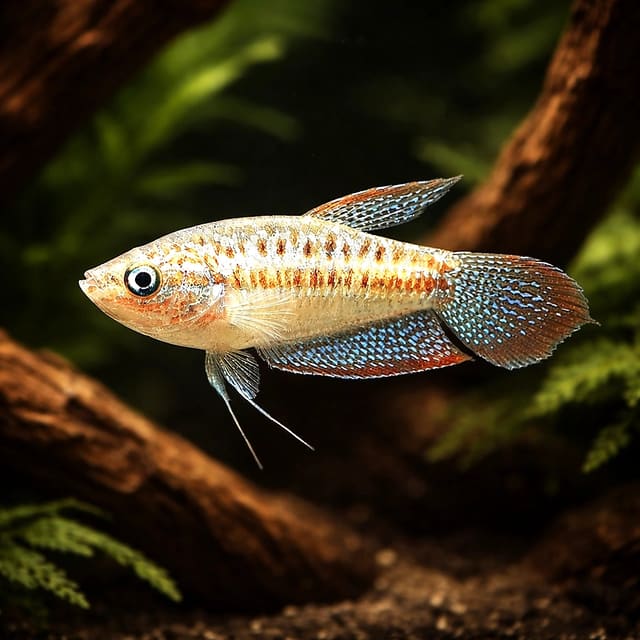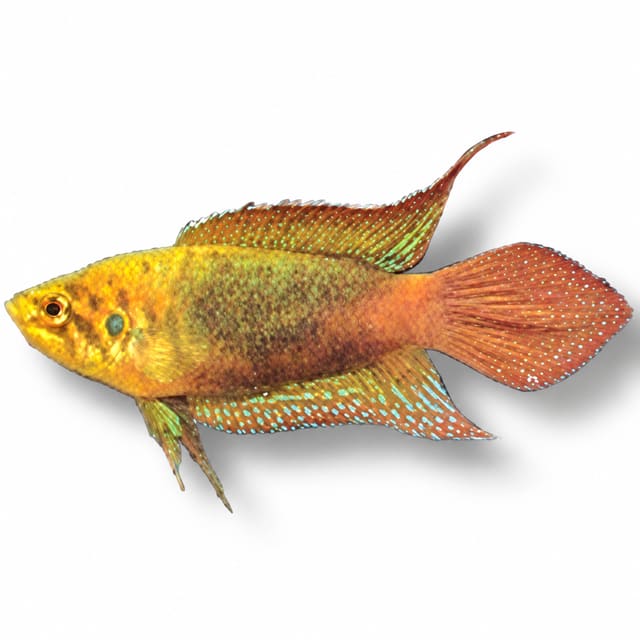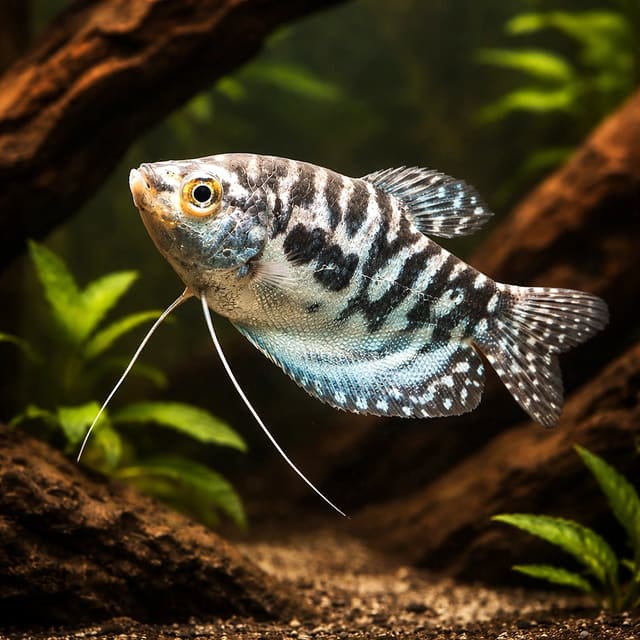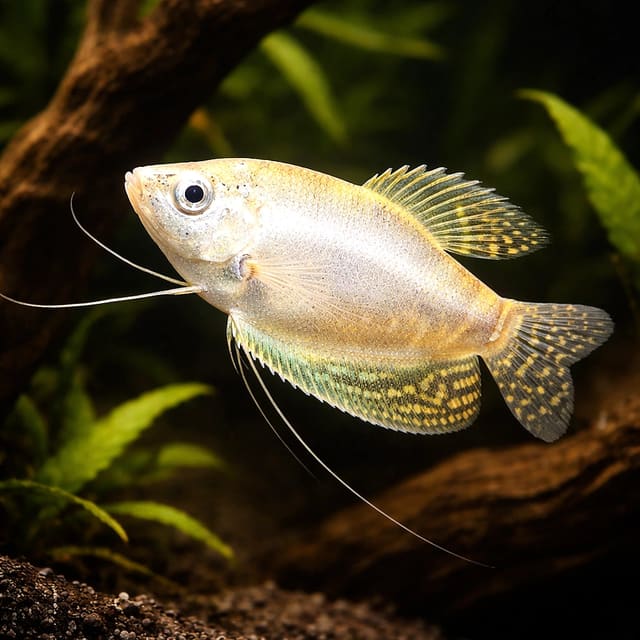
Gold Giant Gourami (Osphronemus goramy)
20–30°C · pH 6.5–8 · 681L
£40.99
Large pink labyrinth fish with a famous puckered mouth, best for spacious 450L+ aquariums, sturdy tankmates and vegetable-led feeding.
Adult size is the maximum length this species reaches at full maturity (scientific sources). The livestock you receive will be younger and smaller — pick a size above for the actual shipping size. Product-photo provenance and any image-specific limitations are stated on the listing.
Helostoma temminckii
Minimum of 2 per order.
Large pink labyrinth fish with a famous puckered mouth, best for spacious 450L+ aquariums, sturdy tankmates and vegetable-led feeding.
Adult size is the maximum length this species reaches at full maturity (scientific sources). The livestock you receive will be younger and smaller — pick a size above for the actual shipping size. Product-photo provenance and any image-specific limitations are stated on the listing.
Maintain these water conditions for optimal health and vibrant colors
The Pink Kissing Gourami (Helostoma temminckii) is a large, long-lived labyrinth fish with the famous puckered mouth and lip-locking behaviour that gives the species its common name. The behaviour looks affectionate, but it is usually social testing, grazing, dominance display or territory negotiation rather than a sign that the fish is gentle in every setup.
The size selector covers seven dispatch grades, from tiny juveniles through larger specimens. These size choices do not specify sex. The smaller sizes are tempting, but this is not a small community fish forever. A well-planned adult aquarium, robust tankmates, vegetable-led feeding and clean warm water are the real keys to success.
| Common name | Pink Kissing Gourami, Kissing Gourami, Kisser Fish |
|---|---|
| Scientific name | Helostoma temminckii |
| Current size options | 1-1.5 cm, 1.5-1.9 cm, 2 cm, 3-4 cm, 4-5 cm, 5-6 cm and over 7 cm variants |
| Adult planning size | Plan for up to around 30 cm; this is the reason the adult setup must be spacious |
| Care level | Moderate; hardy when settled, but too large and assertive for casual small tanks |
| Temperament | Semi-aggressive, bold and sometimes quarrelsome, especially with its own kind or similar-shaped fish |
| Temperature | 24-28C is a practical aquarium target; keep it stable |
| pH / hardness | pH 6.0-8.0; soft to moderately hard water is usually suitable when stable |
| Adult aquarium | 450 litres is the minimum planning target used on this listing; larger is better for groups or communities |
| Diet | Omnivore with a strong plant/algae component plus measured protein foods |
Pink Kissing Gouramis are often sold as small juveniles, but the adult fish is broad-bodied, active and powerful. FishBase records the species as an air-breathing gourami from slow-moving, thickly vegetated water, and UK hobby guidance treats it as hardy but quarrelsome. That combination means it can be rewarding in the right aquarium and frustrating in the wrong one.
Choose this fish if you want a characterful larger gourami that cruises the tank, grazes surfaces, interacts confidently and becomes a visible feature. Do not choose it for a delicate nano community, a shrimp aquarium, a small peaceful tank or a layout where the adult fish cannot turn and patrol comfortably.
| Space | Use a long, roomy aquarium. The fish is active and needs swimming length, not just height. |
|---|---|
| Cover | Use wood, robust plants, hardy planting, large roots or decor to break lines of sight. |
| Surface | Leave clear access to warm humid air above the surface because this is a labyrinth fish. |
| Plants | Use tough or fast-growing plants; soft delicate plants may be grazed or disturbed. |
| Filtration | Use strong biological filtration and regular water changes because large gouramis produce real waste. |
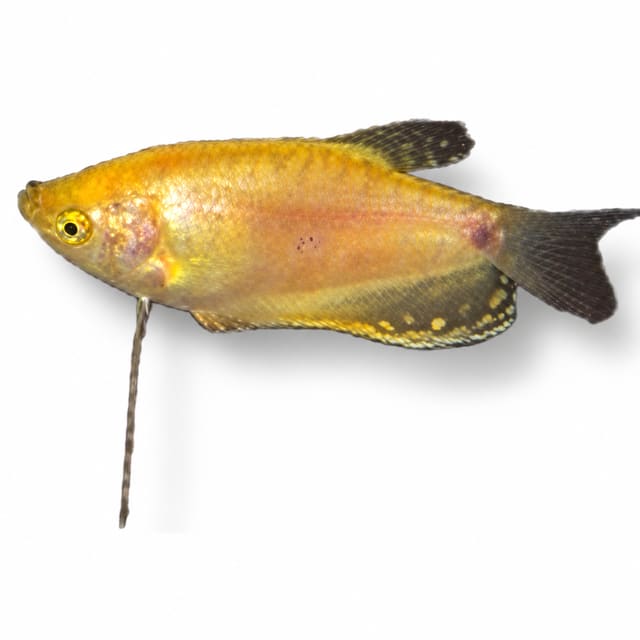
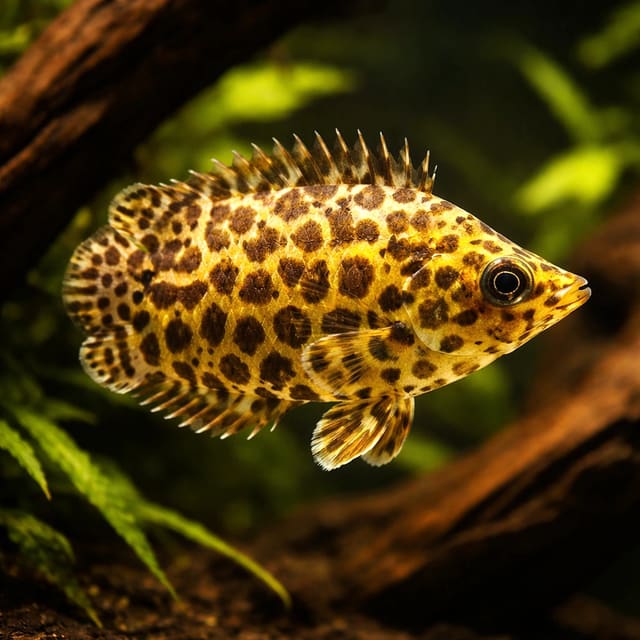
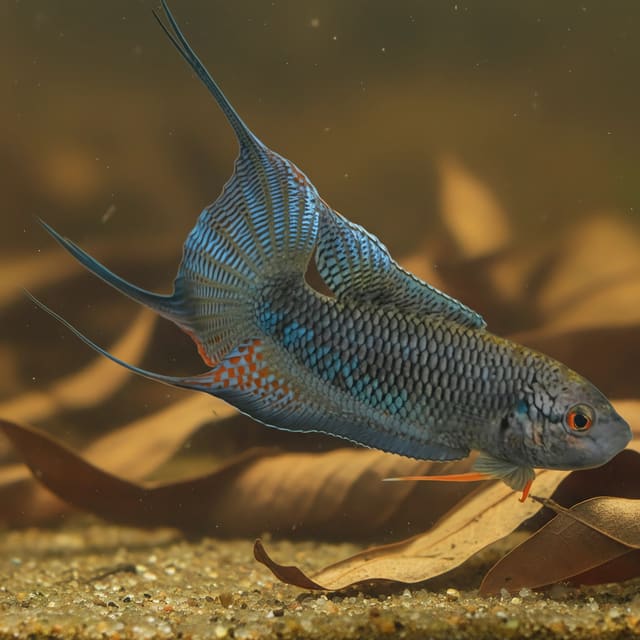
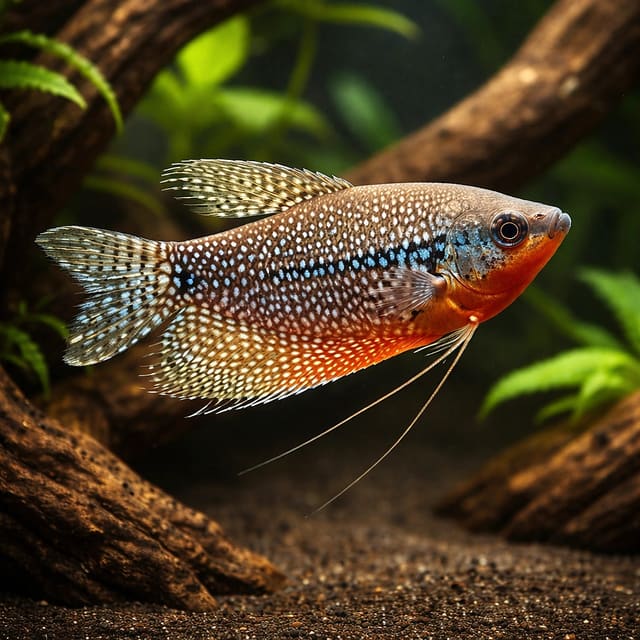
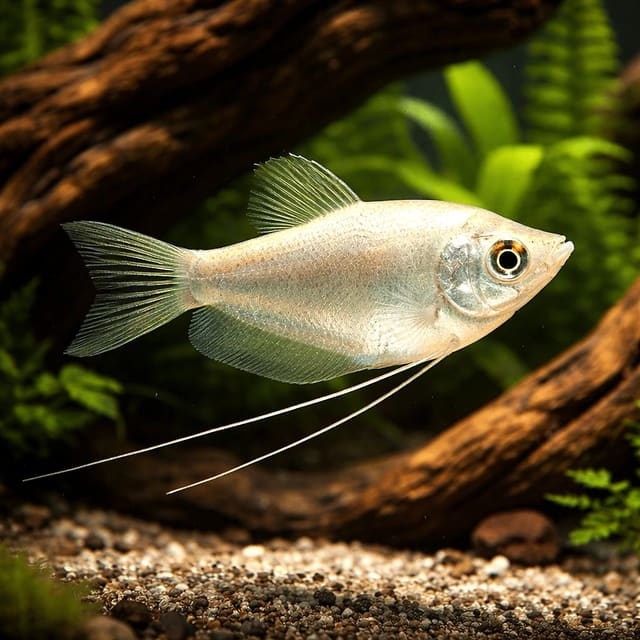
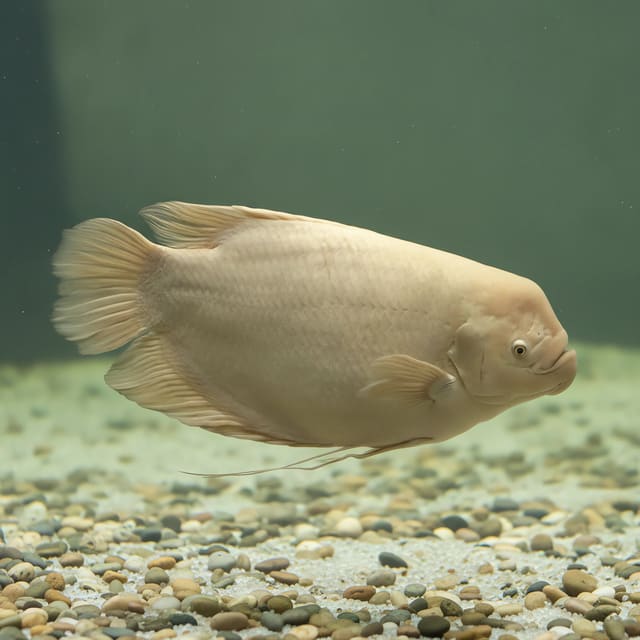
The pink form has a pale pink to silvery-pink body, semi-transparent fins and the unmistakable protruding mouth. The mouth is adapted for scraping algae and biofilm from surfaces, which is why diet and grazing opportunities matter. Juveniles look like miniature adults, but the adult body becomes deep, rounded and much more imposing.
The natural green/wild form exists, but the pink form is the one most familiar in the aquarium trade. Colour is usually at its best when the fish is settled, well fed and not constantly harassed by tankmates.
| Temperature | 24-28C for normal aquarium keeping; avoid sudden drops after delivery. |
|---|---|
| pH | 6.0-8.0, with stability more important than chasing one exact number. |
| Hardness | Soft to moderately hard water; acclimate carefully if your tap water is at either extreme. |
| Nitrogen waste | Keep ammonia and nitrite at zero and nitrate controlled through water changes. |
| Tank maturity | Add to a mature filtered aquarium, not a brand-new system still cycling. |
| Surface air | Do not seal the tank so tightly that the fish cannot breathe normally at the surface. |
Feed this species like an omnivore with a strong grazing habit. Use spirulina flake, algae wafers, quality omnivore pellets and blanched vegetables such as courgette or spinach as the base. Add frozen or live foods such as brine shrimp, daphnia and bloodworm in measured amounts rather than making rich protein the whole diet.
Overfeeding is easy because these fish are enthusiastic. Feed controlled portions, remove leftovers and let some safe grazing surfaces remain available. A balanced diet supports body condition without turning the aquarium into a waste problem.
The famous kissing behaviour is usually a contest or social signal. It can be brief and harmless in a large tank, but in a cramped aquarium it is a sign that the fish do not have enough room to avoid each other. A single specimen is often simpler than a group unless the aquarium is genuinely large.
| Better tankmates | Large peaceful fish, robust catfish, larger barbs, rainbowfish and other sturdy species that will not be bullied or eaten. |
|---|---|
| Use caution | Other large gouramis, similar-shaped labyrinth fish and slow long-finned fish. |
| Avoid | Small fish, shrimp, tiny fry, delicate nano species, fin nippers and very aggressive cichlids. |
| Social planning | Groups need far more room than a single fish, with visual barriers and multiple feeding areas. |
The selector carries seven size options. Smaller juveniles need a carefully managed grow-out tank, while larger fish give a clearer idea of body shape and presence. In every case, buy for the adult fish, not only the size in the bag on delivery day.
| Juvenile sizes | 1-1.5 cm, 1.5-1.9 cm and 2 cm options need careful feeding and peaceful grow-out conditions. |
|---|---|
| Middle sizes | 3-4 cm, 4-5 cm and 5-6 cm options are easier to see and usually more robust in a community grow-out. |
| Larger option | Over 7 cm gives more presence but still needs the same adult space plan. |
Have the mature aquarium ready and read the Live Arrival Guarantee and receiving instructions before ordering. On arrival, keep lights low, acclimate patiently and avoid heavy feeding on the first day.
Plan for a large adult fish up to around 30 cm. The juvenile dispatch sizes are small, but the adult aquarium must be planned from the start.
They are better described as bold and semi-aggressive. They can work with robust, similar-sized fish in a roomy aquarium, but they are not suitable for delicate nano communities.
The lip-locking behaviour is usually a social or territorial display, not affection. It is more manageable when the aquarium is large and broken up with visual barriers.
Use a vegetable-led omnivore diet: spirulina foods, algae wafers, vegetable matter and measured frozen or live foods for variety.
No reviews for this item yet. Bought one? Honest reviews only, good or bad.
What customers say about ordering from us
Easy website plenty of info on fish your buying great to pick a time slot
TRACEY DURRANT · 7 Oct 2026
Got some lovely fish thank you
Kevin Mackie · 7 Oct 2026
Reviews of our shop, collected by Judge.me, an independent third-party review collector. Newest first.