Moderate
Gold Gourami (Trichopodus trichopterus)
24–28°C · pH 6–8 · 81L
From £2.99Some sizes on sale
Photo coming soon
The size, price and care details on this page are for this listing.
The Blue Gourami (Trichogaster trichopterus sumatra) is a freshwater labyrinth fish from the Mekong basin in Asia that reaches 15 cm standard length. It suits keepers prepared for a planted 90 × 30 cm aquarium of about 81 litres; the FishBase, Seriously Fish and OATA overlap is 24–28 °C, pH 6.0–8.0 and 5–12 dGH. Sold individually in 2–3 cm, 3–4 cm, 4–5 cm, 5–6 cm, 6–7 cm and XL sizes.
Adult size is the maximum length this species reaches at full maturity (scientific sources). The livestock you receive will be younger and smaller — pick a size above for the actual shipping size. Product-photo provenance and any image-specific limitations are stated on the listing.
Trichogaster trichopterus sumatra
Save when buying multiple fish. Each quantity is one fish; sex and pair formation are not guaranteed unless the selected variant explicitly states them.
Minimum of 2 per order.
The Blue Gourami (Trichogaster trichopterus sumatra) is a freshwater labyrinth fish from the Mekong basin in Asia that reaches 15 cm standard length. It suits keepers prepared for a planted 90 × 30 cm aquarium of about 81 litres; the FishBase, Seriously Fish and OATA overlap is 24–28 °C, pH 6.0–8.0 and 5–12 dGH. Sold individually in 2–3 cm, 3–4 cm, 4–5 cm, 5–6 cm, 6–7 cm and XL sizes.
Adult size is the maximum length this species reaches at full maturity (scientific sources). The livestock you receive will be younger and smaller — pick a size above for the actual shipping size. Product-photo provenance and any image-specific limitations are stated on the listing.
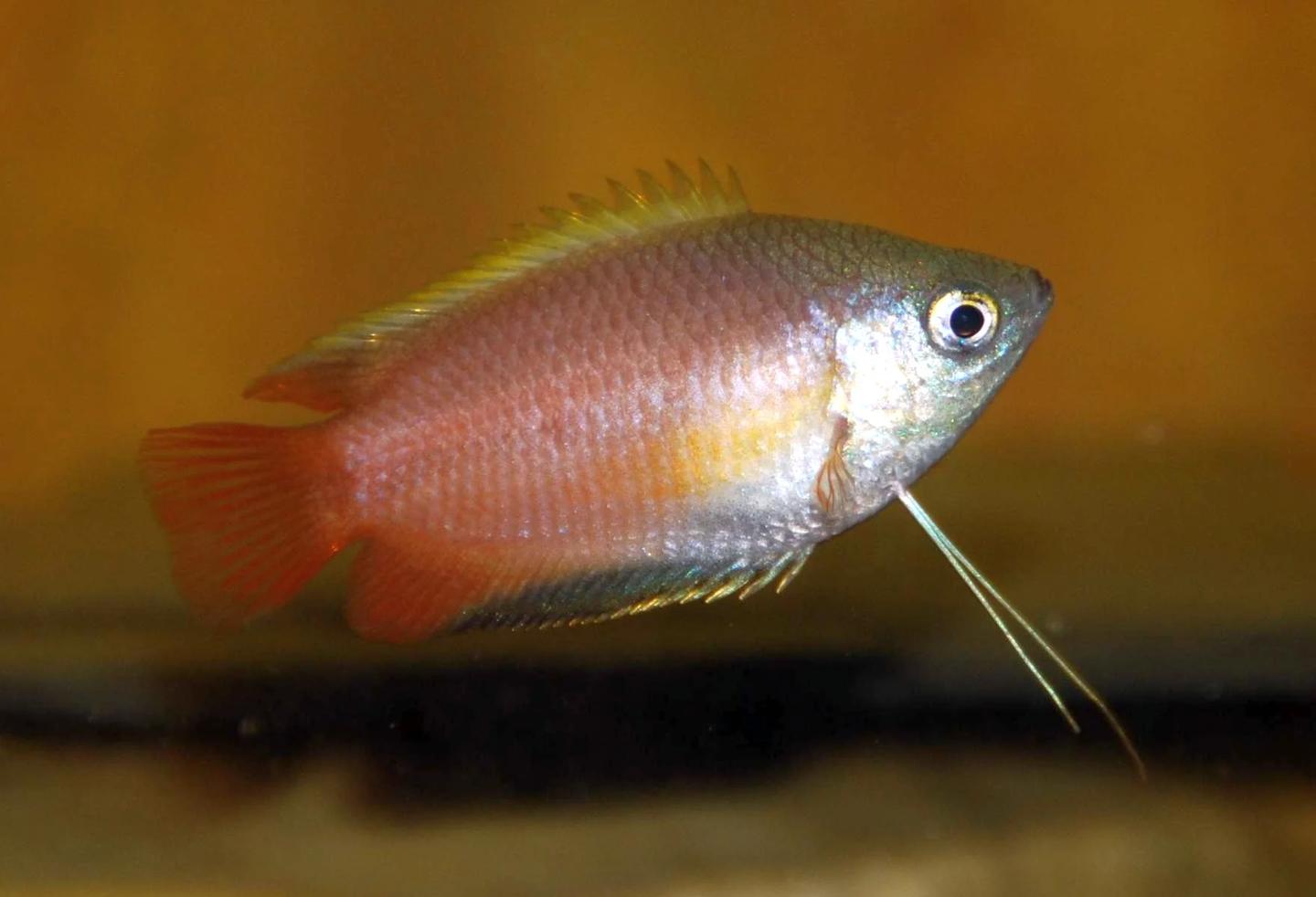
Start with a mature, filtered aquarium at least 60 cm long. Published size records disagree, and broad group guidance is not Honey-Gourami-specific, so verify Trichogaster chuna, the seller's adult-size advice and any claimed sexes before choosing one fish or a group.
Maintain these water conditions for optimal health and vibrant colors
The Blue Gourami is a freshwater labyrinth fish in the family Osphronemidae. This offer carries the established name Trichogaster trichopterus sumatra. FishBase now lists it as Trichopodus trichopterus and gives Three spot gourami as the common name. Its Asian range includes the Mekong basin in Laos, Yunnan, Thailand, Cambodia and Viet Nam, with introductions elsewhere. It reaches 15 cm standard length and suits a keeper who can provide a substantial planted aquarium, stable water and carefully screened companions.
A labyrinth organ allows gouramis to breathe atmospheric air, while their elongated pelvic-fin rays help them sense their surroundings. Those features do not reduce the need for a mature filter, stable water and enough swimming room. This is a substantial gourami rather than a small species for a compact aquarium, and its changing temperament deserves as much attention as its broad water tolerances.
| Decision | What to use |
|---|---|
| Purchase unit | One purchase supplies one live fish in the selected size |
| Numeric sizes | 2–3 cm, 3–4 cm, 4–5 cm, 5–6 cm and 6–7 cm |
| Other size | XL; use the live size selector for its details |
| Adult planning size | Up to 15 cm standard length |
The size you select is the size supplied, not the adult size. A smaller supplied fish does not justify a smaller permanent aquarium, while XL is a label rather than a numerical adult-size promise. Use the live selector to choose the supplied size, then make every aquarium decision around the adult fish.
Sex is guaranteed only when the selected option explicitly states male or female. This Blue Gourami listing has no sex-guaranteed option.
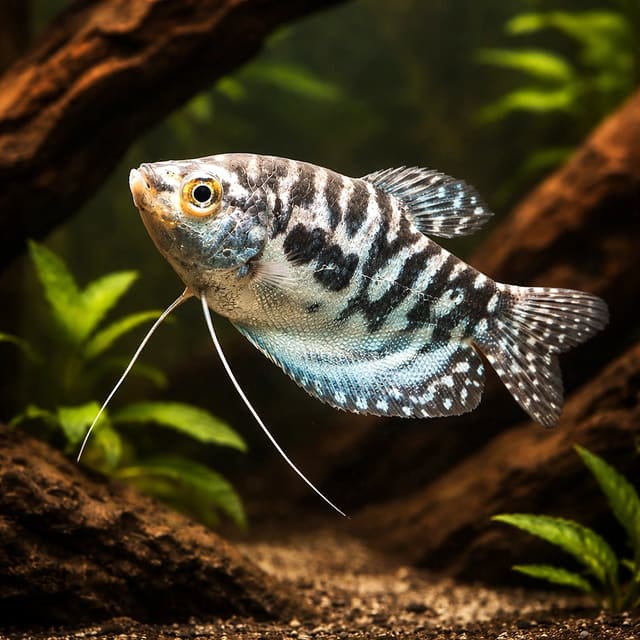
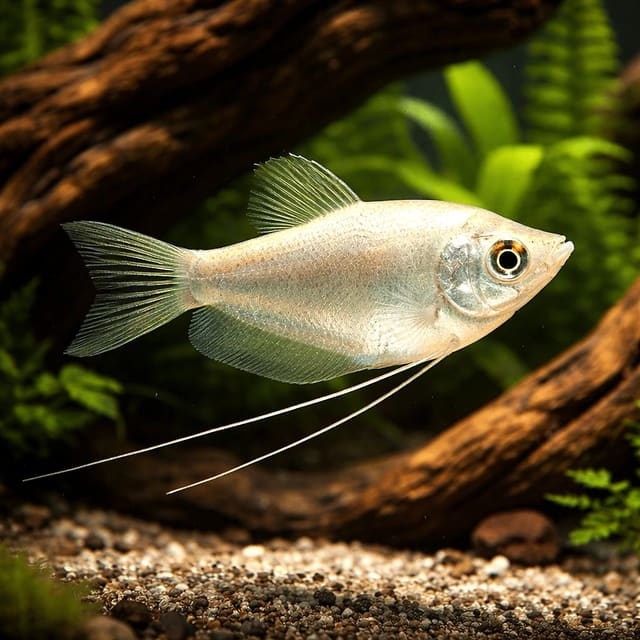
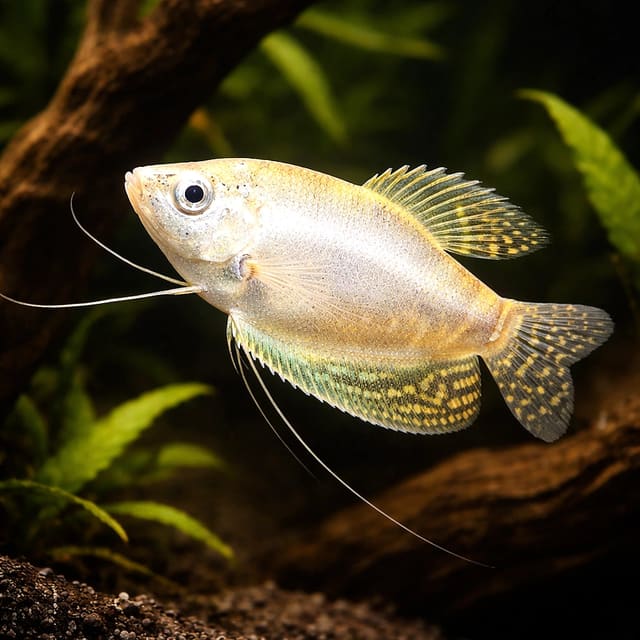
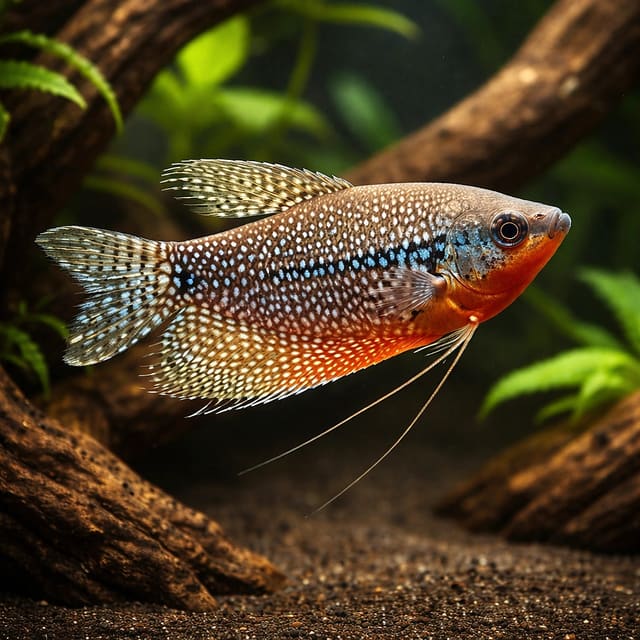
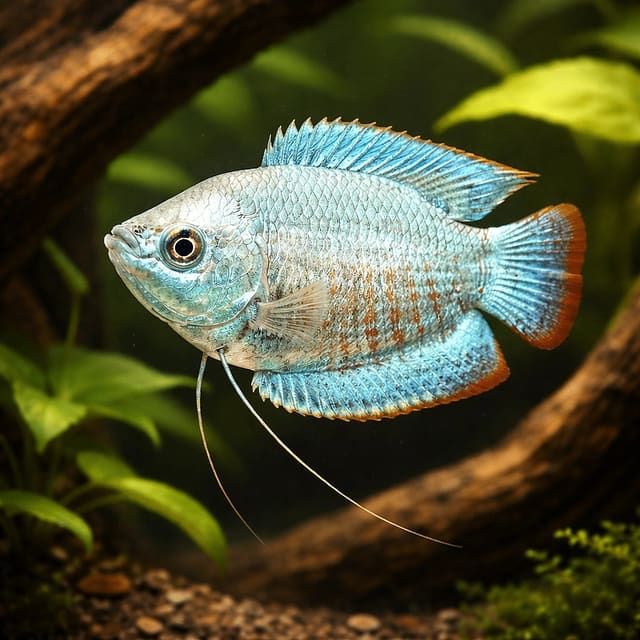
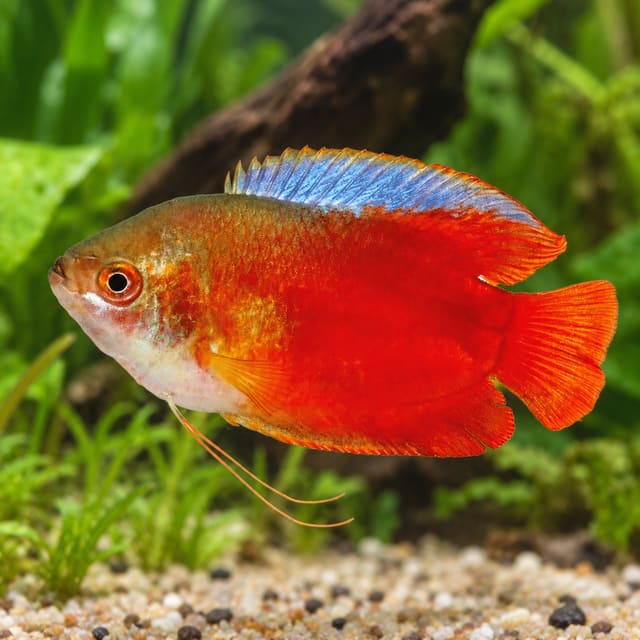
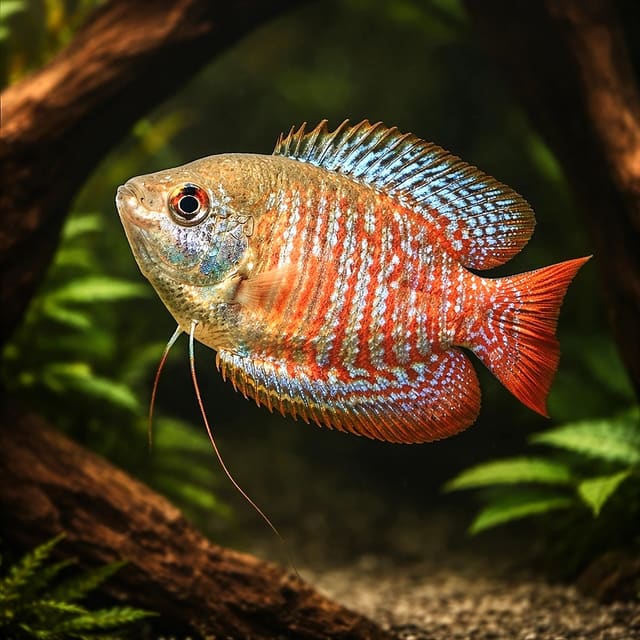
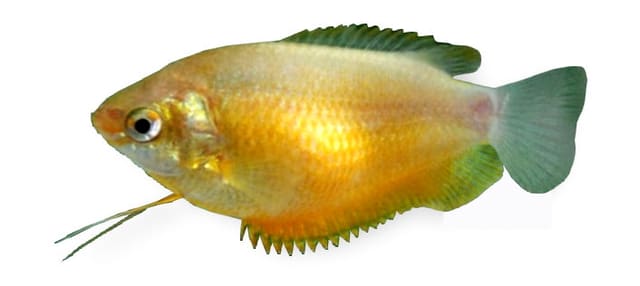
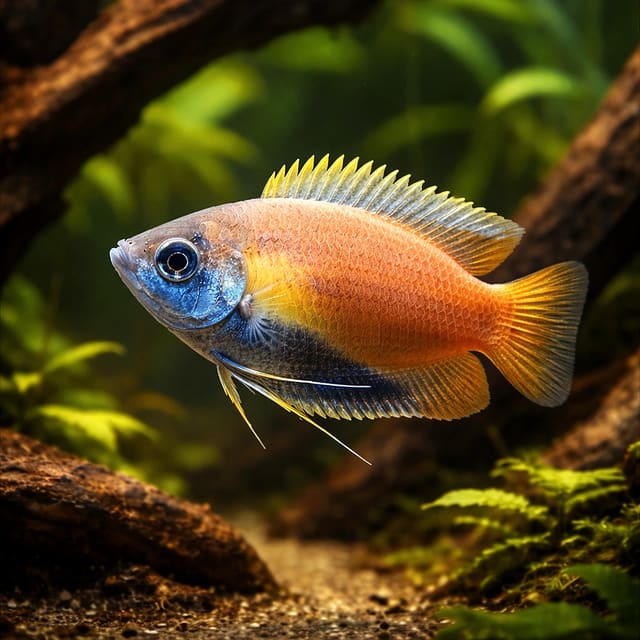
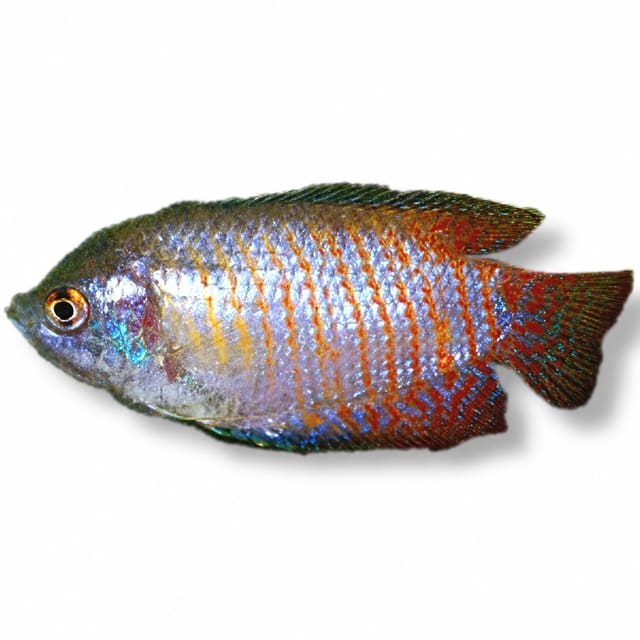
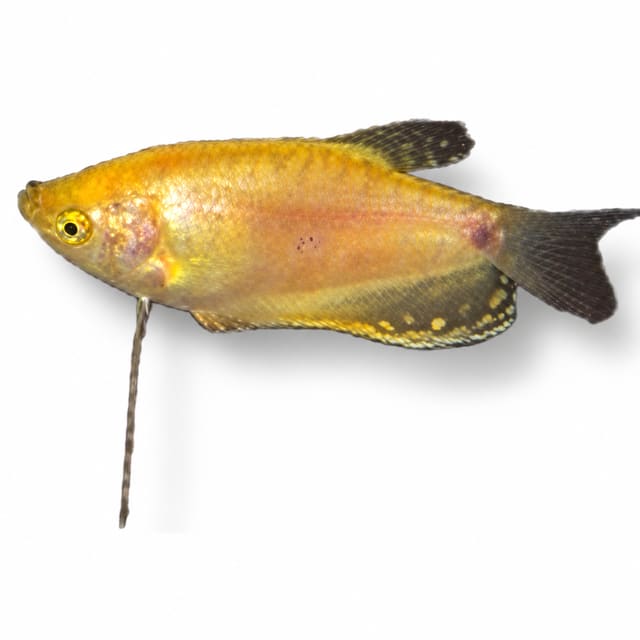
The gallery images are representative, based on reference photographs of this species, so colours can look slightly different from the live animal.
Browse our gouramis and labyrinth fish collection to compare related fish. Before ordering, read the current delivery and Live Arrival Guarantee policy for dispatch days and claim terms.
Seriously Fish gives 150 mm standard length, an aquarium base of 90 × 30 cm and a volume of approximately 81 litres for this fish. Treat the footprint as a central requirement: length and width create swimming space and room for planted cover in a way that height alone cannot replace. FishBase independently gives a maximum of 15 cm standard length.
The aquarium should combine plants, floating cover and open swimming areas. This arrangement gives the fish cover without turning the whole surface into a dense barrier. Keep a clear route to the surface because the labyrinth organ is used to breathe atmospheric air. Gravel or sand can form the substrate, and live plants add useful structure.
| Planning point | Starting reference |
|---|---|
| Adult size | Up to 15 cm standard length |
| Aquarium base | At least 90 × 30 cm |
| Approximate volume | About 81 litres |
| Routine temperature | 24–28 °C |
| pH | 6.0–8.0 |
| General hardness | 5–12 dGH |
The routine water figures are the overlap of FishBase’s environmental range, Seriously Fish’s aquarium guidance and OATA’s group guidance. They describe one connected setup, not independent permissions to compromise elsewhere. An aquarium that holds roughly 81 litres but has a much shorter base misses the stated footprint. Likewise, a suitable footprint still needs working filtration, stable temperature and compatible occupants.
| Suits | Not suited to |
|---|---|
| A planted aquarium with floating cover and open swimming areas | A compact aquarium that cannot provide a 90 × 30 cm base |
| A mature, filtered freshwater setup | An unfiltered or biologically immature aquarium |
| A keeper prepared to screen robust companions | A community built around timid fish |
| A stocking plan that allows for variable adult temperament | A plan that assumes every individual will remain peaceful |
Temperament is the second major planning limit. Some individuals remain peaceful, while others become spiteful as they mature. Males are territorial and will squabble amongst themselves, becoming very aggressive when breeding. A Blue Gourami should therefore be chosen for an aquarium whose other fish are robust enough for that uncertainty, not added solely because the water values overlap.
A larger aquarium can make environmental conditions more stable and give more scope for planting and stocking decisions, but extra litres do not cancel aggressive behaviour. Use the 90 × 30 cm base and approximately 81 litres as the starting reference, then assess every additional gourami or companion against the actual footprint, cover and behaviour already present.
Prepare a fully filtered aquarium before adding the fish. The RSPCA explains why biological filtration is essential: fish release toxic ammonia, beneficial bacteria convert it to nitrite, and another stage converts nitrite to the safer nitrate. A filter needs time and suitable conditions to establish those bacterial populations.
Use our first tropical aquarium guide to plan the setup and maturation process before livestock arrives. Do not treat clear-looking water as proof that the filter is ready. Ammonia and nitrite are dissolved wastes, so readiness is decided through testing rather than appearance.
Add fish to a mature aquarium gradually. Every extra animal and every increase in feeding raises the load on the filter. Stocking too quickly can create new tank syndrome when the bacterial population cannot process the increased waste, allowing ammonia or nitrite to rise.
A mature filter remains a living part of the aquarium rather than a one-off setup task. Chlorine or chloramine can damage its bacteria, replacement water must be conditioned, and blockages can reduce its performance. Weekly tests and maintenance are therefore part of keeping the aquarium mature after the Blue Gourami arrives.
If the aquarium has recently been set up, heavily cleaned, medicated or stocked with several fish, test before proceeding. The safe decision is the one based on measured ammonia and nitrite, not the number of days the equipment has been running.
For routine aquarium care, keep the temperature at 24–28 °C, pH at 6.0–8.0 and general hardness at 5–12 dGH. This is the overlap of FishBase’s environmental range, Seriously Fish’s aquarium guidance and OATA’s group guidance. These ranges show adaptability, but they do not make rapid changes harmless. Choose conditions that suit the whole aquarium and keep them stable rather than repeatedly moving between the limits.
OATA’s gourami and paradise-fish sheet gives group guidance: ammonia and nitrite should be 0 mg/l, while nitrate should not rise more than 20 mg/l above the normal tap-water level. It gives 20–28 °C, pH 6.0–8.0, 4–12 dGH and 3–10 dKH for the group; these are not a species-specific optimum.
| Measurement | Decision it supports |
|---|---|
| Temperature | Confirms the heater is holding 24–28 °C |
| pH | Shows whether acidity or alkalinity remains within 6.0–8.0 |
| General hardness | Checks dissolved-mineral conditions against 5–12 dGH |
| Ammonia | Must remain at 0 mg/l |
| Nitrite | Must remain at 0 mg/l |
| Nitrate | Should stay within 20 mg/l above the tap-water baseline |
Read our water chemistry guide for the role of each value, then use the water matcher to compare measured aquarium water with the stated ranges. Test the tap water as well as the aquarium when using the nitrate limit, because the instruction is based on the rise above the normal tap-water level.
Do not use the pH or hardness span as a reason to alter water unnecessarily. If the aquarium is within range, stable and supporting suitable companions, consistency is the practical goal. When a result moves unexpectedly, check the test method, temperature, recent water changes, feeding and filter operation before making another change.
Any ammonia or nitrite reading requires prompt attention. Pause further stocking, test again carefully and check the filter for interrupted flow or maintenance damage. Visible distress and an abnormal test result should be treated as connected warning signs until water quality has been restored.
Build the layout around a base of at least 90 × 30 cm and approximately 81 litres. A planted aquarium with floating cover and open areas for swimming suits this fish. The aim is not maximum plant density; it is a deliberate balance between shelter, visual structure, surface cover and unobstructed movement.
| Area | How to plan it |
|---|---|
| Planted cover | Use live plants to create structured areas rather than an empty box |
| Floating cover | Provide cover at part of the surface while retaining open access |
| Swimming room | Leave clear areas across the stated footprint |
| Substrate | Use aquarium gravel or sand |
| Surface | Keep a clear route for atmospheric breathing |
Review the layout from the fish’s point of view. One completely open aquarium lacks the recommended cover, while a solid mass of plants can remove the open swimming areas called for in the species guidance. Create more than one type of space instead: planted margins or clusters, partial floating cover and a clear route through the aquarium.
Filtration must be sized to the aquarium. At approximately 81 litres, Seriously Fish uses a turnover of four to five times the aquarium volume per hour and gives a filter rating of 325–405 litres per hour. Treat the manufacturer’s rating as a selection reference, then check that the installed filter remains clear of blockages and continues moving water.
For an aquarium of about 81 litres, a heater of roughly 100–150 W is suggested when the surrounding room is around 20 °C. Room temperature matters: the heater has to bridge the difference between the room and aquarium, so monitor the result with a thermometer and hold the routine target of 24–28 °C rather than assuming wattage alone guarantees it.
Keep the filter intake, outlet and heater clear enough to function as intended. Plants should support the fish without blocking equipment or eliminating surface access. If the layout changes through plant growth, trim or reposition the cover so the original balance of shelter and swimming room remains.
Extra aquarium volume can improve stability, but footprint and layout still need direct attention. A taller aquarium does not automatically create more horizontal swimming room, and powerful equipment does not replace planting. Judge each part by the need it serves.
Blue Gouramis are generalised omnivores. In nature, the species eats terrestrial and aquatic plant matter, algae, small invertebrates, zooplankton and detritus. In the aquarium it accepts most foods, so the practical task is to provide variety without allowing excess food to pollute the water.
Use a good-quality flake, granule or pellet as the regular prepared food. Include an algae-based food to reflect the plant and algae component of the species’ diet. Small live or frozen foods such as daphnia, small bloodworm or tubifex can add variety.
Watch whether the Blue Gourami reaches the food rather than judging the ration only by what disappears. In a mixed aquarium, fast companions may consume much of the portion while a slower fish receives little. A feeding session succeeds when the intended fish eats and the aquarium is not left with an accumulation of food.
Overfeeding creates two linked problems. The fish receives more food than required, and uneaten material breaks down into waste. That extra waste increases the demand on biological filtration and can contribute to unhealthy water conditions. More food is therefore not a substitute for better access or a more suitable stocking plan.
Use the few-minute limit as an observation window. If everything disappears immediately but the gourami does not feed, review competition and food placement before increasing the total amount. If food remains, stop adding more and make the next serving smaller. These responses keep feeding tied to behaviour rather than a fixed pinch that may be too large or too small.
A change in appetite is also a health signal. Reduced intake or loss of interest in food should prompt a water test and a wider check of swimming, breathing, colour, body condition and social behaviour. Keep the menu consistent enough that a genuine change is easy to recognise.
Make the important introduction decisions before the fish arrives. Confirm that the aquarium is mature, filtered and large enough for the adult fish; test ammonia and nitrite at 0 mg/l; set temperature within 24–28 °C; and review every established occupant for size and temperament.
| Checkpoint | Action |
|---|---|
| Before introduction | Test water and confirm the filter is running normally |
| At introduction | Add only to the prepared permanent aquarium |
| First observations | Watch swimming, breathing, colour, hiding and aggression |
| First feeds | Confirm the fish eats within the controlled feeding period |
| First weekly test | Check ammonia, nitrite and nitrate before considering more fish |
Increase the aquarium population slowly. Beneficial bacteria respond to the waste load created by fish and feeding, and adding several animals in quick succession can outpace that response. The result can be new tank syndrome, with ammonia or nitrite reaching unhealthy levels.
Observation should be specific. Note whether the fish swims normally, reaches the surface, uses both planted and open areas, and feeds. Check whether existing fish chase it, whether it drives timid fish into hiding, or whether fin-nipping appears. Temperament can vary between individuals, so behaviour in this aquarium is more useful than a generic community label.
Do not add another fish merely because the first few hours look calm. The species may change as it settles and may become more aggressive as it matures. Let water tests, feeding response and social behaviour establish a clear baseline before changing the stocking plan.
If the fish stops feeding, changes colour markedly, breathes unusually, hangs at the surface, sits on the bottom or swims erratically, test the water promptly. A water-quality problem can affect several fish and needs to be identified before adding anything else.
Keep the first week simple. Maintain the established temperature and feeding routine, avoid unnecessary stocking changes, and record test results and observations. That gives you a useful comparison if appetite, breathing or temperament later changes.
Carry out a partial water change of 25% at least once every week. Use a siphon to remove solid waste from the substrate, and treat replacement tap water with a conditioner that removes chlorine or chloramine before it enters the aquarium.
Test the water at least weekly. Ammonia and nitrite should remain at 0 mg/l, while nitrate should not exceed 20 mg/l above the normal tap-water level. Record the result so a gradual change is visible before it becomes a larger problem.
Tap water can contain chlorine or chloramine that harms the beneficial bacteria living in filter media. Rinsing media under the tap risks reducing the population responsible for processing ammonia and nitrite. Removed aquarium water provides a safer rinsing medium and avoids an unnecessarily severe clean.
Do not make the filter look spotless at the expense of its biological function. The goal is to clear blockages and preserve flow while retaining the bacteria that keep the nitrogen cycle working. Light rinsing is different from stripping and sterilising every component.
Use the weekly routine to inspect the whole setup. Plant growth may have blocked the outlet or covered too much of the surface; waste may have collected in a sheltered area; or the temperature may have moved from its normal level. Correct the specific issue while preserving stable conditions elsewhere.
If ammonia or nitrite appears, postpone further stocking and inspect the filter, recent feeding and maintenance history. Repeat the test carefully and continue monitoring the fish. A weekly routine is the minimum rhythm; an abnormal result or visible change justifies an additional test.
Learn the Blue Gourami’s normal swimming, colour, appetite, breathing and use of cover. Individual fish differ, so a change from that established pattern can be more informative than a single isolated posture.
| What you see | What to do first |
|---|---|
| Hanging at the surface or sitting on the bottom | Test water and check temperature and filter operation |
| Erratic swimming | Test ammonia and nitrite and observe other fish |
| Faster or slower gill movement | Check water quality and look for changes affecting the whole aquarium |
| Darker or paler colour | Review water, aggression, hiding and appetite |
| More aggression or hiding | Reassess cover, companions and recent stocking changes |
| White spots, fluffy growths or damaged scales | Check water and seek health guidance |
| Loss of appetite or body condition | Test water and confirm access to the daily feed |
Water testing is the first response because ammonia and nitrite are toxic and can affect more than one animal. Check the filter for blockages or interrupted operation, review any recent cleaning, and compare the result with previous weekly tests.
Social stress also deserves direct attention. Some Blue Gouramis become more aggressive as they mature, while timid companions may hide or lose access to food. A change in aggression, damaged fins or persistent hiding should trigger a fresh compatibility assessment rather than an automatic increase in feeding.
Appearance and behaviour can point to a problem without identifying its cause. Avoid choosing a treatment from one sign alone. Test the aquarium, note every affected fish and the order in which changes appeared, then contact us for health guidance when the change persists or the animal appears distressed.
Continue normal essential care while gathering those observations. Keep temperature stable, preserve filtration and avoid adding new fish. Record water results, appetite and visible changes so progress can be judged against a clear baseline rather than memory.
Good observation is brief but regular. A few focused checks during feeding and maintenance reveal whether the fish is eating, breathing normally, moving through the aquarium and interacting without escalating conflict.
Do not treat the Blue Gourami as a universally peaceful community fish. Some individuals remain peaceful, while others become spiteful as they mature. Males are territorial and will squabble amongst themselves, becoming very aggressive when breeding.
Seriously Fish recommends robust companions and names barbs, larger characins, loricariids, loaches and other medium or large gouramis as examples. These are screening categories rather than guaranteed combinations. Species, adult size, individual temperament, aquarium footprint and the particular mix of occupants still decide whether a combination works.
| Screen | Decision |
|---|---|
| Robust barbs | Potentially suitable after adult size and behaviour are checked |
| Larger characins | Potentially suitable when they are not timid or vulnerable |
| Loricariids | Potentially suitable when aquarium space and water needs align |
| Loaches | Potentially suitable after adult size and stocking needs are checked |
| Other medium or large gouramis | Use caution because gourami temperament and territorial behaviour vary |
| Timid species | Avoid because a forceful individual may cause persistent stress |
| Fish small enough to be eaten | Avoid |
| Likely fin-nippers | Avoid because they may damage the gourami’s fins |
Start with the adult fish, not the supplied size. A companion that appears large beside a 2–3 cm Blue Gourami may become comparatively small once the gourami reaches up to 15 cm standard length. Compare adult sizes and adult behaviour before selecting either fish.
Then consider temperament in both directions. The Blue Gourami may intimidate a timid fish, while a fin-nipping companion may damage the gourami. A robust label alone does not answer whether a fish is predatory, territorial, highly active or likely to compete aggressively at feeding time.
Finally, assess the physical aquarium. The 90 × 30 cm base and approximately 81-litre reference apply to the Blue Gourami setup, but every added species brings its own space and social needs. More fish require more capacity and a filter able to process the resulting waste.
One purchase supplies one Blue Gourami, which supports a cautious starting plan. Do not buy several simply to create a fixed group. Same-species males will squabble amongst themselves, individual temperament varies, and aggression can increase with maturity or breeding behaviour.
A single individual avoids the direct challenge of planning a same-species group, but it does not make the wider community automatically safe. Watch how it behaves with established fish and how they respond to it. Persistent chasing, increased hiding, fin damage or loss of feeding access means the original compatibility decision needs review.
When considering more than one gourami, do not base the plan on an assumed sex. Use the aquarium’s footprint, cover, existing territories and observed behaviour instead. Other medium or large gouramis appear among the potential robust companions in the species guidance, but they remain a cautious choice because territorial interactions can vary.
Add livestock gradually and allow the aquarium to establish a new baseline between changes. Check water quality, feeding access and social behaviour before making the next addition. This separates the effect of each stocking decision and gives the biological filter time to respond to extra waste.
For a stocking assessment, contact us with the aquarium dimensions, volume, current temperature, recent ammonia and nitrite results, and the full species and numbers already kept. Those details allow a more useful screen than a list of common names alone.
No named companion is universal. Robust barbs, larger characins, loricariids and loaches are starting categories supported by the species guidance; each proposed species still needs its own adult-size, water, social and temperament check.
The Blue Gourami reaches up to 15 cm standard length. Plan its permanent aquarium around that adult size rather than the size supplied.
Plan a base of at least 90 × 30 cm and approximately 81 litres, with live plants, partial floating cover, open swimming areas, a mature filter and surface access.
Start cautiously with one fish rather than buying to a fixed group number. Males will squabble amongst themselves and individual temperament varies, so assess the aquarium footprint, cover and behaviour before considering more gouramis.
Seriously Fish recommends it to beginners with reservations about temperament. It tolerates broad water conditions, but the keeper must provide a mature filtered aquarium and be ready to manage aggression that may develop as it matures.
Feed a good-quality flake, granule or pellet once daily, including an algae-based food. Offer only what it eats within a few minutes, with small live or frozen daphnia, bloodworm or tubifex for variety.
The FishBase, Seriously Fish and OATA overlap is 24–28 °C, pH 6.0–8.0 and 5–12 dGH. Keep ammonia and nitrite at 0 mg/l and maintain stable conditions within those ranges.
Some individuals remain peaceful, while others become spiteful as they mature; males are territorial and will squabble amongst themselves. Avoid likely fin-nippers because they may damage the gourami’s fins.
Screen robust barbs, larger characins, loricariids and loaches individually. Avoid timid fish, fish small enough to be eaten and likely fin-nippers; no named companion is universally suitable.
Start filming every delivery with the parcel still sealed, then record continuously as it is opened and while the fish remains inside the sealed bag. Someone must be present to receive the parcel. Float the bag for 20–30 minutes before releasing the fish, and never pour the bag water into the aquarium.
No reviews for this item yet. Bought one? Honest reviews only, good or bad.
What customers say about ordering from us
Easy website plenty of info on fish your buying great to pick a time slot
TRACEY DURRANT · 7 Oct 2026
Got some lovely fish thank you
Kevin Mackie · 7 Oct 2026
Reviews of our shop, collected by Judge.me, an independent third-party review collector. Newest first.