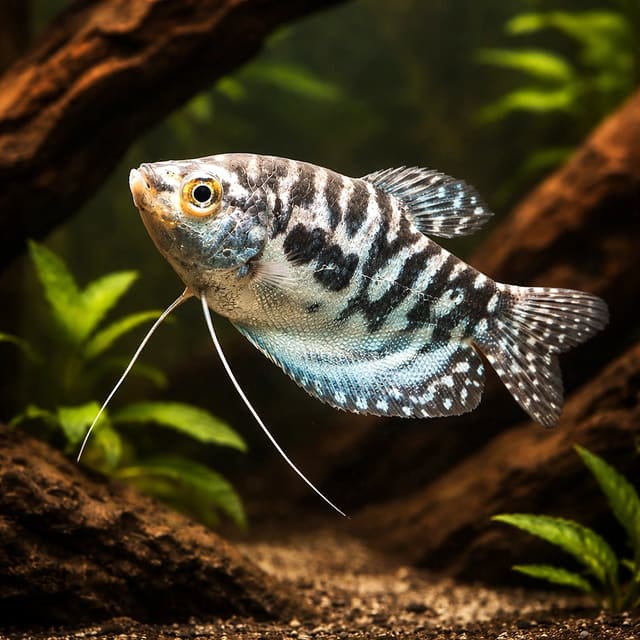
Cosby / Opaline Three-Spot Gourami (Trichopodus trichopterus) – 3–7cm & XL
24–28°C · pH 6–8 · 81L
From £4.99Some sizes on sale

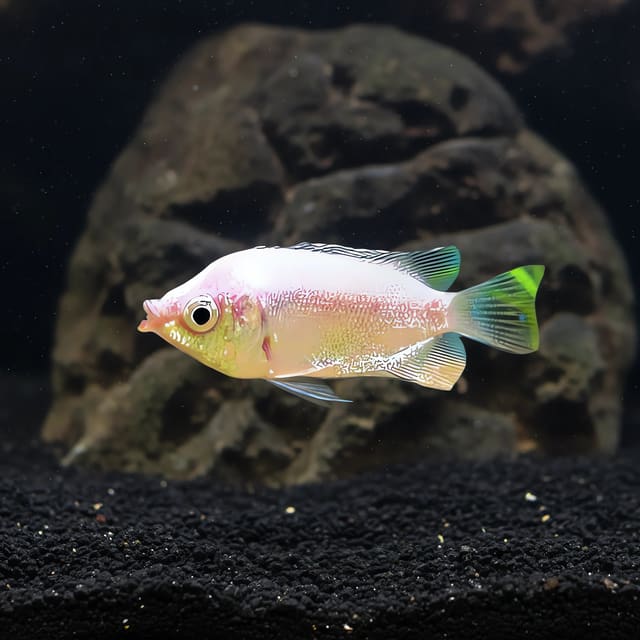
A pale metallic form of the three-spot gourami for medium to large freshwater aquariums. Hardy but sometimes territorial, with careful tank-mate selection essential.
Adult size is the maximum length this species reaches at full maturity (scientific sources). The livestock you receive will be younger and smaller — pick a size above for the actual shipping size. Product-photo provenance and any image-specific limitations are stated on the listing.
Trichopodus trichopterus
Save when buying multiple fish. Each quantity is one fish; sex and pair formation are not guaranteed unless the selected variant explicitly states them.
Minimum of 2 per order.
A pale metallic form of the three-spot gourami for medium to large freshwater aquariums. Hardy but sometimes territorial, with careful tank-mate selection essential.
Adult size is the maximum length this species reaches at full maturity (scientific sources). The livestock you receive will be younger and smaller — pick a size above for the actual shipping size. Product-photo provenance and any image-specific limitations are stated on the listing.
Maintain these water conditions for optimal health and vibrant colors
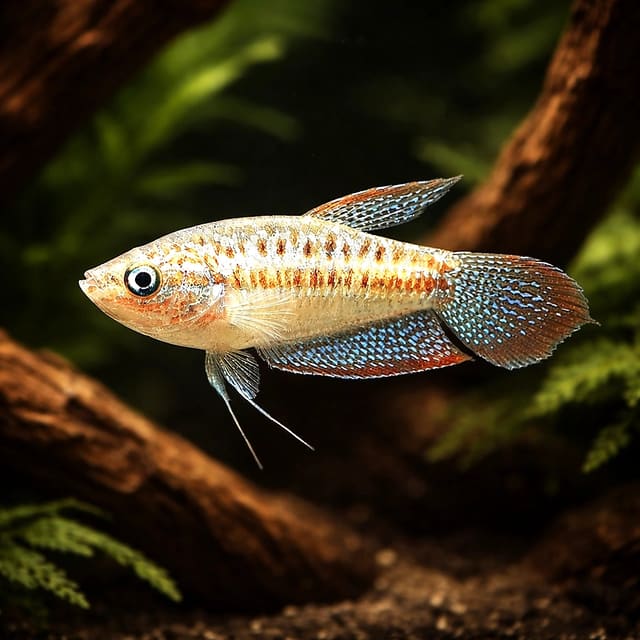
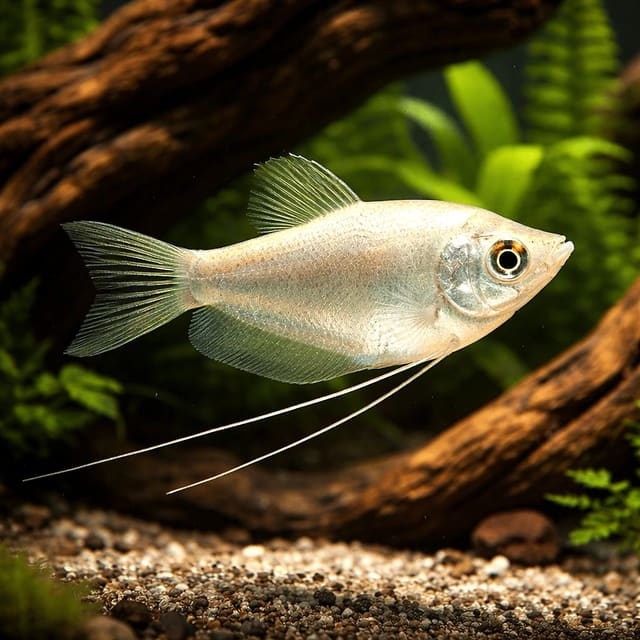
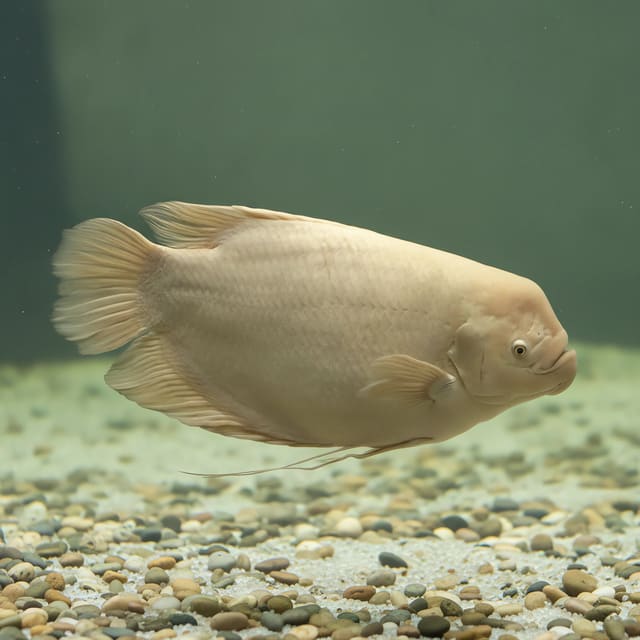
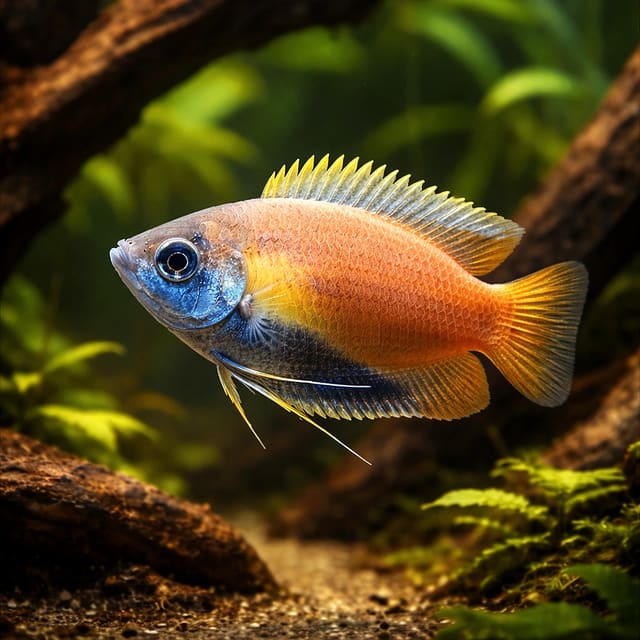
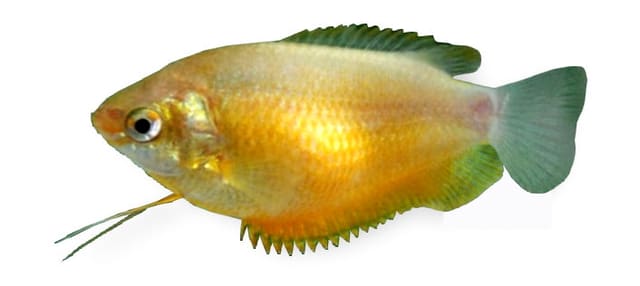
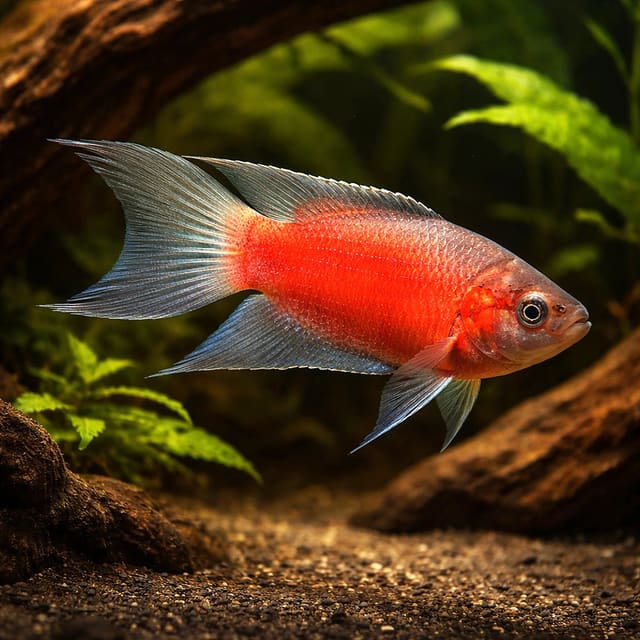
The Silver Platinum Three-Spot Gourami, Trichopodus trichopterus, has a pale metallic body with a silver-white sheen, the classic three-spot gourami shape and long thread-like pelvic feelers. This hardy, confident fish spends much of its time near the upper levels of a medium to large freshwater aquarium. Its pale colour contrasts well with dark plants and wood.
Adults can reach around 15 cm and live for roughly 5 years with good care. A calm, well-structured tank is essential: the species is hardy and adaptable, but its semi-aggressive behaviour makes tank-mate selection and enough space important. This guide covers the setup, feeding and stocking choices to consider before buying.
Trichopodus trichopterus belongs to the gourami group commonly known as labyrinth fish, named for the specialised air-breathing organ that allows them to gulp atmospheric oxygen. In the aquarium hobby, the three-spot gourami has long been valued for its hardiness and range of colour forms, including blue, gold, opaline, cosby, silver and platinum strains. The Silver Platinum Three-Spot Gourami is a selectively maintained aquarium form prized for its pale reflective body and strong community-tank presence.
The wild ancestors of the Silver Platinum Three-Spot Gourami come from Southeast Asia, especially Thailand, Malaysia, and Indonesia. The wild species is found in slow-moving waters such as floodplains, marshes, canals, ditches, ponds, and vegetated backwaters. These areas are often warm, soft to moderately hard, and full of submerged roots, floating plants, and leaf litter.
This natural background explains why the species is so adaptable in aquaria. Its labyrinth organ allows it to gulp atmospheric oxygen, an adaptation to habitats with low dissolved oxygen. Gouramis, bettas, paradise fish and several related species share this specialised air-breathing organ.
In the wild, Trichopodus trichopterus feeds on insect larvae, small crustaceans, zooplankton, plant material, and organic debris. That broad diet is one reason the species adapts well to prepared foods in captivity. Their natural environment is usually shaded and cluttered rather than bright and open, so a tank with cover helps them feel secure and display more natural behaviour.
The platinum form is an ornamental aquarium variety developed in captivity from the same species line as blue, opaline and gold forms. Its pale colour gives it a distinctive appearance in a planted display.
Mimicking the natural habitat of Trichopodus trichopterus with floating cover, gentle flow, shaded areas, and warm stable water usually reduces aggression and brings out calmer, more confident behaviour.
A well-planned setup makes all the difference with this species. The fish is hardy, but the right environment helps prevent stress, fin damage, and territorial disputes. Provide swimming room and breaks in the line of sight.
The minimum aquarium size is 120 litres for a single specimen or a carefully planned pair/group with the right balance. In practice, a better long-term choice is often 150 litres or more, especially if you want tank mates. Adult fish can reach around 15 cm, and they are deep-bodied, active in the upper half of the tank, and capable of bullying weaker fish if cramped.
Keep one male on his own, or one male with two or more females in a larger aquarium. Avoid multiple adult males in modest tanks. They are a poor choice for small or heavily stocked community aquariums.
Keep water conditions stable rather than aiming for extremes. Aim for a temperature of 24-27°C for routine care, although the accepted range is 22-28°C. pH can sit between 6.0 and 8.0, while hardness is comfortably broad at roughly 5-20 dGH.
Those broad tolerances make them adaptable, but the fish does best in warm, clean, low-stress water with minimal sudden swings. In the UK, they usually adapt well to mixed community conditions if acclimated properly.
Filtration needs are moderate. They appreciate clean water, but they do not enjoy being blasted by strong current. A reliable external or internal filter that turns the tank over gently is ideal. Use spray bars or outlet positioning to soften flow near the surface, because these fish like easy access to air. Pair the setup with a dependable aquarium heater and a thermometer to keep temperature steady.
If you are building a community around this species, include mature biological filtration and regular weekly water changes of 25-30%. Stable water quality matters more than chasing exact numbers.
A planted aquarium often works well. Use a dark sand or fine gravel substrate to make the pale body colour stand out. Add driftwood, branch structures, and broad-leaved plants to break up lines of sight. Floating plants are especially useful because they diffuse light and create a sense of security near the surface.
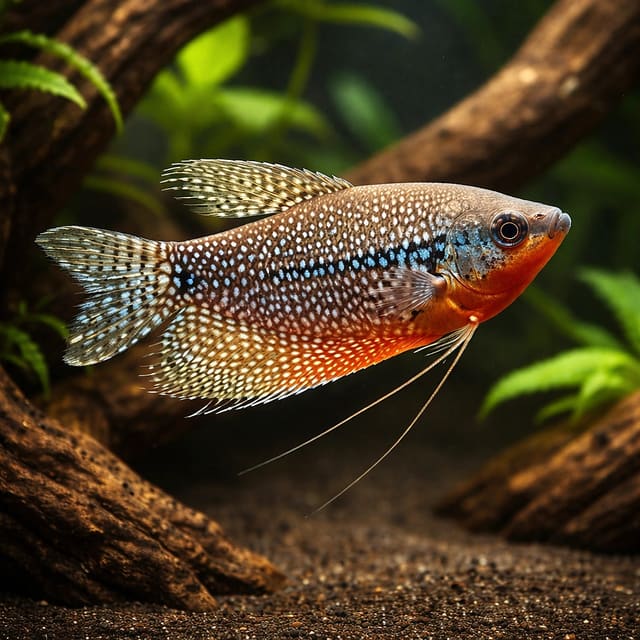
Good companions for this layout include rooted background plants and floating cover. If you want related fish for a similar display, you can also compare this variety with the Silver Three-Spot Gourami or the patterned Cosby Three-Spot Gourami. For smaller upper-level labyrinth fish, the Dwarf Gourami and Cobalt Dwarf Gourami suit different tank scales.
Moderate lighting works best. Very bright, exposed tanks can make them skittish or more defensive. Floating plants help soften the light and encourage natural cruising behaviour under the surface.
Always cycle the aquarium for 4-6 weeks before adding gouramis. A mature filter is one of the best ways to protect labyrinth fish from ammonia and nitrite stress, especially after shipping or introduction to a new home.
The species is omnivorous, which makes feeding simple as long as you provide variety. In nature, they take insects, larvae, tiny crustaceans, algae films, and plant matter. In the aquarium, a varied diet includes a quality staple food supported by frozen and occasional live treats.
Use a high-quality tropical flake, micro-pellet, or medium floating pellet as the main daily food. Because these fish feed readily from the upper water level, floating or slow-sinking foods are ideal. Feed only what they can consume in 30-60 seconds, once or twice daily.
To improve condition and support colour, add frozen bloodworm, brine shrimp, daphnia, and mosquito larvae once or twice a week. Vegetable content also helps. Spirulina-based foods or occasional blanched greens can round out the diet. This variety supports long-term health.
When preparing fish for breeding or show condition, richer foods such as live or frozen brine shrimp and bloodworm help bring adults into peak form. For pairs being conditioned for breeding, small frequent meals are better than one heavy feed.
Avoid overlarge dried foods that swell in the gut, and do not rely on one food type for months at a time. Human foods, fatty meats, and very messy feeds can quickly damage water quality. If medication is ever needed, remember that appetite often drops before visible illness appears.
| Time | Food | Amount |
|---|---|---|
| Morning | Quality tropical flake or small floating pellet | Small pinch, eaten within 1 minute |
| Evening | Frozen brine shrimp, bloodworm, or daphnia | Small portion, 2-3 times weekly |
Easy access to the surface and warm, humid air above the water are helpful for these air-breathing fish.
Overfeeding causes ammonia spikes, excess waste, and greasy surface films. Gouramis are enthusiastic feeders, so it is easy to give too much. Small, measured portions are safer than large meals.
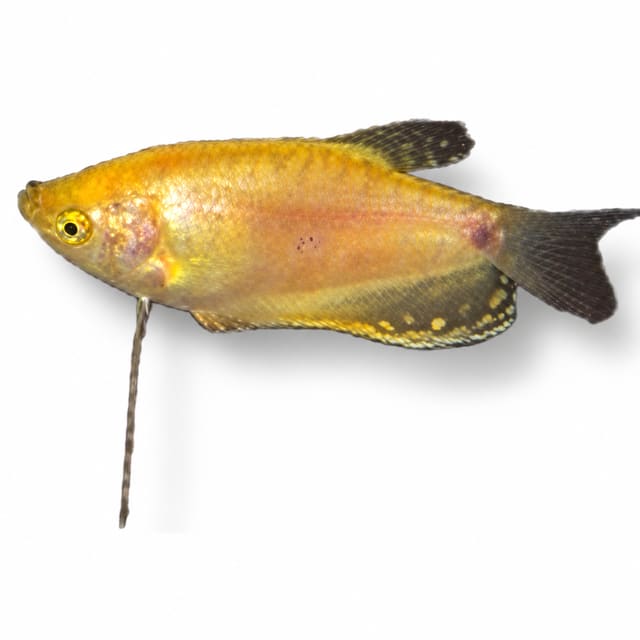
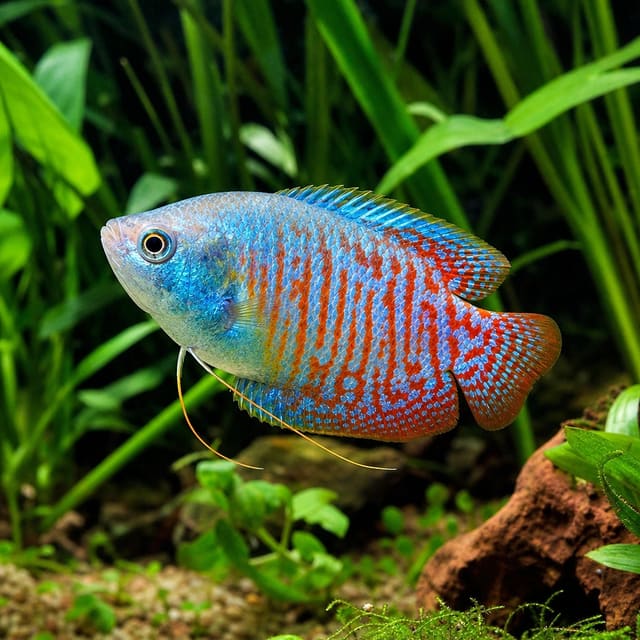
The Silver Platinum Three-Spot Gourami has the classic deep-bodied gourami shape with a laterally compressed profile, extended anal fin, and long thread-like pelvic fins used as sensory feelers. Adults typically measure 12-15 cm, with males often appearing slightly more elongated and more angular in finnage.
The platinum form shows a pale silver to pearly white body with soft metallic reflection. Depending on mood, lighting, and genetics, you may still see faint patterning or the signature darker body spots associated with the species line. Against dark substrate and green planting, the colour really stands out. This contrast makes the platinum form an alternative to darker varieties.
When sexing adults, the dorsal fin is the quickest clue. Males usually have a longer, more pointed dorsal fin and may show more assertive posture. Females tend to have a rounder body and a shorter, softer dorsal profile. This is useful both for general stocking and for breeding plans.
Gouramis and bettas can invite comparison because both are labyrinth fish with surface-oriented behaviour. The difference is scale and temperament style: this species grows much larger, is bulkier, and is often a stronger choice for bigger mixed tanks, while bettas are usually better kept in species-focused or carefully selected smaller communities. When assessing a fish, look for clear eyes, full finnage, smooth scales, and a confident but not frantic swimming style.
The biggest question with this species is compatibility. The fish often behaves calmly when it feels secure, but adults can become territorial, especially males. That means choosing tank mates is less about size alone and more about temperament, swimming zone, and fin shape.
The safest companions are medium-sized, active but non-aggressive species that will not nip fins and will not be intimidated by the gourami’s presence. Good options include medium barbs, larger tetras, corydoras, and many loaches. They also work with some robust oddballs in larger setups.
Among related choices on site, the Leopard Bushfish can suit a carefully planned larger display with plenty of structure, while the Dario Tigris is better viewed as a specialist fish for different setups rather than a direct companion in every case. If you enjoy labyrinth fish, compare this species with the Silver Three-Spot Gourami, Cosby Three-Spot Gourami, and Gold Giant Gourami to understand how size and temperament scale up across the group.
Avoid other adult male gouramis in modest tanks, slow long-finned fish, and very delicate nano species. Male guppies, fancy bettas, and weak surface dwellers are poor choices. Companions should be robust enough to hold their own without provoking conflict.
Suitability for a community depends on aquarium size. A 60-litre peaceful community is unsuitable. A well-planted 150-litre aquarium with sensible stocking can provide a suitable home.
In a 120-150 litre tank, one Silver Platinum Three-Spot Gourami can work with a group of medium tetras and a bottom group of corydoras. In a larger 180-litre setup, one male with two females may work if the tank is heavily structured and tank mates are not intrusive at the surface.
Small shrimp may be viewed as food, especially juveniles. Larger snails are usually ignored. If shrimp are a priority, choose a different centerpiece fish.
| Species | Compatible? | Notes |
|---|---|---|
| Silver Three-Spot Gourami | ⚠️ Caution | Similar temperament; avoid mixing adult males in smaller tanks |
| Dwarf Gourami | ⚠️ Caution | May be stressed by larger gourami presence |
| Leopard Bushfish | ✅ Yes | Possible in spacious, structured aquariums with careful observation |
| Male Betta | ❌ Avoid | Long fins and territorial surface behaviour invite conflict |
| Small Fancy Guppies | ❌ Avoid | Too delicate; fins may trigger chasing or nipping |
Always quarantine new arrivals for 2-4 weeks before adding them to a gourami community. This protects established fish from parasites and gives you time to assess temperament before full introduction.
Breeding is considered fairly achievable for prepared aquarists. Like many labyrinth fish, they are bubble-nest builders. The male claims a calm area near the surface, often under floating plants, and constructs a nest from bubbles coated with mucus.
Use a separate breeding tank of around 60-90 litres with shallow to moderate water depth, gentle filtration, warm water around 27-28°C, and abundant floating cover. Condition the pair well with varied, protein-rich foods. Sexing adults correctly is important before pairing.
The male displays by flaring fins, circling the female, and guiding her toward the nest. Once receptive, the pair embraces beneath the bubbles and eggs are released. A female may lay several hundred eggs, sometimes up to 800 in strong condition. After spawning, remove the female, as the male usually takes over nest defence and may become aggressive.
The male gathers fallen eggs and returns them to the nest. Eggs normally hatch within 24-36 hours depending on temperature. Once fry become free-swimming, remove the male as well, or he may begin to eat them.
Feed infusoria or liquid fry food first, then newly hatched brine shrimp as the fry grow. A key requirement when raising fry is warm, clean, humid air above the water surface. During early development, the labyrinth organ is forming, and cold dry air can contribute to losses.
For higher fry survival, keep the breeding tank covered to trap warm humid air above the surface. This small detail is especially important during the period when the fry’s labyrinth organ begins to develop.
Comparison matters because gouramis vary hugely in size, temperament, and the kind of community they suit. If you are deciding between this fish and smaller or more patterned relatives, think about tank size first, then personality.
| Feature | Silver Platinum Three-Spot Gourami | Dwarf Gourami |
|---|---|---|
| Max Size | 15 cm | 8-9 cm |
| Care Level | Easy to moderate | Moderate |
| Temperature | 22-28°C | 24-28°C |
| Best For | Medium to large community centerpiece | Smaller peaceful planted aquariums |
| Feature | Silver Platinum Three-Spot Gourami | Gold Giant Gourami |
|---|---|---|
| Max Size | 15 cm | Much larger |
| Care Level | Easy to moderate | Advanced due to adult size |
| Temperament | Semi-aggressive | Powerful, species-dependent |
| Tank Size | 120L+ | Very large aquarium required |
| Best For | Home freshwater communities | Specialist large-fish keepers |
Choose this species if you want a larger freshwater centrepiece with a hardy nature and bright metallic appearance. Choose the Dwarf Gourami or Cobalt Dwarf Gourami if your tank is smaller and you want a gentler scale. Choose the Cosby Three-Spot Gourami if you like the same species but prefer marbled patterning over the pale platinum look.
When choosing between this gourami and a betta, the gourami is the better choice for larger mixed communities, while a betta is usually the better choice for a smaller, more controlled single-male display. If your goal is a bold but manageable labyrinth fish, Trichopodus trichopterus is often the sweet spot.
Good health starts with stable water, low stress, and a varied diet. Healthy fish show clear eyes, intact fins, smooth scales, and confident surface-oriented swimming. They should respond quickly to feeding and explore the upper half of the tank without gasping or hiding constantly.
Common diseases include ich, bacterial fin rot, fungal infections after injury, and internal problems linked to chronic overfeeding or poor water quality. Because gouramis often spar, damaged fins can become infected if water quality drops. Watch for clamped fins, flashing, white spots, cottony patches, bloating, or unusual hovering.
Most problems are prevented by keeping ammonia and nitrite at zero, nitrate low, and temperature stable. Quarantine new fish before introduction. If treatment is needed, use medications appropriate for freshwater tropical species and always confirm compatibility with any invertebrates in the tank.
Never medicate a display tank casually. Diagnose the issue first, isolate affected fish when possible, and remember that poor water quality is often the root cause of recurring disease in gouramis.
The fish's behaviour is one of its attractions. They are intelligent, aware of their surroundings, and often learn to recognise feeding routines. Their thread-like pelvic fins are constantly used to explore plants, décor, and even nearby fish.
Most of the time they patrol the upper and middle levels, surfacing regularly to gulp air. A settled specimen is confident rather than frantic. During territorial moments, especially in males, you may see side displays, fin flaring, or short chases. This is normal as long as weaker fish can retreat behind plants or wood.
The species can be kept singly or in a carefully balanced group, but not every tank is suitable for multiple adults. If you want the fish to show its best side, provide a structured layout, floating cover, and enough room to establish personal space. In the right environment, lifespan and quality of life improve noticeably because stress is lower and feeding is more consistent.
Before ordering, check that your aquarium provides enough room, suitable water and sensible tank mates for a Silver Platinum Three-Spot Gourami. Its hardy nature does not remove the need for careful acclimation and good husbandry.
Read the care information and check the size selector before ordering. The options are 4 - 5 cm, 5 - 6 cm, 6 - 7 cm and XL; these describe the purchase options rather than the adult size. No sex is specified by these size options.
Live fish travel in oxygen-filled bags within insulated packaging, with heat packs when conditions require them. A tracked courier licensed to carry live animals handles delivery. Have someone at the delivery address to receive the parcel, and read the delivery and live-arrival information before ordering.
Use this guide to plan tank space, feeding and compatibility before introducing a larger labyrinth fish. Have a mature filter running, test the water and match the temperature before the fish arrives.
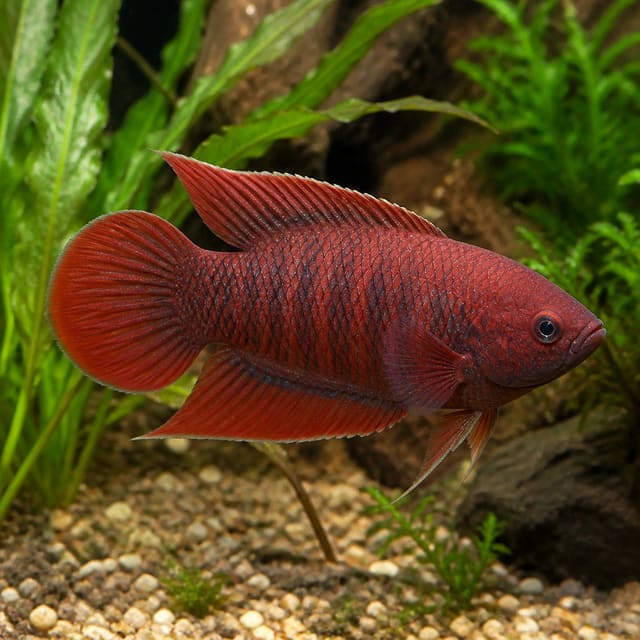
If you enjoy this species, compare it with the closely related Silver Three-Spot Gourami for a more classic tone, or the marbled Cosby Three-Spot Gourami for a patterned alternative. For smaller labyrinth fish, the Dwarf Gourami and Cobalt Dwarf Gourami are popular community choices. If you prefer something more unusual, the Red Paradise Fish offers another surface-oriented species with strong personality, while the Gold Giant Gourami shows how impressive the group can become in very large aquariums.
No reviews for this item yet. Bought one? Honest reviews only, good or bad.
What customers say about ordering from us
I have a small group of long finned mountain minnows. So was delighted to be able to order ten of this variety to increase the genetics in my tank . The ones I recieved are healthy but it’s to early to give a verdict on wether they are of a long finned type since they are small currently.
Gordon Walker · 23 Sept 2026
100% success travel and "installation". Pleased with quality of purchase. The Siamese fighter a bit "shy" so have not yet seen him at his best yet but looking good. Happy customer. GG
George E Garratt · 21 Sept 2026
Reviews of our shop, collected by Judge.me, an independent third-party review collector. Newest first.