Moderate
Gold Gourami (Trichopodus trichopterus)
24–28°C · pH 6–8 · 81L
From £2.99Some sizes on sale
Macropodus opercularis red velvet is an osphronemid labyrinth fish from China, Hainan, Taiwan and northern Vietnam, with a recorded maximum of 6.7 cm standard length. It suits a keeper who can plan around territorial males; FishBase, Seriously Fish and OATA guidance overlap at 20–22°C, pH 6.0–8.0 and 5–12 dGH, and Seriously Fish gives an 80 × 30 cm base as the minimum for a single pair. Sold individually in 3 -4 cm, 4 - 5 cm and 6 -8 cm sizes.
Adult size is the maximum length this species reaches at full maturity (scientific sources). The livestock you receive will be younger and smaller — pick a size above for the actual shipping size. Product-photo provenance and any image-specific limitations are stated on the listing.
Macropodus opercularis
Save when buying multiple fish. Each quantity is one fish; sex and pair formation are not guaranteed unless the selected variant explicitly states them.
Minimum of 2 per order.
Macropodus opercularis red velvet is an osphronemid labyrinth fish from China, Hainan, Taiwan and northern Vietnam, with a recorded maximum of 6.7 cm standard length. It suits a keeper who can plan around territorial males; FishBase, Seriously Fish and OATA guidance overlap at 20–22°C, pH 6.0–8.0 and 5–12 dGH, and Seriously Fish gives an 80 × 30 cm base as the minimum for a single pair. Sold individually in 3 -4 cm, 4 - 5 cm and 6 -8 cm sizes.
Adult size is the maximum length this species reaches at full maturity (scientific sources). The livestock you receive will be younger and smaller — pick a size above for the actual shipping size. Product-photo provenance and any image-specific limitations are stated on the listing.
Maintain these water conditions for optimal health and vibrant colors
The red velvet paradise fish (Macropodus opercularis), sold here as Macropodus opercularis red velvet, is a freshwater labyrinth fish in the Osphronemidae family. FishBase places the species across China from the Yangtze basin southwards, including Hainan and Taiwan, and in northern Vietnam. Its recorded maximum is 6.7 cm standard length. This fish suits a keeper prepared to plan around territorial male behaviour, select companions carefully and maintain a cool, stable aquarium rather than treating it as an automatic community choice.
Adults inhabit varied lowland waters, including river margins, backwaters, small streams, irrigation channels, paddy fields and ditches. They can colonise stagnant, oxygen-poor water because they are obligate air-breathers. The labyrinth organ allows atmospheric breathing, but it does not reduce the need for a mature biological filter, clean water or regular maintenance.
Keep the routine aquarium at 20–22°C, pH 6.0–8.0 and 5–12 dGH. This is the overlap between FishBase’s recorded environment, the aquarium values in the Seriously Fish profile and OATA’s gourami and paradise-fish group guidance. Use an aquarium with a base of at least 80 × 30 cm, equivalent to about 72 litres, as the minimum considered for a single pair. A longer or more spacious aquarium gives more scope to separate territories and arrange cover.
| Suits | Not suited to |
|---|---|
| A stable 20–22°C aquarium | A warm setup that cannot remain within that range |
| A base of at least 80 × 30 cm for a pair | A small aquarium chosen around dispatch size |
| Carefully screened peaceful schooling fish | Timid, similarly shaped or very small fish |
| A keeper prepared for territorial males | Housing males together without a very large aquarium |
| Small live or frozen animal foods | Unmonitored feeding that leaves food to decay |
One purchase supplies one fish. Use the live size selector to choose between the labels 3 -4 cm, 4 - 5 cm and 6 -8 cm. The size you select is the size supplied, not the adult size. These measurements help you choose the dispatch grade; they do not change the aquarium footprint, water range or long-term compatibility plan.
A smaller dispatch fish still needs an aquarium planned for the species and its social arrangement. Do not begin with a smaller permanent home on the assumption that it can be replaced later. Establish the full aquarium, biological filter, cover and compatible stocking plan before the fish arrives. A larger dispatch grade is also not evidence of sex or final length.
Sex is guaranteed only when the selected option explicitly states male or female. This Macropodus opercularis red velvet listing has no sex-guaranteed option.
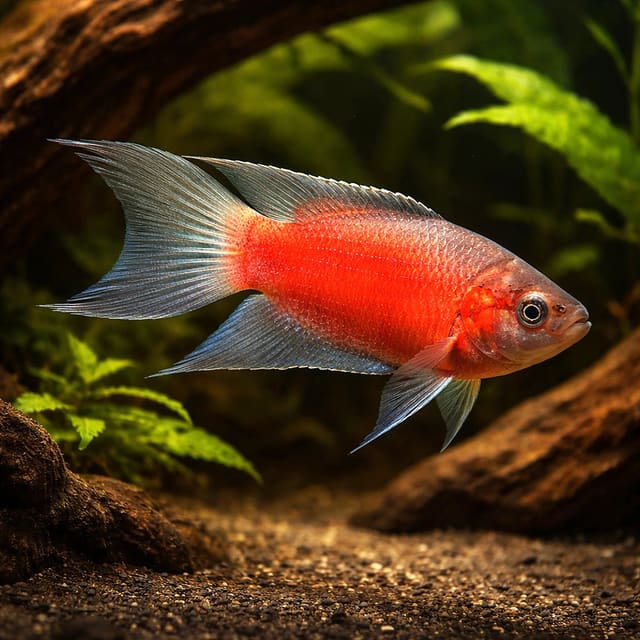
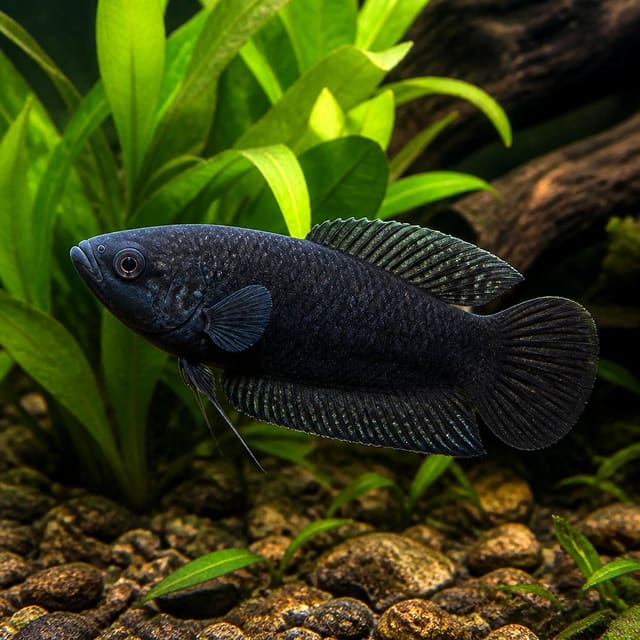
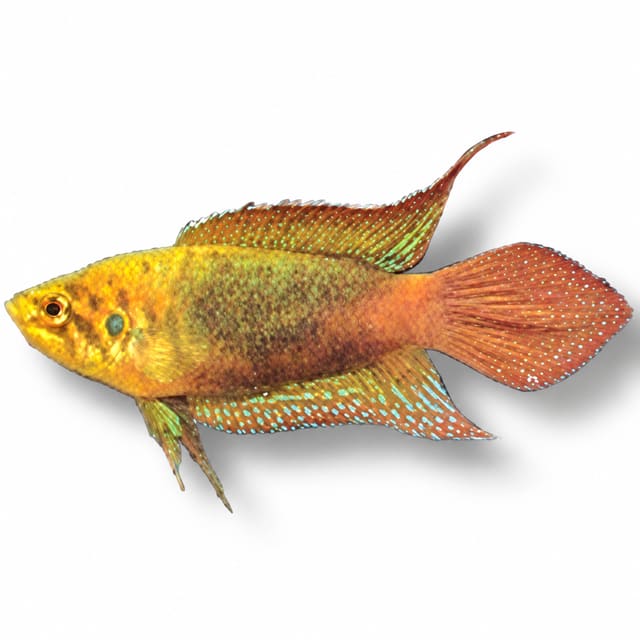
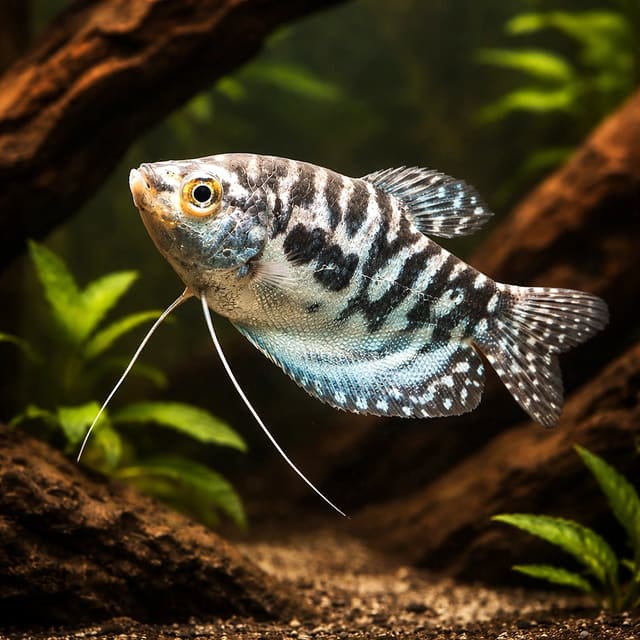
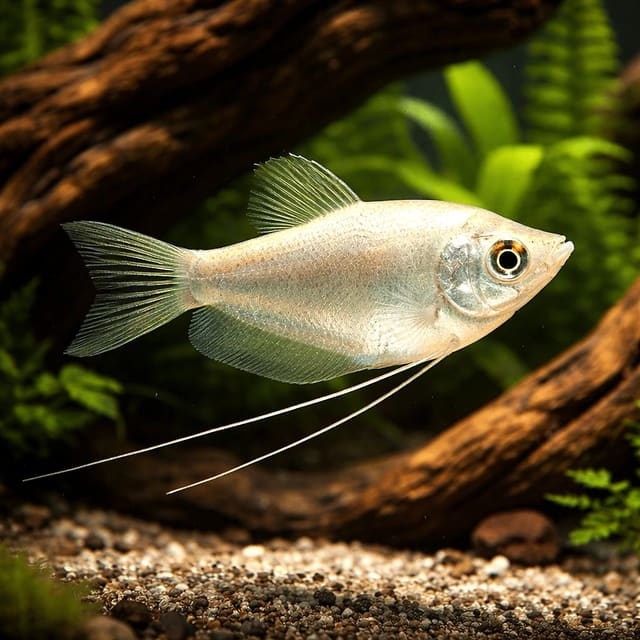
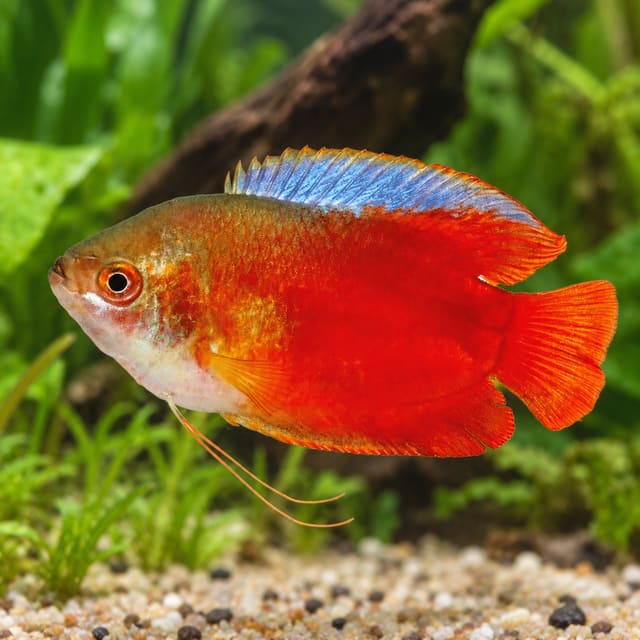
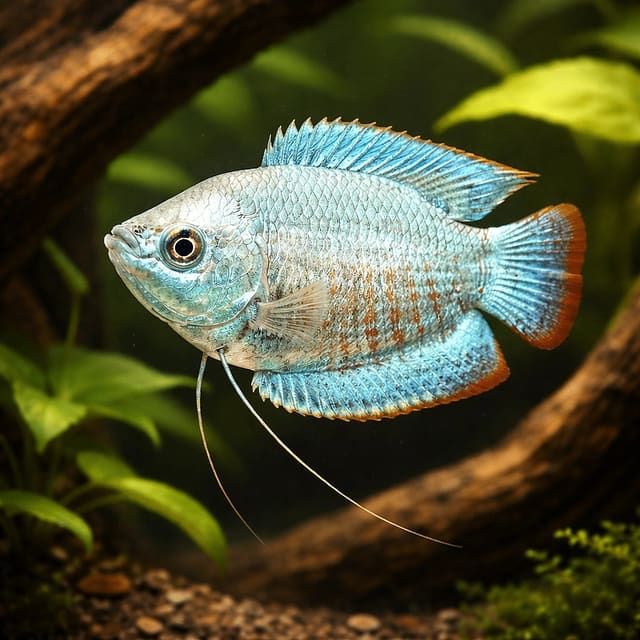
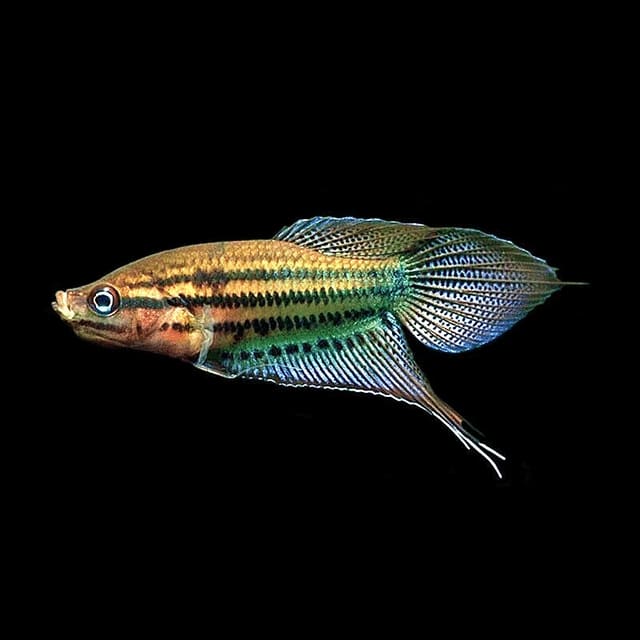
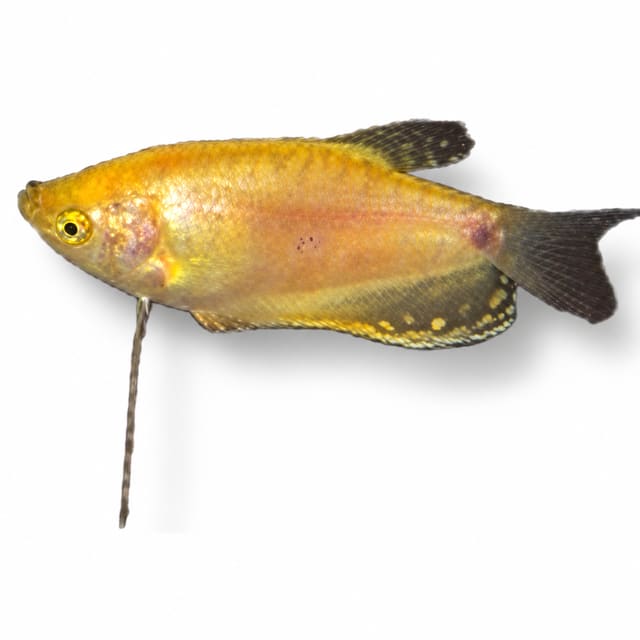
The gallery images are representative of this type of animal rather than photographs of the exact animal supplied, so colours can look slightly different from the live animal.
The image shows a deep red fish with elongated fins, but use the written identity and care requirements when making the keeping decision. Colour, apparent size and fin shape in a representative image should not be used to promise the sex or individual appearance of the fish received.
You can also browse our gouramis and labyrinth fish collection when comparing identities and aquarium requirements. Similar family placement does not make two fish compatible; complete the companion assessment separately.
Plan for an adult of 6.7 cm standard length. FishBase records this as the maximum for male or unsexed Macropodus opercularis. Standard length excludes the tail, so allow for a fish that is longer overall than 6.7 cm.
Choose the aquarium from the 80 × 30 cm footprint rather than calculating space from body length alone.
Provide a base measuring at least 80 × 30 cm, equivalent to about 72 litres, for a single pair. FishBase also gives an 80 cm minimum aquarium size, supporting the importance of horizontal length. The base dimensions matter because two aquariums with similar volumes can offer very different amounts of usable horizontal space.
For example, a tall aquarium should not be treated as equivalent merely because it contains about 72 litres. Check that the base itself reaches 80 × 30 cm. This gives you a clear minimum for arranging wood, plants, shaded areas and visual separation without reducing the full length to a narrow corridor.
The 80 × 30 cm and approximately 72-litre minimum is stated for a single pair. It is not a general allowance for multiple males or a larger mixed-sex group. Males should not be housed together unless the aquarium is very large, and a male kept with females calls for two or more females per male to disperse his attention. That arrangement contains more fish than a pair, so it requires a larger aquarium and a new stocking assessment.
Plan conservatively for an unsexed purchase. The dispatch grade does not establish sex, maturity or final dimensions, and no grade reduces the permanent footprint. Set up the full aquarium before arrival and leave enough open access for maintenance around every piece of cover.
Keep this fish at 20–22°C, pH 6.0–8.0 and 5–12 dGH. FishBase records 16–26°C, pH 6.0–8.0 and 5–19 dGH for the species’ environment. Seriously Fish gives 10–22°C, pH 6.0–8.0 and 5–20 dGH for aquarium care, while OATA gives 20–28°C, pH 6.0–8.0 and 4–12 dGH for gouramis and paradise fish as a group. The 20–22°C, pH 6.0–8.0 and 5–12 dGH routine sits inside all three ranges.
Do not choose one extreme from each wider range. A temperature of 26°C fits FishBase but exceeds the Seriously Fish aquarium range, while 10°C fits Seriously Fish but not FishBase or OATA. The 20–22°C overlap produces one clear routine target that respects every named range. Hardness of 5–12 dGH sits inside all three hardness ranges, and all three give pH 6.0–8.0.
Use our water chemistry guide to understand the measurements, then compare your actual readings with the target through the water matcher. Record the figures rather than relying on the aquarium’s appearance.
If the aquarium measures 23°C, it is above the routine overlap even though it remains inside some broader ranges. Bring the setup into the 20–22°C target before introducing the fish. If pH is 7.2 and hardness is 8 dGH, both readings sit within the plan; stability inside the range is the goal.
Atmospheric breathing is not a substitute for water quality. The labyrinth organ helps the fish use air at the surface, but dissolved waste still affects its health. Keep the filter mature, test regularly and investigate any movement away from the established baseline.
Set up a fully decorated, biologically mature aquarium with a working filter, wood and plant cover. Driftwood roots and branches can be placed to form a few shady spots. If you aim to breed the fish, include some floating or surface vegetation. Leave practical access around the décor so waste can be removed and the filter intake remains clear.
A natural-looking arrangement can use branches, roots and dried leaf litter. Seriously Fish notes that leaf litter adds cover and supports microbe colonies that may provide early food for fry. That benefit relates especially to breeding and fry care; routine adult feeding still needs a deliberate diet.
For an aquarium of about 72 litres, Seriously Fish gives a turnover of four to five times the volume each hour and a filter rating around 290–360 litres per hour. The calculation is practical: four times 72 litres is 288 litres per hour, while five times is 360 litres per hour. Choose the filter by its stated flow and the aquarium’s actual volume, then keep it free of blockages.
The RSPCA’s aquarium welfare guidance explains why filtration is essential. Fish release toxic ammonia; bacteria in a working biological filter convert it to nitrite and then to the safer nitrate. Air-breathing ability does not perform that process or remove dissolved waste.
Prepare and mature the aquarium before livestock is introduced. Our first tropical tank guide explains the setup sequence. Confirm zero ammonia and zero nitrite before adding this fish, and increase the total aquarium population slowly so the bacterial colony can respond to increased waste and feeding.
A newly filled aquarium is not mature simply because temperature and pH are correct. The biological filter must already be processing waste. OATA warns that adding too many fish too quickly can cause new tank syndrome, with ammonia or nitrite rising because the bacterial population cannot handle the new load.
| Setup decision | Practical check |
|---|---|
| Base footprint | At least 80 × 30 cm for a pair |
| Filter for about 72 litres | Approximately 290–360 litres per hour |
| Cover | Wood, branches, plants and shaded areas |
| Biological readiness | Zero ammonia and zero nitrite |
Base the diet on small live or frozen animal foods. FishBase records wild adults feeding on small aquatic animals, including small fish, while Seriously Fish considers insect larvae and similar prey likely in nature. Suitable aquarium foods named by Seriously Fish include Daphnia, Artemia, white worm and grindal worm. These choices directly match the species’ recorded feeding biology.
High-quality dried products may also be accepted, particularly by commercial strains. Treat acceptance as something to observe in the individual fish rather than assuming every product will be eaten. Freeze-dried Artemia and freeze-dried Daphnia are named dried choices, but varied live or frozen prey-sized foods remain the clearest match for the recorded diet.
OATA’s gourami and paradise-fish sheet gives the group routine: feed once a day and offer only what the fish can finish within a few minutes. This controls the portion without relying on a fixed number of pieces, which would vary with food size and the fish’s dispatch grade.
Reduced intake or a loss of interest in food can be an early sign of a problem. Check whether the food is appropriate and then test ammonia, nitrite, nitrate, temperature, pH and hardness. Do not answer poor appetite by repeatedly adding more food, because uneaten material can release waste and make water conditions worse.
A dispatch-size difference can change the size of food that is easy to take, but it does not change the once-daily schedule or the few-minute portion rule. Break or select foods to suit the fish’s mouth, observe each feeding and remove anything left behind.
| Use regularly | Use only when accepted |
|---|---|
| Daphnia, Artemia, white worm or grindal worm | High-quality dried products |
| Small live or frozen foods | Freeze-dried Artemia or Daphnia |
Change 25% of the aquarium water at least once every week. Use a siphon to remove solid waste from the substrate while taking out the old water.
For a 72-litre aquarium, a 25% change is 18 litres. Measure the actual working volume if décor or a different aquarium size changes the amount of water present. Treat replacement water with tap-water conditioner before adding it so chlorine or chloramine does not damage the fish or biological filter.
Do not rinse filter media under the tap. When the filter needs cleaning, rinse the media lightly in aquarium water removed during a partial change. This reduces the loss of the beneficial bacteria that process ammonia and nitrite. The aim is to clear obstructing debris without stripping the filter back to an immature state.
During the first week, note normal feeding response, swimming, colour, breathing and use of cover. Pair those observations with measured water values. During the following weeks, keep the same testing and water-change rhythm so changes are compared with a real baseline rather than memory.
If ammonia or nitrite rises above zero, treat the reading as a water-quality warning. Check stocking pace, feeding, uneaten food and filter function. OATA explains that bacterial capacity must increase when more fish and food are added, so avoid adding several further animals before the aquarium has remained stable under its present load.
A larger aquarium can make temperature and water quality more stable, but it still needs the same scheduled care. Volume gives a wider buffer; it does not replace testing, conditioned replacement water, substrate cleaning or filter checks.
Film every delivery from the sealed parcel before opening it, then float the bag for 20–30 minutes before releasing the fish. The current Tropical Fish Co delivery and Live Arrival Guarantee policy sets out the packing, receipt, video and acclimatisation steps.
The fish is hand-bagged in pure oxygen and packed in an insulated poly box, with a heat pack when the weather calls for it. Those measures support transport, while the aquarium still needs to be fully prepared, mature and within the required water range before the parcel is opened.
Be at the delivery address to receive the parcel, because live fish must not be left unattended. Confirm 20–22°C, pH 6.0–8.0, 5–12 dGH, zero ammonia and zero nitrite in advance. Make sure the filter is operating and that wood or plant cover is already arranged. Acclimatisation is not the time to finish decorating, mature a filter or decide where incompatible fish will be moved.
Open and inspect the parcel on the day it arrives. If there is a Live Arrival Guarantee issue, send the order number and continuous unboxing video the same day. The video should show the sealed parcel, the uninterrupted opening and the fish still inside its sealed bag before release.
After release, compare the fish’s breathing, posture, colour and swimming with the health observations below. Use measured water readings whenever behaviour changes; transport appearance alone should not replace an aquarium test.
Watch for changes in swimming, colour, temperament, breathing, body condition, fins, scales and feeding. OATA recommends learning the normal appearance and behaviour of each fish so that a change is recognised early. Small variations are normal, so compare each fish with its own usual behaviour and appearance.
| If you see | Do this |
|---|---|
| Hanging at the surface, sitting on the bottom or erratic swimming | Test temperature, ammonia, nitrite, nitrate, pH and hardness |
| Breathing faster or slower than normal | Check water quality and filter operation promptly |
| A darker or paler colour | Compare behaviour, aggression and measured water values |
| More aggression or hiding than normal | Review companions, territories and available cover |
| White spots, fluffy growths, damaged fins or missing scales | Test the water and seek further guidance |
| Reduced appetite or body condition | Check food suitability, portion size and water quality |
This species must visit the surface to breathe atmospheric air, so a normal surface breath is part of its biology. A changed pattern of prolonged surface hanging or altered gill movement still deserves a water test. Air breathing does not protect it from ammonia, nitrite or poor maintenance.
Check that ammonia and nitrite remain at zero mg per litre, nitrate stays within the OATA limit, and the aquarium remains at 20–22°C, pH 6.0–8.0 and 5–12 dGH. Inspect the filter for a blockage and look for uneaten food or accumulated waste.
Test the water as soon as you see any of these changes. Different problems can produce similar changes, while unsuitable water can cause or intensify many signs. Record the readings and observations, then contact us for further guidance when a health change persists or the fish’s condition concerns you.
Daily observation works best alongside the weekly routine. Feeding time gives a useful opportunity to check appetite, swimming, fins, scales and interactions without adding another disturbance to the aquarium.
Treat every community match as conditional. Seriously Fish says this species can be maintained alongside peaceful schooling fish with comparable environmental requirements, but similarly shaped fishes should be avoided. OATA says paradise fish can be semi-aggressive and are usually best kept on their own, and recommends robust companions if they are mixed.
A candidate companion must fit 20–22°C, pH 6.0–8.0 and 5–12 dGH. Matching temperature alone is not enough. Compare adult size, temperament, feeding behaviour and body shape, then assess whether the aquarium has enough footprint and cover for every animal.
“Peaceful schooling fish” is a screening category, not a universal approval. A schooling fish that needs warmer water, is small enough to be eaten or may nip fins fails the assessment even if its general temperament is peaceful.
Only proceed when all four answers are satisfactory and the aquarium has adequate space. Introduce population increases slowly so the biological filter can adjust, and observe changes in aggression, hiding, feeding and fin condition.
Plan around territorial males. FishBase states that males fight each other, while Seriously Fish says male territorial aggression becomes more pronounced during reproductive periods. Males should not be housed together unless the aquarium is very large.
Do not use dispatch size, colour or the representative gallery image to construct a sex ratio. The offer is unsexed, and the size selected describes only the fish’s dispatch measurement. A conservative plan is to prepare for one fish unless a deliberately assessed social arrangement and suitable additional space have been established.
Seriously Fish gives an 80 × 30 cm base and approximately 72 litres as the minimum considered for a single pair. That footprint does not automatically cover a trio, several females or multiple territories. It also does not override the warning against housing males together.
Where a known male is deliberately kept with females, Seriously Fish advises two or more females per male to disperse male attention. That advice creates a group of at least three fish, so use a larger aquarium than the pair minimum and arrange multiple areas of cover. For a trio or larger group, provide at least 100 litres, the minimum OATA’s gourami and paradise-fish group guidance gives for paradise fish, and assess the footprint, territories and total biological load together.
Wood, branches, plants and shaded areas can break up the aquarium visually, but décor does not make an unsuitable social combination safe. The strongest controls are avoiding other males except in a very large aquarium, excluding timid or vulnerable fish and giving any planned group substantially more room than the pair baseline.
Reassess the arrangement during reproductive behaviour, when male territorial aggression becomes more pronounced. Bubble-nest behaviour is part of reproduction, but it should not be treated as evidence that every nearby fish is being tolerated safely.
Choose companions for the exact aquarium you have. Peaceful schooling fish with comparable environmental requirements are the clearest candidate category, but they still need individual screening. Robustness, adult size, body shape, fin behaviour and water requirements all matter.
| Proposed arrangement | Decision |
|---|---|
| One paradise fish with peaceful schooling fish that fit the water range | Consider after checking size, body shape and fin behaviour |
| One paradise fish with timid fish | Avoid |
| One paradise fish with very small fish | Avoid if they could be eaten |
| One paradise fish with a similarly shaped species | Avoid |
| One paradise fish with known fin-nippers | Avoid |
| Two males in an ordinary community aquarium | Avoid; males should not share unless the aquarium is very large |
Invertebrates require an individual assessment because FishBase records this species feeding on small aquatic animals. Size, behaviour and vulnerability must be considered rather than assuming that every shrimp, snail or other invertebrate is safe. Do not keep it with fish small enough to be eaten.
Compatibility is not only about whether fish fight. More animals increase feeding and waste, requiring the biological filter’s bacterial population to adjust. Add fish slowly, keep ammonia and nitrite at zero, and retain the weekly maintenance schedule while observing the new social pattern.
Before a mixed stocking plan is put into practice, write down each animal’s adult size, temperature, pH, hardness and temperament. Remove any candidate that falls outside 20–22°C, pH 6.0–8.0 or 5–12 dGH, then apply the behavioural exclusions. This prevents an appealing but unsuitable species from remaining in the plan simply because one parameter matches.
If a proposed companion falls outside these categories, leave it out unless it passes every water, size, temperament, body-shape and fin-nipping check above.
FishBase records a maximum of 6.7 cm standard length for Macropodus opercularis. Standard length excludes the tail; plan its aquarium from the 80 × 30 cm footprint rather than body length alone.
Use a base of at least 80 × 30 cm, equivalent to about 72 litres, for a single pair. Seriously Fish gives this as the minimum considered; larger or more complex social arrangements need more space.
Plan conservatively around one unsexed fish. Seriously Fish gives a single-pair baseline and advises two or more females per male when a known male is kept with females; males should not share unless the aquarium is very large.
Macropodus opercularis red velvet needs deliberate care rather than automatic community placement: maintain 20–22°C, pH 6.0–8.0 and 5–12 dGH, mature the filter and plan around territorial male behaviour.
Feed small live or frozen Daphnia, Artemia, white worm or grindal worm, with accepted high-quality dried products for variety. OATA’s group routine is once daily, limited to what it eats within a few minutes.
Keep Macropodus opercularis red velvet at 20–22°C and pH 6.0–8.0, with hardness of 5–12 dGH. These are the overlapping routine values from FishBase, Seriously Fish and OATA guidance.
Male Macropodus opercularis red velvet are territorially aggressive and fight other males. Paradise fish can be semi-aggressive, so avoid similarly shaped fish, timid species and companions that may nip its fins.
Consider peaceful schooling fish with comparable 20–22°C, pH 6.0–8.0 and 5–12 dGH requirements after individual screening. Avoid timid, similarly shaped or very small fish and any companion that may nip fins.
It is bagged in pure oxygen and placed in an insulated poly box, with a heat pack when weather calls for it. Film the sealed parcel before opening, float the bag for 20–30 minutes before release, and be in to receive it.
No reviews for this item yet. Bought one? Honest reviews only, good or bad.
What customers say about ordering from us
Easy website plenty of info on fish your buying great to pick a time slot
TRACEY DURRANT · 7 Oct 2026
Got some lovely fish thank you
Kevin Mackie · 7 Oct 2026
Reviews of our shop, collected by Judge.me, an independent third-party review collector. Newest first.