−14%
Moderate
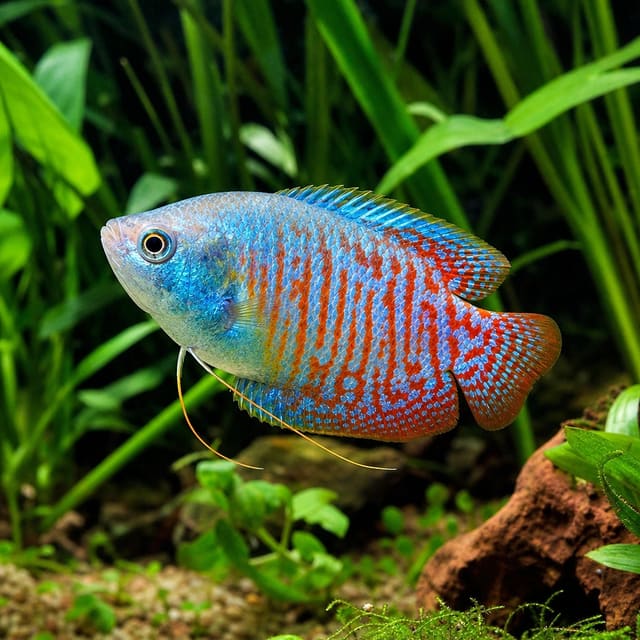
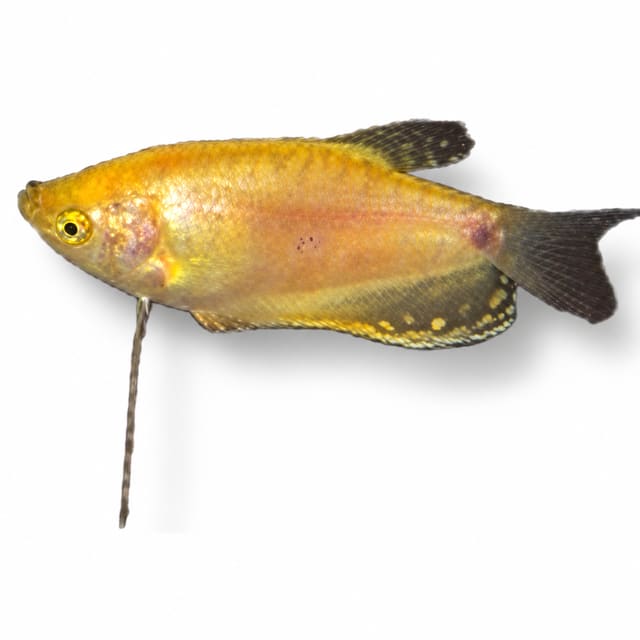
Gold Gourami (Trichopodus trichopterus)
24–28°C · pH 6–8 · 81L
£2.99£4.99

Black Paradise Fish (Macropodus spechti), supplied as one live fish in the approximate 3–4 cm or 4–5 cm size choice. A Vietnamese labyrinth fish for a mature covered aquarium with clear surface access, planted shelter and a carefully observed social arrangement.
Macropodus spechti
Black Paradise Fish (Macropodus spechti), supplied as one live fish in the approximate 3–4 cm or 4–5 cm size choice. A Vietnamese labyrinth fish for a mature covered aquarium with clear surface access, planted shelter and a carefully observed social arrangement.
Maintain these water conditions for optimal health and vibrant colors
Black Paradise Fish, Macropodus spechti, is a Vietnamese freshwater labyrinth fish for a keeper who enjoys watching behaviour as closely as appearance. Its darker colouring and developed fins can make an appealing focal point in a planted aquarium, while its need to reach the surface shapes the layout. Give it clean, stable water, shaded places to withdraw and a clear route to breathe above the water.
This listing supplies one live fish per selected quantity in the approximate 3–4 cm or 4–5 cm size band. The size you select is the size supplied, not the adult size. These are two purchase-size choices for the same black-form offer. Sex is guaranteed only when the selected option explicitly states male or female. This Black Paradise Fish listing has no sex-guaranteed option.
The scientific name is Macropodus spechti; black describes the offer and is not part of the binomial. You may encounter Macropodus concolor in older aquarium writing. Seriously Fish explains the history of that name and uses M. spechti for this species. Keeping the scientific identity in mind is helpful because common names across paradise fish can sound very similar.
FishBase places the species in Osphronemidae, the gourami family, and records it from Viet Nam. Its natural habitats include hill streams, sheltered river margins and backwaters, smaller streams and agricultural channels. This variety is a reminder to provide usable choices within the aquarium: shelter, open routes and places away from the strongest flow, rather than a bare tank designed around a single visual effect.
Seriously Fish gives a maximum of 80 mm standard length, equivalent to 8 cm SL. Standard length excludes the caudal fin. FishBase separately records 5.8 cm SL, labelled male/unsexed. Those are differently scoped published figures, not a reason to calculate a fixed total length by adding an assumed allowance for the tail. Plan around the larger species-profile measurement with room for the fins as well.
The aquarium recommendation from Seriously Fish is a base of at least 80 × 30 cm, or equivalent, for a single pair. Treat that as a pair-specific starting point, not a promise that any group or community fits into the same space. An individual purchase also does not create a confirmed pair: the eventual social arrangement depends on the actual fish and how they behave together.
Black Paradise Fish deserves a more balanced description than simply aggressive or peaceful. The species profile describes it as relatively peaceful outside breeding and says pairs or groups can be maintained. Nevertheless, nesting and social pressure can change how an aquarium works. A keeper should be ready to observe feeding, surface access and resting places, and to separate fish if persistent conflict develops.
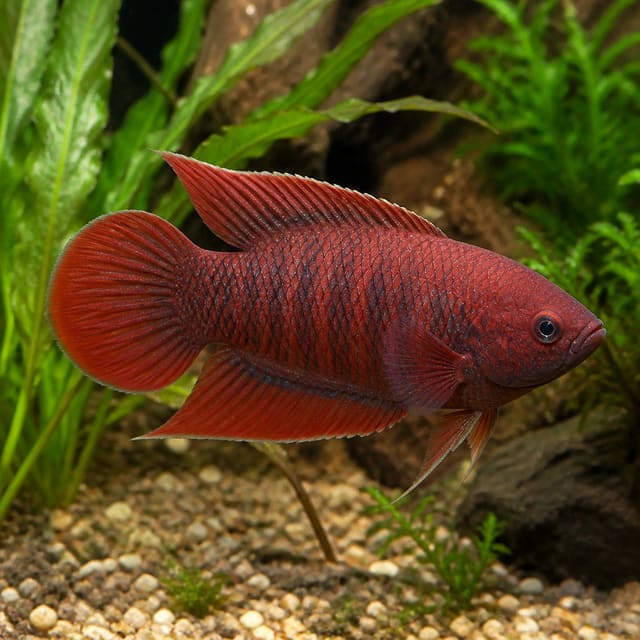
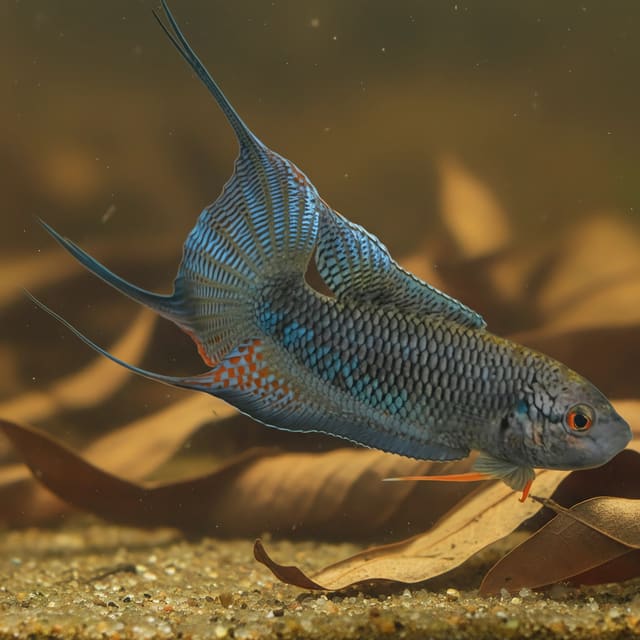
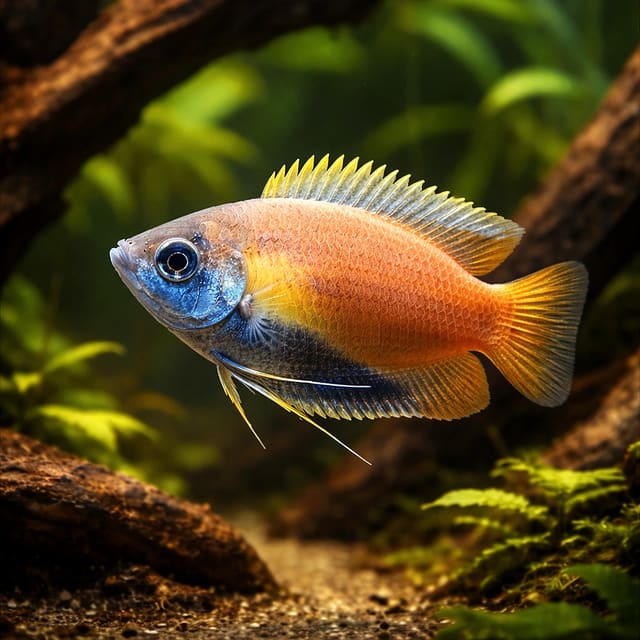
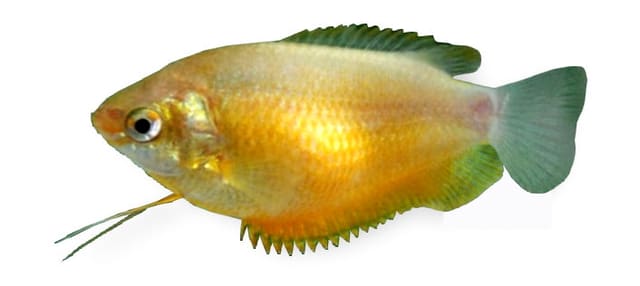
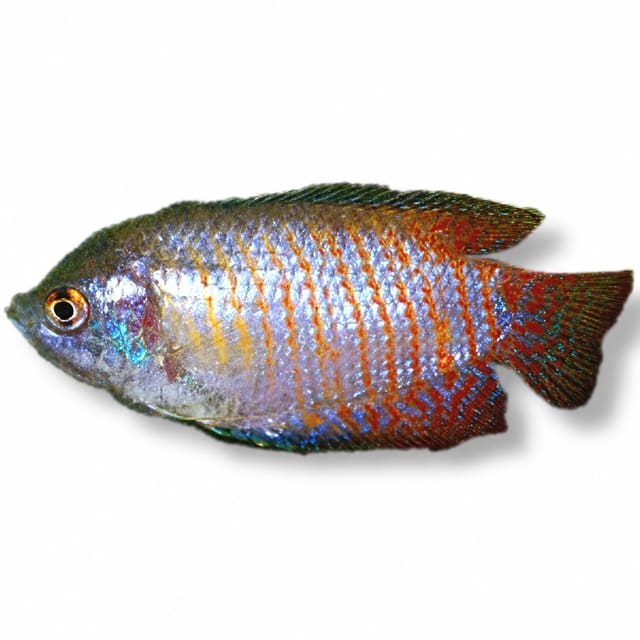
Please do not use this gallery image to identify the species or predict the exact animal supplied. Its identity has not been verified against the stock; the offer and care information refer to the animal named in this listing. The black offer does not promise a particular breeding lineage or a Royal Blue form. Natural variation and the way a fish appears under aquarium lighting make it more useful to assess overall condition than to expect an exact shade.
Choose this species when you can provide a mature covered aquarium and are interested in maintaining the conditions that let it behave normally. Easy access for testing, filter maintenance and inspection is part of a successful setup. If you are comparing other labyrinth fish, use the gouramis and labyrinth fish collection to explore their separate requirements. A shared category is a starting point for research, not evidence that the fish belong together.
For a single pair, use the species profile's minimum base dimensions of 80 × 30 cm or equivalent when choosing the aquarium. The space should remain useful after furnishing. Wood piled through the middle, dense planting without passages or equipment that creates a narrow bottleneck can leave less room than the empty tank suggests. Think about how one fish can move away from another as well as how the display looks from the front.
A group requires its own assessment. Extra fish increase both waste and the number of social interactions, and adding height does not necessarily provide another sheltered territory. Discuss the intended numbers, tank dimensions and other residents before purchasing. It is much easier to revise a stocking plan while the fish are still separate than to improvise accommodation after conflict begins.
The habitat is not recreated by one decorative object. A useful aquarium combines several functions: cover from direct view, an accessible surface, open routes between planted areas and enough room to feed without crowding. A wide area of shade and a second refuge can be more valuable than a single impressive cave that only one animal can use at a time.
Seriously Fish recommends driftwood roots or branches arranged to form shady spots, with floating or surface vegetation particularly relevant to breeding behaviour. Use plants around the sides and rear to soften the exposed edges of the aquarium. Leave gaps through which fish can pass and keep at least part of the surface easy to reach.
Surface plants need attention as they grow. A useful patch of cover can gradually spread into a complete mat, making inspection harder and reducing open breathing routes. Thin it as needed, checking beneath it before lifting material out. The aim is a mixture of shelter and access rather than a completely open surface or one that is entirely covered.
A decorated aquarium can use gravel or sand with suitable live plants, following OATA's general gourami and paradise-fish guidance. The species profile also notes that some breeders prefer bare tanks for easier maintenance. For an ordinary display, choose the arrangement you can keep clean while still providing cover. Bare glass is not a substitute for a thoughtful layout, and decorative substrate does not replace routine waste removal.
FishBase describes this species as an obligate air breather. Its labyrinth organ lets it use atmospheric air, so access to the water surface is essential. A calm visit to the surface can be normal behaviour, whereas repeated distress at the surface or a pronounced change in breathing needs investigation. Learn the individual's usual pattern rather than treating every gulp as an emergency.
Use a secure cover and allow the fish to reach the air without pressing against the lid. In breeding setups, Seriously Fish particularly emphasises warm, humid air for the developing fry. In everyday keeping, maintain accessible air and a stable covered environment while ensuring normal aquarium ventilation. Covering a tank should never mean making its water surface inaccessible.
The labyrinth organ does not remove the need for filtration or water quality. The fish still produces waste, shares water with its companions and depends on a functioning aquarium. A bowl or unfiltered container cannot become suitable merely because the animal can breathe air. Surface access and good water care are complementary requirements.
Position the filter outlet so that water circulates without making every sheltered area turbulent. Watch how the fish moves and rests, then adjust the direction of the outlet if necessary. The useful result is reliable filtration with comfortable places to pause. A single fierce jet through a feeding area may be inconvenient even if the filter has plenty of capacity on paper.
Inspect cable openings and access points whenever equipment is moved. Keep the lid secure during normal use and prepare tools before opening the aquarium for maintenance. Check that wood and ornaments are stable and that gaps do not trap a fish. Designing the layout for safe access now makes weekly cleaning less disruptive later.
Seriously Fish gives a species-level aquarium range of 20–30°C, pH 6.0–8.0 and general hardness of 5–20 dGH. Those ranges describe the published husbandry guidance, not an instruction to alternate between their extremes. Choose stable suitable conditions for the fish and the complete stocking plan, checking the water you use for replacements as well as the water in the tank.
FishBase separately records environmental values of 20–26°C, pH 6.5–7.8 and hardness up to 20 dH; its lower hardness value is unspecified. These environmental records provide background rather than a reason to supply an unspecified lower bound or a narrower aquarium optimum. The different figures should retain their context when you compare care references.
| Check | Practical meaning |
|---|---|
| Temperature | Measure the actual water with a thermometer and maintain suitable conditions consistently. |
| pH and hardness | Use the species-profile guidance and check the needs of all intended residents. |
| Ammonia and nitrite | OATA's general aquarium guidance requires zero readings for both. |
| Nitrate | OATA advises no more than 20 mg/l above normal tap-water levels; routine care should prevent an upward waste trend. |
A simple record of your normal readings is useful when something changes. Note the date, units and any recent maintenance or additions. A one-off result becomes more informative when you can compare it with the aquarium's normal state. If your tap water changes seasonally or you use a prepared water supply, include that in the record too.
The water chemistry guide explains the different tests, while the water matcher can help you compare measured values with stated guidance. Use both alongside observation. Neither a set of matching numbers nor clear-looking water tells you whether every fish can feed and rest comfortably.
The RSPCA explains that fish release ammonia and that an established biological filter supports bacteria which process it through nitrite to nitrate. Ammonia and nitrite are toxic, so the aquarium needs to be mature and functioning before livestock is introduced. Simply running a filter for a short period does not demonstrate that it is ready for the intended feeding load.
Use the first tropical tank guide when preparing a new aquarium. Plan the position, equipment, cover and planting while changes can still be made without disturbing fish. Leave yourself enough access to inspect the filter and thermometer without dismantling the whole display.
OATA recommends increasing fish numbers gradually because the filter's bacterial population needs to respond to extra waste. Adding several animals and extra food at once can overwhelm a young aquarium. This applies even to fish described as hardy. A robust fish still depends on water in which waste is processed safely.
OATA's general care sheet recommends water tests at least weekly and a partial water change of 25% at least once each week. Treat this as a maintenance baseline and use actual water results and stocking to judge whether your routine needs adjustment. Keep the replacement water suitable and use conditioner to remove chlorine or chloramine before it enters the aquarium.
Remove accumulated solid waste with a siphon and inspect the filter for blockages. If media needs cleaning, rinse it lightly in water taken from the aquarium during the water change. Do not wash it under the tap. Preserving the established bacteria is part of cleaning the filter properly, rather than an obstacle to getting the aquarium clean.
After refilling, confirm that equipment is operating, the outlet is flowing normally and the cover is secure. Look at the fish before putting the tools away. A final check can reveal an unplugged filter, a displaced plant blocking the surface or an individual disturbed by moving a piece of wood. This brief habit makes maintenance more reliable than judging completion only by the appearance of the glass.
If the fish's behaviour changes, test the water and check the equipment before making assumptions. Record when the change began and whether it followed new livestock, maintenance or a feeding change. Provide those details when seeking advice. A clear account of what happened helps identify a problem much more effectively than repeatedly trying unrelated remedies.
Keep up observation after an issue appears to settle. The important outcome is the return of normal feeding, movement and stable readings over time, not merely a brief improvement after the aquarium has been disturbed. Where signs are severe or persistent, seek appropriate fish-health advice rather than relying on a generic treatment routine.
The species profile suggests that Black Paradise Fish feeds on insect larvae and similar small prey in nature. In the aquarium, Seriously Fish recommends small live or frozen foods including Daphnia, Artemia, white worm and grindal worm. These give useful options when planning a varied feeding routine. Food should be appropriately sized so the fish can take it without repeatedly abandoning large pieces.
Some high-quality dried products may also be accepted. Check the individual rather than assuming that every fish will immediately eat the same granule or flake. If a new arrival ignores one prepared food, ask what it has been feeding on and review the food's size and presentation. Having a suitable alternative ready is more practical than continuing to add a food that remains untouched.
OATA's broad gourami and paradise-fish advice suggests offering only what is eaten within a few minutes, once daily. Use that as general portion guidance and assess appetite and condition rather than measuring success by how much food goes into the tank. Remove leftovers so they do not break down into additional waste.
A confident surface feeder can collect much of a meal before quieter companions reach it. Watch the actual feeding interaction and distribute food where necessary so all intended animals can eat. This does not mean adding more food without limit; it means noticing which fish receives it. Food falling out of sight is not proof that a shy resident has been fed.
Assess condition over time. A fish that consistently misses food, becomes thinner or suddenly refuses its usual meal needs attention. Check water quality, disturbance, shelter and social pressure alongside the food itself. Repeatedly increasing portions can make a water-quality problem worse while leaving the underlying feeding difficulty unchanged.
If someone else will care for the aquarium, show them the normal portion and which fish should appear for food. Explain that extra feeding is not a substitute for observation and leave a contact plan for concerns. Make sure they know how to check the filter and lid as well as how to feed. A short written routine is easier to follow than remembering several verbal instructions after you have left.
Keep food storage and feeding tools organised so the routine stays straightforward. Do not make sudden large changes simply because the fish appears eager. An animal showing interest is useful feedback, but water quality and steady condition are better guides to successful long-term feeding than enthusiasm alone.
Prepare the aquarium before the delivery day. Confirm the filter, temperature, water tests and cover, and check that the surface remains accessible through the planting. Have a calm place ready for inspecting the parcel. Preparation removes the need to leave a fish waiting while equipment is assembled or a tank is rearranged.
Follow the acclimation guidance on Tropical Fish Co's delivery page and keep handling calm. Avoid exposing the bag to unnecessary bright light, heat or disturbance. Once the fish has entered the aquarium, watch its balance, breathing and ability to reach shelter and the surface. Give it time to explore without repeatedly pursuing it for a closer look.
OATA recommends checking for changes in swimming, colour, breathing, feeding and body condition. In an air-breathing species, distinguish an ordinary surface visit from a marked change in the way the fish breathes or rests. Compare behaviour with the individual's normal pattern and with the condition of the other residents.
Persistently clamped fins, unusual spots or growths, loss of scales, obvious injury, loss of balance or prolonged food refusal need investigation. Check water and equipment promptly, then contact the retailer or a suitable aquatic health professional with clear observations. A photograph is helpful for an external sign, but it cannot replace information about water readings and recent changes.
A separate observation or separation aquarium should be established and appropriate for the animal. If you plan to keep several fish together, prepare this option before it is needed. A rushed move into an unfiltered container may exchange one problem for another. The spare accommodation needs the same essentials: suitable water, cover, surface access and a functioning filter.
Set aside time for testing, cleaning and routine checks as well as feeding. Keep the species details and purchase information so another keeper can understand what the animal is if circumstances change. The purchase size should not determine the permanent home; the aquarium needs to accommodate an adult and the social arrangement you intend to maintain.
If rehoming becomes necessary, contact a responsible retailer or experienced keeper early. Never release aquarium animals or plants into natural waterways. Dispose of waste water and aquarium material carefully so organisms cannot reach them. A planned handover with accurate information gives the fish a much better prospect than an emergency decision made after its current accommodation has become unsuitable.
Seriously Fish describes Black Paradise Fish as relatively peaceful unless breeding and says it can be maintained in a pair or group. This supports thoughtful social keeping without assuming that every two fish form a stable pair. The practical test is whether each animal can feed, rest and reach the surface without persistent interference.
A brief display is different from sustained pursuit. Watch the fish receiving attention, not only the one displaying. Repeated hiding, missed meals or being confined to a corner can show that the arrangement is failing before obvious injury appears. Add cover where it creates usable escape routes, but separate fish if one cannot resume normal activity.
This species builds a bubble nest. Seriously Fish describes nesting among surface vegetation and increased interaction around reproduction. These behaviours explain why quiet upper-water cover can be useful, but they do not turn a normal display into a ready-made breeding setup. A community that works outside breeding still needs observation if nesting begins.
If you deliberately plan to breed the fish, seek detailed species advice and prepare the necessary accommodation and foods first. Sex assessment, adult compatibility and fry care are separate responsibilities. The ordinary care plan here concentrates on keeping the adults well and recognising when their behaviour requires a change.
OATA's broad paradise-fish guidance advises robust tankmates if other species are included, while cautioning against timid animals, fish small enough to be eaten and fin-nippers. Apply those warnings carefully alongside the more specific behaviour account for this species. Shared family membership or a similar temperature range is not enough to establish compatibility.
Look at adult size, activity, feeding speed and use of space. A companion that usually stays lower in the tank can still be affected when it comes out to feed. A fish described as robust may itself be too disruptive for another resident. Assess the complete combination rather than making a decision from one favourable trait.
Keep related product suggestions separate from stocking advice. They provide other animals to research if you are still deciding what to keep. Before adding a companion, make sure the aquarium has the capacity, layout and separation option to support the trial, and leave time to watch the result after the novelty of the first day has passed.
Seriously Fish gives 80 mm, or 8 cm, standard length. FishBase separately records 5.8 cm SL, labelled male/unsexed. Standard length excludes the tail; plan for the larger species-profile measurement plus the fins without treating either figure as an exact prediction.
Seriously Fish recommends a base of at least 80 × 30 cm or equivalent for a single pair. A group or mixed aquarium requires its own assessment of space, cover, behaviour and feeding access.
The species profile says pairs or groups can be maintained and describes the fish as relatively peaceful outside breeding. Observe the actual animals and keep separation available if persistent pursuit prevents normal feeding or rest.
A prepared keeper needs a mature covered aquarium, suitable water, clear surface access and time to observe social behaviour. Establish those essentials and a workable stocking plan before purchase.
Offer small live or frozen foods such as Daphnia, Artemia, white worm and grindal worm. Some quality dried products may also be accepted; check what the individual actually eats and remove leftovers.
Seriously Fish's aquarium guidance is 20–30°C, pH 6.0–8.0 and general hardness of 5–20 dGH. Maintain stable suitable conditions for the complete aquarium rather than moving between the extremes.
The species profile describes it as relatively peaceful unless breeding. Behaviour still needs observation; repeated pursuit, missed meals and fin damage mean the arrangement should be reassessed.
OATA's broad paradise-fish guidance suggests robust companions and cautions against timid fish, very small fish that could be eaten and fin-nippers. Assess each combination for adult size, water needs, feeding and access to shelter.
Tropical Fish Co hand-packs fish in oxygen-filled bags inside insulated boxes, using a heat pack when conditions call for it, and uses a licensed live-animal courier. Be present for the confirmed delivery and inspect the parcel that day. A Live Arrival Guarantee claim needs a continuous unboxing video showing the sealed parcel being opened and the fish still in the sealed bag; contact the team the same day.
Seriously Fish's Black Paradise Fish profile provides the aquarium dimensions, water guidance, feeding and social account. FishBase's species record provides identity, environmental records, air-breathing biology and the separately labelled length measurement.
OATA's gourami and paradise-fish care sheet covers general maintenance and welfare. The RSPCA aquarium environment guidance explains filtration. Check Tropical Fish Co's delivery and Live Arrival Guarantee policy when preparing for arrival.
No reviews for this item yet. Bought one? Honest reviews only, good or bad.
What customers say about ordering from us
I have a small group of long finned mountain minnows. So was delighted to be able to order ten of this variety to increase the genetics in my tank . The ones I recieved are healthy but it’s to early to give a verdict on wether they are of a long finned type since they are small currently.
Gordon Walker · 23 Sept 2026
100% success travel and "installation". Pleased with quality of purchase. The Siamese fighter a bit "shy" so have not yet seen him at his best yet but looking good. Happy customer. GG
George E Garratt · 21 Sept 2026
Reviews of our shop, collected by Judge.me, an independent third-party review collector. Newest first.