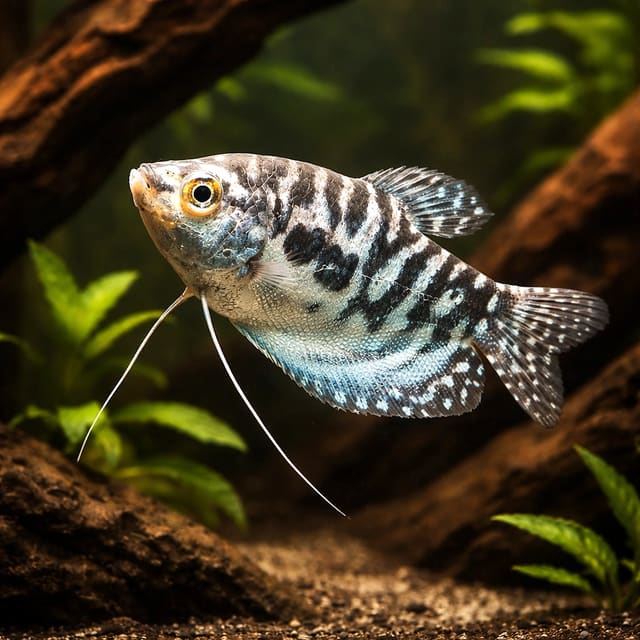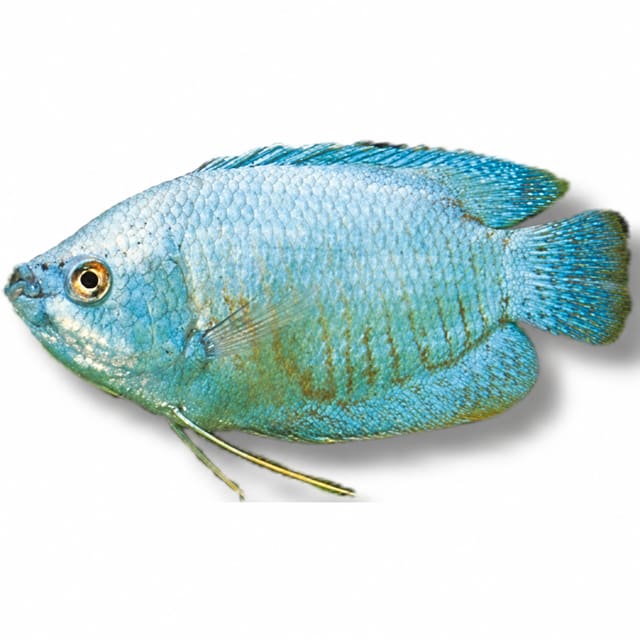
Neon Dwarf Gourami (Colisa lalia neon dwarf)
22–27°C · pH 6–7.5 · 56L
£10.99
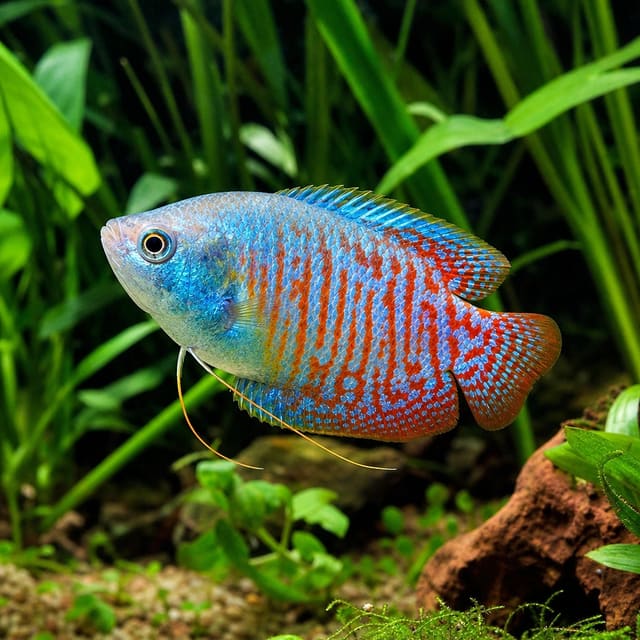
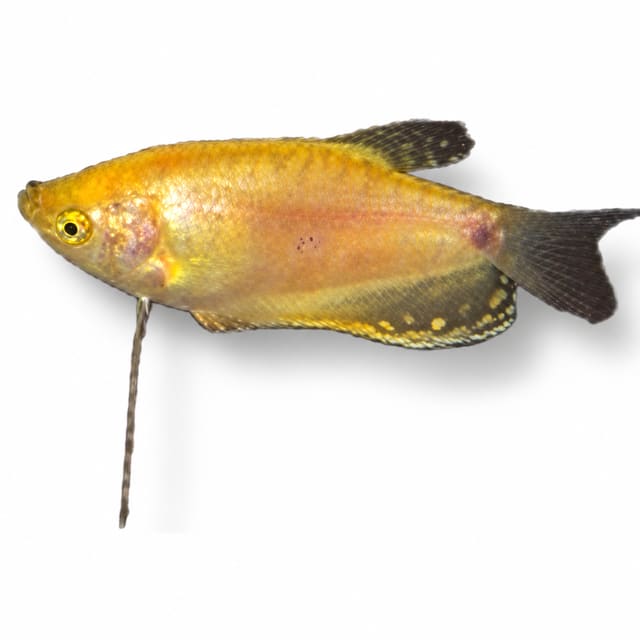
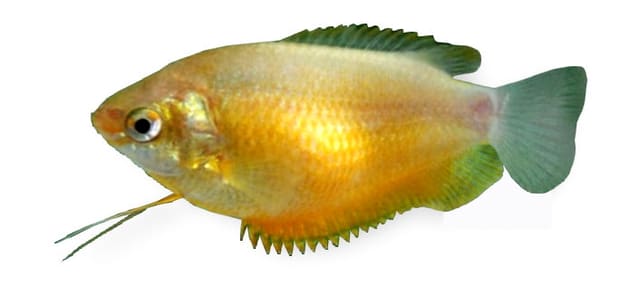
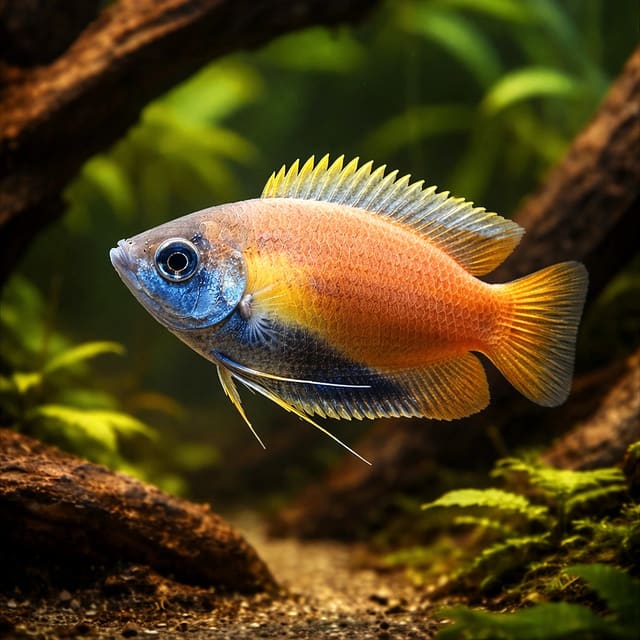
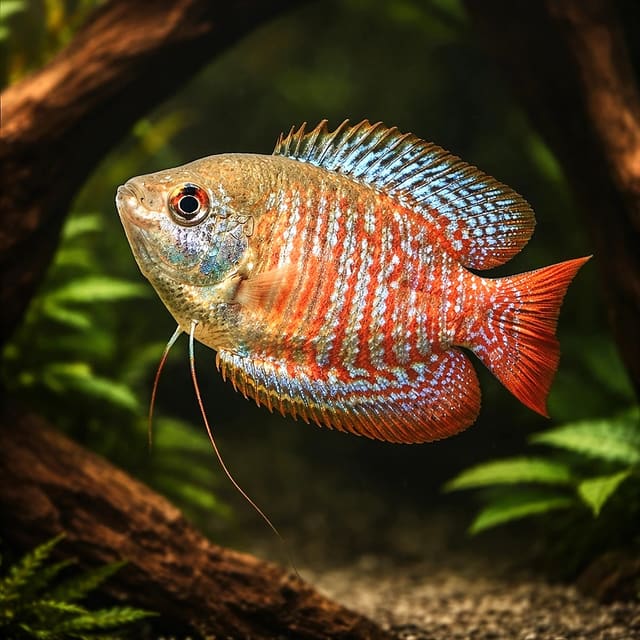
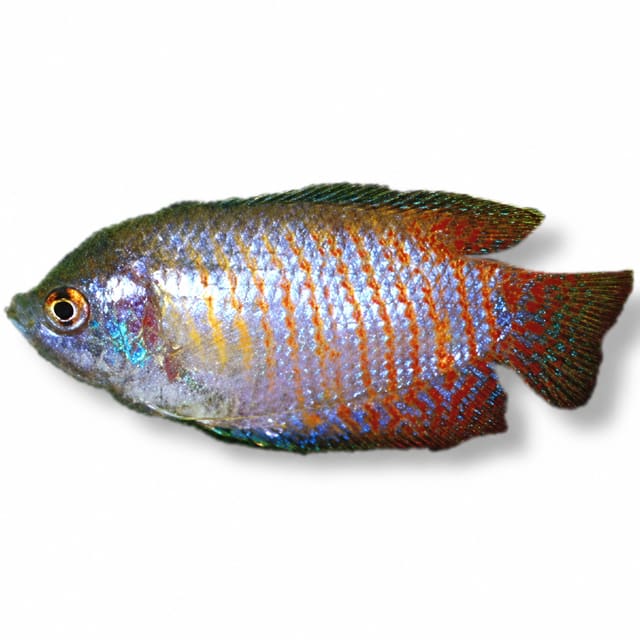
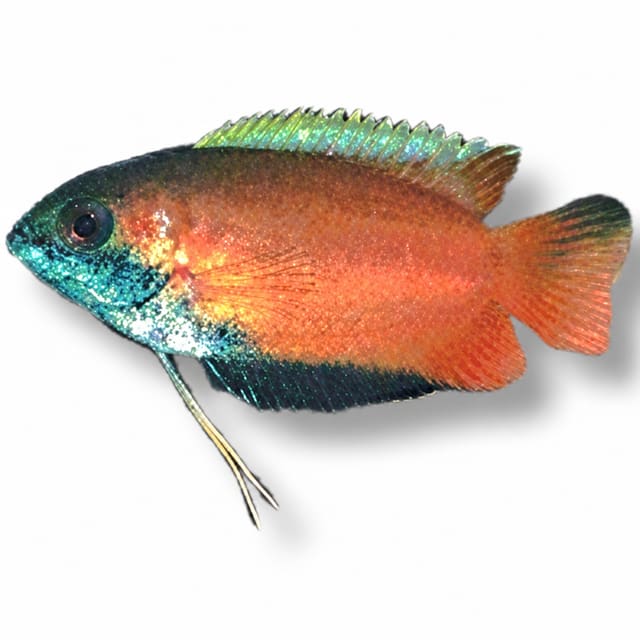
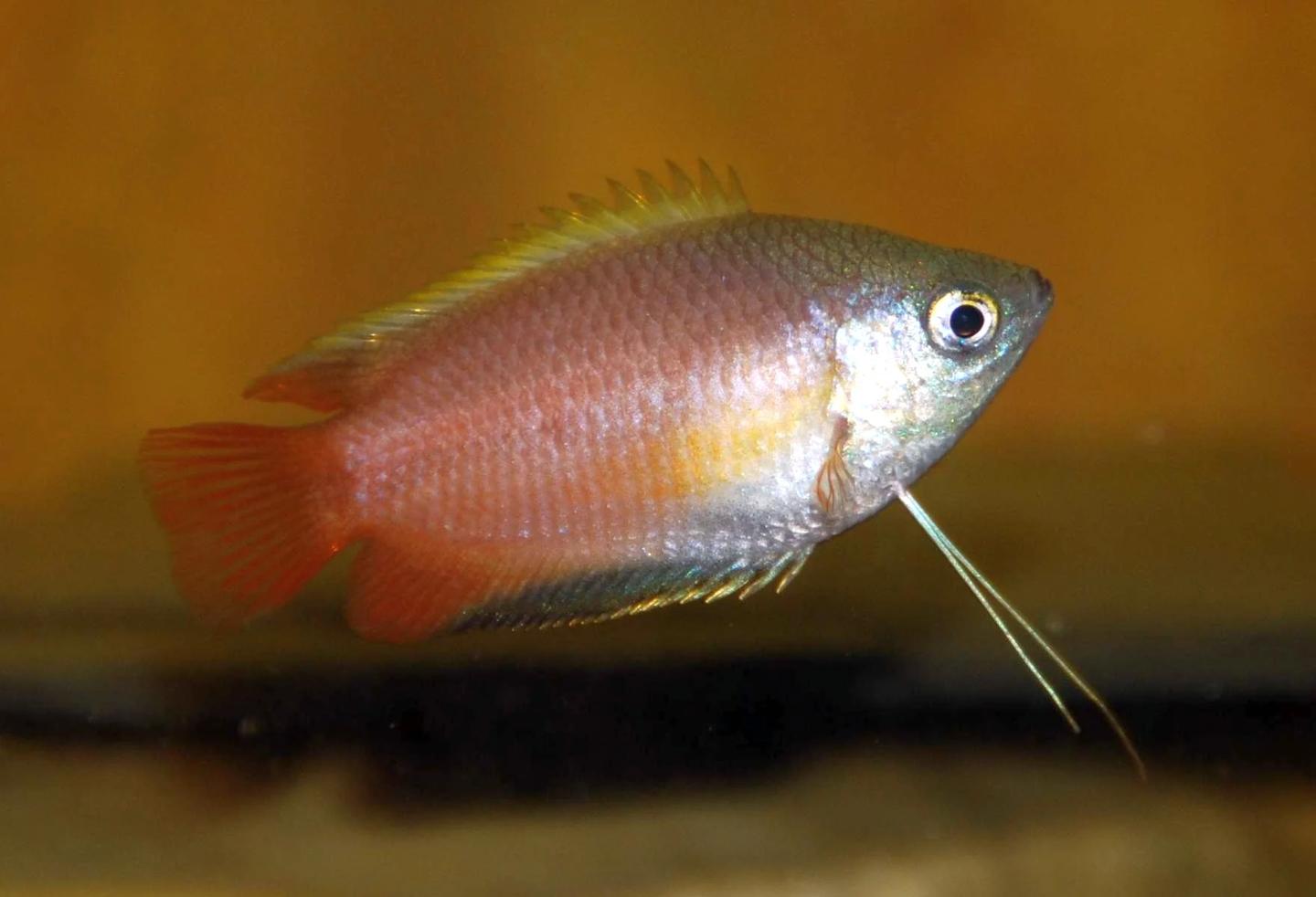
One male dwarf gourami in the red colour form we call blood red. Trichogaster lalius, formerly Colisa lalia, grows to about 9.5 cm, likes a calm, well-planted tank of 60 cm or more at around 25–27 °C, and should be the only male dwarf gourami in the tank.
Adult size is the maximum length this species reaches at full maturity (scientific sources). The livestock you receive will be younger and smaller. Product-photo provenance and any image-specific limitations are stated on the listing.
Trichogaster lalius
Save when buying multiple fish. Each quantity is one fish; sex and pair formation are not guaranteed unless the selected variant explicitly states them.
One male dwarf gourami in the red colour form we call blood red. Trichogaster lalius, formerly Colisa lalia, grows to about 9.5 cm, likes a calm, well-planted tank of 60 cm or more at around 25–27 °C, and should be the only male dwarf gourami in the tank.
Adult size is the maximum length this species reaches at full maturity (scientific sources). The livestock you receive will be younger and smaller. Product-photo provenance and any image-specific limitations are stated on the listing.
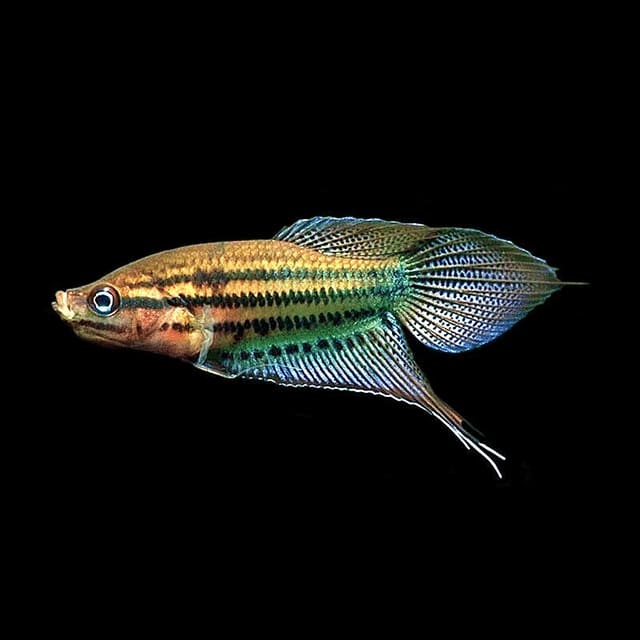
Start with a mature, filtered aquarium at least 60 cm long. Published size records disagree, and broad group guidance is not Honey-Gourami-specific, so verify Trichogaster chuna, the seller's adult-size advice and any claimed sexes before choosing one fish or a group.
Maintain these water conditions for optimal health and vibrant colors
You are buying one male dwarf gourami of the colour form we sell as blood red. It is sold singly, so each one you add to the basket is one male fish, and there is no size option to choose. Males are the colourful half of this species: Seriously Fish describes them as a little larger and much more colourful than the plainer, silvery females, and as they mature they grow extended dorsal and anal fins that females lack. That colour and finnage is what you are paying for, which is why this listing is for a male.
The scientific name in brackets is Trichogaster lalius, the name FishBase gives the dwarf gourami today. Many keepers still know it as Colisa lalia, which is the name this fish was listed under on our shop until now; it is the same species. FishBase also notes a 2022 study by Knight and colleagues that treats T. lalius as a junior synonym of Trichogaster fasciata. FishBase still heads its page with T. lalius, so that is the name we use. If the name changes again, the fish in the bag won't.
The dwarf gourami has collected a few names over the years. Wikipedia lists Colisa lalia, Trichopodus lalius, Polyacanthus lalius and Colisa unicolor among its synonyms, which is worth knowing if you are reading older books or the research papers quoted further down, several of which use Colisa lalia.
| Point | Detail |
|---|---|
| What is sold | One male, blood red colour form |
| Adult size | Up to 9.5 cm total length (FishBase) |
| Minimum tank | 60 cm long, heavily planted, little flow |
| Temperature | 25–27 °C, where FishBase and Seriously Fish agree |
| pH | 6.0–7.5 |
| Temperament | Shy and territorial; one male per tank |
| Diet | Omnivore; flake or granule plus small frozen foods |
| Lifespan | About 4–6 years (Wikipedia) |
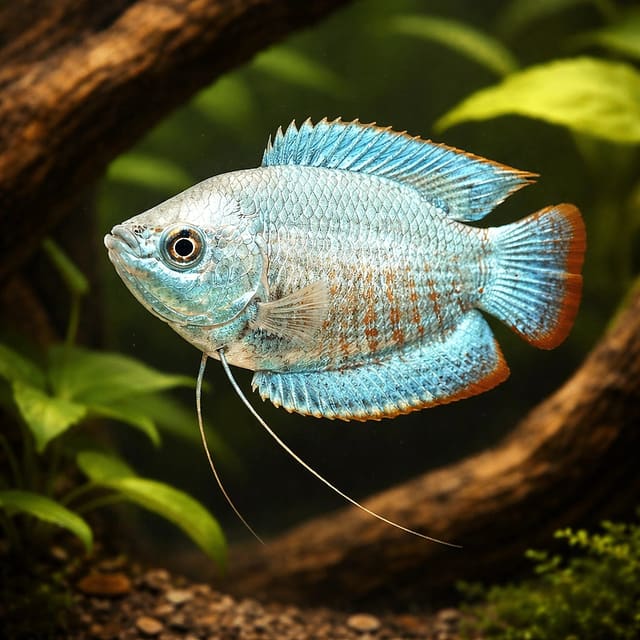
Wild-type males, according to Wikipedia, carry diagonal stripes of alternating blue and red. The all-red and all-blue fish in shops are aquarium varieties. Wikipedia lists powder blue, neon or turquoise blue, and a flame red it describes as the reddest variety, while Seriously Fish lists line-bred forms such as "Sunset", also sold as "Red" or "Robin", alongside the "Neon". Blood red is the name our stock records give this red male. We won't claim it is identical to any one of those named lines; what we can say is that it is a red-bred form of the same species, with the same needs as any other dwarf gourami.
Seriously Fish adds that the dwarf gouramis in the trade are now mass-produced, and that wild-caught fish are virtually unavailable. It also notes some debate over whether the bred colours match the brilliance of the natural form. That is a matter of taste; if you want a red fish, the bred forms are the way to get one.
A blood red male is a good centrepiece for a calm, planted community of small, peaceful fish. It is not a fish for a tank with bettas, other male dwarf gouramis, or large, boisterous or aggressive fish, and it is not the right choice if you can't quarantine new fish. The health section explains why we put that last point so plainly.
FishBase gives the natural range as Pakistan, India and Bangladesh, and Seriously Fish describes the species as widely distributed through Pakistan, northern India and Bangladesh, with feral populations established in Singapore, the USA and Colombia. FishBase and Wikipedia both describe its home as slow-moving streams, rivulets and lakes with plenty of vegetation. Seriously Fish paints a similar picture in more detail: sluggish, heavily vegetated ponds, swamps, ditches, streams and irrigation canals.
Those are warm, still, weedy waters, and the fish is built for them. Dwarf gouramis belong to the family Osphronemidae and, as FishBase records, they breathe air. Like their relatives, they have a labyrinth organ, which lets them take gulps of air from the surface; you'll see a blood red male rise every so often to do exactly that. It's normal behaviour, not a sign of distress, but it does mean the fish needs easy access to the surface and to the layer of air above it.
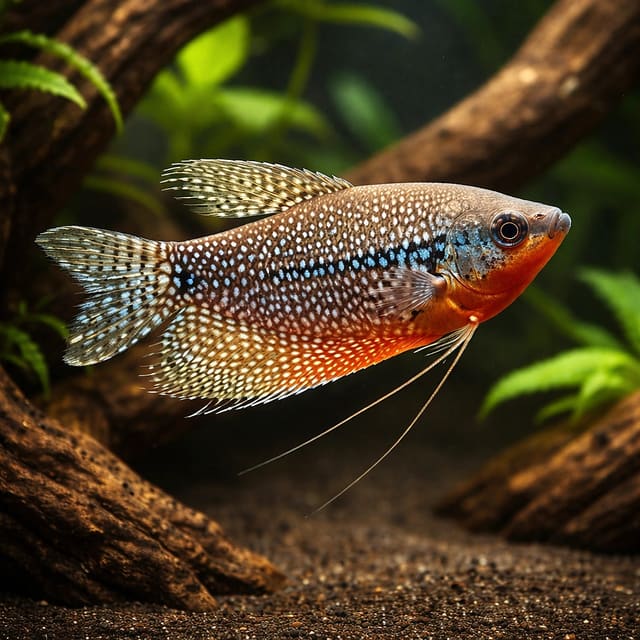
Two other features are worth knowing. The long, thread-like pelvic fins that a male trails beneath his body carry touch-sensitive cells, according to Wikipedia, so they work as feelers. Wikipedia also records that dwarf gouramis can project a stream of water from the mouth to hunt prey above the surface, to a maximum distance of about 5 cm, a trick better known in archerfish.
Put together, the habitat notes ask for a tank that is calm on top, thick with plants, and partly shaded by floating cover. Seriously Fish describes the species as shy, and a shy fish in a bare, brightly lit tank with a strong current has nowhere to retreat to.
FishBase gives a maximum of 9.5 cm total length for the dwarf gourami. Seriously Fish puts the maximum standard length, measured without the tail, at 88 mm, and Wikipedia gives 8.8 cm. These are maximums: plan the tank for an adult male of around 9 cm overall, with males the slightly larger sex.
Wikipedia notes that the male's dorsal fin is pointed while the female's is rounded, and Seriously Fish describes males developing extended dorsal and anal fins as they mature. Those fins, with the feeler-like pelvic fins, are the easiest way to recognise a mature male at a glance.
| Feature | Male | Female |
|---|---|---|
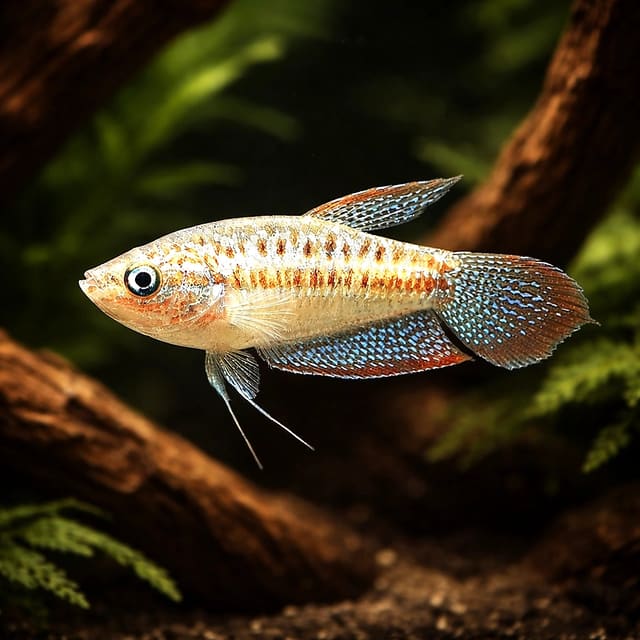
| Colour | Much more colourful (Seriously Fish); wild-type males striped blue and red (Wikipedia) | Plainer and silvery |
| Dorsal fin | Pointed (Wikipedia), extended as he matures (Seriously Fish) | Rounded or curved |
| Anal fin | Extended as he matures | Not extended |
| Size | A little larger | A little smaller |
So if you ever add a female to a tank with your blood red male, don't expect her to match him: a silvery fish with rounded fins is exactly what a healthy female dwarf gourami looks like.
Wikipedia gives a typical lifespan of about four to six years, adding that with good care some live longer. That's a fair commitment for a small fish, and a good reason to set the tank up properly from day one.
| Measure | Figure | Source |
|---|---|---|
| Maximum total length | 9.5 cm | FishBase |
| Maximum standard length | 88 mm | Seriously Fish |
| Length given | 8.8 cm | Wikipedia |
| Typical lifespan | About 4–6 years | Wikipedia |
Seriously Fish describes a 60 × 30 × 30 cm tank of about 56 litres as just about big enough for a pair, provided it is set up correctly, and FishBase gives a minimum tank length of 60 cm. Treat those as the floor for the gourami alone. Once you add a shoal of small companions and some bottom-dwellers, a longer tank gives everyone more room and makes the male's territorial streak far easier to live with.
It helps to sketch the community before you buy anything. Seriously Fish's advice that in a small tank the dwarf gourami should be treated as the primary inhabitant is a useful rule of thumb: build the tank around him, and choose the other fish to fill the spaces he doesn't use. A sensible outline for a 60 cm or larger planted tank would be one blood red male, a group of small, peaceful shoaling fish such as harlequin rasboras or small tetras, a few Corydoras or Otocinclus catfish, and perhaps cherry shrimp in the planting. All of those appear on Seriously Fish's list of suitable companions. Keep the total stocking modest, so the male isn't forced into constant contact with the others.
Fit a lid or cover glass and leave a gap of a few centimetres between the water and the cover. Seriously Fish stresses that gourami fry need access to a layer of warm, humid air, without which their labyrinth organ may not develop properly. An adult male doesn't have that problem, but a covered tank keeps the air he breathes at the surface warm and moist.
As always, the tank must be fully cycled before the fish arrives, with the heater and filter running and the water tested. A new tank with an immature filter is a hard start for any fish, and this species, for reasons covered further down, deserves a calm one.
The published water ranges for the dwarf gourami are fairly broad, but they don't agree exactly. Here they are side by side.
| Source | Temperature | pH | Hardness |
|---|---|---|---|
| FishBase | 25–28 °C | 6.0–8.0 | 5–19 dH |
| Seriously Fish | 22–27 °C | 6.0–7.5 | 2–18 dGH |
| Where they overlap | 25–27 °C | 6.0–7.5 | 5–18 dGH |
Our care specifications carry the FishBase figures. For day-to-day keeping, the overlap is the comfortable zone: a heater set somewhere between 25 and 27 °C, a pH between 6.0 and 7.5, and moderate hardness. Test your own tap water's hardness and pH rather than assuming. If you plan to breed, Seriously Fish suggests raising the temperature to 26.5–29 °C in the breeding tank, which is covered in the breeding section.
Good water won't make a fish immune to the virus discussed below, but stress is the enemy of every fish, and stable water is the cheapest stress reduction you can buy. If you're unsure whether your water suits, tell us your readings and we'll give you an honest view before you order.
In the wild the species is an omnivore. Seriously Fish describes it feeding on small invertebrates, algae and other aufwuchs, the film of tiny plants and animals that grows on submerged surfaces. Wikipedia also says dwarf gouramis prefer both algae-based foods and meaty foods.
In the aquarium they accept most foods. Seriously Fish recommends a good-quality dried food as the staple, with small live and frozen foods such as bloodworm on top. Wikipedia suggests an algae-based flake alongside freeze-dried bloodworm, tubifex and brine shrimp. A balanced week for a blood red male might look like this:
A mature planted tank helps here too. The film of algae and tiny organisms that grows on leaves, wood and glass is the aufwuchs Seriously Fish lists as part of the wild diet, and a mature planted tank grows plenty of it. That's one more reason not to scrub every surface spotless.
Feed small amounts that are eaten quickly. Seriously Fish warns against tank mates that would outcompete the dwarves for food, and it's worth watching at every feed to see that your gourami actually gets his share. If he doesn't, drop a pinch of food at the opposite end of the tank to draw the faster fish away.
A gourami that stops feeding, or that comes up for food and then turns away, is telling you something. Check the water first, then watch him closely; the health section explains what to look for.
Wikipedia calls the dwarf gourami generally peaceful but slightly territorial, and says it does well in most community aquariums. Seriously Fish adds the important detail: the species is both shy and territorial, so in a small tank it should be treated as the main inhabitant, and males can be very hard on females at times.
Seriously Fish puts this bluntly: buying two males is a recipe for disaster unless the tank is very large. Keep one blood red male as the only male dwarf gourami in the tank. If you like the idea of a different colour, choose either this fish or one of our other dwarf gouramis, such as the Neon Dwarf Gourami or a male from our Assorted Male Dwarf Gourami listing, rather than one of each in the same tank.
Seriously Fish also notes that male aggression is worse when the fish shares a tank with other anabantoids, bettas included, or with gaudy species such as guppies. That rules out keeping a betta and a dwarf gourami together.
This listing is for a male only, but some keepers like to add a female later. Seriously Fish's 60 cm, 56-litre figure is given for a pair, on the condition that the tank is set up correctly, and its warning that males can be very hard on females explains what that condition means in practice: thick planting from the substrate to the surface, so she can always put leaves between herself and him. If you see her pinned in a corner, torn-finned or kept away from food, separate them. A single male on his own in a community is a perfectly good way to keep this fish.
Seriously Fish suggests small, peaceful cyprinids such as the harlequin rasbora and other rasboras, certain barbs, loaches, cherry shrimp, tetras, Corydoras and Otocinclus catfish, and smaller rainbowfish. What those have in common is that they are small and peaceful, the opposite of the large, active fish Seriously Fish warns would intimidate the gourami or outcompete it for food.
Our own preference is to add the gourami last, once the rest of the community has settled, so that he arrives into an established group rather than claiming an empty tank. Plenty of planting matters more than open water: Seriously Fish describes plants as the refuges a female needs when a male harasses her, and the same cover helps any fish he takes an interest in.
Every honest account of the dwarf gourami has to mention dwarf gourami iridovirus, usually shortened to DGIV. Seriously Fish suggests that mass breeding may have led to a widespread epidemic of it, and the scientific literature backs up the concern. Here is what the research actually says.
DGIV belongs to the megalocytiviruses, a group within the iridoviruses. In their 2006 paper, Go and colleagues describe iridoviruses emerging over the previous 20 years to cause disease outbreaks in fish and amphibians in many countries, possibly originating in tropical Asia and spreading through trade in farmed food fish or ornamental fish. Their conclusion was that the global ornamental fish trade may help these viruses reach new host species in distant regions. That is the background to everything below: this is a trade-wide problem, documented in more than one country, not a story about one shop or one batch.
Seriously Fish also says the disease has proved untreatable, and that it can pass to other species sharing water with an infected gourami.
We can't promise that any dwarf gourami, from us or anyone else, is free of the virus; the studies above relied on laboratory testing, and a fish that looks healthy is not a tested fish. What you can do is reduce the risk to the fish you already keep:
Beyond the virus, the routine is the same as for any fish. Look at the gourami daily, ideally at feeding time: is he rising to breathe at a normal rhythm, taking food, swimming freely with fins spread? Clamped fins, hiding for days on end, refusing food, or white spots on the skin and fins all mean a closer look and a water test. Wikipedia's article on white spot notes the spots can be more than 1 mm across and that new arrivals and stress can trigger an outbreak, another reason quarantine earns its keep.
If white spot does appear, the timing matters. The same article explains that the parasite's whole cycle takes around a week at 25 °C, and that treatments reach it only while it is free in the water, not while it is embedded in the fish. A treatment stopped as soon as the visible spots fade can miss the next generation, so follow the full course on whatever product you use. If something seems wrong, contact us with what you're seeing and your water readings, and we'll help where we can.
This listing sells a male only, so breeding means finding a female separately. If you do, the published accounts are detailed. Seriously Fish describes the dwarf gourami as a bubble-nesting species and suggests a breeding tank of 45 to 60 cm with clumps of fine-leaved plants, floating plants such as Riccia, a water depth of about 15 to 20 cm and a temperature of 26.5–29 °C. Wikipedia suggests an even shallower 7–10 cm of water at around 28–30 °C, and notes that the male works bits of plant, twigs and other debris into his floating nest to hold it together.
Spawning takes the form of the typical anabantoid embrace, with the male wrapping himself around the female as eggs and sperm are released together. The figures for what follows vary between sources:
| FishBase | Seriously Fish | Wikipedia | |
|---|---|---|---|
| Eggs per spawning | About 600 | Up to 700 | 300–800 |
| Hatching | 12–24 hours | Usually within 36 hours | 12–24 hours |
| Free-swimming | Within 3 days | Not stated | After 3 days |
After spawning, the male takes over. FishBase says he guards the floating bubble nest, and Seriously Fish adds that he becomes completely intolerant of his mate, so take the female out once spawning is over. Both FishBase and Wikipedia advise removing the male too once the fry are free-swimming, to stop him eating them.
The fry are tiny. Seriously Fish recommends infusoria-type food for the first week or so, until they can take microworm or newly hatched brine shrimp, and stresses the need for the tightest-fitting cover on the breeding tank: the fry need warm, humid air above the water while their labyrinth organ develops. Raising a brood is a project in its own right, and none of it is promised by this listing, but it is one of the more rewarding things a gourami keeper can try.
Get the tank fully ready first: heater set, filter mature and running, water tested and the quarantine tank prepared if you're using one. Read our delivery and live-arrival information so the day holds no surprises, and make sure someone will be at the address to take in the parcel when it comes.
Your gourami is bagged with oxygen and boxed in insulated packaging, with a heat pack added when the weather needs one, then carried by a tracked courier licensed to transport live animals. We email you the confirmed delivery date along with the tracking details.
Before you cut the tape, start filming, and keep the recording running without a break while you open the box and show the fish in its sealed bag. That single continuous video is what our live-arrival guarantee relies on; photographs on their own aren't enough. If the fish is dead, dying or plainly in poor condition, send the video and your order number to hello@tropicalfishco.co.uk on the same day the parcel arrives. Subject to the guarantee terms, we will then replace the fish with your next order or refund it.
Keep the lighting subdued for the rest of the first day and leave the male alone to explore. Over the following week, watch how he breathes, whether he feeds and how he behaves. Try a small feed the day after arrival, and if he ignores it, try again later with something frozen. Test the water more often than usual during this period, and if he's in quarantine, run the full quarantine period before moving him into the main tank, even if he looks perfect. Once he is feeding well and exploring the whole tank, he has settled in.
The facts on this page come from these sources. The research papers are technical but the summaries are short and readable.
No reviews for this item yet. Bought one? Honest reviews only, good or bad.
What customers say about ordering from us
Easy website plenty of info on fish your buying great to pick a time slot
TRACEY DURRANT · 7 Oct 2026
Got some lovely fish thank you
Kevin Mackie · 7 Oct 2026
Reviews of our shop, collected by Judge.me, an independent third-party review collector. Newest first.