Easy
Cobalt Dwarf Gourami (Trichogaster lalius)
24–28°C · pH 6–7.5 · 40L
£10.99

Add colour and calm to your tank with Rainbow Dwarf Gourami. A striking moderate-care labyrinth fish, ideal for community aquariums. Provide gentle flow, warm stable water and planted cover.
Adult size is the maximum length this species reaches at full maturity (scientific sources). The livestock you receive will be younger and smaller — pick a size above for the actual shipping size. Product-photo provenance and any image-specific limitations are stated on the listing.
Trichogaster lalius
Save when buying multiple fish. Each quantity is one fish; sex and pair formation are not guaranteed unless the selected variant explicitly states them.
Add colour and calm to your tank with Rainbow Dwarf Gourami. A striking moderate-care labyrinth fish, ideal for community aquariums. Provide gentle flow, warm stable water and planted cover.
Adult size is the maximum length this species reaches at full maturity (scientific sources). The livestock you receive will be younger and smaller — pick a size above for the actual shipping size. Product-photo provenance and any image-specific limitations are stated on the listing.
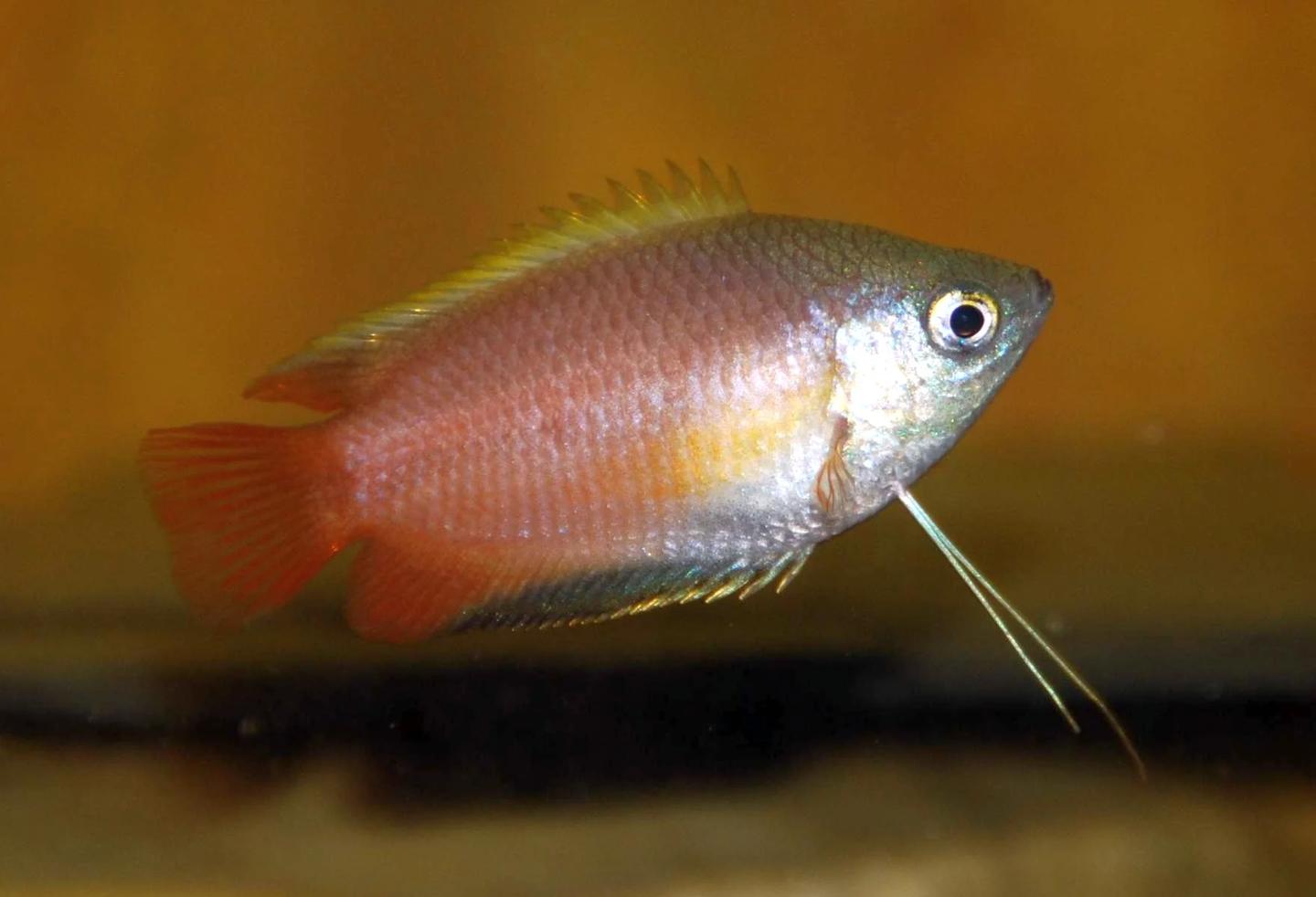
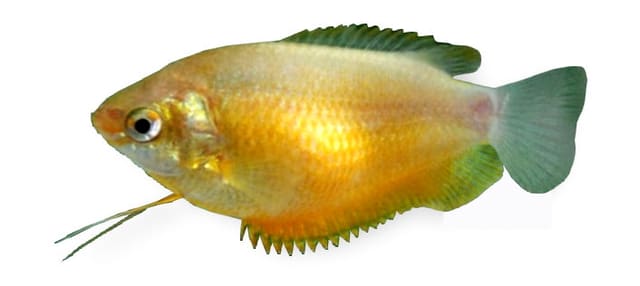
Start with a mature, filtered aquarium at least 60 cm long. Published size records disagree, and broad group guidance is not Honey-Gourami-specific, so verify Trichogaster chuna, the seller's adult-size advice and any claimed sexes before choosing one fish or a group.
Maintain these water conditions for optimal health and vibrant colors
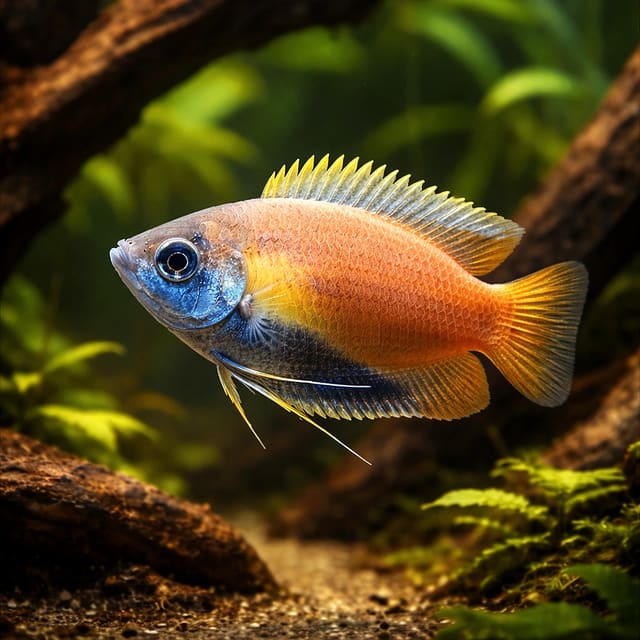
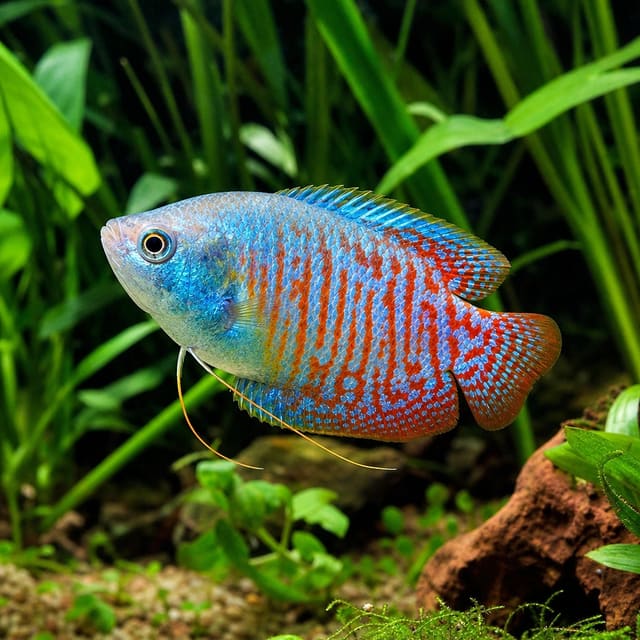
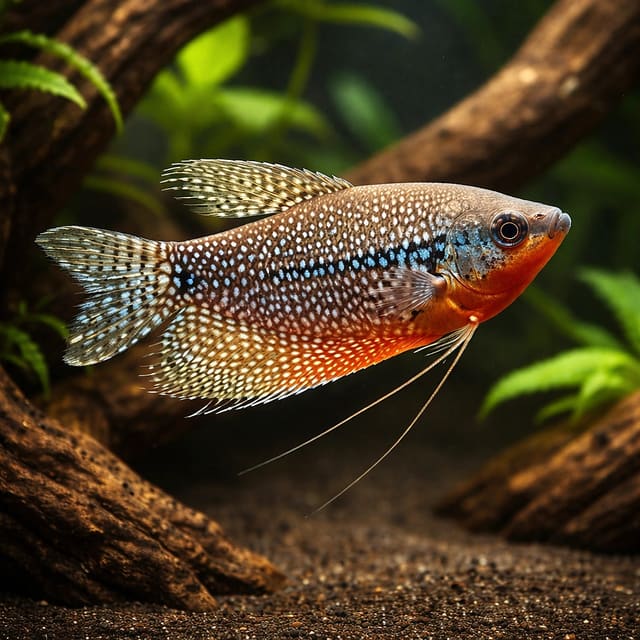
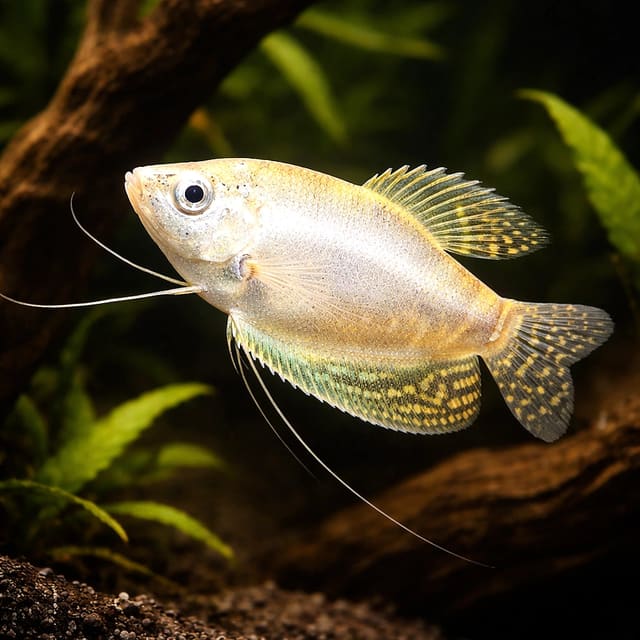
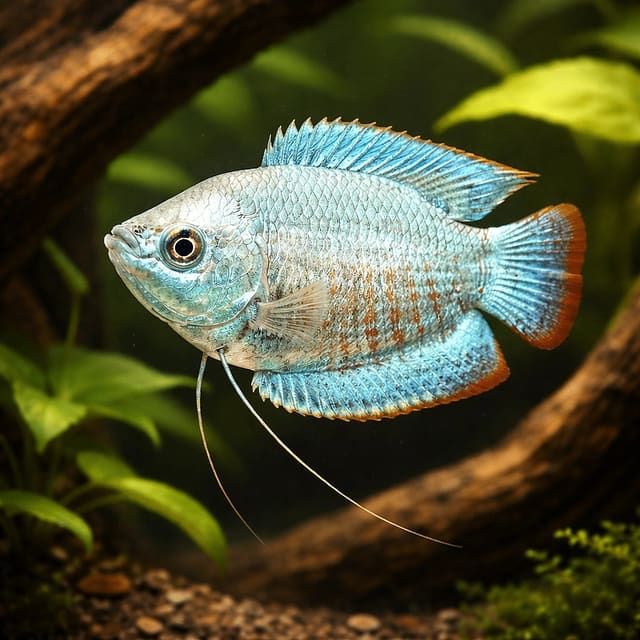
The Rainbow Dwarf Gourami, Trichogaster lalius, is one of the most eye-catching choices for a warm, planted aquarium. This captive-bred rainbow form combines the classic charm of a small labyrinth fish with bright red, blue, orange, and turquoise barring that stands out even in a busy community aquarium. Reaching around 6 cm as an adult, with a typical rainbow dwarf gourami lifespan of up to 4 years, it suits aquarists who want colour without needing a huge tank. It can suit a calm community tank when given cover and gentle flow.
This colour form rewards careful setup. It does especially well in a calm, warm, planted aquarium with gentle flow and plenty of cover. Its colour and surface behaviour make it a distinctive choice for a suitable mature aquarium.
Trichogaster lalius belongs to the gourami family, a group well known for the specialised labyrinth organ that allows these fish to breathe atmospheric air. In the aquarium hobby, the Rainbow Dwarf Gourami is a selectively bred colour form of the classic dwarf gourami rather than a separate wild species. Its small adult size, calm nature, and bright patterning have made it a long-standing favourite among keepers of freshwater gouramis and community tropical fish.
The original wild form of Trichogaster lalius comes from South Asia, especially slow-moving waters associated with India, Bangladesh, and nearby regions. In nature, dwarf gouramis are found in shallow ponds, floodplain pools, ditches, rice paddies, and gently flowing tributaries with dense marginal vegetation. The rainbow dwarf gourami habitat you see in aquaria today is based on that environment, even though the rainbow colour strain itself is captive bred.
These fish evolved in warm, often still water with lots of floating plants and overhead cover. That matters because the species is a labyrinth fish whose surface-breathing needs matter in aquarium care. The labyrinth organ lets it gulp air from the surface, so a calm upper layer and access to warm, humid air above the waterline are important. In the wild, their natural diet includes tiny crustaceans, insect larvae, zooplankton, and bits of plant matter. That is why a varied rainbow dwarf gourami diet works better than feeding only one dry food.
Wild habitats are usually soft to moderately hard, slightly acidic to neutral, and rich in plant cover. For home aquariums, the most useful numbers are the rainbow dwarf gourami pH level of 6.0 to 7.5, rainbow dwarf gourami water hardness of 5 to 15 dGH, and a stable rainbow dwarf gourami water temperature of 24 to 28°C. Matching these rainbow dwarf gourami ideal conditions helps with colour, appetite, and immune strength.
The rainbow form is a domestic colour variety of dwarf gourami; keep its aquarium conditions close to those suited to the species. If you are building a natural-style aquarium, think leaf cover, dark substrate, rooted stems, and floating plants. A well-designed rainbow dwarf gourami in planted tank display often shows the best behaviour and the strongest colour contrast.
Mimicking the natural habitat of dwarf gouramis improves confidence and colour. Use floating plants to soften the light, keep surface flow gentle, and leave easy access to the surface so the fish can use its labyrinth organ normally.
A thoughtful rainbow dwarf gourami tank setup is the difference between a fish that merely survives and one that displays full colour, calm behaviour, and regular feeding response. Although 40 litres is a practical minimum for one fish. In practice, the ideal rainbow dwarf gourami tank size for a community aquarium is 60 litres or more, especially if you want stable water quality and a wider choice of rainbow dwarf gourami compatible fish.
For one fish, 40 litres can work with planting and consistent maintenance. Groups need more space, visual barriers and close observation. If you are wondering how many rainbow dwarf gourami in a tank, the answer depends on space and sight breaks. Two males in a small aquarium usually leads to constant display behaviour and stress, so one male per tank is the safer plan unless the aquarium is much larger and densely decorated.
The best rainbow dwarf gourami water parameters are stable rather than extreme. Aim for a rainbow dwarf gourami temperature of 24-28°C, with 25-26°C being ideal for general community keeping. The recommended rainbow dwarf gourami pH level is 6.0-7.5, and rainbow dwarf gourami water hardness should sit between 5 and 15 dGH. Keep the values stable during routine maintenance. Sudden swings are more harmful than being slightly above or below the midpoint.
Rainbow dwarf gourami filtration needs are modest, but water quality still matters. Use a gentle internal filter, small external filter with spray bar, or a mature sponge filter in smaller setups. Strong current can make them skittish and may interfere with surface feeding and bubble nest building. The best flow is enough to keep oxygen and biological filtration stable without turning the tank into a river. They prefer gentler flow than many active schooling fish.
Use plants and sheltered areas to reduce stress, leaving open swimming space and gentle surface access for this labyrinth fish.
Moderate lighting works best. Very bright light without plant cover can make them hide near the back. A 6-8 hour photoperiod is usually enough in a planted community tank, extended only if your plants require it. In a display aquarium, a planted layout and dark background can make this fish look like one of the standout choices in tropical fish uk online listings.
Cycle the tank fully and confirm stable water tests before adding fish. Rainbow Dwarf Gourami are more likely to settle quickly in mature aquariums with stable temperature, low nitrate, and established plant growth.
The rainbow dwarf gourami diet is omnivorous, but these fish lean heavily toward small protein-rich foods in day-to-day feeding. In nature they pick at insect larvae, tiny crustaceans, and surface prey. In the aquarium, a good rainbow dwarf gourami feeding guide starts with a quality micro pellet or fine tropical flake, then adds frozen foods several times per week for condition and colour. Offer a varied diet and watch that the fish feeds confidently.
Use a small floating or slow-sinking pellet designed for community tropicals, or a fine flake that stays near the upper water level. Because they feed mostly in the top half of the tank, food should remain available there for a short time. Have suitable food ready before the fish arrives.
For best condition, add frozen bloodworm, daphnia, cyclops, and brine shrimp 2-4 times per week. These foods support body condition, courtship, and colour intensity. Offer small foods patiently to a shy new arrival.
Before spawning, increase live or frozen foods slightly. Brine shrimp and bloodworm are especially useful during rainbow dwarf gourami breeding preparation. Avoid oversized foods, mammal meats, or anything likely to foul the surface film.
Feed small amounts once or twice daily. Offer only what they can finish in 30-60 seconds. Overfeeding can quickly spoil water quality, especially in a new aquarium. A lightly fed gourami in clean water will usually look better than a heavily fed fish in a tank with rising nitrate.
| Time | Food | Amount |
|---|---|---|
| Morning | Micro pellet or fine flake | Small pinch |
| Evening | Frozen brine shrimp or bloodworm | Very small portion |
People often ask, “Can Rainbow Dwarf Gourami eat only flakes?” They can survive on them, but they rarely thrive long term without variety. Another common question is, “Do they eat from the bottom?” Usually not by choice; they are upper-level feeders and may ignore food that drops too fast. Choose food small enough for its mouth and remove leftovers.
Overfeeding causes ammonia spikes, oily surface film, and digestive stress. Because Rainbow Dwarf Gourami feed near the surface, excess food is especially likely to linger where they breathe and feed.
A useful comparison species if you want to observe how similar gouramis respond to the same staple foods and tank routine.
Another dwarf gourami colour form for keepers interested in similar feeding habits but a different display look.
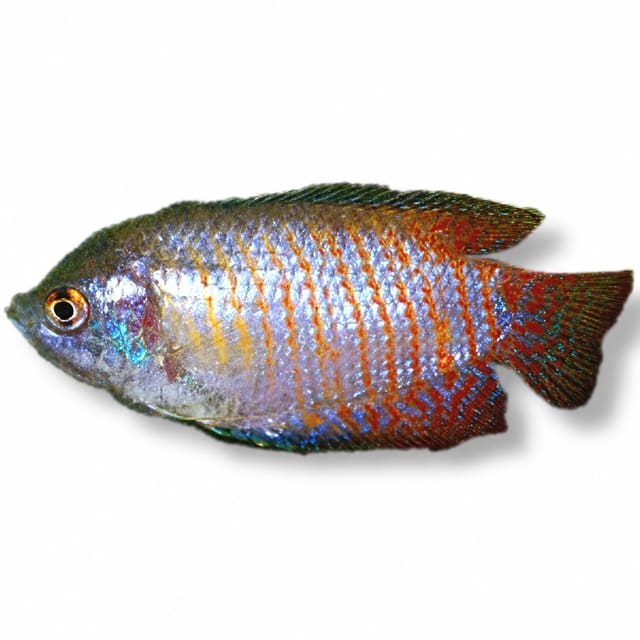
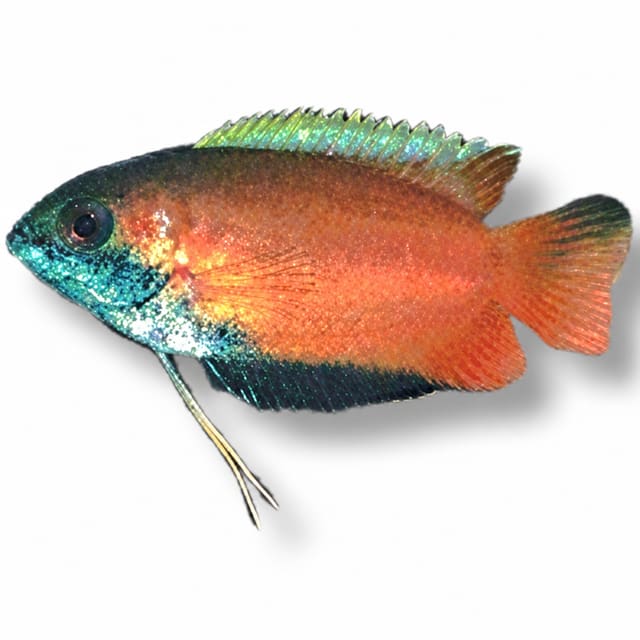
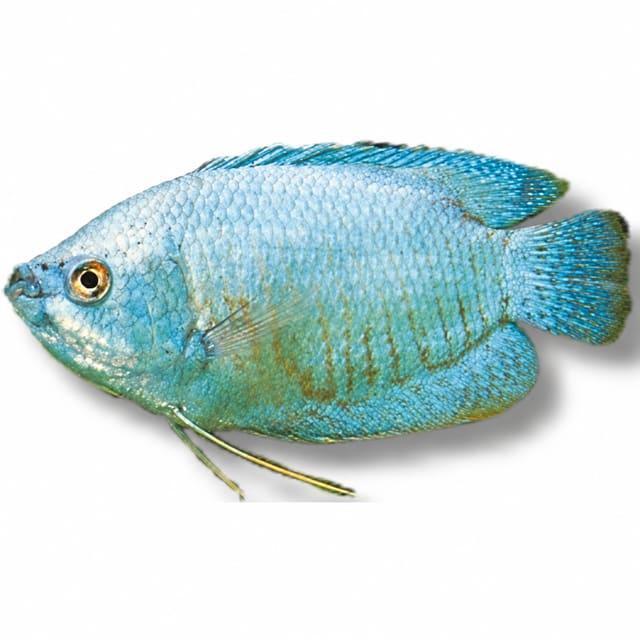
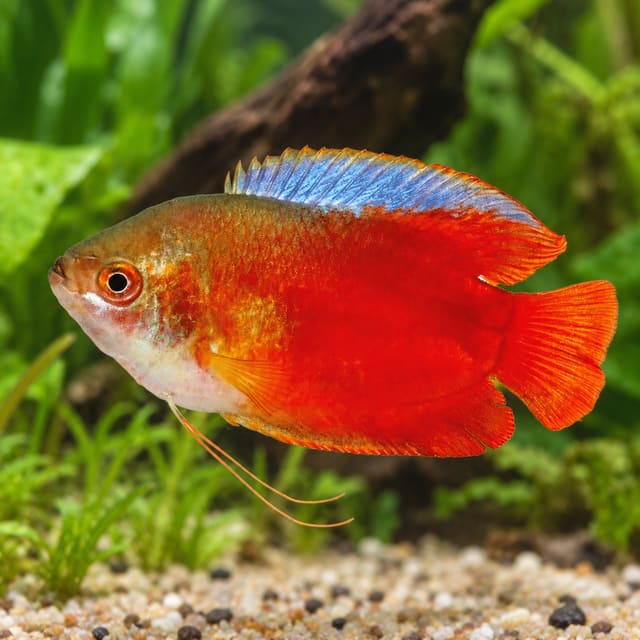
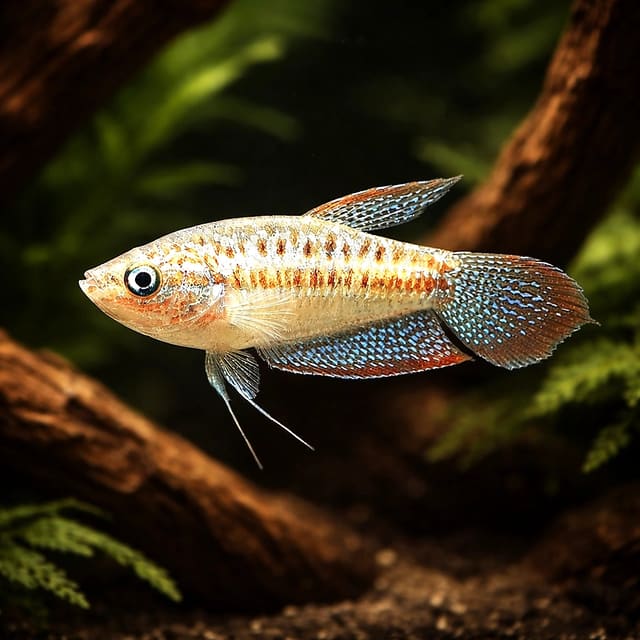
The Rainbow Dwarf Gourami is a compact, laterally compressed fish with a rounded body, long anal fin, and thread-like pelvic feelers used to explore its surroundings. Adult rainbow dwarf gourami size is usually around 5-6 cm, making it suitable for smaller community aquariums. The rainbow variety is prized for its layered colour pattern: metallic blue or turquoise bars mixed with red, orange, and warm copper tones across the body and fins.
Males are the show fish. In the rainbow dwarf gourami male vs female comparison, males are brighter, slimmer, and usually have a more pointed dorsal fin. Females tend to be smaller, plainer, and more silver-grey with softer patterning. This matters both for display and for pairing. If you are asking whether this fish is a good centrepiece for a modest aquarium, the answer is yes; one mature male can dominate the visual focus of a planted 60-litre tank.
Many shoppers also compare rainbow dwarf gourami vs dwarf gourami. In practice, the rainbow fish is a colour morph of the same species, selected for a more varied palette than the standard striped form. Compared with a flame dwarf gourami, the rainbow has more mixed barring and cooler blue tones. In a dark aquascape, the effect is striking, especially when viewed under moderate full-spectrum lighting. Colour and fin detail vary between individual fish and with lighting and condition.
One of the most common customer questions is simple: rainbow dwarf gourami with other fish—yes or no? In most cases, yes. This is often considered the best gourami for community tank keepers who want a manageable species with strong colour but less bulk than larger gouramis. The key is choosing peaceful companions that do not nip fins, outcompete them at feeding time, or challenge them in the upper levels of the tank.
Choose peaceful small fish with overlapping water needs. Watch feeding and behaviour, and separate fish if chasing or fin damage develops.
Avoid fin nippers, large predators and other assertive gouramis that may compete for the same space.
In a 60-litre planted tank, one male Rainbow Dwarf Gourami with a shoal of small rasboras and a group of Corydoras can work very well. A larger, well-planted aquarium can give groups more room, but watch for territorial behaviour and separate fish if needed. This answers another common question: “Are Rainbow Dwarf Gourami good for beginners?” Yes, rainbow dwarf gourami for beginners can work very well if the tank is mature and not overstocked.
| Species | Compatible? | Notes |
|---|---|---|
| Dwarf Gourami | ⚠️ Caution | Too similar; male rivalry likely in smaller tanks |
| Croaking Gourami | ⚠️ Caution | Possible in larger planted tanks, but monitor territory and feeding |
| Gold Giant Gourami | ❌ Avoid | Far too large and unsuitable for the same setup |
Always quarantine new arrivals for 2-4 weeks before adding them to a gourami community. Labyrinth fish are easily stressed by sudden disease introductions and may stop feeding before obvious symptoms appear.
Rainbow dwarf gourami breeding is very achievable, but it is best described as moderate rather than effortless. The male builds a bubble nest near the surface, usually under floating plants or tucked into a quiet corner. If you are researching rainbow dwarf gourami male vs female, this is where the difference becomes useful: the male is more colourful and nest-oriented, while the female is rounder when carrying eggs.
Use a separate 40-litre breeding tank with very gentle filtration, shallow water if desired, floating plants, and a stable rainbow dwarf gourami water temperature around 27-28°C. Condition the pair on frozen and live foods. The best rainbow dwarf gourami ideal conditions for spawning include calm surface water and minimal disturbance.
The male will display under the nest, intensify in colour, and try to guide the female beneath it. During spawning, eggs are released and placed into the bubble nest. This is a normal part of rainbow dwarf gourami behaviour and one of the reasons labyrinth fish remain so interesting to breed.
After spawning, remove the female. The male guards the nest and returns falling eggs. Hatching usually occurs in about 24-36 hours depending on temperature. Once fry become free swimming, remove the male as well or he may begin to view them as food.
Start with infusoria or powdered fry food, then move onto newly hatched brine shrimp as they grow. Keep the tank covered so the air above the water stays warm and humid; this helps proper labyrinth organ development. This is one of the most overlooked parts of how to care for rainbow dwarf gourami fry.
The biggest issues are too much current, poor conditioning, and removing the adults at the wrong time. Dwarf gouramis can show bubble-nesting behaviour in a suitable small breeding aquarium.
Use a tight-fitting lid and keep room drafts away from the breeding tank. Warm, humid air above the surface is important for healthy labyrinth organ development in young fry, and sudden cool air can cause losses even when water quality is good.
The right gourami depends on tank size, temperament and the community already present. The answer depends on tank size, temperament goals, and the look you want. This fish is ideal for smaller planted community aquariums where colour and personality matter more than sheer size.
| Feature | Rainbow Dwarf Gourami | Honey Gourami |
|---|---|---|
| Max Size | 6 cm | 5-6 cm |
| Care Level | Easy to moderate | Easy |
| Temperature | 24-28°C | 24-28°C |
| Best For | Bright centrepiece in planted community tanks | Very peaceful soft-colour community setups |
| Feature | Rainbow Dwarf Gourami | Three-Spot Gourami |
|---|---|---|
| Max Size | 6 cm | 12-15 cm |
| Care Level | Easy to moderate | Moderate |
| Temperature | 24-28°C | 24-28°C |
| Best For | Smaller calm communities | Larger tanks with robust tank mates |
In the rainbow dwarf gourami vs betta comparison, the gourami is usually easier to place in a peaceful community because it is less likely to be intensely territorial than a male betta, though individual temperament varies. In the rainbow dwarf gourami vs honey gourami comparison, the honey gourami is usually gentler and subtler in colour, while the rainbow is brighter and more dramatic. The rainbow form combines bright colour with a relatively small adult size, provided the aquarium is calm.
Good rainbow dwarf gourami health starts with stable water, low stress, and careful sourcing. A healthy fish should show clear eyes, intact fins, steady surface confidence, and strong interest in food. It should not gasp constantly, clamp fins, hide all day, or show faded colour. Because this species uses the surface regularly, changes in breathing behaviour are often one of the first signs that something is wrong.
Rainbow dwarf gourami diseases can include bacterial infections, fungal issues, external parasites such as ich, and stress-related wasting. Dwarf gouramis have a reputation for being sensitive to poor water quality and rough transport, which is why quarantine and acclimation matter. Watch for white spots, swollen abdomen, ulcers, rapid breathing, or refusal to feed. If a fish stays near the surface but seems unable to settle, check ammonia, nitrite, and temperature first.
Most problems are prevented by maintaining the correct rainbow dwarf gourami water parameters, avoiding overcrowding, and feeding a varied diet. Weekly water changes of 25-30% are a strong baseline. Use a separate treatment tank whenever possible, especially in mixed communities. Keep in mind that treatment choice depends on symptoms; do not medicate blindly. Prevention is far better than reacting after appetite and colour have already dropped.
A simple bare-bottom quarantine tank with heater, sponge filter, and some cover is enough. Observe for 2-4 weeks before adding the fish to the main display. Quarantine helps protect an established community. People often ask, “Why is my Rainbow Dwarf Gourami hiding?” The usual reasons are stress, excessive current, aggressive tank mates, or unstable water quality.
Never use medication without checking whether it is safe for your full stock list. If shrimp or snails share the system, some treatments can be harmful even when the gourami itself would tolerate them.
Rainbow dwarf gourami behaviour is one of the main reasons people enjoy this species. They are curious, observant fish that patrol the upper and middle levels, inspect plants with their feeler-like pelvic fins, and often learn the routine of the room. A settled male will display gently, flare at his reflection from time to time, and investigate food eagerly at the surface.
They are peaceful overall, but not completely passive. Males can be territorial toward similar-shaped fish, especially other male gouramis. That is why the answer to rainbow dwarf gourami with other fish depends so much on layout and stocking. In a planted aquarium with broken sight lines, they are usually calm and confident. In a bare tank with too much light and no cover, they may hide or become edgy.
If you want to encourage natural behaviour, use floating plants, warm stable water, and a quiet upper zone. This species is ideal for fishkeepers who enjoy watching subtle interaction rather than nonstop speed. That balance of colour and quiet behaviour is its main appeal.
Check the current size option and livestock delivery terms before ordering. Provide a mature, calm aquarium so a newly arrived gourami can settle with minimal stress.
Review the current livestock delivery and weather policy before placing an order. Plan arrival for a time when you can introduce and observe the fish calmly. Good packing and stable fish are more important than a bargain that arrives stressed.
Check the live price for the selected size option. A mature tank and gentle introduction help reduce arrival stress. Have the tank fully cycled, heated and planted before arrival. That preparation makes acclimation smoother and reduces stress immediately.
Use the care guidance here to plan setup, feeding and compatibility. This listing is backed by practical care guidance on acclimation, feeding, and compatibility so you can keep your new fish in the right conditions from day one. The species can suit a peaceful planted community where its water and space needs are met.
No reviews for this item yet. Bought one? Honest reviews only, good or bad.
What customers say about ordering from us
I have a small group of long finned mountain minnows. So was delighted to be able to order ten of this variety to increase the genetics in my tank . The ones I recieved are healthy but it’s to early to give a verdict on wether they are of a long finned type since they are small currently.
Gordon Walker · 23 Sept 2026
100% success travel and "installation". Pleased with quality of purchase. The Siamese fighter a bit "shy" so have not yet seen him at his best yet but looking good. Happy customer. GG
George E Garratt · 21 Sept 2026
Reviews of our shop, collected by Judge.me, an independent third-party review collector. Newest first.