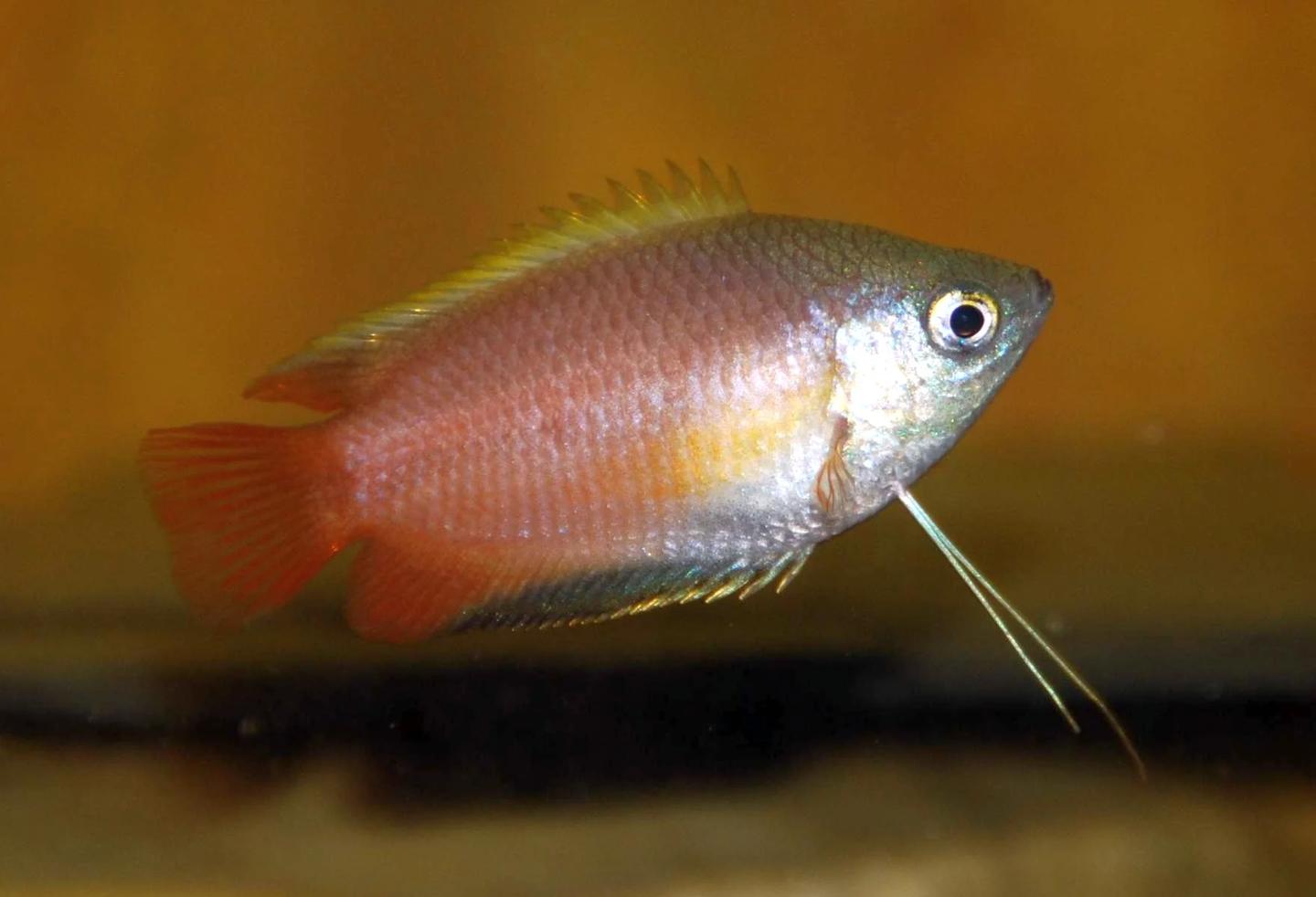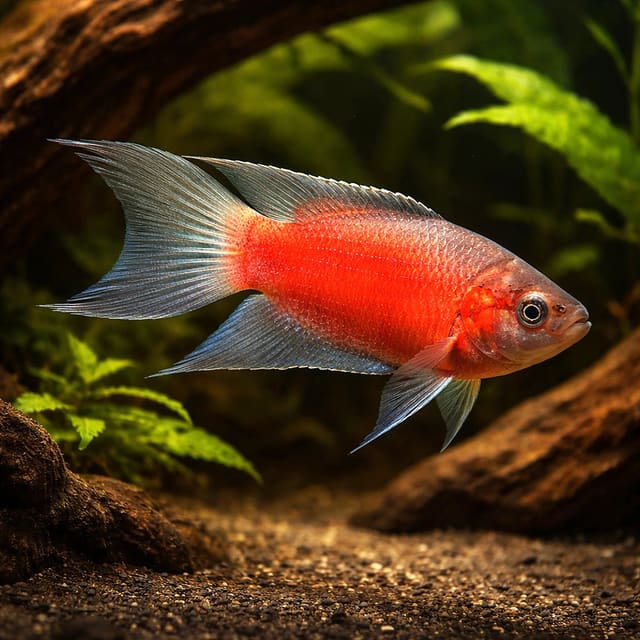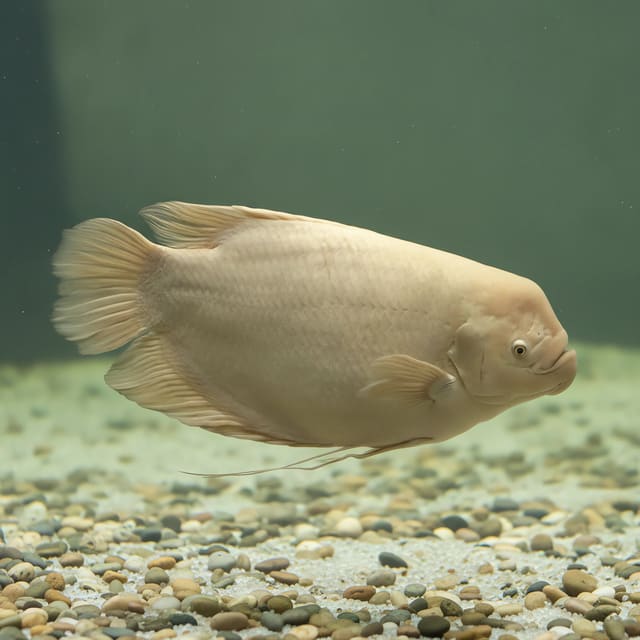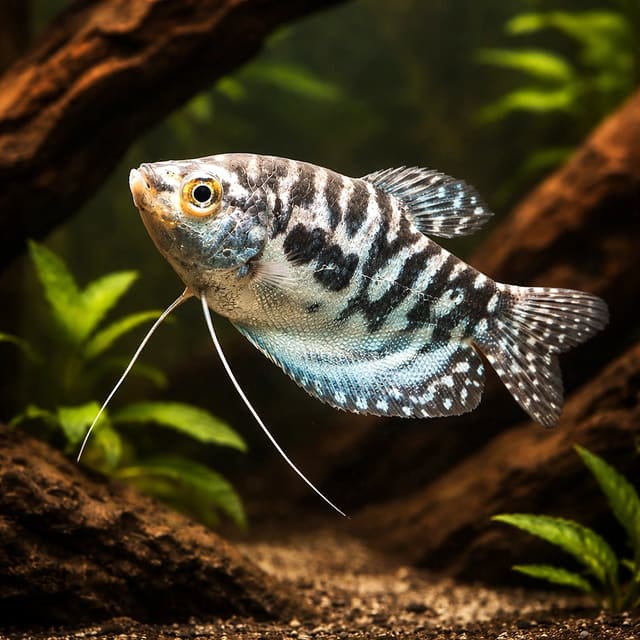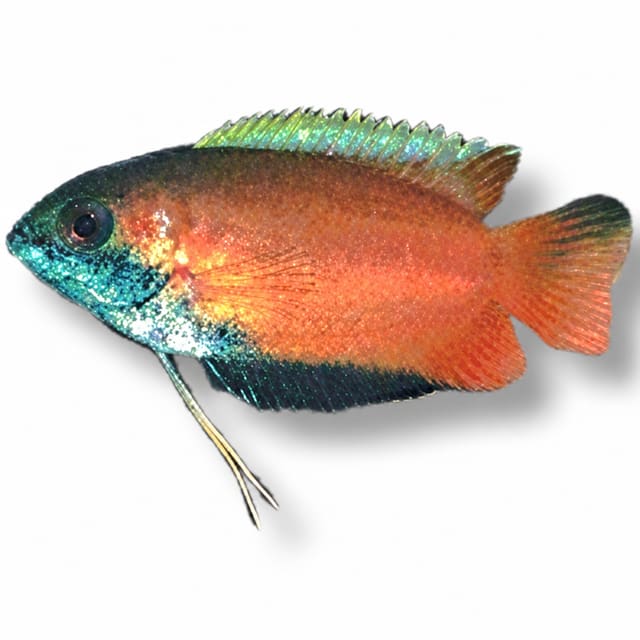
Honey Dwarf Gourami Red (Colisa chuna red)
20–25°C · pH 6.5–7.5 · 30L

A bold, colourful labyrinth fish with real character for peaceful community aquariums. Reaches about 9 cm, easy-to-moderate care, striking orange colour. Buy live with UK delivery.
Adult size is the maximum length this species reaches at full maturity (scientific sources). The livestock you receive will be younger and smaller — pick a size variant above for the actual shipping size. Photos are AI-enhanced, so the animal may show subtle colour or marking differences.
Colisa labiosa
Orange Thick-Lipped Gourami bond and breed in male/female pairs — buying a pair gives them the social structure they need.
A bold, colourful labyrinth fish with real character for peaceful community aquariums. Reaches about 9 cm, easy-to-moderate care, striking orange colour. Buy live with UK delivery.
Adult size is the maximum length this species reaches at full maturity (scientific sources). The livestock you receive will be younger and smaller — pick a size variant above for the actual shipping size. Photos are AI-enhanced, so the animal may show subtle colour or marking differences.
Maintain these water conditions for optimal health and vibrant colors
The Orange Thick-Lipped Gourami (Colisa labiosa, today more often listed under its accepted name Trichogaster labiosa) is a species that quietly wins people over. The glowing orange body and rounded profile make it look like a softer, sturdier alternative to more delicate gouramis, but the real charm shows with a little watching: calm patrols through the upper levels, curious surface feeding, and the classic behaviour of a true labyrinth fish that labyrinth fish UK aquarists love for character as much as colour. Native to Myanmar, this peaceful species reaches around 9 cm, lives for about 5 years, and is an easy choice among tropical fish UK hobbyists keep in a relaxed community aquarium.
If you are looking for an orange thick-lipped gourami for sale UK, weighing up the orange thick-lipped gourami price UK, or comparing options when you buy live fish online UK, this is a species worth serious attention. It suits many community tropical fish UK setups, thrives in a well-planted aquarium, and is regularly recommended as one of the best gourami for a community tank because it is less fragile than some dwarf gourami strains. It also sits comfortably among the colourful tropical fish UK keepers reach for when they want warmth and personality in the top half of the tank. Whether you are planning a first planted aquarium or refining an established display, the Orange Thick-Lipped Gourami delivers colour and movement without the constant tension of more aggressive species, settling in as a reliable centrepiece fish.
This fish belongs to the gourami group within the labyrinth fishes, a branch of freshwater species able to breathe atmospheric air through a specialised labyrinth organ. The names Colisa labiosa and Trichogaster labiosa refer to the same species; older literature and the aquarium trade often use Colisa, while current taxonomy places it in Trichogaster. The orange form, frequently sold as Trichogaster Labiosa «Orange» is a bright but manageable choice among tropical fish UK freshwater species. Related aquarium favourites include the Dwarf Gourami, Cobalt Dwarf Gourami, and larger gouramis such as the Silver Platinum Three-Spot Gourami.
The orange thick-lipped gourami habitat traces back to Myanmar, where wild Trichogaster labiosa live in slow-moving freshwater: quiet ponds, vegetated ditches, floodplain pools, and sluggish streams with dense marginal plant growth. These waters are warm, soft to moderately hard, and rich in cover, which is why this species does so well in calm aquariums with floating plants, shaded areas, and gentle filtration.
In the wild these fish spend much of their time near the surface and upper-middle water layers, and as labyrinth fish they can gulp air from the surface when oxygen runs low. That does not make poor water quality acceptable, but it explains why they tolerate still, oxygen-variable habitats better than many other species. Their natural diet includes small aquatic invertebrates, insect larvae, biofilm, and plant matter, and that broad feeding style is one reason they adapt so readily to aquarium life. For keepers researching the best tropical fish for beginners UK, this species sits in a sweet spot: more personality than many tetras, less volatility than some other gouramis.
Because the orange strain is bred for the aquarium trade, its colour is more intense than the wild form, but the underlying needs stay tied to that natural habitat: warm water, cover, subdued flow, and easy access to the surface. When choosing stock, look for fish that show full finnage, rounded bellies, and calm but alert behaviour. Healthy fish should already be feeding confidently and adapting well to indoor aquariums.
Mimicking the natural habitat of Trichogaster labiosa improves colour, confidence, and feeding response. A tank with floating cover, darker substrate, and low to moderate current usually produces calmer fish and stronger orange tones than a bright, bare aquarium.
A good orange thick-lipped gourami tank setup starts with understanding how this fish uses space. Although it is peaceful, it is still a territorial labyrinth fish, especially males around the surface. The orange thick-lipped gourami minimum tank size is 80 litres, the practical baseline for a pair or trio. For a mixed community, a larger aquarium of 100-125 litres gives much better territory separation and more stable water quality. A larger tank is easier to heat, easier to filter, and less prone to sudden aggression.
The ideal orange thick-lipped gourami tank size depends on group structure. One male with two females works well in many planted aquariums; a bonded pair can also work if extra cover is provided. If you are wondering how many orange thick-lipped gourami in a tank is sensible, avoid crowding multiple males into the minimum volume and think in terms of surface territory as much as litres. A long tank is usually better than a tall one, because this species is not a heavy waste producer but does need calm zones, visual breaks, and room near the top.
The correct orange thick-lipped gourami water temperature is 22-28°C, with 24-26°C a very comfortable everyday range for community keeping. This is standard tropical fish tank temperature territory, and the recommended orange thick-lipped gourami temperature also suits many rasboras, corydoras, and peaceful tetras. pH should sit between 6.0 and 7.5, while orange thick-lipped gourami water hardness is best around 4-15 dGH. They are adaptable, but sudden swings are far more stressful than a stable reading slightly outside the ideal midpoint, and most UK keepers can maintain them in mixed tap-water conditions as long as extremes are avoided.
This species should always be kept in a filtered aquarium. Its labyrinth organ helps it breathe air, not survive ammonia or nitrite. Use a gentle internal filter, or a well-sized external filter with spray-bar flow softened by plants and decor; you want clean water with low current, not a turbulent river effect. A sponge pre-filter is useful if you plan to breed them, and dense planting helps diffuse flow. Pair the tank with a reliable heater and a steady maintenance routine rather than chasing high turnover rates.
An orange thick-lipped gourami aquarium setup looks best with dark sand or fine gravel, which reduces glare and helps the orange body colour stand out. Add wood, root-style decor, and plenty of plants. The species excels as an orange thick-lipped gourami in planted tank displays, especially with floating plants and broad-leaved species that break lines of sight. Good companions in a gourami-themed display include the Croaking Gourami in carefully planned larger setups, while keepers wanting a contrasting centrepiece often compare them with the Red Paradise Fish. For a more classic gourami community, the Dwarf Gourami and Red Three-Spot Gourami are useful reference species when planning size and temperament.
Moderate lighting works best. Bright light is fine where plant cover is dense, but a bare, brightly lit tank can make them skittish. Aim for 6-8 hours of consistent light, especially in a planted aquarium; the colour looks richer over dark substrate with green planting than in stark, overlit tanks.
Always cycle the tank for 4-6 weeks before adding gouramis. Stable biological filtration matters far more than chasing perfect numbers on day one: a mature planted tank with slightly off-centre parameters is safer than a brand-new tank with textbook readings.
The orange thick-lipped gourami diet is omnivorous with a strong taste for small meaty foods. In nature they pick at insect larvae, tiny crustaceans, and organic matter near the surface; in the aquarium they adapt readily to flakes, micro pellets, frozen foods, and occasional vegetable content. A varied orange thick-lipped gourami feeding guide combines a quality staple with protein-rich extras for colour and condition.
For daily feeding, use a high-quality flake or small pellet designed for omnivorous tropical fish. When comparing the best tropical fish food UK options, any reputable tropical flake or micro pellet works well as a staple, provided the particle size matches the fish and the diet is not monotonous. If you already keep small gouramis, the same high-quality tropical micro-pellet approach suits the Orange Thick-Lipped Gourami too.
To bring out the best colour and body condition, add frozen bloodworm, daphnia, brine shrimp, and mosquito larvae. These fish respond especially well to occasional live or frozen invertebrate foods, which is useful when conditioning pairs for spawning or helping newly imported fish settle in.
For Orange Thick-Lipped Gourami, a sensible answer to how often should you feed tropical fish is small portions once or twice daily, giving only what they clear in about 30-60 seconds. Adults can be fed every day, with a light fasting day once a week being fine for mature fish. Healthy adults can usually manage a few days without food if you travel, though a regular routine is better for colour and behaviour.
| Time | Food | Amount |
|---|---|---|
| Morning | Quality flake or micro pellet | Small pinch, eaten within 1 minute |
| Evening | Frozen brine shrimp or bloodworm | Very small portion, 2-3 times weekly |
This species is not a dedicated algae-eater or snail-control fish. It may peck at biofilm or tiny organisms on surfaces, but choose it for personality and colour rather than cleanup duties. When comparing foods, the marketplace matters far less than ingredient quality and a suitable particle size: avoid oversized pellets, fatty feeder meats, and anything that clouds the water quickly.
Overfeeding causes ammonia spikes, excess waste, and greasy surface films that can interfere with normal labyrinth breathing behaviour. Gouramis often beg for food, but that does not mean they need more. Keep portions small and water quality high.
The Orange Thick-Lipped Gourami is a deep-bodied, laterally compressed gourami with a rounded profile, soft flowing fins, and the characteristic thickened lips that give the species its common name. Adults usually reach around 9 cm, making them larger and more substantial than many dwarf gouramis without becoming difficult to house. In the orange strain the body colour ranges from warm apricot to glowing sunset orange, often with subtle darker edging in the fins.
Among most colourful tropical fish UK options for peaceful community aquariums, this fish stands out because the colour looks rich rather than metallic or harsh, and in a planted aquarium with dark substrate the contrast can be striking. That is one reason so many keepers searching to buy orange thick-lipped gourami UK or for a live orange thick-lipped gourami UK choose it as a centrepiece. It is also a good pick for aquarists comparing colourful tropical fish UK choices that are less delicate than some ram cichlids and less hyperactive than schooling nano fish.
For orange thick-lipped gourami male vs female identification, males are usually more intensely coloured and show a more pointed dorsal fin. Females are often slightly fuller-bodied, especially when carrying eggs, and may appear less vivid overall. Good diet, stable water, and low stress all improve colour: a dark background, calm flow, and varied protein-rich feeding do far more for display quality than any colour-booster gimmick.
The simplest way to understand orange thick-lipped gourami compatible fish is to think peaceful, non-nippy, and not too boisterous. These fish are generally calm, but males can become assertive toward rivals or fish that occupy the same upper-water zone. They are often listed among the best gourami for a community tank, and rank highly when keepers search for the best gourami for community tank, because they combine a manageable temperament with decent hardiness, but they are still gouramis, so tank-mate choice matters.
Good orange thick-lipped gourami tank mates include corydoras, rasboras, peaceful tetras, and many small loaches. Bottom dwellers and midwater shoalers work especially well because they leave the surface territory largely undisturbed. For a gourami-themed display, compare them with the Silver Platinum Three-Spot Gourami for a larger, bolder look, or the Cobalt Dwarf Gourami for a smaller but more intense blue contrast. For unusual community accents, some keepers also pair them with species such as Dario Tigris in carefully planned, low-competition setups.
If you are asking what tropical fish are aggressive enough to cause trouble here, the answer is mainly aggressive cichlids, fin-nipping barbs, and other male gouramis in cramped quarters. Avoid anything that constantly chases, nips, or challenges at the surface, which is why orange thick-lipped gourami with other fish works best in balanced communities rather than mixed semi-aggressive tanks. The orange thick-lipped gourami vs betta question comes up often: in most cases keeping them together is risky, because both species use the upper levels, both can be territorial, and long-finned bettas may trigger conflict. It can work in very specific, heavily structured tanks, but it is not a beginner combination.
In a 100-litre planted tank, a trio of Orange Thick-Lipped Gourami with a shoal of rasboras and a group of corydoras can work beautifully. In 125 litres, one male with two females plus a larger midwater shoal offers even better balance. For a beginner-friendly mixed tank, aim for small peaceful companions rather than large, attention-grabbing species.
| Species | Compatible? | Notes |
|---|---|---|
| Dwarf Gourami | ⚠️ Caution | Possible in larger tanks, but male gourami rivalry can occur |
| Croaking Gourami | ⚠️ Caution | Needs careful planning, dense cover, and enough space |
| Red Paradise Fish | ❌ Avoid | Too assertive for a calm thick-lipped gourami setup |
| Corydoras | ✅ Yes | Excellent bottom-dwelling companions |
| Rasboras | ✅ Yes | Peaceful midwater schooling fish |
As for invertebrates, large adult shrimp may be ignored in heavily planted tanks, but small shrimp fry can be eaten; snails are generally safe, though these fish are not dedicated snail hunters. This is a strong community candidate for fishkeepers researching tropical fish care in the UK, because it adapts well to indoor heated aquariums and standard maintenance. It is a warm-water Southeast Asian species, not a UK-native fish, and it does not demand the space some far larger gouramis need.
Always quarantine new arrivals for 2-4 weeks before adding them to a community tank. Many aggression problems are actually stress responses caused by poor acclimation, parasites, or fish being introduced to a tank without enough visual barriers.
Orange thick-lipped gourami breeding is moderately challenging rather than hard, and very achievable for patient aquarists already familiar with bubble-nesting labyrinth fish. Among the tropical fish breeds UK hobbyists work with at home, this is a satisfying species because the courtship and nest-building behaviour are easy to observe and genuinely interesting.
Use a separate 40-60 litre breeding tank with shallow water, gentle sponge filtration, floating plants, and a tight-fitting lid to maintain warm humid air above the surface. Condition the pair with varied foods for 1-2 weeks. The male should deepen in colour and begin inspecting the surface; choose a mature, brightly coloured male and a well-rounded female, which is where understanding orange thick-lipped gourami male vs female becomes important.
Like many labyrinth fish, the male builds a bubble nest at the surface, often beneath floating plants. He courts the female beneath the nest, and spawning involves the classic embrace seen in gouramis. The eggs float upward and are placed into the nest by the male. Once spawning is complete, remove the female to prevent harassment.
The male guards the nest and tends the eggs until hatching, usually within about 24-36 hours depending on temperature. Free-swimming fry follow a few days later, at which point the male should also be removed. Start fry on infusoria or liquid fry food, then move to microworms and newly hatched brine shrimp as they grow. Stable air temperature above the water is important during early fry development: because these are labyrinth fish, cold dry air above the tank can affect proper organ development in young fish. Home breeding is also a useful way for tropical fish breeders UK to maintain a settled group with a known health history.
Lower the water depth to around 15-20 cm in the breeding tank and keep surface movement almost still. This makes bubble-nest maintenance easier for the male and improves fry access to the surface during early development.
Many fishkeepers looking for a best tropical fish UK centrepiece end up choosing between several gouramis. The Orange Thick-Lipped Gourami sits between dwarf gouramis and three-spot gouramis in both size and presence, offering more body and often better long-term resilience than some dwarf strains while staying calmer and smaller than many larger gouramis.
| Feature | Orange Thick-Lipped Gourami | Dwarf Gourami |
|---|---|---|
| Max Size | 9 cm | 6-7 cm |
| Care Level | Easy to moderate | Easy to moderate |
| Temperature | 22-28°C | 24-28°C |
| Best For | Peaceful planted community tanks | Smaller display tanks with careful stock selection |
If you want a more compact fish with intense patterning, compare this species with the Dwarf Gourami or Cobalt Dwarf Gourami. If you want a larger, more imposing gourami, the Gold Giant Gourami is a completely different proposition that needs vastly more space.
| Feature | Orange Thick-Lipped Gourami | Three-Spot Gourami |
|---|---|---|
| Temperament | Peaceful to mildly territorial | More assertive |
| Tank Size | 80L minimum | Larger tank preferred |
| Colour Style | Warm orange body tones | Silvery, blue, or red forms depending on strain |
| Beginner Suitability | Very good | Good with stock planning |
| Best For | Calm community aquariums | Bigger mixed gourami displays |
Choose the Orange Thick-Lipped Gourami if you want a fish that is colourful, personable, and easy to integrate into a peaceful planted aquarium, especially as a visible centrepiece without moving into semi-aggressive territory.
Good orange thick-lipped gourami health starts with stable water, low stress, and careful sourcing. Healthy fish show full finnage, clear eyes, steady breathing, and confident movement near the upper levels; they feed readily and do not hide constantly. Because gouramis use the surface frequently, watch for any fish that struggles to rise, gasps excessively, or clamps its fins.
Orange thick-lipped gourami diseases are usually the same issues seen in many tropical community fish: ich (white spot), bacterial fin damage, fungal patches after injury, and stress-related wasting when water quality is poor. Surface-dwelling species can also be affected by greasy films that reduce easy air access, and in newly imported stock internal parasites and bacterial issues are worth monitoring.
Prevention is easier than cure. Keep ammonia and nitrite at zero, nitrate low, and avoid sudden temperature swings. A mature filter, regular water changes, and a varied diet do more for long-term health than any miracle additive. When treatment is needed, use a separate hospital tank where possible, which matters especially in mixed aquariums with shrimp or snails.
NEVER use copper-based medications in tanks with invertebrates. Copper is lethal to shrimp and many snails, and accidental overdosing is a common mistake in community aquariums.
When sourcing fish, health history matters more than headline price: a slightly higher cost for properly settled fish is usually far cheaper than treating a full tank after introducing stressed stock. For display quality this species also benefits from the right housing among the best tropical fish tanks UK keepers use: a covered top, stable heat, calm flow, and planting. Those basics prevent a surprising number of common problems.
Orange thick-lipped gourami behaviour is one of the species' biggest selling points. They are usually calm, observant fish that cruise the upper third of the aquarium, pause under leaves, and investigate food at the surface. They are not frantic swimmers, which makes them ideal for aquarists who want a display fish with presence rather than constant darting movement.
They are social in a loose sense but not schooling fish. A single male may patrol a preferred area, especially around floating cover, while females move more freely. In breeding condition, males intensify in colour and become more territorial near a bubble nest; outside spawning they are generally tolerant and fit well into peaceful communities.
To encourage natural behaviour, provide floating plants, calm corners, and a secure lid. This species does best when it can move between open water and cover: in sparse tanks it may become shy, and in overstocked tanks it may become defensive. A balanced planted setup reveals the best of its personality and shows exactly how to care for orange thick-lipped gourami in a way that supports natural confidence, and is the core of any practical orange thick-lipped gourami care guide.
When customers look for the best place to buy tropical fish online UK, for live fish for sale UK, or simply to buy aquarium fish online UK, they are usually trying to solve the same problem: finding fish that arrive healthy, correctly identified, and ready to settle. For the Orange Thick-Lipped Gourami that matters, because colour, finnage, and temperament are strongly affected by how the fish were handled before dispatch.
Our Orange Thick-Lipped Gourami are selected for body shape, colour development, and feeding response rather than simply sold as the cheapest available batch. We look for fish with strong orange coverage, good dorsal and anal fin condition, and the calm, alert behaviour expected from settled Trichogaster labiosa. Before dispatch, fish are held under observation, checked for feeding response, and prepared for transition into typical indoor aquarium fish in UK conditions.
For customers comparing aquarium fish delivery UK, best tropical fish delivery UK, or simply tropical fish delivered UK, careful packing is critical. Fish are sent in insulated packaging with appropriate bagging volume, oxygenation, and seasonal heat protection where needed, which is especially important for labyrinth fish that should arrive warm and unstressed. Keepers comparing the best online tropical fish UK sources for live tropical fish delivered UK should weigh packing standards as heavily as price. Safe packing and fish condition, not postage alone, are what actually determine a successful arrival.
Many customers begin with broad searches such as tropical fish for sale, tropical fish UK for sale, or for a good aquarium fish shop UK. What matters most is not shop size but whether the fish are healthy, honestly represented, and supported with proper care guidance, which is why each order is backed by acclimation advice and species-specific support. Order your Orange Thick-Lipped Gourami today with confidence if you want a hardy, attractive gourami that settles well in a peaceful planted aquarium and rewards good care with colour, calm behaviour, and fascinating labyrinth fish character.
If you are building a gourami or peaceful Asian-style community, a few related choices are worth considering. The Dwarf Gourami offers a smaller alternative with bright patterning, while the Cobalt Dwarf Gourami gives a vivid blue contrast in planted tanks. For larger gourami species, the Silver Platinum Three-Spot Gourami and Red Three-Spot Gourami provide a bolder look, and for something more unusual the Croaking Gourami adds fascinating behaviour. To compare all available tropical fish UK stock in one place, our main collection is the easiest way to plan a compatible community around this species.

20–25°C · pH 6.5–7.5 · 30L

16–26°C · pH 6–8 · 80L

22–28°C · pH 6.5–8 · 800L

22–28°C · pH 6–8 · 120L

18–26°C · pH 6.5–8 · 30L

23–27°C · pH 7.4–8.4 · 500L

20–27°C · pH 6–7 · 54L

23–27°C · pH 7.4–8.4 · 150L

24–28°C · pH 6.5–7.8 · 300L

20–24°C · pH 7–8 · 45L

24–28°C · pH 6.5–7.5 · 2000L

24–28°C · pH 7.5–8.5 · 200L

24–28°C · pH 5.5–7 · 60L

18–25°C · pH 6–8 · 100L

24–28°C · pH 7–8 · 120L

18–28°C · pH 6.5–8 · 20L

24–27°C · pH 7.5–8.8 · 150L

22–26°C · pH 6–7.5 · 60L

24–28°C · pH 7.5–8.5 · 40L

24–28°C · pH 7.5–8.5 · 500L