−14%
Moderate
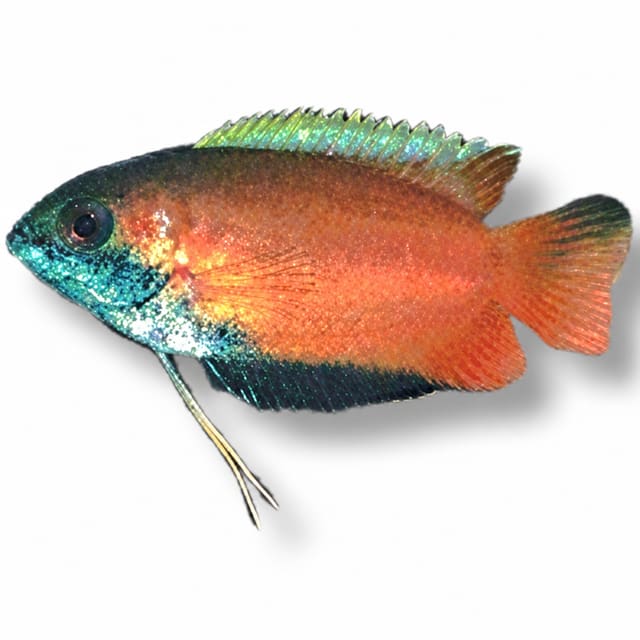
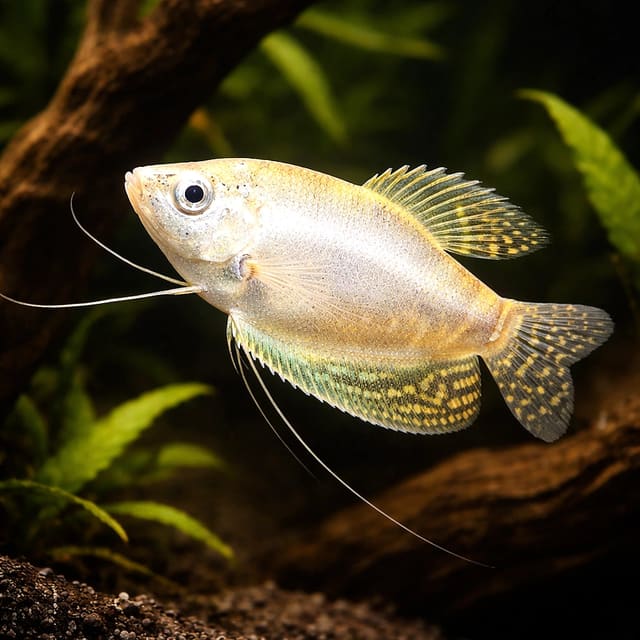
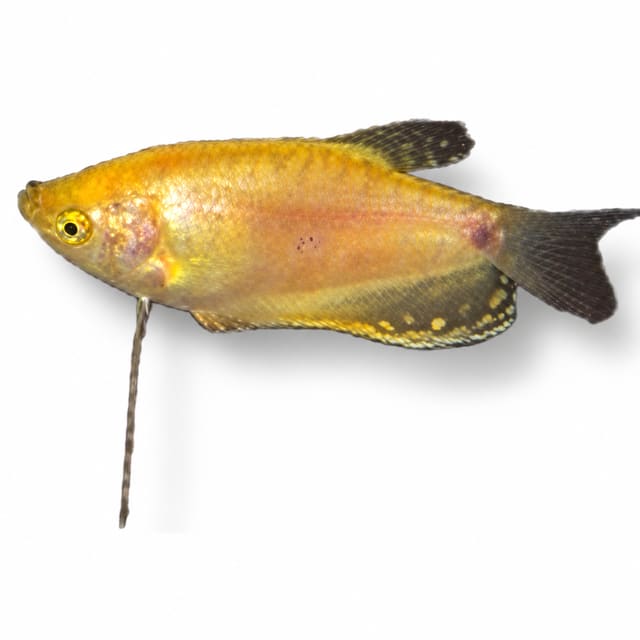
Gold Gourami (Trichopodus trichopterus)
24–28°C · pH 6–8 · 81L
£2.99£4.99

The Red-Backed Paradise Fish (Macropodus erythropterus) is a freshwater osphronemid from Viet Nam that reaches 6.5 cm. It suits keepers who can provide 20–30°C, pH 6.0–8.0, 5–20 dGH and an 80 × 30 cm base of about 72 litres for a single pair, as advised by Seriously Fish. Sold individually as one live fish.
Adult size is the maximum length this species reaches at full maturity (scientific sources). The livestock you receive will be younger and smaller. Product-photo provenance and any image-specific limitations are stated on the listing.
Macropodus erythropterus
Save when buying multiple fish. Each quantity is one fish; sex and pair formation are not guaranteed unless the selected variant explicitly states them.
The Red-Backed Paradise Fish (Macropodus erythropterus) is a freshwater osphronemid from Viet Nam that reaches 6.5 cm. It suits keepers who can provide 20–30°C, pH 6.0–8.0, 5–20 dGH and an 80 × 30 cm base of about 72 litres for a single pair, as advised by Seriously Fish. Sold individually as one live fish.
Adult size is the maximum length this species reaches at full maturity (scientific sources). The livestock you receive will be younger and smaller. Product-photo provenance and any image-specific limitations are stated on the listing.
Maintain these water conditions for optimal health and vibrant colors
The Red-Backed Paradise Fish, Macropodus erythropterus, is a freshwater member of the Osphronemidae family, which contains gouramis and paradise fish. FishBase places the species in Viet Nam and records a maximum length of 6.5 cm standard length. It suits keepers who can provide a mature, filtered aquarium, test the water regularly and plan companions around its breeding-related change in behaviour.
This is a labyrinth fish. Members of its family possess a specialised organ that allows them to breathe atmospheric air as well as using their gills. That ability does not reduce the need for filtration, clean water or thoughtful stocking.
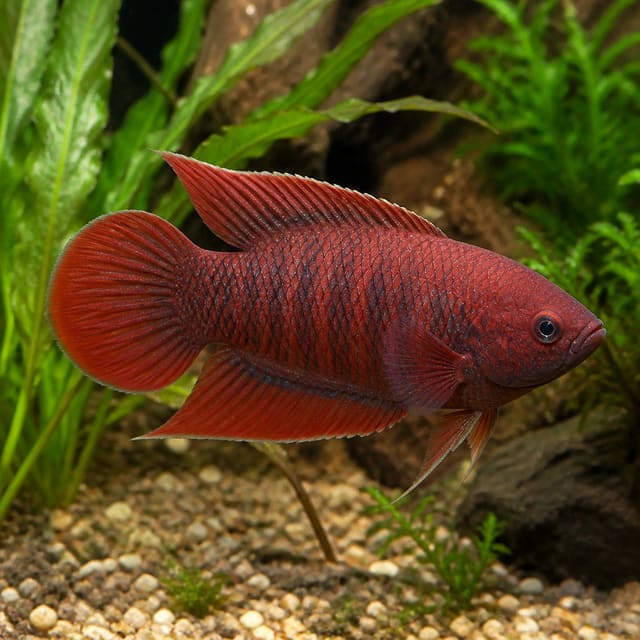
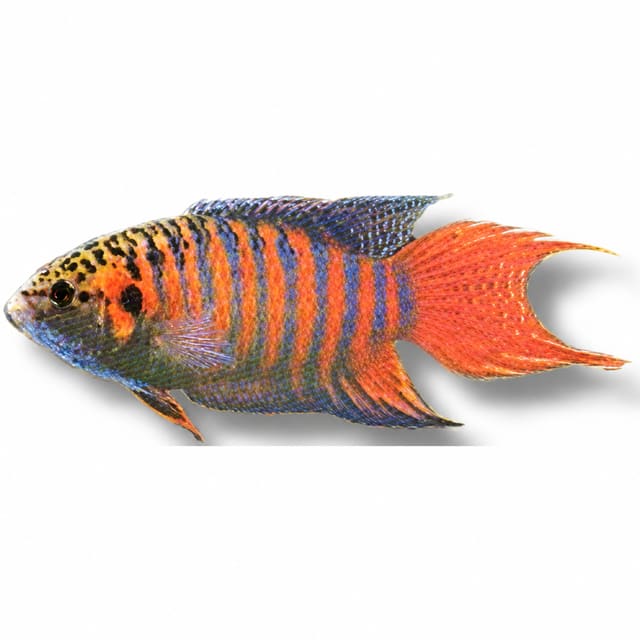
The species profile describes a forked tail, reddish predorsal and subdorsal areas, red markings in the dorsal and caudal fins, and darker margins on the scales of the head and body. It is frequently confused with the similar Macropodus spechti, so identity should rest on the complete combination of features rather than red colour alone.
| Suits | Not suited to |
|---|---|
| A mature, filtered freshwater aquarium | An unfiltered aquarium |
| An 80 × 30 cm base for a single pair | A pair kept below the stated minimum footprint |
| Keepers able to monitor breeding behaviour | Plans that assume behaviour never changes |
| Robust companions with overlapping water needs | Timid, edible-sized or fin-nipping fish |
Keepers comparing related fish can browse our gouramis and labyrinth fish collection, but compare adult dimensions, water ranges and temperament individually rather than assuming every family member needs the same aquarium.
One purchase supplies one Red-Backed Paradise Fish. Plan the aquarium around its adult dimensions rather than its size at purchase.
FishBase records a maximum of 6.5 cm standard length for male or unsexed fish. Seriously Fish uses a larger 8 cm standard-length planning reference. Use the 6.5 cm recorded adult size consistently while allowing for the larger planning reference when arranging space and decor.
Sex is guaranteed only when the selected option explicitly states male or female. This Red-Backed Paradise Fish listing has no sex-guaranteed option.
Mature males are described as larger than females and as having extended soft rays in the dorsal, anal and caudal fins. Those traits may help with observation after development, but neither the animal’s size nor a representative image changes the offer disclosure above.
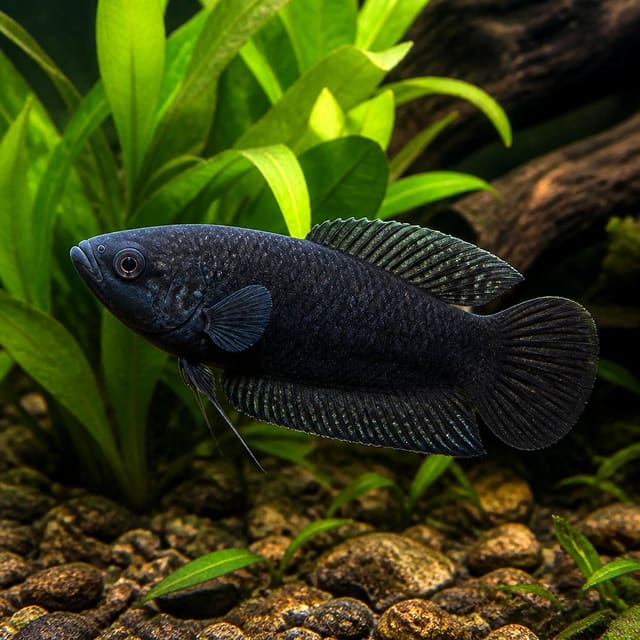
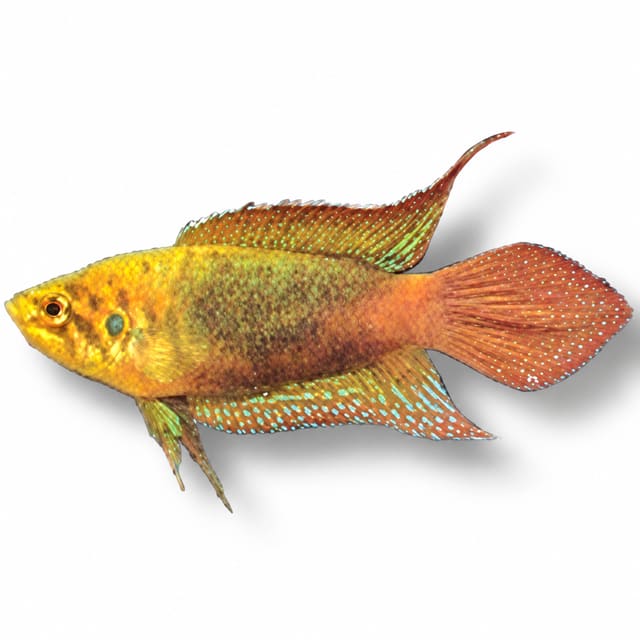
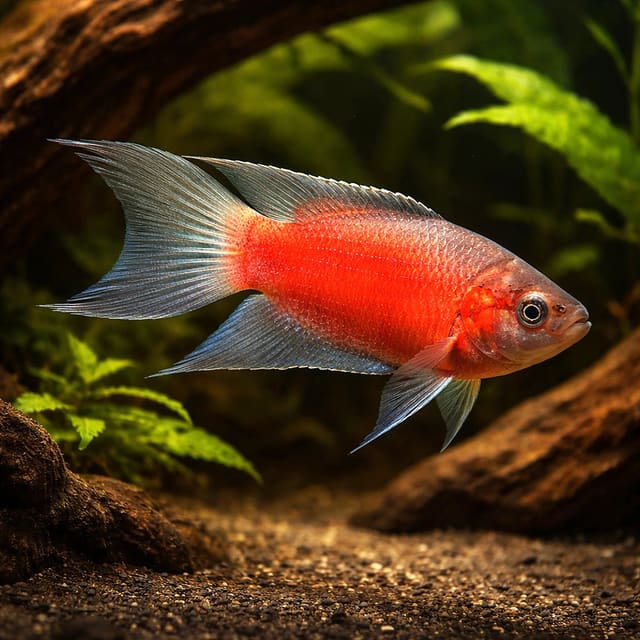
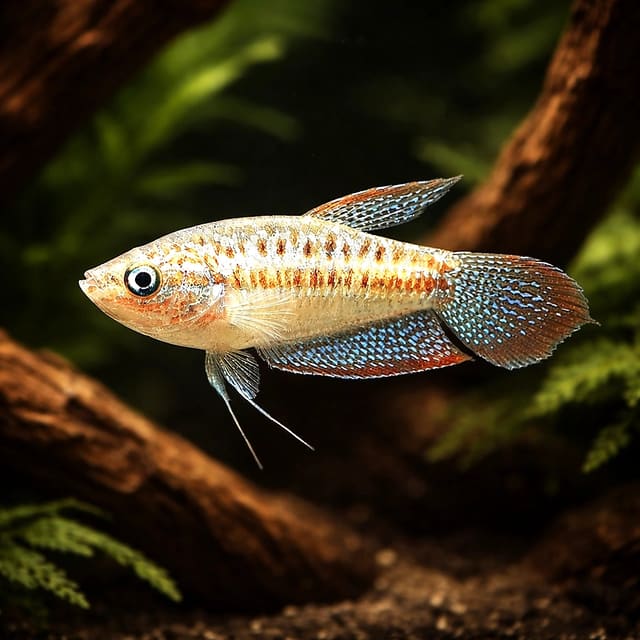
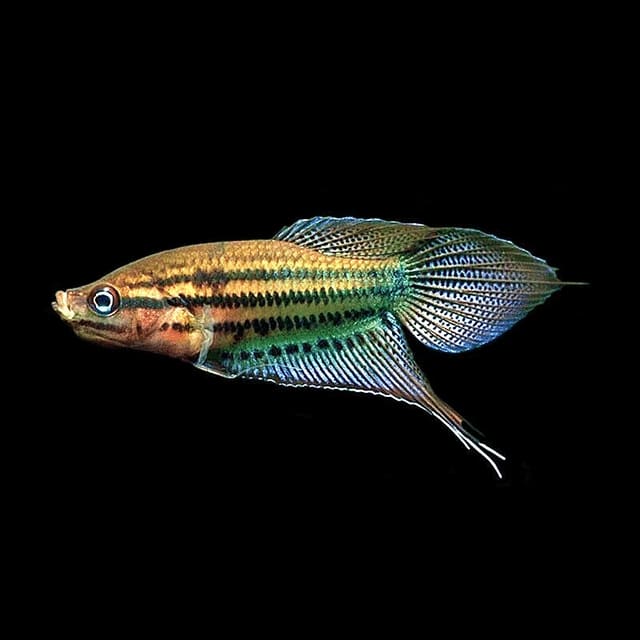
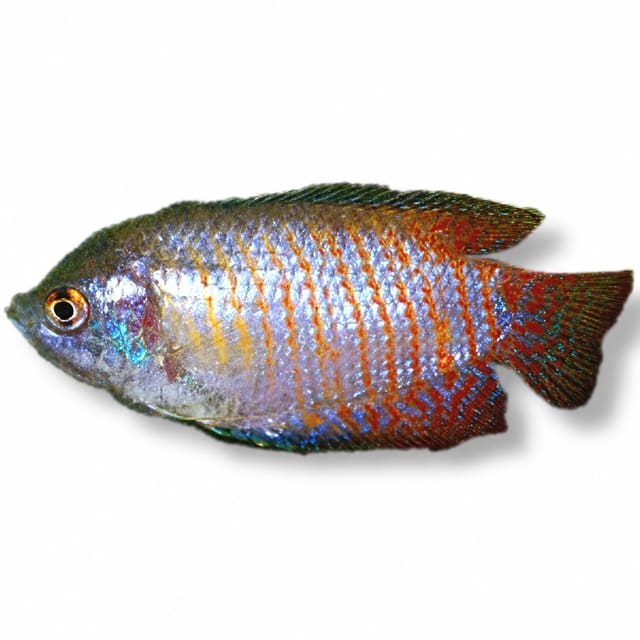
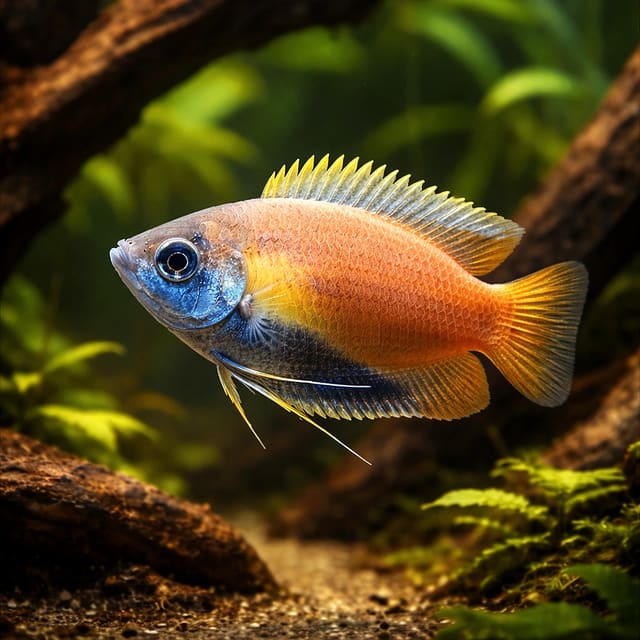
The gallery images are representative of this type of animal rather than photographs of the exact animal supplied, so colours can look slightly different from the live animal.
Read our delivery and Live Arrival Guarantee policy for the applicable packing, receipt, acclimatisation and claim instructions. Complete the filtered, tested aquarium before arranging delivery so the fish can enter a prepared home.
Seriously Fish gives the species an aquarium range of 20–30°C, pH 6.0–8.0 and 5–20 dGH. Its minimum for a single pair is an 80 × 30 cm base or equivalent, equating to about 72 litres. Treat the footprint as the primary spatial test because a taller aquarium with a narrow base does not provide the same horizontal area.
| Planning decision | Working figure |
|---|---|
| Recorded adult size | 6.5 cm standard length |
| Single-pair minimum | 80 × 30 cm base, about 72 litres |
| Temperature | 20–30°C |
| pH | 6.0–8.0 |
| General hardness | 5–20 dGH |
For this one-animal purchase, using the same 80 × 30 cm footprint is a prudent way to avoid designing only around the fish’s size on arrival. A pair reaches the stated minimum; a group or mixed community needs additional space determined by the number, adult sizes, behaviour and territory use of every resident.
Choose a stable point inside all residents’ overlapping ranges rather than chasing the middle of a range by repeatedly altering the water. Measure the aquarium’s actual pH, hardness and temperature before making the stocking decision.
Start with the 80 × 30 cm base used for a single pair and arrange the aquarium so the fish can move between open water and sheltered areas. The species can be maintained in a fully decorated aquarium, although some breeders use no substrate to simplify maintenance. For a display aquarium, the important choice is whether the whole layout remains cleanable and provides useful cover.
Driftwood roots and branches can be positioned to form several shady spots. Use them to divide the aquarium visually without filling every swimming route. A fish moving away from another resident should be able to pass behind decor rather than reaching a dead end. Keep all wood stable so routine maintenance does not disturb the entire structure.
Floating or surface vegetation has a clear role when breeding is intended because the male tends to place a bubble nest within a raft of plants. It can also supply overhead structure in the main display. Leave accessible surface areas between plant rafts because labyrinth fish breathe atmospheric air.
Dried leaf litter can strengthen the natural appearance, add cover and support microbe colonies that may become an early food resource for fry. Add it only where it can be inspected and removed during maintenance. Leaf litter is an optional design feature, not a replacement for filtration, testing or waste removal.
Review the layout whenever fish are added or breeding behaviour begins. More animals increase the need for separation space, and the minimum for a single pair should not be treated as a group allowance.
Keep the aquarium within 20–30°C, pH 6.0–8.0 and 5–20 dGH. Those are the aquarium values published for Macropodus erythropterus. Test the water you actually have, then select companions whose requirements overlap without forcing repeated chemical adjustments.
The range does not require a target of exactly 25°C, pH 7.0 or 12.5 dGH. A stable value within the range is the practical goal. Use our water chemistry guide to understand what pH and hardness measurements mean, then compare your readings with the stated range using the aquarium water matcher.
| If the reading shows | Make this decision |
|---|---|
| 20–30°C | Keep it stable and check that every resident shares the range. |
| pH 6.0–8.0 | Avoid unnecessary correction solely to reach the midpoint. |
| 5–20 dGH | Screen prospective companions against the measured hardness. |
| Outside any range | Resolve the mismatch before introducing the fish. |
A heater estimate must be tied to aquarium volume and room temperature. For a tank of about 72 litres, the species profile estimates roughly 75–100 W to maintain 20–30°C when the room is around 20°C. Treat that as a worked example, not a universal heater rating: aquarium shape, room conditions and the chosen temperature affect the equipment decision.
Record the normal readings before introduction. Later measurements then have a meaningful baseline, allowing you to recognise a change rather than reacting to a single number without context. When different residents need different ends of the range, choose the shared overlap or revise the stocking plan.
Use a well-established biological filter at all times. The RSPCA explains that beneficial filter bacteria process toxic ammonia into nitrite and then nitrate. A labyrinth organ permits atmospheric breathing, but it does not process dissolved fish waste or make an unfiltered aquarium suitable.
At about 72 litres, the species profile uses a turnover of four to five times the aquarium volume each hour. That produces a worked filter rating of roughly 290–360 litres per hour. Check the manufacturer’s rating against the completed aquarium, then inspect the filter for blockages because restricted media or intakes reduce effective flow.
A larger aquarium needs a rating calculated from its own volume. For example, the four-to-five-times rule means multiplying the aquarium’s litres by four and by five to create a comparison band. Do not reuse the 290–360 litres-per-hour example for a different volume.
OATA’s gourami and paradise fish guidance gives broad targets of zero ammonia, zero nitrite and nitrate no more than 20 mg per litre above the normal tap-water level. It recommends a 25% partial water change at least once every week and testing at least once per week.
Chlorine or chloramine may kill part of the beneficial bacterial population if media is washed under tap water. Cleaning everything aggressively at the same time can therefore work against the biological process the filter is meant to maintain. Preserve the established media while removing blockages and accumulated solid waste.
In nature, the species is considered likely to prey on insect larvae and similar small animals. In the aquarium, offer small live or frozen Daphnia, Artemia, white worm or grindal worm. Some high-quality dried products may also be accepted, including quality dried food, freeze-dried Artemia and freeze-dried Daphnia.
OATA’s family guidance describes gouramis and paradise fish as omnivorous and recommends a good-quality flake, granule or pellet, supplemented with small live or frozen foods such as daphnia, small bloodworm or tubifex. Feed once a day and give only what the fish can finish within a few minutes.
| Food decision | What to observe |
|---|---|
| Quality dried staple | Confirm that the individual accepts and swallows it. |
| Daphnia or Artemia | Use an appropriately small live, frozen or freeze-dried form. |
| White or grindal worm | Offer a controlled portion without leaving excess food. |
| Small bloodworm or tubifex | Use as group-guidance variety rather than the entire diet. |
Watch the meal rather than relying on a fixed pinch. Stop adding food when the fish has eaten the portion it can take within a few minutes. Remove uneaten material because decomposing food adds waste to the aquarium and increases the burden on the biological filter.
If dried food is refused, use one of the specifically described small live or frozen foods and continue observing body condition and appetite. A change from normal feeding response belongs in the health check, especially when it appears alongside altered breathing, colour, swimming or hiding.
Do not increase feeding simply because more fish have been introduced. Add livestock slowly so the beneficial bacterial population has time to respond as total feeding and waste rise. Test ammonia and nitrite after any meaningful increase in aquarium load.
Finish the aquarium, establish the biological filter and learn its normal test readings before the animal arrives. Our first tropical aquarium guide sets out the preparation and maturation sequence. The essential readiness test is functional filtration with ammonia and nitrite at zero, not the number of days the aquarium has contained water.
Observe swimming, breathing, colour, appetite and use of cover. Compare each observation with the animal’s developing normal pattern rather than expecting constant display. Test the water promptly if the fish hangs at the surface differently from its usual atmospheric breaths, sits on the bottom, swims erratically, hides more, changes colour or loses interest in food.
Keep the stocking increase modest. Beneficial filter bacteria need to respond whenever more fish are added and feeding rises. Adding several animals quickly can produce new tank syndrome because waste production overtakes biological processing, allowing ammonia or nitrite to rise.
Continue a 25% partial water change at least once every week, test ammonia and nitrite at least once per week, and inspect the filter for blockages. Record whether the fish accepts dried food or needs a greater proportion of the listed live and frozen foods. Inspect fins, scales, eyes and body condition while learning its usual behaviour.
Do not treat routine surface breathing as proof of poor oxygenation or good water quality. This family naturally uses atmospheric air, while ammonia, nitrite and accumulated waste still require testing, filtration and maintenance.
Healthy-fish assessment is a pattern of observations rather than a single colour or pose. Look for clear, bright eyes, undamaged fins, intact scales and the absence of ulcerations or bumps. Learn the individual’s normal appetite, swimming, breathing, hiding and colour so a change can be recognised early.
| If you see | Do this first |
|---|---|
| Surface hanging, bottom sitting or erratic swimming | Test ammonia, nitrite, temperature and the other routine water values. |
| Faster or slower gill-cover movement | Check water quality and filter operation promptly. |
| Darker or paler colour | Compare behaviour, appetite and stocking interactions with the normal pattern. |
| More aggression or hiding | Review breeding behaviour, space, cover and recent livestock additions. |
| White spots, fluffy growths or lost fins and scales | Test the water and seek diagnosis before selecting any treatment. |
| Reduced feeding or body-condition change | Check the feeding response, waste levels and all accompanying signs. |
Water testing comes first because even small amounts of ammonia or nitrite can stress gouramis and paradise fish. Confirm that the filter is operating, inspect for blockages and carry out the established maintenance response without washing biological media under tap water.
Disease treatment depends on the condition, water readings and the other animals in the aquarium. Do not select medication solely from a symptom name. If a health change persists after the immediate water and equipment checks, contact us for further guidance and provide the readings, aquarium volume, temperature, stocking details and a clear description of the change.
Macropodus erythropterus is a bubble nester. The male tends to build the nest within a raft of surface vegetation and displays with the elongated dorsal, anal and caudal fins once the nest is complete. The species is relatively peaceful unless breeding, so nest building is also a signal to reassess compatibility and available retreat space.
Seriously Fish recommends the tightest-fitting cover possible for breeding because fry need a layer of warm, humid air while the labyrinth organ develops. This supports fry development but does not guarantee spawning.
Soft water with a slightly raised temperature may induce reproductive behaviour. Any adjustment must remain controlled, stay within the species’ 20–30°C aquarium range and account for the needs of every resident.
The pair does not need to be separated before spawning, and females are usually tolerated while the male constructs and tends the nest. Observe the actual interaction and revise the arrangement if one fish cannot feed, rest or move away.
The species can be maintained as a pair or group, and a group may show interesting behavioural interactions. The published minimum of an 80 × 30 cm base and about 72 litres applies to a single pair, not to an unrestricted number of fish. A group therefore needs a larger plan based on the number of animals, their adult dimensions, filtration demand and the usable separation created by the layout.
Each purchase supplies one animal. Buying one does not create a pair, and adding another later should be treated as a new stocking decision. Review the adult size, available footprint and existing residents before increasing the number. Do not infer sex from size, colour or gallery imagery when attempting to form a pair.
| Intended arrangement | Planning response |
|---|---|
| One animal | Use a properly filtered aquarium and plan around adult needs rather than arrival size. |
| Single pair | Use at least an 80 × 30 cm base or equivalent, about 72 litres. |
| Group | Increase space beyond the pair minimum and provide multiple routes around cover. |
| Breeding pair or group | Expect compatibility risk to change when nesting behaviour begins. |
Observe access to food, surface air, open water and sheltered areas. An arrangement is failing if one animal is repeatedly excluded from these essentials. Revising the stocking plan is more useful than assuming that pair or group tolerance guarantees equal behaviour from every individual.
When a future addition is being considered, compare the completed aquarium—not its nominal capacity alone—with the pair minimum and the needs of all existing livestock.
For this species, the direct description is relatively peaceful unless breeding. That supports a conditional community assessment rather than a universal tank-mate list. The result remains individual and depends on the aquarium, the animals involved and whether breeding behaviour develops.
OATA’s group-level advice for paradise fish says to choose robust tank mates and avoid timid species, small fish that could be eaten, and fish that may nip their fins. Use those exclusions alongside the exact species’ adult dimensions and water range.
| Screening question | Decision rule |
|---|---|
| Is the fish timid? | Avoid it because paradise-fish activity or breeding behaviour may prevent normal feeding and movement. |
| Could its adult size allow it to be eaten? | Avoid the pairing rather than relying on current juvenile sizes. |
| Does it nip fins? | Avoid it because this species develops extended fin rays. |
| Do water ranges overlap? | Proceed only when temperature, pH and hardness can suit both animals without chasing unstable values. |
| Will both use the same space? | Add enough footprint and structure for each fish to feed, retreat and reach the surface. |
| Could breeding begin? | Plan an alternative arrangement before nesting changes behaviour. |
Do not treat a family label such as gourami, paradise fish, tetra or catfish as a compatibility answer. Screen the exact adult size, temperament, feeding access and water needs of the proposed animal. Apply the same screening process to invertebrates rather than assuming a predictable outcome.
For a stocking and compatibility assessment, contact us with the aquarium’s dimensions and volume, measured temperature, pH and hardness, current residents and intended number of Red-Backed Paradise Fish. Those details permit a more useful decision than a generic list of names.
FishBase records a maximum of 6.5 cm standard length for male or unsexed Red-Backed Paradise Fish.
Seriously Fish advises an aquarium base of at least 80 × 30 cm or equivalent, about 72 litres, for a single pair of Macropodus erythropterus.
The Red-Backed Paradise Fish can be maintained as a pair or group, but the 80 × 30 cm and approximately 72-litre minimum applies only to one pair; a group needs more space.
Choose it only if you can provide a mature filtered aquarium, test water regularly, maintain the stated ranges and respond when breeding changes its behaviour.
Offer the Red-Backed Paradise Fish small live or frozen Daphnia, Artemia, white worm or grindal worm, with accepted high-quality dried food; feed once daily and only what it eats within a few minutes.
Keep it at 20–30°C, pH 6.0–8.0 and 5–20 dGH, the species aquarium values published by Seriously Fish.
Macropodus erythropterus is relatively peaceful unless breeding; avoid fin-nipping companions and reassess the arrangement if nesting changes its behaviour.
Consider robust fish whose adult size and water needs fit the aquarium; avoid timid species, small fish that could be eaten and fish that may nip its fins. Specific outcomes with invertebrates remain uncertain, so apply the same screening rule.
Start filming continuously while the parcel is still sealed, then record it being opened with the fish still inside the sealed bag. Someone must be present to receive it; float the bag for 20–30 minutes before releasing the fish, and never pour the bag water into the aquarium.
No reviews for this item yet. Bought one? Honest reviews only, good or bad.
What customers say about ordering from us
I have a small group of long finned mountain minnows. So was delighted to be able to order ten of this variety to increase the genetics in my tank . The ones I recieved are healthy but it’s to early to give a verdict on wether they are of a long finned type since they are small currently.
Gordon Walker · 23 Sept 2026
100% success travel and "installation". Pleased with quality of purchase. The Siamese fighter a bit "shy" so have not yet seen him at his best yet but looking good. Happy customer. GG
George E Garratt · 21 Sept 2026
Reviews of our shop, collected by Judge.me, an independent third-party review collector. Newest first.