Moderate
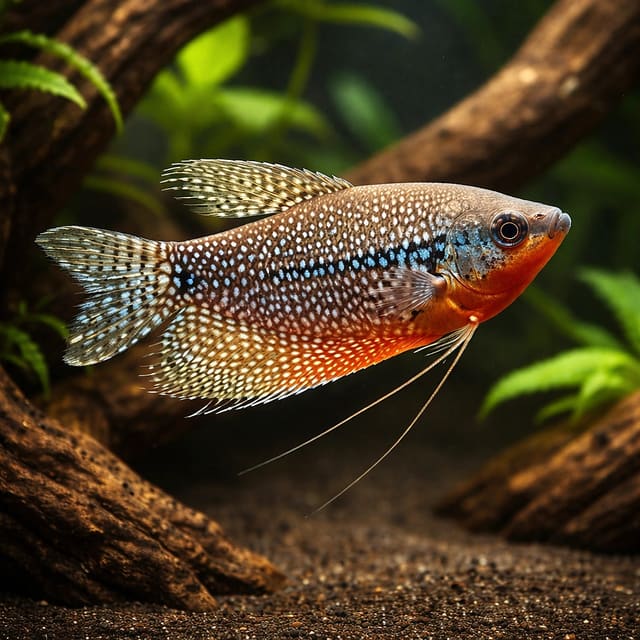
Gold Gourami (Trichopodus trichopterus)
24–28°C · pH 6–8 · 81L
From £2.99Some sizes on sale
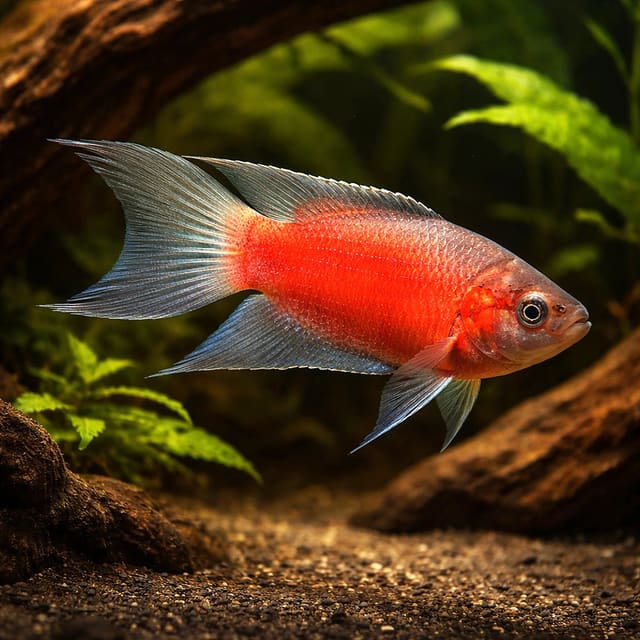
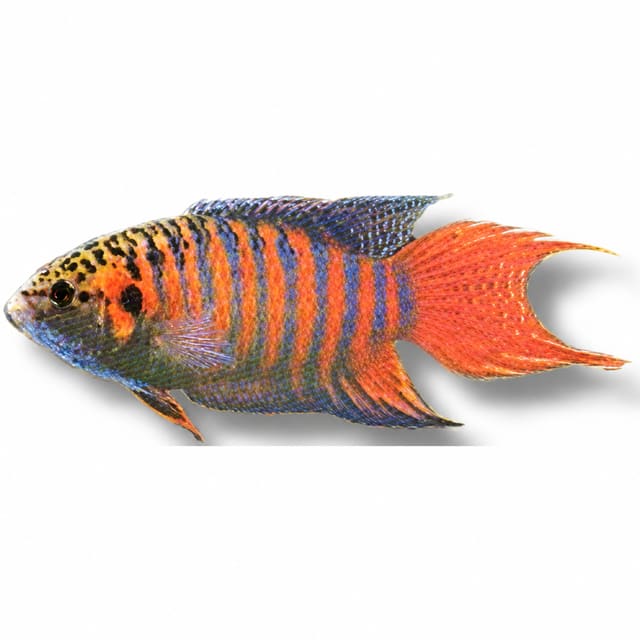
Macropodus opercularis — Fire Ice is a striking paradise fish for keepers who can manage territorial behaviour as carefully as water quality. One live fish is supplied at the 3–4 cm dispatch grade. Plan an 80 × 30 cm covered aquarium, 10–22 °C water and peaceful schooling companions only when their needs genuinely match.
Adult size is the maximum length this species reaches at full maturity (scientific sources). The livestock you receive will be younger and smaller. Product-photo provenance and any image-specific limitations are stated on the listing.
Macropodus opercularis
Save when buying multiple fish. Each quantity is one fish; sex and pair formation are not guaranteed unless the selected variant explicitly states them.
Macropodus opercularis — Fire Ice is a striking paradise fish for keepers who can manage territorial behaviour as carefully as water quality. One live fish is supplied at the 3–4 cm dispatch grade. Plan an 80 × 30 cm covered aquarium, 10–22 °C water and peaceful schooling companions only when their needs genuinely match.
Adult size is the maximum length this species reaches at full maturity (scientific sources). The livestock you receive will be younger and smaller. Product-photo provenance and any image-specific limitations are stated on the listing.
Maintain these water conditions for optimal health and vibrant colors
Macropodus opercularis — Fire Ice is a selectively coloured form of the paradise fish, an East Asian labyrinth fish with a long aquarium history and a much more assertive personality than its graceful fins might suggest. One purchase supplies one live fish at the supplier's 3–4 cm dispatch grade. That is the size sent, not the adult planning size: species accounts record up to 8 cm standard length, which excludes the tail fin.
This is a rewarding fish for a keeper who wants an alert, surface-oriented centrepiece and is prepared to plan around territory. It is not a carefree addition to a random community. Males are territorial, especially during reproductive activity, and similarly shaped fish are poor neighbours. The simplest arrangement for this single-fish offer is one paradise fish in a mature, covered aquarium. A mixed-sex group is a deliberate larger-aquarium project, not something to assemble by buying several fish and hoping the ratio works.
| Suits | Plan before buying |
|---|---|
| Keepers comfortable with intermediate care and behaviour management | An aquarium at least 80 × 30 cm at the base; roughly 72 litres is the species-profile minimum for a single pair |
| Cooler, stable freshwater aquariums | A routine species-profile range of 10–22 °C, pH 6.0–8.0 and 5–20 dGH |
| Planted or wood-decorated layouts with shade and surface cover | Open access to the surface plus a secure, close-fitting lid |
| Carefully researched communities | Peaceful schooling fish with comparable environmental needs; avoid timid, tiny, fin-nipping or similarly shaped fish |
The paradise fish belongs to Osphronemidae and possesses a labyrinth organ that allows it to breathe atmospheric air. That ability helps explain why wild fish can occupy slow or oxygen-poor habitats, but it does not make filtration, clean water or access to the surface optional. A mature biological filter remains essential, and the fish should never be shut away from the air-water boundary by a completely filled or obstructed cover.
The species aquarium profile gives 10–22 °C for routine maintenance, while field and group records contain different figures for different purposes. The important buying decision is therefore whether the aquarium can remain stable in the chosen routine range, not whether the fish can briefly endure a more extreme number. Test the actual tap water and aquarium rather than adjusting chemistry to a guessed ideal. The gouramis and labyrinth fish collection is useful for comparing other forms, but a related product is an alternative to research rather than an automatic tank mate.
Sex is guaranteed only when the selected option explicitly states male or female. This Macropodus opercularis fire ice listing has no sex-guaranteed option. That matters because visual sex differences described for mature fish do not turn an unsexed retail animal into a guaranteed male or female. Plan a stocking arrangement that remains safe if the individual develops stronger territorial behaviour.
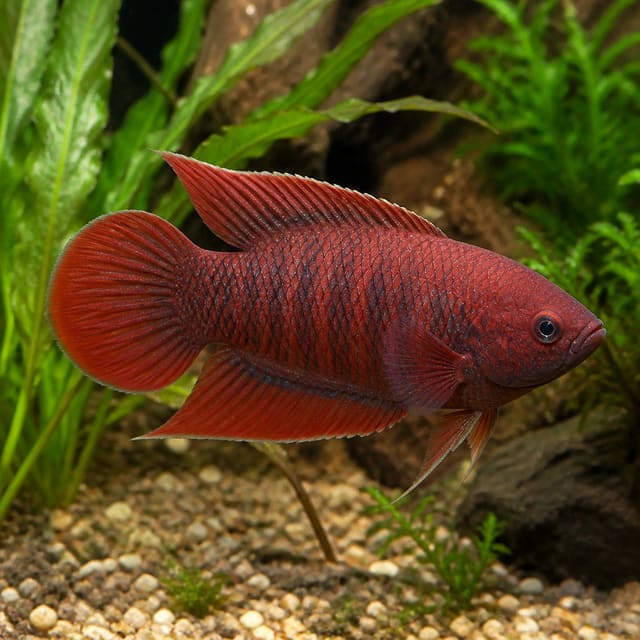
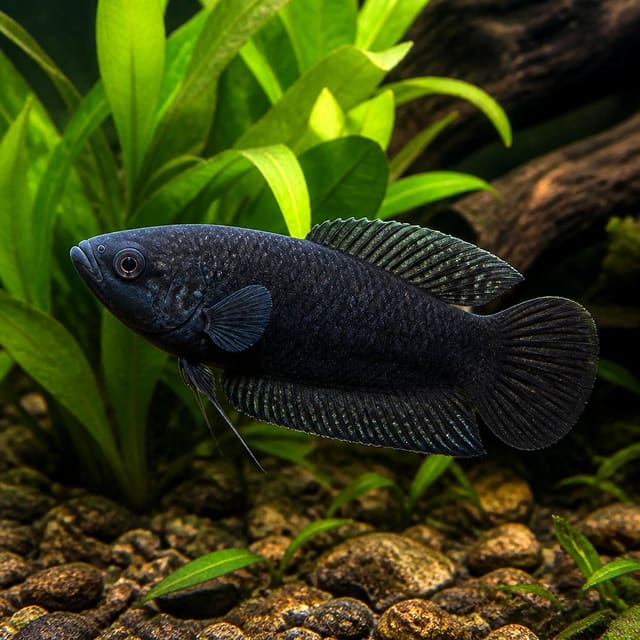
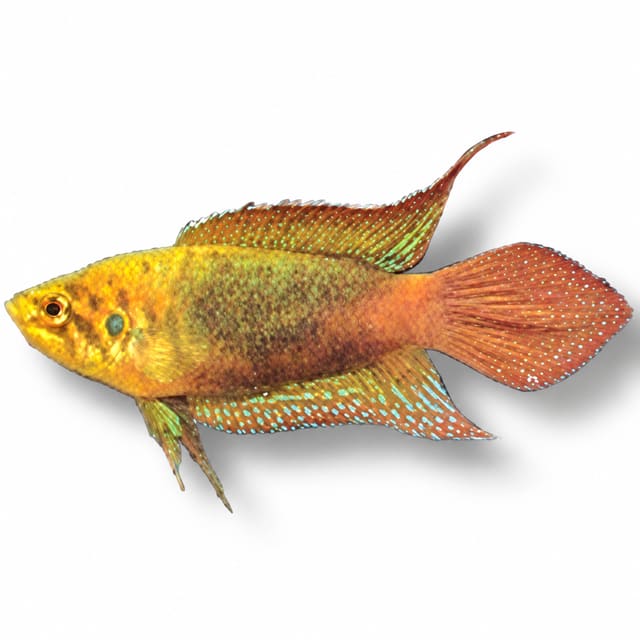
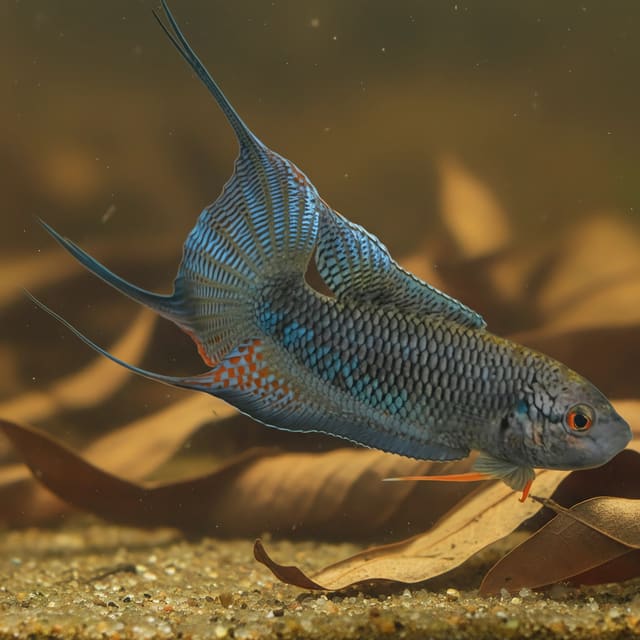
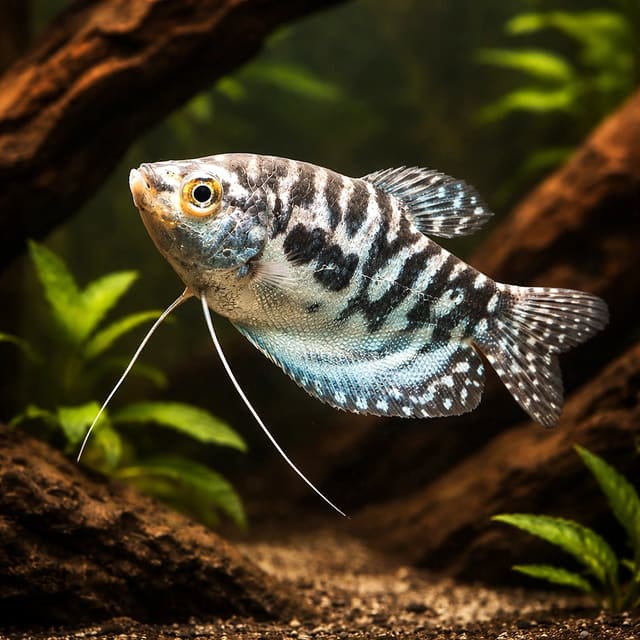
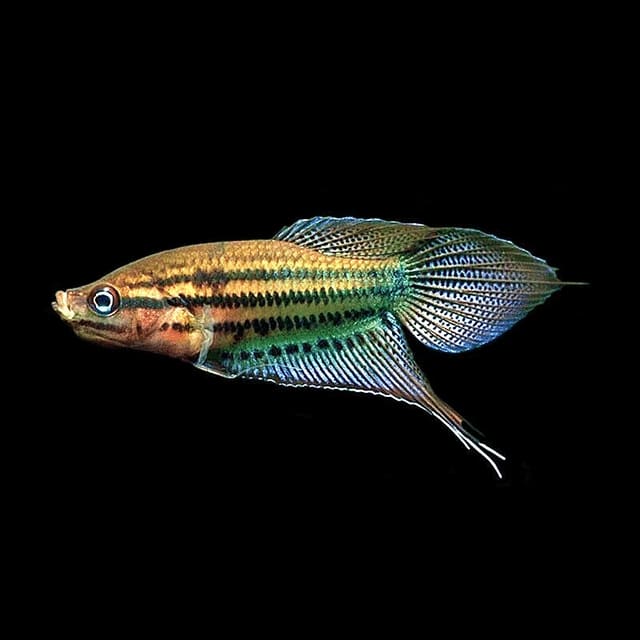
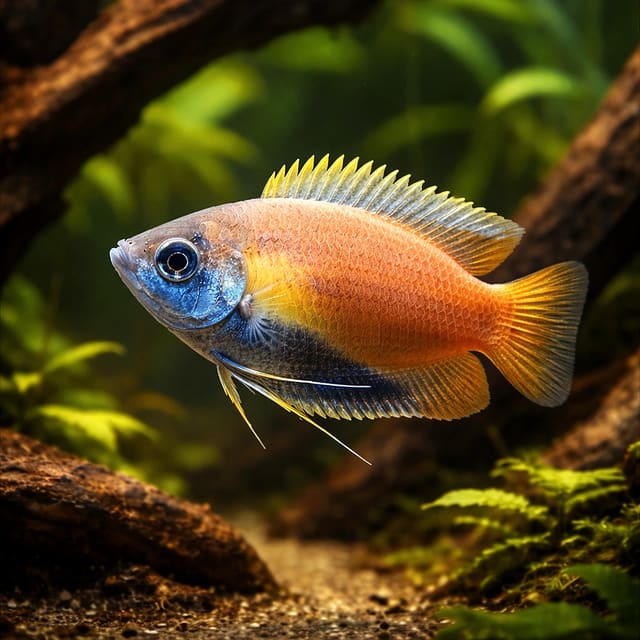
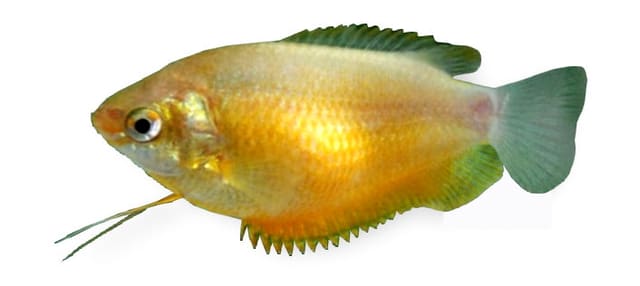
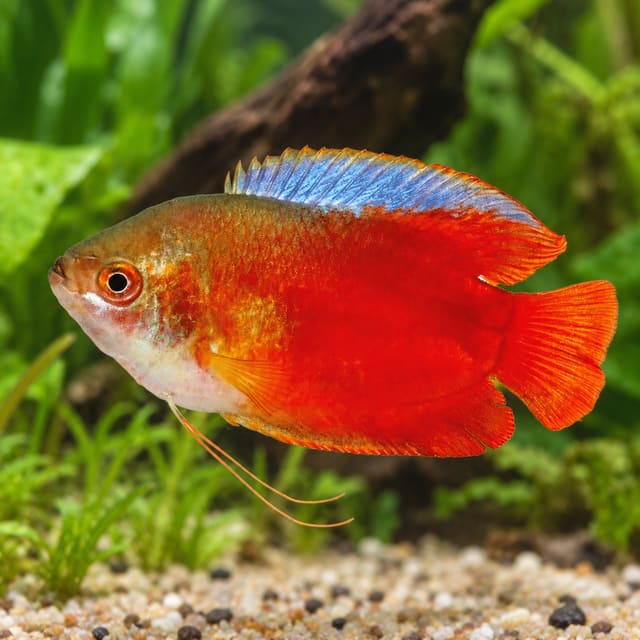
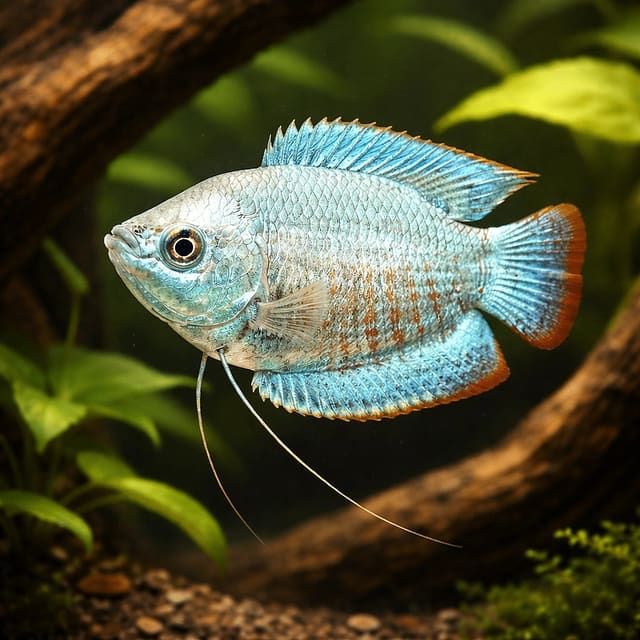
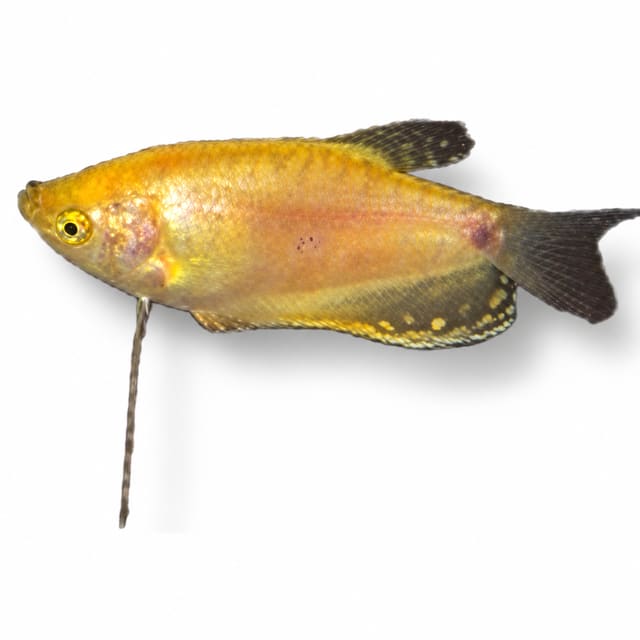
Gallery images have been digitally enhanced to improve image quality. Natural colour, pattern, size and maturity can vary between live animals. Fire Ice is a trade-form description, not a promise that every individual will match one photograph or show identical colour on arrival. Colour can also appear subdued after transport; judge welfare by breathing, balance, fins, appetite and gradual settling rather than expecting immediate display colour.
Choose another species if the intended aquarium is very warm all year, contains slow long-finned fish, relies on an open top, or cannot provide an 80 cm swimming length. The Fire Ice paradise fish can be hardy, but its hardiness should be treated as resilience within good husbandry, not permission to compromise the aquarium.
The species profile recommends a base of 80 × 30 cm, approximately 72 litres, as the minimum for a single pair. Footprint matters because the fish needs horizontal room and because territory cannot be managed by height alone. For one animal, that same footprint gives sensible swimming and furnishing space. If you intend to keep a male with two or more females, use a larger aquarium with much more cover and several separated areas; 72 litres should not be stretched into a multi-fish promise.
A new aquarium must be biologically mature before the fish arrives. The filter's bacterial community converts toxic ammonia first to nitrite and then to nitrate. The fish's air-breathing ability does not protect it from dissolved ammonia or nitrite. If this is your first setup, follow the first tropical aquarium guide before choosing an arrival date, and confirm that ammonia and nitrite both remain at zero under normal feeding.
Driftwood roots and branches can make shaded retreats, while rooted and floating plants soften sight lines and help a fish choose between cover and open water. Dried leaf litter can add further cover; the species profile also notes that the micro-organisms developing around leaves can provide early food for fry, although a display aquarium does not need to become a breeding project. Leave clear routes between furnishings so the fish can turn and reach the surface easily.
Use sand or smooth gravel if you want a substrate. Check every ornament and artificial plant for sharp or rough edges, because extended fins can catch on abrasive surfaces. The broad OATA sheet recommends cover and warns against rough furnishings for long-finned fish. A visually busy layout is useful only when it remains safe, cleanable and open enough for normal swimming.
A close-fitting lid serves two functions: it reduces escape risk and helps preserve a warm, humid air layer above the water. Do not fill the aquarium so high that the fish has no clear breathing space. Floating plants may provide security and, in a breeding setup, a place for a bubble nest, but they should not form a solid mat across the entire surface. Create open gaps and check them after plant growth or maintenance.
Gentle to moderate circulation is preferable to making every part of the tank a fast channel. The species profile's equipment example for a 72-litre aquarium uses roughly four to five turnovers per hour, but filter labels are starting points rather than guarantees: media condition, head height and hardscape all alter real flow. Aim for effective biological filtration with calmer margins and surface access. Watch the fish rather than chasing a number; constant struggle against current, persistent hiding or difficulty holding position indicates that the layout needs adjustment.
Keep the tank away from direct sunlight, radiators, cold draughts, loud speakers and repeated vibration. A cool-water-capable fish still benefits from gradual, predictable conditions. Sudden daytime heating from a window followed by a cold night is not the same as a stable seasonal change. Use a reliable thermometer and check it at different times of day when setting up a new position.
For routine maintenance, use the species aquarium profile of 10–22 °C, pH 6.0–8.0 and 5–20 dGH. These figures suit the animal described here and are the values used in the care card. FishBase also records 16–26 °C, pH 6.0–8.0 and 5–19 dH from environmental data, while OATA gives 20–28 °C and 4–12 dGH for gouramis and paradise fish as a group. Those records describe different scopes. They should not be merged into a claim that every temperature across the combined extremes is an equally good daily target.
Choose a stable point within the species aquarium range that fits the fish and any carefully selected companions. Avoid abrupt daily swings. Seriously Fish notes that the species can often be maintained without aquarium heating and may benefit from a cool winter period, but a seasonal cool period is gradual and controlled. It is not an invitation to expose the aquarium to draughts, rapid heater cycling or sudden water-change shocks.
| Measure | Working approach |
|---|---|
| Temperature | 10–22 °C for routine species care; select a stable point compatible with the whole aquarium |
| pH | 6.0–8.0; stability and correct acclimatisation matter more than forcing a fashionable value |
| General hardness | 5–20 dGH in the species profile |
| Ammonia | Zero mg/l |
| Nitrite | Zero mg/l |
| Nitrate | OATA group guidance says no more than 20 mg/l above normal tap-water levels |
Test the tap water before deciding whether it needs adjustment. The aquarium water-chemistry guide explains what each result means, and the water-parameter matcher helps compare measured values with the care range. Use liquid or otherwise reliable tests according to their instructions, record results, and look for trends rather than waiting for obvious distress.
Macropodus opercularis can breathe atmospheric air using its labyrinth organ. In nature, this helps it exploit slow, stagnant and sometimes oxygen-poor lowland habitats. In an aquarium, it still passes waste into the water, still depends on functioning gills and still suffers when ammonia or nitrite rises. Surface breathing is normal for a labyrinth fish; frantic or unusually frequent visits combined with clamped fins, loss of balance or reduced appetite deserve a full water-quality check.
Keep the surface free from oily films and leave gaps among floating plants. Maintain gentle surface movement without making access difficult. Clean blocked filter inlets, but preserve the biological media. Rinse media lightly in water removed from the aquarium, not under the tap, because chlorine or chloramine can damage the bacterial population the filter needs.
OATA recommends a partial water change of 25% at least once every week for the broader group. Treat that as a useful routine starting point and adjust through measured nitrate, stocking, feeding and aquarium volume. Here, ‘at least once every week’ applies to the schedule; it does not mean that 25% is a universal minimum volume to exceed blindly at every change. Dechlorinate replacement tap water, bring it close to the aquarium temperature and add it without a sudden disturbance.
Siphon visible waste from accessible substrate while leaving useful planted areas intact. Do not deep-clean the entire filter and substrate together, because removing too much established biology at once can destabilise the system. If ammonia or nitrite is detectable, respond promptly with testing, an appropriate water change and a check of the filter, feeding and recent stocking. Do not use the paradise fish's reputation for toughness as a reason to wait.
Learn the individual's normal swimming, colour, breathing and feeding. Investigate a sustained change such as erratic movement, prolonged bottom sitting, clamped or damaged fins, repeated rubbing, spots, growths, swelling, weight loss or refusal of food. Start with water tests and a review of recent changes. Diagnosis and treatment need case-specific professional advice; this listing does not prescribe medicine from a visual symptom.
Wild Macropodus opercularis takes small aquatic animals, including insect larvae and small fish. In captivity, the species profile recommends small live or frozen foods such as Daphnia, Artemia, white worm and grindal worm, with high-quality dried foods often accepted by commercial strains. OATA's broader guidance adds quality flakes, granules or pellets and small frozen items such as bloodworm or tubifex.
Use a good prepared food as the dependable base, then rotate suitable frozen or live foods for variety. Match each item to the fish's mouth and present it where the fish can take it confidently. A paradise fish may notice food near the surface quickly, but food should not be left drifting into inaccessible corners or decaying among plants.
OATA advises feeding only what the fish can consume within a few minutes once a day. That is practical group guidance, not a reason to deliver one large meal regardless of the animal's condition. Begin conservatively, observe what is actually eaten and remove obvious leftovers. Overfeeding adds organic waste, drives nitrate and can destabilise a small aquarium even when the fish continues to beg.
Use body condition over time rather than one enthusiastic feeding response. A fish that repeatedly spits food, stops approaching, loses fullness, becomes swollen or produces unusual waste deserves investigation. Check water quality first, then the freshness, size and storage of the food. Avoid assuming that refusal always means fussiness or that extra food will solve it.
Breeding diets and fry feeding are specialist subjects. The species is a bubble nester, but a display listing should not turn a brief food section into an incomplete breeding recipe. If breeding is intentional, prepare a separate setup, cover for the female, suitable first foods and a plan for the young before conditioning adults.
Record results in a notebook or app. A series of ordinary weekly numbers is more useful than a single test taken after the fish looks ill. Trends expose a weakening filter, increasing waste load or changing tap water before a crisis develops.
A filter is not just a mechanical dirt collector. Its media houses bacteria that convert ammonia and nitrite. Replace only what the manufacturer and condition require, and avoid changing all biological media at once. If flow falls, first check the intake, impeller and mechanical debris. Gentle cleaning can restore performance without sterilising the filter.
The same principle applies after adding livestock: the filter bacteria need time to respond to more waste. This listing supplies one fish, but that does not make rapid multi-species stocking safe. Add animals slowly, test more frequently after each addition and be ready to pause stocking if ammonia or nitrite appears.
Brief exploration, surface breathing and defending a chosen area can all be normal for a paradise fish. Persistent chasing, damaged fins, a fish pinned into one corner or a companion unable to feed is a compatibility problem, not a personality quirk to wait out. Rearrange cover only when it can be done without destabilising the aquarium, and have a separate safe aquarium or divider ready before experimenting with a group.
Surface visits should be interpreted alongside gill movement, posture and water results. The labyrinth organ enables atmospheric breathing, but rapid breathing can still signal poor water, heat, stress or illness. Likewise, temporary transport pallor may improve as the fish settles, while progressive colour loss with poor appetite requires attention.
Confirm that the aquarium is mature, the temperature is stable and ammonia and nitrite are zero. Make sure someone is present to receive the parcel. Have a phone ready and make the continuous unboxing video described in the current delivery and Live Arrival Guarantee policy, beginning with the parcel still sealed and continuing until the fish is visible inside the sealed bag.
The order matters. Recording after the parcel has already been opened cannot show the sealed arrival condition, while floating alone does not gradually address a difference in water chemistry. Float for the stated 20–30 minutes, then use the gradual aquarium-water adjustment before release.
Expect the fish to need time to explore cover and recover from transport. Offer a modest meal only after it is swimming normally and shows interest; remove food it ignores. Test ammonia and nitrite more often than the ordinary weekly schedule, especially if the aquarium is new to this waste load. Check every lid gap after cables, airline or filter pipes have been moved during introduction.
Do not chase the fish for photographs or repeatedly rearrange the aquarium to make it visible. A shaded retreat and predictable day-night cycle help it settle. If it remains distressed, loses balance, breathes abnormally or develops visible injury, check water immediately and seek appropriate help.
Paradise fish are not all-purpose community fish. FishBase notes that males fight, while the species aquarium profile describes territorial aggression that becomes more pronounced during reproductive periods. The risk is not solved by calling the fish semi-aggressive; it is reduced through stocking decisions, space, cover and a willingness to separate animals when behaviour proves unsafe.
Do not house two males together as an ordinary arrangement. Seriously Fish allows that males might coexist only where the aquarium is very large, which is an exception rather than a recommendation for the footprint described on this page. For most home aquariums, plan around one male territory. Because this retail choice does not promise sex, the safest starting point is one fish rather than a guessed group.
If mature fish are positively sexed later and a mixed-sex arrangement is intended, provide at least two females per male to spread male attention. OATA's broad sheet also gives a two-females-per-male ratio. Use a larger, heavily structured aquarium with several retreats, broken sight lines and a backup separation plan. A numerical ratio cannot compensate for too little space or an unusually persistent individual.
Mature males tend to be larger and have more extended soft rays in the dorsal, anal and caudal fins, but those general sex differences do not guarantee the sex of a juvenile or transport-stressed animal. Avoid buying several unsexed fish solely to manufacture a ratio. Observe development and make welfare-led changes before chasing becomes constant.
The species profile says to avoid similarly shaped fishes and allows peaceful schooling species with comparable environmental requirements. OATA advises robust companions and warns against timid fish, small fish that could be eaten and fish likely to nip long fins. These are conditions, not a universal list of safe species.
| Relationship | Practical rule |
|---|---|
| Avoid | Rival male paradise fish in an ordinary aquarium; similarly shaped territorial fish; very small fish that may be treated as prey; persistent fin nippers |
| Use caution | Slow or timid fish, long-finned fish, surface-dwelling competitors and any species needing much warmer routine water |
| May suit after research | Peaceful schooling fish that are robust enough for the aquarium and genuinely share the chosen temperature, pH and hardness |
Compare adult size, temperature, behaviour, swimming level and feeding access before combining species. A fish described as peaceful in isolation may still be a poor neighbour if it nips fins, competes for the surface or cannot tolerate 10–22 °C. Conversely, a robust fish is not suitable merely because it can defend itself; repeated conflict harms both animals.
Early warning signs include one fish monopolising food, another remaining behind the filter, repeated charges across the tank, torn fins or a companion prevented from reaching the surface. A short display is different from relentless pursuit, but damage and exclusion should trigger action. Add cover only if it can create genuinely separate space; otherwise separate the fish.
Alternative gourami listings can be useful when comparing appearance and care commitments, but they are not recommendations for cohabitation. Research every intended companion on its own merits and judge the combined plan by the least flexible animal, not the toughest one.
Species accounts record 6.7–8 cm standard length, with 8 cm the larger planning figure. Standard length excludes the tail fin. The 3–4 cm grade describes the fish supplied, not its adult size, and the broader OATA group sheet describes paradise fish as approximately 10 cm without using the same measurement convention.
The species profile recommends an 80 × 30 cm base, about 72 litres, as the minimum for a single pair. Use that footprint as a sensible starting point for one fish, and choose a substantially larger, well-structured aquarium for a deliberately assembled mixed-sex group.
One fish is the simplest plan for this non-sexed offer. Males are territorial and should not share an ordinary aquarium. If mature fish are later positively sexed and a group is attempted in a larger setup, provide at least two females per male plus several retreats and a separation plan.
Its water chemistry can be forgiving, but territorial behaviour, companion selection, a secure lid and cool-water planning make it a better intermediate choice. A prepared beginner can succeed by maturing the aquarium first, testing weekly and keeping the stocking plan simple.
Use quality flakes, granules or pellets as a dependable base, with suitably sized frozen or live foods such as Daphnia and Artemia for variety. Feed a controlled amount that is eaten within a few minutes and remove leftovers before they affect water quality.
Use 10–22 °C and pH 6.0–8.0 for routine species care, with 5–20 dGH. Pick a stable point within that range that also suits every carefully chosen companion. Environmental and broad group records contain wider figures, but they are not all equal daily targets.
Males are territorially aggressive, especially around reproduction. Avoid rival males, similarly shaped fish and companions that may nip its extended fins. Also avoid very small or timid fish; consider peaceful schooling fish only where water needs and behaviour are compatible.
Do not assume so. Similarly shaped fishes are specifically discouraged, and another labyrinth fish may compete for the same space. Treat other gouramis as alternatives to compare, not automatic companions, and assess any proposed combination by adult behaviour, space and water needs.
Tropical Fish Co hand-packs live fish in an insulated box and uses a licensed live-animal courier. Someone must receive the parcel. Make a continuous unboxing video from the still-sealed parcel through to the fish inside the sealed bag. Send that video with the order number if a Live Arrival Guarantee claim is needed on the day of arrival.
Care ranges should be read with their scope. Species aquarium recommendations guide the routine plan; wild environmental records and family-wide guidance add context rather than automatically widening the daily target.
No reviews for this item yet. Bought one? Honest reviews only, good or bad.
What customers say about ordering from us
Easy website plenty of info on fish your buying great to pick a time slot
TRACEY DURRANT · 7 Oct 2026
Got some lovely fish thank you
Kevin Mackie · 7 Oct 2026
Reviews of our shop, collected by Judge.me, an independent third-party review collector. Newest first.