−14%
Moderate
Gold Gourami (Trichopodus trichopterus)
24–28°C · pH 6–8 · 81L
£2.99£4.99

The Gold Giant Gourami (Osphronemus goramy) is a gourami-family fish from Asia that reaches 70 cm standard length. It suits keepers able to provide at least a 183 × 61 cm base, around 681 litres, 20–30°C and pH 6.5–8.0. Sold individually in 6 cm, 7 cm and 9 cm dispatch sizes.
Adult size is the maximum length this species reaches at full maturity (scientific sources). The livestock you receive will be younger and smaller — pick a size above for the actual shipping size. Product-photo provenance and any image-specific limitations are stated on the listing.
Osphronemus goramy
The Gold Giant Gourami (Osphronemus goramy) is a gourami-family fish from Asia that reaches 70 cm standard length. It suits keepers able to provide at least a 183 × 61 cm base, around 681 litres, 20–30°C and pH 6.5–8.0. Sold individually in 6 cm, 7 cm and 9 cm dispatch sizes.
Adult size is the maximum length this species reaches at full maturity (scientific sources). The livestock you receive will be younger and smaller — pick a size above for the actual shipping size. Product-photo provenance and any image-specific limitations are stated on the listing.
Maintain these water conditions for optimal health and vibrant colors
The Gold Giant Gourami is the golden aquarium variety of Osphronemus goramy, a member of the gourami family Osphronemidae from Asia, probably including Sumatra, Borneo, Java, the Malay Peninsula, Thailand and Indochina. It suits a keeper prepared for a genuinely large labyrinth fish, powerful filtration and a purpose-built adult home. Its eventual size, waste output and space requirements should determine the decision before its dispatch size or colour does.
FishBase lists a maximum of 70 cm standard length for Osphronemus goramy. That is a maximum rather than a promised size for every individual, but it is the decisive planning reference for aquarium length, width, filtration and future handling. A home chosen around the selected 6 cm, 7 cm or 9 cm size would not meet the adult commitment.
| Suits | Not suited to |
|---|---|
| A purpose-built adult aquarium of at least 183 × 61 cm and around 681 litres | An ordinary small community aquarium |
| A keeper prepared to run powerful, efficient filtration | A system planned only around the 6 cm, 7 cm or 9 cm dispatch size |
| A carefully screened plan involving robust large fish and ample space | Smaller fish that may be eaten, timid fish or fin-nipping fish |
The species is associated with freshwater and brackish environments and has also been introduced to several countries for aquaculture. Base aquarium care on the adult dimensions and husbandry requirements set out here, without assuming where an individual fish was raised.
Browse the gouramis and labyrinth fish collection if the finished aquarium calls for a different scale of fish. Choose this giant species only when the large adult system is part of the plan from the beginning.
One purchase supplies one Gold Giant Gourami in the size selected through the live size selector. The size choices are 6 cm, 7 cm and 9 cm, and each is a dispatch measurement rather than a forecast of how large that individual will become.
The size you select is the size supplied, not the adult size. Compare every size with the species maximum of 70 cm standard length and the adult aquarium requirement before choosing. Even the 9 cm size represents only a small fraction of the length used for long-term planning.
Sex is guaranteed only when the selected option explicitly states male or female. This Gold Giant Gourami listing has no sex-guaranteed option.
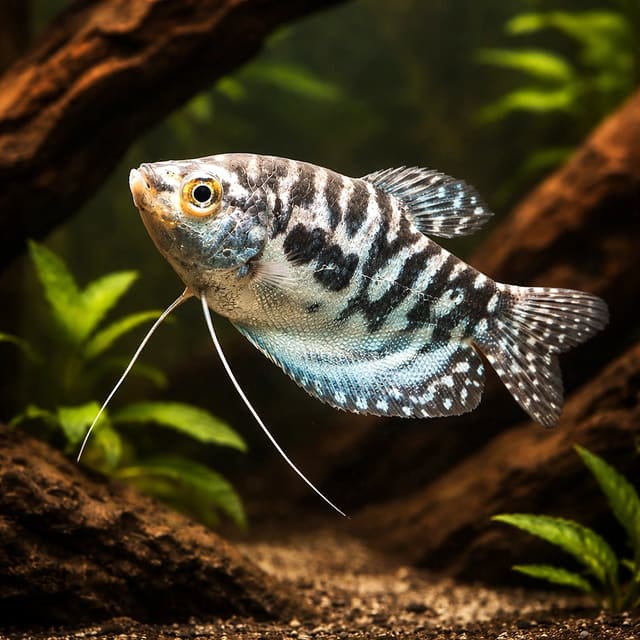
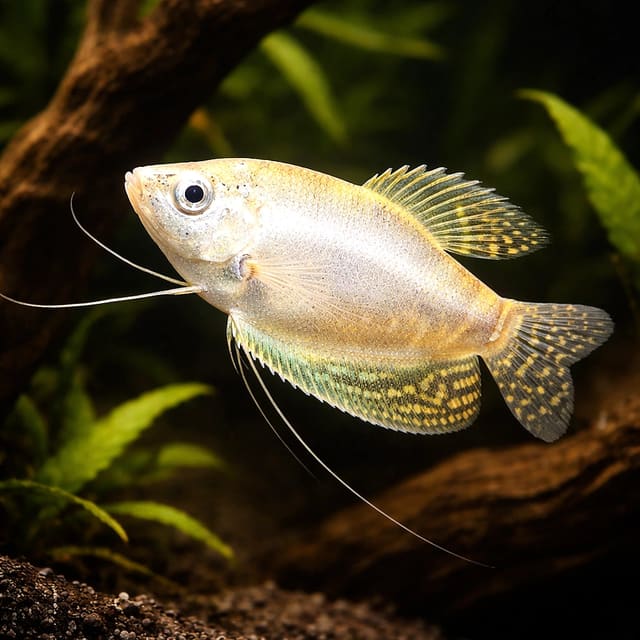
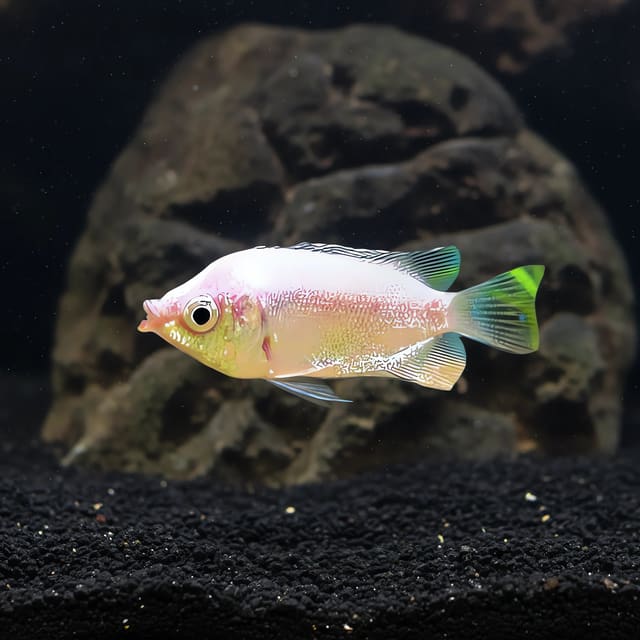
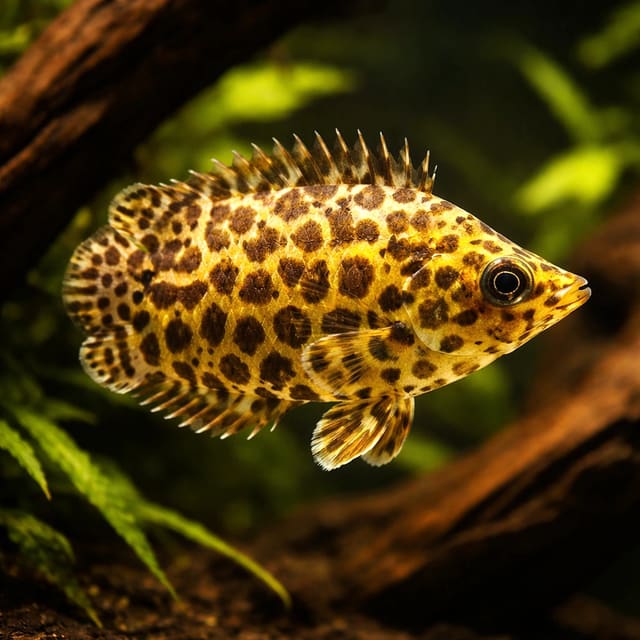
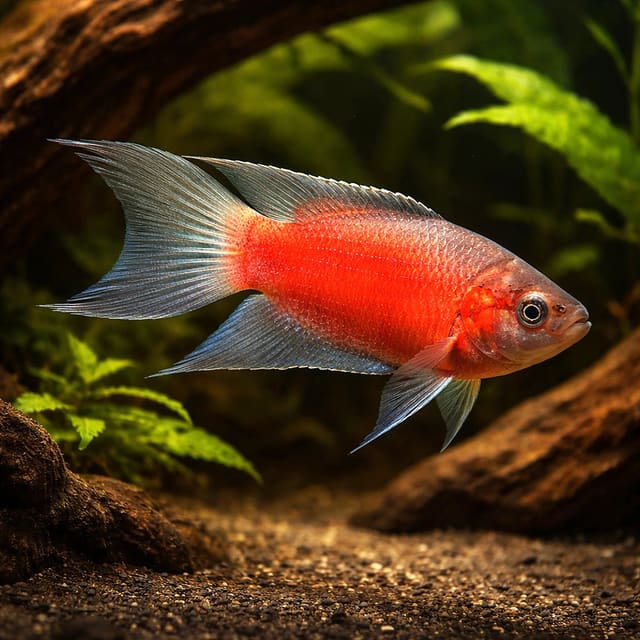
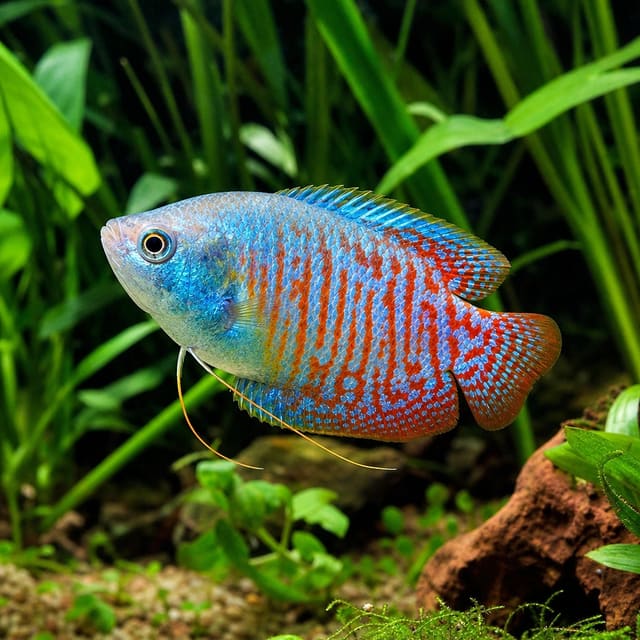
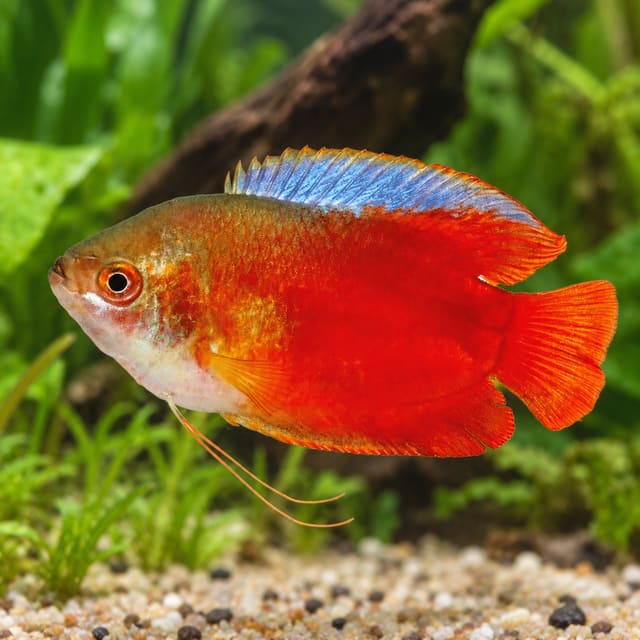
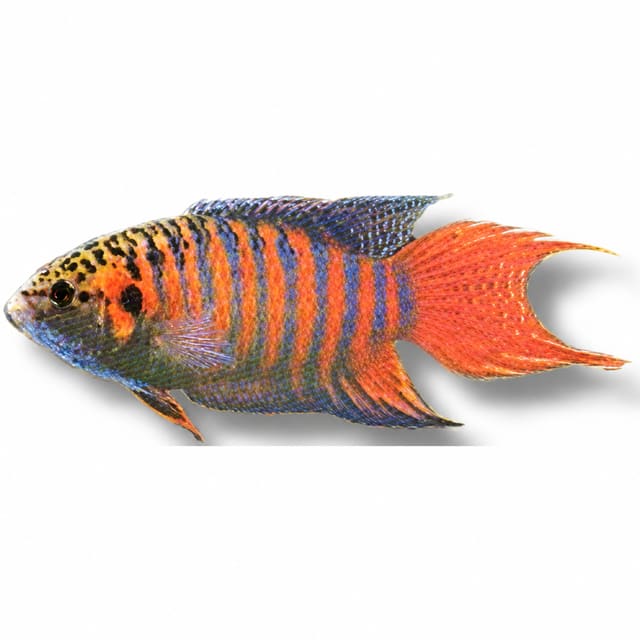
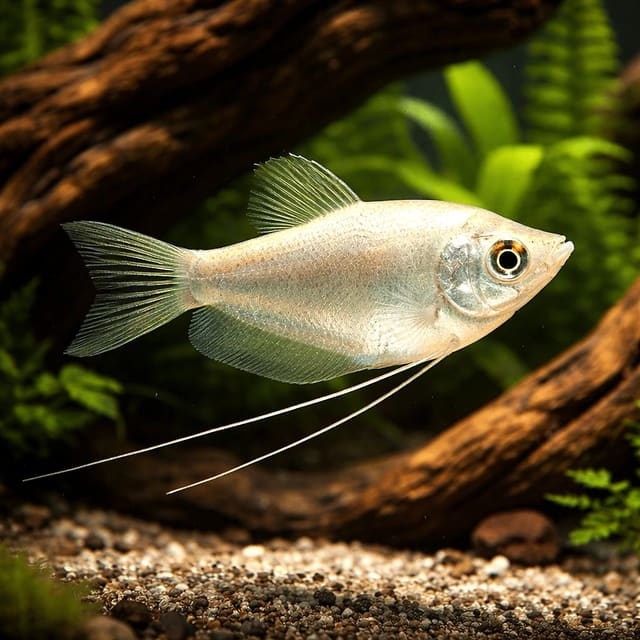
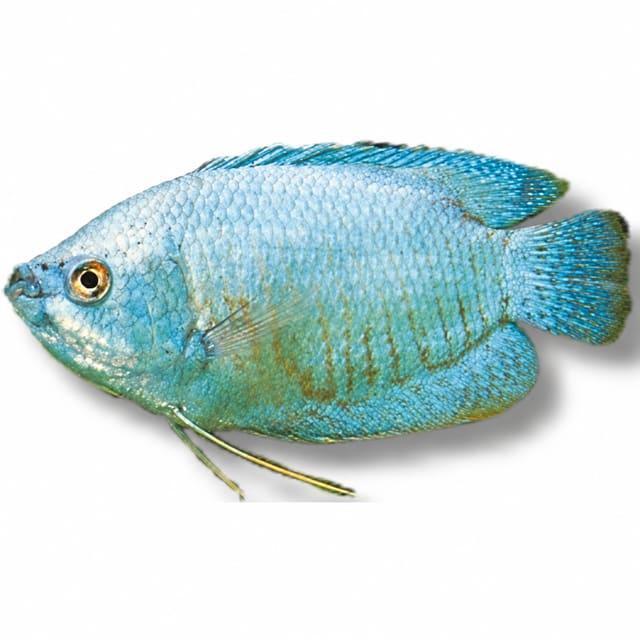
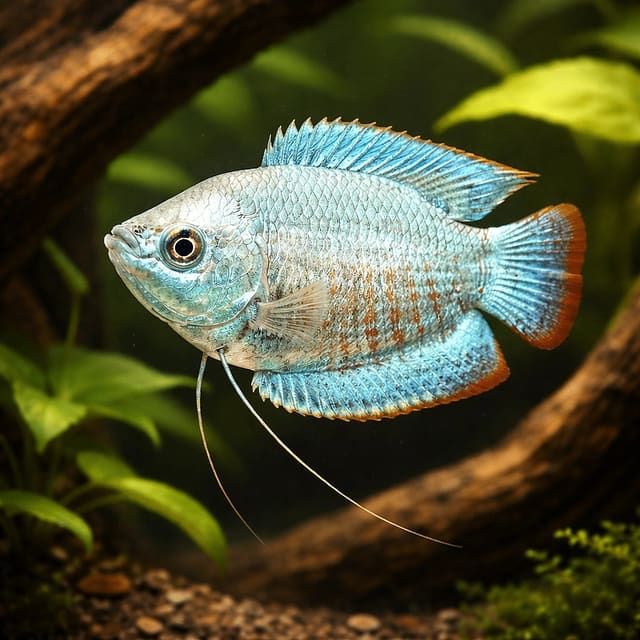
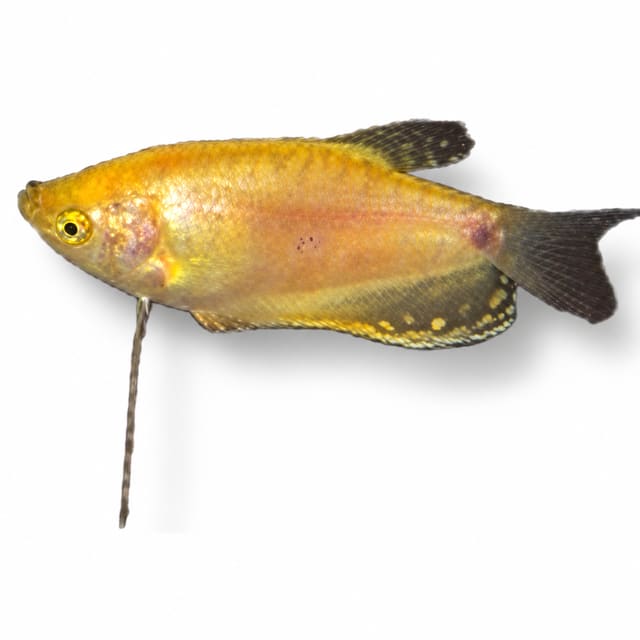
The gallery images are representative of this type of animal rather than photographs of the exact animal supplied, so colours can look slightly different from the live animal.
Neither the dispatch measurement nor the gallery should be used to infer sex, age, origin or eventual temperament. Make the choice from the stated offer and the adult care commitment, then use the live selector for the size attached to the purchase.
Seriously Fish gives an adult base of 183 × 61 cm and about 681 litres as the absolute bare minimum, while stressing that a bigger aquarium is better. Its species profile uses 70 cm standard length and gives an aquarium range of 20–30°C, pH 6.5–8.0 and hardness 5–25 dGH.
| Planning value | How to use it |
|---|---|
| Up to 70 cm SL | Plan around the maximum listed standard length rather than the dispatch size. |
| Base at least 183 × 61 cm | Treat both length and width as minimum adult dimensions. |
| About 681 litres | Use this only as the absolute bare minimum for one adult; bigger is better. |
| 20–30°C | Keep the aquarium at a stable point within this species range. |
| pH 6.5–8.0 | Check that the prepared aquarium lies within the stated range. |
| 5–25 dGH | Use the species range when assessing source water and aquarium water. |
A 6 cm fish would need to become more than eleven times that dispatch length to reach the 70 cm planning reference; a 9 cm fish would approach eight times its dispatch length. Those comparisons are not growth promises. They show why the size label cannot be used as the permanent-space specification.
Before committing, check the complete set of numbers together. A tank that reaches about 681 litres but falls short of the 183 × 61 cm base misses part of the stated minimum. Likewise, a correctly dimensioned aquarium still needs powerful filtration, suitable water and a routine capable of controlling the waste produced by a large adult.
The minimum adult plan combines a base of 183 × 61 cm with approximately 681 litres. Seriously Fish presents a 72 × 24 × 24 inch aquarium as the absolute bare minimum for an adult and says that bigger is better. In metric dimensions, 183 × 61 × 61 cm gives roughly 681 litres, showing how the footprint and volume belong to the same planning example.
Do not substitute height for the stated base. Adult length determines the need for a long aquarium, while the 61 cm minimum width provides the other part of the published footprint. If either base dimension falls short, a larger litre figure created mainly by extra height does not match the stated adult minimum.
| If the proposal does this | Make this decision |
|---|---|
| Meets litres but misses a base dimension | Choose a different aquarium with the required base. |
| Only just meets every minimum | Keep stocking restrained and prefer a larger system where practical. |
| Adds another large fish | Reassess space, filtration and compatibility rather than relying on the one-fish minimum. |
Provide hiding places with robust large rocks and bogwood, as recommended in the species profile. Keep every structure stable enough for use around a powerful large fish and preserve the open area needed by the adult. Floating plants are preferable to delicate planting in this profile, although the gourami may eat them.
Plan the permanent aquarium before using a smaller system for the selected dispatch size. The adult footprint is the fixed reference; the time taken to reach it is not a safe basis for delaying the long-term setup.
Powerful and efficient filtration is essential because Seriously Fish describes this species as exceptionally messy. Choose filtration for the planned adult aquarium rather than the body size delivered with the order. A filter that appears adequate for a 6 cm fish can become the limiting part of the system as body mass, food intake and waste increase.
At the roughly 681-litre absolute minimum, the species profile uses a turnover of four to five times the aquarium volume each hour. Four turnovers equal about 2,724 litres per hour and five equal about 3,405 litres per hour. Its worked recommendation is two filters, each rated at 1,360–1,705 litres per hour, producing a combined nominal range of about 2,720–3,410 litres per hour.
The RSPCA explains why a well-established biological filter is vital: fish release toxic ammonia, beneficial bacteria convert it to nitrite, and further bacteria convert nitrite to the safer nitrate. A labyrinth organ lets the gourami breathe atmospheric air, but it does not process dissolved waste.
Prepare and mature the filter before the fish enters the aquarium. Our guide to preparing and maturing a tropical aquarium explains the setup sequence. Do not use the Gold Giant Gourami to start the biological cycle.
| Filtration check | Required outcome |
|---|---|
| Adult capacity | Powerful filtration sized for the finished system. |
| Biological stage | A mature bacterial population able to process ammonia and nitrite. |
| Flow plan | About four to five rated turnovers per hour in the 681-litre example. |
| Routine access | Equipment that can be checked for blockage and maintained consistently. |
Maintain the aquarium within 20–30°C, pH 6.5–8.0 and 5–25 dGH. These are species aquarium values from the Seriously Fish profile and agree with the temperature and pH ranges listed by FishBase. Choose a stable point inside the range instead of moving between its extremes.
For dissolved waste, OATA's gourami and paradise fish sheet gives zero mg/l ammonia, zero mg/l nitrite and nitrate no more than 20 mg/l above the normal tap-water level as broad group guidance. It recommends testing at least weekly and changing 25% of the water at least once each week.
Use our aquarium water chemistry guide to understand what each test measures. After testing the aquarium, the water matcher can compare the measured values with the 20–30°C, pH 6.5–8.0 and 5–25 dGH ranges.
| Test result | Care response |
|---|---|
| Ammonia above zero | Treat it as a water-quality problem and review biological filtration, feeding and maintenance. |
| Nitrite above zero | Act on water quality rather than relying on the fish's air-breathing ability. |
| Nitrate more than 20 mg/l above tap water | Review the water-change routine and waste load. |
| pH, hardness or temperature outside range | Resolve the mismatch before introduction. |
If filter media needs cleaning, OATA advises rinsing it lightly in aquarium water removed during a partial change rather than running it under the tap. This reduces losses of the beneficial bacteria established in the media.
Osphronemus goramy is omnivorous and unfussy. FishBase records a wild diet containing plants and animals, including aquatic weeds, fish, frogs and earthworms. The species profile says it accepts pellets, frozen foods and vegetable matter and recommends a quality dried product with an algae-based food. Build the routine from those food categories rather than making one rich food the whole diet.
For frequency, OATA's wider gourami guidance recommends feeding once a day and giving only what the fish can eat within a few minutes. That schedule provides a clear stopping rule for pellets, granules, flakes, frozen food and vegetable matter. Portions must follow what is consumed within that short period rather than appetite at the glass.
| Food | Role in the routine |
|---|---|
| Quality dried food | Use as the dependable foundation of the diet. |
| Algae-based food | Include alongside the dried staple. |
| Pellets or granules | Offer only an amount eaten within a few minutes. |
| Frozen food | Use for variety within the same measured feeding period. |
| Vegetable matter | Include as one of the food types accepted by the species. |
OATA also names small live or frozen items such as daphnia, small bloodworm and tubifex in its group feeding guidance. Use any such food as part of a varied routine, not as permission to exceed the once-daily, few-minutes limit.
Overfeeding leaves food to break down and release toxic waste. If material remains after the feeding period, remove it and reduce the next portion. Check that the fish still receives a varied combination rather than solving leftovers by eliminating whole food categories.
Provide hiding places with robust large rocks and bogwood while retaining the space required by an adult that may reach 70 cm standard length. The species profile prefers floating plants but warns that they may be eaten, so planting should not be the only source of cover or the feature on which the layout depends.
Gold Giant Gourami belongs to a family of anabantids with a specialised labyrinth organ that allows atmospheric breathing. Keep the water surface accessible. This adaptation does not reduce the need for powerful filtration, zero ammonia, zero nitrite and controlled nitrate.
Heating must be calculated for the aquarium volume and room conditions. For the approximately 681-litre example, Seriously Fish estimates roughly 150–225 W spread across three heaters when the room is around 20°C. Recalculate for a different aquarium volume or room temperature.
| Heating decision | What to check |
|---|---|
| Using the 681-litre example | Start from roughly 150–225 W across three heaters when the room is around 20°C. |
| Using a larger aquarium | Recalculate rather than copying the 681-litre example unchanged. |
| Using a different room temperature | Reassess the heating requirement because the published estimate assumes about 20°C. |
| Setting temperature | Hold a stable value within the 20–30°C aquarium range. |
Check temperature with the same regularity as the rest of the water values. A heater wattage is an equipment estimate; the measured aquarium temperature is the value that confirms whether the setup remains inside the species range.
Prepare the complete aquarium before the fish arrives. OATA advises checking that the aquarium is an appropriate size for the intended number of gouramis and confirming that ammonia and nitrite are both zero before adding fish. For this species, that size check must include the adult plan even when the selected dispatch size is 6 cm, 7 cm or 9 cm.
Add livestock slowly because the beneficial bacteria in a mature filter must respond when fish numbers and feeding increase. OATA calls the failure caused by adding too many fish too quickly “new tank syndrome”: the bacterial population cannot process the increased waste, so ammonia and nitrite can rise to harmful levels.
Read the current delivery and Live Arrival Guarantee policy while planning receipt. Keep the aquarium, filter and water ready before the delivery date rather than attempting to mature or rearrange the system after the animal arrives.
| Checkpoint | Pass condition |
|---|---|
| Before introduction | The aquarium meets the adult plan and the filter is mature. |
| Water test | Ammonia and nitrite are zero mg/l. |
| First feeds | Food is limited to what is eaten within a few minutes once a day. |
| Ongoing review | Weekly tests continue, with a 25% partial water change at least once a week. |
A labyrinth fish reaching the surface does not demonstrate that the introduction has succeeded. Judge the setup through measured water quality, normal feeding and the behaviour-and-appearance checks used for all aquarium fish.
Learn the fish's usual swimming, colour, temperament, breathing, appearance, body condition and feeding response. OATA recommends watching changes in each of these areas because a departure from the fish's normal pattern can reveal a developing problem.
Healthy fish should have clear, bright eyes, undamaged fins, intact scales and no ulcerations or bumps. Check those features alongside stable posture and feeding. A single observation should lead to a water test and closer assessment rather than a guessed diagnosis.
| Change noticed | First response |
|---|---|
| Hanging at the surface, sitting on the bottom or erratic swimming | Test water quality and check the aquarium conditions. |
| Faster or slower gill-cover movement | Check temperature, ammonia and nitrite promptly. |
| Darker or paler colour than normal | Compare behaviour, feeding and water results with the fish's usual pattern. |
| More aggression or hiding | Review space and interactions with every companion. |
| White spots, fluffy growths or loss of fins or scales | Record the signs and seek fish-health guidance promptly. |
| Reduced food intake or changed body condition | Check water, feeding portions and access to food. |
The labyrinth organ can support atmospheric breathing, but it does not make ammonia or nitrite safe. Surface behaviour must therefore be assessed alongside water tests rather than dismissed as normal air breathing.
If you are concerned by a health change, test the water quality and contact us for further guidance. Report the measured temperature, pH, ammonia, nitrite and nitrate together with the behaviour or appearance change. Those concrete observations make the next decision clearer than a general description that the fish seems different.
Continue preventive care through mature filtration, weekly testing, a 25% water change at least once a week, controlled feeding and regular filter checks. Do not let a normal appetite replace these measurements; water quality and equipment condition still require direct checks.
Avoid smaller fish because the Gold Giant Gourami may eat them. Seriously Fish describes the species as generally peaceful with other large fish but notes that some adults may become very aggressive, often when the aquarium is too small.
Large body size alone does not settle compatibility. The aquarium must provide enough space for the gourami and every companion at adult size, while each fish must fit the same 20–30°C, pH 6.5–8.0 and 5–25 dGH range. An additional large fish also increases the waste that filtration and weekly maintenance must manage.
OATA's wider gourami guidance says to avoid timid fish, smaller fish that could be eaten and fish that may nip fins. Apply those screens conservatively to this exceptionally large gourami. A fish that cannot feed normally, move away from conflict or maintain its usual behaviour is not passing the practical compatibility test.
| Screen | Decision rule |
|---|---|
| Swallowing risk | Avoid smaller fish that may be eaten. |
| Temperament | Avoid timid fish and fish that may nip fins. |
| Adult space | Go beyond the one-adult minimum when another large fish is included. |
| Water overlap | Use companions suited to the complete temperature, pH and hardness range selected for the aquarium. |
| Waste load | Confirm that filtration and maintenance can manage all adult fish. |
With plenty of room, Seriously Fish says this gourami will usually coexist with knifefish, large catfish and loricariids. These are conditional examples rather than guarantees for every individual or aquarium. Temperament can change as an adult develops, and inadequate space can increase aggression.
Ask us for a stocking and compatibility assessment before combining this gourami with an uncertain companion. Include aquarium dimensions, volume, water values, filtration and the exact common and scientific name of every proposed fish.
This offer supplies one animal per selected quantity. Begin by planning a complete adult aquarium for that one Gold Giant Gourami, including the 183 × 61 cm minimum base, approximately 681-litre absolute minimum, powerful filtration and open surface access.
Do not assume that buying a second animal creates a compatible pair or a required social group. Some adults may become very aggressive, and individual behaviour cannot be predicted from a shared species name. More than one giant gourami should therefore be treated as a separate stocking decision with additional space and a response ready if conflict develops.
| Plan | Required assessment |
|---|---|
| One Gold Giant Gourami | Meet the full adult minimum and size filtration for its exceptional waste output. |
| One with another large species | Apply swallowing, temperament, adult-space, water and waste-load screens. |
| More than one giant gourami | Provide additional adult space and monitor each individual interaction rather than assuming pair compatibility. |
Watch for changes in aggression, hiding, feeding access and normal swimming. If one fish is repeatedly excluded from food or space, the combination requires immediate reassessment. Waiting for visible injury is not a suitable test of whether the stocking plan works.
The approximately 681-litre figure is an absolute bare minimum for an adult fish, not a universal allowance that can simply be repeated for every extra occupant. Aquarium shape, the adult size of all fish, hiding places, filtration and observed temperament remain part of the decision.
Avoid smaller fish because they may be eaten. Avoid timid fish and fish that may nip fins. For other large fish, compatibility remains conditional on robust temperament, matching water requirements, sufficient adult space and ongoing observation.
The Gold Giant Gourami reaches a recorded maximum of 70 cm standard length, so plan its permanent aquarium around a very large adult rather than its dispatch size.
An adult needs a base of at least 183 × 61 cm and around 681 litres as an absolute bare minimum, with a bigger aquarium and powerful filtration preferred.
Plan a complete adult home for one fish first; assess every additional giant gourami separately because some adults may become very aggressive.
This fish requires an adult aquarium of at least 183 × 61 cm and around 681 litres, powerful filtration and careful compatibility planning, so choose it only if you can manage that long-term commitment.
Feed the Gold Giant Gourami quality dried and algae-based foods with pellets, frozen foods and vegetable matter, giving only what it eats within a few minutes once a day.
Keep it at 20–30°C, pH 6.5–8.0 and 5–25 dGH; OATA's group guidance also sets ammonia and nitrite at zero mg/l and nitrate no more than 20 mg/l above tap water.
Some adults may become very aggressive, often when space is inadequate; avoid timid fish and fish that may nip the gourami's fins.
Avoid smaller fish that may be eaten; with plenty of room, Seriously Fish says the Gold Giant Gourami will usually coexist with knifefish, large catfish and loricariids, subject to adult space, water and temperament checks.
Start filming the sealed parcel before opening it and continue in one take until the Gold Giant Gourami is shown inside the sealed bag. Someone must be present to receive it; float the bag for 20–30 minutes, then release the fish without pouring the bag water into the aquarium.
No reviews for this item yet. Bought one? Honest reviews only, good or bad.
What customers say about ordering from us
I have a small group of long finned mountain minnows. So was delighted to be able to order ten of this variety to increase the genetics in my tank . The ones I recieved are healthy but it’s to early to give a verdict on wether they are of a long finned type since they are small currently.
Gordon Walker · 23 Sept 2026
100% success travel and "installation". Pleased with quality of purchase. The Siamese fighter a bit "shy" so have not yet seen him at his best yet but looking good. Happy customer. GG
George E Garratt · 21 Sept 2026
Reviews of our shop, collected by Judge.me, an independent third-party review collector. Newest first.