−14%
Moderate
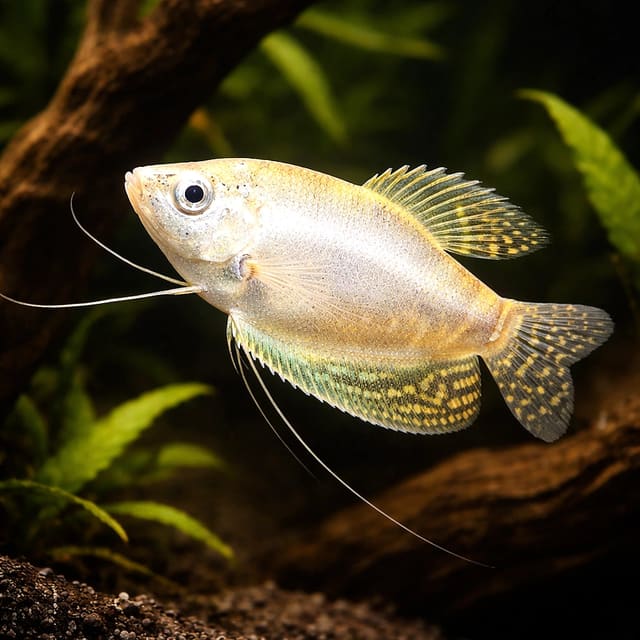
Gold Gourami (Trichopodus trichopterus)
24–28°C · pH 6–8 · 81L
£2.99£4.99

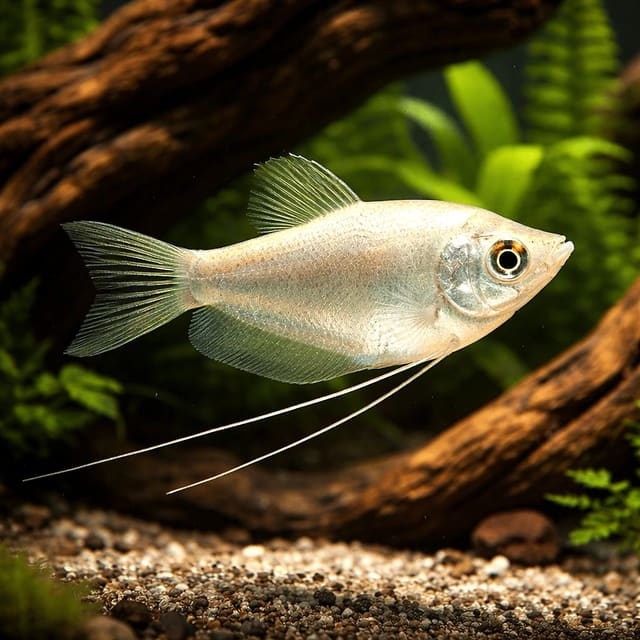
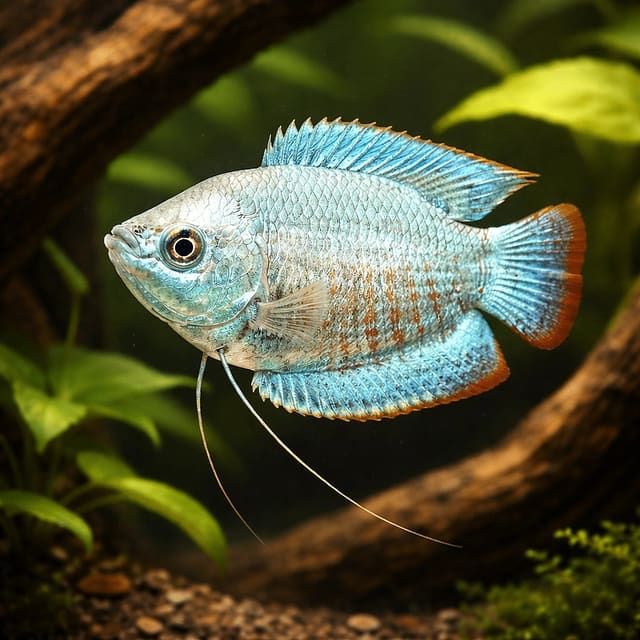
Trichogaster trichopterus silver, the Silver Three-Spot Gourami, is an Osphronemidae labyrinth fish from the Mekong basin and Southeast Asia that reaches 15 cm standard length. It suits prepared keepers who can manage territorial adults in an aquarium at least 100 cm long; 24–28°C and pH 6.0–8.0 are part of the overlap of FishBase, Seriously Fish and OATA guidance. Sold individually in dispatch sizes from 4–5 cm to 8–10 cm.
Adult size is the maximum length this species reaches at full maturity (scientific sources). The livestock you receive will be younger and smaller — pick a size above for the actual shipping size. Product-photo provenance and any image-specific limitations are stated on the listing.
Trichogaster trichopterus
Save when buying multiple fish. Each quantity is one fish; sex and pair formation are not guaranteed unless the selected variant explicitly states them.
Trichogaster trichopterus silver, the Silver Three-Spot Gourami, is an Osphronemidae labyrinth fish from the Mekong basin and Southeast Asia that reaches 15 cm standard length. It suits prepared keepers who can manage territorial adults in an aquarium at least 100 cm long; 24–28°C and pH 6.0–8.0 are part of the overlap of FishBase, Seriously Fish and OATA guidance. Sold individually in dispatch sizes from 4–5 cm to 8–10 cm.
Adult size is the maximum length this species reaches at full maturity (scientific sources). The livestock you receive will be younger and smaller — pick a size above for the actual shipping size. Product-photo provenance and any image-specific limitations are stated on the listing.
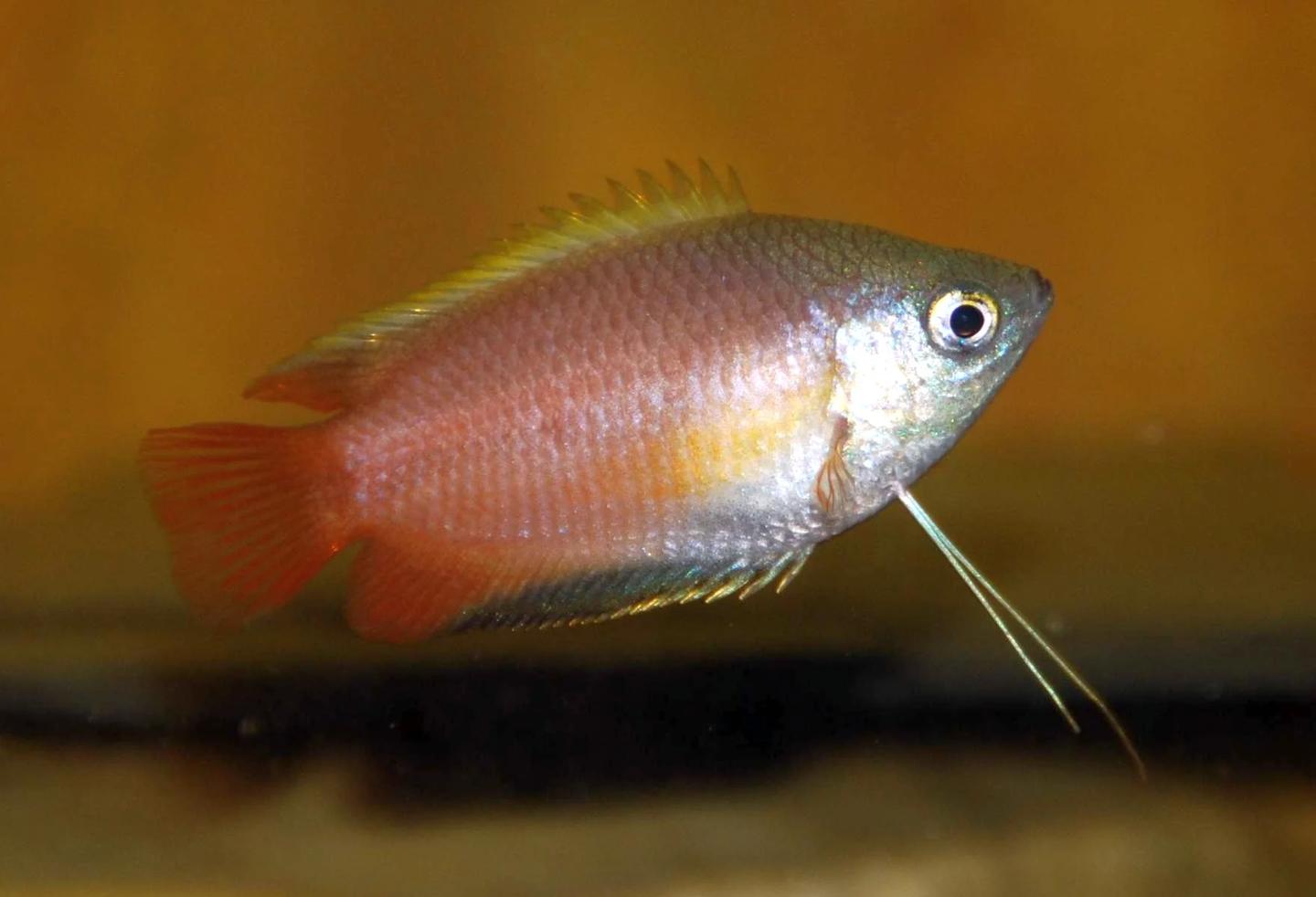
Start with a mature, filtered aquarium at least 60 cm long. Published size records disagree, and broad group guidance is not Honey-Gourami-specific, so verify Trichogaster chuna, the seller's adult-size advice and any claimed sexes before choosing one fish or a group.
Maintain these water conditions for optimal health and vibrant colors
The Silver Three-Spot Gourami (Trichogaster trichopterus) is a freshwater labyrinth fish in the Osphronemidae family. It comes from the Mekong basin in Laos, Yunnan, Thailand, Cambodia and Viet Nam, with a wider Southeast Asian distribution. FishBase records a maximum length of 15 cm standard length, so this is a substantial gourami rather than a small community fish. It suits a keeper prepared to provide adult space, stable water and a carefully screened community.
FishBase now lists it as Trichopodus trichopterus. The silver form is one of several selectively bred aquarium colour forms described by Seriously Fish. Its body plan remains characteristic of a gourami: laterally compressed, with long dorsal and anal fins and elongated pelvic-fin rays that help it sense its surroundings.
In nature, this air-breathing fish occupies lowland wetlands, marshes, swamps, canals and seasonally flooded forest. These waters are shallow, sluggish or still and contain abundant aquatic vegetation. It migrates laterally between permanent waters and flooded areas as seasons change. That background explains why a planted aquarium with floating cover, open swimming room and clear access to the surface is a practical layout.
The labyrinth organ lets the fish breathe atmospheric air, but it does not replace filtration or water maintenance. Plan for a well-matured aquarium, a reliable biological filter and enough surface access for normal air-breathing behaviour. Browse our gouramis and labyrinth fish collection when comparing this fish with other members of the group.
Choose an aquarium at least 100 cm long and keep the water at 24–28°C, pH 6.0–8.0 and 5–12 dGH. The 15 cm adult size, deep body and variable temperament make swimming length and sensible stocking as important as the nominal volume.
FishBase gives a minimum aquarium size of 100 cm. Seriously Fish gives a 90 × 30 cm base and approximately 81 litres, together with planted cover and open swimming areas. We use the longer FishBase dimension as the practical minimum while retaining the approximately 81-litre figure as a comparison benchmark, not as permission to use a short aquarium.
We rate this fish as intermediate care. Seriously Fish describes it as hardy and adaptable but recommends it to beginners with reservations because individual temperament varies. Some adults remain peaceful, while others become spiteful; males are territorial and may be highly aggressive during breeding.
| Suits | Not suited to |
|---|---|
| Keepers with an aquarium at least 100 cm long | Short aquariums planned around the dispatch size |
| Planted layouts with floating cover and open swimming room | Crowded surface zones without territorial space |
| Communities of robust, appropriately sized fish | Timid fish, edible-sized fish or fin-nipping fish |
| Keepers ready to monitor individual temperament | Stocking plans that assume every adult stays peaceful |
One purchase supplies one fish in the size selected on the live size selector. The listed dispatch choices are 4–5 cm, 6–7 cm, 7–8 cm and 8–10 cm. The size you select is the size supplied, not the adult size. Every choice therefore needs an aquarium planned around the same 15 cm maximum standard length.
A smaller dispatch fish does not justify a smaller permanent aquarium. Before choosing 4–5 cm, check that the aquarium can accommodate a deep-bodied 15 cm adult and its robust companions. A larger dispatch fish also needs a measured compatibility assessment before introduction because established residents must have enough room to avoid and pass one another.
Sex is guaranteed only when the selected option explicitly states male or female. This Trichogaster trichopterus silver listing has no sex-guaranteed option.
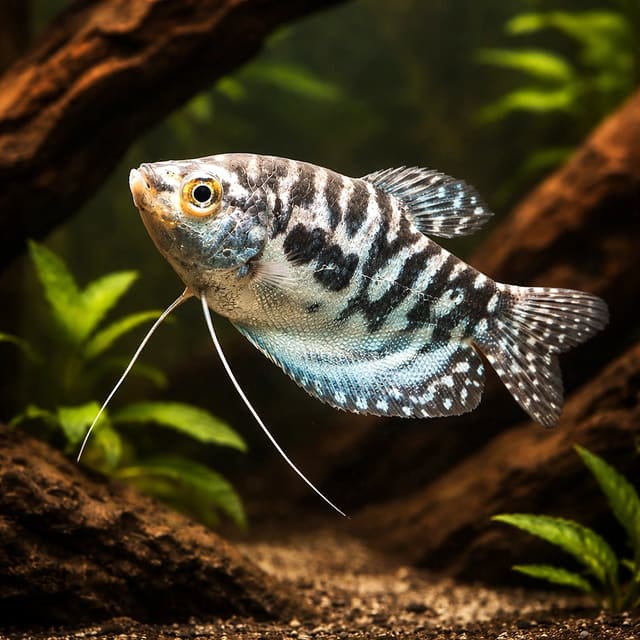
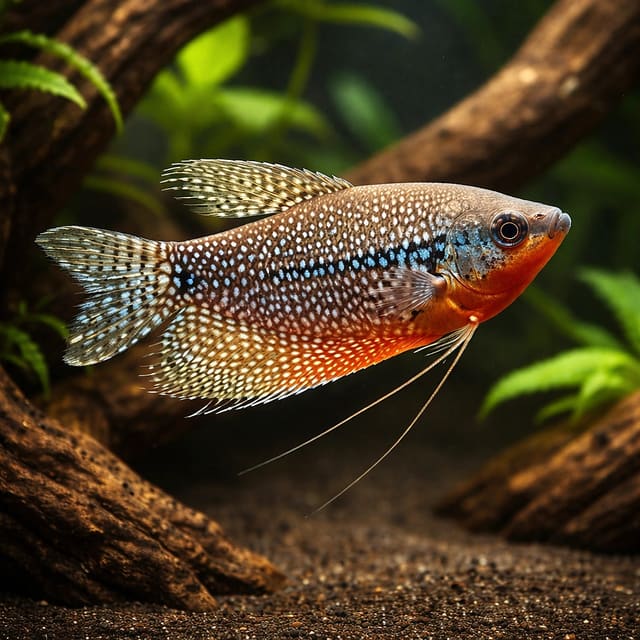
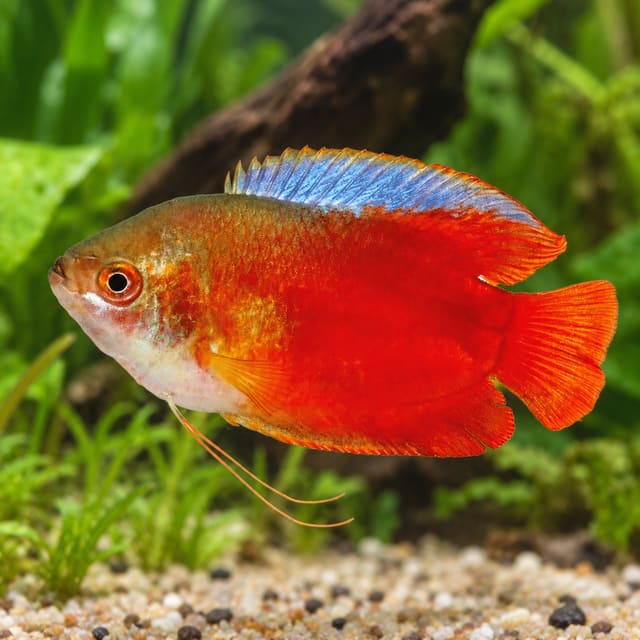
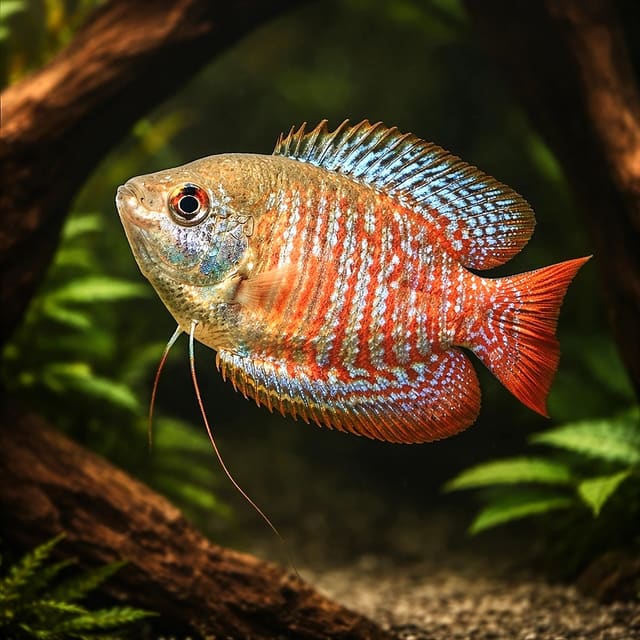
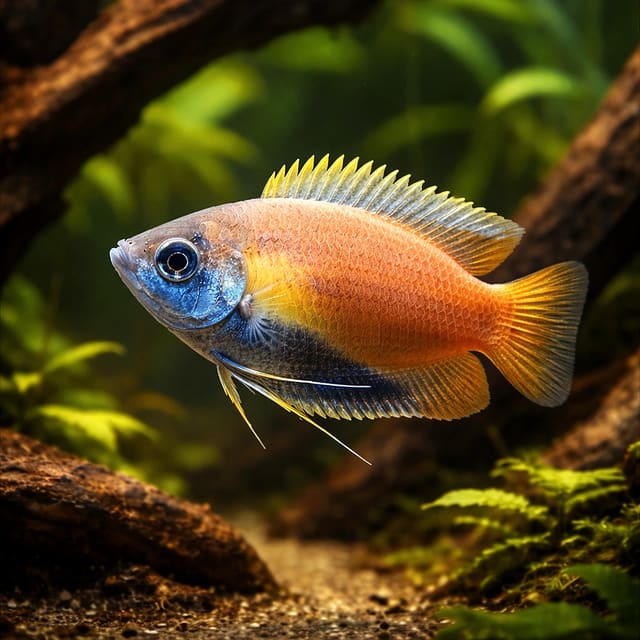
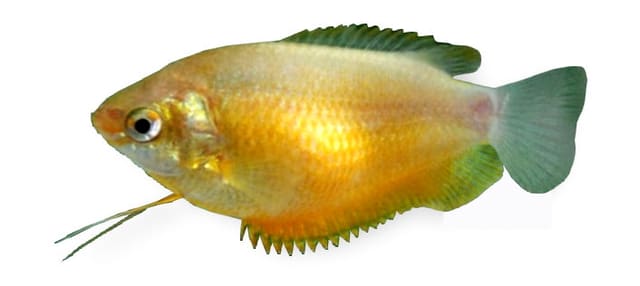
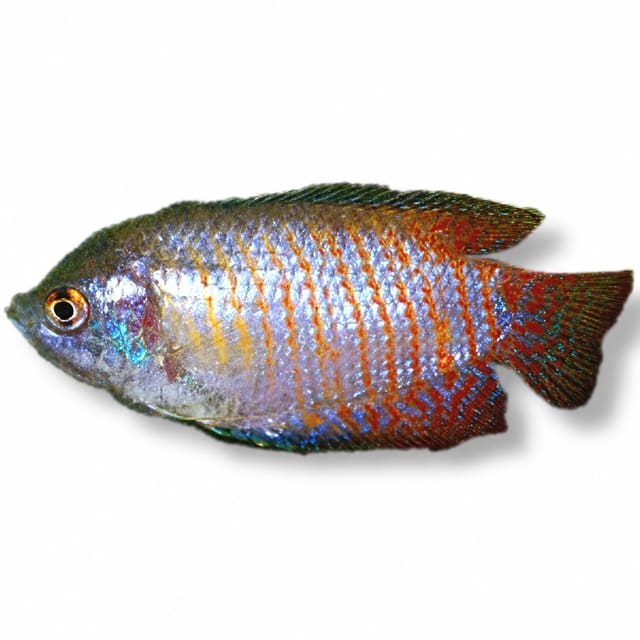
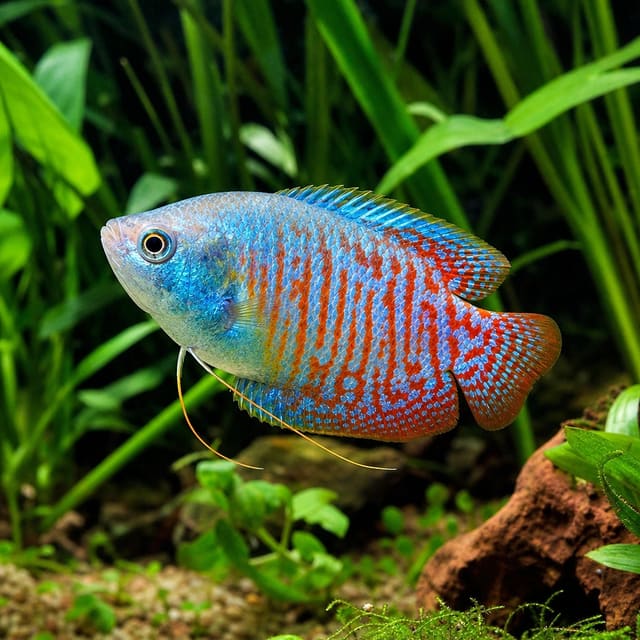
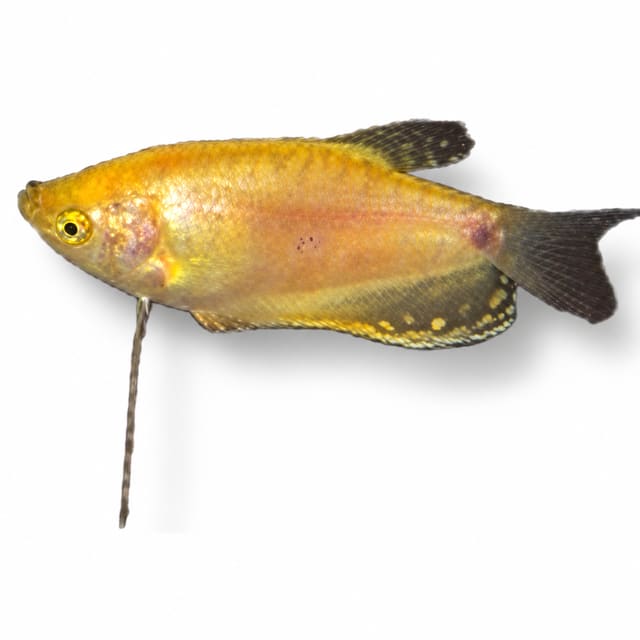
The gallery images are representative of this type of animal rather than photographs of the exact animal supplied, so colours can look slightly different from the live animal.
Use the selector for dispatch size, then make the separate husbandry decision from the adult dimensions, water range and temperament described here. That distinction prevents a juvenile measurement from becoming the basis for a permanent stocking plan.
Start with an aquarium at least 100 cm long. FishBase gives that minimum aquarium length for a fish reaching 15 cm standard length. Seriously Fish uses a 90 × 30 cm base and approximately 81 litres as its aquarium-size reference, but the longer 100 cm instruction gives the adult more usable swimming length and more scope for separating territories.
Use live plants and some floating cover while retaining open areas for swimming. Place cover so the fish can move between sheltered and open zones without losing access to the surface. Gouramis possess a labyrinth organ and regularly breathe atmospheric air, so the route to the surface must remain open.
OATA’s gourami guidance recommends gravel or sand and ideally live plants. Seriously Fish specifically describes a planted aquarium with floating cover and open swimming areas. These elements also create a more useful footprint when a fish wants to move away from another resident.
Use our first tropical aquarium guide to prepare and mature the system before livestock is introduced. Add fish gradually rather than filling the aquarium in one step, because the biological filter’s bacterial population must adjust when waste and feeding increase.
Do not judge capacity by volume alone. Two aquariums can hold similar litres while offering different swimming lengths and territorial layouts. For this gourami, the adult body size and the 100 cm minimum length remain the decisive spatial checks.
Keep this gourami at 24–28°C, pH 6.0–8.0 and 5–12 dGH. These values sit inside FishBase’s recorded environment of 22–28°C, pH 6.0–8.0 and 5–19 dGH, the Seriously Fish aquarium range of 24–30°C, pH 5.5–8.5 and 3–35 dGH, and OATA’s gourami group guidance of 20–28°C, pH 6.0–8.0 and 4–12 dGH. The working range is the overlap of all three.
Test the aquarium before introduction and at least weekly afterwards. Temperature shows whether the heater is holding the intended range. pH and general hardness establish whether the aquarium remains within the planned chemistry. Ammonia and nitrite must both remain at zero milligrams per litre, while OATA advises keeping nitrate no more than 20 mg/l above the normal tap-water level.
Read our water chemistry guide for the role of each measurement, then use the water matcher to compare measured aquarium values with this fish’s range.
| Measurement | Decision |
|---|---|
| 24–28°C | Keep the heater stable within this range |
| pH 6.0–8.0 | Use a stable value inside the range |
| 5–12 dGH | Match the fish to soft-to-medium general hardness |
| Ammonia 0 mg/l | Do not add livestock if ammonia is detectable |
| Nitrite 0 mg/l | Do not add livestock if nitrite is detectable |
| Nitrate | Keep it within 20 mg/l of the tap-water baseline |
A stable result inside the range is the goal. Test after a change in stocking, feeding or maintenance because each can alter the load handled by the biological filter.
Use a well-established, maintained biological filter in every permanent aquarium. The RSPCA explains that biological filtration supports bacteria that convert toxic ammonia into nitrite and then into the safer nitrate. Air breathing does not reduce this fish’s need for clean, filtered water.
Seriously Fish recommends filtration turning over four to five times the aquarium volume each hour. Its approximately 81-litre reference aquarium therefore corresponds to a filter rating of roughly 325–405 litres per hour. Apply the same calculation to the aquarium’s real volume: multiply litres by four for the lower figure and by five for the upper figure.
| Aquarium volume | Four-to-five-times calculation |
|---|---|
| 81 litres | Approximately 325–405 lph |
| 100 litres | 400–500 lph |
| 120 litres | 480–600 lph |
The calculated rating is a starting point for choosing equipment. Arrange the outlet so the whole aquarium is filtered while the gourami can still reach the surface and use planted cover. Inspect the filter regularly for blockages because reduced circulation also reduces the volume of water reaching its biological media.
When media needs cleaning, rinse filter media in water removed from the aquarium, never under the tap. Treat replacement tap water with a suitable conditioner before it enters the aquarium.
Increase stocking slowly. OATA warns that adding too many fish too quickly can cause new tank syndrome when the bacterial population cannot process the increased waste. Test ammonia and nitrite after each stocking increase and keep both at zero. If either appears, stop further additions and focus on restoring water quality before the plan continues.
Feed one small meal a day, offering only what the fish can finish within a few minutes. OATA’s gourami guidance provides this portion and frequency rule. Remove uneaten food because it breaks down into waste and adds pressure to the biological filter.
The recorded diet is genuinely mixed. FishBase reports zooplankton, crustaceans and insect larvae in nature. Seriously Fish also describes terrestrial and aquatic plants, algae, small invertebrates, zooplankton and detritus. Choose a good-quality omnivore flake, granule or pellet as the regular prepared food, include an algae-based food, and vary meals with suitably small live or frozen items.
| Meal role | Supported choices |
|---|---|
| Prepared food | Good-quality flake, granule or pellet |
| Plant and algae component | An algae-based prepared food |
| Live or frozen variety | Daphnia, small bloodworm or tubifex |
Alternate these choices across successive daily meals rather than serving several full portions together. Variety changes what is fed, not the total allowance. Stop adding food once the fish is no longer taking it promptly.
Watch whether the fish approaches food and eats normally. OATA identifies reduced intake or loss of interest in food as a change that may signal a health or water-quality problem. If feeding response drops, test ammonia, nitrite, nitrate, temperature and pH before deciding what else to do.
Also watch how companions behave during the meal. A timid fish repeatedly displaced from food is a compatibility warning, while one gourami dominating the whole feeding area suggests that the stocking layout needs reassessment. Spread the single meal through the occupied feeding area only when doing so lets all residents eat without increasing the overall quantity.
Change 25% of the aquarium water at least once every week. OATA strongly recommends this routine for gouramis and paradise fish, alongside weekly testing and regular filter checks. Use a siphon to remove solid waste from the substrate during the change.
Record the tap-water nitrate result as well as the aquarium result. OATA’s ceiling is no more than 20 mg/l above the normal tap-water level, so the difference between those readings is the useful comparison.
Ammonia or nitrite above zero means the biological filter is not processing the current waste load. Pause further livestock additions, check filtration and continue monitoring. A rising nitrate difference points to accumulating waste and calls for closer attention to feeding, stocking and the weekly water-change routine.
A sudden change in pH, temperature or hardness should prompt a check of replacement water, heater operation and recent aquarium changes. Work from measured values rather than adjusting several things at once. One controlled correction is easier to evaluate than a series of simultaneous interventions.
Weekly maintenance is also the time to inspect swimming room and plant growth. Keep the surface route open, retain floating cover without allowing it to occupy every open area, and preserve the swimming lanes that were planned for the adult fish. These small checks keep the original layout functional as plants mature.
Use the fish’s normal appearance, feeding and movement as a baseline, then act on changes. Healthy fish should have clear, bright eyes, intact scales and undamaged fins, without ulcerations or bumps. Individual behaviour varies, so a change from the fish’s established pattern is more useful than expecting every gourami to behave identically.
Normal visits to the surface are part of labyrinth-fish biology. Judge concern from a changed pattern, associated rapid gill movement, poor balance, reduced feeding or other signs rather than from surface breathing alone.
Measure temperature, pH, ammonia, nitrite and nitrate immediately. Confirm that the filter is operating and that recent feeding or stocking has not increased its load. Ammonia and nitrite must be zero; compare nitrate with the tap-water baseline.
Check compatibility at the same time. Chasing, exclusion from food, fin damage or persistent hiding may indicate that an individual’s temperament has changed as it matured. Separate immediate observation from diagnosis and do not medicate on guesswork. If the change persists after water and compatibility checks, contact us for guidance with the measured values and observed signs.
Have the mature, filtered aquarium running before the fish arrives. OATA’s gourami guidance supports testing for 24–28°C, pH 6.0–8.0, 5–12 dGH, zero ammonia and zero nitrite; the temperature, pH and hardness figures are the overlap of FishBase, Seriously Fish and OATA guidance. Confirm that someone can receive the parcel because live fish must not be left unattended.
These steps come from the Tropical Fish Co delivery and Live Arrival Guarantee policy. Fish are hand-bagged in pure oxygen and placed in an insulated poly box, with a heat pack when the weather calls for it. Transport is handled by a licensed live-animal courier.
Once released, check balance, swimming, breathing, body condition and fin condition. Remember that this species normally takes atmospheric air at the surface. Look for combinations of changed behaviour rather than treating ordinary surface visits as a problem.
Keep the planned stocking increase gradual. The biological filter must adjust whenever more fish and food increase waste production, so do not combine the new gourami with several other additions at the same time. Test ammonia and nitrite after introduction and keep both at zero.
During the first week, confirm that the gourami eats its once-daily portion, can reach the surface and is neither excluding companions nor being displaced by them. Recheck the layout if one fish is repeatedly trapped behind cover or prevented from entering open swimming space. Early observation turns territorial behaviour, feeding competition and water changes into specific decisions before they become established problems.
Choose robust, appropriately sized fish that can share the water range and are unlikely to be swallowed, intimidated or drawn into repeated territorial disputes. Seriously Fish names barbs, larger characins, loricariids and loaches among the stronger companion types used with this species. It also mentions medium or large gouramis, but those require extra caution because male gouramis can be territorial.
| Question | Decision |
|---|---|
| Is it timid? | Avoid it because OATA advises against timid companions for robust gouramis |
| Is it small enough to be eaten? | Avoid it |
| Is it likely to nip fins? | Avoid it |
| Is it a robust barb or larger characin? | Consider it if adult size, water and space also match |
| Is it a loricariid or loach? | Consider it after checking adult size, water and aquarium footprint |
| Is it another medium or large gourami? | Use caution and assess sex, territory and surface-space competition |
A category name is not a universal compatibility promise. Barbs vary in fin-nipping behaviour, while characins, loricariids and loaches vary greatly in adult size and water needs. Screen the exact animal against all four tests: adult size, temperament, water overlap and usable space.
Do not use calm juvenile behaviour as a lifetime guarantee. Seriously Fish reports that some individuals remain peaceful while others become spiteful as they mature. The community must therefore have enough structure and room to respond if an adult’s behaviour changes.
Invertebrates are not part of the named companion guidance used for this plan. Build this community from the robust fish groups above, then make any additional stocking decision through a separate assessment rather than assuming that an animal living in another tank zone is automatically safe.
Plan around one specimen as the cautious starting point. Males are territorial, squabble among themselves and may become very aggressive during breeding. A single specimen avoids male-to-male conflict, while any plan for several gouramis needs more space, visual separation and a clear response if one fish dominates the others.
There is no fixed group formula that suits every aquarium. OATA’s broad gourami guidance often plans around a small group, but this species varies too much in temperament for that number to be applied automatically. Seriously Fish reports both peaceful adults and individuals that become spiteful. For a multi-gourami plan, contact us once you know the aquarium dimensions, existing residents and intended fish.
If these signs appear, test the water first and then observe who initiates the conflict. Rearranging cover can change territorial boundaries, but persistent aggression may require separating fish. Do not solve repeated chasing by adding more animals to the same constrained footprint.
This species is a bubble-nester. Seriously Fish describes the male constructing a large nest among floating plants and becoming aggressive around reproduction. Even without a breeding project, floating cover may become a defended area. Keep alternative routes to the surface and avoid concentrating all feeding and cover into one corner.
Compatibility remains an individual assessment throughout adulthood. A combination that works initially still needs monitoring for changing aggression, feeding access and fin condition. The practical standard is not simply whether fish occupy the same aquarium, but whether each can feed, move and rest without repeated intimidation.
Trichogaster trichopterus silver reaches 15 cm standard length according to FishBase. Plan the permanent aquarium around that adult figure rather than the selected dispatch size.
Use an aquarium at least 100 cm long. FishBase gives a 100 cm minimum aquarium size, while Seriously Fish gives a 90 × 30 cm base and approximately 81 litres; the longer dimension is the practical minimum used here.
Plan around one specimen as the cautious starting point because males are territorial and may fight, particularly during breeding. Any group needs a sex-aware assessment, more space and close monitoring rather than a fixed group number.
We rate it intermediate: Seriously Fish describes it as hardy and adaptable but recommends it to beginners with reservations because adult temperament varies and males can become territorial.
Feed one small meal daily that is eaten within a few minutes. Use quality omnivore flake, granules or pellets, include an algae-based food, and vary meals with small live or frozen daphnia, bloodworm or tubifex.
Keep it at 24–28°C, pH 6.0–8.0 and 5–12 dGH. This is the overlap of FishBase’s recorded environment, Seriously Fish aquarium values and OATA’s gourami group guidance.
Some individuals remain peaceful while others become spiteful as they mature; males are territorial and can be highly aggressive during breeding. Avoid fin-nipping companions, and monitor chasing, food access and fin condition.
Consider robust barbs, larger characins, loricariids and loaches when their adult size, water needs and space requirements match. Avoid timid fish, fish small enough to be eaten and fin-nipping fish; use caution with other medium or large gouramis.
It travels hand-bagged in pure oxygen in an insulated poly box, with a heat pack when the weather calls for it, via a licensed live-animal courier; someone must be home to receive it.
No reviews for this item yet. Bought one? Honest reviews only, good or bad.
What customers say about ordering from us
I have a small group of long finned mountain minnows. So was delighted to be able to order ten of this variety to increase the genetics in my tank . The ones I recieved are healthy but it’s to early to give a verdict on wether they are of a long finned type since they are small currently.
Gordon Walker · 23 Sept 2026
100% success travel and "installation". Pleased with quality of purchase. The Siamese fighter a bit "shy" so have not yet seen him at his best yet but looking good. Happy customer. GG
George E Garratt · 21 Sept 2026
Reviews of our shop, collected by Judge.me, an independent third-party review collector. Newest first.