Easy
Pearl Gourami (Trichopodus leerii) – 2.5–7cm & XL Size Grades
24–28°C · pH 6–8 · 81L
£5.99

The Moonlight Gourami (Trichogaster microlepis) is a freshwater gourami from the Mekong in Cambodia and Viet Nam and the Chao Phraya basins that reaches 14 cm. It suits keepers who can provide a planted 90 × 30 cm aquarium base with slow flow; the overlap of Seriously Fish species guidance and OATA group guidance is 25–28°C, pH 6.0–7.5 and 4–12°dGH. Sold individually in dispatch sizes from 3,5 - 4,5 cm to 8 - 10 cm.
Adult size is the maximum length this species reaches at full maturity (scientific sources). The livestock you receive will be younger and smaller — pick a size above for the actual shipping size. Product-photo provenance and any image-specific limitations are stated on the listing.
Trichogaster microlepis
The Moonlight Gourami (Trichogaster microlepis) is a freshwater gourami from the Mekong in Cambodia and Viet Nam and the Chao Phraya basins that reaches 14 cm. It suits keepers who can provide a planted 90 × 30 cm aquarium base with slow flow; the overlap of Seriously Fish species guidance and OATA group guidance is 25–28°C, pH 6.0–7.5 and 4–12°dGH. Sold individually in dispatch sizes from 3,5 - 4,5 cm to 8 - 10 cm.
Adult size is the maximum length this species reaches at full maturity (scientific sources). The livestock you receive will be younger and smaller — pick a size above for the actual shipping size. Product-photo provenance and any image-specific limitations are stated on the listing.
Start with a mature, filtered aquarium at least 60 cm long. Published size records disagree, and broad group guidance is not Honey-Gourami-specific, so verify Trichogaster chuna, the seller's adult-size advice and any claimed sexes before choosing one fish or a group.
Maintain these water conditions for optimal health and vibrant colors
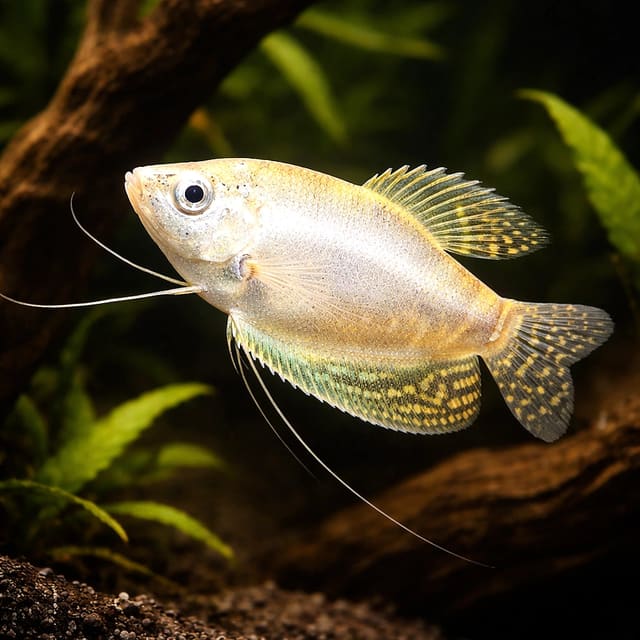
The Moonlight Gourami (Trichogaster microlepis) is a freshwater member of the Osphronemidae family from the Mekong in Cambodia and Viet Nam and the Chao Phraya basins. FishBase records a maximum length of 14 cm. It suits keepers who can provide warm, tested water, a planted aquarium with slow flow and carefully screened companions. Its deep, laterally compressed silver body carries the elongated pelvic-fin rays characteristic of gouramis. Those thread-like rays help gouramis sense their surroundings.
FishBase now lists it as Trichopodus microlepis, treating Trichogaster microlepis as a synonym. It records the fish as demersal and originally occurring in the Mekong in Cambodia and Viet Nam and in the Chao Phraya basins. It has also been introduced elsewhere, including the Mekong basin in Thailand.
This is a labyrinth fish with a specialised organ that allows it to breathe atmospheric air. It still needs clean water, a properly maintained filter and careful aquarium management.
Wild Moonlight Gouramis inhabit ponds, swamps and shallow, sluggish or standing water with abundant aquatic vegetation. That natural history supports an aquarium with slow flow, planted shelter and open water where the fish can move without being pushed continually by the filter outlet. Plants should create cover without filling every swimming route.
In nature, the fish feeds on zooplankton, crustaceans and aquatic insects. This explains why varied animal-based live or frozen foods complement a good prepared staple in the aquarium. It does not make the species an algae-control fish or a substitute for routine maintenance.
| Suits | Not suited to |
|---|---|
| A planted aquarium with open swimming room and slow flow | An unfiltered aquarium or one with persistent harsh current |
| Keepers able to maintain warm, tested water | Communities containing fish small enough to be eaten |
| Carefully screened community plans | Fin-nipping or overly vigorous companions |
| A varied omnivorous feeding routine | A plan relying on this fish for algae control |
Its restrained silver appearance suits keepers who prefer form, reflective colour and measured movement rather than a brightly patterned centrepiece. Explore the gourami and labyrinth fish collection when comparing related aquarium fish, but assess each candidate separately for adult dimensions, temperament and water requirements.
One purchase supplies one animal of the selected option. The live size selector shows the labels 3,5 - 4,5 cm, 6 - 7 cm, 8 - 10 cm and 5-5.5 cm; use it to choose the dispatch size shown for your order. The size you select is the size supplied, not the adult size.
A smaller dispatch fish is not a different species, a promised age or a sex indicator. It still needs an aquarium planned around the mature fish from the outset. A larger dispatch size also does not remove the need for gradual introduction, restrained feeding and close observation after arrival.
| Selection detail | How to use it |
|---|---|
| Size label | Treat it as the dispatch-size band for the selected fish. |
| Purchase quantity | Quantity one means one Moonlight Gourami. |
| Adult planning | Use the adult measurement and aquarium footprint, not the dispatch size. |
| Sex | Plan without assuming that size or colour identifies the sex supplied. |
Sex is guaranteed only when the selected option explicitly states male or female. This Moonlight Gourami listing has no sex-guaranteed option.
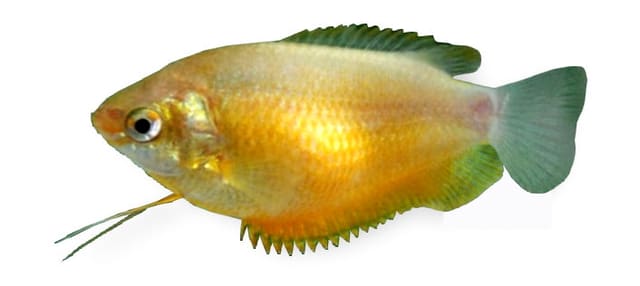
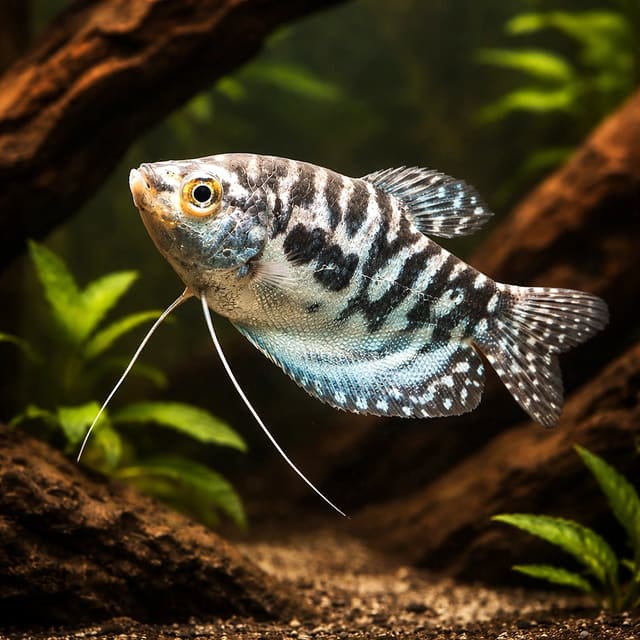
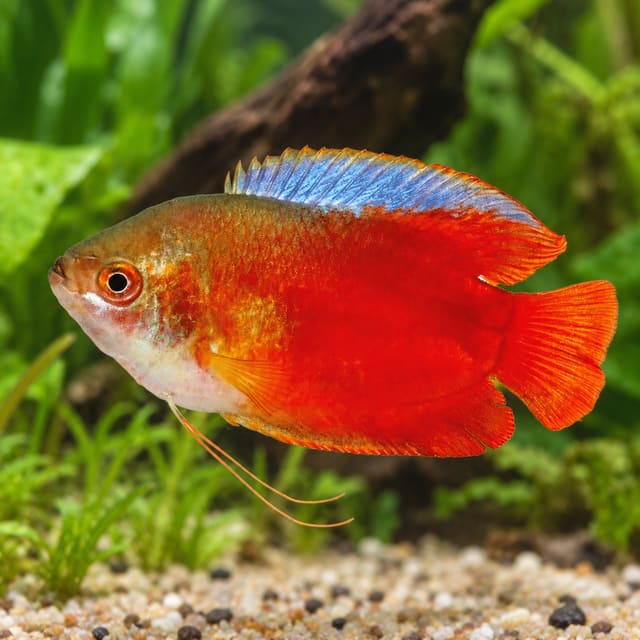
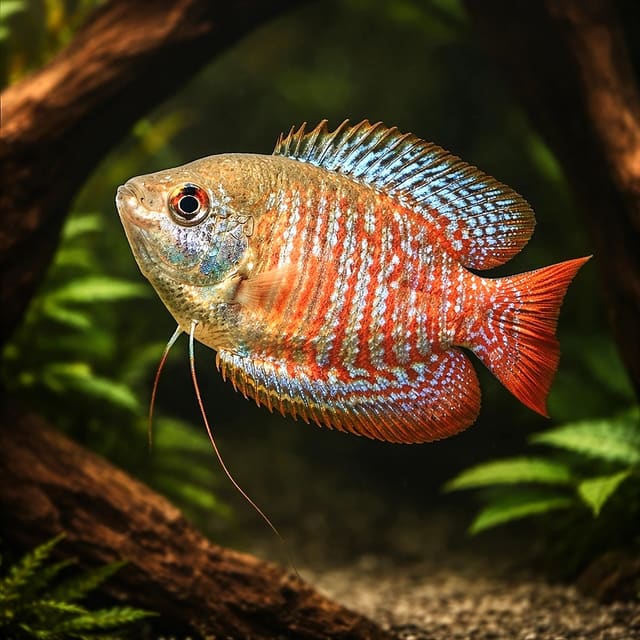
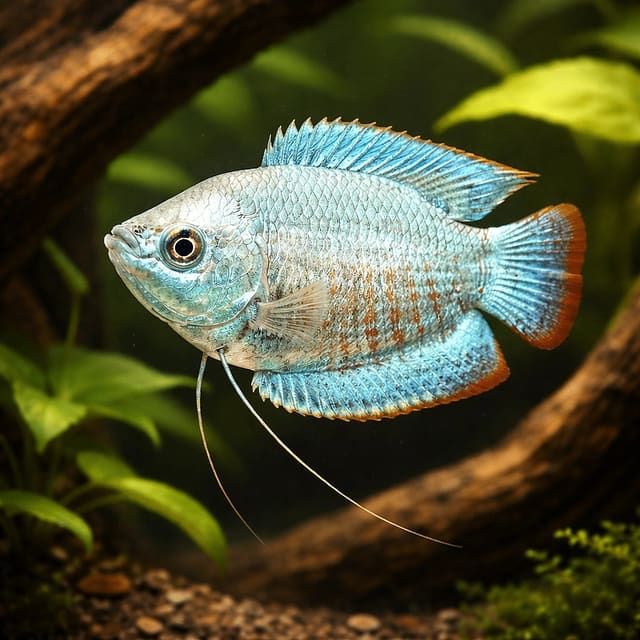
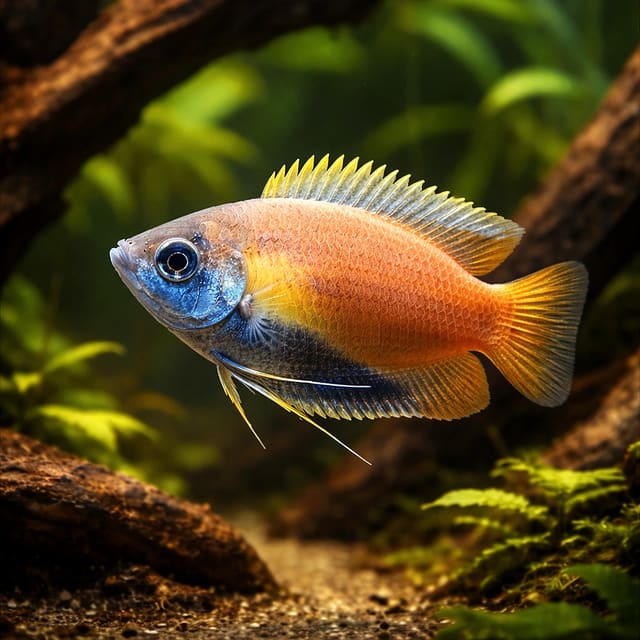
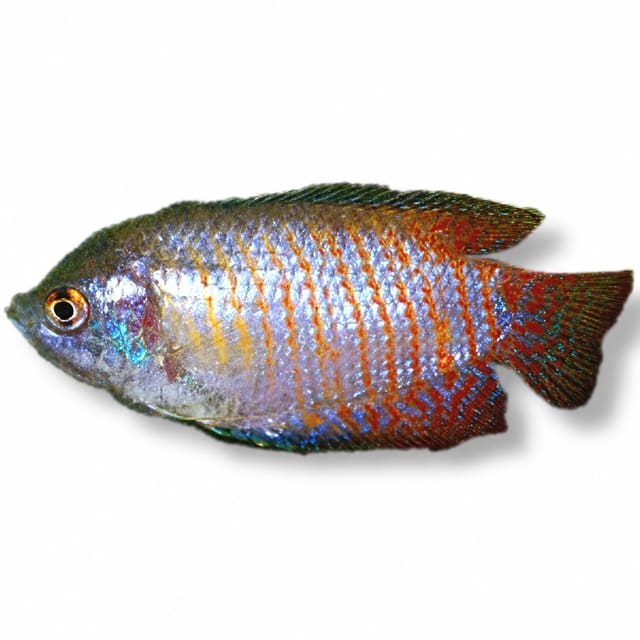
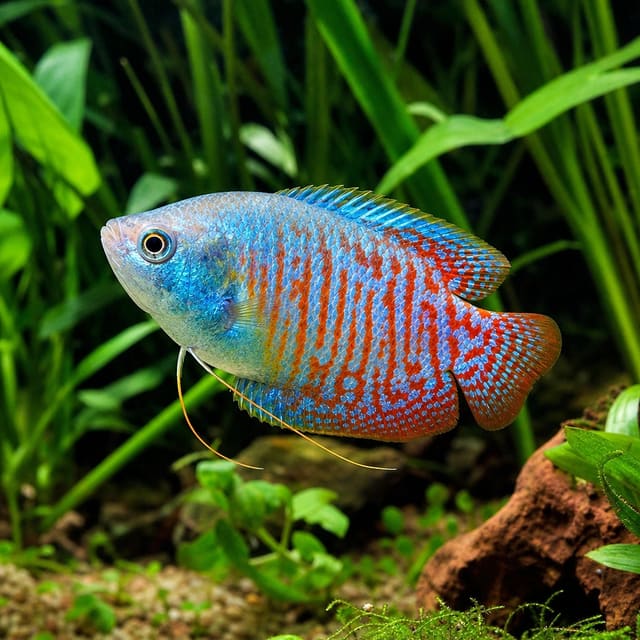
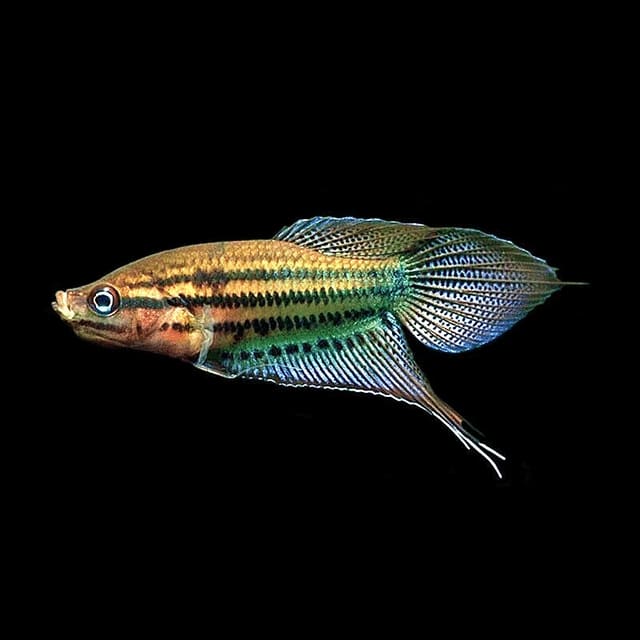
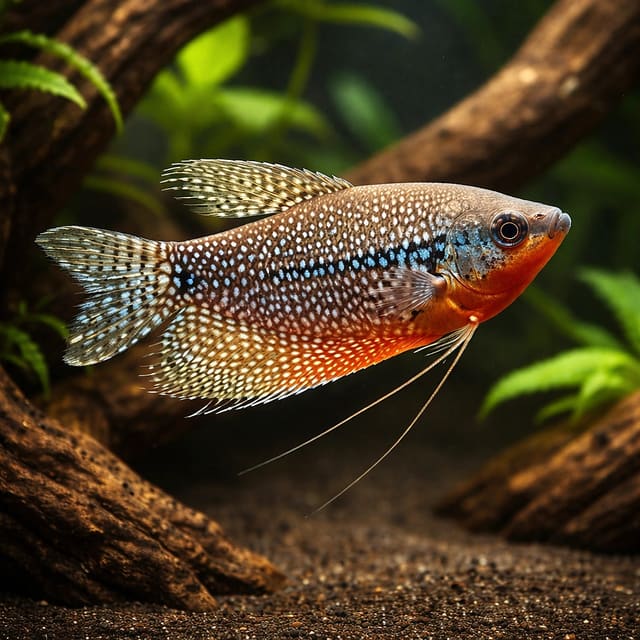
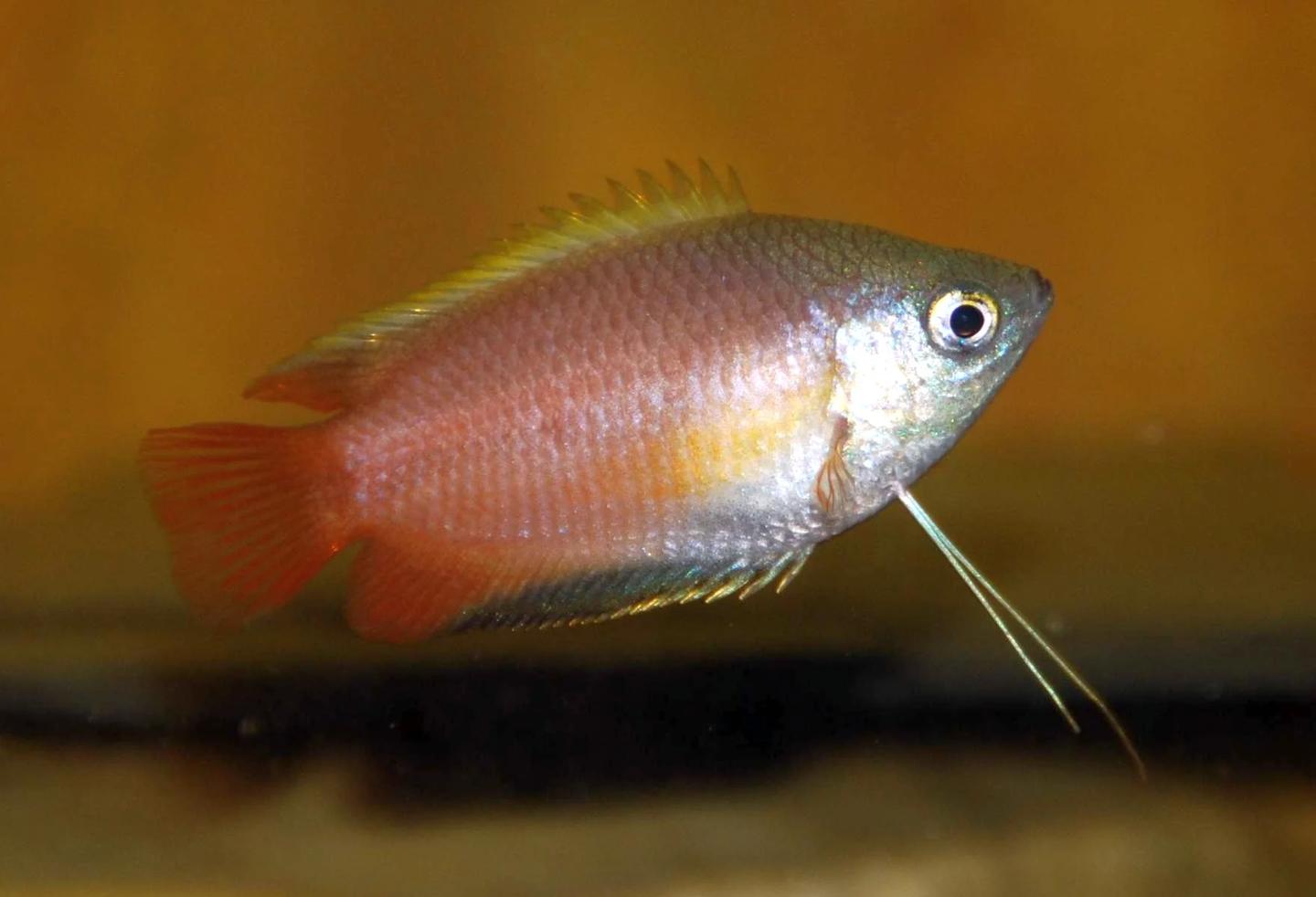
The gallery is designed to show the characteristic silver form, translucent fins and long pelvic filaments in different scenes. The gallery images are representative, based on reference photographs of this species, so colours can look slightly different from the live animal.
Choose the size after checking the aquarium, rather than choosing the aquarium around the dispatch fish. Confirm that the tank is mature, that ammonia and nitrite read zero, and that the adult stocking plan leaves open swimming room around planted cover.
FishBase records a maximum of 14 cm total length for a male or unsexed Moonlight Gourami. The Seriously Fish husbandry page separately uses a planning length of 15 cm standard length.
The same husbandry guidance pairs this fish with an aquarium base measuring 90 × 30 cm and an approximate volume of 81 litres. Use the footprint and volume together. A tall tank with less than 90 cm of length does not provide the same swimming route, while décor and substrate can reduce usable water volume.
| Planning decision | Working figure |
|---|---|
| Recorded maximum | 14 cm total length |
| Aquarium base | 90 × 30 cm |
| Approximate volume | 81 litres |
| Routine temperature | 25–28°C |
| Routine pH | 6.0–7.5 |
| Routine general hardness | 4–12°dGH |
Treat 90 × 30 cm and around 81 litres as the starting reference for one fish, not an automatic community stocking allowance. Other inhabitants need their own adult space, and additional gouramis require more room and visual barriers because males may become territorial with other males and gouramis.
This fish suits a keeper prepared to maintain warm, tested water, feed a varied omnivorous diet and screen every companion for adult size and activity. Its labyrinth organ is an adaptation for breathing air, not protection from ammonia, nitrite, unsuitable temperature or poor filtration.
Begin with the 90 × 30 cm base and around 81 litres described for this species. Choose more space when adding companions or another gourami. The aquarium must accommodate adult bodies, swimming routes, planted shelter, equipment and the territorial distance individuals may need.
Seriously Fish specifically recommends a planted setup with open swimming areas and slow water flow. Use that combination rather than choosing between an exposed tank and a completely overgrown one. Plants can interrupt sight lines, but they should not obstruct the filter intake, trap extensive waste or remove all open water.
Check the layout from the fish’s perspective. If the outlet visibly drives the fish across the tank or leaves it continually sheltering behind décor, diffuse or redirect the flow while preserving adequate filtration. If two fish can see one another from every point, add planted or structural sight breaks before considering extra gouramis.
Set up and mature the aquarium first. The filter needs an established population of beneficial bacteria capable of processing waste, and tests must show zero ammonia and zero nitrite before a fish is added. Our first tropical aquarium guide helps organise preparation before livestock arrives.
Recheck usable dimensions after placing substrate, wood, plants and equipment. An aquarium nominally holding around 81 litres may contain less water once decorated, so a larger tank creates a useful margin for stable temperature, waste dilution and community planning.
Keep the aquarium at 25–28°C, pH 6.0–7.5 and 4–12°dGH. This is the overlap of Seriously Fish species guidance and OATA’s gourami group guidance, narrowing the broader values for routine care.
Seriously Fish uses 25–30°C, pH 6.0–7.5 and 2–25°dGH. FishBase records wild environmental values of 26–30°C, pH 6.0–7.0 and 2–25°dH. OATA uses 20–28°C, pH 6.0–8.0 and 4–12°dGH for gouramis, along with a carbonate-hardness guide of 3–10°dKH. The OATA figures are not a species-specific optimum.
A reading of 26°C, pH 7.0 and 8°dGH sits within all three routine bands. A reading of 29°C falls within the Seriously Fish range but outside the narrowed day-to-day target, so first check the heater setting, thermometer and room conditions. A hardness of 3°dGH remains within the wider species range but below the working 4–12°dGH band; monitor stability and avoid an abrupt correction.
Use our water chemistry guide to understand each test and the relationship between biological filtration, ammonia, nitrite and nitrate. Stable readings matter because fish must continually adapt to the water surrounding them. Repeated rapid alterations can create a problem even when the intended final number looks suitable.
A filter is essential. The RSPCA explains that biological filtration supports beneficial bacteria that convert toxic ammonia to toxic nitrite and then to safer nitrate. A labyrinth organ does not replace this process, and access to atmospheric air does not make polluted water safe.
For an aquarium of around 81 litres, Seriously Fish uses a turnover of four to five times the aquarium volume per hour and suggests a filter rated at approximately 325–405 litres per hour. Treat this as an equipment-selection calculation for that volume. Check how the outlet behaves once media, pipework and décor are in place, because the Moonlight Gourami also needs slow water movement.
| If you observe | Take this action |
|---|---|
| The fish is continually pushed by the outlet | Redirect or diffuse the return while preserving filter operation. |
| Waste gathers in still corners | Adjust circulation gently and remove debris during maintenance. |
| Ammonia or nitrite appears | Stop adding fish, test again and correct the biological-loading problem. |
| Flow falls noticeably | Check the intake, outlet and media for blockages. |
Never rinse biological media under the tap. Chlorine or chloramine may damage the bacterial population. When cleaning is needed, rinse the media lightly in aquarium water removed during a partial water change. Do not replace all established media at once unless the equipment instructions require a safety-critical change.
Seriously Fish also estimates a 125–150 W heater for an aquarium of around 81 litres when the room is about 20°C. This is a worked example rather than a universal heater rule. Tank dimensions, room temperature and equipment design affect heating, so select a thermostatic heater suited to the actual aquarium and confirm its result with a thermometer.
After adding any fish, increase stocking only gradually. Feeding and animal waste increase the demand on the bacterial population, and rapid additions can cause new tank syndrome when the filter cannot process the extra waste.
The Moonlight Gourami is omnivorous. Seriously Fish reports that it takes most commercially prepared foods and recommends supplementing them with live and frozen foods. OATA’s gourami guidance gives a practical routine: offer only what the fish can eat within a few minutes, once a day.
Use a good-quality flake, granule or pellet as the prepared staple. Add small live or frozen items such as daphnia, small bloodworm or tubifex for variety. This approach reflects the wild diet recorded by FishBase, which includes zooplankton, crustaceans and aquatic insects, without trying to reproduce wild feeding conditions exactly.
Prepared food provides a repeatable staple, while live or frozen additions create variety. Do not turn supplementation into a second oversized daily meal. Overfeeding leaves organic material to break down, adding waste that the filter must process and raising the risk of poor water quality.
Feed after checking that the fish can approach without being driven away by faster companions. Moonlight Gouramis are described as skittish, so an overly vigorous community can interfere with feeding even when the food itself is suitable. Compatibility and feeding access must therefore be assessed together.
If the fish stops feeding or its body condition changes, test ammonia, nitrite, nitrate and temperature first. Compare the behaviour with its normal pattern, look for aggression or hiding, and contact us if the change continues or is accompanied by altered breathing, damaged fins, white spots or unusual growths.
OATA strongly recommends a 25% partial water change at least once every week for gouramis and paradise fish. Use a siphon to remove solid waste from the substrate, and treat replacement tap water with a suitable conditioner before it enters the aquarium so chlorine or chloramine does not harm the fish or filter bacteria.
For example, if tap water contains 15 mg/l nitrate, the OATA threshold places the aquarium ceiling at 35 mg/l. That calculation does not replace ammonia and nitrite testing: nitrate can be within its limit while a newly disturbed or overloaded filter produces dangerous ammonia or nitrite.
Clean only what needs attention. Lightly rinse blocked filter media in the removed aquarium water rather than tap water. Avoid combining a major filter clean, extensive décor disturbance and several new fish on the same day, because each can affect stability or biological demand.
Watch for hanging at the surface beyond the fish’s normal air-breathing visits, sitting on the bottom, erratic swimming, unusual darkening or paling, increased aggression, more hiding, faster or slower gill movement, fin or scale loss, white spots, fluffy growths, body-condition changes and reduced feeding.
When anything changes, test water quality first and compare the result with the fish’s recent baseline. Correct husbandry problems calmly and avoid guessing at a disease treatment from one sign. Behaviour, water readings and physical appearance together provide a more useful picture than any one observation alone.
Prepare before the parcel arrives. Confirm that the destination aquarium is mature, correctly heated and suitable for the planned adult stocking level. Test temperature, ammonia and nitrite before introducing the fish.
These steps follow our delivery and Live Arrival Guarantee policy. Keep the continuous video from the sealed parcel through opening and the view of the fish inside its sealed bag.
| Checkpoint | What to assess |
|---|---|
| Arrival day | Balance, breathing, fin condition and whether companions pursue the newcomer. |
| First feeding | Offer a small portion and remove food not eaten within a few minutes. |
| Each day | Check temperature, appetite, colour, hiding and aggression. |
| End of week | Complete the normal tests and the 25% partial water change if this is the scheduled weekly change. |
Labyrinth fish rise to breathe atmospheric air, so an occasional surface visit is part of their biology. A marked change—such as persistent hanging at the surface, unusually rapid gill movement or loss of balance—calls for immediate water testing and a check of temperature, filtration and social pressure.
Do not add more fish merely because the newcomer appears settled after a day. The filter’s bacterial population must respond to additional waste, and the aquarium needs time to show whether the existing compatibility plan works under normal feeding.
Seriously Fish describes the Moonlight Gourami as skittish and advises against keeping it with fish small enough to be viewed as food or companions that are too vigorous. OATA’s broader gourami advice also says to avoid small fish that could be eaten and fish that may nip fins. These are the decisive screens for a community plan.
| Check | Pass condition |
|---|---|
| Adult size | The companion will not remain small enough to be eaten. |
| Activity | It will not continually rush or displace a skittish gourami. |
| Fin behaviour | It is not expected to nip fins or pelvic filaments. |
| Shared conditions | Its temperature, pH, hardness, space and flow requirements overlap. |
Seriously Fish names other gouramis, Botia, Corydoras, barbs, angelfish and loricariids as possible examples. Treat these as candidates for individual assessment, not universal matches. A non-nipping barb may pass where a fin-nipping species does not; a suitably sized bottom-dwelling catfish may use space differently, but its adult dimensions and group needs still count towards the aquarium plan.
Do not approve a companion solely because it occupies another water level. Feeding competition, total waste, night-time activity and the ability to move between planted cover also matter. An aquarium based on the approximate 81-litre reference for one Moonlight Gourami may need to be substantially larger once the companions’ adult requirements are included.
Compatibility remains conditional because individual behaviour and aquarium layout vary. Contact us for a stocking assessment if you provide the tank dimensions, measured water values and the species, numbers and adult sizes already planned.
Male Moonlight Gouramis may become territorial with other males and with gouramis. Because the selected option does not guarantee sex, build the plan around behaviour rather than assuming a particular sex ratio. Long sight lines, limited cover and competition for the same upper area can make it harder for one fish to withdraw.
| Plan | Decision |
|---|---|
| One Moonlight Gourami | Start from the 90 × 30 cm base and around 81 litres, then account separately for every companion. |
| More than one | Use a larger aquarium with planted sight breaks and room for individuals to separate. |
| Mixed gouramis | Screen adult size, temperament and shared upper-space use, then monitor territorial behaviour. |
| Small community fish | Avoid any species small enough to be treated as food. |
OATA advises planning gourami aquariums with enough room for a small group, while also noting that gouramis vary from timid and delicate to large and aggressive. For this fish, the practical instruction is to increase space for each additional gourami and create more than one sheltered route. Do not rely on a numerical group rule that ignores sex, individual behaviour and tank shape.
When introducing another gourami, observe more than brief display behaviour. Persistent chasing, blocked access to food, continual hiding, damaged fins or a fish confined to one corner indicate that the arrangement needs intervention. Rearranging plants may break a sight line, but separation is the safer response when aggression continues.
Allow for filtration as well as territory. A larger group increases feeding and waste, so ammonia and nitrite must remain zero after each addition. Add fish gradually, test regularly and avoid making several stocking changes together.
The safest compatibility decision combines adult dimensions, water overlap, activity, feeding access and a fallback separation plan. A visually calm first hour does not replace observation through normal feeding and maintenance cycles.
FishBase records the Moonlight Gourami at up to 14 cm total length. Plan the aquarium around that adult figure rather than the fish’s dispatch size.
Use a 90 × 30 cm base and around 81 litres as the Seriously Fish planning reference for one Moonlight Gourami, with planted shelter, open swimming room and slow flow. Choose more space for companions or additional gouramis.
A single Moonlight Gourami avoids male-to-male territorial pressure. For more than one gourami, use a larger aquarium with planted sight breaks and monitor the fish because males may become territorial with other males and gouramis.
The Moonlight Gourami suits a prepared keeper who can maintain 25–28°C, test water regularly, keep ammonia and nitrite at zero and screen every companion. Its air-breathing labyrinth organ does not reduce its need for filtration and stable water.
Feed the Moonlight Gourami a good-quality flake, granule or pellet once daily, offering only what it can finish within a few minutes. Supplement the staple with small live or frozen foods such as daphnia, small bloodworm or tubifex.
Keep it at 25–28°C, pH 6.0–7.5 and 4–12°dGH. These routine values are the overlap of Seriously Fish species guidance and OATA gourami group guidance.
This fish is described as skittish rather than as a fin nipper, but males may become territorial with other males and gouramis. Avoid companions that may nip its fins and separate fish if persistent chasing, blocked feeding or damage develops.
Seriously Fish names other gouramis, Botia, Corydoras, barbs, angelfish and loricariids as candidates, but each must be screened for adult size, activity, fin behaviour, water overlap and space. Avoid fish small enough to be eaten and companions too vigorous for this skittish fish.
Someone must be present to receive it. Start filming every delivery with the parcel still sealed, continue as it is opened and show the fish still inside the sealed bag; then float the bag for 20–30 minutes before releasing the fish, and never pour the bag water into the aquarium.
No reviews for this item yet. Bought one? Honest reviews only, good or bad.
What customers say about ordering from us
I have a small group of long finned mountain minnows. So was delighted to be able to order ten of this variety to increase the genetics in my tank . The ones I recieved are healthy but it’s to early to give a verdict on wether they are of a long finned type since they are small currently.
Gordon Walker · 23 Sept 2026
100% success travel and "installation". Pleased with quality of purchase. The Siamese fighter a bit "shy" so have not yet seen him at his best yet but looking good. Happy customer. GG
George E Garratt · 21 Sept 2026
Reviews of our shop, collected by Judge.me, an independent third-party review collector. Newest first.