Easy
Silver Platinum Three-Spot Gourami
22–28°C · pH 6–8 · 120L
From £4.99Some sizes on sale

Small colourful African labyrinth fish with shy bushfish behaviour, original reference photo, specialist 3-4 cm size and Live Arrival Guarantee.
Adult size is the maximum length this species reaches at full maturity (scientific sources). The livestock you receive will be younger and smaller. Product-photo provenance and any image-specific limitations are stated on the listing.
Microctenopoma ansorgii
Save when buying multiple fish. Each quantity is one fish; sex and pair formation are not guaranteed unless the selected variant explicitly states them.
Confirm your email, then we’ll send an availability message for this exact item if it returns within 180 days.
This request is only for this product—no newsletter or other promotions. A mail-provider retry may very rarely duplicate the same availability message. Unconfirmed addresses are removed after 48 hours. See our privacy policy.
Small colourful African labyrinth fish with shy bushfish behaviour, original reference photo, specialist 3-4 cm size and Live Arrival Guarantee.
Adult size is the maximum length this species reaches at full maturity (scientific sources). The livestock you receive will be younger and smaller. Product-photo provenance and any image-specific limitations are stated on the listing.
Maintain these water conditions for optimal health and vibrant colors
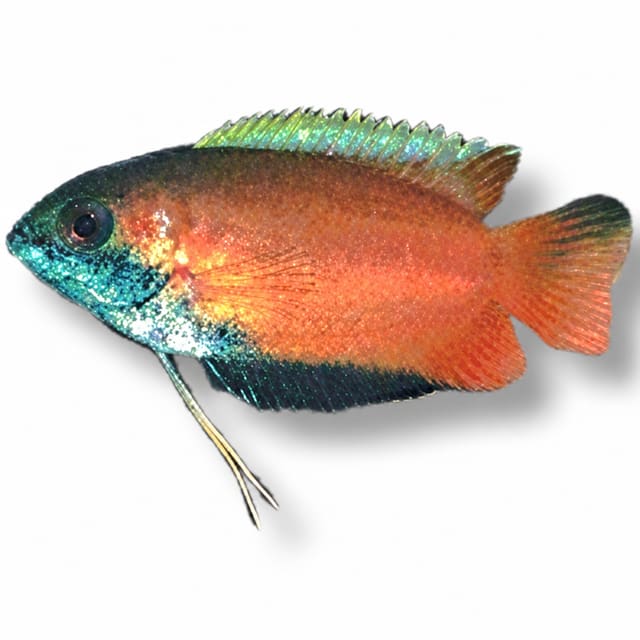
The Ornate Ctenopoma (Microctenopoma ansorgii) is a small African labyrinth fish with dramatic orange, black and red striping, a shy bushfish personality and a very different look from the common gouramis most aquarists know. It is also sold in older supplier and hobby lists as Ctenopoma ansorgei or Ctenopoma ansorgii, so those names are kept here as search and trade-name bridges, but the main listing now uses the accepted Microctenopoma ansorgii name.
This is the 3-4 cm size as supplied. Choose this fish if you want an unusual, colourful and watchable African anabantoid for a mature, calm, plant-heavy aquarium.
Ornate Ctenopoma is one of the most attractive small African labyrinth fish. Settled males can show dark vertical bars across the body with orange-red colour through the flanks and fins, while the rounded tail and combed dorsal outline give the fish a neat, compact bushfish profile. Young fish can look pale at first, so the page should not oversell instant colour; the pattern is best when the fish is settled, mature and kept under gentle conditions.
The appeal is behaviour as much as colour. This is not a frantic open-water community fish. It watches from plants, moves carefully through cover and becomes more confident when the aquarium feels secure. For keepers who enjoy subtle, natural behaviour, the species has far more character than its small size suggests.
FishBase places Microctenopoma ansorgii around the Chiloango River and central Congo basin, with possible Cameroon reports treated cautiously. Specialist aquarium references describe slow reaches with dense marginal vegetation. The best aquarium is therefore mature, warm, softly lit and full of cover rather than bare and bright.
Use a dark substrate if possible, then build broken sight lines with wood, roots, live plants and floating plants. Java fern, Anubias, Cryptocoryne, mosses and surface plants all suit the style of tank. Gentle filtration is better than a blasting current, and small regular water changes are safer than large swings. A tight lid is essential because labyrinth fish can jump and need access to a warm, humid layer of air above the surface.
A practical target is 25-28°C, pH 6.0-8.0 and low to moderate hardness. FishBase gives 26-28°C, pH 6.0-8.0 and 5-19 dH, while aquarium-care references allow a similar range when extremes are avoided. Stability matters more than chasing a perfect number. Avoid new, unstable aquariums, ammonia or nitrite, and sudden changes in temperature or hardness.
Because this fish is shy, stress can show as hiding, pale colour or missed feeds. Keep lighting diffused, provide cover at the surface and do not place it in a tank where boisterous fish dominate every meal.
Ornate Ctenopoma is a small predator of aquatic invertebrates in nature. Offer small frozen or live foods such as bloodworm, white mosquito larvae, daphnia, brine shrimp, cyclops and tiny worms. Some individuals may learn to take fine granules or small soft prepared foods, but new arrivals should not be expected to thrive on dry food alone.
Feed small portions and watch the fish eat. In a busy tank, target feeding near cover can help shy individuals get enough food without being rushed by faster tank mates.
This is usually a specialist community fish rather than a rough-and-tumble community fish. Good companions are peaceful species that are not tiny enough to be eaten and not boisterous enough to bully it. Suitable choices can include calm rasboras, tetras of sensible size, hatchetfish, killifish, small peaceful catfish and gentle bottom dwellers with similar water needs.
Avoid fry, dwarf shrimp, very tiny fish, fin nippers, aggressive cichlids and fast feeders that turn every meal into a race. Males can show territorial aggression, especially around breeding, so groups need space, plants and visual barriers.
Microctenopoma species differ from many larger Ctenopoma because males build and guard bubble nests. Breeding M. ansorgii is possible but not casual. Soft, slightly acidic water, surface cover, privacy and excellent small foods help. The male may build a small nest among floating vegetation, the eggs can hatch quickly, and fry need very small first foods plus warm air above the surface while the labyrinth organ develops.
This fish is best for a patient aquarist who wants a rare African labyrinth fish and is happy to design the tank around cover, food and low stress. It is not the right choice for a bare bright tank, a shrimp display, a newly cycled aquarium or a community full of pushy fish. In the right setup, though, it becomes a beautiful, quietly fascinating species.
Your Ornate Ctenopoma is packed for live-animal transport and sent by tracked courier delivery. First-time customers can use WELCOME10 at checkout where eligible, and our Live Arrival Guarantee applies when the delivery and acclimation instructions are followed. Please make sure someone is available to receive the parcel, acclimate slowly, keep the lights low and give this shy fish time to settle.
Yes for aquarium-trade purposes. The supplier name is Ctenopoma ansorgei, while current references commonly use Microctenopoma ansorgii. This listing uses the current name and keeps the older name as a helpful synonym.
Plan around 6-8 cm as an adult. FishBase lists 5.4 cm standard length and an 8 cm total-length report, while aquarium references usually plan around 8 cm.
Very tiny fish, fry and dwarf shrimp are risky. Choose calm tank mates that are not small enough to be swallowed and not pushy enough to outcompete it.
It does best when live or frozen foods form the core of the diet, especially during settling. Some individuals later accept fine prepared foods, but dried food should not be the only plan.
No reviews for this item yet. Bought one? Honest reviews only, good or bad.
What customers say about ordering from us
I have a small group of long finned mountain minnows. So was delighted to be able to order ten of this variety to increase the genetics in my tank . The ones I recieved are healthy but it’s to early to give a verdict on wether they are of a long finned type since they are small currently.
Gordon Walker · 23 Sept 2026
100% success travel and "installation". Pleased with quality of purchase. The Siamese fighter a bit "shy" so have not yet seen him at his best yet but looking good. Happy customer. GG
George E Garratt · 21 Sept 2026
Reviews of our shop, collected by Judge.me, an independent third-party review collector. Newest first.