−13%
Moderate
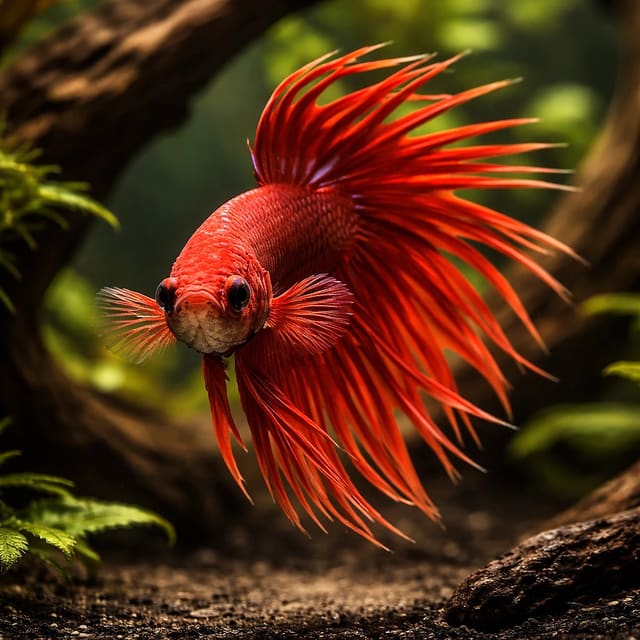
Crowntail Male Betta (Betta splendens)
26–28°C · pH 6–8 · 20L
£12.17£13.99

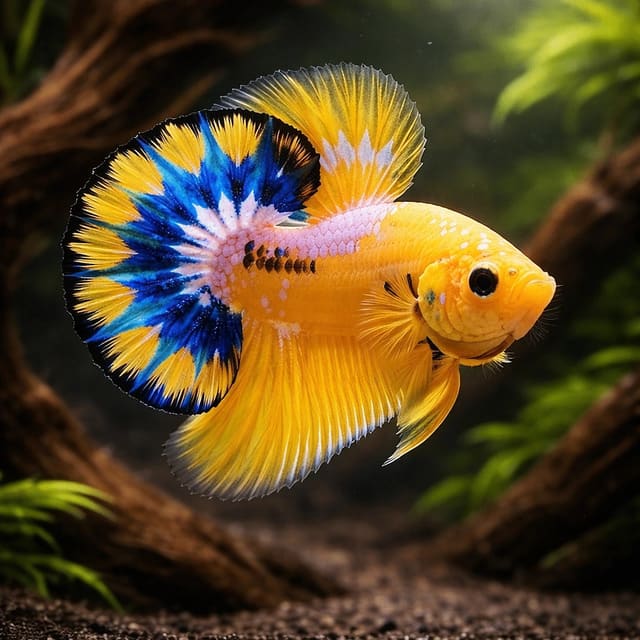
The Avatar Plakat Male Betta (Betta splendens) is an ornamental freshwater fish from the Osphronemidae family, originating from central Thailand and the lower Mekong and reaching 6.5 cm. It suits a prepared keeper who can house one male in at least 20 litres at 26–28°C, pH 6.0–8.0 and 4–12 dGH; the temperature is Tropical Fish Co’s domestic target, while the chemistry follows OATA’s Betta group guidance within the species ranges. Sold individually as one male fish.
Adult size is the maximum length this species reaches at full maturity (scientific sources). The livestock you receive will be younger and smaller. Product-photo provenance and any image-specific limitations are stated on the listing.
Betta splendens
The Avatar Plakat Male Betta (Betta splendens) is an ornamental freshwater fish from the Osphronemidae family, originating from central Thailand and the lower Mekong and reaching 6.5 cm. It suits a prepared keeper who can house one male in at least 20 litres at 26–28°C, pH 6.0–8.0 and 4–12 dGH; the temperature is Tropical Fish Co’s domestic target, while the chemistry follows OATA’s Betta group guidance within the species ranges. Sold individually as one male fish.
Adult size is the maximum length this species reaches at full maturity (scientific sources). The livestock you receive will be younger and smaller. Product-photo provenance and any image-specific limitations are stated on the listing.
For one typical domestic Betta splendens, start with at least 20 litres, a mature filter, thermostatic heater, separate thermometer, gentle flow, a secure lid with surface access, and plants or refuges. Keep one male per aquarium.
Maintain these water conditions for optimal health and vibrant colors
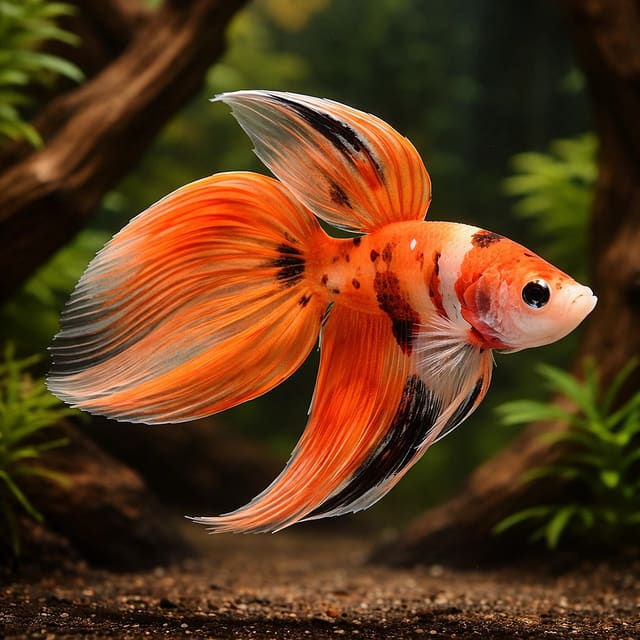
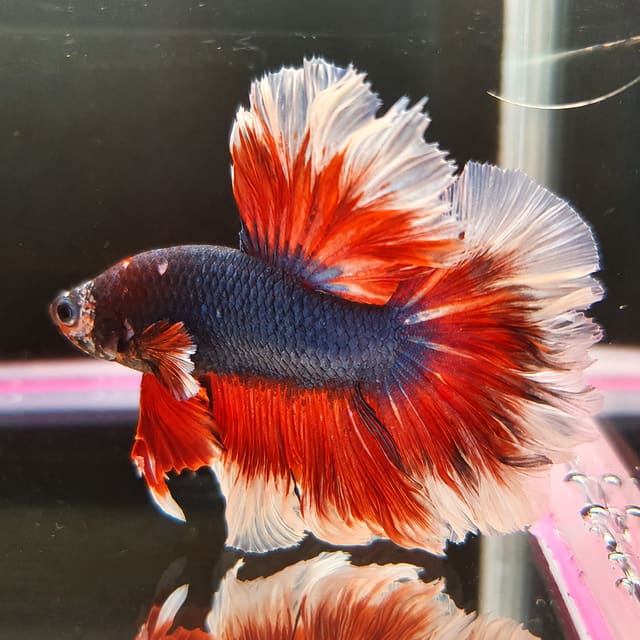
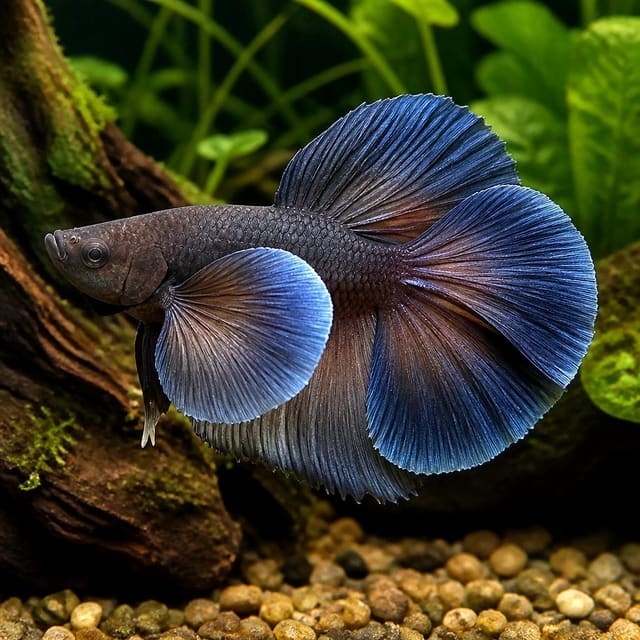
The Avatar Plakat Male Betta is an ornamental freshwater Betta splendens from the Osphronemidae family. The wild species occurs in central Thailand and the lower Mekong, and FishBase records a maximum length of 6.5 cm for male or unsexed fish. This domestic plakat form has a compact profile and shorter, broader fins. It suits a prepared keeper who can provide a heated, mature and gently filtered aquarium of at least 20 litres, with one male housed alone by default.
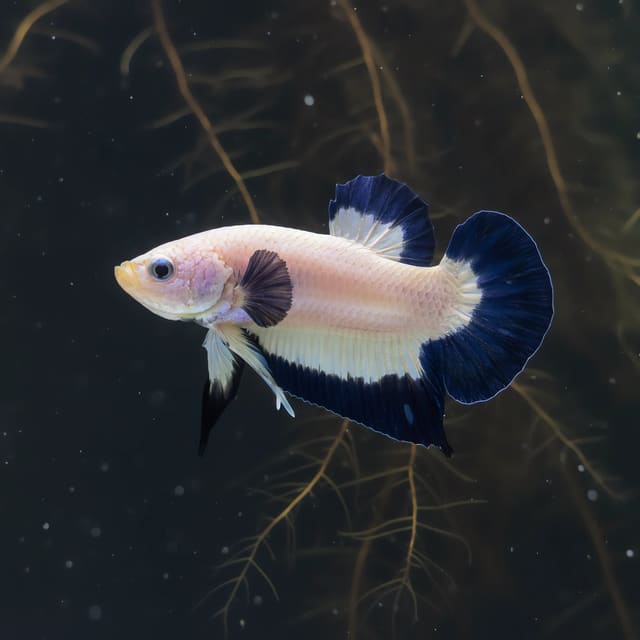
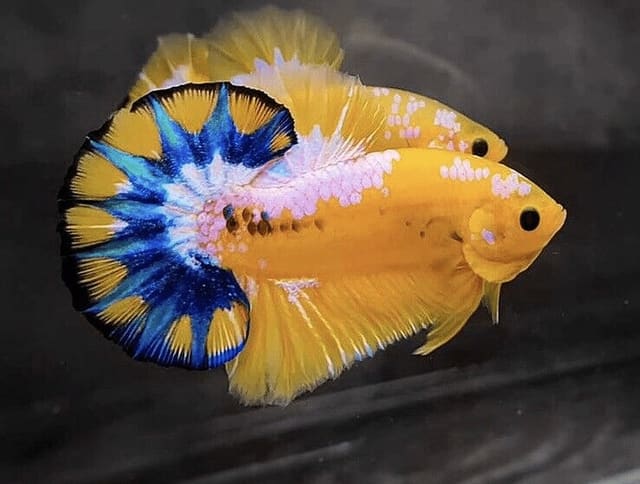
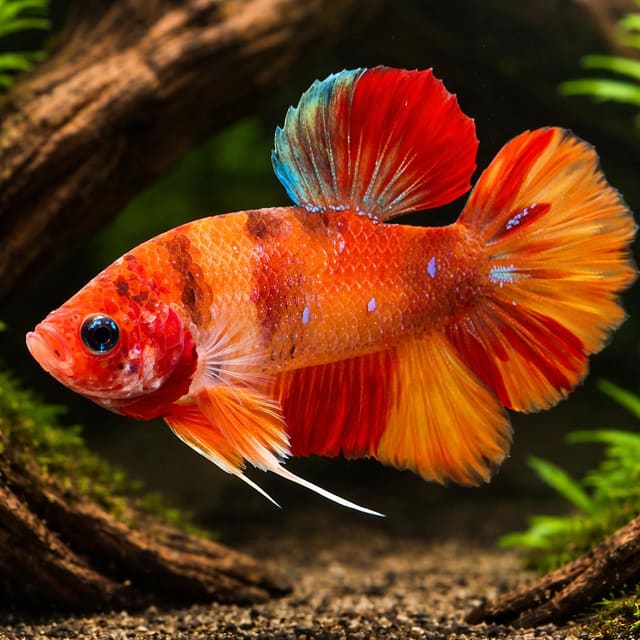
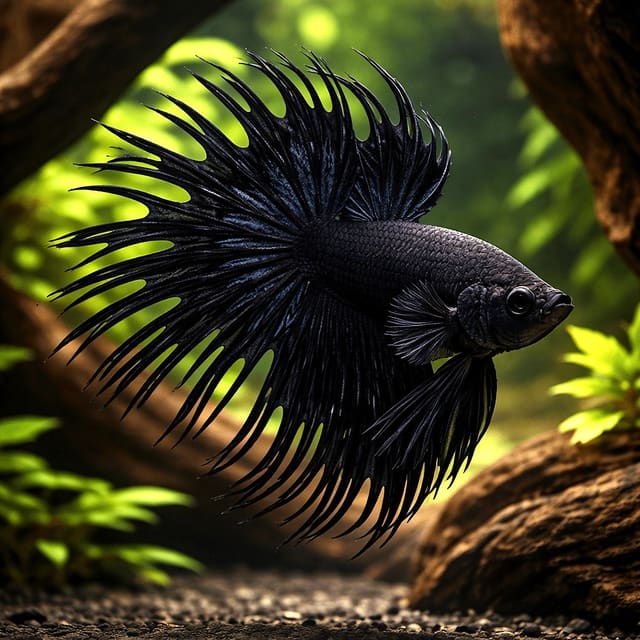
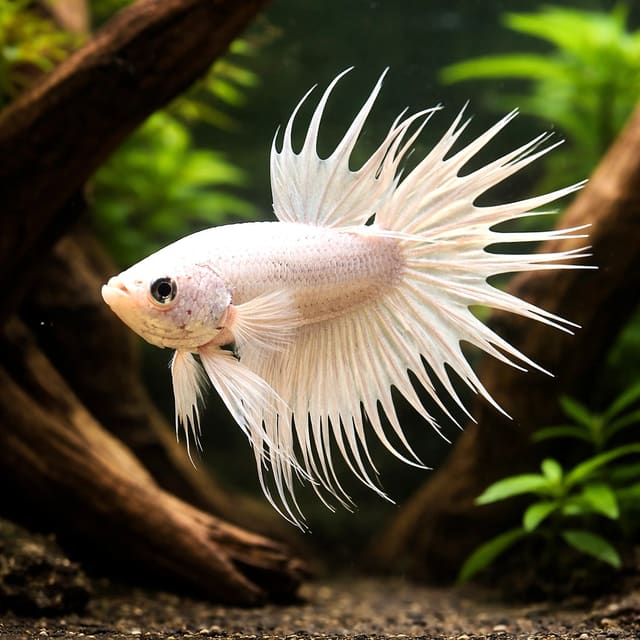
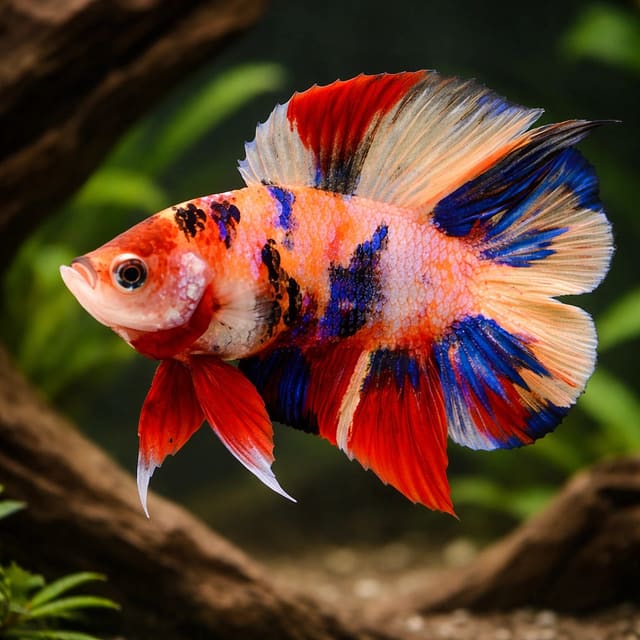
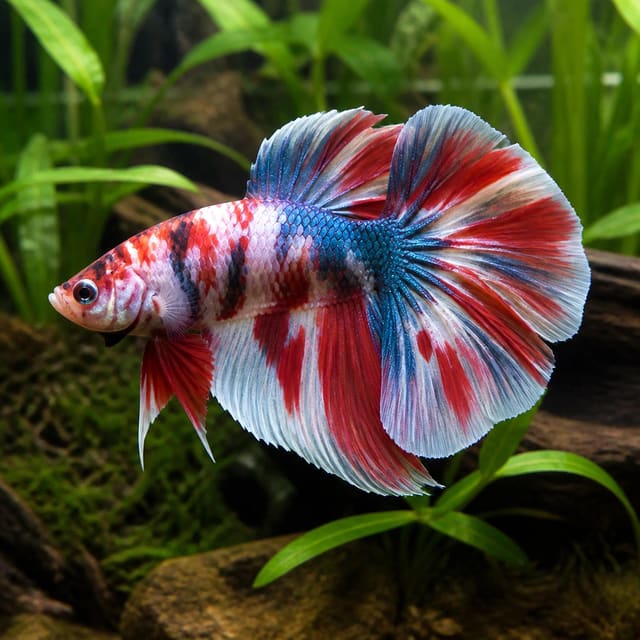
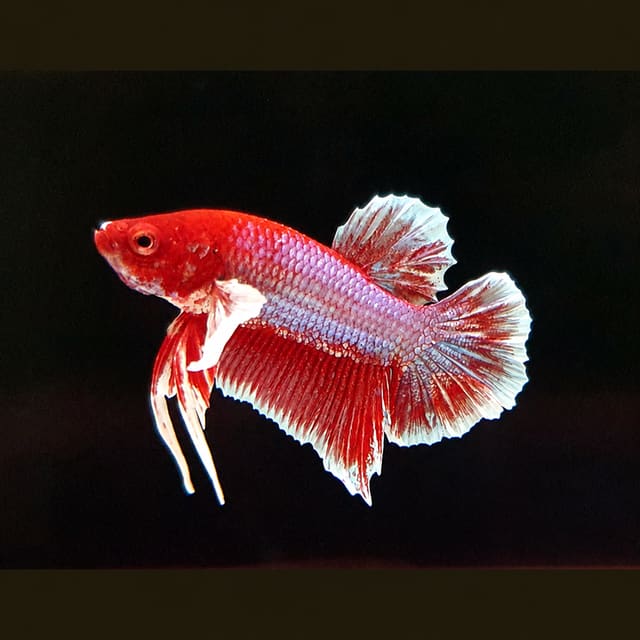
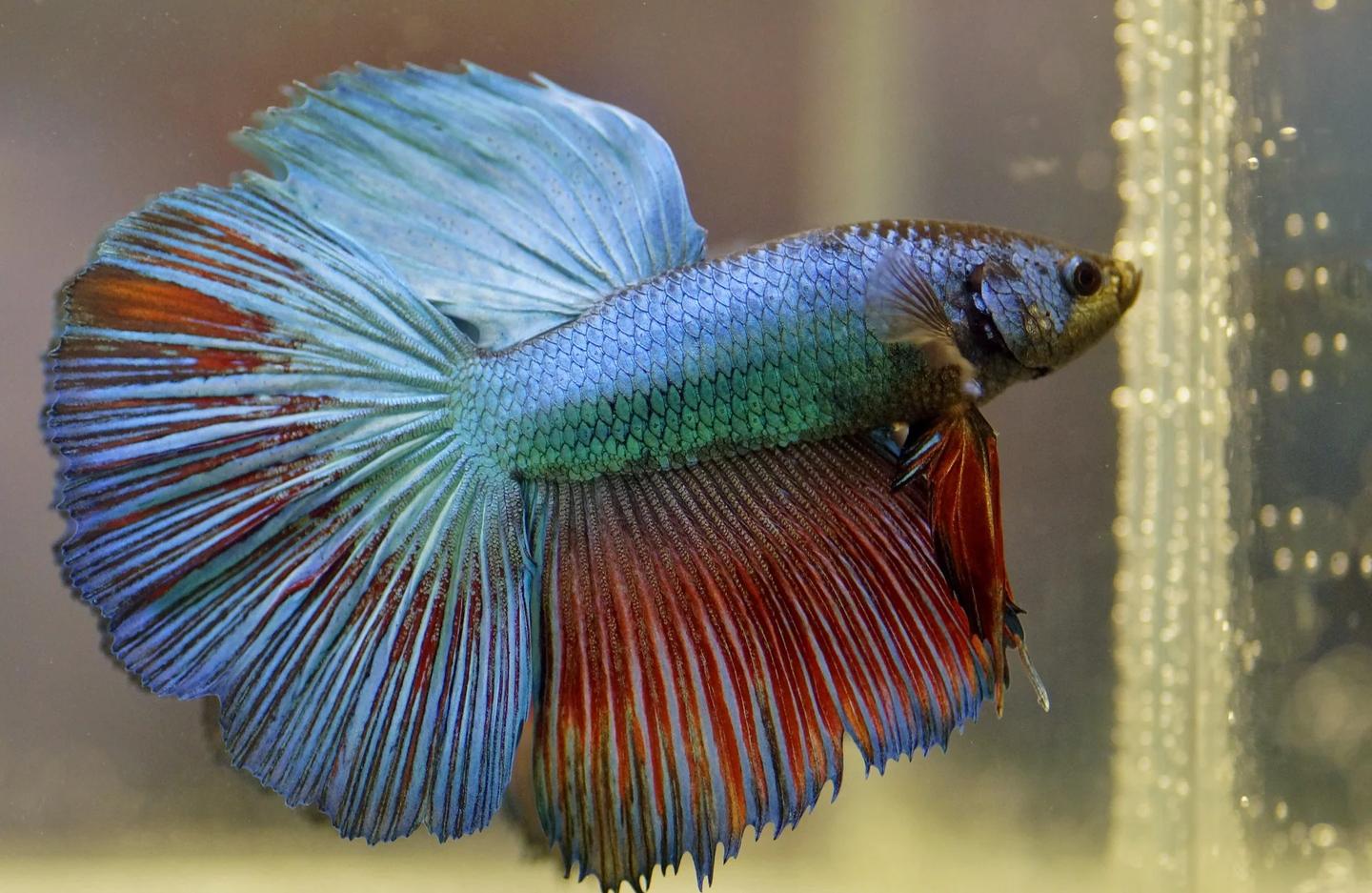
Domestic Bettas vary greatly in colour, fin shape, body form and behaviour. A genome-wide study of domestic Betta diversity illustrates why a strain name or visible pattern should not be used to infer age, pedigree, origin, fertility, health or temperament. The NCBI taxonomy entry identifies Betta splendens. Lighting, plants and background colours can also change how metallic markings appear to the eye.
One purchase supplies one animal. Sex is guaranteed only when the exact product or selected option explicitly states male or female. This Avatar Plakat Male Betta listing is sold as male.
The gallery images are representative, based on reference photographs of this species, so colours can look slightly different from the live animal. One gallery scene shows two fish because it illustrates visible form and colour; it does not change the purchase unit or make male cohabitation appropriate.
We rate this fish as intermediate. The daily feeding is straightforward, but success depends on cycling the aquarium before arrival, maintaining stable heat, providing gentle rather than forceful flow and housing the male by himself unless a carefully screened community plan passes every compatibility check. A first-time keeper can meet those needs by preparing the complete system before choosing the fish.
If you are comparing forms or species, browse the Betta collection and judge each choice by its own identity and care needs.
FishBase records a maximum of 6.5 cm total length for male or unsexed Betta splendens. OATA describes Bettas as reaching about 7 cm, while Seriously Fish uses a 70 mm standard-length planning reference. Use the FishBase maximum of 6.5 cm consistently when planning for this sold male, while allowing adequate space for normal movement, cover and surface access.
Our complete Betta care guide uses at least 20 litres as the minimum starting screen for one typical domestic male. The Seriously Fish species profile recommends a base of 45 × 30 cm or equivalent, approximately 41 litres, as large enough for a single male or pair. For this male, the safer social plan remains one fish in his own aquarium. Choose the 45 × 30 cm footprint where practical because decor reduces open water and extra capacity gives more room for cover, resting places and gentle circulation.
A nominal volume is only one part of the decision. Check the tank’s internal dimensions, actual filled volume, lid, surface access, heater, filter flow and room left after substrate and furnishings. A mature, planted and stable aquarium is a better welfare target than a bare container carrying the same litre label.
OATA’s Betta sheet gives group guidance of 20–28°C, pH 6.0–8.0 and 4–12 dGH for tank-reared Bettas. Seriously Fish gives 22–30°C, pH 6.0–8.0 and 1–15 dGH for B. splendens. Our routine target for a typical domestic fish is a stable 26–28°C, inside both temperature ranges; use pH 6.0–8.0 and 4–12 dGH as the practical chemistry range.
| Decision | Starting point |
|---|---|
| Adult planning length | FishBase maximum of 6.5 cm total length |
| Aquarium | At least 20 litres; 45 × 30 cm or about 41 litres where practical |
| Temperature | Stable 26–28°C |
| pH and hardness | pH 6.0–8.0; 4–12 dGH |
| Social plan | One male in his own aquarium |
| Suits | Not suited to |
|---|---|
| A prepared keeper with a mature, heated and filtered aquarium | An uncycled aquarium or unfiltered container |
| One male housed in at least 20 litres | Two male Bettas sharing an aquarium |
| Gentle flow, plants, shade and surface access | Strong current or a bare, tiny container |
| Stable 26–28°C water and regular testing | An unheated setup with changing water conditions |
| A solitary setup or carefully screened community plan | A standard community chosen without compatibility screening |
Build the aquarium around a working biological filter, not around clear-looking water. Fish release ammonia, which is toxic. Filter bacteria process it into nitrite, which is also toxic, and then into safer nitrate. The RSPCA explains why a well-set-up and maintained filter is vital for this waste-processing cycle.
If this is your first setup, follow the guide to prepare and mature a first aquarium before livestock arrives. Do not make the fish the ammonia source for an uncycled system.
| If you find | Do this |
|---|---|
| Ammonia or nitrite above zero | Delay adding livestock and continue establishing the biofilter. |
| Temperature drifting outside 26–28°C | Check heater placement, settings and thermometer readings before proceeding. |
| Current pushing objects or plants strongly | Diffuse or reduce the flow while keeping filtration running. |
| Open gaps around the lid | Secure them while preserving clear access to the water surface. |
| Sharp or trapping decor | Replace it with smooth, aquarium-safe cover. |
Run the completed aquarium long enough to see that readings remain steady through normal room-temperature changes and routine equipment operation. A single acceptable test is a checkpoint; a stable sequence shows that the system is behaving consistently.
Use a thermostatic heater throughout the year and verify it with a separate thermometer. Set the aquarium to hold 26–28°C for this typical domestic Betta splendens. The thermostat controls power to the heater; the thermometer shows what the water is actually doing. Check both after installation, after maintenance and whenever room temperature changes markedly.
Keep pH between 6.0 and 8.0 and general hardness between 4 and 12 dGH. UK tap water varies, so measure the aquarium rather than assuming a postcode, bottled product or household appliance produces a particular result. Use the aquarium water-chemistry guide to understand pH, hardness, ammonia, nitrite and nitrate before choosing any adjustment.
Treat tap water with an aquarium conditioner that handles the chlorine or chloramine present in the supply. Test water after any domestic softener or filter because those devices can alter its composition. Stability and gradual matching matter more than forcing every value towards the midpoint of a range.
| Reading | Practical response |
|---|---|
| 26–28°C and steady | Keep the heater setting and continue checking with the separate thermometer. |
| Below 26°C | Check heater operation, placement, water circulation and room conditions before adjusting. |
| Above 28°C | Check the reading with the separate thermometer and investigate room heat or equipment faults. |
| Ammonia above zero | Treat it as a water-quality problem requiring prompt investigation and corrective husbandry. |
| Nitrite above zero | Investigate the biofilter, recent feeding, additions and maintenance immediately. |
| pH or hardness within range but stable | Avoid unnecessary chemical chasing. |
Use the water matcher to compare measured aquarium values with the stated guidance. Enter actual test results, not figures copied from a water-company average.
If a reading changes suddenly, look for a practical cause before reaching for additives: a large untreated top-up, filter disruption, decaying food, equipment failure or an inaccurate test can all change the next decision. Recheck the result, protect the fish from toxic waste and make corrections gradually unless ammonia or nitrite demands urgent action.
Betta splendens has a labyrinth organ and can take atmospheric air at the surface, but that adaptation does not replace filtration or clean water. Arrange the aquarium so the fish can reach the surface easily, breathe without fighting the current and rest among cover. Fit a secure lid because Bettas can jump, while leaving a suitable air space between the water and cover.
Strong water movement should be avoided. Watch the fish rather than judging flow only from the filter label: repeated displacement, difficulty holding position or an inability to rest indicates that the current needs adjustment. Diffuse the outlet, use plants or hardscape to create calmer zones, or select a gentler filter without switching off the biological filtration.
For a roughly 41-litre aquarium, Seriously Fish gives an example filter rating of 80–125 litres per hour for the gentle movement this species prefers. Treat that as a worked equipment example, then account for the filter design, media, outlet position, actual filled volume and the manufacturer’s instructions. Nominal turnover alone cannot show how forcefully water strikes the fish.
A planted layout should still allow you to inspect the fish, siphon debris and check the equipment. Structure is useful when it creates calm water and choice; clutter becomes a problem when it blocks the surface, traps the body or prevents routine cleaning.
A fish that can cruise, turn, approach food and settle without being swept away is coping better than one continually bracing against the outlet. If the current is too forceful, adjust its direction or diffusion first. Keep the filter operating so the established bacterial population continues processing waste.
Wild Betta splendens feeds on zooplankton, mosquito larvae and other insect larvae. In the aquarium, use a suitably sized complete Betta pellet or quality aquarium flake as the nutritional base. Add small live or frozen foods such as daphnia or bloodworm as variety rather than allowing one treat to replace a balanced staple.
OATA recommends feeding only what the fish can eat within a few minutes, once a day. Start with the food maker’s portion guidance, watch how promptly the fish eats and adjust for body condition and waste. Pellet sizes and energy density differ between brands, so a universal pellet count or a portion based on the size of the fish’s eye is not a reliable rule.
| If you see | Change this |
|---|---|
| Food remains after a few minutes | Remove it and reduce the next measured portion. |
| The fish ignores a new dried food | Offer an appropriately sized piece and allow it to recognise the item as food; do not keep adding more. |
| Body condition steadily increasing | Review portion size, treat frequency and whether more than one person is feeding. |
| Body condition falling | Check intake, water quality, temperature and other health changes rather than simply adding a large meal. |
| Waste building on the substrate | Reduce excess feeding and remove debris during maintenance. |
Daphnia, Artemia and appropriately sized bloodworm can add dietary variety. Offer them in small portions that the fish can handle and consume promptly. Do not turn freeze-dried or frozen treats into the whole diet, and avoid repeated additions that disappear into plants or substrate.
Overfeeding affects both body condition and water quality. Uneaten food decomposes, adding waste that the filter must process. If several people care for the aquarium, pre-measure each feed and keep a simple feeding record so the fish does not receive duplicate meals.
Changes in appetite matter most when compared with the individual’s usual behaviour. Pair a feeding change with checks of temperature, ammonia, nitrite, breathing and posture; appetite alone cannot identify the cause.
Carry out a 25% partial water change at least once every week. Use a siphon to remove solid waste from accessible areas of substrate, and condition replacement tap water before it enters the aquarium. Match the replacement water sensibly for temperature and avoid abrupt chemistry changes.
Ammonia and nitrite must remain at zero. OATA advises keeping nitrate no more than 20 mg per litre above the normal tap-water level. Record results so a gradual trend is visible before it becomes a severe change.
Check the filter for reduced flow or blockages during maintenance. If the filter needs cleaning, do not run it under the tap because any chlorine or chloramine present may kill the beneficial bacterial population established in the media. Instead, rinse the media lightly in aquarium water removed during the partial change.
A filter does not need to look new to work. Avoid replacing all media at once unless the manufacturer’s safety instructions require a particular component change. Preserve mature biological media while removing the debris that restricts circulation.
| Checkpoint | What to confirm |
|---|---|
| First week | Zero ammonia and nitrite, stable 26–28°C, normal feeding and manageable flow. |
| Second week | No rising waste trend, no trapped debris and no deterioration in fins or body condition. |
| Fourth week | The weekly routine is sustainable and the filter, heater, lid and furnishings remain secure. |
If test results worsen after cleaning, review how much media was disturbed, whether the filter stopped for an extended period and whether feeding or waste load changed. Correct the system rather than masking toxic waste with an unnecessary pH adjustment.
Complete the aquarium checks before the delivery arrives. Temperature should be stable at 26–28°C, ammonia and nitrite should read zero, the filter should be running gently and the lid should be ready to secure after release. Someone must be present to receive the parcel because live fish cannot be left unattended.
These steps follow our delivery, acclimatisation and Live Arrival Guarantee policy. Keep the continuous video. Include it with your order number if a claim is required.
After release, secure the lid while preserving clear access to the water surface. OATA advises watching swimming, breathing, colour, temperament, body condition and feeding for changes. Floating the bag addresses temperature difference, while the destination aquarium must already be mature, filtered and within the stated water values.
| After release | Response |
|---|---|
| The fish can reach the surface and hold position | Continue observation and keep the flow unchanged. |
| The fish is repeatedly swept away | Diffuse or redirect the outlet while maintaining filtration. |
| Breathing becomes unusually fast or slow | Check temperature, ammonia, nitrite and equipment operation promptly. |
| The fish sits low or hides | Check the complete system and compare the behaviour over time rather than forcing movement. |
| A mark or fin change is visible | Record what you see and begin with water-quality and equipment checks. |
Create a baseline during the first day by noting posture, breathing, chosen resting places and response to the environment. That comparison is more useful than repeatedly tapping the glass or moving decor to provoke activity.
Watch for changes in swimming, colour, aggression, hiding, breathing, fins, scales, body condition and food intake. A change is a prompt to inspect the aquarium and the whole animal; it is not a diagnosis by itself. Compare the fish with its own usual pattern because individuals differ.
The MSD Veterinary Manual’s aquarium-fish guidance places water analysis, aquarium history and appropriate diagnostic work at the centre of investigation. Correct toxic ammonia or nitrite promptly, but do not assume that improved water quality identifies a pathogen.
| Change | First action |
|---|---|
| Reduced appetite | Check temperature, waste readings, recent food changes and body condition. |
| Fast gill movement | Test water immediately and inspect flow, heat and surface access. |
| Erratic swimming | Check equipment, water values and whether the current is displacing the fish. |
| White spots or fluffy growth | Document the appearance and seek diagnosis before choosing medication. |
| Torn or receding fins | Inspect decor, filter intake, water quality and any social contact. |
| Swollen or reduced body condition | Review measured feeding and seek help if the change persists or becomes severe. |
Avoid combining medicines or raising temperature from an online symptom match. Similar-looking signs can have different causes, and treatment choice depends on the aquarium history and a proper assessment. When signs are severe, persistent or unexplained, use OATA’s UK fish-vet directory to locate appropriate help.
Keep dated water results and clear observations. A sequence showing when appetite, breathing or posture changed gives a professional more useful context than a single descriptive label.
Keep this male by himself as the default. FishBase states that male Betta splendens fight each other, and OATA warns that two males may continue until severe injury or death. More space, plants or visual barriers do not make two males sharing one aquarium a safe plan.
The RSPCA’s fish compatibility guidance also recognises that male Bettas may fight their own kind and that social housing must be planned around the animals involved.
Seriously Fish advises avoiding species with trailing finnage or body shapes a male may view as rivals. Persistent fin nippers should also be avoided because repeated fin damage can lead to stress and declining condition. Boisterous or aggressive fish are poor candidates for the calm, gently filtered environment this Betta requires.
| Proposed contact | Decision |
|---|---|
| Another male Betta | Avoid; use separate aquariums without direct access. |
| Long-finned or rival-shaped fish | Avoid because the Betta may treat it as a rival. |
| Persistent fin-nipping fish | Avoid because the Betta may become a target. |
| Boisterous or aggressive fish | Avoid competition and repeated disturbance. |
| A solitary aquarium | Preferred starting plan for this male. |
Do not interpret a brief period without fighting as proof that a combination will remain peaceful. Territorial behaviour and social pressure can change as animals settle, mature or compete for food and space. The reliable starting decision is one male with full use of his own furnished aquarium.
A community aquarium is an exception to the solitary plan, not the default. No tank mate is guaranteed safe with this male. Individual Betta temperament, the behaviour of the proposed companion and the design of the complete aquarium all affect the result, so keep a separate, heated and filtered housing plan ready before any introduction.
A spare container without established heat and filtration is not a dependable separation plan. Prepare a suitable aquarium or secure divider arrangement before testing a community. Separate promptly if you see persistent chasing, biting, blocked access to food or surface air, repeated hiding, torn fins, rapid breathing or loss of body condition.
| Observation | Decision |
|---|---|
| Occasional awareness without pursuit | Continue close observation and protect separate refuges. |
| Repeated display or chasing | Separate before injury develops. |
| Fin nipping or torn fins | Separate and inspect water quality and injuries. |
| One animal controls the food | Separate rather than compensating with excess feeding. |
| The Betta cannot rest or reach the surface freely | End the combination and restore a calm layout. |
Treat shrimp, snails and other invertebrates as uncertain combinations. A Betta may investigate or hunt smaller animals, while larger or defensive invertebrates may create their own injury risk. Do not add an animal as a cleaner or feeding experiment. Provide appropriate refuge for each species, observe closely and use the prepared separation plan if predation, harassment or injury appears.
FishBase records a maximum length of 6.5 cm for male or unsexed Betta splendens. Plan the aquarium and furnishings around that adult size rather than the fish’s size on arrival.
Use at least 20 litres for one male, with a mature filter, heater, separate thermometer, gentle flow, secure lid, surface access and safe cover. Seriously Fish recommends a 45 × 30 cm base or equivalent, approximately 41 litres, as a practical species-level reference.
Keep one male per aquarium. FishBase states that males fight each other, and OATA warns that mixing two males may result in severe injury or death.
It can suit a careful beginner once a proper aquarium is mature and ready, but we rate its overall care as intermediate. Stable heat, gentle filtration, water testing, safe furnishings and solitary male housing must be arranged before arrival.
Use a suitably sized complete Betta pellet or quality aquarium flake as the base, with small live or frozen foods such as daphnia or bloodworm for variety. OATA advises feeding only what is eaten within a few minutes once a day.
Hold a stable 26–28°C using Tropical Fish Co’s domestic target, with pH 6.0–8.0 and 4–12 dGH from OATA’s Betta group guidance within the species ranges. Ammonia and nitrite must remain at zero.
Male Bettas fight other males and may treat fish with trailing fins or rival-like body shapes as competitors. Avoid other male Bettas, trailing-finned or rival-shaped fish, boisterous or aggressive fish and persistent fin nippers.
A solitary aquarium is safest. Seriously Fish says some small cyprinids and loaches from similar environments may sometimes be suitable, but this is the exception; screen water overlap, adult size, activity, feeding competition, body shape and fin-nipping risk and prepare separate heated housing.
Start filming every delivery with the parcel still sealed and the outer box visible. Someone must be present to receive it; open it in one continuous take with the fish still inside the sealed bag, float the bag for 20–30 minutes, then release the fish without pouring the bag water into the aquarium.
No reviews for this item yet. Bought one? Honest reviews only, good or bad.
What customers say about ordering from us
I have a small group of long finned mountain minnows. So was delighted to be able to order ten of this variety to increase the genetics in my tank . The ones I recieved are healthy but it’s to early to give a verdict on wether they are of a long finned type since they are small currently.
Gordon Walker · 23 Sept 2026
100% success travel and "installation". Pleased with quality of purchase. The Siamese fighter a bit "shy" so have not yet seen him at his best yet but looking good. Happy customer. GG
George E Garratt · 21 Sept 2026
Reviews of our shop, collected by Judge.me, an independent third-party review collector. Newest first.