−13%
Moderate
Crowntail Male Betta (Betta splendens)
26–28°C · pH 6–8 · 20L
£12.17£13.99

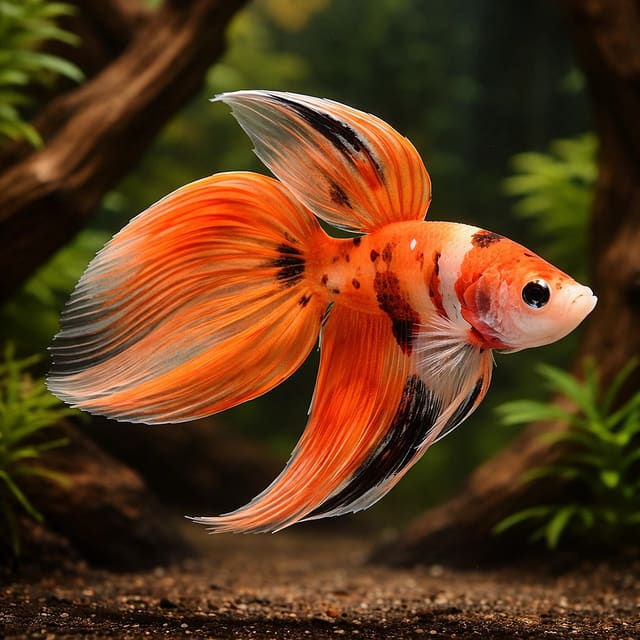
The male Giant Nemo Betta (Betta sp.) is a patterned orange-and-red betta sold as a single male. Keep him on his own or with very placid tank mates, never with another male, in a filtered, heated aquarium of at least 20 litres; OATA’s broad guidance for bettas is 20–28 °C and pH 6.0–8.0.
Betta sp.
The male Giant Nemo Betta (Betta sp.) is a patterned orange-and-red betta sold as a single male. Keep him on his own or with very placid tank mates, never with another male, in a filtered, heated aquarium of at least 20 litres; OATA’s broad guidance for bettas is 20–28 °C and pH 6.0–8.0.
For one typical domestic Betta splendens, start with at least 20 litres, a mature filter, thermostatic heater, separate thermometer, gentle flow, a secure lid with surface access, and plants or refuges. Keep one male per aquarium.
Maintain these water conditions for optimal health and vibrant colors
The male Giant Nemo Betta is a patterned betta sold as a single male fish. It belongs to the genus Betta, part of the gourami family Osphronemidae, and like every betta it is an anabantid: a labyrinth organ lets it breathe air at the surface as well as through its gills. The exact species has not been identified, so the care advice here follows the genus Betta and its care group. In practice one rule matters above all others: this male must never share a tank with another male betta, and he needs a filtered, heated aquarium that has fully matured before he arrives.
Each purchase supplies one male fish in one of two dispatch sizes, 4–6 cm or 6–8 cm. The size you select is the size supplied, not the adult size. The size menu on this page shows which sizes can be ordered.
Both sizes are males of the same line and need identical care. The 4–6 cm size gives you longer to watch him grow in your own aquarium, while the 6–8 cm size arrives closer to his grown shape. A smaller fish is not a reason to choose a smaller tank: plan the aquarium for the fish he will become.
| Suits | Keepers with a mature, heated aquarium of at least 20 litres who will keep him away from other male bettas |
|---|---|
| Sold as | One male fish per purchase |
| Size choices | 4–6 cm or 6–8 cm at dispatch |
| Identity | Genus Betta; species not confirmed |
| Water | 20–28 °C, pH 6.0–8.0 and 4–12 dGH (OATA broad betta guidance) |
| Temperament | Highly aggressive towards other male bettas; often a target for fin nippers |
| Tank mates | None, or very placid fish only |
| Diet | Good-quality flake or betta pellets plus small live or frozen foods |
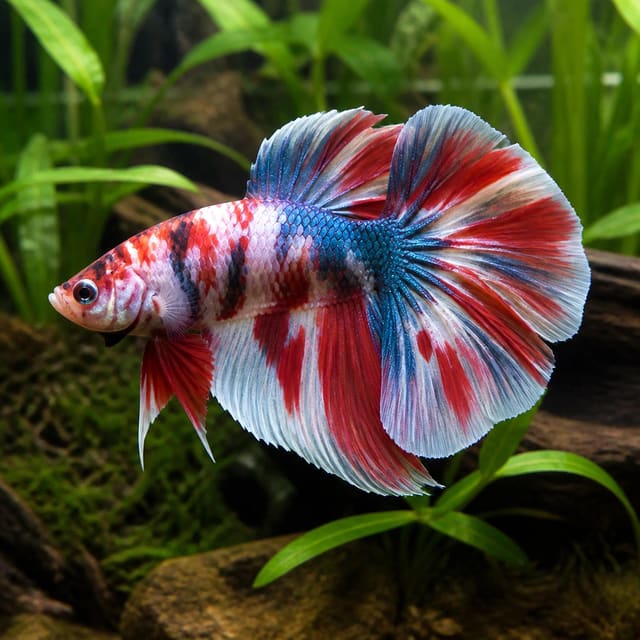
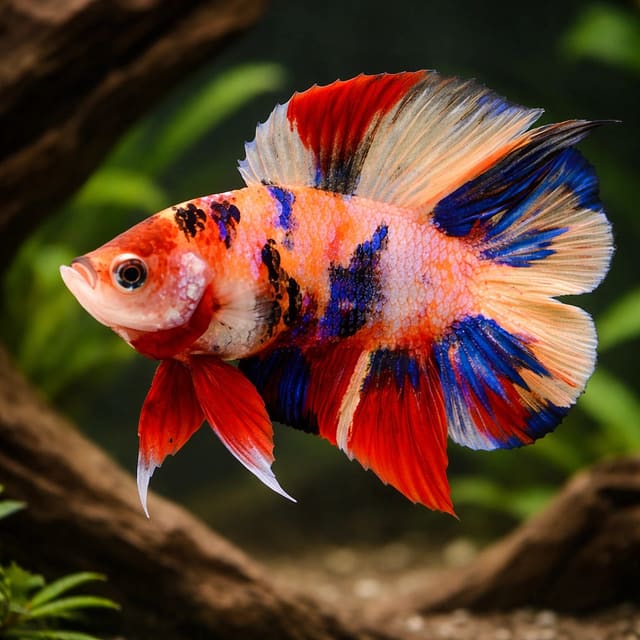
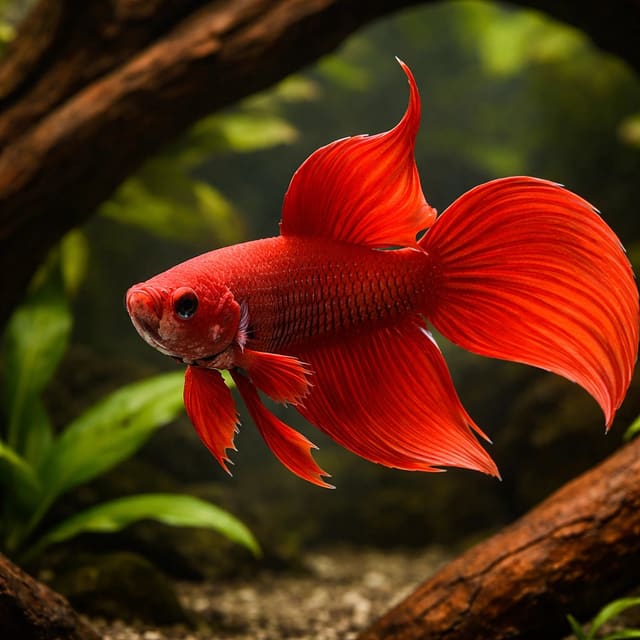
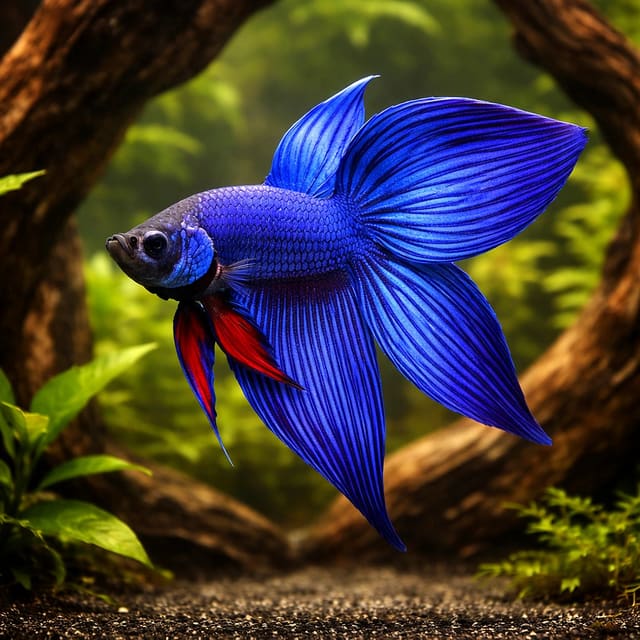
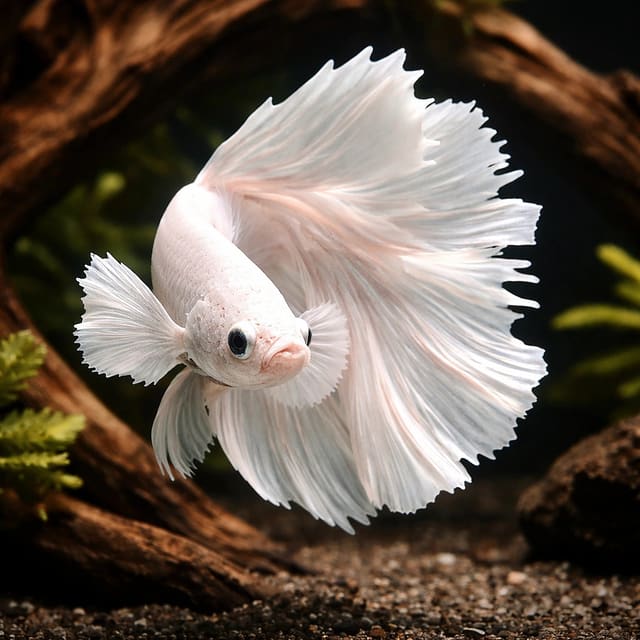
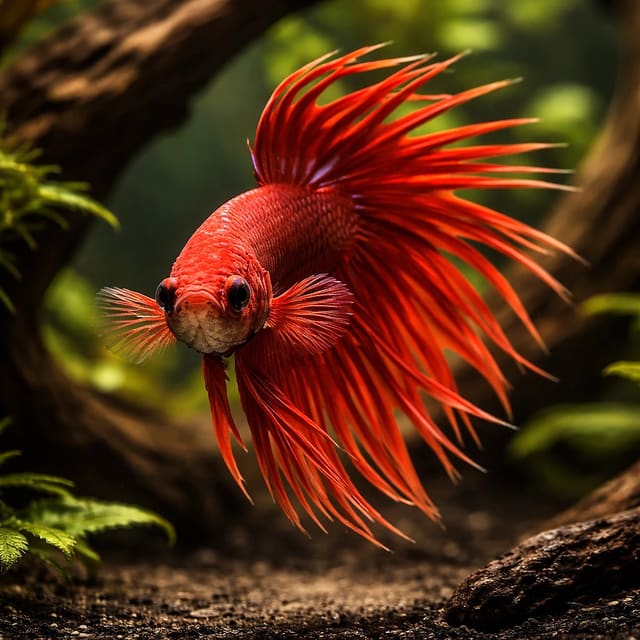
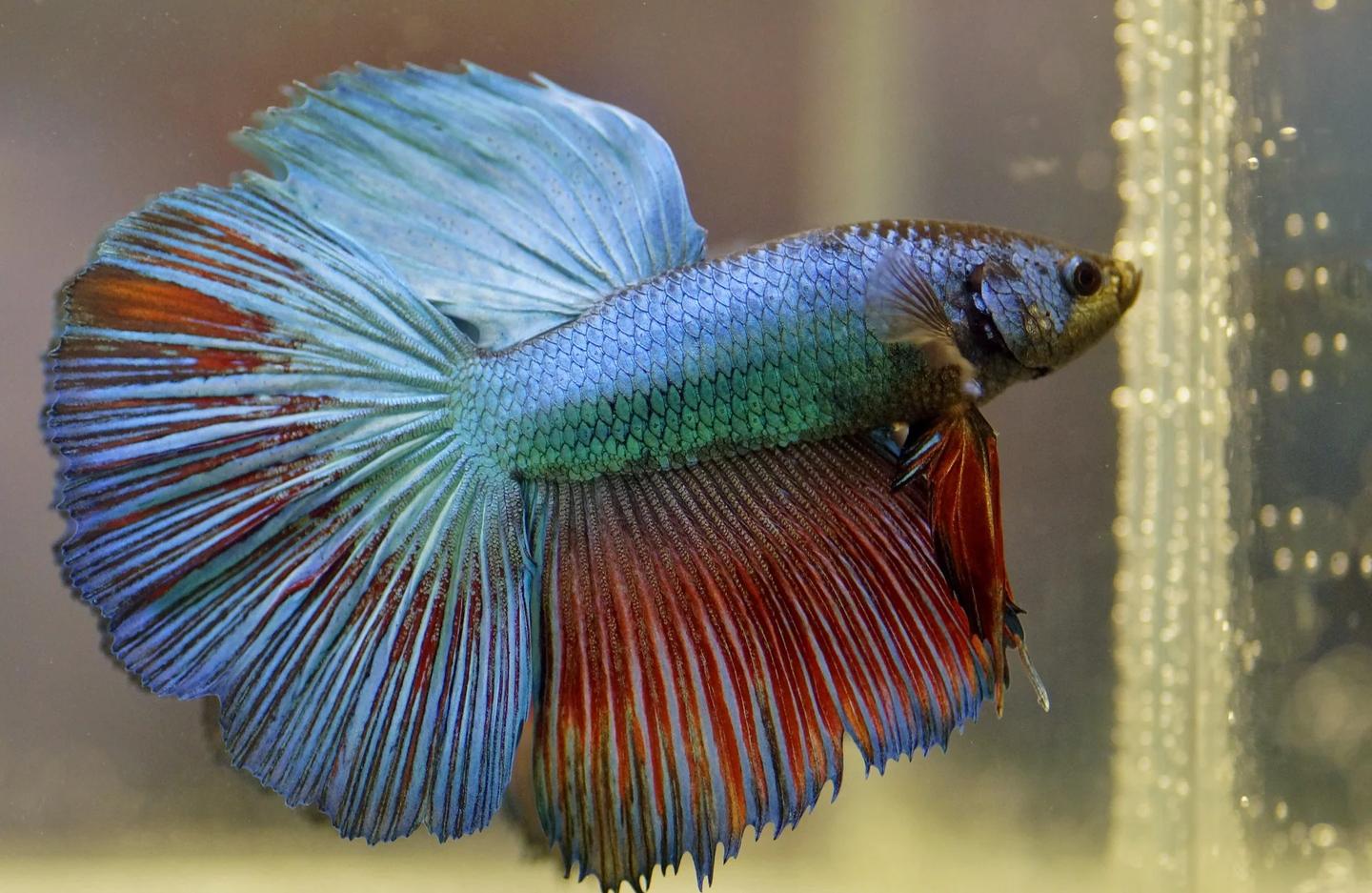
Giant and Nemo are trade names for this line. The photographs show an orange and red fish with darker patches across the body, a red dorsal fin edged in blue-green and short, rounded fins. The catalogue label for the fish reads Betta spl., but the species behind that label has not been confirmed, which is why the scientific name on this page is Betta sp. The FishBase species list for the genus Betta holds 78 species, so the genus name alone covers a wide range of fish.
OATA’s care sheet notes that the most common betta in the trade is Betta splendens, selectively bred to produce a wide range of colours and fin types, and that most bettas in the trade are captive bred for intense colour. Those notes describe the trade in general. They explain why broad betta values are a sensible starting point for this fish, not which species he is.
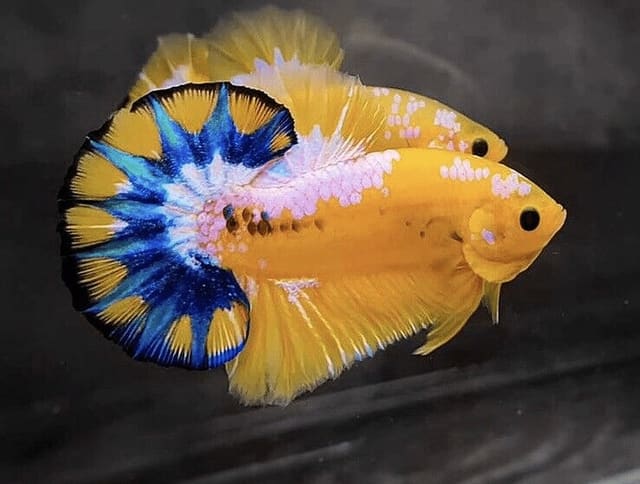
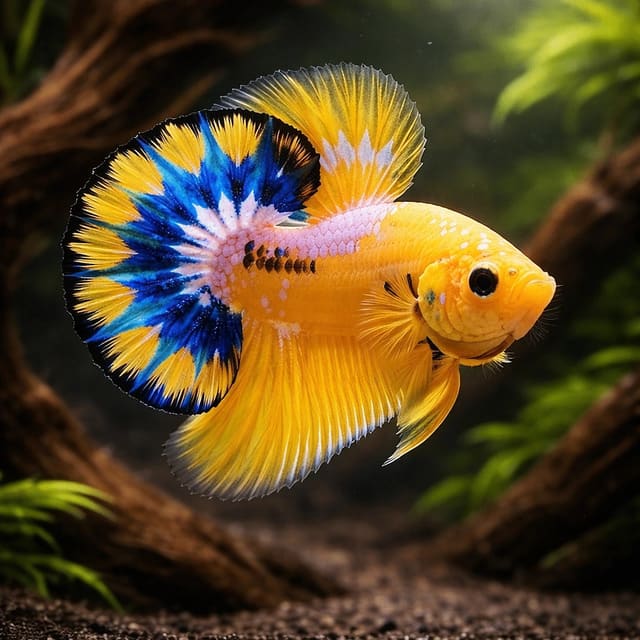
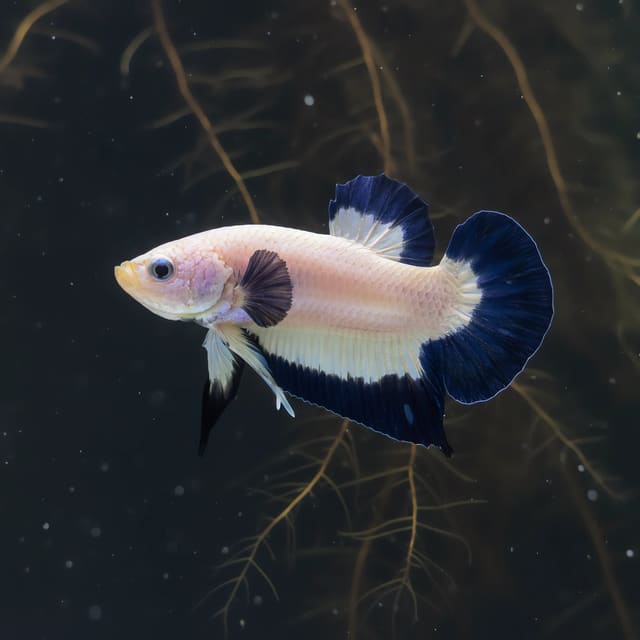
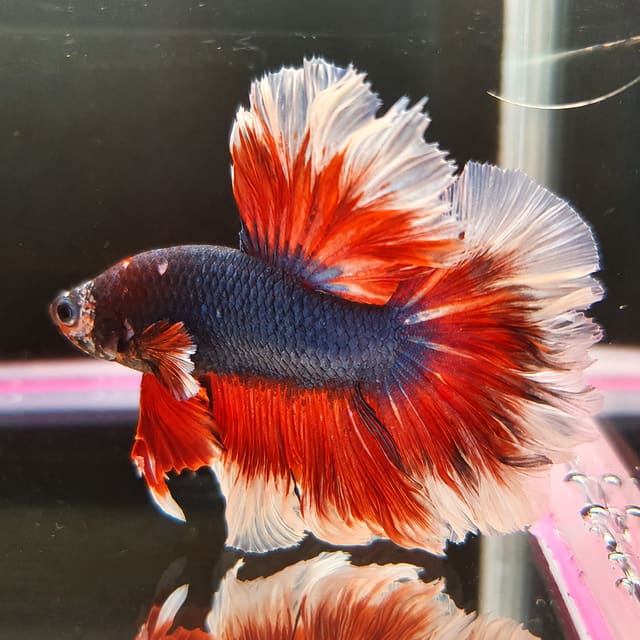
Gallery images have been digitally enhanced to improve image quality. Natural colour, pattern, size and maturity can vary between live animals. One photograph shows two fish together; a male betta should never share a tank with another male.
Sex is guaranteed only when the exact product or selected option explicitly states male or female. This Betta spl. male Giant Nemo listing is sold as male. Every fish on this listing is a male, so plan for one per aquarium unless you are deliberately setting up a group with females, which OATA reserves for experienced keepers.
To compare other bettas before you decide, the betta collection brings the range together in one place.
OATA recommends an aquarium of at least 20 litres for a single male betta, and at least 60 litres for a group of females. Its general rule is to buy an aquarium as large as possible within reason, because the larger the aquarium, the more stable its temperature and water quality will be. This is a Giant line and the larger dispatch size is already 6–8 cm, so treat 20 litres as the floor rather than the target and give him more room if you can.
OATA also asks keepers to make sure, before buying, that the tank will suit the betta for the whole of his life. Buying the final aquarium now avoids moving him later.
To check a tank against the 20-litre minimum, multiply its internal length, width and water depth in centimetres and divide by 1,000. A tank measuring 40 × 25 × 25 cm holds about 25 litres when full, which clears the minimum; a 30 × 20 × 20 cm tank holds about 12 litres, which does not. Gravel, wood and plants take up some of that space, so a little headroom above the minimum is worth having.
Bettas are often kept in small, sparsely decorated housing in shops. OATA is clear that these conditions should not be copied at home. Shop tanks are temporary housing with high filtration capacity, where extra decoration can get in the way of netting and let waste build up. A home aquarium is permanent, so it needs filtration, heating and furnishing chosen for the long term.
The labyrinth organ lets a betta take air at the surface. OATA stresses that this does not mean bettas need any less care than other fish: a betta still needs an appropriate aquarium with adequate filtration. Leave part of the surface open so he can reach the air easily.
When a male shares space with females, OATA asks for a densely planted aquarium that breaks up line of sight and provides areas to hide in. A single male can be given the same kind of structure: plants and wood along the back and sides, open water at the front for swimming, and a clear route to the surface.
Room temperatures in a British home regularly fall below 20 °C, especially overnight and in winter, so a thermostatic heater is essential rather than optional. Place the thermometer at the opposite end of the tank from the heater, so the reading reflects the whole aquarium rather than the warm spot beside the heater, and glance at it every day.
If you are starting from scratch, our guide to setting up a first tropical tank explains the steps for setting up and maturing the aquarium before any fish go in.
The OATA care sheet for Siamese fighting fish says that tank-reared bettas are usually undemanding of water chemistry and gives the values below. They are broad guidance for bettas as a group rather than a species-specific optimum. Because this fish’s species has not been confirmed, steady water inside these ranges matters more than any single figure.
| Reading | Target |
|---|---|
| Temperature | 20–28 °C |
| pH | 6.0–8.0 |
| General hardness | Soft to medium, 4–12 dGH |
| Carbonate hardness | Soft to medium, 3–10 dKH |
| Ammonia | Zero |
| Nitrite | Zero |
| Nitrate | No more than 20 mg per litre above your tap water |
OATA adds that some less common species of betta need specific conditions. With a species that has not been confirmed, the practical response is to aim for the middle of each range rather than its edges, keep the readings steady from week to week, and watch how the fish responds during his first weeks with you.
The 20–28 °C span is wide. Pick one setting inside it and hold it there with a thermostatic heater, checking the thermometer daily. Bring replacement water to the tank temperature before a water change so the fish never meets a sudden swing.
Ammonia or nitrite above zero means waste is building up faster than the filter can deal with it. Carry out a partial water change with conditioned, temperature-matched water, feed lightly, check the filter for blockages and test again the next day. If the problem persists, OATA’s advice is to seek guidance with your results, and you can contact us with them.
Test before the fish arrives. Our guide to what to test in aquarium water and why explains each reading, and the water parameter matcher compares your results with the values in the table. After he arrives, OATA recommends testing at least once a week so ammonia and nitrite do not build up.
A worked example: tap water that reads pH 7.6 and 10 dGH already sits inside the OATA values, so it only needs conditioning and warming before it goes in. Water that reads 16 dGH is harder than the soft-to-medium range, so work out how you will bring it down before you order.
OATA describes bettas as omnivorous fish that will take most food types. At home the base of the diet should be a good-quality flake or pellet, and specialised betta pellets are made specifically for these fish. Small live or frozen foods such as daphnia, small bloodworm or tubifex add variety, and OATA says bettas benefit from them.
Feed only what the fish can eat within a few minutes, once a day. Overfeeding leaves uneaten food to break down and release toxic waste into the water, which is the opposite of what a betta in a modest tank needs. If you are new to judging portions, start with fewer pellets than you think he needs and add a few more next time if they all disappear quickly.
Any of these calls for smaller portions, not just more water changes.
Frozen daphnia and bloodworm are the easiest way to add variety, because they keep in the freezer and can be portioned small. Thaw a portion in a little tank water before feeding and offer only what he clears within a few minutes. Live foods add interest but need a reliable source; whichever you choose, the once-a-day rule still applies.
Keep dried food sealed between feeds. If he ignores a new food, go back to what he takes readily and try again another day.
OATA stresses that good husbandry is essential, because bettas can be stressed by even the smallest amounts of ammonia and nitrite. A short, regular routine keeps both at zero.
| Task | How often |
|---|---|
| Partial water change of 25%, siphoning solid waste from the gravel | At least once every week |
| Test ammonia and nitrite | At least once a week |
| Treat replacement water with tap water conditioner | Every water change |
| Check the filter for blockages | Regularly, and whenever the flow drops |
| Rinse filter media lightly in removed tank water, never under the tap | Only when it needs cleaning |
The tap rule protects the filter: chlorine or chloramine in tap water can kill the beneficial bacteria living in the media. The RSPCA explains the role of those bacteria: fish release toxic ammonia, a working biological filter converts it to nitrite and then to the safer nitrate, and no fish should be kept without a well set up and maintained filter.
OATA describes a healthy fish as having clear, bright eyes, undamaged fins, intact scales, no ulcers or bumps and appropriate swimming behaviour. A betta visits the surface to breathe air, and that is normal; hanging at the surface all the time is not.
If you see any of these, test the water first, as OATA advises, then seek advice with your results in hand. A written note of weekly readings makes that conversation much quicker.
Every order is hand-packed by our team. The fish is bagged in pure oxygen inside an insulated poly box, with a heat pack added when the weather calls for it, and a licensed live-animal courier carries the parcel on a tracked service. We email the tracking number and your confirmed delivery date so you know when to be in. The full Live Arrival Guarantee terms are on our delivery page.
OATA advises checking that ammonia and nitrite read zero before any fish goes in, and building up stock slowly. The bacteria in a matured filter have to catch up each time fish are added and feeding increases; adding too much too quickly causes new tank syndrome, where ammonia and nitrite rise to unhealthy levels.
For a single male that usually means one introduction and nothing more for a while. Watch his fins, colour, breathing and appetite over the first few days, using the warning signs listed under weekly care. If you later add very placid tank mates, add them slowly, test the water in the days that follow, and check his fins closely for signs of nipping.
OATA’s betta sheet is blunt about males. They are highly aggressive towards each other, and two should never be kept together, because they will fight until one is severely injured or, more likely, killed. That rule applies whatever the size or colour of the fish, and it is the first thing to settle before ordering.
The picture changes with other fish. OATA notes that males are not aggressive towards other species, but they are often the target of intense fin nipping, which can cause stress, disease and death. For that reason it recommends keeping a male either alone or with very placid tank mates.
Fin damage is more than cosmetic. OATA links intense fin nipping to stress, disease and even death in male bettas, and loss of fins is on its list of warning signs. That is why the tank-mate rule for a male is about the other fish’s habits rather than his.
| Question | Why it matters |
|---|---|
| Is it genuinely calm? | OATA asks for very placid tank mates for a male betta. |
| Does it ever pick at fins? | Males are often the target of intense fin nipping. |
| Is it boisterous or aggressive? | A male needs very placid company, and OATA keeps even the calmer females away from boisterous or aggressive fish. |
| Does it share the water range? | It must live comfortably at 20–28 °C and pH 6.0–8.0, in soft to medium water. |
| Is it another male betta? | Two males will fight until one is severely injured or killed. |
One wrong answer is enough to rule a fish out.
Torn or ragged fins, a male that hides more than usual, or a change in his level of aggression all appear on OATA’s list of warning signs. If they follow the arrival of a tank mate, separate the fish before the damage builds up.
OATA describes one arrangement that combines a male with females: a male with at least five females, in a densely planted aquarium that breaks up line of sight and gives every fish areas to hide in. It states plainly that this should not be attempted by inexperienced keepers.
Plan the aquarium around the females as well as the male: at least the 60 litres OATA gives for a group of females alone, and more once a male joins them, with dense planting and enough hiding places for any fish to move out of the others’ view. Watch closely for torn fins, fish that hide constantly or a change in aggression, all of which are on OATA’s list of warning signs, and be ready to separate them.
Plan for a fish of at least 7 cm. OATA gives about 7 cm as the adult size of bettas in general, and this line is sold under a Giant trade name, but its exact species has not been confirmed, so treat 7 cm as a minimum for planning rather than a ceiling.
OATA recommends at least 20 litres for a single male betta and advises buying as large an aquarium as is reasonable, because a bigger tank keeps temperature and water quality more stable. For a Giant line, more than the minimum is the better choice.
No. OATA’s guidance is that two males should never be kept together, because they will fight until one is severely injured or, more likely, killed. Keep one male Giant Nemo Betta per aquarium.
A single male in a matured, filtered and heated aquarium suits a newer keeper who tests the water weekly and changes 25% of it at least once a week. Keeping a male with a group of females is different: OATA says it should not be attempted by inexperienced keepers.
Feed a good-quality flake or pellet, such as a specialised betta pellet, and add small live or frozen foods like daphnia, small bloodworm or tubifex. OATA advises feeding once a day and only what the fish can eat within a few minutes.
OATA’s broad guidance for bettas is 20–28 °C, pH 6.0–8.0 and soft to medium water of 4–12 dGH, with ammonia and nitrite at zero. Keep the male Giant Nemo Betta at one steady temperature inside that range.
Males are highly aggressive towards other male bettas, but OATA notes that they are not aggressive towards other species. The bigger risk runs the other way: males are often the target of intense fin nipping, which can cause stress, disease and death.
Very placid tank mates only, or none at all. Avoid other male bettas, fin-nipping fish and boisterous or aggressive species. OATA also describes keeping a male with at least five females in a densely planted aquarium, but only for experienced keepers.
Our team hand-bags him in pure oxygen inside an insulated poly box, adding a heat pack when the weather calls for it, and a licensed live-animal courier delivers the parcel on a tracked service. Someone must be at the address to receive it; open the parcel the same day while filming one continuous unboxing video from the sealed box, float the bag for 20–30 minutes before releasing him, and send us the video and your order number the same day if anything has gone wrong.
No reviews for this item yet. Bought one? Honest reviews only, good or bad.
What customers say about ordering from us
I have a small group of long finned mountain minnows. So was delighted to be able to order ten of this variety to increase the genetics in my tank . The ones I recieved are healthy but it’s to early to give a verdict on wether they are of a long finned type since they are small currently.
Gordon Walker · 23 Sept 2026
100% success travel and "installation". Pleased with quality of purchase. The Siamese fighter a bit "shy" so have not yet seen him at his best yet but looking good. Happy customer. GG
George E Garratt · 21 Sept 2026
Reviews of our shop, collected by Judge.me, an independent third-party review collector. Newest first.