−13%
Moderate
Crowntail Male Betta (Betta splendens)
26–28°C · pH 6–8 · 20L
£12.17£13.99
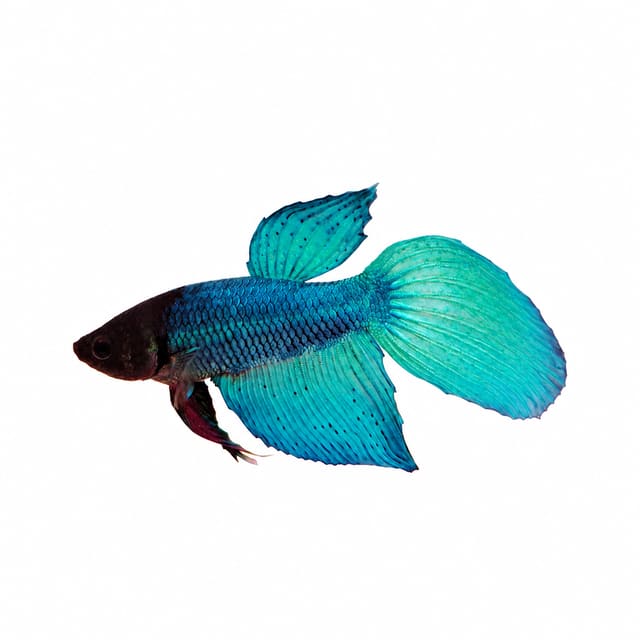
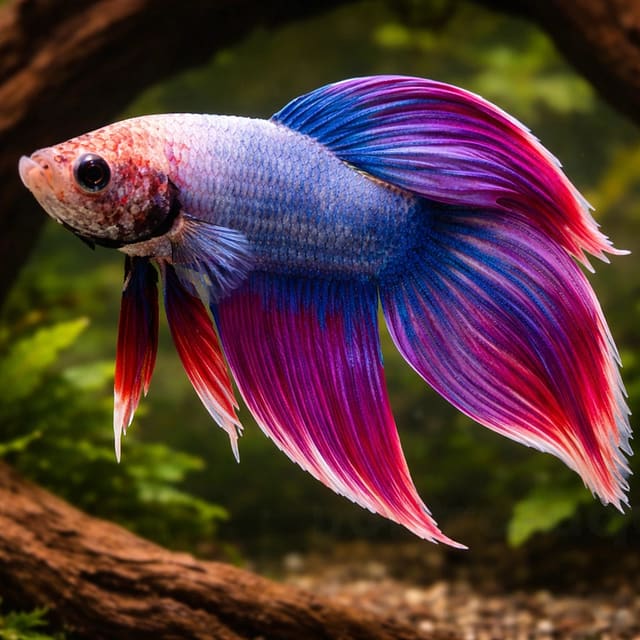
The Crowntail Fancy Colour Male Betta Mix is one male Betta splendens with spiky crowntail fins and his own colour pattern from a mixed group. He needs a heated, filtered, covered aquarium of at least 20 litres to himself, never shared with another male.
Adult size is the maximum length this species reaches at full maturity (scientific sources). The livestock you receive will be younger and smaller. Product-photo provenance and any image-specific limitations are stated on the listing.
Betta splendens
The Crowntail Fancy Colour Male Betta Mix is one male Betta splendens with spiky crowntail fins and his own colour pattern from a mixed group. He needs a heated, filtered, covered aquarium of at least 20 litres to himself, never shared with another male.
Adult size is the maximum length this species reaches at full maturity (scientific sources). The livestock you receive will be younger and smaller. Product-photo provenance and any image-specific limitations are stated on the listing.
For one typical domestic Betta splendens, start with at least 20 litres, a mature filter, thermostatic heater, separate thermometer, gentle flow, a secure lid with surface access, and plants or refuges. Keep one male per aquarium.
Maintain these water conditions for optimal health and vibrant colors
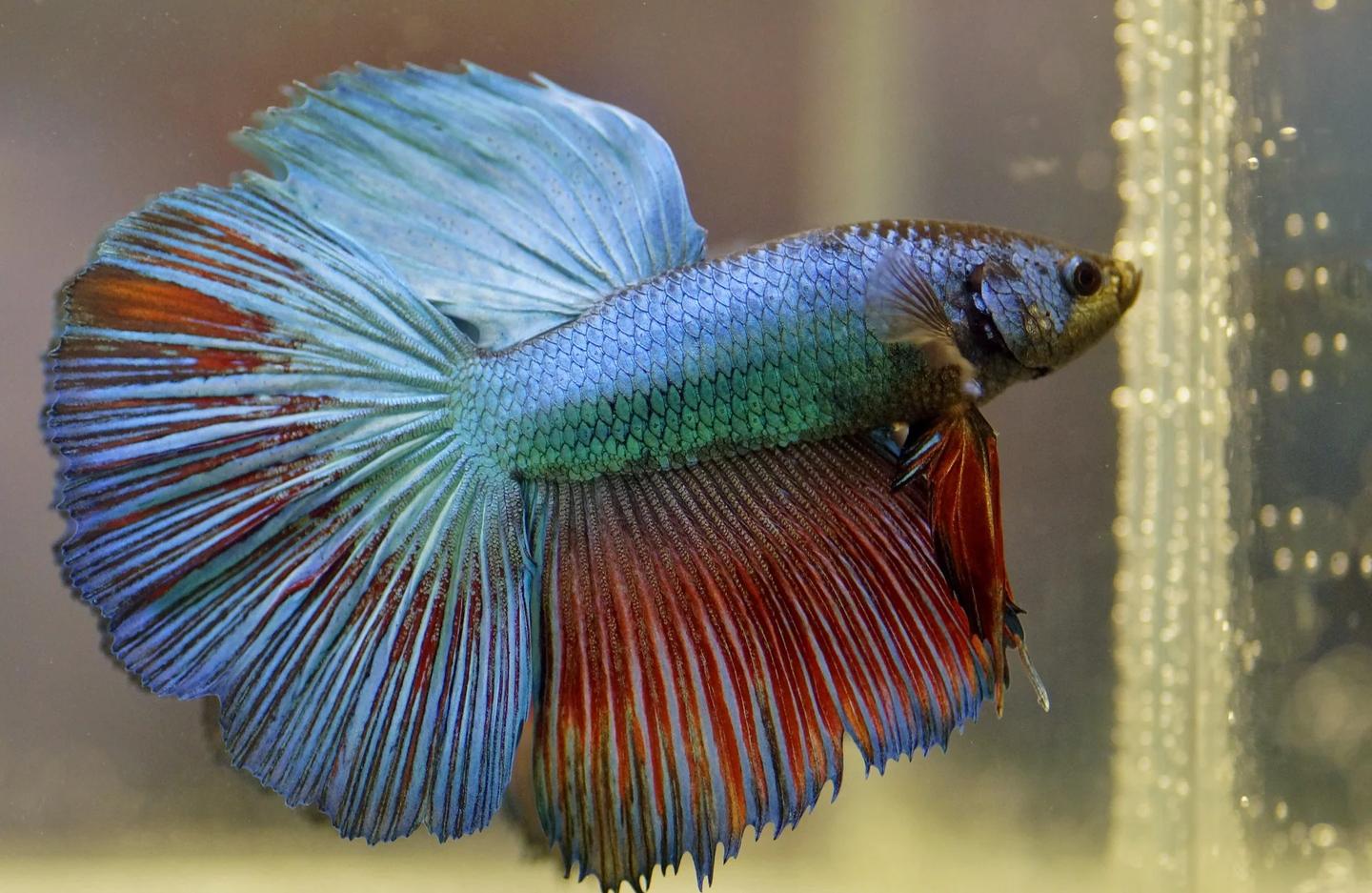
The Crowntail Fancy Colour Male Betta Mix is one male Betta splendens, the fish most people know as the Betta or Siamese fighting fish, in the crowntail fin form. Crowntail describes the spiky, crown-like edge to his fins, where the fin rays run out into points. The colour mix means the males in this group differ from one another, so the fish you receive will carry his own pattern and shades. What he needs most is an aquarium of his own: heated, filtered, covered and at least 20 litres, with no other male Betta in it.
Bettas belong to the gourami family, Osphronemidae, and FishBase describes them as facultative air-breathers. As well as using their gills, they gulp air at the surface with a specialised labyrinth organ, which is why clear access to the surface matters so much in their tank. That ability is no excuse to skip a filter. OATA, the UK ornamental fish trade body, points out that the labyrinth organ does not mean a Betta needs any less care than other fish; it still needs a proper aquarium with good filtration.
| Suits | A keeper who wants one showpiece male in his own heated, filtered and covered aquarium of 20 litres or more |
|---|---|
| Not suited to | Bowls, unheated tanks, busy community aquariums or any tank that already holds a male Betta |
| What you receive | One live male crowntail Betta per purchase; colour cannot be chosen |
| Adult size | About 7 cm, with long fins that make him look larger |
| Temperature | 26–28°C as a practical target, read on a separate thermometer |
| Social needs | Lives alone; males fight their own kind |
| Care level | Intermediate (Tropical Fish Co rating) |
In the wild, FishBase places the species in the Mekong basin, in the standing water of floodplains, canals and rice paddies as well as medium to large rivers. The Bettas kept in aquariums are domestic ornamental lines, bred over many generations for colour, fin shape, vigour and strength, and they look very different from wild fish. Wild Betta splendens is assessed as Vulnerable by the IUCN; that status describes wild populations rather than domestic males bred for the aquarium trade.
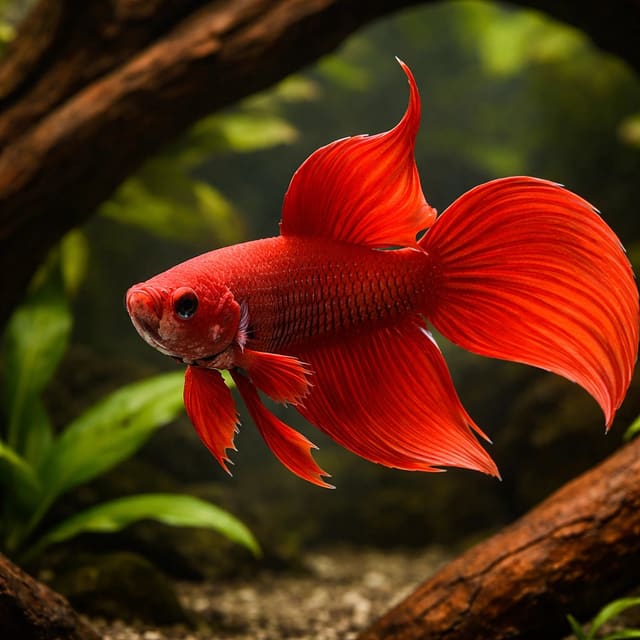
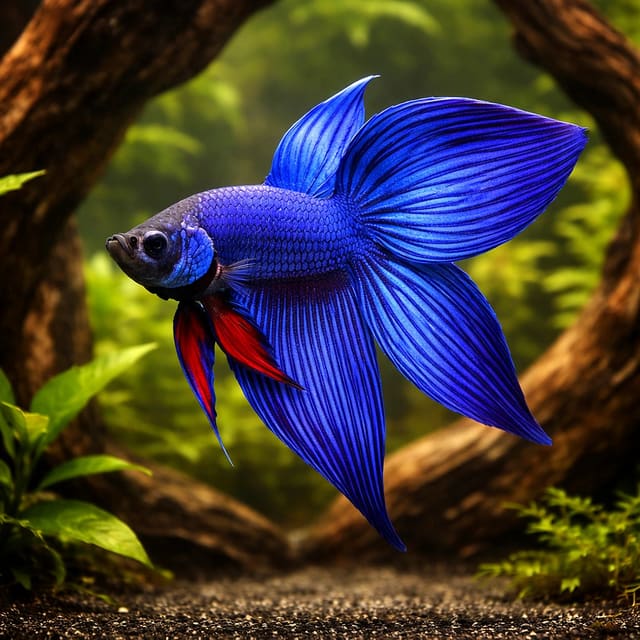
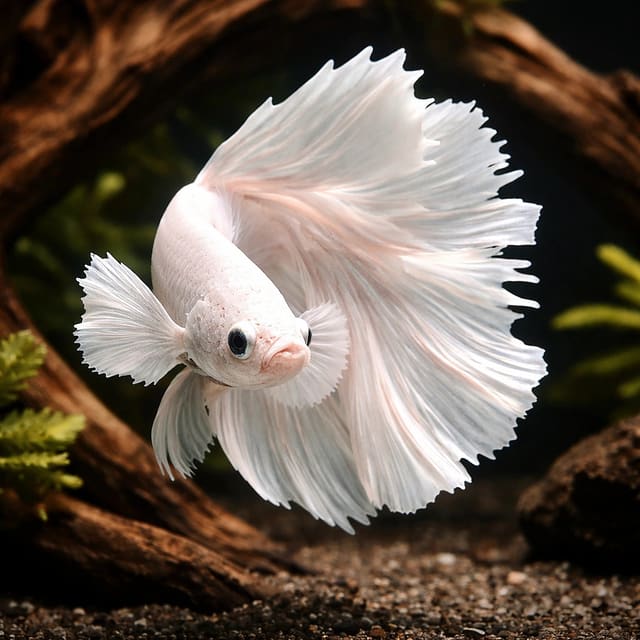
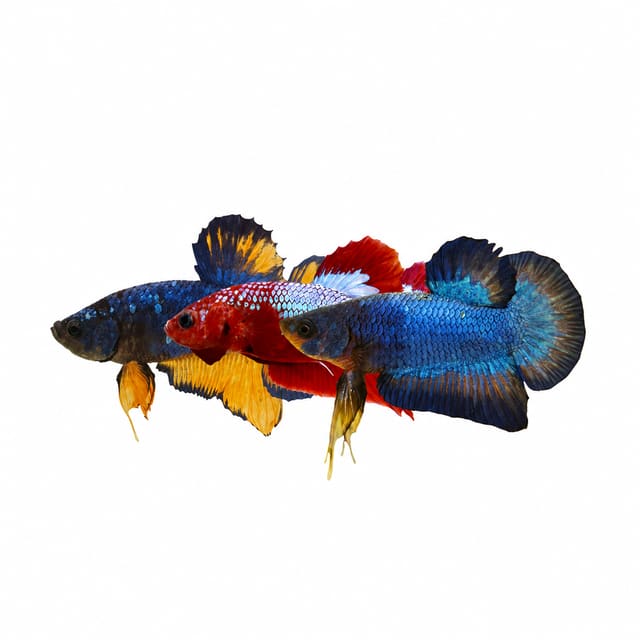
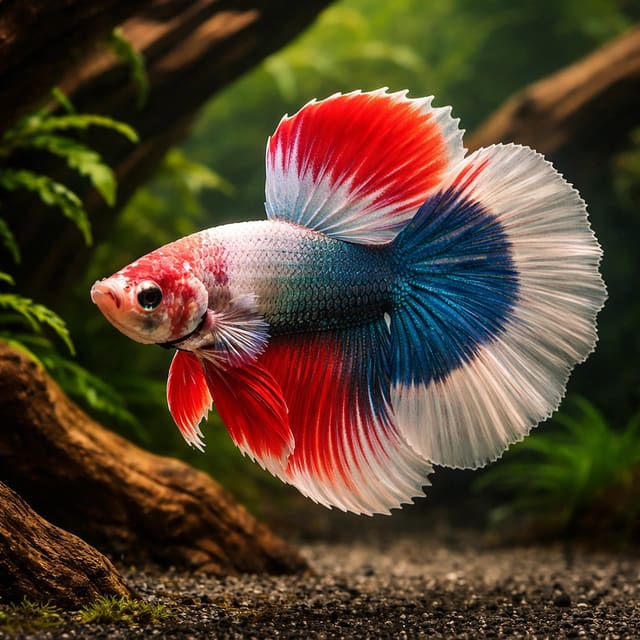
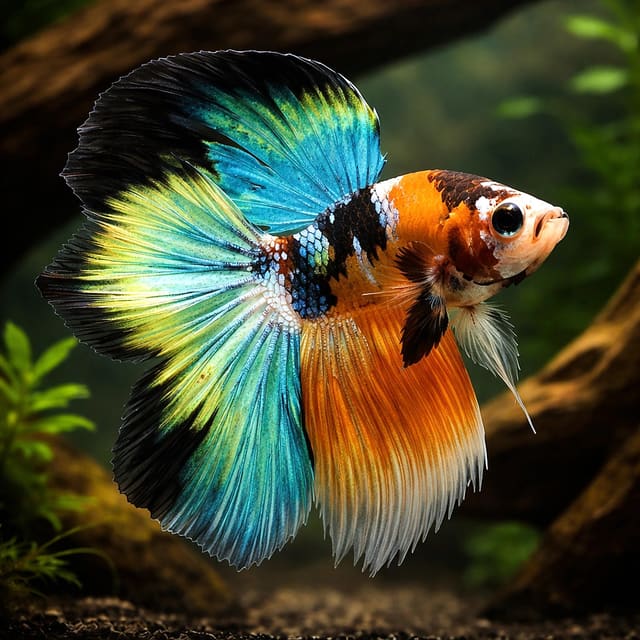
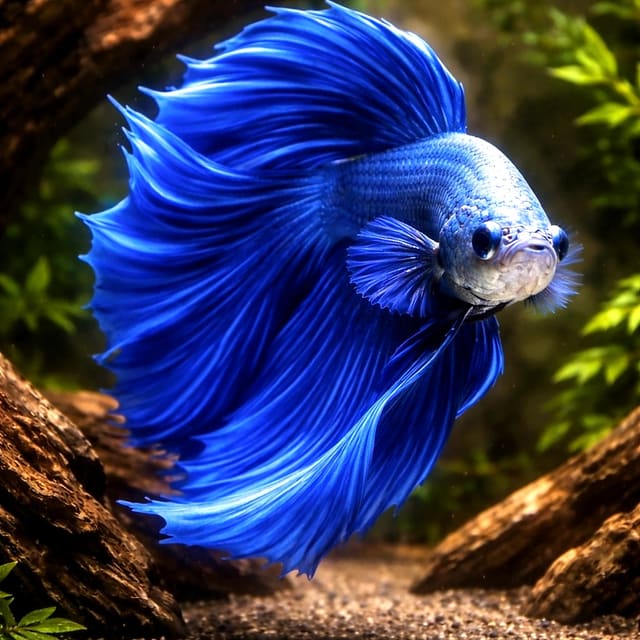
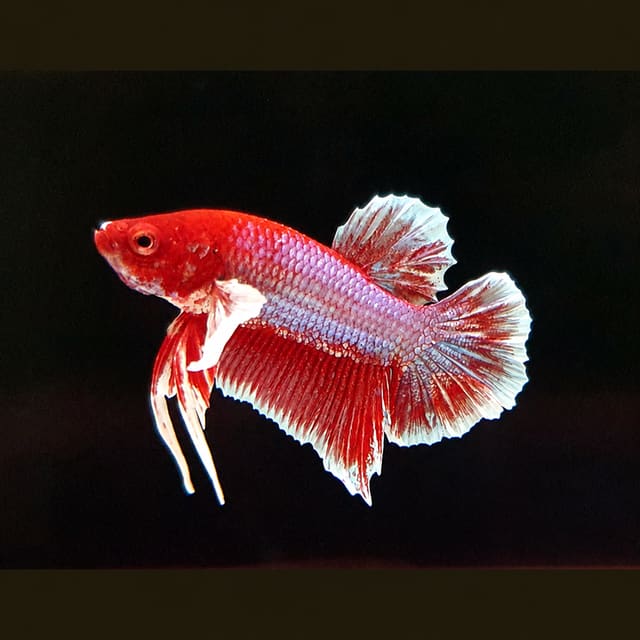
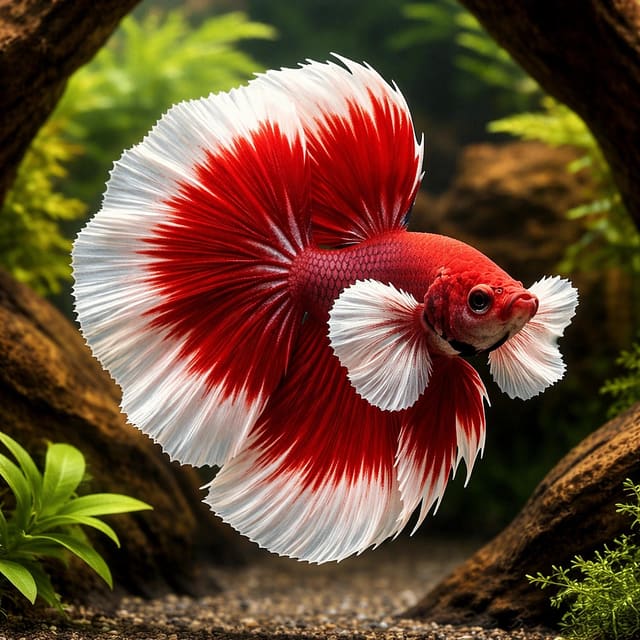
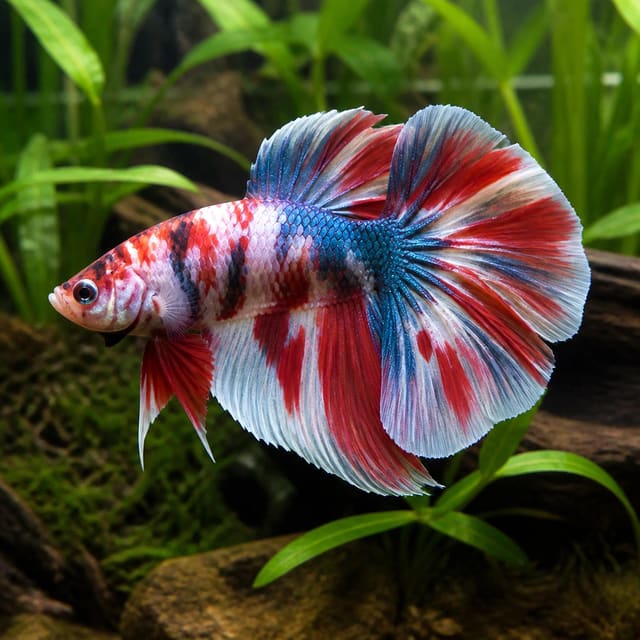
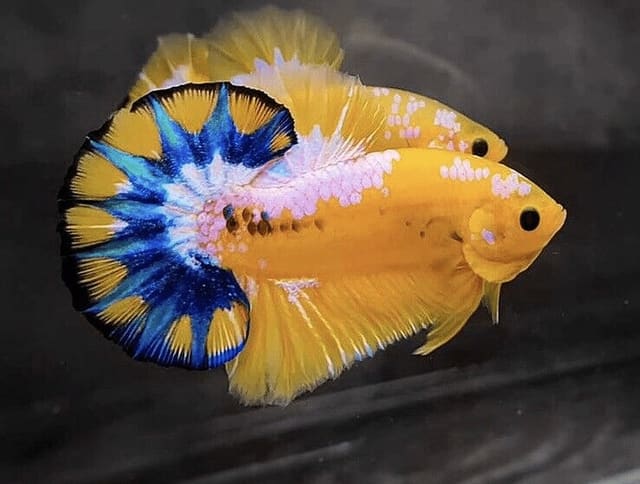
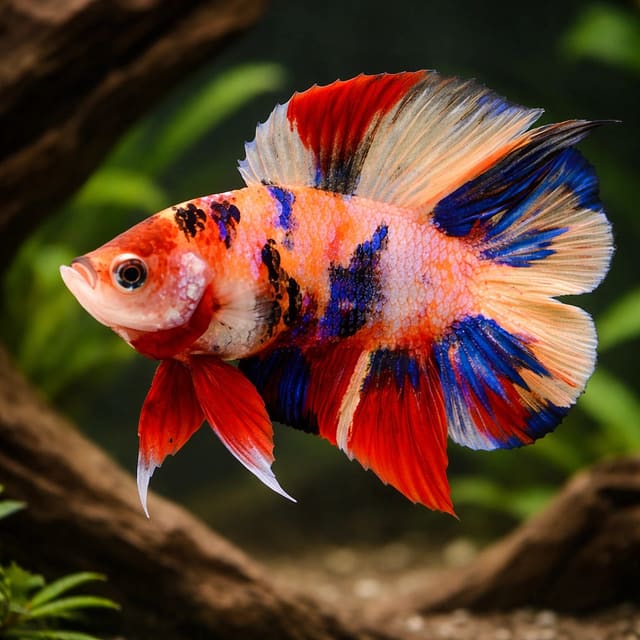
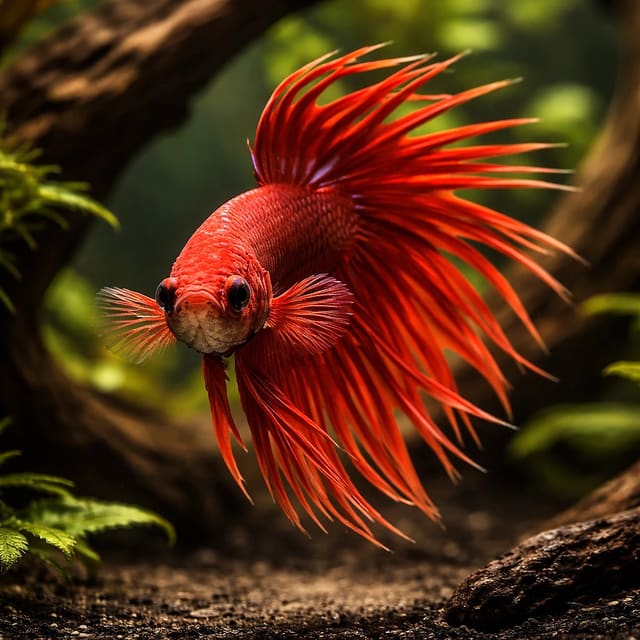
Each purchase supplies one live male, sent at the XL dispatch grade. The grade is a trade size band for the fish when he is packed; it is not a measured length, an age or a promise of how big he will grow. There is no colour choice on this listing. The photograph shows the crowntail form and one example of the colour range, and your male's colours and markings will be his own.
Sex is guaranteed only when the exact product or selected option explicitly states male or female. This Crowntail Fancy Colour Male Betta Mix listing is sold as male.
Gallery images have been digitally enhanced to improve image quality. Natural colour, pattern, size and maturity can vary between live animals.
Those long, spiked fins are the reason people choose a crowntail, and they shape how the tank should be set up. Very long fins can change how an individual copes with water movement and decor, so gentle flow, smooth furnishings and resting places near the surface matter more than they would for a short-finned fish. Watch how your male swims once he has settled rather than assuming that any named fin type is automatically hardier or more delicate.
He is a good fit if you can say yes to each of these:
A crowntail male suits someone who wants one striking fish to watch closely, in a quiet aquarium planned around him. If you would like to compare other males and fin types before deciding, browse the full Betta range. The care on this page applies to domestic Betta splendens in general; the offer itself is this crowntail colour mix only.
Have the aquarium running, heated and biologically mature before you order. A Betta put into a brand-new tank meets ammonia and nitrite while the filter bacteria are still building up, and that is an avoidable start.
OATA's Betta care sheet recommends an aquarium of at least 20 litres for a single male and advises buying as large a tank as is reasonable, because larger volumes keep temperature and water quality more stable. Treat 20 litres as the starting point rather than the goal.
Seriously Fish gives a base of 45 × 30 cm, roughly 41 litres, as large enough for a single male or a pair, and does not support keeping the species in tiny aquaria or small jars. FishBase adds that holding males in very small containers should be discouraged. Two 2024 behavioural studies point the same way: small bowls restricted normal activity, and a furnished tank of about 19 litres produced better behaviour than smaller or bare set-ups.
Shop display tanks can look small and plain, and OATA explains why. They are temporary housing with heavy filtration, kept simple because extra decoration can compromise welfare when fish are netted and waste builds up. They are not a model for a home aquarium.
The RSPCA's guidance on the aquarium environment is clear that no fish should be kept without a well set-up and maintained filter. Fish release ammonia, which is toxic; beneficial bacteria in the filter convert it to nitrite, also toxic, and then to nitrate, which is safer. Those bacteria take time to establish, which is why the RSPCA recommends fishless cycling and adding fish only once ammonia and nitrite have risen and fallen back to zero.
OATA warns that stocking a tank too quickly can cause new tank syndrome, where there are not enough nitrifying bacteria to cope with the extra waste and ammonia and nitrite climb to harmful levels. If this is your first aquarium, our guide to setting up a first tropical tank walks through the process in order.
Seriously Fish describes this species doing best in a well-planted, shady aquarium with plenty of surface cover. Good options include tall stem plants, floating plants such as Salvinia or Riccia, tropical lilies (Nymphaea) and Cryptocoryne. Driftwood works well, and Microsorum or Taxiphyllum can be attached to it. Dried leaf litter adds further cover, and the tannins released as it breaks down are considered beneficial.
For a crowntail, texture matters as much as layout. Choose smooth wood, rounded stones and live or soft plants, and avoid sharp edges, rough openings that could trap a fin or body, and anything that blocks his route to the surface. Floating plants and lily leaves give him places to rest near the top without holding position against the current. In one of the 2024 studies, the same 19.3-litre volume produced more hovering, repetitive swimming and wall contact when bare than when furnished, so structure is worth the effort.
OATA describes tank-reared Bettas as usually undemanding about water chemistry. What they do not cope with is dirty or unstable water, so aim for the values below and test against them.
| Measure | Aim for |
|---|---|
| Temperature | 26–28°C, our practical target, inside OATA's 20–28°C guidance for tank-reared Bettas |
| pH | 6.0–8.0 |
| General hardness | 4–12 dGH, soft to medium |
| Carbonate hardness | 3–10 dKH |
| Ammonia | Zero |
| Nitrite | Zero |
| Nitrate | No more than 20 mg/l above your tap water's level |
Other references give wider figures. FishBase records the species at 24–30°C, pH 6.0–8.0 and 5–19 dH, which describes the environment of wild fish. Seriously Fish lists 22–30°C and 1–15 dGH, and notes that wild-collected fish are likely to prefer a pH between 5.0 and 7.0, while ornamental strains are unfussy anywhere from 6.0 to 8.0. For a domestic crowntail male, the targets in the table are the ones to use; the wild figures are background, not numbers to chase.
Stability matters more than hitting one exact figure. Check the separate thermometer regularly, especially in the first days after setting up and during hot or cold spells, and investigate any reading outside 26–28°C rather than turning the heater up or down on a guess. Follow the heater maker's guidance for tank volume, installation depth and room temperature, then confirm the result in the water. A larger volume of water also changes temperature more slowly, which is one more reason to give him more than the minimum.
Flow should stay gentle. For a tank of about 41 litres, Seriously Fish suggests a filter rated around 80–125 litres per hour, which gives a sense of how soft the current should be. Watch him after setup: if he is pushed around or cannot rest, diffuse the outflow without switching off the filter.
OATA stresses that Bettas can be stressed by even the smallest amounts of ammonia and nitrite, which is why the routine matters more than any single reading. UK tap water varies with local geology and supply, so test your own rather than assuming, and test again after any domestic softener or filter, since both can change what comes out of the tap. Adjust pH or hardness only for a real reason, never just to land in the middle of a range. Our guide to aquarium water parameters explains what each test tells you, and the water parameter matcher lets you compare your readings with the targets above.
In the wild, FishBase records the species feeding on zooplankton, mosquito larvae and other insect larvae, and Seriously Fish describes it as likely to prey on aquatic and terrestrial invertebrates. In the aquarium that means a fish built to eat small invertebrates that will also accept a good prepared diet.
OATA describes aquarium Bettas as omnivorous and recommends a good quality flake or pellet, including the specialised Betta pellets made for them. Use a complete food sized for his small mouth as the base of the diet, and add small live or frozen foods for variety. OATA names daphnia, small bloodworm and tubifex; Seriously Fish suggests Daphnia, Artemia and chironomid larvae (bloodworm) offered regularly to bring out the best colour and condition.
OATA advises feeding only what a Betta can eat within a few minutes, once a day. Seriously Fish warns that Betta species seem particularly prone to obesity, and overfeeding also harms the water as leftovers break down into toxic waste.
Skip portion formulas based on the size of the fish's eye, fixed pellet counts that ignore how large a brand's pellets are, and a compulsory weekly fasting day. Pellet size and energy content vary from food to food, and age, condition and water temperature all change how much a fish needs. Follow the food maker's guidance and adjust to what you see.
Seriously Fish also mentions small insects such as pinhead crickets or Drosophila fruit flies, fed on fish flakes or vegetable matter first so they carry extra nutrition. They are an occasional extra rather than a replacement for a complete food. Captive Bettas normally accept dried foods once they recognise them as edible, so a newly arrived male may take a little while to accept an unfamiliar pellet: offer small amounts and remove what he leaves.
If you go away, do not rely on a fasting period you have read about online. Arrange a competent carer, leave pre-measured portions with written instructions, and make sure they know how to spot a heater or filter problem. If you plan to use an automatic feeder, test it for a good while before you travel rather than trusting it for the first time while you are gone.
We hand-bag fish in pure oxygen and pack them in an insulated poly box, with a heat pack when the weather calls for it. A licensed live-animal courier delivers on your confirmed Thursday or Friday date, and we email the tracking number and delivery date so you know when to be in. Someone needs to be at the address to receive the parcel, because live fish cannot be left unattended.
Our delivery and Live Arrival Guarantee terms set out exactly what the guarantee covers and what we need from you.
Keep feeding light while he settles, and keep testing at least weekly, sooner if anything looks wrong, because a new fish adds to the load on the filter. OATA lists the changes worth noticing in any fish:
A Betta rising to take air is normal for a labyrinth fish. The warning sign is a change from his own usual pattern, such as hanging at the surface for long periods when he used to patrol the tank.
Torn fins, white marks, a swollen belly or odd swimming can each have more than one cause, so investigate before you treat. The MSD Veterinary Manual puts the aquarium's history and water analysis at the start of any diagnosis, and that is the right order at home too:
Correcting water quality can be urgent, but it does not identify a disease. Keep notes and test results, check the whole system, and get help rather than treating whatever label looks closest online.
Expect him to rise and take air from the surface regularly; FishBase describes the species as a facultative air breather and bubble-nest builder. Many males build a raft of bubbles at the surface, under a broad leaf or among fine-leaved floating plants, whether or not a female is present. A nest is part of reproductive behaviour. It does not prove he is healthy, and the absence of one does not mean anything is wrong, so judge him on water tests, feeding, breathing and posture instead.
The name Siamese fighting fish comes from a tradition of keeping males to fight one another in organised bouts, and the species has been line-bred for vigour and strength as well as for the ornamental trade. Seriously Fish notes that ornamental strains seem more aggressive than any other Betta species, including their close relatives. In practice that means one male per tank. His aggression is aimed mainly at other males and at fish he takes for rivals, which the compatibility tab covers in detail.
Males develop more extended fins than females, and Seriously Fish points out that some ornamental strains take this to extremes. The crowntail's long, rayed fins are part of his appeal, and they are also why flow, decor and resting places deserve extra thought. If a fin edge looks ragged, check the water, the current and every piece of decor before assuming disease, and keep watching how he swims and rests over the following days.
A genome study of domestic Bettas by Kwon and colleagues (2022) mapped the genetic basis of variation in colour, fins, body size and behaviour across ornamental lines. It is a useful reminder that "crowntail" and "fancy colour" describe appearance, not pedigree, age, health or temperament. A photograph can show visible traits, but it cannot tell you how an individual will look under your own lighting. Our Betta care guide goes further into domestic lines, tank size research and the reasoning behind our 26–28°C target.
This listing supplies a single male, so breeding is not part of the plan, but the basics explain a lot of his behaviour. Betta splendens is a bubble nester. The male builds the nest, usually will not tolerate the female nearby until it is finished, and spawning takes place beneath it in the embrace typical of the gourami family. FishBase notes that aquarium keepers normally keep the sexes apart except for mating. Seriously Fish adds that the fry need a layer of warm, humid air above the water for the labyrinth organ to develop properly, which is why breeders use the tightest-fitting cover they can.
The safest plan for this male is an aquarium to himself. That advice reflects how consistently the specialist references describe the species, and it saves both him and any companion from stress.
OATA is blunt: two male Bettas should not be mixed, or they will fight until one is severely injured or, more likely, killed. FishBase states simply that males will fight each other, and the RSPCA's advice on keeping pet fish together lists male Bettas among fish that fight their own kind. Research on housing found that bigger or more complex tanks reduced some display behaviour but did not make it safe to keep two males together, so no amount of space or planting solves this.
Neighbouring tanks need thought as well. If you keep more than one male, give each his own aquarium and position them so the males have no direct visual contact.
Seriously Fish does not recommend this species for the standard community aquarium and says it is best kept alone. Individual fish sometimes tolerate other species, but that is the exception rather than the rule. OATA makes a related point from the other side: male Bettas are not aggressive towards other species, but they are often the target of intense fin nipping, which can cause stress, disease and death. Both lines of advice lead to the same place: alone, or with very placid companions chosen with great care.
| Possible companion | Our advice |
|---|---|
| Another male Betta | Never. They will fight. |
| Fish with long, trailing fins or a Betta-like shape | Avoid. A male may treat them as rivals. |
| Fin-nipping or boisterous fish | Avoid. His long fins make him an easy target. |
| Female Bettas | Not in a standard set-up. OATA describes keeping a male with at least five females only in a densely planted tank, and says it should not be attempted by inexperienced keepers. |
| Very placid small fish, such as some small cyprinids or loaches from similar still-water habitats | Possible in a larger tank after proper research, with a spare tank ready if it does not work. |
| Shrimp, snails and fish fry | Uncertain. He may investigate or hunt small animals, and some larger invertebrates bring their own injury risk. |
Screen every animal for adult size, water needs, the part of the tank it uses, activity level and feeding speed, and make sure the tank has room for the whole community rather than just the Betta. Temperament varies from one male to the next, so set up a heated, filtered separation option before you add anything. Do not add shrimp or snails as cleaners or as live food; that turns an uncertain pairing into a predictable problem for one side or the other.
Watch closely for the first days after any introduction: chasing, torn fins, a companion hiding constantly, or the Betta hanging back from food are all reasons to separate them.
Plan for an adult of about 7 cm. FishBase records a maximum of 6.5 cm total length, Seriously Fish gives 70 mm standard length and OATA says about 7 cm, and his long crowntail fins make him look larger than his body length.
OATA recommends at least 20 litres for a single male, and Seriously Fish considers a base of 45 × 30 cm, about 41 litres, large enough for a single male or a pair. Treat 20 litres as the minimum and choose more space if you can, because larger volumes stay more stable.
Keep one male per aquarium. OATA warns that two males will fight until one is severely injured or killed, and extra space or planting does not make it safe. A male with females needs a large, densely planted set-up that OATA says is not for inexperienced keepers.
He can suit a careful beginner once a heated, filtered, covered tank of at least 20 litres is fully cycled, with ammonia and nitrite at zero. Surviving in a bowl is not the same as good care; the heater, filter, test kits and a weekly maintenance routine must be in place before he arrives.
Use a complete Betta pellet or quality flake as the base, with small live or frozen foods such as daphnia, bloodworm or Artemia for variety. Feed only what he eats within a few minutes, once a day, and remove leftovers, because Bettas are prone to obesity and uneaten food fouls the water.
Tropical Fish Co's practical target is 26–28°C, inside OATA's 20–28°C guidance for tank-reared Bettas, with pH 6.0–8.0 and ammonia and nitrite at zero. A heater is needed all year round in the UK, checked with a separate thermometer.
Males are aggressive towards other males and may treat fish with long, trailing fins or a similar body shape as rivals. With other species the bigger risk usually runs the other way: OATA notes that male Bettas are often the target of fin nipping, so avoid boisterous or nippy fish.
The safest plan is none, because he does best alone. Seriously Fish says some small cyprinids and loaches from similar habitats can suit after proper research, and OATA recommends only very placid tank mates. Avoid other male Bettas, long-finned or Betta-shaped fish and fin nippers, and treat shrimp, snails and fry as uncertain.
He is hand-bagged in pure oxygen, packed in an insulated poly box with a heat pack when the weather calls for it, and delivered on a confirmed Thursday or Friday by a licensed live-animal courier. Someone must be in to receive him. If practical, film a continuous unboxing video from the sealed parcel, open it the same day, then float the bag for 20–30 minutes before releasing him. We strongly recommend an unboxing video when practical: it helps us investigate arrival concerns faster, resolve them with less back-and-forth and understand packing or transit issues so we can reduce recurrence. Video is optional and clear photos are accepted. Never delay necessary animal care to record evidence.
The main references behind the care advice on this page:
Our own Betta care guide and delivery terms, linked above, explain the 26–28°C target and how the Live Arrival Guarantee works.
No reviews for this item yet. Bought one? Honest reviews only, good or bad.
What customers say about ordering from us
Easy website plenty of info on fish your buying great to pick a time slot
TRACEY DURRANT · 7 Oct 2026
Got some lovely fish thank you
Kevin Mackie · 7 Oct 2026
Reviews of our shop, collected by Judge.me, an independent third-party review collector. Newest first.