By Tropical Fish Co Editorial Team
Can a betta live with other fish?
Sometimes—but “sometimes” is not a stocking plan. OATA's UK care sheet says a male Betta splendens may be kept alone or with very placid tank mates, while also warning that long fins can attract intense fin-nipping [2]. The responsible question is therefore not “which species is safe?” but “can this complete group live well in this exact aquarium, and can I separate them if it fails?”
Start with three firm boundaries:
- Do not house two male Betta splendens together. Fighting can cause severe injury or death [2].
- Meet every companion's own needs first. A shoaling fish does not become suitable because one specimen fits beside a betta.
- Prepare the fallback before the introduction. A mature, heated and filtered separation space—or a confirmed return plan—is part of the setup, not an emergency afterthought.
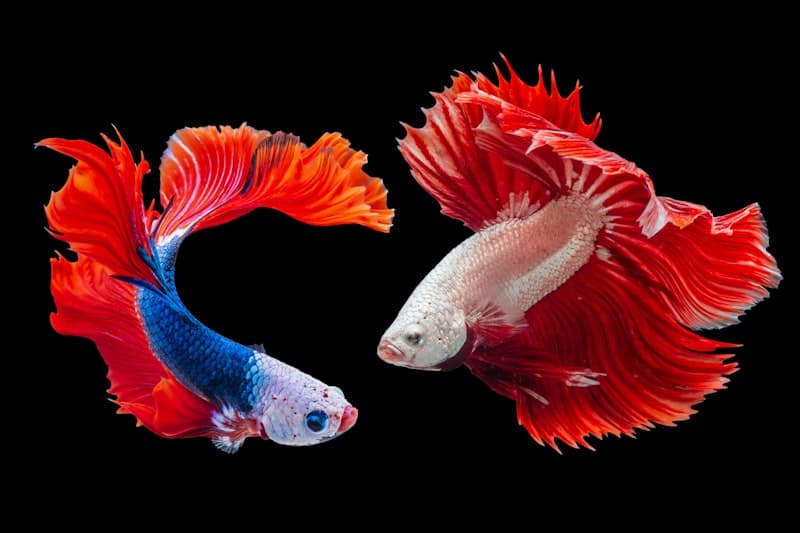
This guide covers the usual domestic Siamese fighting fish, Betta splendens [1]. Other Betta species and supplier labels need their own identity and care check. For the fish itself, use our betta care guide; for heat and measurement, see betta fish temperature UK.
A calm result in somebody else's aquarium, a shop display or a short video does not predict your fish. A 2025 mirror-assay study found substantial differences in aggressive responses among ornamental male bettas, but it did not test mixed-species communities [8]. Use that evidence to justify individual observation—not to label one fish “community safe”.
The tank-size answer: 5 gallon, 10 gallon and larger
Search results often turn tank size into a single number. Welfare does not work that way: dimensions, mature filtration, swimming space, floor area, cover, flow and the complete adult group all matter. Still, current UK trade guidance gives useful lower screens.
| Aquarium label | Approximate volume | What the evidence supports | Decision for this guide |
|---|---|---|---|
| 5 US gallons | 18.9 L | OATA recommends at least 20 L for one male betta [2] | Plan a single male betta, not fish tank mates |
| 10 US gallons | 37.9 L | Below OATA's 45 L starting point for a small shoal of smaller tetras [5] | Do not add a fish shoal simply because the tank is called “10 gallon” |
| 45–79 L | Varies by shape | May meet the group-level volume for a small shoal of a smaller tetra species; a betta and the exact species add further needs | A possible research range, not an automatic approval |
| 80 L and larger | Varies by footprint | OATA recommends at least 80 L for a shoal of smaller Corydoras [6] | More options, but water, group, territory, feeding and temperament still control |
These numbers are deliberately conservative and transparent. They do not mean every 45-litre tank suits a betta plus tetras, or every 80-litre tank suits a betta plus Corydoras. The combined adult stocking plan may require more.
Tank Volume Calculator
Enter length, width, and height to get your real water volume in litres.
Open tool →Why “safe betta tank mates” lists fail
Most lists check whether a candidate is peaceful and stop there. A useful compatibility decision has at least seven parts:
| Check | Question to answer before buying | Red flag |
|---|---|---|
| Exact identity | What is the scientific name and adult form? | Common label only, mixed species or uncertain identity |
| Social requirement | Is it solitary, paired, shoaling or group-living—and how many are needed? | Buying one social fish because it physically fits |
| Adult space | Do the whole group and the betta fit by adult size, swimming pattern and tank footprint? | Using dispatch size or litres alone |
| Water | Do temperature, pH and hardness overlap in stable measured water? | “UK tap water is fine” without a test |
| Behaviour | Is there fin-nipping, chasing, territorial, predatory or food-competition risk? | A “peaceful” label used as a guarantee |
| Habitat | Can flow, surface access, substrate, cover and open swimming space serve every species? | Solving one animal's needs by compromising another's |
| Exit plan | Can either side be separated immediately into suitable mature housing? | No spare setup and no confirmed return route |
The RSPCA likewise tells keepers to consider species, water quality, behavioural needs and competition, and to maintain shoaling fishes in proper groups [3]. A compatibility decision must protect the proposed companion as carefully as the betta.
Water Parameter Matcher
Enter your tap water readings to see if this species will thrive.
Open tool →Candidate groups: what the evidence actually says
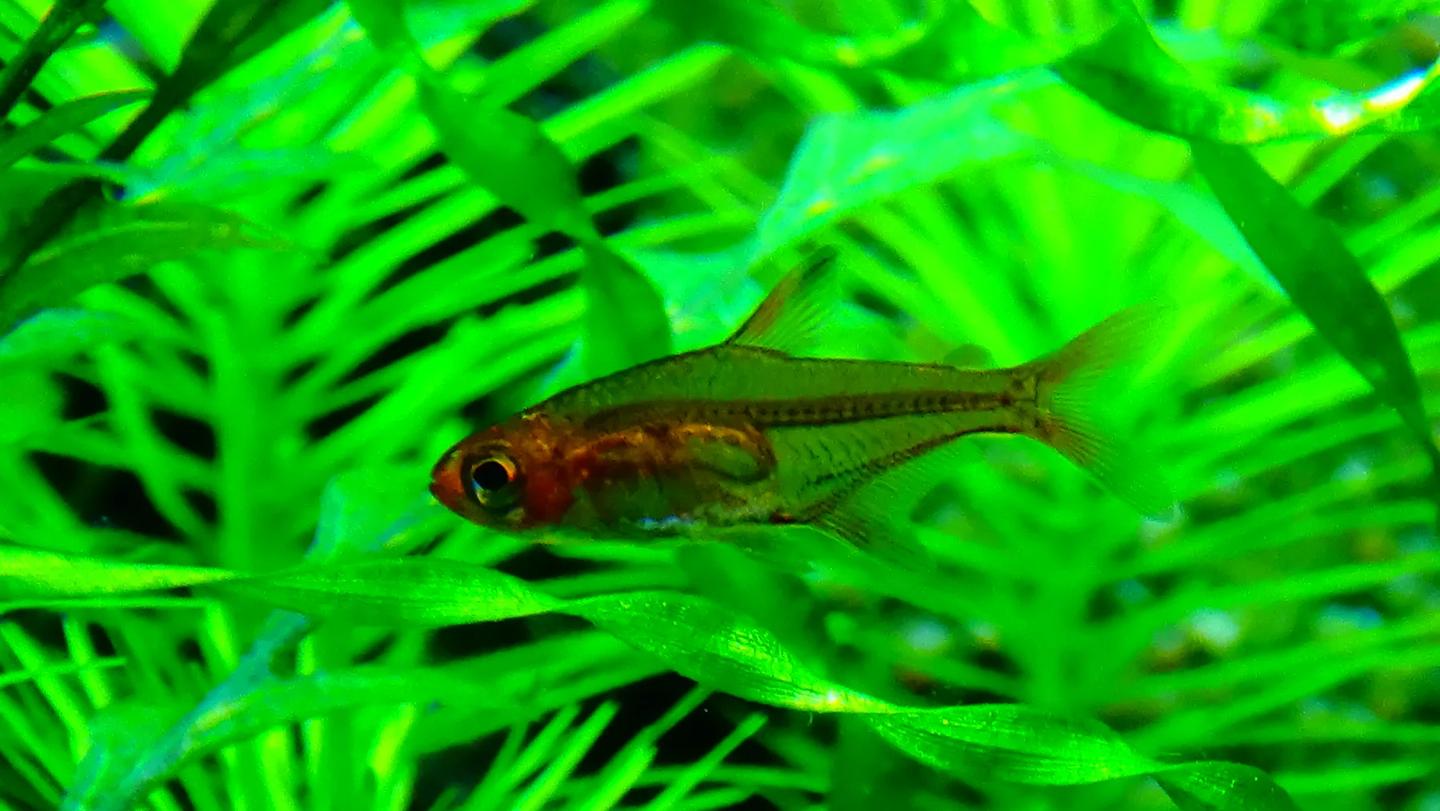
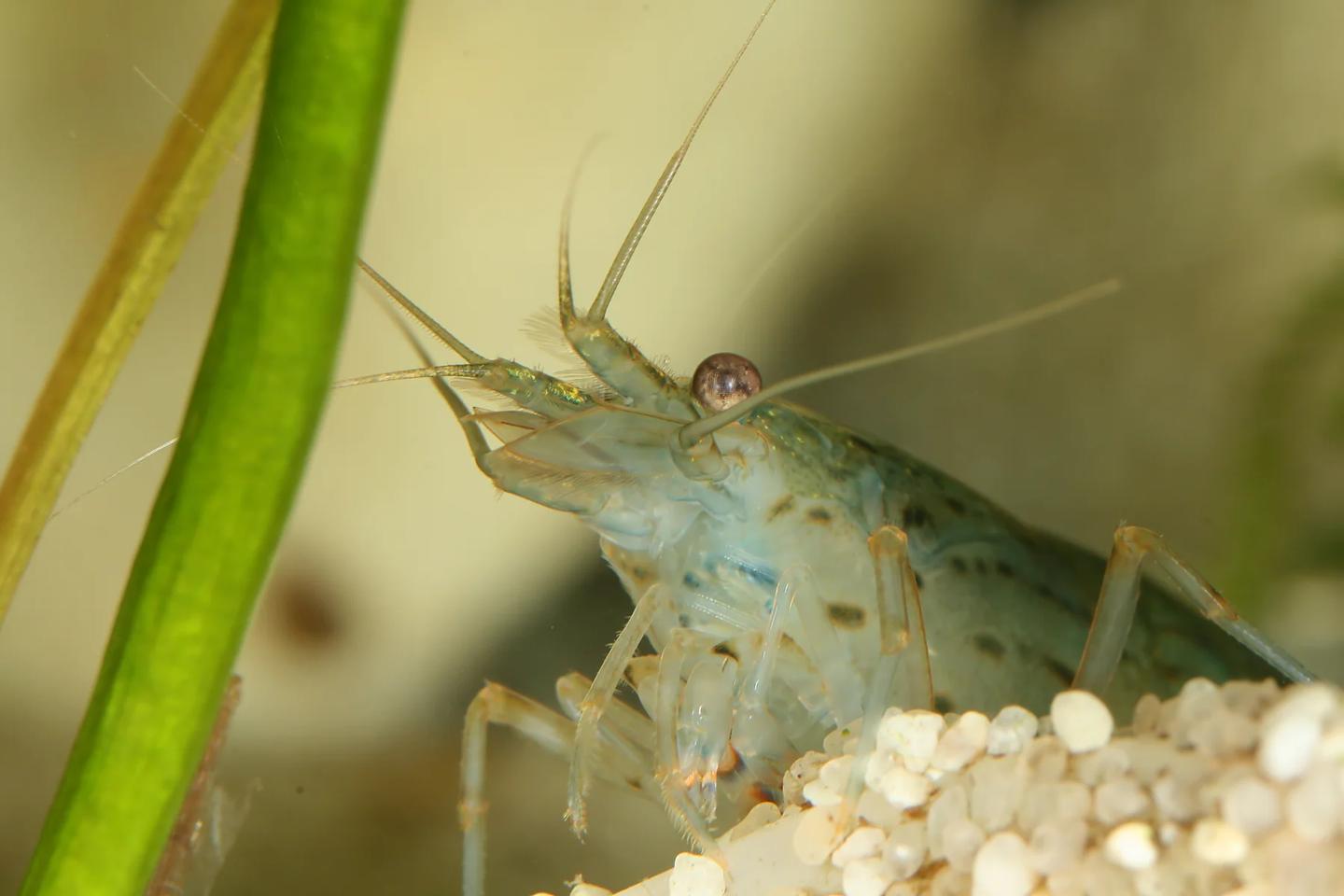
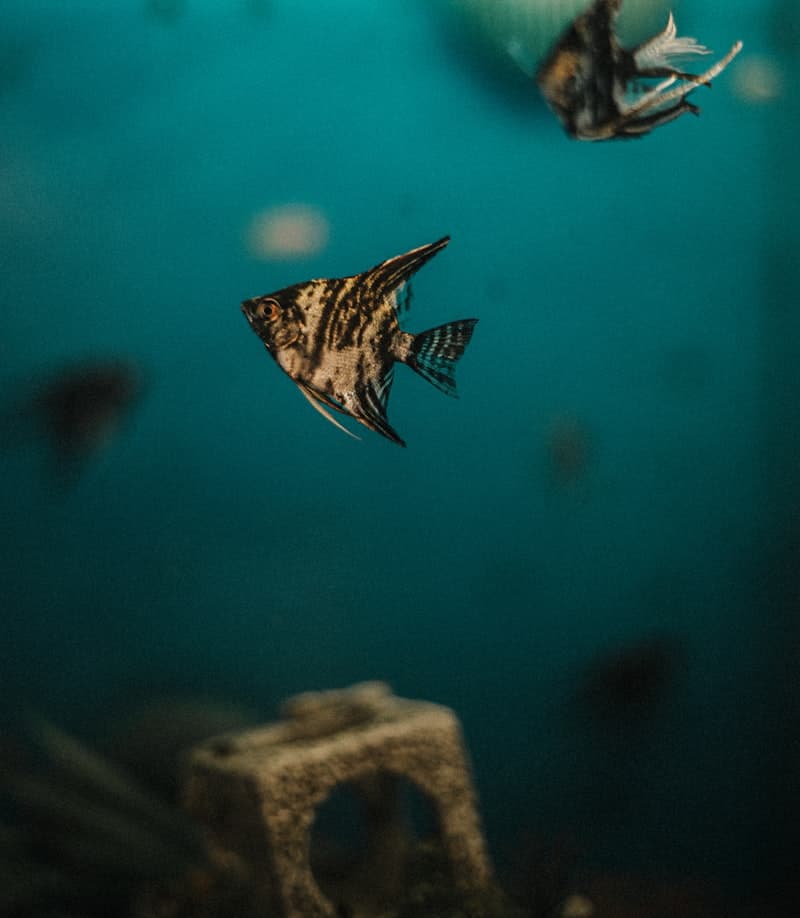
The examples below are research starting points, not endorsements. The page photographs show representative animals and are not proof that those animals should be combined.
Small tetras: possible only after an exact-species check
OATA describes most tetras as shoaling fish and recommends at least five, with more generally better. It gives a broad 22–27 °C group range and recommends at least 45 litres for a small shoal of a smaller species [5].
That does not make every tetra a betta companion. Some species are larger, more active or more prone to fin interaction; even a smaller species needs a complete group and open swimming room. For an ember tetra or black neon tetra, confirm the exact species, adult group, measured water and combined stocking rather than copying a generic “tetra” answer.
Corydoras: different swimming level, substantial group needs
Corydoras are often suggested because they spend much of their time lower in the aquarium. Different depth can reduce competition for one area, and the RSPCA recommends considering swimming levels [3]. But a different level is only one check.
OATA says Corydoras are shoaling fish kept in groups of at least five and recommends at least 80 litres for a shoal of the smaller species [6]. Substrate, floor area, oxygenation, temperature and reliable sinking-food access matter too. A single “pygmy cory” added to a small betta tank is not a welfare-friendly shortcut.
Shrimp and snails: not bulletproof clean-up crew
OATA warns that freshwater shrimp and snails may be eaten by aquarium fish. It also notes that shrimp are generally social, recommends a larger aquarium when invertebrates are mixed with fish and warns that even low copper exposure can kill them [7].
Adult Amano shrimp may be larger than dwarf-shrimp young, but size does not create a guarantee. A betta may chase or consume an invertebrate; a newly moulted shrimp is especially exposed. Nerite eggs and breeding requirements also vary by species, so “a nerite will never breed in freshwater” is too broad. If the invertebrate matters to you as an animal rather than expendable “clean-up”, a separate setup removes the predation gamble.
Guppies and other long-finned fish: do not use a slogan
The old version of this guide claimed that bright colour and long fins automatically make a betta read another fish as a rival. The selected evidence does not prove that universal mechanism. What the UK care evidence does establish is that male bettas have long fins vulnerable to intense nipping and that compatibility must be researched by exact species [2].
Guppies are therefore not a default recommendation: their group, water, feeding, breeding and fin-interaction risks all need assessment. Fancy goldfish are unsuitable for the more basic reason that their temperature, body form, waste load and space needs are a different aquarium plan.
Other bettas, fin-nippers and territorial fish
- Two male B. splendens: do not combine them [2].
- A male and female: not an everyday community pairing; breeding requires specialist planning and removal options.
- A female group: a separate advanced setup, not a workaround for this guide. Read female betta fish UK before considering it.
- Known fin-nipping, highly boisterous, predatory or territorial species: reject unless reliable species-specific evidence and an expert plan resolve the risk. “It might work” is not enough when both animals can be injured.
A six-step compatibility screen
Use this before opening a product page or visiting a shop.
- Write the complete stocking plan. Include scientific names, adult numbers, adult sizes and social groups—not only the one new animal.
- Measure the aquarium. Record litres and internal length, width and height. A tall 80-litre tank and a long 80-litre tank do not provide the same floor or swimming area.
- Compare measured water. Test temperature, pH and hardness; inspect ammonia, nitrite and nitrate trends. Compare the seller's current water before any gradual acclimation decision.
- Map how each animal lives. Mark surface access, current, open water, substrate, hides, feeding points and resting areas. The betta's labyrinth organ does not remove the need for filtration or surface access [2].
- Name the failure signs. Decide in advance what persistent chasing, hiding, food exclusion, rapid breathing, fin damage or injury will trigger separation.
- Prepare separation. The fallback needs mature filtration, correct heat, safe water and enough space; an uncycled bowl is not a rescue plan.
RSPCA guidance strongly recommends fishless cycling and warns that small decorative tanks are unstable and often cannot support effective filtration [4]. A 2024 experiment also found that space and enrichment affected betta behaviour under its test conditions [9]. Neither source supports cramming a community into a nominal gallon target.
- Under about 45 L? Do not add a fish shoal to a male-betta setup.
- Considering Corydoras? Start from the whole group and OATA's 80 L guidance, not one small specimen.
- Considering shrimp or snails? Treat predation and copper sensitivity as real risks.
- No mature separation option? Do not run the experiment.
- Any persistent distress or injury? Separate promptly; do not wait for a fixed 48-hour deadline.
Introducing animals without turning hope into evidence
There is no ritual that makes an incompatible combination safe. Rearranging décor, dimming lights or adding the companion first may change the first encounter, but the reviewed sources do not justify treating those tactics as a guarantee.
A safer sequence is:
- research and quarantine the exact new animal with an appropriate, mature setup;
- confirm stable, overlapping water and that the final aquarium is mature;
- create cover and broken sightlines without removing open swimming or surface access;
- ensure every animal can reach suitable food;
- observe closely at introduction, during feeding and after lights change;
- separate when chasing is persistent, one animal stays hidden, feeding fails, breathing changes, fins are damaged or any injury appears.
OATA's betta health checklist includes changes in aggression, hiding, swimming, breathing, colour, condition, feeding, fins and scales [2]. Use those signals, not a promise that everything will settle after a certain number of hours.
Current catalogue links—with the correct boundary
The links below are exact species pages for readers who have already completed the full compatibility screen. They are not a “safe tank mates” bundle. The product page owns current identity, price, dispatch size, sale unit and checkout availability; this guide owns the combined welfare decision.
Species pages to check after the compatibility screen
These verified links show exact candidate identities. Recheck the full adult group, measured water and current product details before buying; appearance here is not a compatibility approval.
You can also browse current bettas and community fish. Availability changes, and no page should imply that a pictured animal or proposed combination is in stock now.
The honest answer in one sentence
A betta can sometimes live with other animals only when the complete group fits the mature aquarium, every species' water and behavioural needs are met, and a proper separation option already exists. If those conditions are not met, a well-furnished single-male setup is the better choice—not a failed community.
For the next checks, use the betta care guide, first tropical tank guide, water chemistry guide, Corydoras care guide and Amano shrimp UK guide.