Moderate
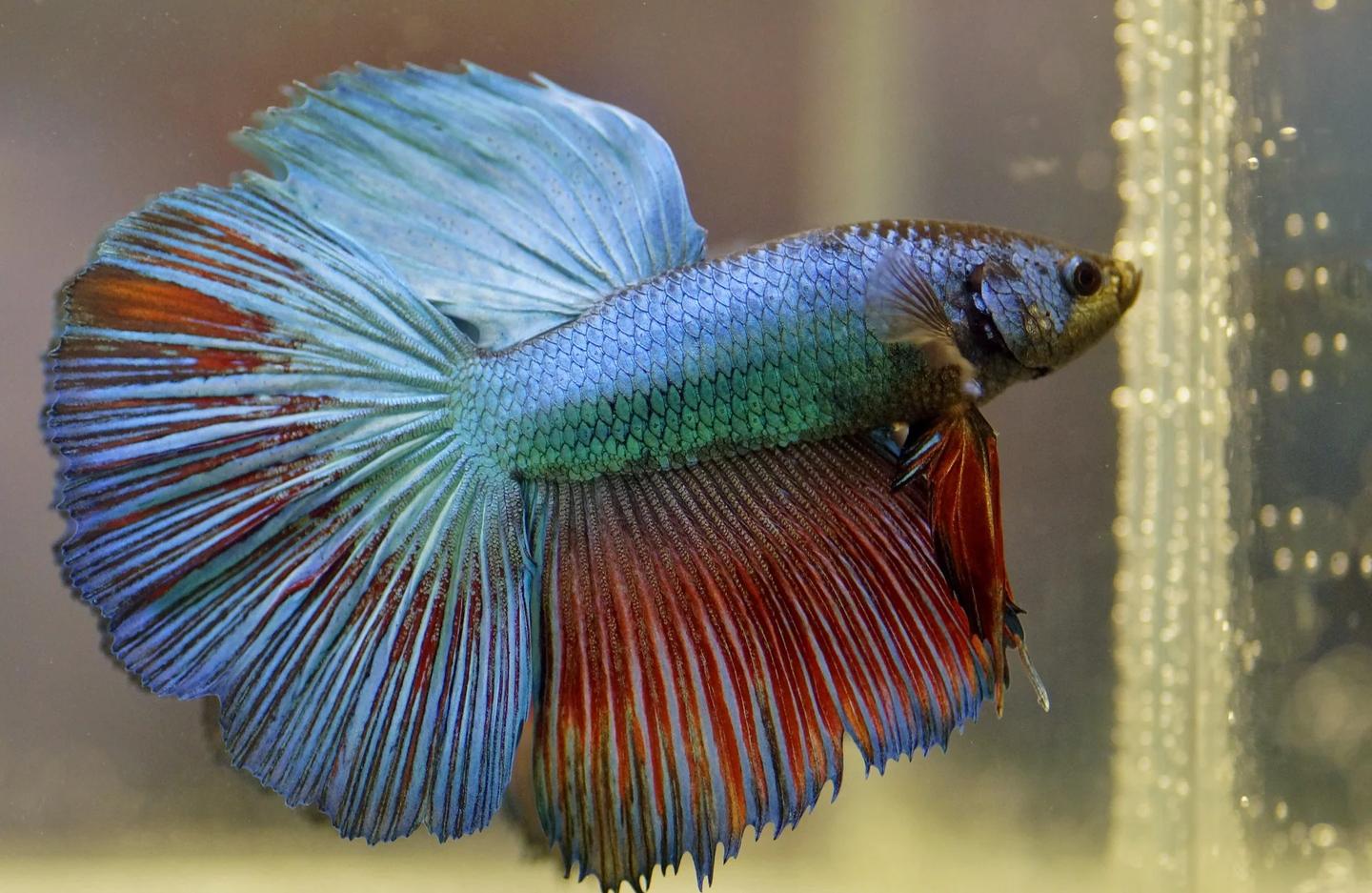
Veiltail Nemo Male Betta (Betta splendens)
22–30°C · pH 6–8
£35.99

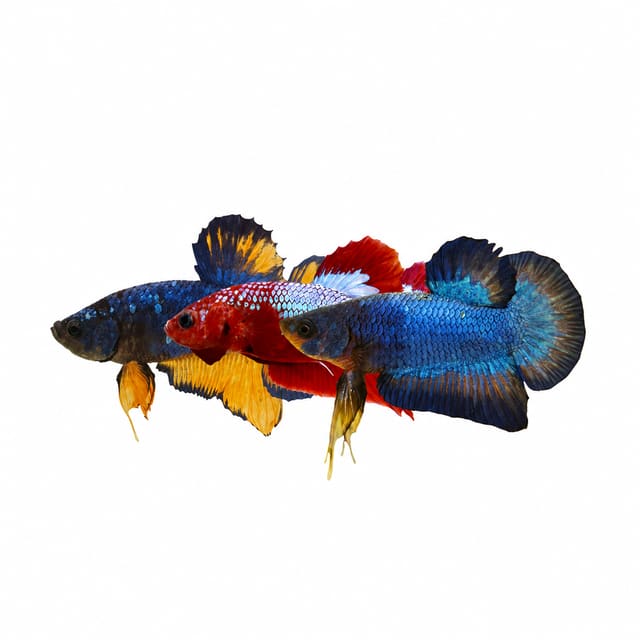
Striking Cambodian Longfin Male Betta with elegant flowing fins and bold colour. Ideal for tropical setups. Order today with reliable UK delivery.
Adult size is the maximum length this species reaches at full maturity (scientific sources). The livestock you receive will be younger and smaller. Product-photo provenance and any image-specific limitations are stated on the listing.
Betta splendens
Confirm your email, then we’ll send an availability message for this exact item if it returns within 180 days.
This request is only for this product—no newsletter or other promotions. A mail-provider retry may very rarely duplicate the same availability message. Unconfirmed addresses are removed after 48 hours. See our privacy policy.
Striking Cambodian Longfin Male Betta with elegant flowing fins and bold colour. Ideal for tropical setups. Order today with reliable UK delivery.
Adult size is the maximum length this species reaches at full maturity (scientific sources). The livestock you receive will be younger and smaller. Product-photo provenance and any image-specific limitations are stated on the listing.
For one typical domestic Betta splendens, start with at least 20 litres, a mature filter, thermostatic heater, separate thermometer, gentle flow, a secure lid with surface access, and plants or refuges. Keep one male per aquarium.
Maintain these water conditions for optimal health and vibrant colors
The Cambodian Longfin Male Betta is one of the most eye-catching forms of Betta splendens, combining a pale Cambodian body pattern with elegant flowing finnage that moves like silk in calm water. For most keepers, the single most important factor in long-term success is getting the betta fish temperature right. This species is often sold as a hardy beginner fish, but stable warmth is what separates a fish that merely survives from one that flares, feeds confidently, and shows rich colour every day. A good betta fish tank setup focuses on gentle filtration, warm water, cover near the surface, and enough room for a male to patrol without stress. The ideal betta fish water temperature sits between 24-30°C, and most keepers find the betta fish best temperature for daily care is around 26-27°C. Native to Southeast Asia, this labyrinth fish reaches around 7 cm, lives about 3 years with good care, and is best kept singly because males are territorial. If you want a fish with personality, display value, and manageable betta fish aquarium requirements, this male offers exactly that, provided you respect the correct temperature range, tank size, and feeding routine. For full husbandry detail, see our Betta fish care guide.
Betta splendens is the best-known member of the labyrinth fish group, named for a specialised organ that allows it to breathe atmospheric air at the surface. In the aquarium hobby, longfin strains such as Cambodian, halfmoon, veiltail, crowntail, and double tail have been selectively developed for colour and finnage. This Cambodian longfin type is prized for its softer body tone and graceful movement, making it a standout display fish for a warm, carefully planned nano aquarium.
The domestic Cambodian Longfin Male Betta traces back to the wild betta fish habitat found across Thailand and nearby parts of Southeast Asia. Wild Betta splendens inhabit shallow, slow-moving waters such as rice paddies, floodplains, ditches, marsh edges, and vegetated canals. These waters are warm, soft to moderately hard, low in current, and thick with plant cover. That is why betta fish habitat temperature matters so much in captivity: the fish is adapted to consistently warm tropical conditions rather than a cool, fluctuating home environment.
Many beginners ask, are betta fish pond fish? In the UK, the answer is no for outdoor keeping. They are tropical fish, not coldwater pond fish, and they do poorly in low temperatures and sudden seasonal swings. A stable indoor aquarium is far safer than exposing them to swings in betta fish house temperature. When building a betta fish tank habitat, think calm water, broad-leaved plants, shaded areas, and easy surface access for air breathing.
The natural ecosystem also explains why a more betta fish tank natural style often works so well. Leafy cover, floating plants, and wood help the fish feel secure and reduce pacing. A healthy betta fish tank ecosystem should not be sterile or brightly exposed; it should mimic a warm, sheltered margin habitat where the fish can rest near leaves, inspect the surface, and patrol a small territory.
Good betta fish care starts by matching those conditions as closely as possible: warm water, low flow, clean but not turbulent filtration, and a feeding plan based on the species' insect-rich carnivorous habits. This is also why longfin betta care differs slightly from shortfin forms; the larger fins create more drag, so gentle flow and rest points are especially important. For keepers following a detailed betta fish care guide or siamese fighting fish care routine, temperature stability remains the foundation.
Mimicking the natural habitat improves health and behaviour. A Cambodian longfin betta kept in warm, still water with floating cover usually shows better finnage, calmer patrol behaviour, and a stronger feeding response than one kept in a bare, brightly lit tank with heavy current.
One of the most common questions is what size fish tank do i need for a betta? The true betta fish minimum tank size for a single male is 20 litres, and that should be treated as the floor, not the ideal. If you are wondering what size betta fish tank works best, a 25-40 litre aquarium gives more stable water quality, easier heating, and more room for planting. The betta fish tank size matters because small bowls and tiny cubes swing in temperature quickly, making betta fish temperature shock more likely.
Many people search for betta fish bowl temperature or betta fish bowl water temperature, but bowls are poor choices for long-term care. They are difficult to heat evenly, hard to filter gently, and often too small to meet the real betta fish tank size requirement. For a betta fish nano tank setup, use a proper glass aquarium with a lid, heater, and sponge or baffled filter rather than an unheated bowl. For most homes, the answer to keeping a betta fish at room temperature is simple: room temperature is usually too unstable and too cool, especially at night or in winter.
The recommended betta fish tank size minimum is 20 litres for one male, but 25 litres or more is easier to maintain. If you are asking what size tank to betta fish need, think in terms of stability rather than just swimming room. Larger water volume buffers waste, keeps the betta fish aquarium water temperature steadier, and allows more cover. A betta fish tank 5 gallon with heater is a strong entry-level setup for a single specimen.
The ideal temperature range is 24-30°C, with the best results usually around 26-27°C. Aim for that middle zone and avoid daily swings greater than 1°C. This betta fish desired temperature band keeps the fish active and feeding well. The maximum temperature for betta fish should not be treated as a target; prolonged heat near the upper limit can speed metabolism, reduce oxygen, and stress the fish. If the betta fish water temperature too hot problem occurs, lower it gradually rather than suddenly. pH should stay between 6.0 and 7.5, and a stable neutral to slightly acidic reading is better than chasing an exact number.
A reliable betta fish heater is essential in most UK homes. Set the betta fish heater temperature to 26°C as a safe starting point, then monitor with a thermometer; whether you call it betta fish heater temp or tank heater temperature, consistency matters more than chasing extremes. A small adjustable betta fish water heater is better than a fixed-output unit because it lets you fine-tune conditions through the year. If you are wondering how to heat a betta tank without a heater, the honest answer is that it is unreliable for long-term care in most homes. A mini heater for fish bowl may sound convenient, but bowls remain poor habitats.
Use a gentle sponge filter or a low-flow internal filter. Long fins make a strong current tiring, and fish forced to fight flow may clamp their fins or hide. This is especially important in a planted layout where the fish should glide between leaves rather than get pushed around.
Dark sand or smooth fine gravel helps show off pale Cambodian tones and reduces glare. Add broad-leaved plants such as Anubias, Java fern, and floating cover. Live plants create a more natural display and provide resting points near the surface. Good aquascaping ideas include driftwood arches, floating Indian almond leaves, and open front swimming space. For keepers interested in other display forms, compare this fish with the Halfmoon Butterfly Betta Male Betta Splendens or the elegant Stunning Vailtail Green Male Betta Splend.
Always cycle the aquarium for 4-6 weeks before adding your fish. Stable biological filtration prevents ammonia spikes, which are especially damaging in warm betta tanks where metabolism is already elevated.
The correct betta fish diet is high in protein and based on the species' carnivorous nature. In the wild, bettas feed on insect larvae, tiny crustaceans, and small invertebrates near the surface. In the aquarium, the best staple is a quality pellet formulated as siamese fighting fish food, supported by frozen or live treats such as bloodworms, brine shrimp, and daphnia. A varied diet supports colour, finnage, and overall betta fish health.
Use a small floating betta pellet as the main daily food. Feed 2-4 pellets once or twice daily depending on pellet size and the fish's body condition. Bettas have small stomachs, so portion control matters. If the fish spits out food, soak pellets briefly or choose a smaller size.
Offer frozen bloodworms or brine shrimp 2-3 times weekly. Daphnia is useful for variety and can help prevent constipation. These foods also help maintain body mass in longfin fish that display actively. If you are conditioning fish for betta fish breeding, increase food variety but keep portions controlled to avoid fouling the tank.
Feed once in the morning and once in the evening, removing uneaten food promptly. Warm water speeds digestion, so a fish kept at the proper betta fish heat temp usually shows a stronger appetite than one kept too cool. Even so, overfeeding is a major cause of bloating and poor water quality.
| Time | Food | Amount |
|---|---|---|
| Morning | Betta pellets / siamese fighting fish food | 2-3 small pellets |
| Evening | Pellets or frozen brine shrimp / daphnia | 2-3 pellets or a small pinch |
Appetite is one of the first indicators that something is off. A fish that suddenly refuses food is often telling you that temperature, stress, or water quality needs attention before any feeding change is made.
Overfeeding causes ammonia spikes, obesity, and digestive issues. In a small warm aquarium, leftover food breaks down quickly. Feed sparingly, watch the fish swallow each bite, and fast one day per week if needed.
A useful comparison if you want another longfin display fish with similar feeding and heating needs.
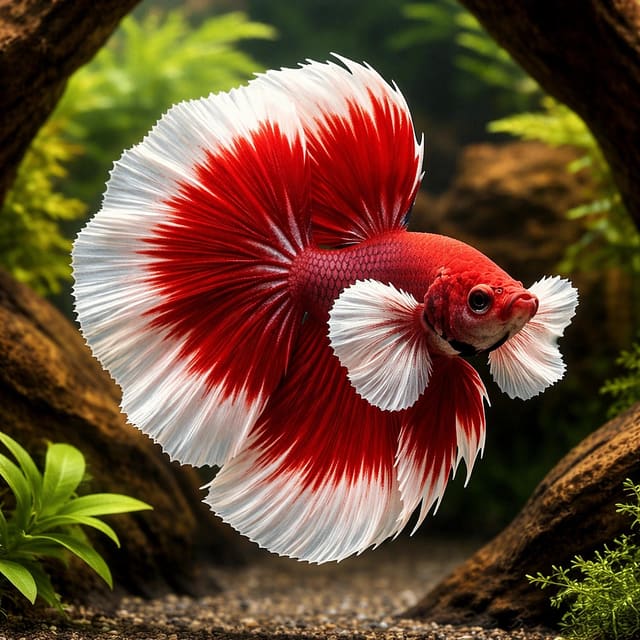
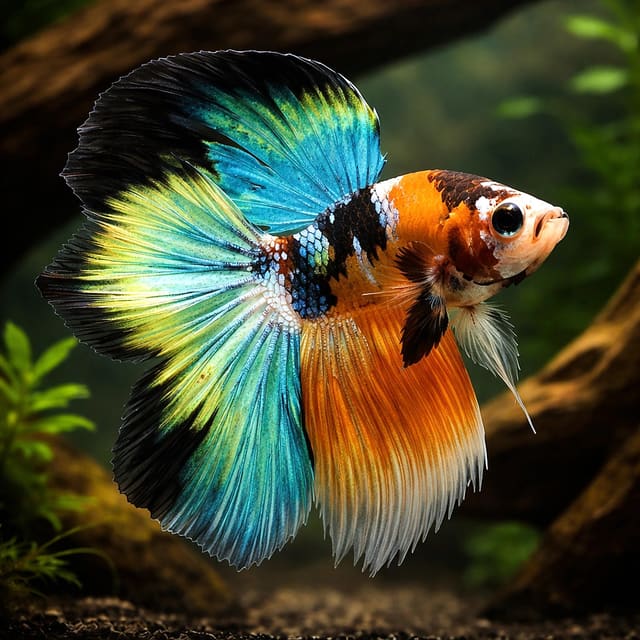
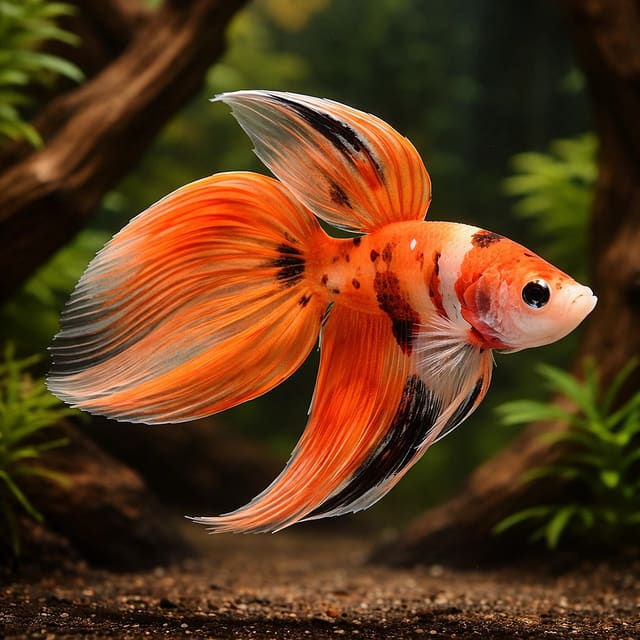
The Cambodian longfin form is known for a lighter body base with contrasting finnage, often showing creamy pink, flesh-toned, pale ivory, red, or soft blue accents depending on the line. Betta colour can shift noticeably with mood, genetics, and lighting; the fish can deepen or mute its shades depending on stress, dominance, and environment.
This male reaches around 7 cm and carries extended fins that create a flowing silhouette. Because of those fins, the fish looks best in calm water with a dark background for contrast. The betta fish preferred temperature and stable water quality affect appearance more than many beginners realise; a fish kept at the correct betta fish preferred water temperature often shows better fin extension and stronger colour than one kept cool.
Sexing is usually straightforward in adults. Males have longer fins, a stronger flare response, and more territorial display behaviour, making this male an unmistakable centrepiece. For variety lovers, compare this fish with the STUNNING KOI NEMO BETTA Male Betta, the fuller-finned Stunning Halfmoon Male Splend Beautiful Betta, or the spikier Stunning Crown Tail Male Betta Mix.
Our photos show the subtle body tone and fin flow that make this fish stand out in a planted nano display. A darker substrate, warm-spectrum lighting, and a calm layout with leaves near the surface are ideal for showing the fish at its best.
A male betta is best treated as a solitary centrepiece fish, and any serious betta fish community tank guide should start with that fact. People often ask what are betta fish tank mates, but success depends on tank size, layout, and the individual male's temperament. The safest approach is a species-only setup or a carefully planned community in a larger planted tank.
Good cambodian longfin betta tank mates are peaceful bottom dwellers or invertebrates that do not nip fins or compete at the surface. Suitable options include small Corydoras in larger tanks, Kuhli loaches, and some snails. Shrimp can work, but there is always risk; some males ignore them, others hunt them. For a visual comparison with other bettas before deciding on a display fish, look at the STUNNING Double Tail Male SPLEND BEAUTIFUL FISH or the softer-toned Female Super Delta Top Grade.
In a 40 litre or larger planted tank, peaceful tank mates for betta may include pygmy Corydoras, small snails, and Kuhli loaches. A heavily planted layout breaks sight lines and reduces stress. For stocking questions like betta fish tank mates 10 gallon, keep options very limited and choose only low-impact companions. With betta fish tank mates 15 gallon, you have more flexibility, but the male's personality still decides the outcome.
Avoid other male bettas, fin nippers such as tiger barbs, and flashy fish that resemble bettas. Male guppies are often a poor choice because their tails can trigger aggression. Fast, boisterous fish also outcompete longfin bettas at feeding time.
| Species | Compatible? | Notes |
|---|---|---|
| Pygmy Corydoras | ✅ Yes | Peaceful bottom dwellers in a 40 litre or larger planted tank. |
| Snails | ✅ Yes | Usually safe and helpful for cleanup, though some bettas may peck at antennae. |
| Male guppies | ❌ Avoid | Bright fins can trigger chasing and attacks. |
Always quarantine new arrivals for 2-4 weeks before adding them to a display tank. This reduces disease risk and lets you judge whether your betta is calm enough for any community experiment.
Betta fish breeding is best described as moderate rather than easy. The male builds a bubble nest, embraces the female during spawning, and then usually takes over egg care. For success, you need the right pair, the right conditioning foods, and the right betta fish temperature for breeding. Most breeders use 27-28°C as a practical betta fish breeding temperature, with very still water and shallow depth.
A dedicated breeding tank of 15-25 litres works well. Keep the water shallow, filtration minimal or absent during spawning, and add floating cover. The betta fish breeding water temperature should be stable, not swinging between day and night.
Use a healthy male and a mature female of suitable size. Keep the male betta fish temperature and male betta fish water temperature stable before introduction to encourage nest building. Condition both fish on protein-rich foods, and introduce them only once the male has begun building a bubble nest.
After spawning, the male gathers the eggs into the bubble nest. Remove the female once spawning is complete to prevent harassment. Eggs usually hatch in 24-36 hours depending on temperature. The ideal betta fish fry temperature is similar to the breeding tank, around 27-28°C. Once fry become free-swimming, remove the male and begin feeding infusoria or vinegar eels, followed by newly hatched brine shrimp.
For better hatch rates, keep the breeding tank shallow and cover it to trap warm humid air above the surface. This helps developing fry as the labyrinth organ begins to form and reduces losses caused by cold air exposure.
Choosing between betta varieties is not just about colour. Finnage type affects swimming effort, display style, and how the fish uses the aquarium. If you want a graceful show fish for a calm planted tank, the Cambodian longfin is an excellent choice. If you want a bolder pattern or a different tail shape, other lines may suit you better.
| Feature | Cambodian Longfin Male Betta | Halfmoon Male Betta |
|---|---|---|
| Max Size | 7 cm | 7 cm |
| Care Level | Easy | Easy to moderate |
| Temperature | 24-30°C | 24-30°C |
| Best For | Elegant planted nano display | Maximum tail spread and dramatic flaring |
| Feature | Cambodian Longfin Male Betta | Crowntail Male Betta |
|---|---|---|
| Tail Style | Flowing longfin | Spiked ray extensions |
| Visual Effect | Soft, fluid movement | Sharper, more exotic outline |
| Best Tank Style | Calm, leafy aquascape | Open display with gentle current |
| Best For | Keepers wanting classic elegance | Keepers wanting a more unusual silhouette |
If you are comparing options, the Stunning Halfmoon Male Splend Beautiful Betta offers a broader tail spread, while the Stunning Crown Tail Male Betta Mix gives a more sculpted look. The Stunning Vailtail Green Male Betta Splend is another good alternative for keepers who like classic long flowing fins. For beginners wanting one of the best betta fish for beginners, this Cambodian longfin is a strong choice because it combines hardy basic care with standout visual appeal.
The biggest preventable issue in betta keeping is unstable temperature. People often ask about betta temperature shock symptoms and how long a betta can survive in cold water. Cold stress reduces appetite, slows immunity, and can lead to lethargy, clamped fins, and susceptibility to fin rot or white spot. Typical betta fish temperature shock symptoms include sudden inactivity, loss of balance, faded colour, refusal to eat, and hanging near the heater or surface.
If the tank overheats, betta fish high temperature stress can appear as rapid gill movement, frantic swimming, or gasping. Around 32°C (90°F) is beyond the safe long-term range for most home-kept bettas, so if the betta fish water temperature too hot warning applies, cool the tank gradually, increase surface agitation slightly, and check room heat sources and lighting.
A healthy male is alert, responsive, curious at feeding time, and able to hold its fins open without strain. Colour should be clear for the variety, not greyed out by stress. The fish should rest at times, but not lie listlessly on the bottom all day. Warm stable water, a proper betta fish quarantine tank for new arrivals, and sensible feeding all support long-term betta fish health.
Watch for fin rot, white spot, velvet, constipation, and bacterial infections. Longfin fish are especially vulnerable to fin damage in rough decor or strong current. Good betta fish tank enrichment does not mean clutter; it means safe resting leaves, visual barriers, and gentle exploration points. Appetite, posture, and fin condition are your best early warning signs of trouble.
Never make sudden temperature corrections. Rapid changes can worsen betta temperature shock symptoms. Adjust by small increments and always match new water closely during water changes.
This fish is intelligent, observant, and strongly territorial. A male often patrols the top and middle levels, inspects new objects, and learns where food appears. He may flare at his reflection, at similarly shaped fish, or even at movement outside the glass. That is normal display behaviour, but constant pacing usually means the setup needs more cover.
Because bettas are labyrinth fish, they regularly visit the surface for air, which is why a lid, warm air above the water, and easy surface access all matter. The fish's betta fish body temperature follows the surrounding water because it is ectothermic, so behaviour changes quickly when the tank cools. A fish at the correct betta fish comfortable temperature is noticeably more interactive, while one in a cool tank becomes withdrawn.
Good enrichment includes floating plants, occasional rearrangement of leaves, and a calm viewing area. In many home aquariums, this fish becomes a true character pet, recognising feeding times and responding to movement near the tank.
When customers search to buy betta fish UK, look for siamese fighting fish for sale, find betta fish for sale UK, or buy betta fish online UK, they are usually looking for more than just availability. They want a fish that has been held correctly, fed properly, and packed with temperature control in mind. That matters even more for a longfin male, because transport stress and cold exposure can affect finnage, appetite, and colour very quickly.
Our Cambodian longfin males are selected for finnage quality, body condition, and active behaviour before listing. Each fish is assessed for feeding response and general condition, then held in warm stable systems. In colder months, betta fish delivery UK uses insulated packaging and heat support so the fish does not arrive chilled. We also include practical acclimation guidance, because the safest way to warm a chilled fish is gradually, never by sudden transfer into hotter water.
If you want to buy cambodian longfin betta UK, compare a few forms first and choose the one that matches your tank style. This fish is ideal for keepers wanting a graceful single specimen in a planted display. Whether you are searching for a cambodian longfin betta for sale UK, looking to order cambodian longfin betta online UK, comparing the cambodian longfin betta price UK, or simply want a male betta for sale UK, live betta fish for sale UK, or to buy longfin betta UK, the key is receiving a healthy fish that has not been rushed through poor holding conditions.
For keepers building a small collection or comparing forms, you may also like the Stunning Halfmoon Female Betta Splend Beautiful or the striking Halfmoon Butterfly Betta Male Betta Splendens. Order your Cambodian Longfin Male Betta today with confidence and build the warm, calm display this fish deserves.
If you enjoy the soft tones and flowing fins of this fish, compare it with the Stunning Vailtail Green Male Betta Splend for a classic longfin profile, or the STUNNING KOI NEMO BETTA Male Betta for a bolder patterned display. The STUNNING Double Tail Male SPLEND BEAUTIFUL FISH offers a different tail structure, while the Female Super Delta Top Grade is useful if you are researching breeding projects. For a fuller finnage style, consider the Stunning Halfmoon Male Splend Beautiful Betta. If you are still deciding between forms, the Stunning Crown Tail Male Betta Mix shows how different tail types change the whole look of a betta aquarium.
No reviews for this item yet. Bought one? Honest reviews only, good or bad.
What customers say about ordering from us
I have a small group of long finned mountain minnows. So was delighted to be able to order ten of this variety to increase the genetics in my tank . The ones I recieved are healthy but it’s to early to give a verdict on wether they are of a long finned type since they are small currently.
Gordon Walker · 23 Sept 2026
100% success travel and "installation". Pleased with quality of purchase. The Siamese fighter a bit "shy" so have not yet seen him at his best yet but looking good. Happy customer. GG
George E Garratt · 21 Sept 2026
Reviews of our shop, collected by Judge.me, an independent third-party review collector. Newest first.