−13%
Moderate
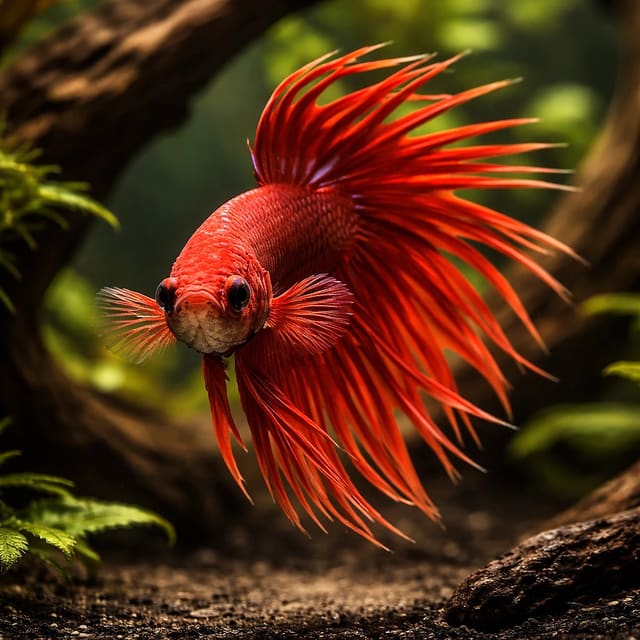
Crowntail Male Betta (Betta splendens)
26–28°C · pH 6–8 · 20L
£12.17£13.99

Female Betta Mix (Betta splendens) is a female domestic Betta reaching 7 cm standard length, offered as one fish in selectable 2–4 cm dispatch grades. Plan individual housing by default in a mature, heated, filtered and furnished aquarium at a stable 26–28°C, pH 6.0–8.0 and 4–12 dGH; do not assume female Bettas will live peacefully together.
Adult size is the maximum length this species reaches at full maturity (scientific sources). The livestock you receive will be younger and smaller — pick a size above for the actual shipping size. Product-photo provenance and any image-specific limitations are stated on the listing.
Minimum of 2 per order.
Female Betta Mix (Betta splendens) is a female domestic Betta reaching 7 cm standard length, offered as one fish in selectable 2–4 cm dispatch grades. Plan individual housing by default in a mature, heated, filtered and furnished aquarium at a stable 26–28°C, pH 6.0–8.0 and 4–12 dGH; do not assume female Bettas will live peacefully together.
Adult size is the maximum length this species reaches at full maturity (scientific sources). The livestock you receive will be younger and smaller — pick a size above for the actual shipping size. Product-photo provenance and any image-specific limitations are stated on the listing.
For one typical domestic Betta splendens, start with at least 20 litres, a mature filter, thermostatic heater, separate thermometer, gentle flow, a secure lid with surface access, and plants or refuges. Keep one male per aquarium.
Maintain these water conditions for optimal health and vibrant colors
The Female Betta Mix is a domestic Betta splendens in the family Osphronemidae. Seriously Fish records 7 cm standard length, while FishBase separately records 6.5 cm total length. These are different length measures and are not directly interchangeable. Use the 7 cm standard-length figure as the conservative aquarium-planning record.
One purchase supplies one fish in the selected dispatch grade. The live size choices span 2–3 cm, 3–3.5 cm and 3.5–4 cm, although availability belongs to the live selector. The size you select is the size supplied, not the adult size. Sex is guaranteed only when the exact product or selected option explicitly states male or female. This Female Betta Mix listing is sold as female.
Female is a sex guarantee, not a guarantee of peaceful cohabitation. Seriously Fish says ornamental Betta splendens are best kept alone in most cases and that males and females are normally maintained separately outside breeding. Use one female alone in a furnished aquarium as the lower-risk default. A female-group plan is demanding, can fail despite preparation and must have separate heated, filtered accommodation ready for every fish.
Prepare the complete aquarium first: mature biological filtration, a thermostatic heater, a separate thermometer, gentle flow, a secure lid, open surface access and planted or smooth refuge. The labyrinth organ allows atmospheric breathing, but it does not make an unfiltered bowl suitable.
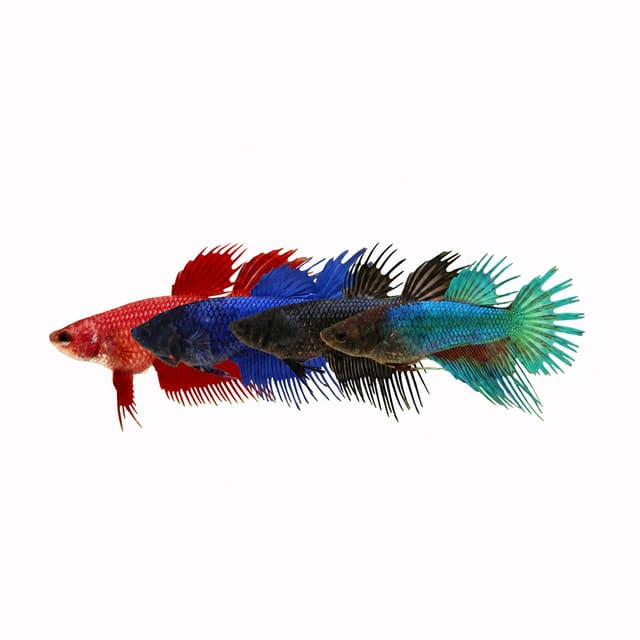
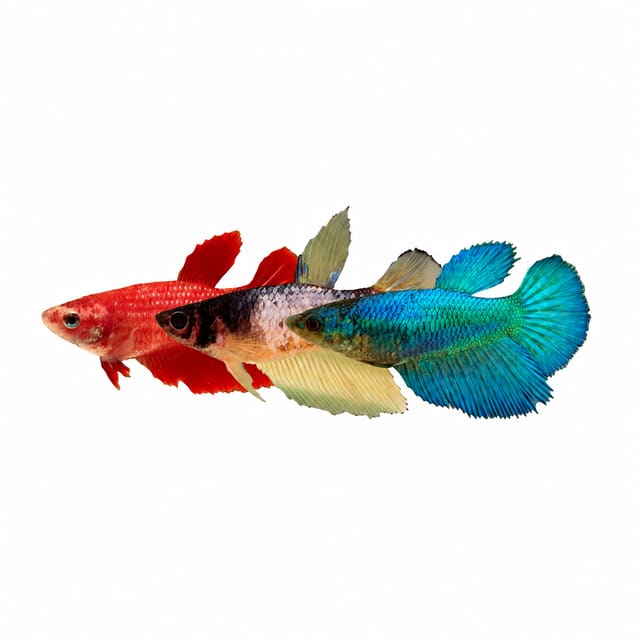
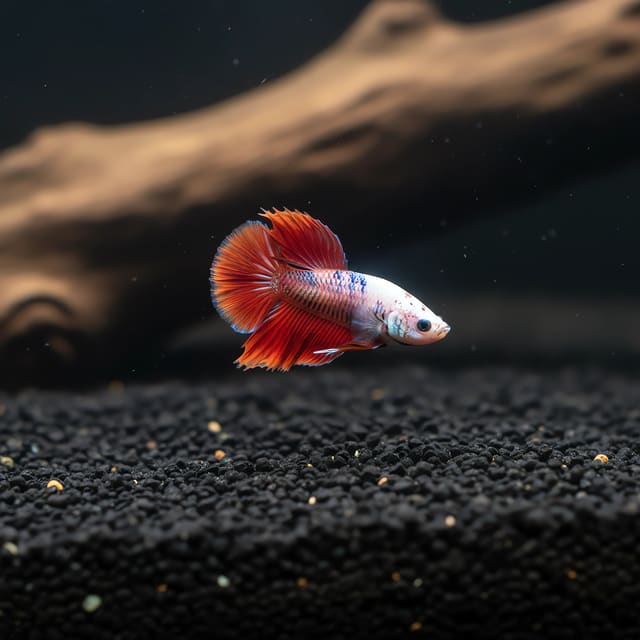
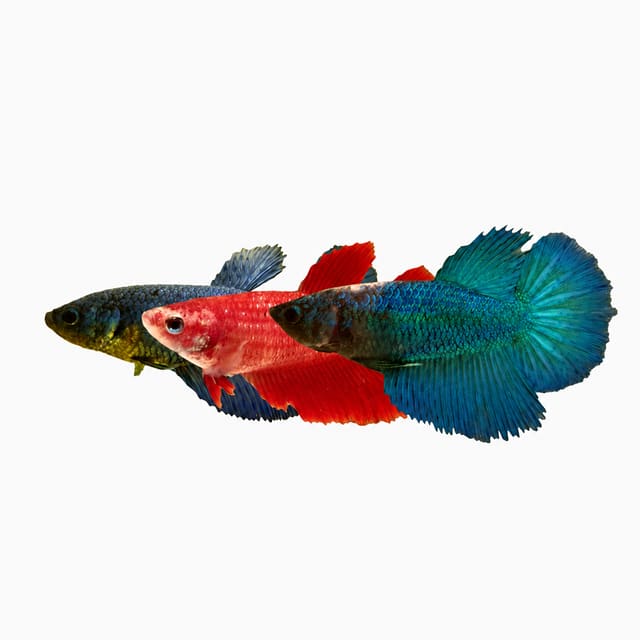
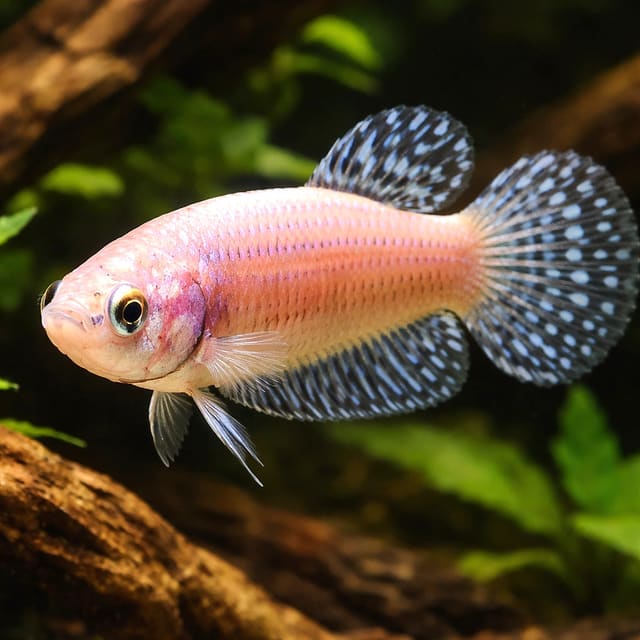
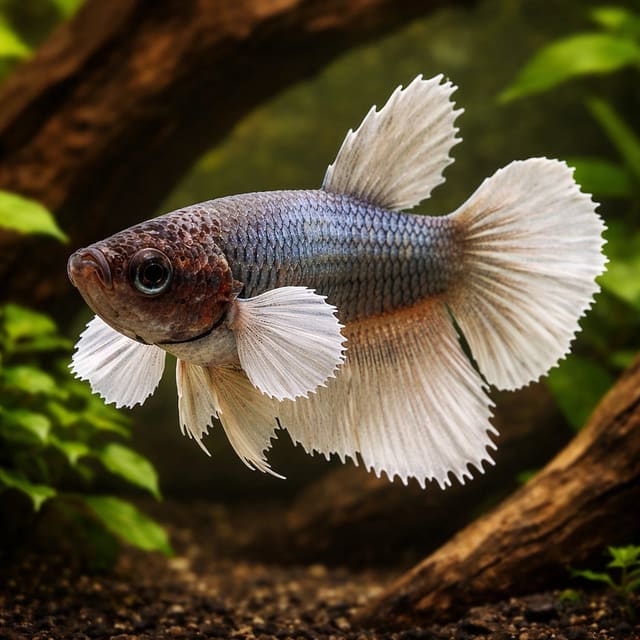
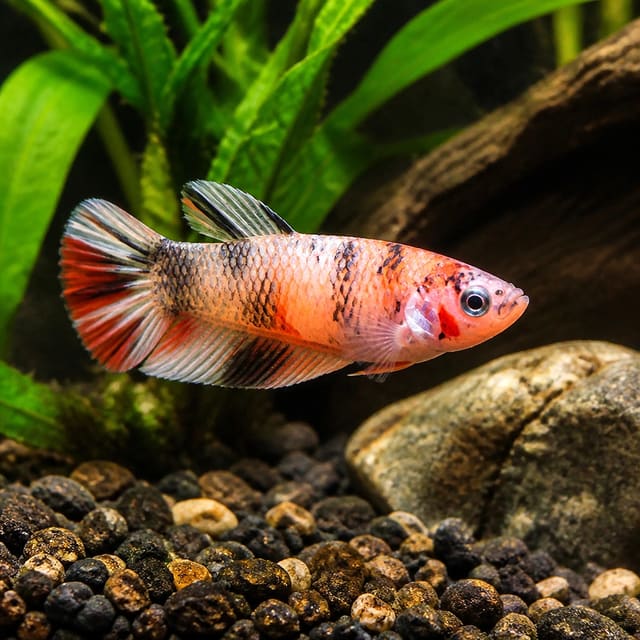
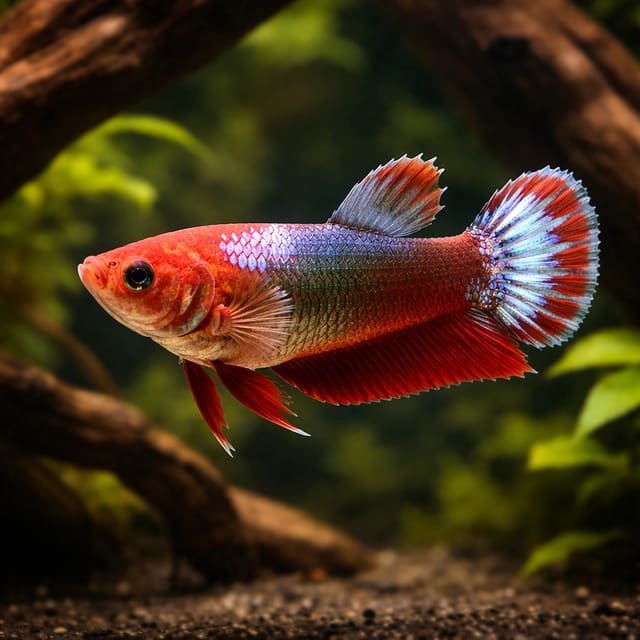
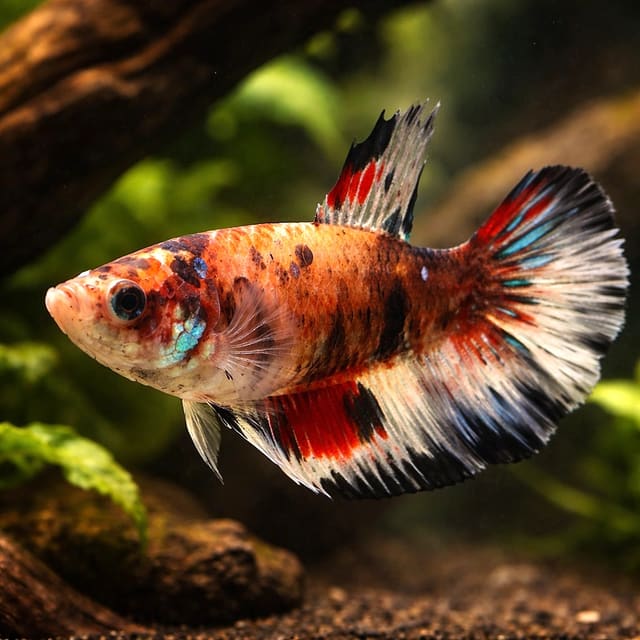
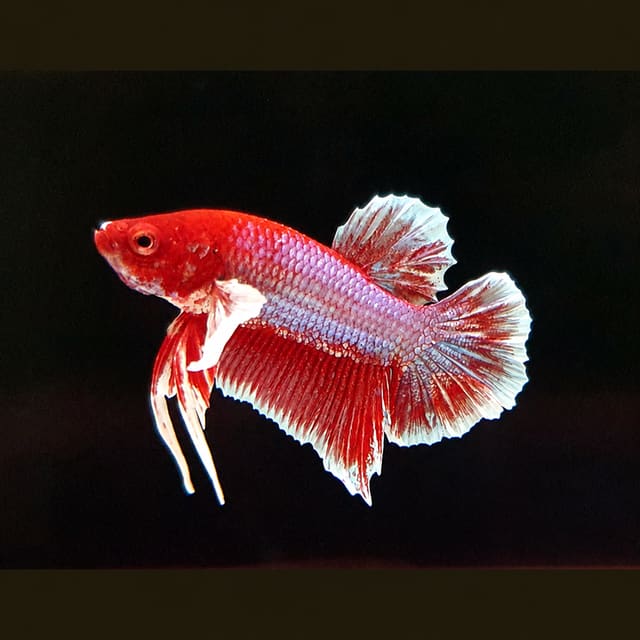
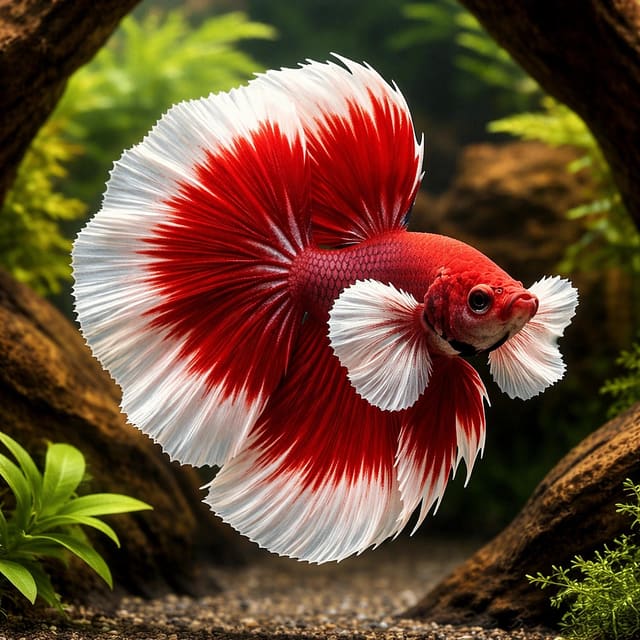
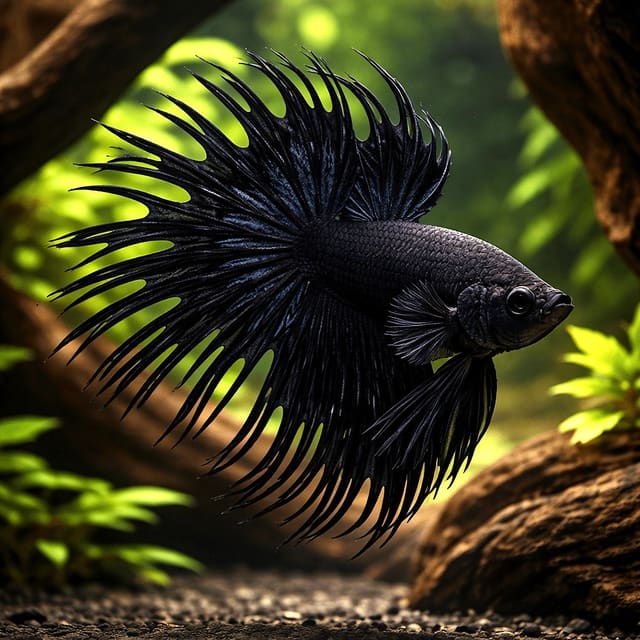
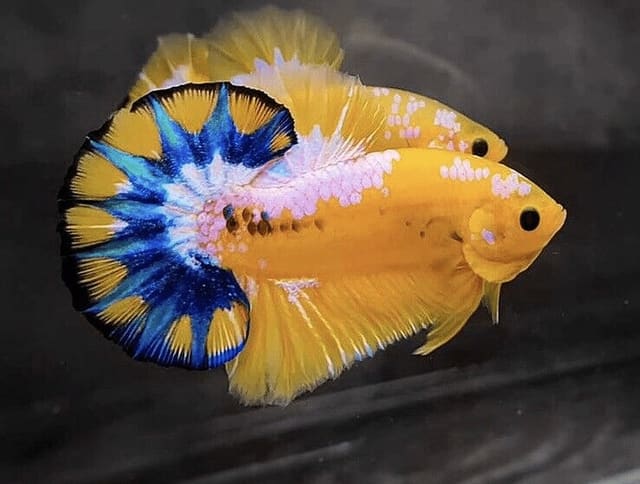
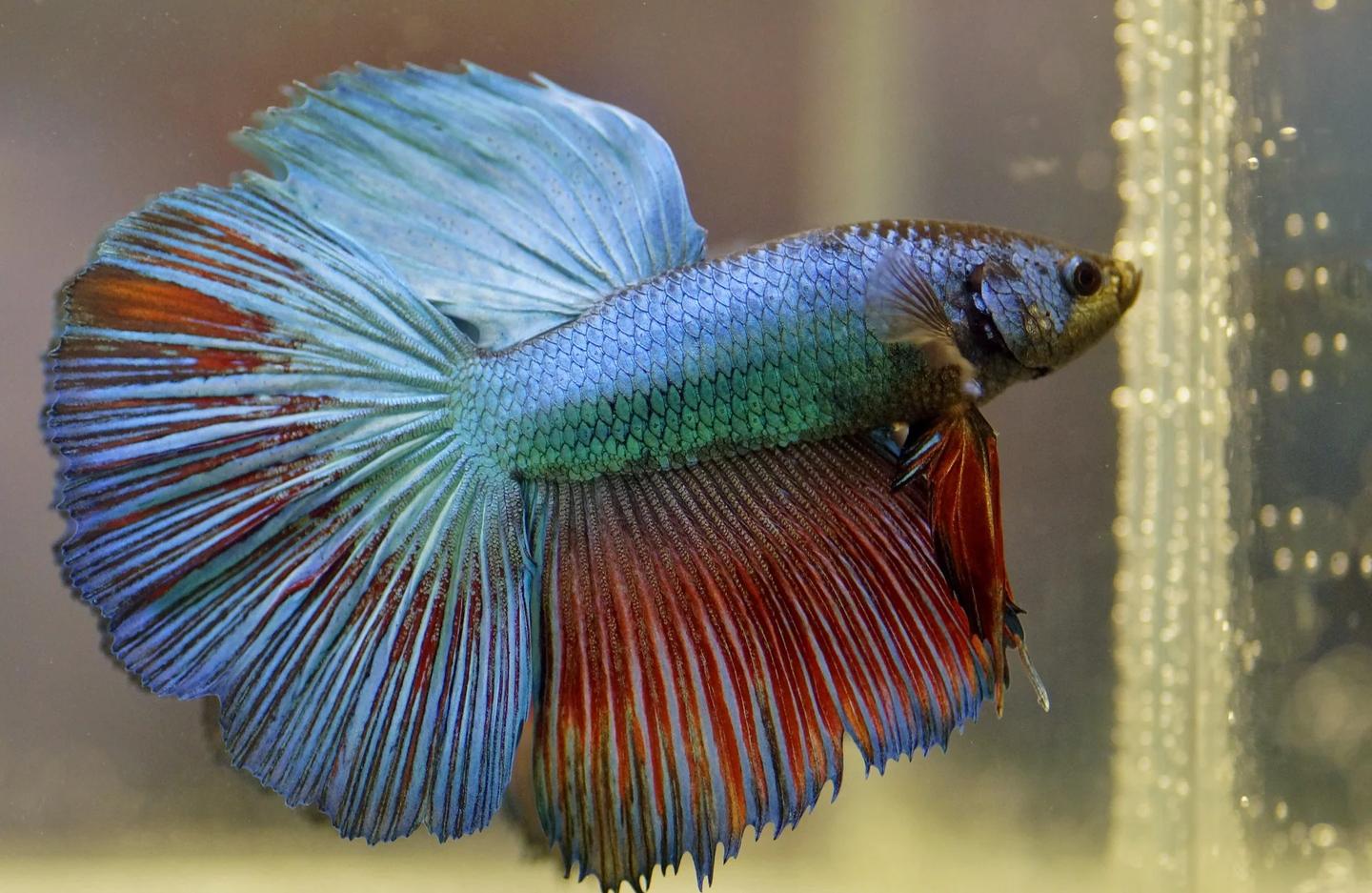
This is a mixed-colour offer. Individual colour, markings and fin shape vary; a purchase does not select a particular colour pattern. Choose this female because the animal and its care suit your aquarium, rather than expecting a named colour line.
| Offer detail | Practical meaning |
|---|---|
| Purchase unit | One female fish per purchase |
| Dispatch grades | 2–3 cm, 3–3.5 cm or 3.5–4 cm |
| Adult planning | 7 cm standard length from Seriously Fish |
| Social default | One female housed alone |
| Colour selection | A mixed assortment rather than a named colour line |
Browse the current Betta collection to compare available forms. The Crowntail Female Betta (Betta splendens) is another female offer to compare, not an automatic companion for this fish. Each Betta needs its own housing decision.
The accepted scientific identity is Betta splendens, as listed by the NCBI Taxonomy database. It belongs to the family Osphronemidae and is widely called the Betta or Siamese fighting fish. Mixed-colour remains an offer description rather than a separate species.
FishBase describes the wild species in standing floodplain waters, canals, rice paddies and medium to large rivers in the Mekong basin. Wild fish feed on zooplankton, mosquito larvae and other insect larvae. They are facultative air-breathers, using a labyrinth organ to take atmospheric air at the surface, but they still depend on clean water and effective biological filtration.
That natural history explains several practical choices: leave unobstructed surface access, avoid forceful current and provide cover rather than a bare container. It does not assign a wild locality or collection origin to this female. Domestic aquarium forms have a complex breeding history, and a genome-wide study of domestic Bettas documents extensive diversity in colour, fins, body traits and behaviour.
The mix suits someone who wants to care for a female Betta without choosing a particular named colour. The small dispatch sizes make advance planning especially important: the fish needs its adult accommodation from the start, not a temporary jar until it grows. A size grade describes the fish being supplied; it does not reduce the need for heating, filtration or refuge.
Think about the daily routine as well as the display. Can you test water, prepare conditioned replacement water, measure food and observe one individual every day? Can somebody competent maintain the same routine when you are away? Those practical questions tell you more about suitability than whether a fish has dramatic colour or a popular tail label.
If you already have other livestock, evaluate this purchase against the whole aquarium rather than an empty space in the stocking list. Water requirements must overlap, adult space must be sufficient and separation must be possible. A female label cannot turn an unsuitable community into a suitable home. Setting up an individual aquarium first makes feeding, observation and maintenance much easier to interpret.
Take time to distinguish a calm fish from a fish that has stopped moving because its surroundings are unsuitable. The useful baseline is normal swimming, ready surface access, feeding, body condition and consistent water tests over time. Bright colour alone is not a welfare test, and a less intensely coloured female still deserves the same complete care.
Seriously Fish records 70 mm, or 7 cm, standard length for Betta splendens. FishBase separately records 6.5 cm total length. Because standard length and total length are different measures and are not directly interchangeable, use the Seriously Fish standard-length record for aquarium planning rather than the dispatch size.
Our complete Betta care guide uses at least 20 litres as the starting screen for one typical domestic Betta splendens. Seriously Fish gives a 45 × 30 cm base and approximately 41 litres as large enough for a single male or pair. For this female, begin at 20 litres and choose the larger footprint where practical; decor and the air gap below the lid reduce the real water volume.
OATA’s Betta sheet gives 20–28°C, pH 6.0–8.0 and 4–12 dGH for the group, rather than a species-specific optimum. Seriously Fish gives aquarium ranges of 22–30°C, pH 6.0–8.0 and 1–15 dGH, while FishBase records 24–30°C in the wild environment. Our routine target of 26–28°C, pH 6.0–8.0 and hardness 4–12 dGH remains within the applicable aquarium ranges.
| Suits | Not suited to |
|---|---|
| A careful beginner with a mature, tested aquarium | An unfiltered bowl, jar or barren container |
| Solitary housing for one female | Routine housing with another Betta |
| Gentle flow, shade, plants and surface access | Strong current or blocked surface access |
| Stable heated water at 26–28°C | An unheated or rapidly changing setup |
| A measured daily feeding routine | Unmeasured feeding that leaves food to decay |
Prepare and mature the aquarium before the fish arrives. If this is your first setup, follow the first tropical aquarium guide and do not use elapsed time or clear-looking water as proof that the filter is ready. Test the finished aquarium and proceed only when ammonia and nitrite are both zero.
Use a thermostatic heater, a separate thermometer and a mature biological filter. The thermometer checks the actual water rather than merely repeating the heater setting. Position equipment so warmth circulates without creating a concentrated jet that pushes the fish away from resting places.
A long, usable footprint gives this territorial fish room to explore, turn and withdraw. Seriously Fish describes a well-planted, shady aquarium with surface cover, tall plants, floating plants, driftwood and additional shelter. Choose smooth aquarium-safe furnishings and retain clear routes between the cover and the surface.
| Layout decision | What to check |
|---|---|
| Flow | The fish can hold position and reach every resting area without being swept away |
| Surface | Open water remains accessible for atmospheric breathing |
| Lid | The cover is secure and leaves a safe air space above the water |
| Plants and refuge | Cover breaks sight lines without forming an impassable surface mat |
| Decor | Openings are large enough to enter, turn and leave without catching fins |
Watch how the individual uses the layout during the first week. Repeatedly being pushed sideways, struggling to remain at a resting point or avoiding the filter side indicates excessive flow. Diffuse or redirect the outlet while keeping the biological filter running.
A labyrinth organ is an adaptation for breathing air, not a substitute for filtration. Keep surface access and well-maintained water together: neither one makes the other optional. Avoid tiny jars and bare containers because they restrict furnishing and make stable heating, filtration and maintenance harder.
Look at the aquarium after plants and furnishings are in place. There should be a route from each sheltered area to the surface without squeezing through a narrow opening or crossing the strongest part of the filter outlet. Leave space to turn as well as space to pass. Cover is useful when the fish can choose it and leave it; a crowded maze that blocks access is not the same thing.
Check maintenance access at the same time. You need to remove uneaten food and siphon waste without dismantling every refuge. Arrange equipment so the heater and filter remain accessible for inspection and so you can read the thermometer without disturbing the fish. A layout that supports a simple, consistent routine helps you keep the water and environment stable.
Plant choice can follow the aquarium’s lighting and your ability to maintain it. Seriously Fish names floating and tall plants, Cryptocoryne, and plants attached to wood as useful cover. These are examples rather than compulsory purchases. Smooth artificial cover can also serve as refuge when it is safe for aquarium use. Whichever materials you choose, inspect edges and openings before placing them in the tank.
Set the heater to produce a measured water temperature of 26–28°C. Check with a separate thermometer at a consistent time and position, then observe whether heat is distributed throughout the aquarium. Follow the heater maker’s aquarium-volume, installation and minimum-water-depth instructions rather than using one universal wattage formula.
Keep pH between 6.0 and 8.0 and general hardness between 4 and 12 dGH. Stability and gradual matching matter more than forcing either value to the centre with rapid chemical adjustment. UK tap water varies, so test the aquarium and replacement water instead of assuming a value from the postcode or from another keeper’s tank.
Use the water chemistry guide to understand each test, then use the water matcher with measurements from the aquarium itself. Treat tap water with a suitable conditioner before it enters the tank so chlorine or chloramine does not harm the fish or the filter bacteria.
| Reading | Decision |
|---|---|
| Below 26°C | Check the heater, thermometer, room temperature and placement; correct gradually |
| Above 28°C | Check equipment and room heat, maintain aeration and lower the temperature gradually |
| Ammonia above 0 mg/L | Treat it as urgent waste-processing failure; change conditioned water and inspect the filter |
| Nitrite above 0 mg/L | Reduce the immediate exposure with conditioned water and investigate biological filtration |
| Nitrate rising quickly | Review feeding, waste removal, stocking and water-change frequency |
| pH changing abruptly | Compare tap and tank readings and inspect recent additions before adding an adjuster |
OATA advises nitrate should not exceed 20 mg/L above the normal tap-water level. Record the tap baseline and aquarium result together so the number has context. Never add hot water directly to a cool aquarium or make a large chemistry change simply to reach a preferred decimal.
The RSPCA’s aquarium guidance explains that a working biological filter supports bacteria that convert toxic ammonia into nitrite and then the safer nitrate. Clear water can still contain ammonia or nitrite, so testing rather than appearance determines whether the system is coping with waste.
OATA strongly recommends a 25% water change at least once each week. Treat that as the routine starting point and use the nitrate trend, waste accumulation and test results to decide whether this aquarium needs more frequent partial changes. Replacement water must be conditioned and close to the aquarium’s temperature.
If filter media needs cleaning, rinse it lightly in aquarium water removed during the partial change. Do not run it under the tap because chlorine or chloramine may kill the beneficial bacterial population established in the media. Avoid replacing every biological component together; stagger necessary changes so the aquarium retains established filtration.
Uneaten food, heavy feeding or several animals added together can exceed the filter’s present capacity. OATA describes this imbalance as new tank syndrome: waste production rises faster than the nitrifying bacteria can respond. For this offer, start with the one planned fish, keep feeding measured and investigate any ammonia or nitrite result immediately.
A full clean-out is not routine maintenance. Replacing all the water, sterilising the substrate and changing all filter media together removes stability and exposes the fish to abrupt differences. Consistent partial work is safer and makes trends easier to recognise.
Keep the test log beside a short care sheet describing the normal temperature, food, portion and water-change method. Record actual readings rather than simply writing that the water was fine. Include the tap-water nitrate baseline, since OATA’s nitrate guidance is expressed above that level. A clear record helps distinguish an isolated reading from a developing trend.
Prepare food portions before travel and explain how to recognise leftovers. Show the carer how to check the thermometer, see that the filter is moving water and confirm the lid and surface access. Ask them to report a change in appetite or breathing promptly. An unfamiliar carer should have a simple routine and a contact for advice, rather than needing to improvise feeding or alter equipment settings.
After a maintenance change, observe the fish and check equipment operation. Note what you changed, including filter cleaning or new furnishings, so a later problem can be considered alongside the aquarium history. This makes the health investigation more useful than trying to remember several weeks of small adjustments.
In nature, FishBase records zooplankton, mosquito larvae and other insect larvae in the diet of Betta splendens. In the aquarium, use a suitably sized complete Betta pellet or quality aquarium flake as the nutritional base. OATA also recommends small live or frozen foods such as daphnia, small bloodworm or tubifex as variety.
Feed once each day and offer only what the fish consumes within a few minutes. Remove obvious leftovers before they decay. Pellet diameter, density and energy content vary between products, so use the food maker’s directions and the fish’s body condition rather than applying one fixed pellet count to every brand.
| Food | How to use it |
|---|---|
| Complete Betta pellet | Measured nutritional base in a size the fish can take easily |
| Quality aquarium flake | Complete alternative when portioned for one fish |
| Daphnia | Small live or frozen variety alongside the complete diet |
| Bloodworm or tubifex | Suitably sized variety rather than the whole daily diet |
| Uneaten food | Remove it because decomposition increases the waste load |
Overfeeding affects both body condition and water quality. Seriously Fish notes that Bettas can be prone to obesity, while OATA warns that uneaten food releases toxic waste as it breaks down. If more than one person feeds the aquarium, prepare measured portions so the fish is not fed repeatedly.
A sudden refusal to feed is a prompt to check the whole system rather than to keep adding different foods. Confirm temperature, ammonia, nitrite, breathing, posture and recent maintenance. Remove uneaten attempts promptly. If appetite remains reduced or another sign appears, follow the health sequence below instead of raising the temperature or adding treatment at random.
Complete the aquarium before the delivery day: filtration mature, ammonia and nitrite at zero, heater stable at 26–28°C, lid secure and surface access clear.
Follow the delivery and Live Arrival Guarantee policy and use this arrival sequence:
OATA’s Betta guidance calls for ammonia and nitrite at zero before introduction. Confirm the heater and filter remain operating, then watch whether the fish can reach the surface and hold position against the flow. Remove uneaten food rather than encouraging repeated feeding.
Test ammonia and nitrite each day if the aquarium is newly matured or if any reading changes. Compare behaviour with the individual’s emerging normal pattern. Continuing distress requires measured checks of temperature, water quality, flow and the environment.
By the end of the first month, you should have a record of weekly temperature, ammonia, nitrite, nitrate and pH readings, the water-change routine and normal feeding response. Use that baseline to notice change early. Adjust the layout only when it creates a clear problem, such as excessive current, blocked surface access or a trapping hazard; constant rearrangement removes familiar refuge.
Do not add another fish simply because the first animal appears settled. Every addition changes waste production and social pressure. For this territorial species, the solitary plan remains the lower-risk default after acclimatisation as well as during the first few days.
Learn the individual fish’s normal feeding response, breathing rate, posture, swimming route, colour and use of cover. OATA recommends watching for changes in swimming, colour, temperament, breathing, appearance, body condition and feeding. A change is useful information, but one visible sign can have several possible causes.
Begin with the aquarium. The MSD Veterinary Manual emphasises water analysis, aquarium history and appropriate diagnostic work. Confirm temperature and test ammonia, nitrite, nitrate and pH, then review recent additions, feeding, cleaning, equipment changes and social events.
White spots, fluffy growth, fin loss, swelling, weight change, loss of balance, rapid breathing, sitting on the bottom or remaining at the surface all require attention. Do not combine medicines or raise the temperature from a symptom label alone. Some treatments affect biological filtration, oxygen conditions or other aquarium animals, and a mistaken treatment can delay the correct response.
Use OATA’s fish-vet directory when veterinary assessment is needed. Keep photographs, water-test results and a short timeline of feeding, maintenance and behaviour. Those details allow a professional to assess the system rather than relying on a single visual sign.
Correcting toxic water exposure may be urgent, but clean water alone does not identify an infection or injury. Make the immediate environment safe, preserve the aquarium history and choose treatment only after the likely cause has been assessed.
Seriously Fish recommends keeping Betta splendens alone because its disposition and care requirements make community success the exception rather than the expected result. Ornamental strains can be aggressive, and usual practice keeps males and females separately unless breeding. A single female in a furnished aquarium is therefore the clearest starting plan.
Female does not mean socially dependent or automatically peaceful. This fish does not need another Betta as a companion. Solitary housing removes competition for food and resting places and avoids requiring the fish to maintain distance from another territorial individual.
OATA describes a possible female-group plan as at least four females in an aquarium of at least 60 litres. Treat both numbers as minimum conditions, not a promise of peace. The aquarium needs dense planting, broken sight lines, several feeding areas and separate heated accommodation ready before any introductions.
| What you see | What to do |
|---|---|
| Repeated chasing or biting | Separate the aggressor or targeted fish into prepared accommodation |
| One fish always hiding | Check access to food and refuge, then separate if exclusion continues |
| Fin or scale damage | End direct contact and check water quality and injury severity |
| Persistent flaring | Break visual contact and reassess the whole social plan |
| Food exclusion | Do not solve it by adding excess food; separate the affected fish |
Do not begin with two females on the assumption that a pair is simpler than a group. Do not use the two-fish gallery scene as a housing example. A group that remains motionless or hidden is not necessarily settled; watch access to food, normal swimming and body condition rather than judging success from the absence of an obvious fight.
Breeding is a separate controlled project, not routine pair housing. A male and female should not share the everyday aquarium as companions. This female is sold as one mixed-colour animal, not as part of a matched breeding pair.
No companion species is automatically safe with this female. Seriously Fish says an individual may sometimes tolerate other species, but that this is not the expected outcome. The RSPCA’s guidance on keeping fish together also places responsibility on the keeper to research compatibility rather than relying on a general community label.
Avoid another Betta. OATA advises that females placed in communities should not be housed with boisterous or aggressive fish. Fin-nipping, feeding competition and constant activity can also create pressure even when no direct attack is seen.
| Screen | Question to answer |
|---|---|
| Adult space | Does the aquarium have enough usable room for every adult animal, not just the Betta? |
| Water overlap | Can all animals remain within 26–28°C, pH 6.0–8.0 and 4–12 dGH? |
| Temperament | Are boisterous, aggressive and persistent fin-nipping behaviours absent? |
| Feeding | Can the female receive a measured portion without being crowded or overfed? |
| Swimming space | Can each animal use its normal area without constant contact? |
| Separation | Is another heated, filtered space ready before the introduction? |
Small shrimp and snails remain uncertain companions because an individual Betta may investigate or hunt small animals, while defensive invertebrates may introduce injury risk. Do not add an animal as a cleaner or feeding experiment. Each animal still needs its own diet, water match, refuge and adult space.
Introduce only after every screen passes and observe beyond the first quiet hour. Watch for chasing, flaring, fin damage, food exclusion, rapid breathing, persistent hiding and changes in normal swimming. Separate promptly when pressure continues; adding more decor after aggression starts is not a substitute for ending unsafe contact.
The honest compatibility limit is individual temperament. A combination that works in another aquarium does not guarantee the same result here, so the backup aquarium is part of the original plan rather than an emergency improvisation.
Plan around Seriously Fish’s 7 cm standard-length record. FishBase separately records 6.5 cm total length; these different measures are not directly interchangeable, and the dispatch grade is not the adult size.
Use at least 20 litres for one typical domestic Betta, with mature filtration, a heater, separate thermometer, gentle flow, secure lid, surface access and cover; more usable space is preferable.
Keep one Female Betta Mix alone by default. OATA describes groups of at least four in at least 60 litres, but that is a demanding broad-care option, not a promise of peace; prepared separate accommodation is essential.
One female can suit a careful beginner after a proper aquarium is cycled and ready. A female group is not a beginner setup because aggression, food exclusion and injury can develop.
Feed a suitably sized complete Betta pellet or quality aquarium flake once daily, offering only what is eaten within a few minutes; add small live or frozen daphnia, bloodworm or tubifex as variety.
Use Tropical Fish Co’s stable 26–28°C practical target for a typical domestic Betta, with pH 6.0–8.0 and 4–12 dGH; ammonia and nitrite must remain at zero.
A female may be territorial or aggressive. Do not assume females will cohabit peacefully; avoid another Betta by default and separate immediately when chasing, biting, damage or food exclusion persists.
Solitary housing is the expected plan. Seriously Fish says some small cyprinids or loaches may suit an individual after careful research, but every combination needs compatible water, enough adult space and a prepared separation plan.
Tropical Fish Co hand-bags the fish in pure oxygen and uses an insulated poly box, with a heat pack when weather calls for it, and a licensed live-animal courier. Someone must receive the parcel and inspect it the same day. For a Live Arrival Guarantee claim, record a continuous unboxing video from the sealed parcel through to the fish still in its sealed bag, and contact the store the same day with your order number.
Independently collected by Judge.me from customers who bought this item. All reviews are shown.
No sign of stress but very little colour, disappointed but glad shes OK.