−13%
Moderate
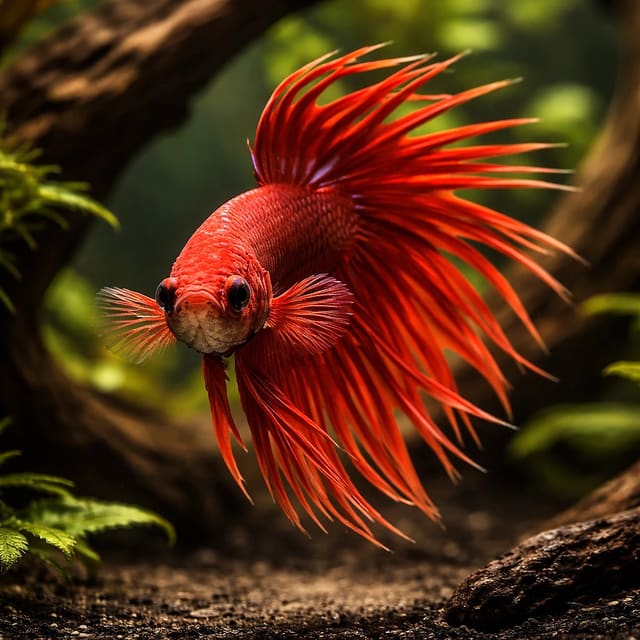
Crowntail Male Betta (Betta splendens)
26–28°C · pH 6–8 · 20L
£12.17£13.99

Halfmoon Koi Female Betta (Betta splendens) is a calmer female Siamese fighting fish with patchwork koi colouring and broad fins, for a heated, filtered and covered aquarium of at least 20 litres. Each purchase is one live female, to keep on her own or in a group of at least four females.
Adult size is the maximum length this species reaches at full maturity (scientific sources). The livestock you receive will be younger and smaller. Product-photo provenance and any image-specific limitations are stated on the listing.
Betta splendens
Halfmoon Koi Female Betta (Betta splendens) is a calmer female Siamese fighting fish with patchwork koi colouring and broad fins, for a heated, filtered and covered aquarium of at least 20 litres. Each purchase is one live female, to keep on her own or in a group of at least four females.
Adult size is the maximum length this species reaches at full maturity (scientific sources). The livestock you receive will be younger and smaller. Product-photo provenance and any image-specific limitations are stated on the listing.
For one typical domestic Betta splendens, start with at least 20 litres, a mature filter, thermostatic heater, separate thermometer, gentle flow, a secure lid with surface access, and plants or refuges. Keep one male per aquarium.
Maintain these water conditions for optimal health and vibrant colors
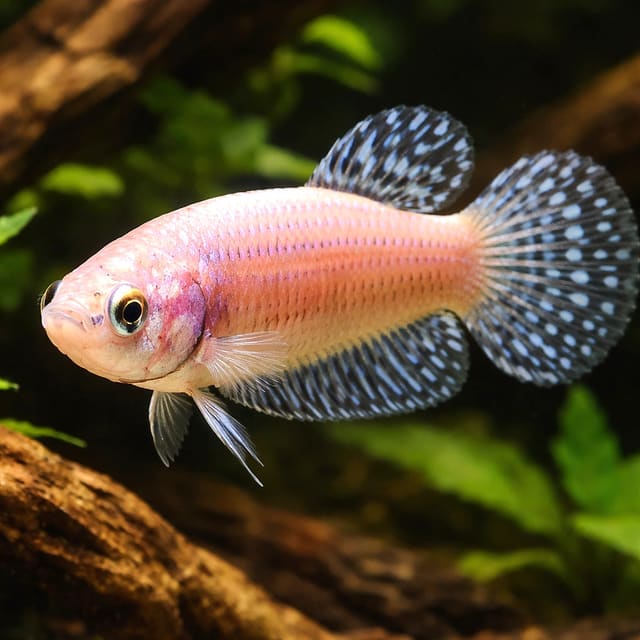
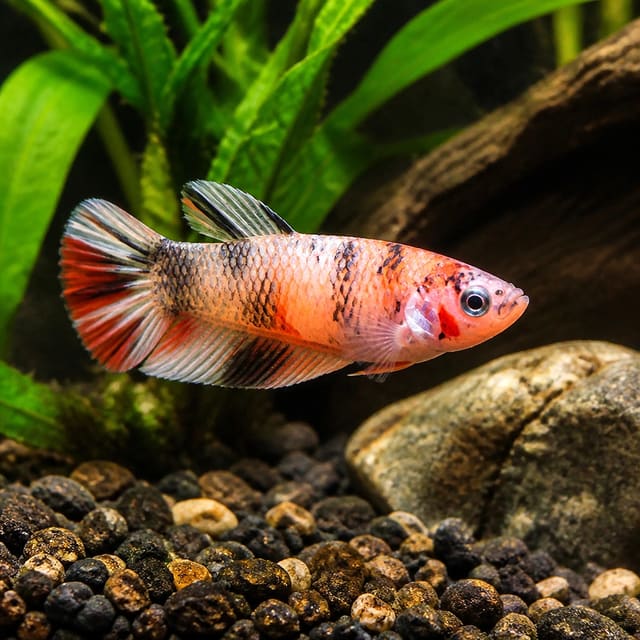
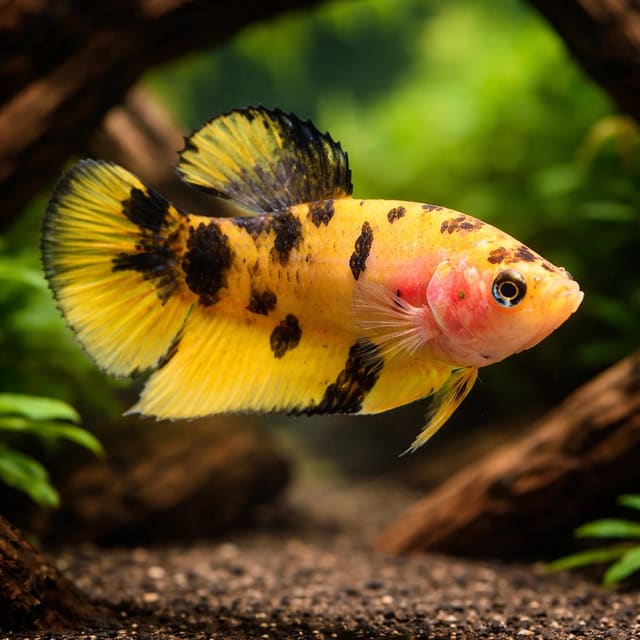
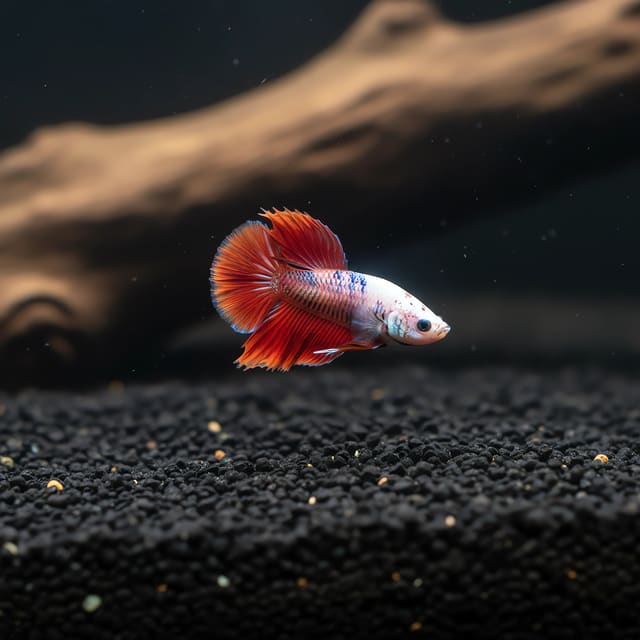
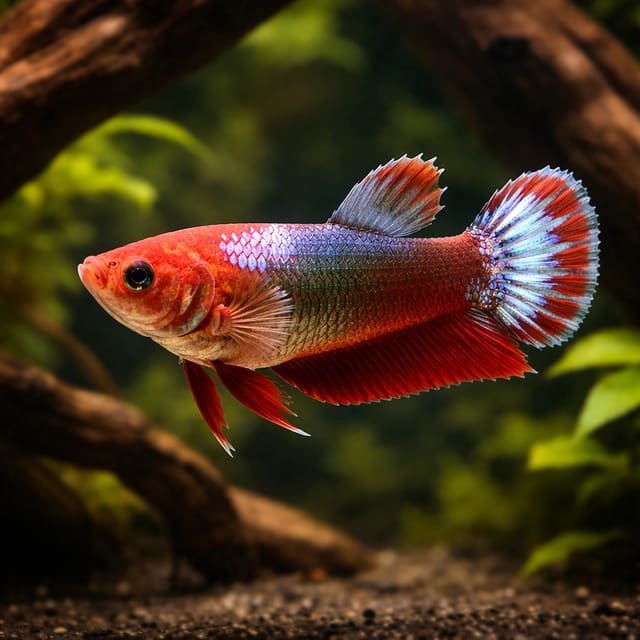
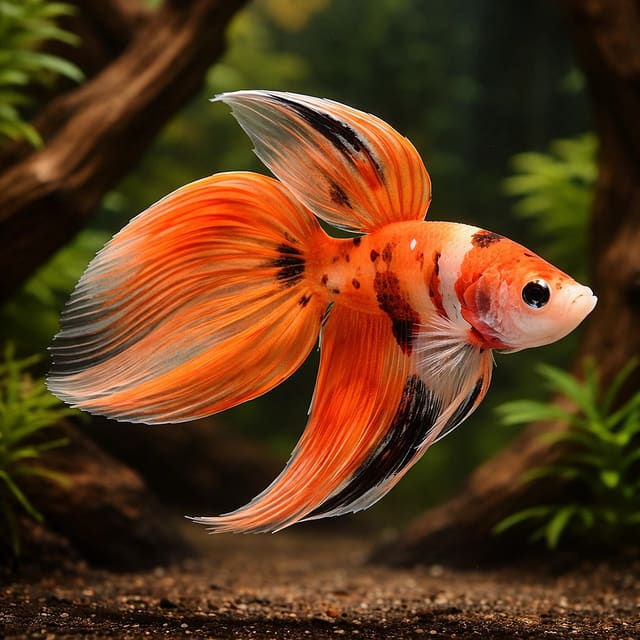
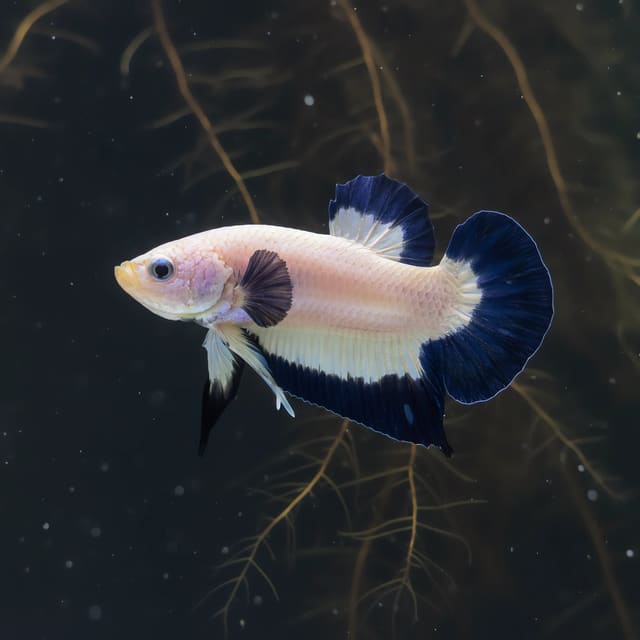
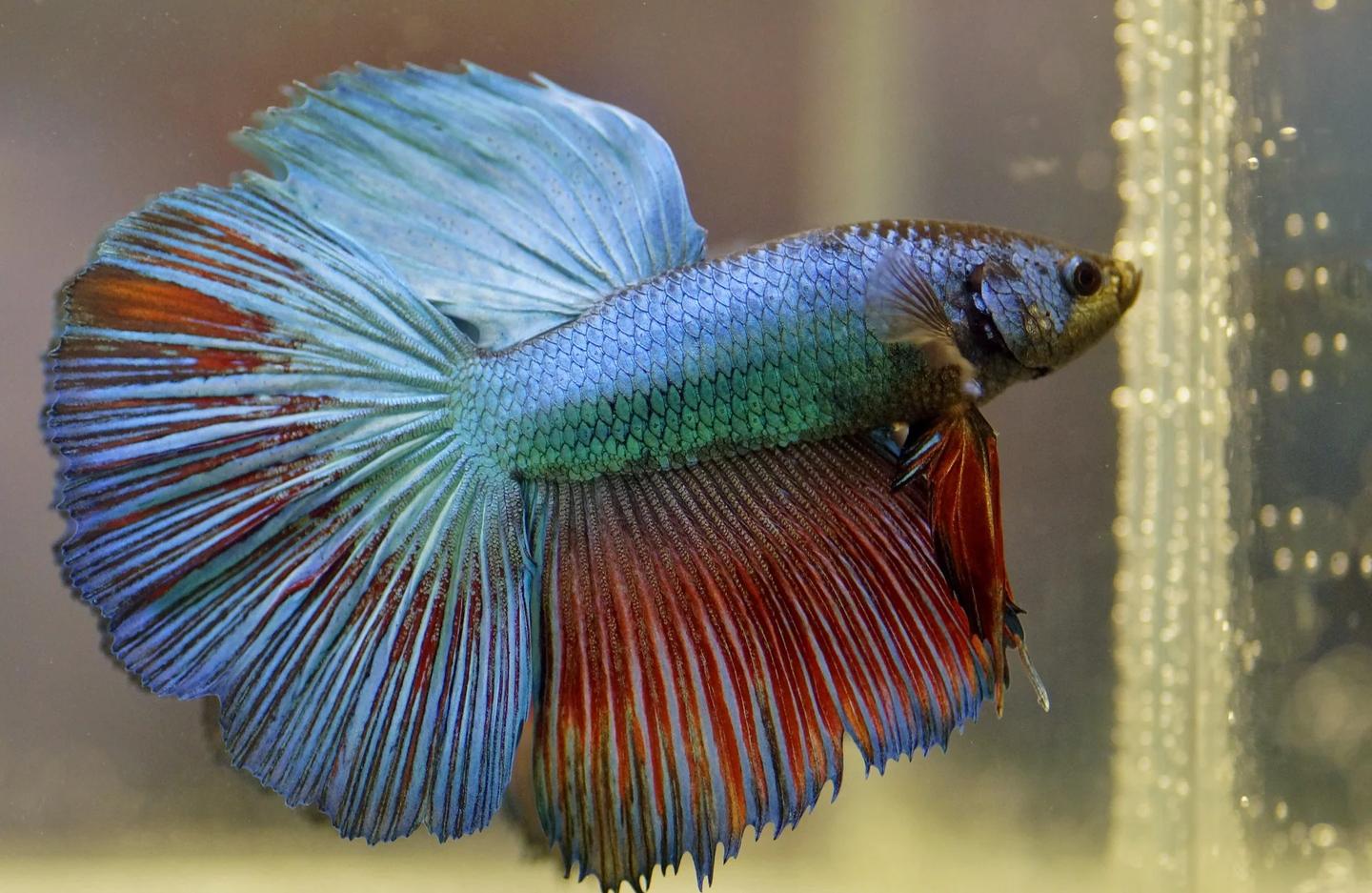
The Halfmoon Koi Female Betta is a domestic form of Betta splendens, the Siamese fighting fish. Halfmoon and koi are the trade names for her fin type and colouring, and the fish in these photographs shows why: a coppery orange body flecked with black and red, a few pale spots, a flash of blue on the gill cover, and full dorsal, tail and anal fins streaked with red, black, white and pale blue. She is one female for a heated, filtered and covered aquarium, and she can live on her own or as part of a group of female bettas.
FishBase places Betta splendens in Osphronemidae, the gourami family. Wild fish live in the Mekong basin, in the standing water of floodplains, canals and rice paddies as well as medium to large rivers, where they feed on zooplankton and mosquito and other insect larvae. Like other anabantids, bettas have a labyrinth organ that lets them breathe air at the surface, and males build bubble nests. The species was described by Regan in 1910, as the NCBI Taxonomy record confirms.
Wild Betta splendens is assessed as Vulnerable on the IUCN Red List. That assessment belongs to wild populations; it does not automatically apply to domestic aquarium lines, and the wild form itself is rarely seen in the hobby. OATA notes that the species has been selectively bred for a wide range of colours and fin types, and that most bettas in the trade are captive bred for intense colour.
OATA puts the betta's rise in popularity down to its varied personalities and colouration. A female brings that character with a much calmer temperament than a male, and OATA's guidance gives her more housing options as a result: she can live on her own in a well-planted aquarium, or with other females in a larger one. For a keeper who wants a betta's colour and curiosity with some flexibility over the set-up, a female is a natural choice.
That flexibility has limits. Seriously Fish points out that ornamental strains can be more aggressive than other betta species and that one fish per tank is usual in most cases, so a group is something to plan carefully rather than assume.
One purchase is one live female Halfmoon Koi Betta, supplied at an XL size grade. The grade describes her size when she is sent rather than an adult length; OATA puts adult bettas at about 7 cm. Sex is guaranteed only when the exact product or selected option explicitly states male or female. This Halfmoon Koi Female Betta listing is sold as female.
| Suits | A careful keeper, including a well-prepared beginner, with a cycled aquarium ready before she arrives |
|---|---|
| Housing | Alone in at least 20 litres, or with at least three more females in 60 litres or more |
| Temperature | A steady 26–28°C from a thermostatic heater |
| Temperament | Much calmer than a male, although ornamental bettas vary between individuals |
| Care rating | Intermediate on our scale |
We rate bettas as intermediate. A single female can suit a careful beginner, but only once a proper aquarium is cycled and ready: heater, mature filter, secure lid, test kits and a weekly routine all in place before she arrives. Surviving in a small bowl is not the same as receiving good care.
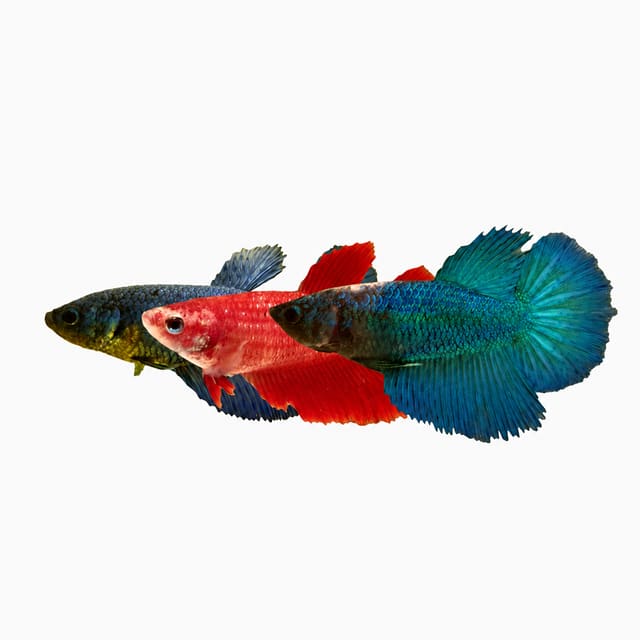
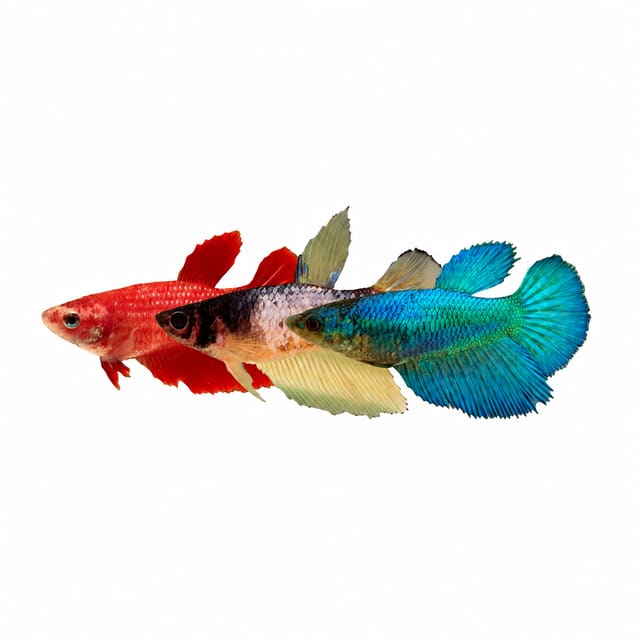
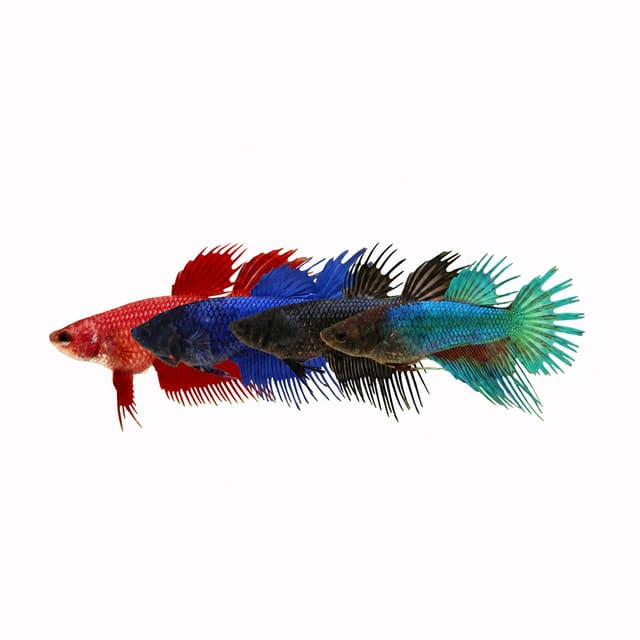
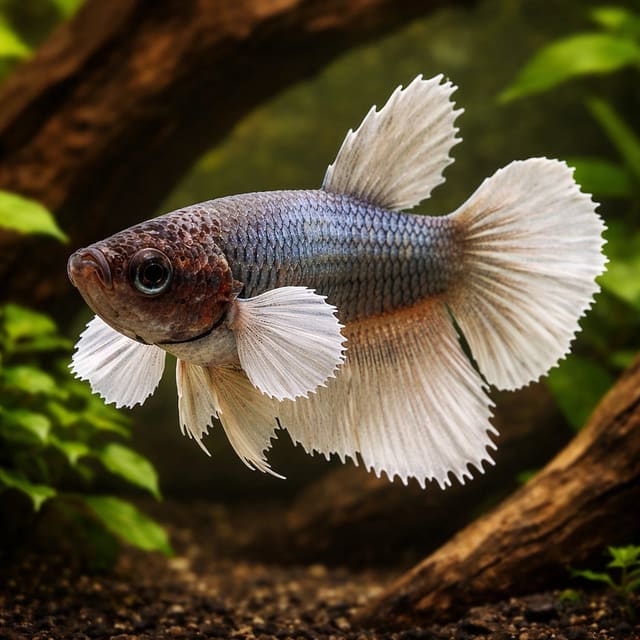
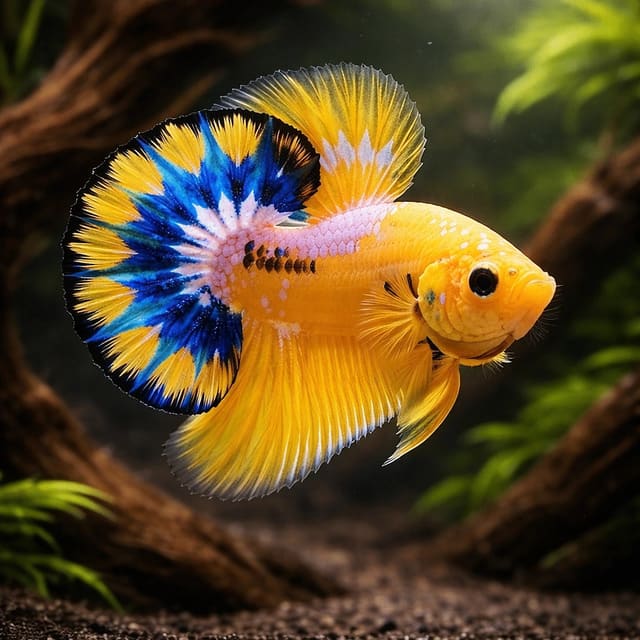
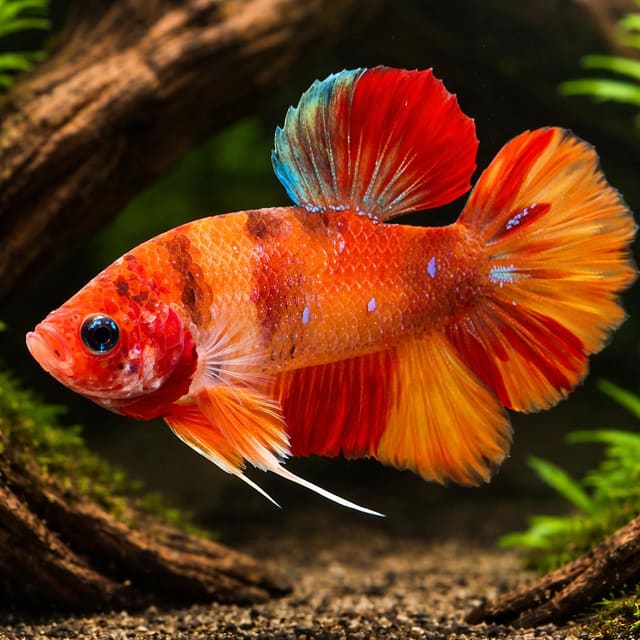
The four photographs show a Halfmoon Koi betta beside driftwood, two koi-patterned bettas in a planted aquarium, a side view on a pale background and a close view in front of a broad green leaf. Gallery images have been digitally enhanced to improve image quality. Natural colour, pattern, size and maturity can vary between live animals. The betta you receive will carry her own arrangement of colour rather than a copy of any one picture.
For one betta, our betta care guide treats 20 litres as the starting point, heated, filtered, covered and furnished, with more space wherever you can manage it. Seriously Fish suggests an aquarium base of 45 × 30 cm, about 41 litres, as large enough for a single male or a pair, and both FishBase and Seriously Fish discourage keeping bettas in very small containers or jars. If you would like a group of females, OATA recommends at least 60 litres.
Shop displays can give the wrong impression. OATA explains that bettas are often held in small, sparsely decorated housing in shops because those tanks are temporary and have high filtration capacity, and that you should not copy them at home. Two recent behavioural studies summarised in our care guide found that tiny bowls restricted normal swimming and that furnished housing produced better behaviour than barren housing of the same size. Larger volumes are also easier to keep stable.
OATA says bettas in the UK need a heater all year round. Use a thermostatic heater with a separate thermometer so you can see what the water is actually doing, and size the heater from the manufacturer's guidance for your aquarium volume rather than a rule of thumb. We aim for a steady 26–28°C for a typical domestic betta, inside OATA's 20–28°C range for tank-reared fish.
Breathing air does not make a filter optional. The RSPCA's advice on fish environments explains that fish release toxic ammonia, and that a working biological filter grows the bacteria that turn it into nitrite, which is also toxic, and then into safer nitrate. Bettas come from sluggish waters, so Seriously Fish advises avoiding strong water movement and suggests an air-powered sponge filter. If she is pushed around by the current or struggles to rest, reduce or spread the flow without switching off the filter.
If this is your first heated aquarium, our guide to setting up a tropical fish tank in ten safe steps covers cycling the filter before any fish goes in. Wait until ammonia and nitrite both read zero before you order.
Bettas must always be able to reach the surface to breathe. OATA advises a gentle current and a small air gap below the cover, and a secure lid also stops a betta jumping out. Floating plants are welcome, but keep an area of open surface where she can take air, and never let décor block it.
Seriously Fish says bettas fare best in a well-planted, shady aquarium with plenty of surface cover: tall stem plants, floating plants such as Salvinia or Riccia, tropical lilies or Cryptocoryne, and driftwood carrying Microsorum or Taxiphyllum. Small clay pots or lengths of piping add shelter, and dried leaf litter brings extra cover.
With her large halfmoon fins, choose smooth furnishings. Our care guide advises avoiding sharp edges, rough openings that could trap a fish and anything that blocks the surface, and notes that very long fins may change how an individual copes with flow and furnishings. Watch how she swims once she has settled, and adjust the layout if she snags or tires.
Our care guide sets out a simple test to pass before any betta is bought:
If you would like to match her new water to the water she has been kept in, ask us before ordering and we can tell you what we know about her holding conditions.
| Temperature | 26–28°C, our target inside OATA's 20–28°C |
|---|---|
| pH | 6.0–8.0 |
| General hardness | 4–12°dH, soft to medium |
| Carbonate hardness | 3–10°dKH, soft to medium |
| Ammonia | Zero |
| Nitrite | Zero |
| Nitrate | No more than 20 mg per litre above your tap water level |
These come from OATA's betta care sheet, which describes tank-reared bettas as usually undemanding of water chemistry. They are broad guidance for bettas rather than a species-specific optimum. Seriously Fish adds a useful distinction: wild-collected fish are likely to prefer pH 5.0–7.0, but ornamental strains such as this one are unfussy, with 6.0–8.0 acceptable. FishBase records the wild species in tropical waters of 24–30°C, which is a record of its natural habitat rather than a setting for your heater.
The nitrate figure is measured against your tap water, so test the tap as well as the tank. Knowing the nitrate your supply already carries tells you how much the aquarium itself is adding between water changes.
UK tap water is not one chemistry; its hardness varies with geology and the water source. Treat every batch of new water with a tap water conditioner to remove chlorine or chloramine, test again after any domestic softener or filter, and compare your results with the table instead of assuming. Our guide to aquarium water parameters explains which values to test and why each one matters, and the water parameter matcher compares your own readings with these ranges. There is no need to adjust pH or hardness just to reach the middle of a range; steady conditions matter more than a particular decimal.
Note each week's readings alongside the water temperature. A written record turns a slow change into something you can see, and it is exactly what you will want to hand if you ever need help with her health.
In the wild, FishBase records Betta splendens feeding on zooplankton and on mosquito and other insect larvae, and Seriously Fish expects it to prey on aquatic and terrestrial invertebrates. OATA describes bettas as omnivorous and willing to take most food types. At home, base her diet on a good-quality flake or pellet; specialised betta pellets are made for these fish. Add small live or frozen foods for variety, such as daphnia, small bloodworm or brine shrimp, which Seriously Fish recommends offering regularly for good colour and condition.
OATA's advice is to feed only what she can eat within a few minutes, once a day. Seriously Fish notes that bettas seem particularly prone to obesity, so resist extra meals however keenly she comes to the front. Our care guide advises against portion rules based on the size of the fish's eye or a fixed pellet count, because pellet sizes and energy density vary between brands. Follow the food maker's guidance, watch her body shape and remove anything left over. Our care guide also advises against a compulsory weekly fast; measured daily portions and a watchful eye on her shape are the better tools.
If several people feed the aquarium, pre-measure the portions so she is not fed twice by accident. Before a holiday, arrange a competent carer with measured feeds and written instructions, and test any automatic feeder well before you leave rather than trusting it for the first time while you are away.
Our team hand-packs every fish in a bag of pure oxygen inside an insulated poly box, adding a heat pack when the weather calls for it. A licensed live-animal courier delivers on a tracked service, and we email the tracking number and your confirmed delivery date so you know when to be in. The delivery and Live Arrival Guarantee terms set out the full details.
Her aquarium should already be cycled, with ammonia and nitrite at zero. In the first days, check that she reaches the surface easily, rests without being swept by the current and finds cover among the plants. Feed sparingly and keep testing.
If you are building a group of females, add fish gradually. The beneficial bacteria in the filter need to increase each time more fish are added and feeding increases, and stocking too many too quickly causes new tank syndrome: there are not enough nitrifying bacteria for the extra waste, and rising ammonia and nitrite may cause fish to become ill or die.
OATA describes healthy fish as having clear, bright eyes, undamaged fins, intact scales, no ulcers or bumps and appropriate swimming behaviour. With a long-finned betta, look closely at the fin edges as well as the body, and learn what her normal resting and swimming pattern looks like.
| Swimming | Hanging at the surface, sitting on the bottom or swimming erratically |
|---|---|
| Colour | Turning darker or paler than normal |
| Temperament | More aggressive than usual, or hiding more |
| Breathing | Gill covers moving faster or slower than normal |
| Appearance | White spots, fluffy growths, or loss of fins or scales |
| Condition and feeding | Gaining or losing weight, or losing interest in food |
A change in appetite, breathing, posture, swimming, colour or fins matters, but it is not a diagnosis. OATA advises testing water quality and seeking experienced guidance, and the MSD Veterinary Manual likewise puts aquarium history and water analysis ahead of choosing a medicine from one symptom. Work through it in this order:
A torn fin, white mark, swollen belly or unusual swimming pattern can have more than one cause. Correcting the water may be urgent, but it does not identify the problem, so keep notes and get qualified help rather than treating whatever looks closest online.
OATA and Seriously Fish both note that male bettas are more colourful and carry longer, more extended fins than females, a difference taken to extremes in some ornamental strains. That is why most bettas are easy to sex. Halfmoon and koi describe fins and colour rather than sex, and this listing is for a female.
Seriously Fish describes Betta splendens as extensively line-bred for vigour, strength and the ornamental trade, and hybridised with close relatives including B. imbellis, B. smaragdina and B. mahachaiensis. A genome study by Kwon and colleagues in 2022 mapped variation in colour, body size, sex determination and fin traits across domestic bettas. The practical lesson is that a colour or tail name is a trade description, not a scientific certificate: a photograph can show visible traits, but it cannot prove age, health, temperament or how she will look under your lighting.
Fuller fins look spectacular but ask a little more of the set-up. Gentle flow, smooth décor and resting places near the surface all help, and it is worth watching how she moves in the first weeks rather than assuming every named form copes in the same way.
| On her own | The simplest plan: at least 20 litres, heated, filtered, covered and planted |
|---|---|
| With other females | A group of at least four in 60 litres or more, well planted, with a spare tank ready |
| In a community | Only with a group of females and calm companions that share her water |
Seriously Fish does not recommend Betta splendens for the standard community aquarium and says its care needs and disposition mean it is best kept alone. Individual fish sometimes tolerate other species, but that is the exception rather than the norm, and ornamental strains seem more aggressive than any other betta species, so in most cases only one is kept per tank. A single female with a well-furnished aquarium to herself is a complete and rewarding set-up.
OATA takes a more open view of females: they are much calmer than males and can be kept in groups of at least four, in an aquarium of at least 60 litres. If you choose that route, give the group dense planting and plenty of hiding places, add fish gradually so the filter keeps up, and watch closely. A female who hides more, changes colour or stops feeding may be under pressure from the others. Our care guide treats a backup separation plan as part of any shared set-up, so have a second heated tank ready before you start. Each fish is a separate purchase, so order enough females for the group you have planned.
Feeding time is where a group shows its balance. Our care guide lists feeding competition among the things to screen for, so watch that every female gets her share and that no one fish is pushed away from the food. Plan the whole group's space too: each adult needs room, not just the first betta you bought.
No species is automatically safe with a betta. Seriously Fish names some small cyprinids and loaches that live in similar environments in nature as possible companions, with proper research before purchase. OATA says females mixed into a community must be kept in a group and away from boisterous or aggressive fish. The RSPCA's guidance on keeping fish together also stresses researching each species before mixing them.
Check every candidate for adult size, water needs, activity, fin nipping and competition at feeding time, and remember that the whole community needs space, not just the betta. OATA notes that male bettas are often the target of intense fin nipping, which can cause stress, disease and death; her flowing fins deserve the same protection.
Signs that a group or community is not working are the same warning signs OATA lists for any fish: hiding more than usual, a change in colour, damaged or missing fins, or a loss of interest in food. If you see them in one fish, test the water first, then move her to the spare tank rather than waiting to see whether things settle. A betta that lives on her own afterwards has lost nothing, since Seriously Fish regards one fish per tank as the usual arrangement.
FishBase and Seriously Fish both advise keeping the sexes apart unless you are breeding, and males will fight each other, so this female should not share her tank with a male betta. Our care guide is also cautious about invertebrates: nobody can promise that shrimp, snails or fish fry will be safe with a betta, which may hunt smaller animals, while larger or defensive invertebrates bring their own risk of injury. Treat any such combination as uncertain and be ready to separate them.
If you would like to compare other bettas, the betta collection shows the forms we keep.
OATA says bettas grow to about 7 cm. FishBase records a maximum of 6.5 cm total length for males or unsexed fish, and Seriously Fish gives a standard length of 70 mm, so plan for an adult of about 7 cm.
On her own, start at 20 litres that are heated, filtered, covered and furnished, and choose more space where you can. Seriously Fish suggests a base of 45 × 30 cm, about 41 litres, for a single male or a pair, and OATA recommends at least 60 litres for a group of females.
They can, with care. OATA says female bettas are much calmer than males and can be kept in groups of at least four, in an aquarium of at least 60 litres. Seriously Fish warns that ornamental strains can be aggressive and that one fish per tank is usual in most cases, so either keep her alone or plan a well-planted group with a spare tank ready. Keep her apart from males unless you are breeding.
A single betta can suit a careful beginner once a proper aquarium is cycled and ready. The heater, mature filter, lid, test kits and weekly routine all need to be in place before she arrives, which is why we rate bettas as intermediate.
Use a good-quality flake or a specialised betta pellet as the base, with small live or frozen foods such as daphnia or bloodworm for variety. OATA advises feeding only what she can eat within a few minutes, once a day, and Seriously Fish notes that bettas seem particularly prone to obesity.
OATA's guidance for tank-reared bettas is 20–28°C, pH 6.0–8.0 and general hardness of 4–12°dH, with ammonia and nitrite at zero. We aim for a steady 26–28°C inside that range, held by a thermostatic heater and checked with a separate thermometer.
Females are much calmer than males, but Seriously Fish describes ornamental strains as more aggressive than other betta species, and individuals vary. OATA notes that male bettas are often the target of intense fin nipping, so keep fin-nipping species away from her fins too.
No companion is automatically safe. Seriously Fish names some small cyprinids and loaches from similar natural habitats as possible companions after proper research, and OATA says females mixed into a community must be in a group and kept away from boisterous or aggressive fish.
Our team hand-packs her in a bag of pure oxygen inside an insulated poly box, with a heat pack when the weather calls for it, and a licensed live-animal courier delivers on a tracked service. Be in to receive her, film one continuous unboxing video from the sealed parcel to the fish in her bag, then float the bag for 20–30 minutes before releasing her without the bag water. Any Live Arrival Guarantee claim needs that video and your order number on the day she arrives.
The care figures here come from these public sources, together with our own betta care guide and delivery terms, which are linked in the care sections above.
No reviews for this item yet. Bought one? Honest reviews only, good or bad.
What customers say about ordering from us
I have a small group of long finned mountain minnows. So was delighted to be able to order ten of this variety to increase the genetics in my tank . The ones I recieved are healthy but it’s to early to give a verdict on wether they are of a long finned type since they are small currently.
Gordon Walker · 23 Sept 2026
100% success travel and "installation". Pleased with quality of purchase. The Siamese fighter a bit "shy" so have not yet seen him at his best yet but looking good. Happy customer. GG
George E Garratt · 21 Sept 2026
Reviews of our shop, collected by Judge.me, an independent third-party review collector. Newest first.