Java Kuhli Loach - Aquarium supplies from Tropical Fish Co

Brown Kuhli Loach (Pangio kuhlii) - UK

£4.99In Stock

Brown Kuhli Loach is a peaceful bottom-dweller ideal for community aquariums. Moderate care and full of character. Order now with fast UK delivery.

Bottom DwellerCommunity FishFreshwater FishLoachModerate CarePeacefulTropical Fish

Premium Quality

Healthy, vibrant fish from trusted suppliers

Expert Care

Detailed care guides and support

Live Arrival Guarantee

Your fish arrives healthy or we'll replace it

Acclimated

Properly quarantined and ready for your tank

Why Choose This Fish?

Brown Kuhli Loach is a peaceful bottom-dweller ideal for community aquariums. Moderate care and full of character. Order now with fast UK delivery.

The Brown Kuhli Loach, often sold as Pangio kuhlii javanicus, is one of the most charming oddballs in the freshwater fish UK hobby. This peaceful, eel-like bottom dweller spends its day weaving through roots, leaf litter, and plants, then becomes more active at dusk when the aquarium lights dim. For aquarists looking for community fish UK options that stay small, behave gently, and add real movement to the lower levels, the Brown Kuhli Loach is hard to beat. It is sometimes called the Brown Java Loach, Chocolate Kuhli Loach, Java Kuhli Loach, or Plain Brown Kuhli, and it stands out from the more familiar banded kuhli loach with its smooth chocolate-brown body and understated elegance.

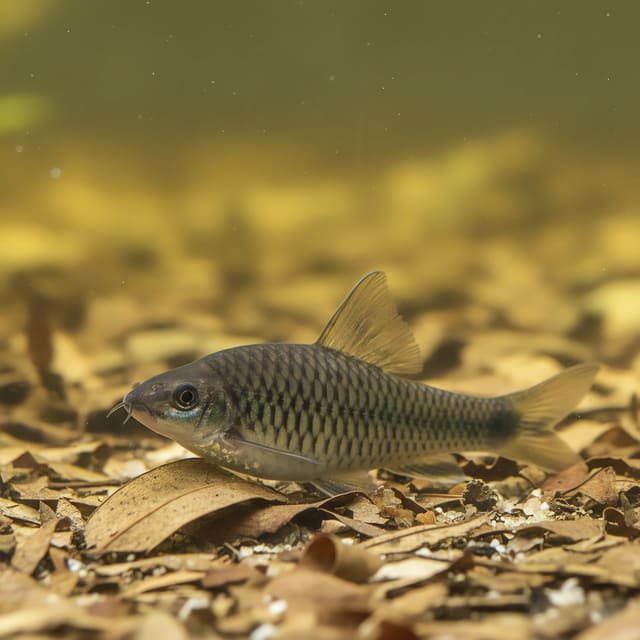
Native to Southeast Asia, this species reaches a practical kuhli loach size of around 8-12 cm, thrives in warm, soft water, and can live for 8-10 years with proper care. That long kuhli loach lifespan, combined with easy-going behaviour and a love of planted aquariums, makes it one of the best kuhli loach species UK keepers can choose for a calm tropical setup. If you are searching for tropical fish UK, freshwater fish uk for sale, or a peaceful eel-like fish for community tank UK aquarists genuinely enjoy keeping, this species deserves a close look. See our detailed photos showing the slim body shape, subtle brown sheen, and whisker-like barbels that make this loach UK favourite such a rewarding addition to a home aquarium.

🔹 Quick Facts

  • Scientific Name: Pangio kuhlii javanicus
  • Care Level: Easy
  • Min Tank Size: 60 litres (13 gallons)
  • Temperature: 24-30°C (75-86°F)
  • pH Range: 4.0-7.0
  • Lifespan: Up to 10 years
  • Temperament: Peaceful
  • Diet: Omnivore

Classification

  • Order: Cypriniformes
  • Family: Cobitidae
  • Genus: Pangio

The Brown Kuhli Loach belongs to the true loach family and sits within a group of slim, burrowing species prized in the aquarium trade for their peaceful nature and unusual body shape. In the hobby, Pangio kuhlii javanicus is often discussed alongside striped forms and other dark-bodied Pangio species. Its place in the hobby is secure because it fills a niche few fish can: a social, nocturnal, soft-substrate specialist that works beautifully in planted community aquariums.

Where Do Brown Kuhli Loaches Come From? Natural Habitat Explained

The natural pangio kuhlii javanicus habitat is found across parts of Southeast Asia, especially Indonesia, Malaysia, and nearby regions with slow-moving forest streams, swamp margins, and shallow floodplain waters. These environments are usually shaded by overhanging vegetation, rich in decaying leaves, and full of fine silt or sand. In the wild, Brown Kuhli Loaches spend much of their time hidden among roots and organic debris, emerging to hunt tiny worms, insect larvae, crustaceans, and leftover edible matter.

That habitat explains why this fish behaves so differently from many open-water species sold as tropical fish uk freshwater options. It is not built for fast current or bright, exposed layouts. Instead, it prefers dim areas, soft bottoms, and plenty of cover. If you are comparing it with a hillstream loach for sale uk listing, the care is very different: hillstream species like stronger flow and cooler, oxygen-rich water, while the Brown Kuhli Loach prefers warm, calmer conditions.

Many new keepers searching freshwater fish in uk, uk freshwater fish, or even broad terms like freshwater fish species uk may also stumble across non-aquarium topics such as uk sea fish species, barbel freshwater fish uk, common bream freshwater fish uk, or common roach freshwater fish uk. Those are wild British fish discussions, not tropical aquarium care. The Brown Kuhli Loach is not part of the freshwater fish of the uk fauna, and it should never be released into local waterways. Responsible fishkeeping matters, especially when people ask about invasive fish species uk and how aquarium species can affect native ecosystems.

In aquariums, recreating this natural setting is simple but important. Warm water, subdued lighting, driftwood, leaf litter, and especially a soft substrate allow them to show their best behaviour. This is one reason they are considered a top bottom dweller UK choice for calm planted tanks. Their understated colour may not be as flashy as some of the popular fish in uk searches suggest, but their movement, social behaviour, and secretive habits make them far more interesting over time.

💡 Expert Tip

Mimicking the natural habitat of Pangio kuhlii javanicus improves feeding confidence, reduces stress, and encourages natural burrowing. A thin layer of leaf litter over soft sand often brings shy fish out earlier in the day.

How to Set Up the Perfect Tank for Brown Kuhli Loach

A thoughtful brown kuhli loach tank setup is the difference between fish that hide constantly and fish that settle, forage, and thrive. Although the species is small, it should not be treated as a throw-in cleanup fish. These loaches are social, sensitive to rough décor, and strongly dependent on stable water quality.

Tank Size Requirements

The minimum practical tank for a group is 60 litres, but a pangio kuhlii javanicus tank size of 100 litres or more is strongly recommended. Why? Because they need floor space more than height, and they should be kept in groups. A proper brown kuhli loach group size UK recommendation is at least 5-6 fish, with 8 or more often giving even better confidence. In larger groups, they hide less and display more natural social behaviour.

Water Parameters

The ideal brown kuhli loach temperature is around 26°C, though the full brown kuhli loach temperature range is 24-30°C. For acidity, the best pangio kuhlii javanicus pH range is 4.0-7.0, with around 6.5 being a very safe target in captivity. The preferred brown kuhli loach water parameters also include soft to moderately soft water, and pangio kuhlii javanicus water hardness should ideally stay between 1 and 12 dGH. Stability matters more than chasing extreme values.

24-30°C
Temperature
4.0-7.0
pH Range
1-12 dGH
Hardness
60L min
Tank Size

Filtration

Use gentle but efficient filtration. Sponge filters, spray bars, or external filters with diffused outflow work well. Strong current is not ideal for this species. Because they spend time on the substrate, uneaten food and waste can collect where they live, so filtration should be reliable without turning the tank into a river. Tight-fitting lids are also important, as loaches can squeeze through surprising gaps.

Substrate

The single most important feature of a brown kuhli loach care guide is the substrate. A brown kuhli loach sand substrate is strongly recommended because these fish dig, nose around, and partially bury themselves. The full brown kuhli loach sand substrate requirement is simple: use smooth, fine sand deep enough for natural rooting behaviour, usually 2-4 cm. Sharp gravel can damage their delicate skin and barbels. This is not a fish to keep on coarse stones.

Plants & Decor

Pangio kuhlii javanicus for planted aquarium setups is an excellent match. Dense planting with shaded zones makes them feel secure. Fine-leaved stems, floating plants, driftwood arches, and caves all help. In a peaceful community, they pair especially well with small midwater fish such as X Strawberry Rasbora, X Yellow-Tailed African Tetra, and Lake Kurumoi Rainbowfish in larger layouts. If you want other unusual bottom fish, compare their needs with Protomyzon pachychilus, which prefers a very different high-flow environment.

Lighting Requirements

Moderate to low lighting suits them best. Bright light is not harmful if you provide dense cover, floating plants, and shaded décor, but dimmer conditions make them more visible during the day. Aim for 6-8 hours of consistent light if the tank is heavily planted, and avoid sudden on-off changes that can startle them.

🔹 Quick Setup Checklist

  • Keep at least 5-6 Brown Kuhli Loaches together
  • Use fine sand, never sharp gravel
  • Maintain 24-30°C and soft, slightly acidic water
  • Add driftwood, caves, leaf litter, and dense planting
  • Choose peaceful tank mates only
  • Fit a secure lid to prevent escapes

💡 Pro Tip

Always cycle the tank for 4-6 weeks before adding loaches. Because they live on the bottom and have delicate skin, they are often among the first fish to show stress if ammonia or nitrite is present.

What Do Brown Kuhli Loaches Eat? Complete Feeding Guide

The brown kuhli loach diet is omnivorous. In nature, these fish sift through soft substrate for tiny invertebrates, organic debris, and edible leftovers. In the aquarium, they do best when fed a varied menu that reaches the bottom quickly. They are not efficient at competing with fast midwater fish, so target feeding in the evening often gives the best results.

Staple Foods

Good staples include sinking micro pellets, soft carnivore wafers, and quality omnivore tablets. Feed after lights dim if top-dwelling fish are greedy. Although broad search terms like freshwater fish to eat list, freshwater fish uk to eat, british fish to eat, and edible freshwater fish uk refer to human food topics, in aquarium care the real question is what foods this fish should eat for health. The answer is small, protein-rich, digestible foods designed for tropical bottom dwellers.

Supplemental Foods

Supplement the staple diet with frozen bloodworm, daphnia, cyclops, mosquito larvae, and finely chopped tubifex from trusted sources. Live foods can be used occasionally to stimulate natural foraging. These foods help condition fish, improve body mass, and support healthy barbels. If you are comparing species by freshwater fish mass or body build, a well-fed Brown Kuhli Loach should look slim but not pinched.

Treats & Special Foods

Treats can include baby brine shrimp, blackworm, and occasional gel foods. In mixed tanks with species such as X Sixbanded Barb or X Rhombo Barb, feeding after dark helps the loaches get their fair share. These fish do not need colour-enhancing food to stay attractive, but a varied diet often deepens the warm brown tone seen in healthy specimens.

Feeding Frequency & Portion Control

Feed once or twice daily in small portions. In a mature aquarium, they will also browse between meals. Offer only what the group can finish within a few minutes. Because they are scavengers, many keepers assume they can survive on leftovers alone. That is one of the most common mistakes in any brown kuhli loach care guide.

Time Food Amount
Morning Sinking omnivore pellet Light feed, enough for 2-3 minutes
Evening Frozen bloodworm or bottom wafer Main feed, target near hiding spots

Foods to Avoid

Avoid oversized pellets, floating flakes as the only diet, and spoiled live foods. Also avoid assuming they can eat whatever appears on a freshwater fish representative species guide, a gudgeon freshwater fish uk article, or a small river fish species list. Aquarium loaches have different needs from wild British species. Never use food intended for large predators or large tropical fish uk systems, and do not leave excess food to rot in the substrate.

⚠️ Feeding Warning

Overfeeding causes ammonia spikes, fouls the sand bed, and quickly leads to poor water quality. Because Brown Kuhli Loaches live where waste settles, they suffer early if food is allowed to decay on the bottom.

X Strawberry Rasbora — A gentle nano companion that suits the same calm feeding routine and helps create a balanced upper-water community above your loaches.
X Yellow-Tailed African Tetra — A lively but generally compatible schooling fish for larger peaceful aquariums where Brown Kuhli Loaches occupy the bottom zone.

Brown Kuhli Loach Appearance: Colors, Patterns & Varieties

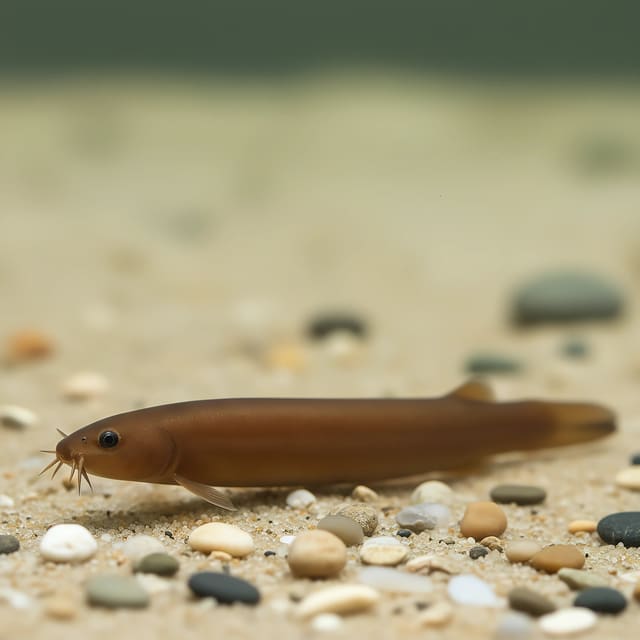
The Brown Kuhli Loach has a long, slender, snake-like body with tiny fins, a pointed snout, and several soft barbels around the mouth. Adult pangio kuhlii javanicus size usually falls between 8 and 12 cm, which matches the expected kuhli loach size for well-grown aquarium specimens. The body is smooth and flexible, built for slipping through roots and burrowing into sand rather than cruising in open water.

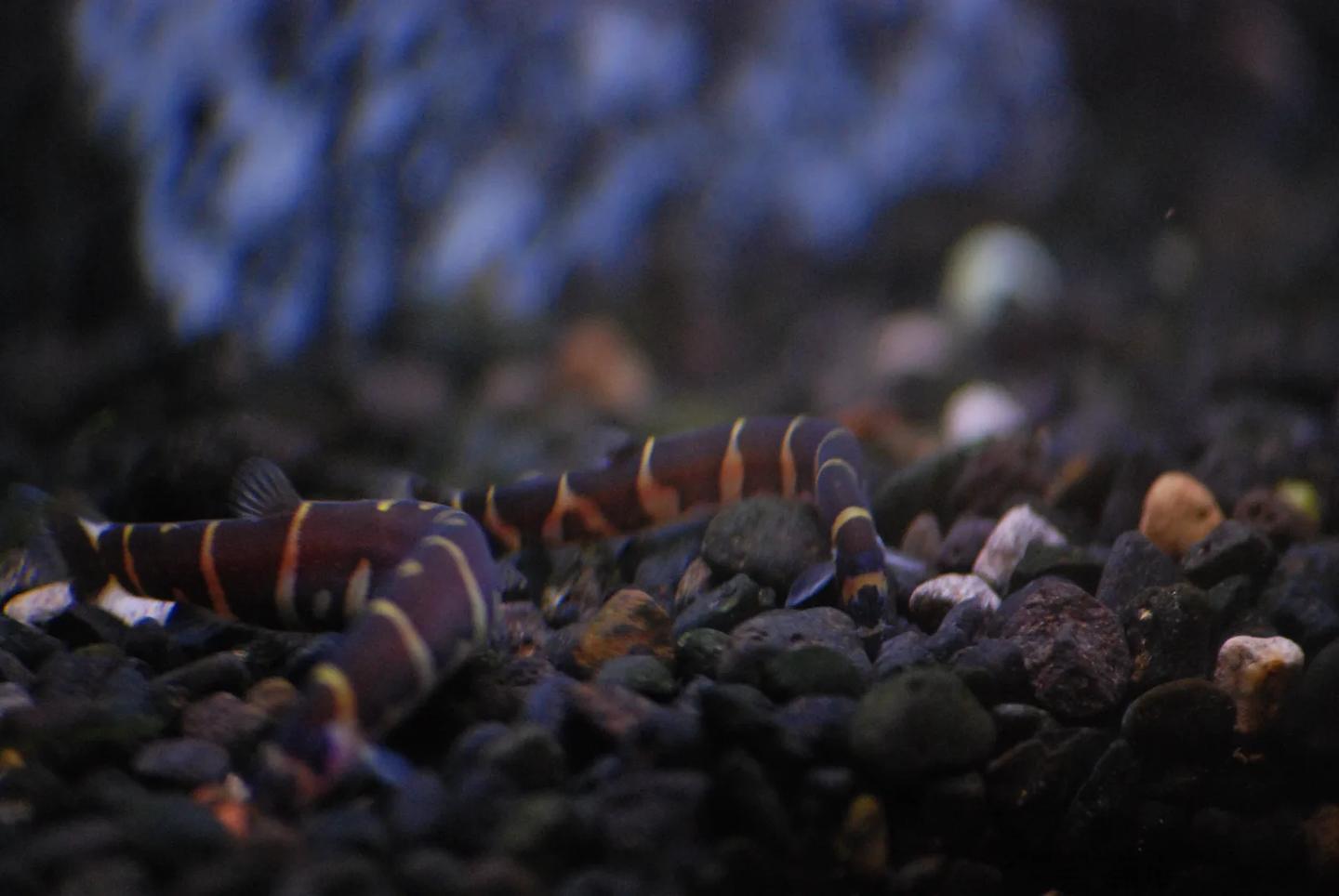
Colour is where this fish differs from the classic striped form. Instead of strong yellow-and-black banding, the Brown Kuhli Loach shows a more even chocolate, tan-brown, or tea-brown body tone. This is why hobbyists also use names such as Chocolate Kuhli Loach and Plain Brown Kuhli. In low light over dark substrate, the fish can look almost smoky bronze. In brighter planted aquariums, the body often reveals a subtle satin sheen.

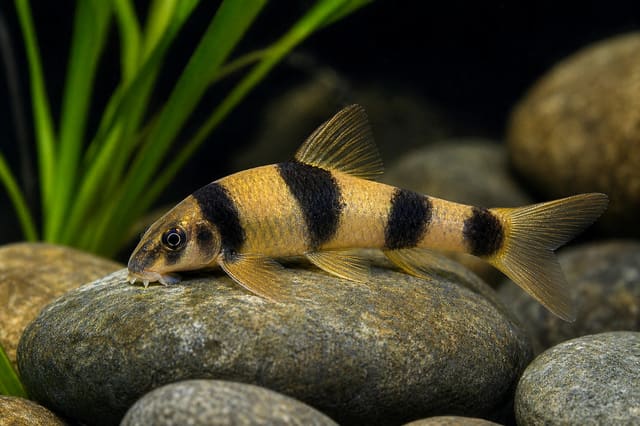
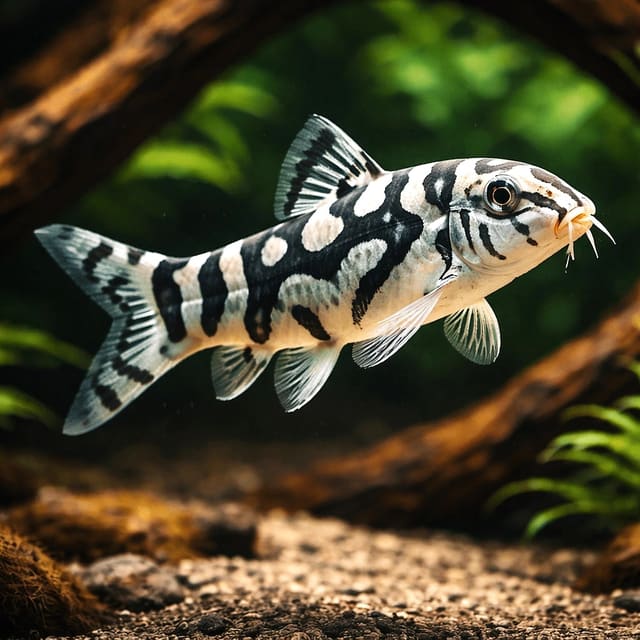
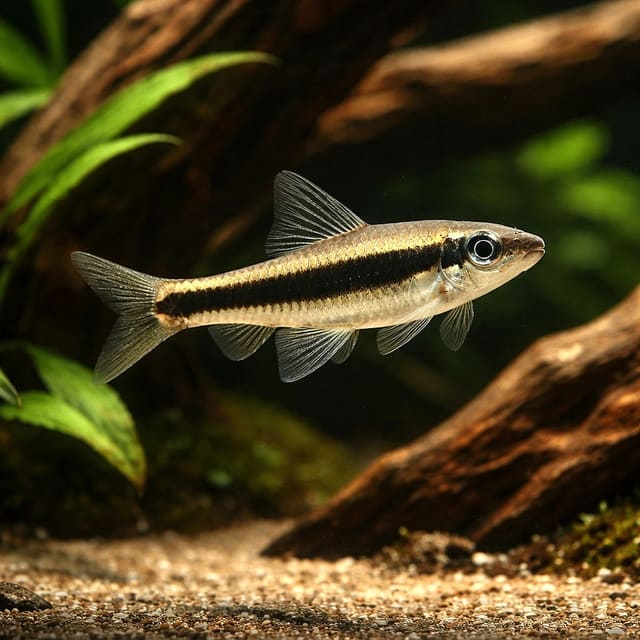
Searches like brown kuhli vs black kuhli loach and brown kuhli loach vs striped kuhli loach are common because these fish are often confused in shops. Black forms are usually darker and more uniform, while striped forms have clear banding. Brown forms sit in between, with softer, more naturalistic colour. If you have seen a black kuhli loach for sale or even a dwarf kuhli loach for sale listing, check the scientific name carefully because appearance can vary by species and collection locality.

Sexing is not easy, but mature females are often fuller-bodied, especially when carrying eggs, while males may appear slimmer with slightly thicker pectoral fin rays. Our photos show the rich brown coloration achieved through warm water, subdued lighting, and a proper sand-based setup. For buyers searching buy brown kuhli loach UK, buy java kuhli loach UK, pangio kuhlii javanicus buy online UK, or simply kuhli loach UK, this subtle colour form is a great alternative to the more common striped fish.

What Fish Can Live With Brown Kuhli Loach? Compatibility Guide

The brown kuhli loach for community tank role is one of its biggest strengths. This is a gentle, non-aggressive species that spends most of its time on or under the substrate. It does not harass tank mates, rarely competes strongly for food, and works best with small to medium peaceful fish that occupy the middle and upper levels.

Ideal Tank Mates

Excellent pangio kuhlii javanicus tank mates include rasboras, small tetras, peaceful barbs, Corydoras, small gouramis, and some shrimp in well-structured tanks. Good examples from our range include X Strawberry Rasbora for a soft-water nano community, X Yellow-Tailed African Tetra for a slightly more active display, and Lake Kurumoi Rainbowfish in larger peaceful aquariums. For aquarists who enjoy unusual species, Protomyzon pachychilus can be fascinating, though it requires different flow and oxygen levels.

Because many shoppers use broad searches such as freshwater fish for sale uk, uk freshwater fish for sale, freshwater fish uk for tank, small freshwater fish uk, or common freshwater fish uk, it helps to be clear: Brown Kuhli Loaches are best with similarly peaceful tropical species, not random fish from a freshwater fish list uk, freshwater fish uk list, freshwater fish list uk, or list of uk freshwater fish article. Those lists often include wild temperate species that are not suitable aquarium companions.

Species to Avoid

Avoid large cichlids, boisterous bottom dwellers, and predatory fish. A Short Body Texas Cichlid is a poor match because it is too assertive and may stress or injure loaches. Very rough substrate fish are also unsuitable, as are species that monopolise the bottom. If you are asking broad questions like what size sea fish can you keep or comparing with wild species such as bream freshwater fish uk, remember that aquarium compatibility depends on temperament, water chemistry, and feeding style, not just size.

Community Tank Stocking Examples

In a 60-litre aquarium, a sensible stocking could be 6 Brown Kuhli Loaches with a small shoal of rasboras. In a 100-litre planted tank, 8 loaches with 12-15 small tetras and a pair of peaceful gouramis works well. In larger displays, they can form the lower layer beneath active but non-aggressive schooling fish. They are a superb peaceful eel-like fish for community tank UK option because they add life to the bottom without causing conflict.

Compatibility with Invertebrates

They are usually safe with adult dwarf shrimp and snails, though very tiny shrimplets may occasionally be eaten. Dense moss and leaf litter improve shrimp survival. Their barbels and soft mouths are made for probing, not tearing, which makes them gentler than many other bottom feeders.

Species Compatible? Notes
X Strawberry Rasbora ✅ Yes Peaceful, small, and ideal for soft planted aquariums
X Rhombo Barb ⚠️ Caution Works in larger tanks if the group is calm and not too boisterous
Short Body Texas Cichlid ❌ Avoid Too aggressive and disruptive for shy bottom-dwelling loaches

💡 Compatibility Tip

Always quarantine new arrivals for 2-4 weeks before adding them to a loach aquarium. Brown Kuhli Loaches are hardy once settled, but they dislike sudden disease outbreaks and unstable treatment routines.

How to Breed Brown Kuhli Loach: Complete Breeding Guide

Pangio kuhlii javanicus breeding is considered very difficult, and successful home spawning remains uncommon. Most specimens in the trade are not bred routinely by casual hobbyists, which is why this fish still feels special even among rare tropical fish uk discussions. If you are hoping to breed them, think of it as an advanced project rather than a guaranteed result.

Breeding Setup

A dedicated breeding aquarium should be warm, very clean, softly filtered, and heavily planted. Fine-leaved plants, floating cover, and a soft sandy base are essential. Use subdued lighting and maintain stable conditions near the warmer end of the range. Mature fish should be conditioned on rich foods for several weeks. Broad searches like pictures of freshwater fish in uk, british freshwater fish pictures, or freshwater fish uk identification will not help much here because breeding success depends more on conditioning and environment than visual identification alone.

Spawning Behaviour

When in condition, females become noticeably fuller. Males may chase and circle females through plants. In successful events, eggs are scattered among fine vegetation or hidden cover. Reports suggest soft, slightly acidic water and heavy feeding can help trigger spawning, but there is no simple formula. Many aquarists keeping Pangio kuhlii javanicus for years never witness a confirmed spawn.

Egg Care & Hatching

If eggs are found, adults should ideally be removed. Gentle aeration and pristine water are important. Fungus can be a problem in still water. Hatching time varies with temperature, but fry are tiny and delicate. Because this species is not one of the easier egg layers, there is less standardised information than for common tetras.

Fry Care & Growth

New fry need infusoria-sized foods first, followed by microworms, vinegar eels, and newly hatched brine shrimp as they grow. Growth is slow. A mature, biofilm-rich setup helps greatly. If you are comparing them with rare tetras for sale uk breeding projects, expect Brown Kuhli Loaches to be the more difficult challenge.

Common Breeding Challenges

The biggest issues are identifying mature pairs, triggering spawning, and raising tiny fry. This is why many keepers focus on long-term maintenance rather than reproduction. For reference, names such as Brown Kuhli Loach, Brown Java Loach, Java Kuhli Loach, and Pangio kuhlii javanicus may all appear in hobby discussions, so always confirm the exact fish you are working with. If you are researching list of freshwater fish uk, uk freshwater fish list, or how many freshwater fish species are there in the uk, remember those are separate topics from breeding tropical loaches in captivity.

Advanced Breeding Tip

Experienced breeders often condition Brown Kuhli Loaches in a mature, dimly lit planted tank with rich live foods for several weeks, then move the best-conditioned group into very soft, warm water with floating plants and minimal disturbance. Stability is often more important than chasing exact trigger numbers.

Brown Kuhli Loach vs Similar Species: Which Should You Choose?

Choosing between loach species often comes down to appearance, behaviour, and setup style. The Brown Kuhli Loach is ideal for aquarists who want subtle colour, social bottom activity, and a fish that disappears into a natural aquascape rather than dominating it.

Feature Brown Kuhli Loach Striped Kuhli Loach
Max Size 8-12 cm 8-10 cm
Care Level Easy Easy
Temperature 24-30°C 24-30°C
Price £4.00 £4.00-£6.00
Best For Natural planted communities Keepers wanting stronger pattern contrast

The main difference in the brown kuhli loach vs striped kuhli loach choice is visual. Brown fish blend beautifully into leaf litter and dark aquascapes, while striped forms stand out more in bright displays. Care is very similar. If you prefer understated, natural looks, the brown form is often the better pick.

Feature Brown Kuhli Loach Black Kuhli Loach
Body Colour Chocolate to tan-brown Very dark brown to black
Visibility in Tank Moderate Lower in dark setups
Behaviour Peaceful, social burrower Similar
Availability Moderate Variable
Best For Balanced natural displays Collectors seeking darker forms

Searches like brown kuhli vs black kuhli loach, pangio kuhlii javanicus vs pangio kuhlii, and best kuhli loach species UK are common because import names can be inconsistent. In practice, the Brown Kuhli Loach is a great all-rounder for planted tanks. If you are also considering other unusual fish, compare with Protomyzon pachychilus for specialist flow tanks or Myleus schomburgki for a completely different, much larger display concept. For soft-water communities, the Brown Kuhli Loach remains one of the most versatile choices.

Common Health Problems in Brown Kuhli Loach & How to Prevent Them

Brown Kuhli Loaches are hardy when established, but they are sensitive to poor substrate, unstable water, and harsh medication. Because their bodies are slender and lightly scaled, problems often show up quickly. A healthy fish has intact barbels, smooth skin, a rounded but not bloated body, and active foraging behaviour, especially at dusk.

Signs of a Healthy Brown Kuhli Loach

Healthy fish explore the bottom, slip in and out of cover, and feed eagerly once settled. They should not gasp, clamp fins, or remain motionless in the open for long periods. A proper brown kuhli loach lifespan of 8-10 years is realistic only when long-term stress is kept low.

Common Diseases & Symptoms

The most common issues are barbel erosion from rough gravel, bacterial infections after skin damage, wasting from underfeeding, and white spot if newly imported fish are stressed. Many shoppers searching kuhli loach for sale near me, pangio kuhlii javanicus for sale UK, or plain brown kuhli for sale UK focus on price first, but condition on arrival matters far more than a small saving.

Treatment Options

Start with water quality correction: test ammonia, nitrite, nitrate, pH, and temperature. Move sick fish to a calm hospital tank if needed. Use medications carefully and at loach-safe dosages. Because this species can be sensitive, always verify active ingredients before treatment. Harsh chemicals and overdosing are common mistakes. If there are shrimp in the aquarium, treatment choices become even more limited.

Prevention Tips

Use soft sand, maintain stable warm water, feed a varied diet, and avoid aggressive tank mates. Quarantine new fish, especially if mixing species from different sources. Searches such as freshwater fish uk species, large freshwater fish uk, or freshwater fish in the uk are too broad to guide health care; species-specific prevention is what matters. For Brown Kuhli Loaches, the key is low stress and clean substrate.

Quarantine Procedures

Quarantine for 2-4 weeks in a bare-bottom or sand-bottom tank with hiding places, gentle filtration, and stable heat. Observe feeding response and check for parasites before introduction to the display aquarium.

⚠️ Medication Warning

Never dose blindly with strong medications in a loach tank. Brown Kuhli Loaches can react badly to overly aggressive treatment, and copper-based products are especially risky in mixed tanks containing shrimp or other sensitive invertebrates.

🔹 Quarantine Protocol

  • Isolate new fish for 2-4 weeks
  • Keep temperature stable at 25-27°C
  • Provide hiding places and gentle aeration
  • Monitor feeding, respiration, and skin condition daily
  • Only introduce to the main tank once fully settled

Understanding Brown Kuhli Loach Behavior in the Aquarium

Pangio kuhlii javanicus behaviour is one of the main reasons people fall in love with this fish. They are peaceful, social, and mostly crepuscular to nocturnal, meaning they become most active in the evening. During the day they often rest under wood, among roots, or half-buried in sand. Once they feel secure, they start appearing more often in daylight too.

This is not a solitary species. A proper brown kuhli loach group size UK recommendation of 5-6 or more is important because groups give confidence. Single fish hide more, feed less boldly, and show less natural behaviour. In established tanks, groups may pile together under leaves or wriggle through the same tunnel like a knot of living roots.

They are classic bottom dweller UK aquarium fish, but unlike many bottom species they are not territorial. Their barbels constantly test the substrate for edible particles, which is why soft sand matters so much. For aquarists building a calm brown kuhli loach for community tank layout, the reward is a lower level that feels alive without becoming chaotic.

Why Buy from Tropical Fish Co?

When buying a fish as substrate-sensitive as the Brown Kuhli Loach, condition matters more than flashy marketing. We select healthy, active specimens with intact barbels, clear eyes, and full body condition, because these are the details that predict how well a loach will settle into a home aquarium. This is especially important for customers searching brown kuhli loach for sale online UK, buy live fish online uk, tropical fish uk for sale, best place to buy tropical fish online uk, or buy tropical fish online uk free delivery and trying to separate well-prepared stock from stressed imports.

Before dispatch, our Brown Kuhli Loaches are observed for feeding response and general stability, then packed in insulated boxes suitable for UK transit. Heat packs are used in cold weather, and fish are bagged with care to reduce stress during transport. This matters for any loach UK order, because loaches can be more sensitive to rough handling than chunkier community species.

We also provide practical care guidance tailored to this fish: soft sand, group keeping, subdued lighting, and patient acclimation. If you are comparing brown kuhli loach price UK between sellers, remember that proper preparation reduces losses and helps fish settle faster. Customers looking for pangio kuhlii javanicus for sale UK, buy brown kuhli loach UK, buy java kuhli loach UK, or even uk freshwater fish for sale often tell us the same thing after setup: once these fish feel safe, they become one of the most interesting species in the tank.

Order your Brown Kuhli Loach today with confidence if you want a peaceful, characterful, long-lived addition to a planted tropical aquarium.

Why Choose Tropical Fish Co for Brown Kuhli Loach

  • Selected for intact barbels and strong feeding response, which are key signs of good loach condition
  • Packed for UK transit with insulation and seasonal heat protection to reduce arrival stress
  • Care advice focused specifically on sand substrate, group size, and peaceful community stocking

Build a calmer, more natural community around your Brown Kuhli Loaches with carefully chosen companions. X Strawberry Rasbora is an excellent nano shoaler for the upper levels, while X Yellow-Tailed African Tetra adds movement in larger peaceful tanks. Lake Kurumoi Rainbowfish suits bigger planted displays where loaches occupy the bottom zone. If you enjoy unusual species, Protomyzon pachychilus offers a contrasting specialist loach option for high-flow setups. For aquarists comparing shapes and behaviours, X Rhombo Barb and X Sixbanded Barb can also work in carefully planned peaceful communities with enough space and cover.