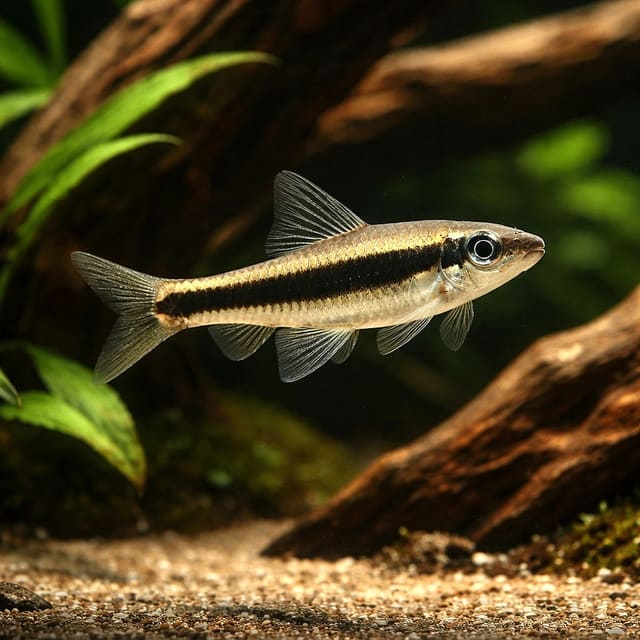
Kuhli Loach (Acanthophthalmus kuhli)
24–27°C · pH 6.5–6.5
£2.99
The Sucker-belly loach (Pseudogastromyzon myersi) is a Gastromyzontidae hillstream fish from Guangdong Province, China, also reported from Hong Kong, that reaches 6 cm. It suits a mature, highly oxygenated flowing aquarium with at least a 75 × 30 cm base; use the Seriously Fish–OATA overlap of 22–23.9°C, pH 6.5–7.5 and 4–12 dGH, while OATA advises at least five loaches. Sold individually as one live fish.
Adult size is the maximum length this species reaches at full maturity (scientific sources). The livestock you receive will be younger and smaller. Product-photo provenance and any image-specific limitations are stated on the listing.
Pseudogastromyzon myersi
Shoaling fish: kept in a group they feel safer, stay calmer and show their best colour.
The Sucker-belly loach (Pseudogastromyzon myersi) is a Gastromyzontidae hillstream fish from Guangdong Province, China, also reported from Hong Kong, that reaches 6 cm. It suits a mature, highly oxygenated flowing aquarium with at least a 75 × 30 cm base; use the Seriously Fish–OATA overlap of 22–23.9°C, pH 6.5–7.5 and 4–12 dGH, while OATA advises at least five loaches. Sold individually as one live fish.
Adult size is the maximum length this species reaches at full maturity (scientific sources). The livestock you receive will be younger and smaller. Product-photo provenance and any image-specific limitations are stated on the listing.
Maintain these water conditions for optimal health and vibrant colors
The Sucker-belly loach is Pseudogastromyzon myersi, a hillstream fish in the family Gastromyzontidae from Guangdong Province, China, also reported from Hong Kong. FishBase records a maximum length of 6 cm total length and describes adults living in rapid-flowing streams, where they feed on periphytic algae and detritus from rock surfaces. It suits a mature aquarium that can provide clean, highly oxygenated moving water, dependable biological filtration and solid surfaces carrying established biofilm.
Seriously Fish also uses 60 mm standard length as its aquarium-planning length. Although compact, this fish has specialised environmental and feeding needs that matter more than body length alone.
This is not a fish to choose solely as an algae-control tool. Its natural diet includes a complex layer of algae, microorganisms and detritus, while aquarium feeding also requires suitable live or frozen foods. Choose it because the aquarium can support its complete care pattern.
Seriously Fish recommends a minimum base of 75 × 30 cm or an equivalent footprint, with a volume of about 68 litres. Treat both dimensions as planning requirements: a tall aquarium with the same volume but a smaller floor does not create the same area for rocks, grazing and movement.
For general aquarium care, its species profile recommends 18.9–23.9°C. OATA’s broader loach guidance gives 22–27°C; the overlapping routine band is therefore 22–23.9°C. Use pH 6.5–7.5 and general hardness 4–12 dGH, again taking the overlap between the species range and the narrower applicable part of OATA’s guidance.
| Planning point | Working value |
|---|---|
| Recorded maximum | 6 cm total length |
| Minimum base | 75 × 30 cm or equivalent |
| Approximate volume | 68 litres |
| Routine temperature | 22–23.9°C |
| pH | 6.5–7.5 |
| General hardness | 4–12 dGH |
| Suits | Not suited to |
|---|---|
| A mature aquarium with clean, highly oxygenated flowing water | An unfiltered or biologically immature aquarium |
| A base of at least 75 × 30 cm or equivalent | A tall aquarium whose smaller base does not provide the required footprint |
| Water-worn rocks carrying algae and associated microorganisms | A setup without dependable biofilm and supplementary live or frozen food |
| Carefully screened companions sharing its water and flow needs | Goldfish or combinations that exhaust its grazing and feeding resources |
Temperature alone is not enough. The species profile says warmer conditions may be tolerated only when dissolved oxygen remains high. In a warm aquarium, check circulation, oxygenation, breathing and water quality together.
Use our water matcher to compare measured aquarium values with these ranges. Make the comparison before choosing the fish, because changing an established aquarium to suit one new inhabitant can unsettle the animals already living there.
One purchase supplies one Sucker-belly loach. Use 6 cm when planning long-term space, décor and feeding access.
Sex is guaranteed only when the selected option explicitly states male or female. This Sucker-belly loach listing has no sex-guaranteed option.
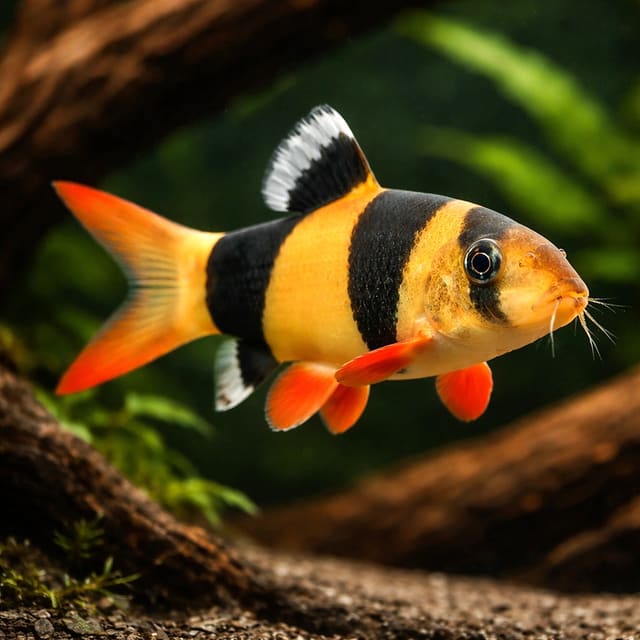
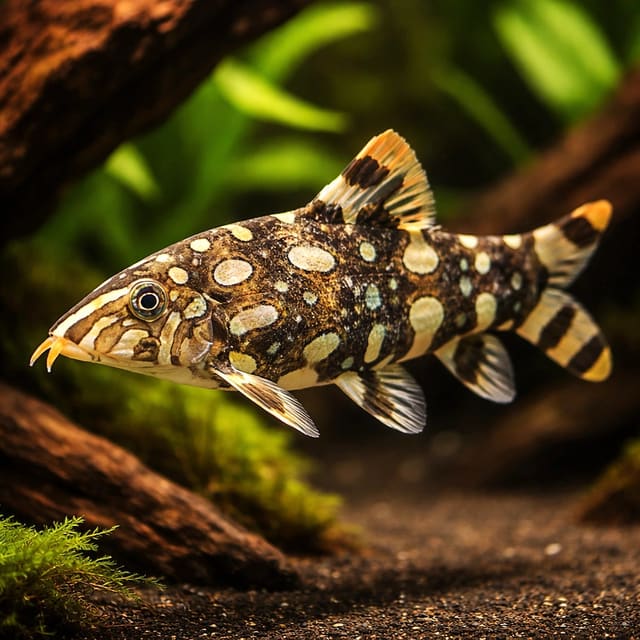
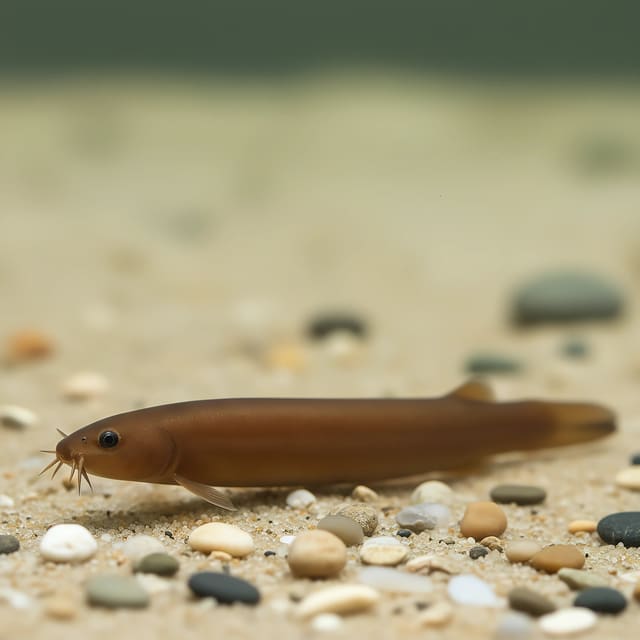
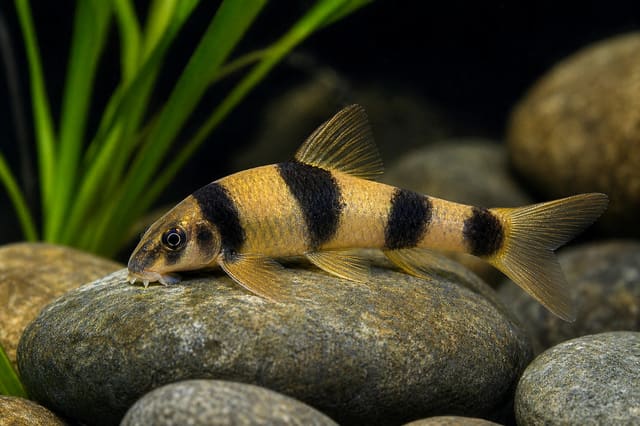
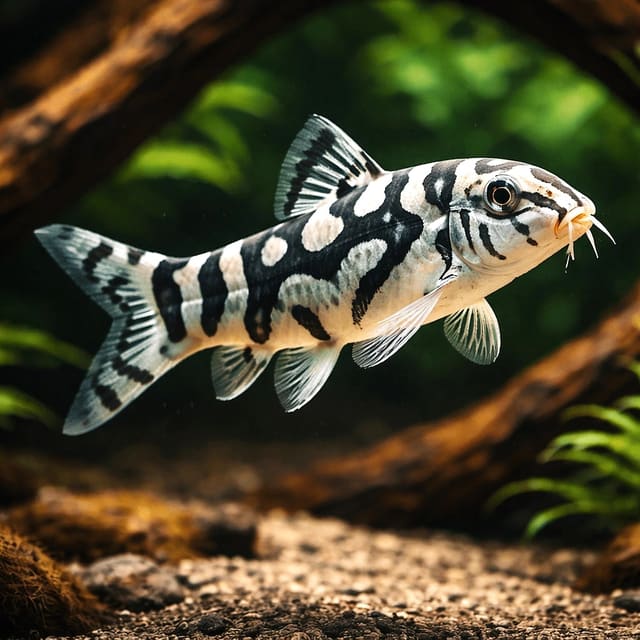
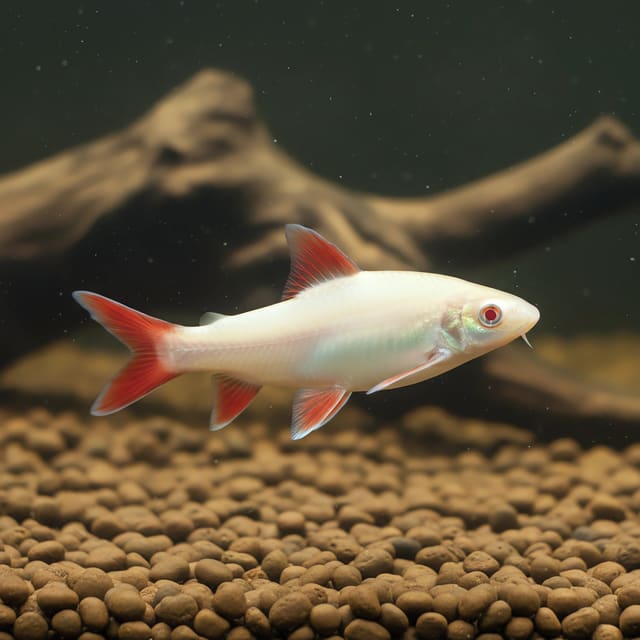
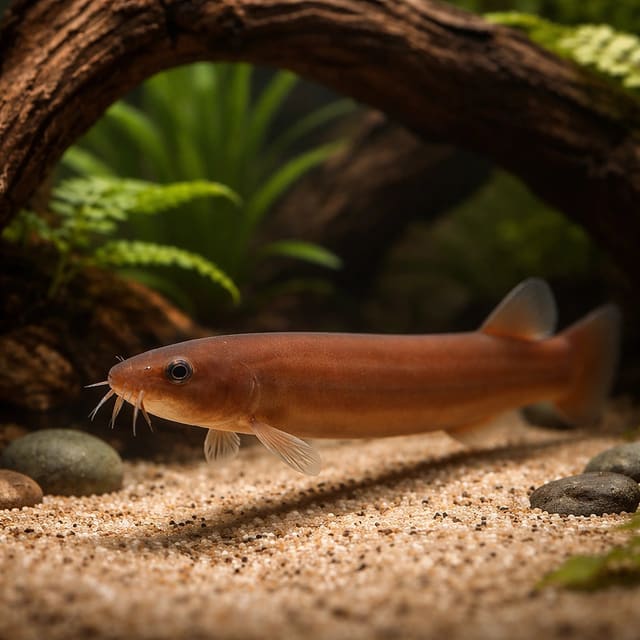
Some gallery images have been digitally enhanced to improve image quality. They show the listed type of animal rather than guaranteeing the exact markings of the individual supplied, so natural colour and pattern can vary.
If this environmental pattern suits your aquarium, you can also browse the loaches and oddballs collection. Compare each animal on its own adult size, water range and behaviour rather than assuming that all loaches share the same needs.
Clean, well-oxygenated water is the central setup requirement. Seriously Fish recommends an oversized filter as a minimum and says turnover should ideally exceed ten times the aquarium volume per hour, with supplementary powerheads and airstones used to produce the desired circulation and oxygenation. Torrential conditions are unnecessary, but weak circulation does not match the fish’s stream-adapted biology.
For an aquarium of about 68 litres, the species profile suggests a filter rated at roughly 270–340 litres per hour and a separate powerhead rated at 270–475 litres per hour. These figures help shortlist equipment; the working result still needs to be clean water, high oxygen and circulation reaching the rock surfaces.
| Equipment decision | Purpose |
|---|---|
| Biological filter | Processes fish waste and keeps water clean |
| Powerhead | Adds the stronger movement associated with this fish’s habitat |
| Airstone | May supplement oxygenation and surface disturbance |
| Open filter sponge | May develop an extra grazing surface |
A powerhead does not replace the biological filter. Aim its movement so water circulates through the usable footprint rather than leaving the main rockwork isolated from flow. Observe where debris settles and whether the fish can reach multiple feeding surfaces without every route leading through one concentrated jet.
Reassess circulation after adding rocks, wood or plants because décor changes the path water takes. Check the filter and powerhead for blockages during routine maintenance. A falling flow rate matters here because it can reduce both waste removal and oxygen delivery to the places where the fish spends its time.
Choose equipment around the completed aquarium, not the empty glass box. The 75 × 30 cm minimum base must still contain useful grazing surfaces and flowing routes after the filter, powerhead and décor are installed.
A well-established biological filter protects the fish from ammonia and nitrite. The RSPCA explains that filter bacteria convert toxic ammonia into nitrite and then nitrate. Strong water movement cannot substitute for this biological process, so both filtration and circulation must be working properly.
Before introduction, test ammonia and nitrite and require both to read zero milligrams per litre. OATA also advises keeping nitrate to no more than 20 milligrams per litre above the normal tap-water level. Compare the aquarium result with conditioned tap water so that the nitrate instruction has a meaningful baseline.
Our first aquarium guide explains how to prepare and mature a setup before livestock arrives. Use it alongside the more specialised flow, oxygen and biofilm requirements on this page.
If ammonia or nitrite rises after adding livestock, treat the reading as an immediate husbandry warning. Pause further additions, check filter operation and blockages, reduce the causes of excess waste, and follow the water-change routine. Continue testing until both readings return to zero.
Do not judge maturity by clear-looking water. Ammonia and nitrite are measured through testing, while adequate circulation is judged through equipment performance and observation. A dependable setup meets both checks at the same time.
Build the aquarium around water-worn rocks and pebbles of different sizes over gravel, sand or a mixture of both. These solid surfaces provide the places where algae and associated microorganisms can develop. Arrange enough usable rock area that grazing does not depend on one small patch.
Aged driftwood is suitable. Seriously Fish advises avoiding new wood that leaches tannins because discoloured water reduces the effectiveness of the strong artificial lighting used to promote algae and microorganism growth. This is a functional lighting decision: the aim is productive grazing surfaces rather than brightness for its own sake.
Prepare these surfaces before the fish arrives. A newly scrubbed rock may look attractive, but it does not perform the same feeding role as a mature surface carrying natural growth. Avoid cleaning every grazing surface at once; maintain enough established material for continuous access while keeping the water clean.
If the main aquarium cannot grow enough algae, or other herbivorous fish consume it rapidly, maintain a separate container or small aquarium in which algae can grow on rocks. Rotate mature rocks into the main aquarium and move heavily grazed ones back to recover. This gives the fish renewed surfaces without relying on long filamentous algae, which the species does not eat in large quantities.
Keep flow paths open around the completed rockwork. Décor should support grazing without defeating the circulation and oxygenation for which the aquarium was planned.
In nature, this fish takes periphytic algae and detritus from rock surfaces. Its aquarium diet is more specialised than a simple label such as “algae eater” suggests. Seriously Fish describes Pseudogastromyzon as chiefly grazing filamentous cyanobacteria and stalked diatoms, while also consuming some microinvertebrates. Long filamentous or firmly adherent algae are not eaten in large quantities.
Maintain rocks and other hard surfaces carrying algae and aufwuchs. Supplement that grazing with regular meals of live or frozen Daphnia, Artemia and bloodworm, which the species profile treats as essential for good health. Some sinking dried foods may be accepted, but acceptance does not make them a replacement for mature grazing surfaces and the live or frozen component.
OATA’s loach routine uses one feed per day and limits the portion to what is eaten within a few minutes. Apply that schedule while recognising that this fish also grazes established surfaces between offered meals. The daily portion is therefore judged by active feeding, leftover food and body condition rather than by filling the aquarium with excess food.
Competition changes the calculation. If another grazer strips surfaces quickly, increase the number of mature rocks available or rotate algae-grown rocks from a separate nursery. If faster tank mates take all live or frozen food, change the stocking plan rather than repeatedly adding larger portions that pollute the water.
A fish that loses interest in food or changes body condition needs a water-quality check as well as a diet review. Feeding and filtration are linked because uneaten food raises the waste load in the same oxygen-rich water this species depends upon.
Test the aquarium at least weekly. Keep ammonia and nitrite at zero milligrams per litre, nitrate no more than 20 milligrams per litre above the normal tap-water level, temperature at 22–23.9°C, pH at 6.5–7.5 and general hardness at 4–12 dGH. Our water chemistry guide explains what these measurements mean and why trends matter.
OATA strongly recommends a 25% partial water change at least once a week. Use a siphon to remove accumulated solid waste from the substrate, particularly where the rock layout creates settling areas. Treat replacement tap water with a conditioner that removes chlorine or chloramine before adding it to the aquarium.
Record the test results rather than relying on a single memory of what the aquarium “usually” does. A sequence of readings shows whether nitrate is gradually rising, pH is shifting or maintenance is keeping pace with feeding and animal numbers.
Match the response to the result. Detectable ammonia or nitrite calls for immediate attention to waste, filtration and stocking. Reduced circulation calls for an equipment and blockage check. A temperature reading near the upper limit calls for close attention to dissolved oxygen and breathing because warmer conditions carry the explicit requirement that oxygen remains high.
Keep maintenance consistent rather than repeatedly stripping the aquarium back. The goal is clean water and dependable biological filtration alongside mature grazing surfaces, not a sterile arrangement with every trace of useful growth removed.
Prepare the aquarium before the parcel arrives. Test ammonia and nitrite at zero, confirm the working temperature and make sure the filter, powerhead and aeration are operating normally. OATA advises checking water quality before introducing fish, while the species setup requires clean, highly oxygenated flowing water.
Someone must be present to receive the parcel because live fish cannot be left unattended. Follow our delivery and Live Arrival Guarantee policy throughout the arrival process.
Film every delivery continuously from the sealed parcel through opening and the fish being shown inside the sealed bag. Keep the video and order number for any Live Arrival Guarantee claim.
Do not combine the arrival with several other livestock additions. OATA advises increasing fish numbers slowly because the beneficial bacteria in the mature filter must respond when waste and feeding increase. A measured addition also makes changes in behaviour, breathing or water quality easier to interpret.
During the first day, compare the fish’s behaviour with the strong-flow layout. It should be able to reach rock surfaces and move through the aquarium without every useful route being dominated by another fish. During the first week, repeat the water tests and check that offered food reaches it without creating leftovers.
If ammonia or nitrite becomes detectable after introduction, respond to the water result immediately rather than assuming the behaviour is only an acclimatisation response.
Learn the fish’s normal pattern after introduction and use changes from that baseline as the warning. OATA highlights altered swimming, darker or paler colour, increased hiding or aggression, faster or slower gill movement, damaged fins, white spots, fluffy growths, changing body condition and reduced feeding interest.
For a bottom-associated grazer, one posture should not be judged in isolation. Compare location with breathing, colour, feeding, water movement and recent test results. A fish remaining in one place while breathing changes is a different decision from a fish actively grazing the same rock.
Warmer water needs particularly careful attention to oxygen. Seriously Fish says the species may withstand warmer conditions when dissolved oxygen is maintained, so rapid breathing alongside heat or reduced flow calls for an immediate equipment and water-quality check.
Loach guidance notes that some members of the wider group may be intolerant of certain medications. Do not turn a visual symptom into a guessed treatment. Test the water first and contact us for guidance about a health change before choosing a medicine.
Keep a short record of readings, maintenance, feeding and observed changes. This connects an altered behaviour with events such as a blocked filter, increased feeding or a recent livestock addition and supports a more focused response.
OATA advises keeping loaches in groups of at least five, with more being better for social species. Use that as the starting point for number planning, then apply this fish’s own space and behaviour requirements. Pseudogastromyzon myersi can react belligerently to similarly shaped fishes, especially other balitorids, even though it is not generally described as particularly aggressive.
The minimum 75 × 30 cm base and approximately 68-litre volume establish a baseline aquarium for the species; they do not automatically settle the capacity for every proposed group. Each additional fish increases the need for usable grazing area, feeding access, filtration and space between similarly shaped individuals.
One purchase supplies one animal, so choose the order quantity deliberately if building towards a group. Add livestock slowly rather than creating a sudden jump in waste and feeding.
If the aquarium is close to the minimum footprint, already contains competing grazers or includes other hillstream-shaped fish, contact us with the tank dimensions, measured water values, resident species and proposed numbers for a stocking and compatibility assessment.
Group planning does not remove the need for individual observation. A numerical target cannot show whether one fish is repeatedly displaced from food or whether the mature grazing area is being depleted faster than it recovers.
Compatibility begins with the environment. Every resident must suit 22–23.9°C, pH 6.5–7.5, hardness of 4–12 dGH, strong circulation and high oxygen. A fish that matches temperament but needs warmer, slower water is not a sound match.
Seriously Fish describes the Sucker-belly loach as not particularly aggressive, while warning that it tends to react belligerently to similarly shaped fish, especially other balitorids. It also describes this species as a poor companion for goldfish, so avoid that pairing.
| Screen | Decision |
|---|---|
| Water values | Require an overlapping temperature, pH and hardness range |
| Oxygen and flow | Choose fish comfortable in clean, highly oxygenated moving water |
| Body shape | Use caution with similar hillstream-shaped fishes |
| Feeding | Reject combinations that leave this grazer without biofilm or offered food |
| Temperament | Prefer confident fish that will not be unsettled by active loaches |
Food competition deserves the same weight as overt aggression. Numerous herbivorous fishes can consume natural growth rapidly, while faster feeders may take the live or frozen foods before this fish reaches them. A larger portion is not an automatic solution because uneaten food increases the waste load. Increase mature grazing area, rotate algae-covered rocks or revise the combination.
After adding a tank mate, watch whether the loach continues to use several surfaces, reaches food and maintains body condition. Occasional harmless squabbles can occur among some hillstream loaches, but repeated exclusion, damage or declining condition means the arrangement needs intervention.
Judge each proposed tank mate by the aquarium dimensions, measured water values, flow pattern, established residents and feeding access.
FishBase records a maximum of 6 cm total length. Use 6 cm when planning its long-term space, décor and feeding access.
Seriously Fish recommends a base of at least 75 × 30 cm or equivalent and gives an approximate volume of 68 litres. Provide an oversized filter, strong circulation, high oxygen and mature water-worn rocks.
OATA’s loach guidance advises keeping groups of at least five, with more being better. Plan the final number around footprint, grazing area, filtration, feeding access and this species’ reactions to similarly shaped fish.
Choose it for a first aquarium only if the biological filter is mature and you can maintain strong circulation, high oxygen, stable water and established grazing surfaces. Test ammonia and nitrite at zero before introduction.
Maintain mature rocks carrying algae and aufwuchs, then provide regular live or frozen Daphnia, Artemia or bloodworm. Some sinking dried foods may be accepted, and OATA’s loach routine limits the daily offered portion to what is eaten within a few minutes.
Use the Seriously Fish–OATA overlap of 22–23.9°C, pH 6.5–7.5 and general hardness of 4–12 dGH. Keep ammonia and nitrite at zero milligrams per litre and maintain high dissolved oxygen.
It is not particularly aggressive, but it may react belligerently to similarly shaped fishes, especially other balitorids. Watch for repeated challenges, exclusion from feeding surfaces, damage or declining body condition.
Potential companions named by Seriously Fish include Devario, Rasbora, Garra, Rhinogobius, Sicyopterus, Stiphodon, Glyptothorax, Akysis and Hara species, but each choice must share its water, flow and oxygen needs without exhausting its food. Avoid goldfish and use caution with similarly shaped fishes.
Start filming the sealed parcel before opening it, then record continuously as it is opened and the fish is shown inside the sealed bag. Have someone present to receive it, float the bag for 20–30 minutes, and release the fish without pouring the bag water into the aquarium.
No reviews for this item yet. Bought one? Honest reviews only, good or bad.
What customers say about ordering from us
Easy website plenty of info on fish your buying great to pick a time slot
TRACEY DURRANT · 7 Oct 2026
Got some lovely fish thank you
Kevin Mackie · 7 Oct 2026
Reviews of our shop, collected by Judge.me, an independent third-party review collector. Newest first.