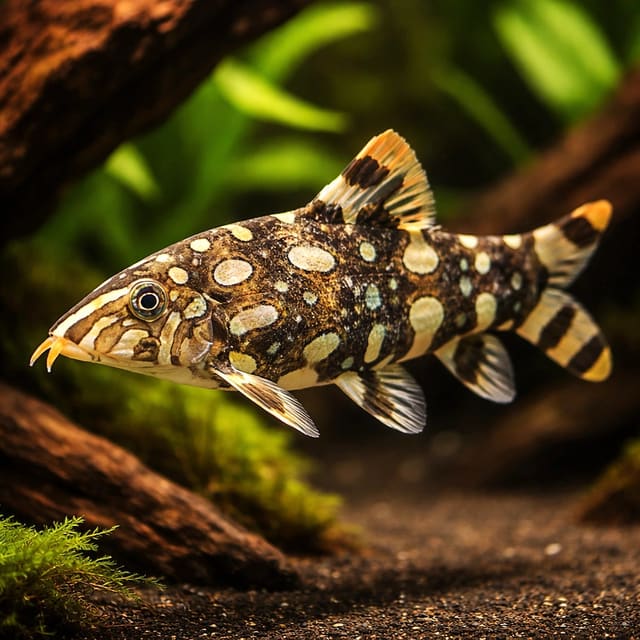
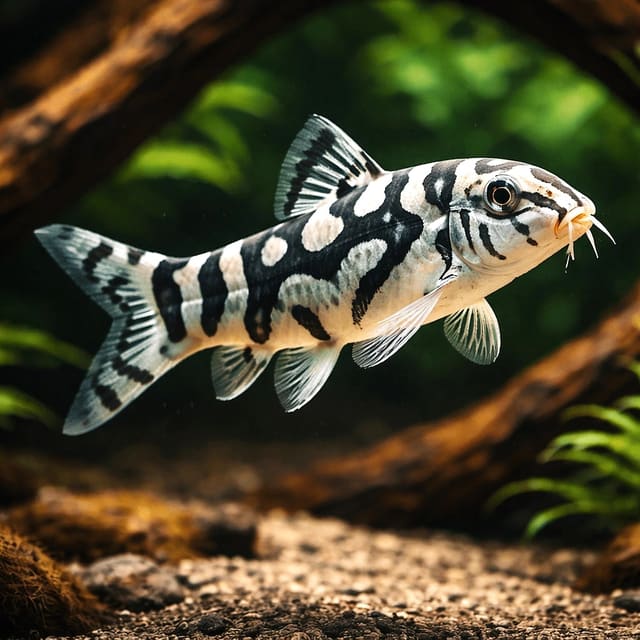
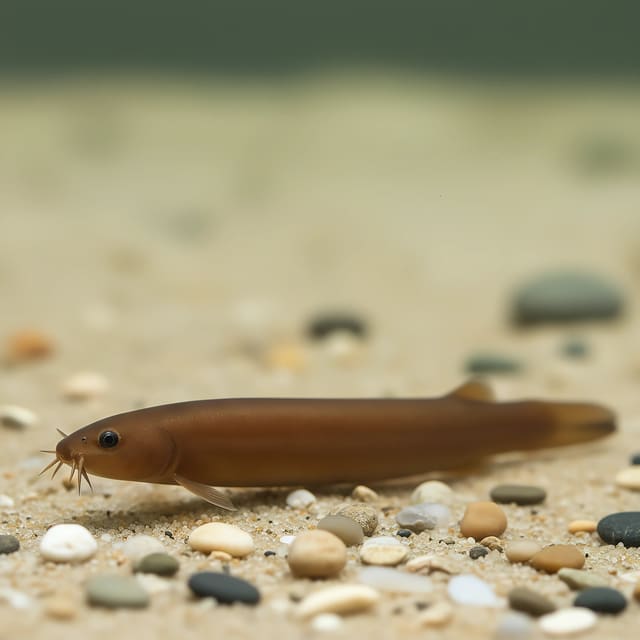
Kuhli Loach (Acanthophthalmus kuhli)
24–27°C · pH 6.5–6.5
£2.99
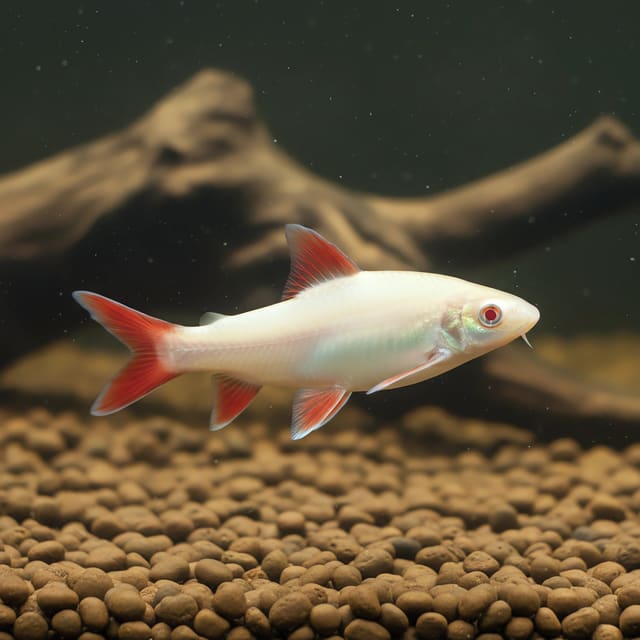
The Chinese algae eater black (Gyrinocheilus aymonieri) is a freshwater algae eater from the Mekong, Chao Phraya and Meklong basins and northern Malay Peninsula that reaches 28 cm SL. It suits a spacious, flow-rich aquarium; keep the FishBase and Seriously Fish overlap of 25–26°C and pH 6.0–8.0, and use groups of at least five if grouping. Sold individually in 4 cm, 5 cm and 6–7 cm dispatch sizes.
Adult size is the maximum length this species reaches at full maturity (scientific sources). The livestock you receive will be younger and smaller — pick a size above for the actual shipping size. Product-photo provenance and any image-specific limitations are stated on the listing.
Gyrinocheilus aymonieri
Shoaling fish: kept in a group they feel safer, stay calmer and show their best colour.
The Chinese algae eater black (Gyrinocheilus aymonieri) is a freshwater algae eater from the Mekong, Chao Phraya and Meklong basins and northern Malay Peninsula that reaches 28 cm SL. It suits a spacious, flow-rich aquarium; keep the FishBase and Seriously Fish overlap of 25–26°C and pH 6.0–8.0, and use groups of at least five if grouping. Sold individually in 4 cm, 5 cm and 6–7 cm dispatch sizes.
Adult size is the maximum length this species reaches at full maturity (scientific sources). The livestock you receive will be younger and smaller — pick a size above for the actual shipping size. Product-photo provenance and any image-specific limitations are stated on the listing.
Maintain these water conditions for optimal health and vibrant colors
The Chinese algae eater black (Gyrinocheilus aymonieri) is a freshwater member of the Gyrinocheilidae algae-eater family and an ornamental black-gold form of the species. FishBase records its range across the Mekong, Chao Phraya and Meklong basins and the northern Malay Peninsula. It reaches 28 cm standard length, making it a substantial adult fish rather than a small cleaner for a general community aquarium.
This fish suits a keeper who can provide a long aquarium, strong biological filtration, high dissolved oxygen, moderate water movement and a carefully screened stocking plan. Adults are territorial, and their compatibility changes as they grow. Choose it for its behaviour, body form and grazing activity only after planning around the adult fish.
Keep routine water at 25–26°C, pH 6.0–8.0 and 5–19 dGH. Those values are the overlap between FishBase’s recorded environment and the aquarium range in the Seriously Fish species profile.
Confirm the adult footprint, water range and compatibility plan before considering the smaller fish shown by the size labels. A suitable decision means all three requirements work together: the aquarium has enough horizontal room, its established system can hold the routine water values, and every intended companion passes the adult behavioural screen.
If one part does not fit, choose a different stocking plan rather than treating the fish’s initial size or algae-grazing behaviour as a reason to compromise. The adult requirement controls the decision from the beginning.
| Suits | Not suited to |
|---|---|
| An aquarium with a base of at least 150 × 45 cm | A small aquarium planned around the dispatch size |
| High oxygen and moderate water movement | A poorly maintained aquarium with accumulating organic waste |
| A carefully screened, adult-focused stocking plan | A routine mixed community chosen without behavioural screening |
| Robust, active upper-level fish after assessment | Similar-looking algae eaters and other bottom-dwelling fish |
| A complete feeding and maintenance routine | Using an algae-eating fish as a substitute for aquarium maintenance |
Use a base of at least 150 × 45 cm, with a volume of about 304 litres. Seriously Fish describes that footprint as the smallest that should be considered for an adult reaching 28 cm SL. Standard length measures the fish to the base of its tail, so the complete fish occupies more visual and swimming space than the number alone may suggest.
The footprint is the controlling requirement. A tall aquarium with a similar nominal volume but a shorter or narrower base does not meet the stated 150 × 45 cm plan. The fish lives and feeds close to solid surfaces, so horizontal room for rockwork, grazing areas, cover and movement matters.
For a worked check, an aquarium that holds about 304 litres but measures less than 150 cm along its base fails the footprint requirement. Likewise, a 150 cm aquarium narrower than 45 cm fails the stated base plan. Check both dimensions instead of relying on the litre label alone.
Map the footprint before adding décor. Mark space for stable rocks and wood, then preserve open routes between them. If the completed structure turns much of the base into narrow dead ends or inaccessible waste traps, simplify it while retaining cover and grazing surfaces.
The recorded dispatch sizes are starting sizes only. Adult territoriality becomes increasingly important as the fish grows, so choose the final aquarium and compatible livestock before bringing home a smaller specimen. Do not rely on a future upgrade to make an unsuitable present stocking plan work.
Its sucker-like mouth lets it hold onto fixed objects in flowing water. That biology supports a layout with stable rocks, wood and open routes between grazing surfaces rather than a bare, cramped footprint.
One purchase supplies one Chinese algae eater black in the size selected from the live size selector. Choose 4 cm, 5 cm or 6–7 cm according to the displayed labels. The size you select is the size supplied, not the adult size. Every size must still enter an aquarium planned around the 28 cm SL adult and the minimum 150 × 45 cm base.
Sex is guaranteed only when the selected option explicitly states male or female. This Chinese algae eater black listing has no sex-guaranteed option.
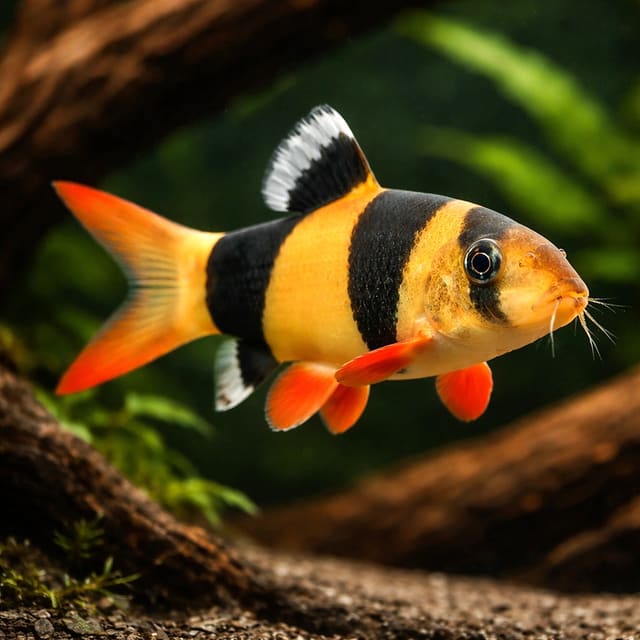
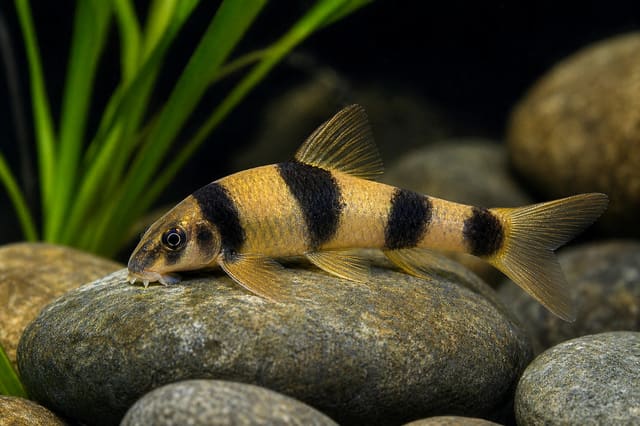
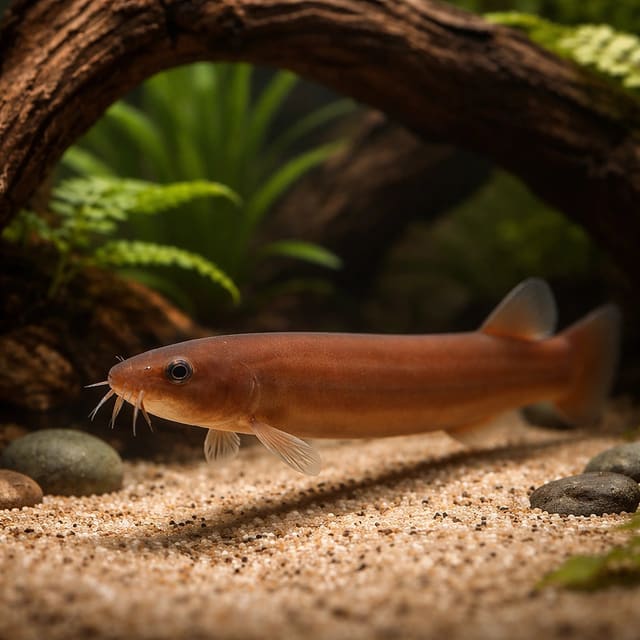
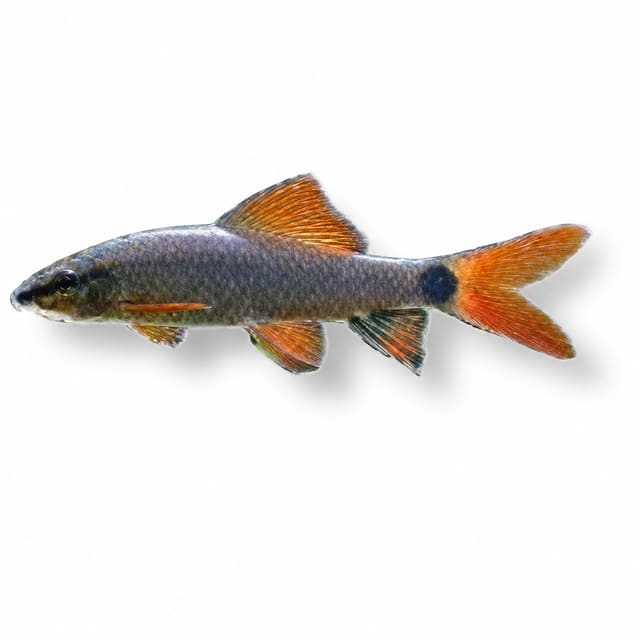
Some gallery images have been digitally enhanced to improve image quality. They show the listed type of animal rather than guaranteeing the exact markings of the individual supplied, so natural colour and pattern can vary.
The black-gold wording identifies the ornamental form sold here; the species remains Gyrinocheilus aymonieri. Although this fish appears in our loaches and oddballs collection, it is an algae eater rather than a true loach.
A 4 cm, 5 cm or 6–7 cm label describes the fish supplied, not a separate adult type or a different long-term care plan. Compare the label only when deciding the starting size; use 28 cm SL, the adult aquarium footprint and adult territoriality for every permanent husbandry decision.
Purchase quantity and social planning are separate decisions. One selected unit supplies one fish, while a group plan requires at least five individuals. An individual plan is also possible, but either route must account for the species becoming more territorial as it grows.
Arrange the aquarium around stable grazing surfaces, cover and open movement. In nature, adults occupy medium to large rivers and enter flooded fields, holding onto fixed objects in flowing water with their sucker-like mouths. A river-style aquarium turns those recorded behaviours into a practical layout.
Keep routes between structures open enough for a 28 cm SL adult. Décor must support the fish’s movement and grazing rather than reducing the stated base into a collection of narrow pockets. Cover remains important because smaller specimens tend to hide, while open routes become increasingly valuable as the fish grows.
Look across the lower part of the aquarium rather than only from above. The route between cover, grazing surfaces and open water should remain clear at adult scale. Secure every large rock and branch so the structure stays stable where the fish grips and browses.
Use attached plants where they preserve the footprint better than pots or dense planting. If a decorative feature blocks cleaning access or creates a persistent debris pocket, reposition it while keeping enough cover for a smaller fish to retreat.
Watch where organic debris collects around rocks and wood. This species is intolerant of accumulating organic waste, so the layout must remain accessible for routine cleaning. A decorative river bed only works when the filter and maintenance routine can keep it clean.
Once settled, the fish may move into midwater at feeding time as well as browsing biofilm on the rockwork. Preserve both grazing surfaces and clear movement rather than filling every part of the aquarium with décor.
Keep the aquarium at 25–26°C, pH 6.0–8.0 and 5–19 dGH. This is the overlap of FishBase’s recorded environment and Seriously Fish’s aquarium range, keeping every routine value inside both species references.
Temperature is the narrowest decision. Seriously Fish recommends 22–26°C for general aquarium care, while FishBase records 25–28°C in the natural environment; 25–26°C is shared by both. The full pH range of 6.0–8.0 is common to both. For hardness, 5–19 dGH overlaps FishBase’s 5–19 dH and Seriously Fish’s 2–20 dGH.
OATA’s tropical algae-eater guidance recommends weekly testing as broad group guidance. Use our water chemistry guide to understand the measurements, then compare your results with the stated range using the aquarium water matcher.
Write down each weekly result so movement towards a boundary is visible. For example, a temperature reading of 26°C is within the plan, but a continuing upward trend needs attention before it passes that limit. Apply the same approach to pH and hardness instead of waiting for a value to sit outside the range.
Test after any meaningful change to the aquarium and compare the complete set with the previous result. A stable pH does not cancel a temperature or hardness change, so assess every number on its own and then consider how the aquarium is behaving as a system.
Record all three values together. A suitable temperature does not compensate for pH or hardness outside the plan, and a single test does not replace weekly monitoring. Stable filtration and regular testing let you identify a change before it combines with the species’ intolerance of organic waste.
Provide a well-established biological filter, high dissolved oxygen and moderate water movement. The RSPCA explains that aquarium filters are vital because fish release toxic ammonia; beneficial bacteria in a working biological filter convert ammonia to nitrite and then to the safer nitrate.
Seriously Fish recommends turnover of four to five times the aquarium volume each hour. At approximately 304 litres, that corresponds to about 1,216–1,520 litres per hour. Its worked example uses two filters rated at 610–760 litres per hour each. Use that as the filtration plan for the stated aquarium rather than matching equipment to the fish’s small dispatch size.
Set up the complete aquarium and filter before the fish arrives. Our first tropical aquarium guide explains how to prepare and mature the system before livestock is introduced. A filter is essential whatever the aquarium size.
For the stated 304-litre plan, four times the volume is 1,216 litres per hour and five times is 1,520 litres per hour. If two filters share that work equally, the cited 610–760 litres-per-hour rating for each unit produces approximately the intended combined range.
Judge the result inside the furnished aquarium, where rocks, wood and plants affect movement. Moderate current should reach the working areas without leaving repeated waste deposits behind the décor. Persistent debris identifies a layout or circulation problem even when the equipment ratings look suitable on paper.
Test weekly alongside visual checks of the substrate and spaces behind décor. If debris repeatedly gathers in one area, make that area easier to clean and review how water moves around the structure. The objective is not maximum current at every point; it is moderate movement, strong oxygenation and control of the organic waste this species tolerates poorly.
Keep the filter running and maintained as part of the aquarium’s core life-support system. Algae on grazing surfaces may be useful, but it must not be confused with the biological filtration needed to process fish waste.
Base the diet on algae, other plant material and quality dried foods, then add small animal foods for variety. FishBase records the wild fish as mostly herbivorous, feeding largely on algae, periphyton and phytoplankton while also taking insect larvae or zooplankton. Seriously Fish similarly describes it as an aufwuchs grazer that eats algae, small crustaceans and insect larvae.
| Food role | Suitable choices |
|---|---|
| Regular plant and grazing component | Algae, fresh plant material, shelled peas, cucumber, blanched courgette and spinach |
| Quality dried component | Good-quality flakes or granules |
| Small animal-food component | Bloodworm, Daphnia and Artemia offered live or frozen |
| Additional variety | Chopped fruit or gel foods made from a mixture of natural ingredients |
Offer controlled portions and allow algal foods additional grazing time. Remove food that is not being used because excess material breaks down and releases toxic waste.
Do not rely on algae already growing in the aquarium as the complete diet. OATA advises that algae-grazing fish still need prepared food and fresh vegetables. This remains important even when bright lighting produces visible growth on rocks and wood.
Place plant foods where the fish can browse them without trapping leftovers behind rocks or wood. Observe whether dried food, vegetables and the smaller animal-food component are being taken, then reduce the offered amount if material repeatedly remains and begins to foul the aquarium.
Rotate the menu across the listed food roles. A practical sequence can alternate suitable vegetables and quality dried foods while including bloodworm, Daphnia or Artemia as the animal-food component. The aim is variety within the recorded diet, not an abrupt change from grazing foods to a single prepared product.
Wash vegetables thoroughly before use or choose organic produce, because residual pesticides may harm fish or invertebrates. Rotate suitable foods rather than making one vegetable or one dried product the whole ration.
The diet should not change from plant food to pellets simply because the fish grows. Both plant matter and small animal foods belong in the recorded species diet, while the portion must remain controlled to protect water quality.
Choose this fish because the adult aquarium, feeding plan and temperament suit your household, not as a quick solution to an algae problem. OATA warns that some algae-eating fish grow too large for many aquariums and that they are not substitutes for regular maintenance or appropriate stocking.
Persistent algae can point to an underlying water-chemistry or maintenance issue. Use the weekly tests, filtration plan and waste checks to investigate the aquarium itself rather than adding livestock to compensate. A 28 cm territorial fish creates its own space, food and waste requirements.
Continue supplementary feeding even when the aquarium contains visible algae. FishBase records a varied natural diet, and Seriously Fish recommends plant material, dried foods and small live or frozen foods. Grazing activity is therefore one part of normal feeding behaviour, not proof that the fish is receiving a complete ration.
If algae keeps returning, compare weekly water results, organic-waste accumulation and stocking with the maintenance routine. Adding this fish would also add an adult space requirement, territorial behaviour and further biological load, so it cannot replace that diagnosis.
Where the aquarium already fits the fish, encourage grazing on selected stable surfaces while keeping other areas accessible for cleaning. This approach preserves useful browsing opportunities without allowing algae or trapped debris to define the maintenance standard.
Plan lighting around both the plants and the intended grazing surfaces. More algae does not reduce the need to remove organic debris, test the water or maintain the filter. The successful aquarium combines useful biofilm with clean, oxygen-rich water.
This distinction also prevents impulse stocking. Before selecting the fish, confirm the adult footprint, routine water range and compatibility plan independently of the amount of algae in the aquarium.
Have the established aquarium, filtration and stocking plan ready before the parcel arrives. The aquarium should already be operating within the routine care range, with the intended cover and flow in place. Do not use arrival day to redesign the aquarium around the dispatch size.
These steps follow the current Tropical Fish Co delivery and Live Arrival Guarantee policy. The fish is hand-bagged in pure oxygen and placed in an insulated poly box, with a heat pack when weather conditions call for one. A licensed live-animal courier carries the parcel.
Film every delivery from the sealed parcel onwards. The continuous sequence preserves the condition of the parcel and sealed bag before anything is disturbed. If anything has gone wrong, contact us the same day with the order number and the short unboxing video.
After release, let the prepared aquarium provide the cover, flow and water conditions planned in advance. Smaller specimens may hide, so judge the setup by whether suitable cover is accessible rather than expecting immediate open-water activity. Keep the introduction focused on the policy steps above and the established aquarium conditions.
An individual setup is possible, while a group should contain at least five fish. FishBase’s aquarium note specifies groups of five or more, and Seriously Fish explains that the species need not always be kept alone. Do not turn that guidance into a pair or a small group of two to four.
A group can be one way to reduce aggression between members of the species, but it also places several territorial adults in the same aquarium. Every fish may reach 28 cm SL, so the plan has to accommodate five full-sized animals rather than five dispatch-sized juveniles.
The 150 × 45 cm base and approximately 304-litre volume are the smallest aquarium dimensions Seriously Fish recommends for the species. Treat adult size, territorial behaviour and group number as simultaneous requirements when judging a larger group plan.
Multiply the decision, not the minimum aquarium figure: five fish means five adults that can each reach 28 cm SL, produce waste and use cover and grazing space. Assess the complete group’s footprint, filtration load and territorial interactions rather than assuming the individual minimum automatically fits five.
A plan for two, three or four fish does not meet the stated group threshold. If the aquarium cannot support at least five adult fish under the full behavioural and filtration plan, use the individual route instead of creating an undersized group.
Do not use juvenile hiding behaviour as a forecast of adult social behaviour. Smaller fish tend to hide, while territoriality increases as they grow. Review the stocking plan as the fish develops and treat persistent aggression as a compatibility problem rather than a temporary version of algae-grazing behaviour.
Purchase quantity does not alter the social rule: each selected unit is one fish. A five-fish group therefore means choosing five individual fish while keeping the group threshold and adult requirements intact.
Avoid similar-looking fishes such as Crossocheilus, Epalzeorhynchos and Garra species. Adults can show particularly high aggression towards these fishes as their territorial behaviour develops.
Avoid other bottom-dwelling fishes, including cichlids and most catfishes. Seriously Fish specifically places these animals in the avoid group because they may be picked on. Keeping them after an informal trial does not remove that instruction.
Use caution with larger tankmates because the Chinese algae eater may attach to their flanks to feed on body mucus. Large body size alone is therefore not a compatibility safeguard.
For the upper levels, consider robust, active cyprinids or characids after assessing the complete aquarium. These are the kinds Seriously Fish identifies for consideration, but they are not universal tankmates. The honest screening rule is to combine upper-level use, robust active behaviour, sufficient space and the absence of a similar algae-eater shape.
| Decision | Animals or traits |
|---|---|
| Avoid | Similar-looking Crossocheilus, Epalzeorhynchos and Garra |
| Avoid | Other bottom dwellers, including cichlids and most catfishes |
| Caution | Larger fish whose flanks may be accessible for mucus feeding |
| Consider after screening | Robust, active cyprinids or characids using the upper levels |
This order prevents an attractive candidate from bypassing an unconditional avoid. It also keeps a conditional upper-level possibility from becoming a blanket claim that every cyprinid or characid will work.
For fish and invertebrates outside those named kinds, apply the same zone, shape and behaviour screen without assuming a safe result. Ask us for a stocking assessment with the aquarium’s base dimensions, existing species and intended group number before combining an uncertain mix.
Add the Chinese algae eater as the final fish in the planned aquarium. Seriously Fish recommends this order to reduce the chance of it claiming ownership of the entire space before the other inhabitants are established.
Complete the rocks, wood, plants, cover, filtration and flow before introduction. Rearranging essential structure around a territorial adult changes the same surfaces and routes used for grazing, shelter and movement.
Picking, repeated aggression or flank attachment means the pairing has failed the compatibility screen. Change the stocking arrangement rather than reclassifying an avoid animal as suitable because the aquarium is large.
During the first week, confirm that the new fish can reach cover, grazing surfaces and prepared food without displacing the established inhabitants. Hiding by a smaller specimen can fit the described settling behaviour, but aggression towards a named avoid type or attachment to a larger fish requires action.
Repeat the compatibility assessment as the fish grows. Increasing territoriality is a developmental concern, so an initially quiet introduction does not remove the need to watch zone use, pursuit and access to food at adult scale.
Keep feeding behaviour separate from aggression. Browsing algae on rocks and moving into midwater for prepared food fit the species’ recorded diet. Attaching to another fish for body mucus creates a compatibility concern.
Continue to plan around the adult fish even if a juvenile initially appears shy. The decisive behavioural change is increasing territoriality with growth, which is why the final-addition rule and the avoid list matter from the start.
It reaches 28 cm standard length. FishBase and Seriously Fish both record that adult figure, so plan the aquarium around 28 cm SL rather than the selected dispatch size.
Use an aquarium with a base of at least 150 × 45 cm, about 304 litres; Seriously Fish says this is the smallest that should be considered for it at 28 cm SL.
It can be kept individually; if you choose a group, FishBase’s aquarium note says five or more. Adults are territorial, so the whole plan must accommodate each 28 cm SL fish.
It is not a straightforward first community fish. Seriously Fish describes it as largely unsuitable for a general community because adults become increasingly territorial and need carefully chosen tankmates.
It mainly grazes algae, periphyton and plant matter but also eats small crustaceans, insect larvae and zooplankton. Offer plant material, quality flakes or granules and small live or frozen foods; keep portions controlled, allow algal foods additional grazing time and remove food that is not being used.
Keep it at 25–26°C and pH 6.0–8.0, with hardness of 5–19 dGH. These routine values are the overlap of FishBase’s recorded environment and Seriously Fish’s aquarium range.
Adults are territorial and can show high aggression towards similar-looking fishes, pick on bottom dwellers or attach to larger fish to feed on body mucus. Treat those recorded behaviours as the compatibility risk rather than relying on a fin-nipping label.
Consider carefully screened robust, active cyprinids or characids using the upper levels. Avoid similar-looking Crossocheilus, Epalzeorhynchos and Garra, plus other bottom dwellers including cichlids and most catfishes.
Start filming the sealed parcel before you open it or float the bag. Tropical Fish Co packs the fish in pure oxygen inside an insulated poly box, uses a heat pack when weather calls for one and sends it with a licensed live-animal courier; be present to receive it, keep the continuous unboxing video and float the bag for 20–30 minutes before release.
No reviews for this item yet. Bought one? Honest reviews only, good or bad.
What customers say about ordering from us
Easy website plenty of info on fish your buying great to pick a time slot
TRACEY DURRANT · 7 Oct 2026
Got some lovely fish thank you
Kevin Mackie · 7 Oct 2026
Reviews of our shop, collected by Judge.me, an independent third-party review collector. Newest first.