Advanced
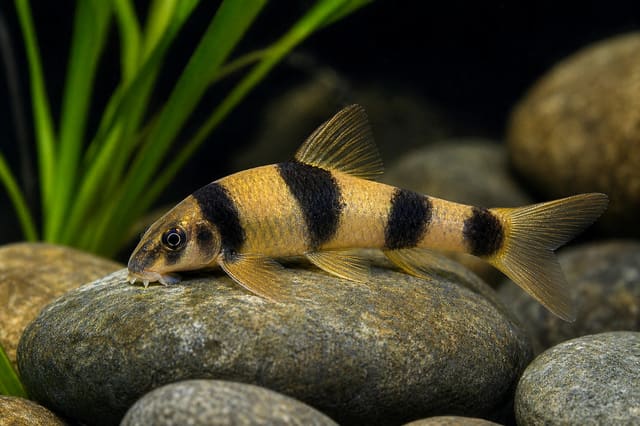
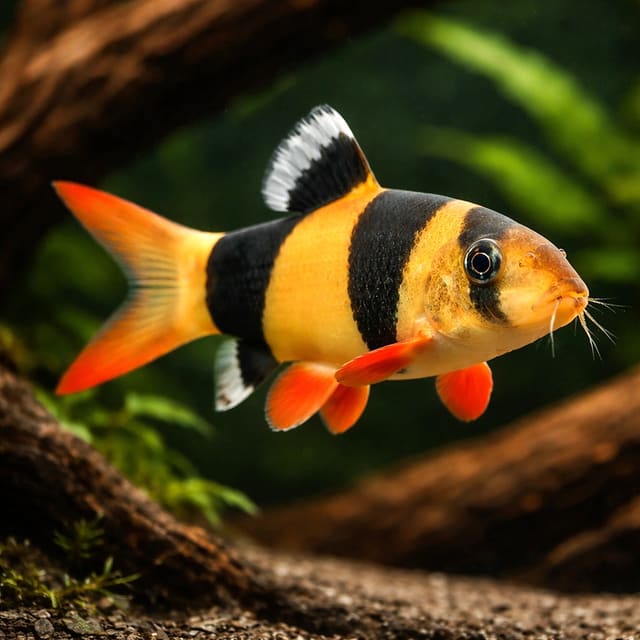
Clown Loach (Chromobotia macracanthus)
24–30°C · pH 5–7 · 648L
From £10.99Some sizes on sale

A patterned, social loach for a mature, spacious aquarium. Moderate care; keep a group and choose suitable tank mates. 22–28°C, pH 6.0–7.5, hardness 2–10 dGH.
Adult size is the maximum length this species reaches at full maturity (scientific sources). The livestock you receive will be younger and smaller — pick a size above for the actual shipping size. Product-photo provenance and any image-specific limitations are stated on the listing.
Botia kubotai
Shoaling fish: kept in a group they feel safer, stay calmer and show their best colour.
A patterned, social loach for a mature, spacious aquarium. Moderate care; keep a group and choose suitable tank mates. 22–28°C, pH 6.0–7.5, hardness 2–10 dGH.
Adult size is the maximum length this species reaches at full maturity (scientific sources). The livestock you receive will be younger and smaller — pick a size above for the actual shipping size. Product-photo provenance and any image-specific limitations are stated on the listing.
Maintain these water conditions for optimal health and vibrant colors
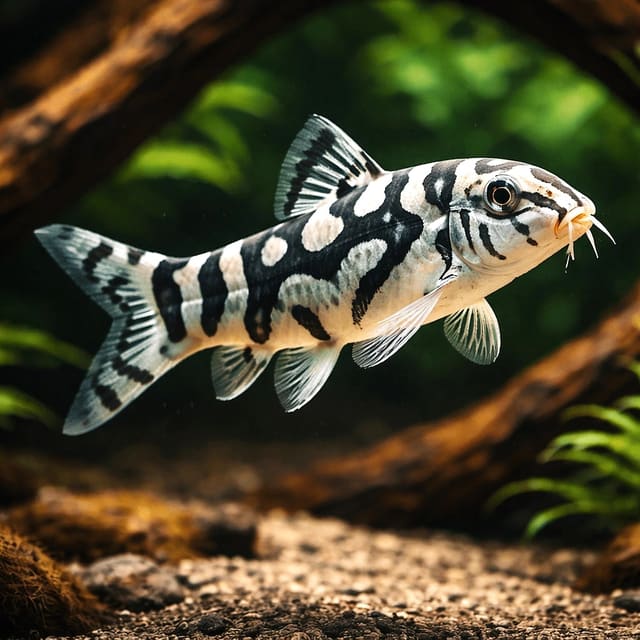
Botia kubotai, commonly known as the polka dot loach or angelicus loach, is a social freshwater loach with distinctive markings. This species comes from the Myanmar–Thailand border region, in clear, well-oxygenated headwaters. The listed size options are 4–5 cm and 6–7 cm; check the selector for current availability. The species reaches approximately 15 cm in standard length, excluding the tail, and needs a spacious aquarium. The bold polka-dot patterning—irregular dark spots against a pale yellow-grey background—creates a striking visual impact, especially when a group moves together across the substrate. Peaceful temperament, moderate care requirements, and fascinating social behaviour make Botia kubotai an excellent choice for aquarists with some loach experience and appropriate tank space.
Botia kubotai displays one of the most distinctive colour patterns among freshwater loaches. The body is covered with irregular black spots of varying sizes against a creamy yellow or pale grey background, creating the characteristic "polka dot" appearance. Some individuals show a reticulated or maze-like pattern rather than discrete spots, and pattern intensity varies between specimens. The body is elongated and laterally compressed, with a slightly arched dorsal profile and a downturned mouth surrounded by four pairs of barbels used for foraging. Fins are semi-transparent with dark spotting or banding. Juveniles display crisper, more contrasting patterns that may become slightly less defined as the fish matures. Colouration intensifies during spawning condition or when the fish is excited, and fades slightly during stress or illness. Overall body shape is sleek and muscular, reflecting the species' active swimming behaviour.
Botia kubotai occurs in the Salween headwaters around the Myanmar–Thailand border. Reported habitats include shaded, relatively slow-flowing stretches of clear, well-oxygenated water, with sand, rocks, submerged wood and leaf litter. In the aquarium, provide shelter and clean, oxygenated water rather than turbulent conditions. See the Seriously Fish species profile for habitat and social-behaviour context.
A minimum 250-litre aquarium with a footprint emphasising length over height provides appropriate space for a group of 6-8 polka dot loaches. Use fine sand or very smooth gravel substrate to protect the delicate barbels, which the loaches use constantly for foraging. Arrange smooth river rocks, rounded pebbles, driftwood, and slate or flat stones to create caves, overhangs, and hiding spots—each loach should have access to at least one secure retreat. Provide water circulation and surface agitation using the filter outlet, ensuring good oxygenation without forcing turbulent conditions. Subdued lighting suits this species best, so incorporate floating plants or position wood to create shaded areas. Robust, well-anchored plants such as Anubias, Java fern, and Vallisneria tolerate the loaches' active substrate foraging. Ensure tight-fitting lids, as loaches occasionally jump when startled. Introduce them to an established aquarium; our nitrogen-cycle guide explains how biological filtration develops.
Expert Tip: Keep polka dot loaches in groups of at least 6 individuals. Solitary specimens become shy, stressed, and display abnormal behaviour, while groups exhibit natural social dynamics and remain more confident.
Maintain temperatures of 22–28°C, pH 6.0–7.5 and hardness of 2–10 dGH. Keep conditions stable and the water clean and well-oxygenated. Ammonia and nitrite must be undetectable, while nitrates should stay below 30 ppm through efficient biological filtration and weekly water changes of 30-40%. Botia kubotai is sensitive to poor water quality and deteriorating conditions, so consistency and cleanliness are essential. Ensure strong water circulation and surface agitation to maintain oxygen saturation, especially at higher temperatures. Our water-chemistry guide explains testing and stable conditions.
Botia kubotai is an omnivore with a preference for meaty foods. Offer a varied diet including high-quality sinking pellets or wafers, frozen and live foods such as bloodworms, brine shrimp, daphnia, mosquito larvae, and tubifex, plus occasional vegetable matter like blanched courgette or cucumber. Feed after lights-out to align with the species' crepuscular and nocturnal activity pattern, though aquarium specimens adapt to daytime feeding. Loaches are enthusiastic feeders but may be outcompeted by faster fish during feeding time, so ensure food reaches the substrate. Occasional chopped earthworm or suitable mollusc foods can add variety; use them sparingly alongside balanced prepared foods. A varied diet supports vibrant colouration, healthy growth, and breeding condition.
Polka dot loaches are primarily crepuscular and nocturnal in the wild but adapt to daytime activity in aquariums, especially when kept in confident groups. They display fascinating social behaviour, including synchronised swimming, resting in piles with overlapping bodies, and playful chasing. The species is peaceful toward other fish but may establish a loose hierarchy within the group, with occasional harmless chasing or posturing. Loaches spend much time foraging across the substrate, probing crevices and turning over small objects in search of food. They occasionally produce audible clicking sounds, particularly during feeding or social interactions. When startled or stressed, individuals may dash rapidly or hide until they feel secure. Overall, the species is lively, curious, and entertaining to observe, especially in well-planted tanks with hiding places and open swimming areas.
Botia kubotai thrives in peaceful community aquariums alongside similarly sized, non-aggressive species. Excellent companions include tetras (Congo, diamond, Buenos Aires), rasboras, danios, rainbowfish, peaceful barbs (odessa, rosy), and other botiid loaches that appreciate similar conditions. Bottom-dwelling companions like Corydoras catfish and small to medium plecos coexist well, provided the aquarium is spacious enough to prevent competition. Avoid housing with aggressive cichlids, fin-nipping species, very small fish that may be intimidated, or highly territorial bottom dwellers. Polka dot loaches may eat aquarium snails, so do not assume ornamental snails are safe or rely on these fish to solve a snail infestation. Slow-moving fish with long trailing fins are also poor companions because fins may be nipped. The species' peaceful nature and active but non-aggressive demeanour make it a superb addition to well-planned community tanks.
Breeding Botia kubotai in home aquariums is uncommon and is not a straightforward project. The species has been produced commercially using hormones, but that does not establish the origin of the fish offered here. Prioritise a stable, mature aquarium, a social group and varied feeding; do not treat temperature or pH fluctuations as a proven spawning recipe.
Choose Botia kubotai only if you can provide a mature, spacious aquarium and a social group with suitable tank mates. Use the size selector to choose an available grade. You can browse our Botia listings and compare each species’ care requirements before planning a group.
No reviews for this item yet. Bought one? Honest reviews only, good or bad.
What customers say about ordering from us
I have a small group of long finned mountain minnows. So was delighted to be able to order ten of this variety to increase the genetics in my tank . The ones I recieved are healthy but it’s to early to give a verdict on wether they are of a long finned type since they are small currently.
Gordon Walker · 23 Sept 2026
100% success travel and "installation". Pleased with quality of purchase. The Siamese fighter a bit "shy" so have not yet seen him at his best yet but looking good. Happy customer. GG
George E Garratt · 21 Sept 2026
Reviews of our shop, collected by Judge.me, an independent third-party review collector. Newest first.