Moderate
Granite Snakehead (Channa cf. limbata 'Granite')
22–26°C · pH 6–7.5
£29.29
The Lawu Snakehead is a dwarf snakehead sold as Channa cf. limbata 'Lawu': a torpedo-shaped, air-breathing predator with dark blotches over a golden-brown body, growing to about 20 cm. It needs a covered aquarium of about 240 litres, dim cover and meaty foods, and may be kept indoors in England and Wales under the general licence. One live fish.
Adult size is the maximum length this species reaches at full maturity (scientific sources). The livestock you receive will be younger and smaller. Product-photo provenance and any image-specific limitations are stated on the listing.
Channa cf. limbata 'Lawu'
The Lawu Snakehead is a dwarf snakehead sold as Channa cf. limbata 'Lawu': a torpedo-shaped, air-breathing predator with dark blotches over a golden-brown body, growing to about 20 cm. It needs a covered aquarium of about 240 litres, dim cover and meaty foods, and may be kept indoors in England and Wales under the general licence. One live fish.
Adult size is the maximum length this species reaches at full maturity (scientific sources). The livestock you receive will be younger and smaller. Product-photo provenance and any image-specific limitations are stated on the listing.
Read the full care guidance when planning conditions for your aquarium.
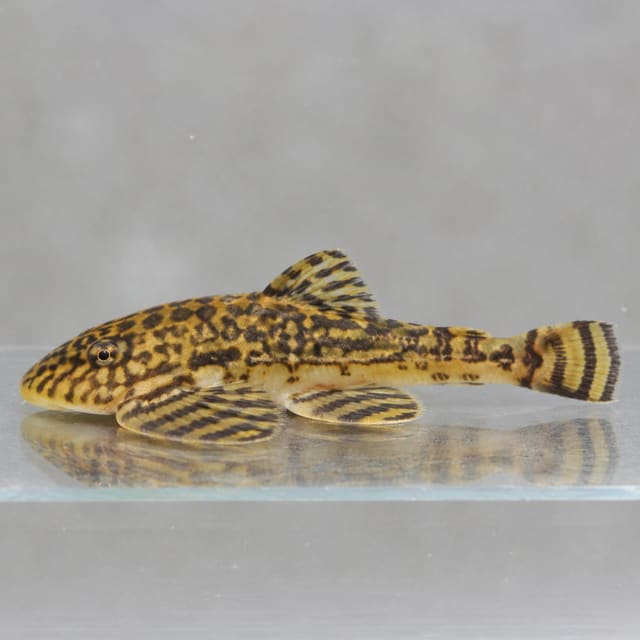
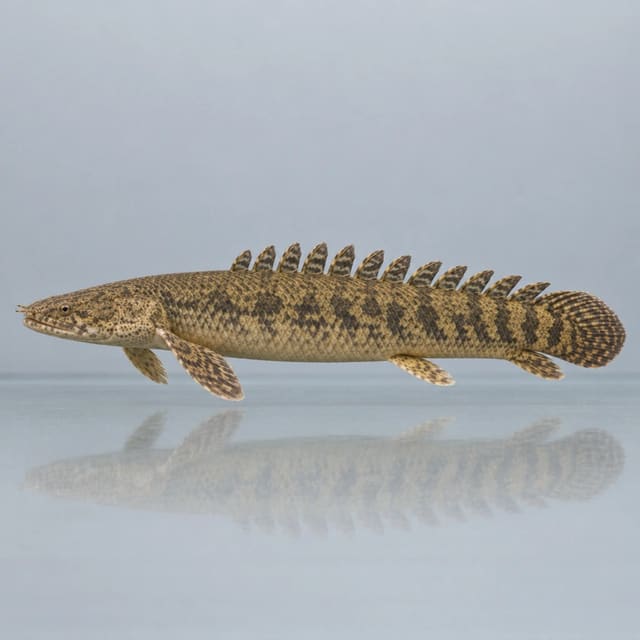
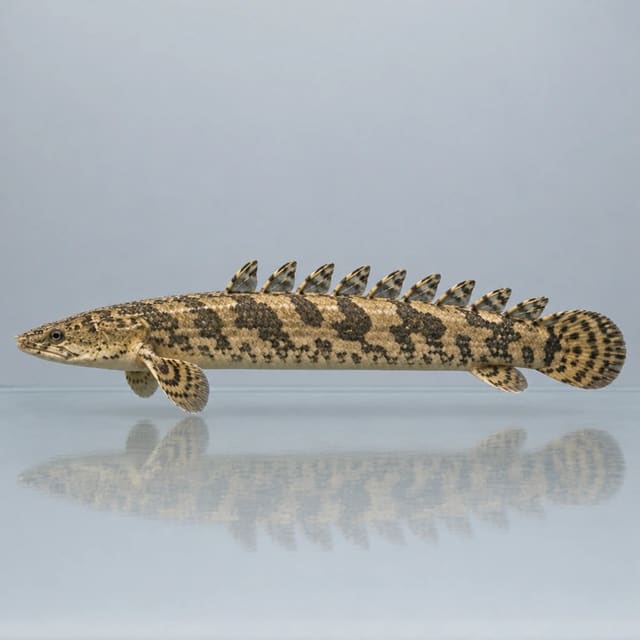
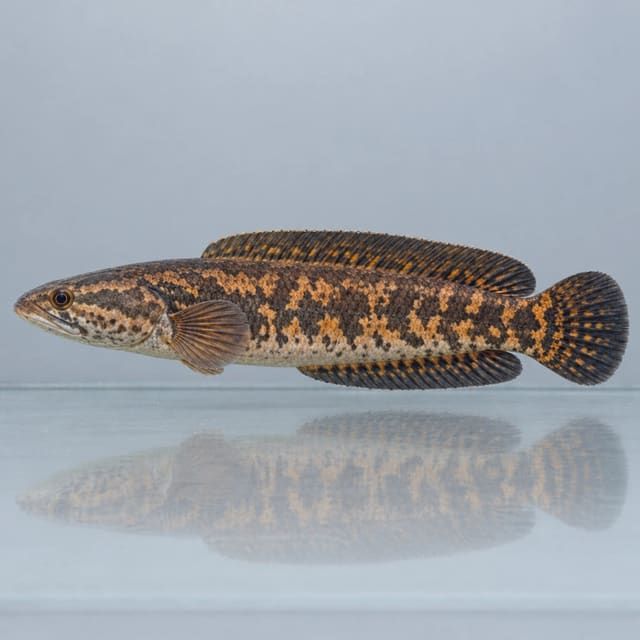
The Lawu snakehead is a dwarf snakehead sold as Channa cf. limbata 'Lawu': a long, torpedo-shaped predator with a golden-brown body, rows of dark blotches along the flanks, and long dorsal and anal fins dotted with orange. Like every snakehead it breathes air at the surface, hunts by ambush and will eat any fish small enough to swallow. It is a fish for a covered aquarium of its own, kept by someone who enjoys watching one characterful predator rather than a busy community.
The scientific name needs a word of explanation. For many years the small snakeheads of South and Southeast Asia were all called Channa gachua. Seriously Fish describes that name as covering a complex of look-alike species in need of review, and FishBase still files limbata under C. gachua. A DNA barcoding study by Conte-Grand and colleagues (2017) found two widespread lineages, one west and one east of the Indo-Burma ranges, and suggested calling the eastern one Channa limbata, the oldest available name, until more detailed work splits it further. "cf." in the name means the fish compares with limbata but its exact identity has not been confirmed.
| Name you may see | What it tells you |
|---|---|
| Lawu snakehead | The trade name for this dark, blotched form |
| Channa cf. limbata | Close to C. limbata, identity not confirmed |
| Channa gachua complex | The wider group of dwarf snakeheads it belongs to |
| Dwarf snakehead, red-tailed snakehead | Common English names used for C. limbata |
| Gabus gunung, ikan kotes | Javan names for limbata-type snakeheads: "mountain snakehead" and a local name |
"Lawu" reads like a place name: Gunung Lawu is a volcano on the border of Central and East Java, and an Indonesian report in Jawa Pos describes Javan limbata living in mountain streams, springs and irrigation channels. We cannot independently confirm where this form was collected, so treat the name as a trade label. See all our snakeheads, the Channa snakeheads range, the wider other freshwater fish category and our loaches and oddball fish collection.
One purchase supplies one live Lawu snakehead in the standard size we stock. It is sold as a young fish, not an adult, and its sex is not known or guaranteed: snakeheads are hard to sex, though Practical Fishkeeping notes that females are plumper.
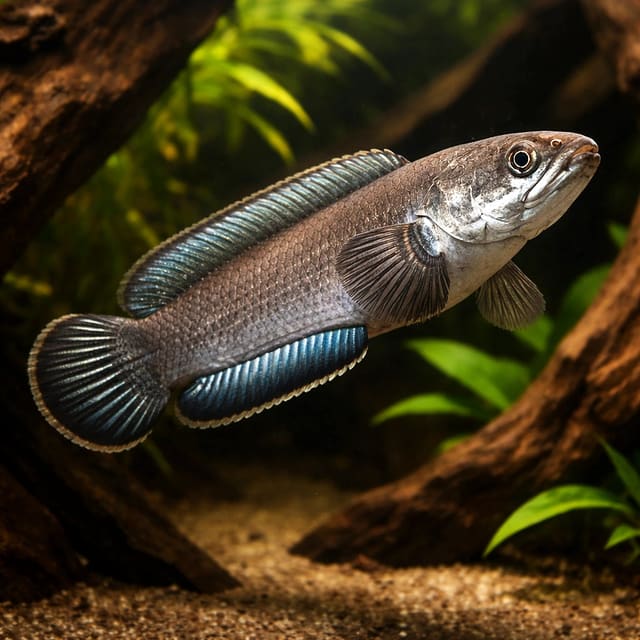
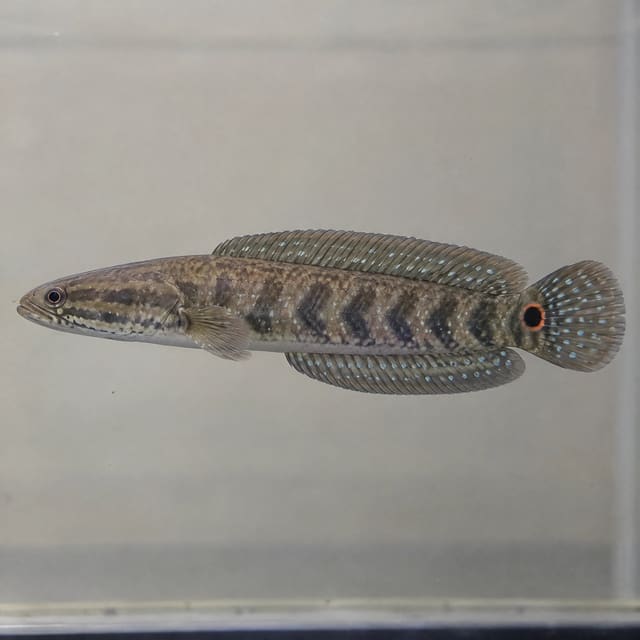
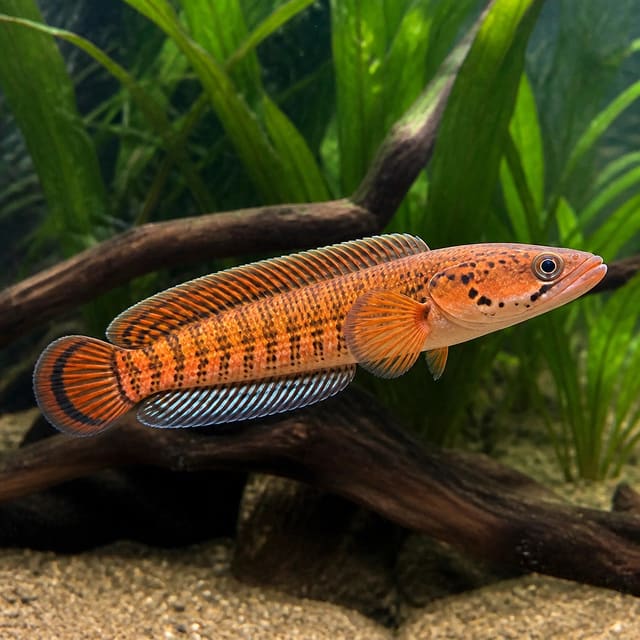
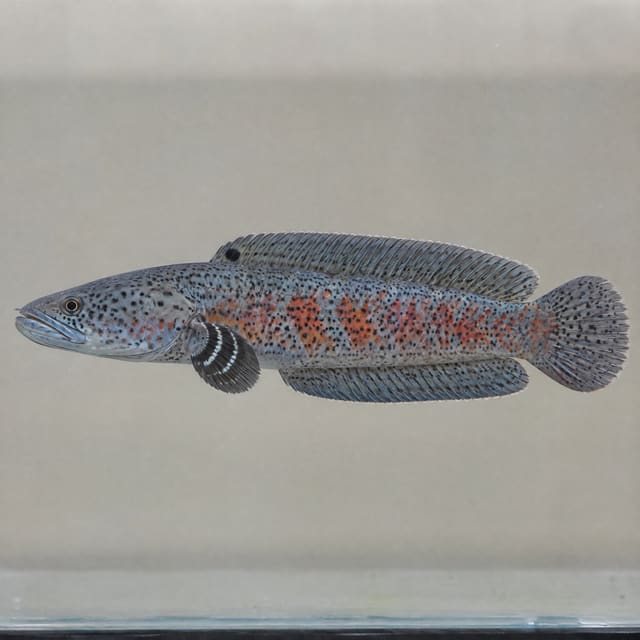
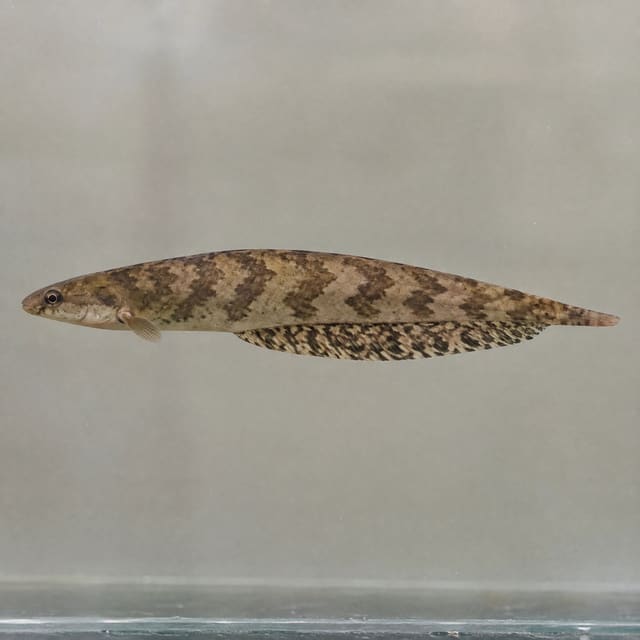
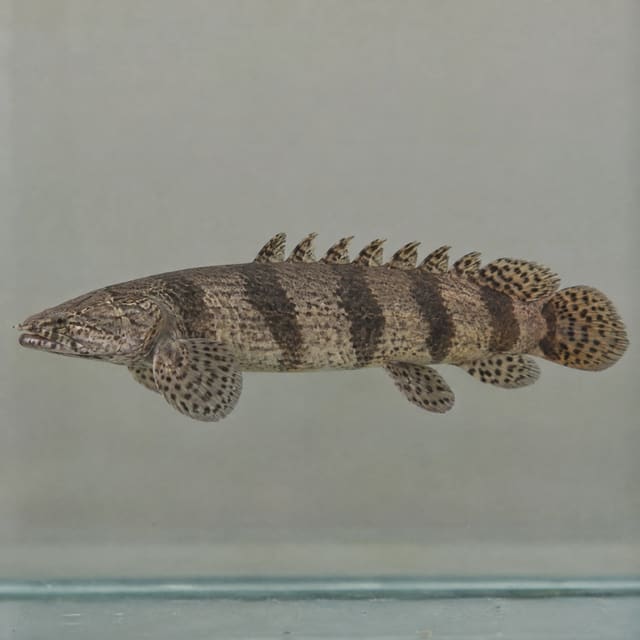
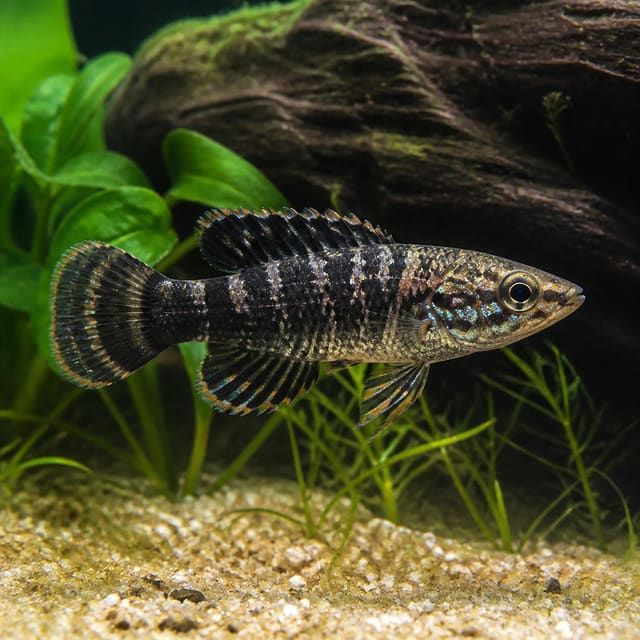
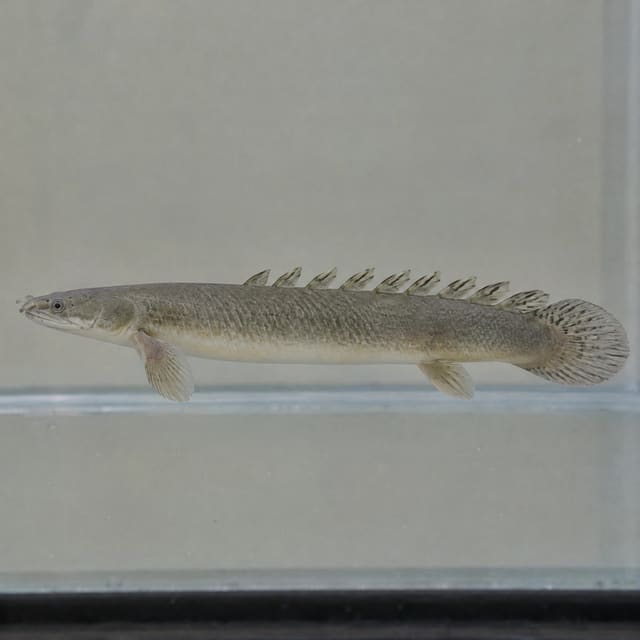
The photographs show the pattern type, not the individual fish. Snakehead markings vary between individuals and change with age; Practical Fishkeeping notes that juveniles are often more brightly marked than adults, and a fish that has just travelled will look darker or paler than it does once settled. Expect the blotched pattern, not an exact copy of the picture.
Read our delivery and Live Arrival Guarantee policy for dispatch days and arrival checks.
Snakeheads have a poor reputation in the news because some large species become invasive where they are released. In England and Wales, keeping non-native freshwater fish is controlled under the Import of Live Fish Act rules. The government publishes a checklist of freshwater fish that can be kept for ornamental purposes (version 7, last updated 13 October 2026), linked from the gov.uk page on keeping non-native fish. It lists the genus Channa with one exception: Channa argus, the northern snakehead, and its subspecies. A limbata-type snakehead is therefore covered by the general licence, and you do not need an individual licence to keep it.
That general licence has a firm limit: it covers indoor aquaria only. It does not allow a snakehead in a garden pond or an outdoor tank, and releasing any aquarium fish into the wild is illegal. Rules differ elsewhere in the UK. In 2017 OATA reported that all Channa species are restricted in Scotland and need a licence to keep, so if you live in Scotland or Northern Ireland, check your own government's current rules before you order.
Size figures for this group vary because the name has covered several fish. Seriously Fish gives a maximum of 200 mm standard length for C. gachua in the broad sense. Ecology Asia, describing C. limbata in Singapore, gives adults of about 20 cm total length. The Jawa Pos report on Javan limbata gives 16 to 20 cm. FishBase records a maximum of 32.9 cm total length for the complex as a whole. Plan for a fish of about 20 cm, and accept that a few individuals may grow larger.
Seriously Fish recommends a base of 120 x 45 cm, about 243 litres, for this group, with water at least 30 cm deep. Snakeheads are not fast swimmers; they need floor space to patrol and hide, not height. A long, wide tank with a tight lid suits them far better than a tall column.
| Step | What to check |
|---|---|
| Floor space | At least 120 x 45 cm, about 243 litres of tank |
| Depth | At least 30 cm of water, with an air gap above it |
| Cover | A lid with no gaps around pipes and cables; snakeheads leap well |
Our tank volume calculator converts your measurements into litres. Leave the tank mates question until you have read the compatibility section: for this fish, the size of the tank and the size of the other fish both matter.
Seriously Fish recommends dim lighting and plenty of cover for this group: live plants, driftwood, terracotta pipes and plant pots, with floating plants such as Indian fern (Ceratopteris) over part of the surface. With overhead shade a snakehead hides less and spends more time in view. Practical Fishkeeping adds driftwood, plants and plenty of floating cover, and suggests gravel rather than very fine sand, because fine particles can clog filters.
The lid is not optional. Practical Fishkeeping calls a tight-fitting cover vital because snakeheads leap well, and Seriously Fish describes Channa as known escape artists. At the same time, these are obligate air breathers: Seriously Fish explains that paired chambers behind the gills, lined with breathing tissue, let them take air from the surface, and Practical Fishkeeping warns that a snakehead denied the surface can drown. Fill the tank to leave a few centimetres of warm, humid air under the lid.
| Area | Purpose |
|---|---|
| Pipe, cave or root tangle | A den the fish can back into and watch from |
| Floating plants | Shade and a calm, sheltered surface for breathing |
| Open front strip | Space to feed, and a clear view for you |
| Air gap under the lid | Warm, humid air for surface breaths |
The published ranges for this group are broad, which suits a fish found from hill streams to rivers and ditches. Choose the overlap and keep it steady.
| Reading | Seriously Fish (gachua group) | FishBase (gachua) | Practical Fishkeeping (many snakeheads) | Aim for |
|---|---|---|---|---|
| Temperature | 18-28°C | 22-26°C | species-specific | 22-26°C |
| pH | 5.0-8.0 | 6.0-7.0 | 5.0-7.0 | 6.0-7.5 |
| Hardness | 1-20 dGH | not given | soft, up to 8 GH | soft to medium |
| Ammonia and nitrite | not given | not given | not given | zero (OATA) |
| Nitrate | not given | not given | not given | no more than 20 mg/l above tap water (OATA) |
Practical Fishkeeping notes that northern Indian populations of the gachua group need a cold winter, while tropical populations do not. We have no published water data for the Lawu form itself. If it does come from mountain water, as the name suggests, it may appreciate the cooler half of the range, so avoid running the tank hot and use our guide to tank temperature to set the heater.
UK tap water ranges from soft to very hard depending on where you live. Most dechlorinated tap water falls inside the broad Seriously Fish range, so the priority is not a perfect number but a steady one. Our water chemistry guide explains what pH and hardness mean, and the water matcher compares your readings with this fish's needs.
A predator eating meaty food makes a lot of waste. For a 243-litre tank Seriously Fish suggests a filter turning the water over four to five times an hour, about 970 to 1,215 litres an hour, and a heater of roughly 150 to 250 watts in a room near 20°C. Spread the outflow so the surface stays fairly calm, because the fish needs to reach it to breathe. Our guide to aquarium filtration explains how to choose one.
How you change water matters as much as how often. OATA's care sheet for aggressive fish, which covers snakeheads, asks for a 25% partial change at least weekly, while Practical Fishkeeping warns that many snakeheads do poorly with large or rapid water changes. The two fit together: change a modest amount every week and keep the new water close to the tank's temperature and hardness.
In the wild, FishBase records this group feeding at night on small fish, insects and crustaceans, and Ecology Asia lists insects and smaller fish. In the aquarium it will learn to take dead foods. Seriously Fish suggests bloodworm, small earthworms and chopped prawn for young fish, then fish strips, whole prawns, mussels and larger earthworms as it grows, with dried foods accepted but not used as the staple. Practical Fishkeeping adds sinking pellets and notes that live food is not essential.
Two rules matter. OATA says live fish must not be used as food, and Seriously Fish warns against feeder fish because of disease risk and poor nutrition. Seriously Fish also advises against mammal and bird meat, such as beef heart or chicken, because snakeheads cannot use those fats well. OATA asks you to feed aggressive species no more than once a day.
Offer food in the evening if the fish hides by day, and use tongs: a hungry snakehead strikes fast.
Move a snakehead gently from bag to tank. OATA's method is to switch off the lights, float the sealed bag for 10 minutes, add tank water to the bag over up to 20 minutes and then net the fish across with as little bag water as possible; for fish shipped in boxes it describes slow drip acclimatisation through airline tubing. The Jawa Pos report on Javan limbata names temperature adjustment as the main hurdle for newly moved fish, and links poor adjustment to white spot and velvet.
| Checkpoint | What to do |
|---|---|
| Day 1 | Lights off, lid on, no food |
| Days 2-3 | Offer a small meaty meal in the evening; remove leftovers |
| Every day | Watch breathing, colour and whether it uses the surface |
| Day 3 and day 7 | Test ammonia and nitrite |
A new snakehead usually hides for several days; that is normal. Our guide to acclimatising new fish covers the steps in more detail.
This is where the sources disagree most, so here is what each says. OATA's care sheet for aggressive fish says snakeheads are aggressive towards any other fish and should be kept alone. Practical Fishkeeping describes the dwarf snakehead as docile and suitable for community tanks with fish too large to eat, and notes that smaller snakehead species are retiring and can suffer around large, aggressive cichlids. Seriously Fish says a species tank is usually best, but a community of peaceful, non-territorial fish too large to be eaten is possible. Juveniles can live together, though they often become aggressive as they mature, and an established pair is usually peaceful together but hostile to other snakeheads.
| Suits | Avoid |
|---|---|
| Living alone in a species tank | Any fish small enough to swallow |
| A bonded pair in a large tank | Shrimp and small invertebrates |
| Robust, peaceful fish far too large to eat, after research | Other snakeheads, including other limbata forms |
| Large, aggressive cichlids that bully a retiring fish |
Our tank mates tool can check a planned mix, but for this fish the safest answer is usually a tank of its own. Compare it with our other dwarf snakeheads, such as the Assam Dwarf Snakehead, the Chinese Snakehead, the Rainbow Snakehead and the Peacock Snakehead.
OATA's guidance for predatory fish is practical: some species have sharp teeth, so net them carefully, double-bag them for transport, never start a siphon by mouth, and wash your hands or wear long rubber gloves when working in the tank. A healthy snakehead has clear eyes, intact fins and skin, steady breathing and a strong feeding response; OATA lists clamped fins, flicking against objects and shimmying as warning signs.
| If you see | Do this first |
|---|---|
| White spots on skin or fins | Check the heater and recent temperature changes; read our white spot treatment guide |
| Rubbing against wood or gravel | Test the water, then look closely for parasites |
| Refusing food for a week | Check water and hiding places; try a different meaty food in the evening |
| Swollen belly | Skip feeding for a few days and reduce portions |
| Gulping air constantly | Test ammonia and nitrite; check the filter is working |
The gachua group are mouthbrooders. FishBase states that the male carries the eggs and fry in his mouth, and Seriously Fish adds that in some populations the female lays extra, infertile eggs that feed the fry once they swim free. Practical Fishkeeping says that a pair is best formed by letting several young fish choose partners in a large tank with plenty of hiding places, and that both parents guard the fry, which swim in a tight school. Seriously Fish warns against mixing populations, because some may hybridise: keep a Lawu pair with its own form, not with other limbata-type snakeheads.
A dwarf snakehead sold as Channa cf. limbata 'Lawu'. The 'cf.' means it resembles Channa limbata but its exact identity has not been confirmed. Limbata is the name researchers suggest for the eastern populations of the Channa gachua species complex, and Lawu is a trade name for this dark, blotched form.
In England and Wales, yes, in an indoor aquarium. The government checklist of fish covered by the indoor-aquarium general licence (13 October 2026) lists every Channa except Channa argus and its subspecies. It may not go in a pond or be released. In 2017 OATA reported that all Channa need a licence in Scotland, so customers in Scotland and Northern Ireland should check their own rules first.
Plan for about 20 cm. Seriously Fish gives 200 mm standard length for the gachua complex, Javan reports give 16 to 20 cm, and FishBase records a maximum of 32.9 cm total length for the complex as a whole, so some fish may grow larger.
Seriously Fish recommends a base of 120 x 45 cm, about 243 litres, with water at least 30 cm deep. Fit a tight lid with an air gap above the water, because snakeheads jump and must breathe air.
Yes, if they fit in its mouth, and it will also take shrimp. OATA says snakeheads are aggressive to other fish and should be kept alone; Practical Fishkeeping says dwarf snakeheads can live with fish too large to eat. A species tank is the safe choice.
Meaty foods: thawed krill, mysis, prawn and mussel, earthworms and sinking carnivore pellets. OATA says live fish must not be used as food, and Seriously Fish advises against beef heart, chicken and other mammal or bird meat.
Yes, in a UK home. Aim for a steady 22 to 26 degrees C, inside the ranges given by Seriously Fish (18-28 degrees C) and FishBase (22-26 degrees C), and change the temperature slowly; sudden swings are a known cause of disease in newly moved fish.
Young fish can live together but often turn aggressive as they mature, and a bonded pair is usually hostile to other snakeheads. Start with one fish unless you have room and a second tank to separate them.
No reviews for this item yet. Bought one? Honest reviews only, good or bad.
What customers say about ordering from us
Easy website plenty of info on fish your buying great to pick a time slot
TRACEY DURRANT · 7 Oct 2026
Got some lovely fish thank you
Kevin Mackie · 7 Oct 2026
Reviews of our shop, collected by Judge.me, an independent third-party review collector. Newest first.
Moved by UK carriers licensed to handle live animals
Hand-packed with oxygen bags, poly box, heat pack
Email photos the same day; an optional unboxing video helps us review problems faster — claim terms apply
Klarna & PayPal Pay in 3 at checkout