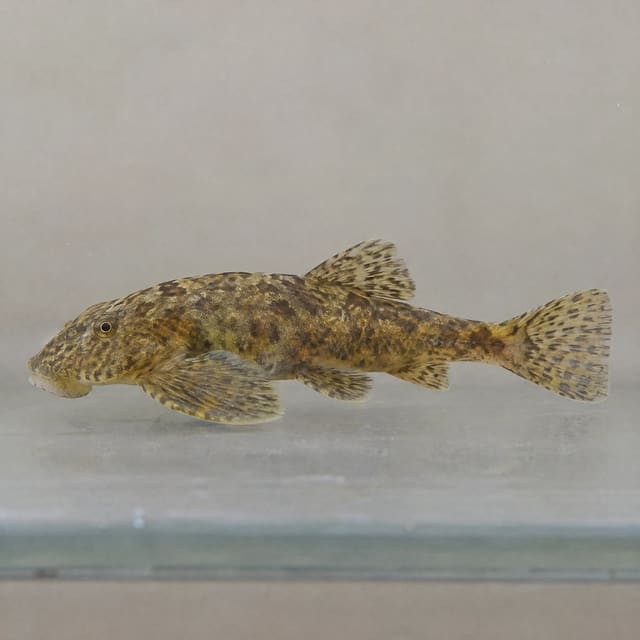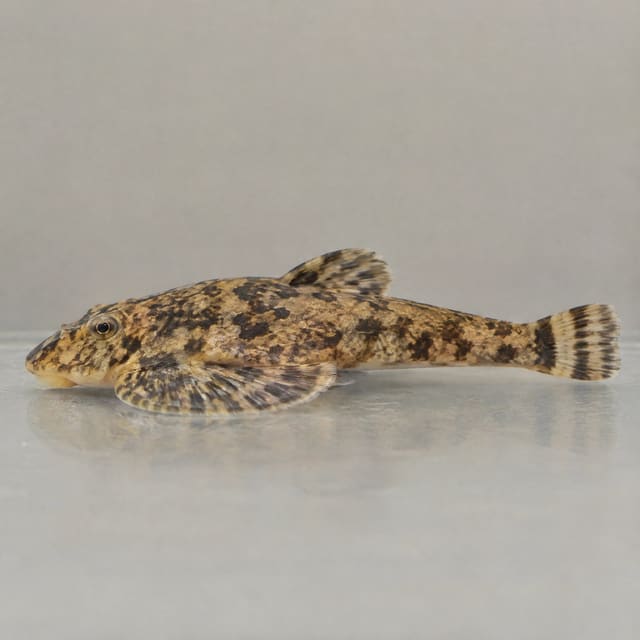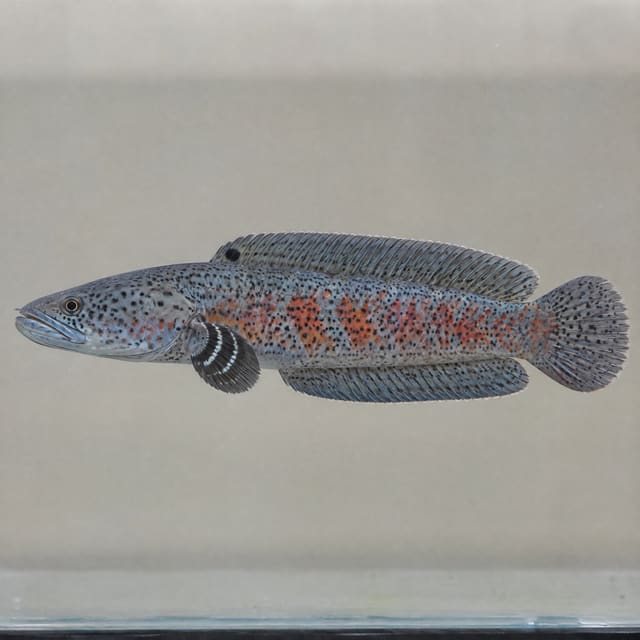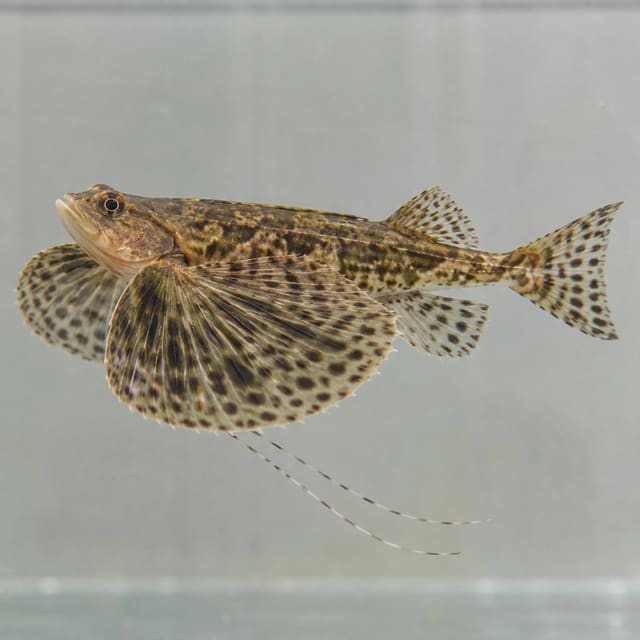
Moderate
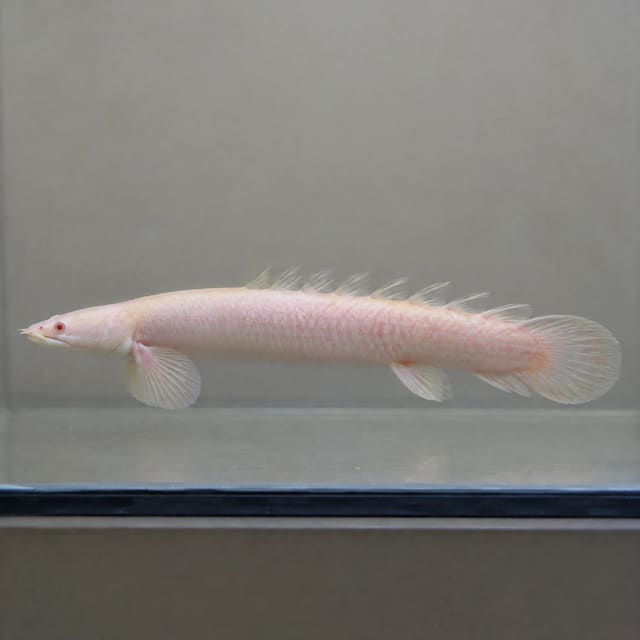
Senegal Bichir (Polypterus senegalus)
25–28°C · pH 6–8
£20.99
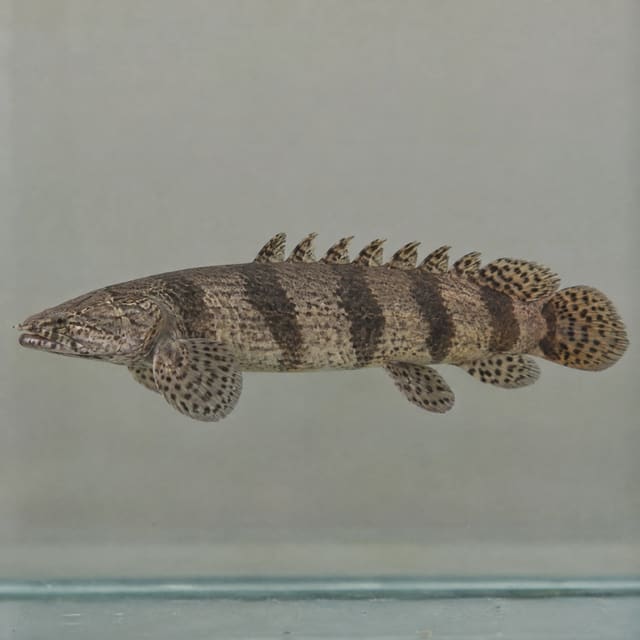
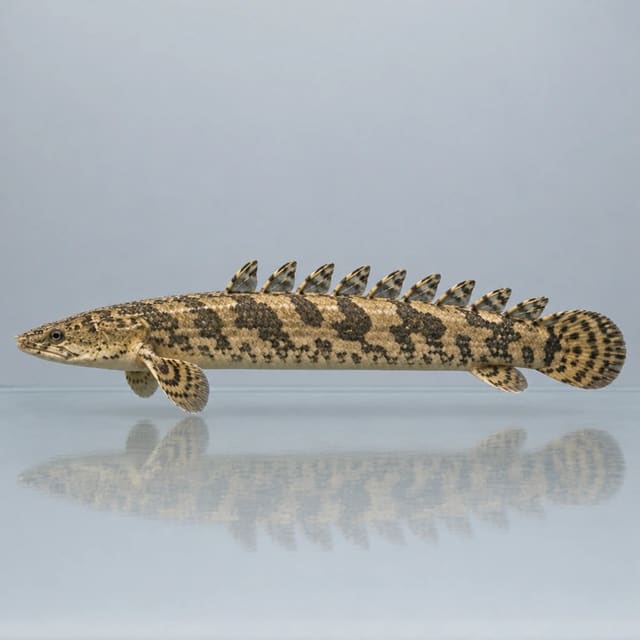
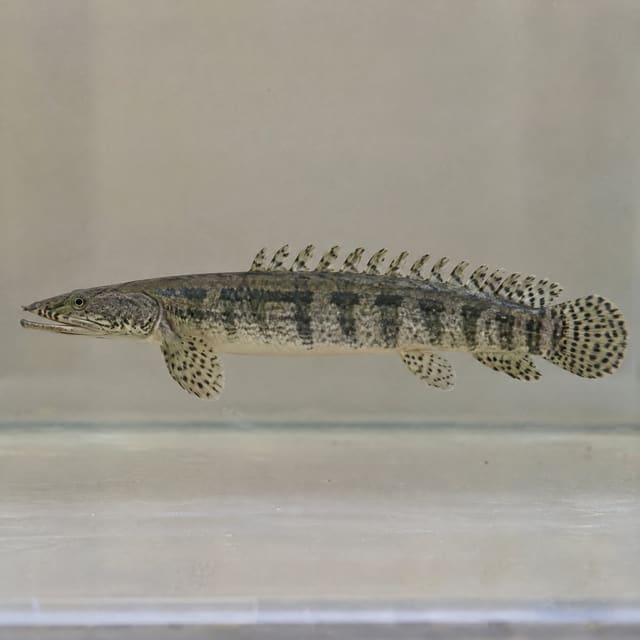
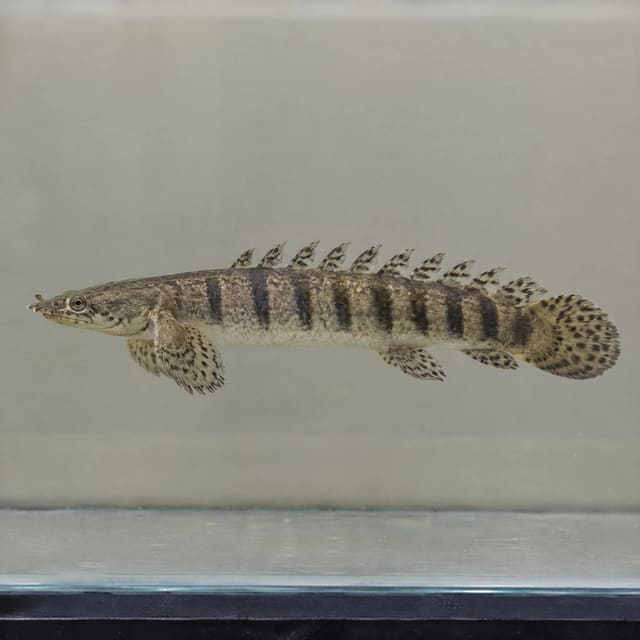
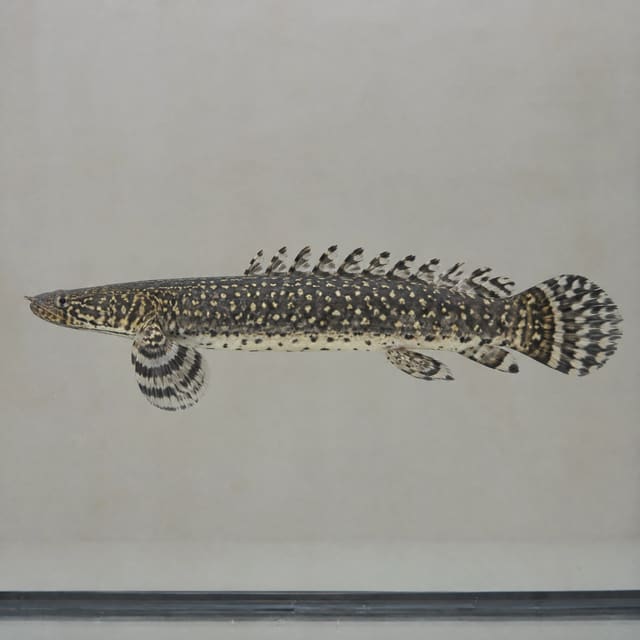
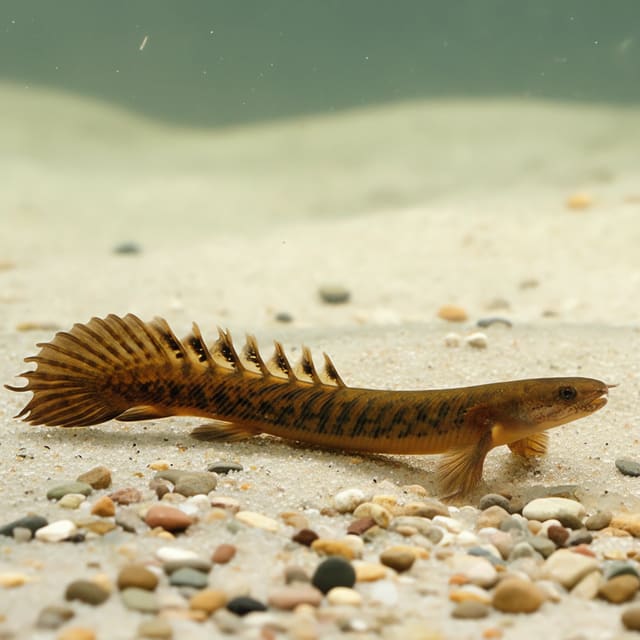
Ansorge's bichir (Polypterus ansorgii), the Guinean bichir, is a rare West African bichir with an olive to dark brown, boldly blotched body and a row of spiny finlets along its back. It breathes air, hunts by smell after dark and can grow well past 60 cm, so it needs a very large, tightly covered aquarium. One live fish per purchase.
Adult size is the maximum length this species reaches at full maturity (scientific sources). The livestock you receive will be younger and smaller. Product-photo provenance and any image-specific limitations are stated on the listing.
Polypterus ansorgii
Ansorge's bichir (Polypterus ansorgii), the Guinean bichir, is a rare West African bichir with an olive to dark brown, boldly blotched body and a row of spiny finlets along its back. It breathes air, hunts by smell after dark and can grow well past 60 cm, so it needs a very large, tightly covered aquarium. One live fish per purchase.
Adult size is the maximum length this species reaches at full maturity (scientific sources). The livestock you receive will be younger and smaller. Product-photo provenance and any image-specific limitations are stated on the listing.
Read the full care guidance when planning conditions for your aquarium.
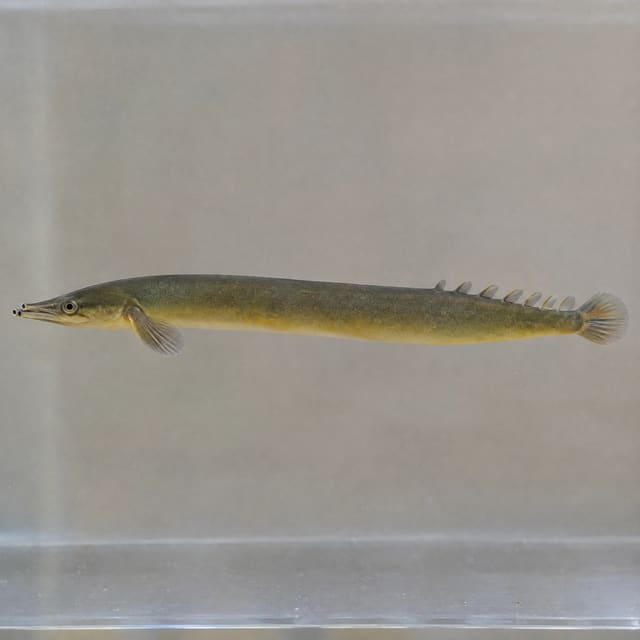
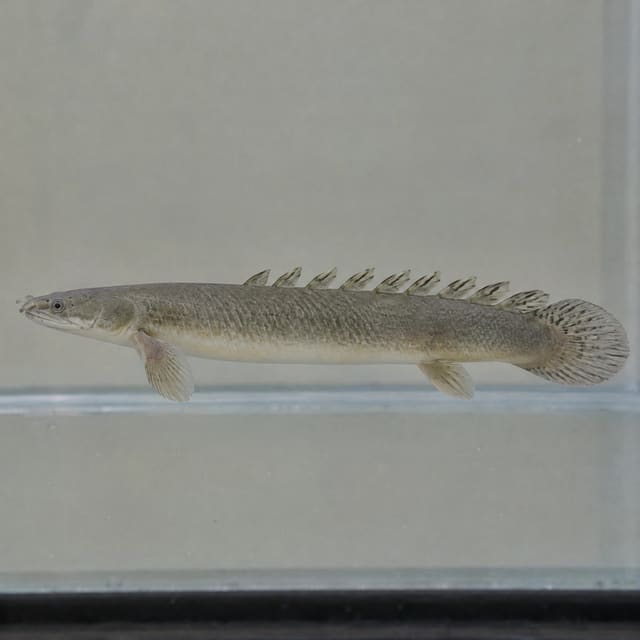
Ansorge's bichir (Polypterus ansorgii) is a rarely seen West African bichir, also sold as the Guinean bichir. Like every bichir it is an ancient-looking, air-breathing fish: a long, almost round body covered in thick, diamond-shaped scales, a broad head with tube-like nostrils, large fan-shaped pectoral fins and a row of separate spiny finlets running down the back to a rounded tail. Ansorge's bichir is greenish-brown to almost black, with large, dark, irregular blotches along the sides.
FishBase records that the species was described in 1910 from the Corubal River in Guinea-Bissau and has since been reported from the Niger basin in Guinea and from Lake Kainji and the Ogun River in Nigeria. It counts 13 to 15 dorsal finlets and describes the body as elongated with a circular cross-section. Wikipedia notes that the lower jaw may protrude very slightly in mature fish and that the species is easily confused with other bichirs; it is named after the explorer William John Ansorge, who collected the first specimen.
| What you may read | What it means for you |
|---|---|
| Ansorge's bichir, Guinean bichir | Two common names for Polypterus ansorgii |
| Maximum 28 cm (FishBase) | The figure most care sheets copy |
| Maximum 72 cm (Wikipedia) | The same number in inches is 28, a likely source of the confusion |
| Up to 90 cm (AquaInfo) | A Dutch species article that says the 28 cm figure is wrong |
| Lower-jawed bichir | Grouped with the large bichirs such as the saddled bichir, not with the small Senegal bichir |
The sources disagree, so this page plans for the larger figure. A fish that may reach 60 to 90 cm is a lifetime commitment that needs a very large aquarium, not a community tank. AquaInfo's species article describes it as a rarity in the hobby because its natural range is small, and adds that it is often mistaken for a smaller form of Polypterus bichir, from which it differs in having blotches rather than long stripes.
Compare it with the other bichirs in our loaches and oddballs range, the full Polypterus bichirs category or the wider other freshwater fish section. Unusual species like this one also appear in our rare and collector fish selection.
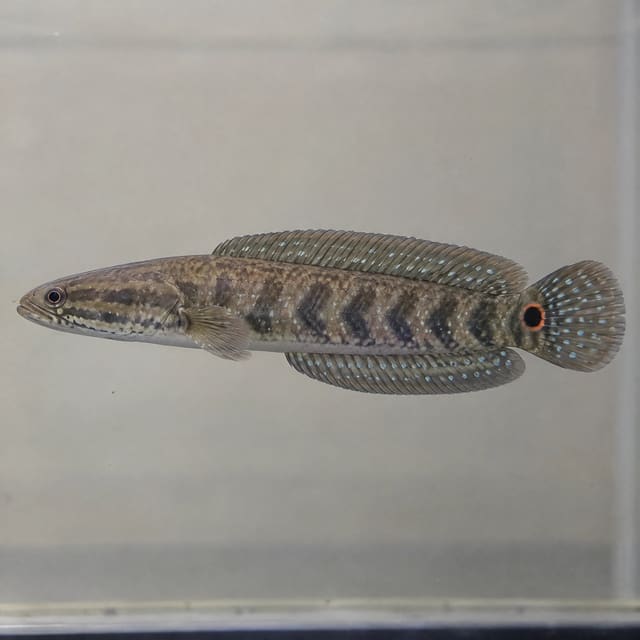
One purchase supplies one live Ansorge's bichir in the standard size we stock. That is a juvenile or young fish, not the adult size, and the sex is not selected or guaranteed. Bichirs are usually wild-caught imports, so each fish is an individual: the blotches differ from fish to fish, and the photographs show the species, not the exact animal you will receive.
Adult bichirs can be sexed by the anal fin, which is thicker in males according to Seriously Fish. Young fish cannot be sexed reliably, and this species is not known to have been bred in captivity, so buy it as a single show fish rather than with breeding in mind.
Check our delivery and Live Arrival Guarantee policy before ordering, and have the aquarium running, matured and tested first.
Bichirs live on the bottom, so floor space matters far more than height. Seriously Fish says exactly that for both the Senegal and the saddled bichir. AquaInfo says young Ansorge's bichirs can start in a tank from 80 cm, but that they grow quickly and soon need a very large aquarium.
For the adult, the closest published guide is Seriously Fish's profile of the saddled bichir, a lower-jawed relative that reaches 75 cm. It recommends a base of 210 x 120 cm, with a 90 cm height giving about 2,268 litres, for a fully grown fish. OATA's guidance for very large fish adds that tanks often need to be well over 500 litres, and that indoor heated ponds are a realistic alternative for the biggest species.
| Stage | Fish length | Aquarium to plan |
|---|---|---|
| Arrival | Juvenile | From about 80 cm long, mature and fully covered |
| Growing on | About 30 to 40 cm | A long, wide tank of several hundred litres |
| Adult | 60 cm or more | A base on the scale of 210 x 120 cm, or an indoor pond |
Our tank volume calculator turns your measurements into real litres. Measure the footprint rather than relying on the label on the box: a bichir needs to turn its whole body comfortably and to lie fully stretched out on the floor.
Seriously Fish recommends a soft substrate with driftwood and smooth rocks for hiding places; plants are optional. AquaInfo adds open swimming space, plenty of shelter, slightly dimmed lighting and some surface resting places such as floating plants or wood near the top, which young or newly arrived bichirs use. Anchor plants firmly, because bichirs forage through vegetation.
The lid matters more than anything else in the layout. Both sources call bichirs escape artists: AquaInfo says they can push up lids and light hoods. Fit a heavy, tight cover with every cable hole sealed. At the same time, leave a layer of air between the water and the lid, because bichirs must breathe at the surface. Seriously Fish warns that a bichir may drown if it cannot reach atmospheric air.
| Area | Purpose |
|---|---|
| Open sand floor | Patrolling, resting and finding food by smell |
| Driftwood roots and smooth caves | Daytime hiding places big enough for the adult |
| Floating plants or wood near the surface | Resting places for young fish |
| Clear surface strip and air gap under the lid | Breathing air without obstruction |
Avoid sharp rocks and rough gravel: the bichir lies on the bottom and pushes into gaps. AquaInfo also warns that the rear finlets are razor sharp, so never catch a bichir by hand; guide it into a container instead of netting it whenever you can.
No source gives full water values for this species alone, so the table combines AquaInfo's species figures with Seriously Fish's values for two related bichirs. Keep the water steady inside the overlap rather than chasing a single number.
| Reading | AquaInfo, Ansorge's bichir | Seriously Fish, saddled bichir | Seriously Fish, Senegal bichir | Aim for |
|---|---|---|---|---|
| Temperature | 23-28°C | 22-27°C | 24-28°C | 24-27°C |
| pH | 6.0-7.5 | 6.0-8.0 | 6.2-7.8 | 6.5-7.5 |
| General hardness | not given | 5-25 dGH | 5-20 dGH | 5-20 dGH |
| Ammonia and nitrite | zero (OATA) | zero | ||
| Nitrate | no more than 20 mg/l above tap water (OATA) | as low as possible | ||
UK tap water ranges from soft to very hard depending on the region. Most supplies fall inside, or close to, the hardness range above, so a bichir rarely needs special water; what it needs is clean, dechlorinated, stable water. Test your tap supply for pH and general hardness before the fish arrives. Our water chemistry guide explains pH, GH and KH, and the water matcher compares your readings with the ranges in the table.
A large carnivore produces a lot of waste. OATA calls a filter essential for very large fish and says several large aquarium filters, or a pond filter, may be needed to cope. For the Senegal bichir, Seriously Fish suggests filtration turning the tank volume over four to five times an hour. Spread the outflow along the tank so the bichir still has calm resting places on the floor. Our guide to aquarium filtration covers sizing.
The biological filter must be mature before the fish arrives; the guide to the nitrogen cycle explains how to establish it. A tank that has only just been filled is not ready for a fish of this size, however small it is on arrival.
Bichirs have poor eyesight and find food by smell, according to Seriously Fish, and are most active at dusk and at night. They are carnivores. AquaInfo lists mysis, mosquito larvae, shrimp, krill, mussel, squid, earthworms and pieces of fish meat as suitable foods, and advises against oily salmon and feeder goldfish. Seriously Fish's saddled bichir profile notes that large bichirs often refuse dried foods at first, though some learn to take pellets, and suggests prawns, earthworms, mussel and lancefish.
OATA's guidance for very large fish is to feed once a day, only as much as is eaten within a few minutes. Young, growing bichirs can have smaller meals more often; adults do well on a meal every day or two.
Remove leftovers after a few minutes. A healthy bichir has a gently rounded belly; a sunken belly means it is losing out to tank mates or not finding the food.
OATA's guidance for wild-caught fish is to keep lighting dim, to quarantine new arrivals before mixing them with existing stock, and to expect that some will want live or fresh food before prepared foods. Seriously Fish adds that most bichirs on sale are wild-caught and may carry infections or parasites, so watch new arrivals closely for the first few weeks. AquaInfo names a skin fluke often found on wild bichirs and warns that they tolerate many medicines poorly, suggesting half to two-thirds of the usual dose if treatment is needed.
| Checkpoint | What to do |
|---|---|
| Day 1 | Lights off, no food |
| Days 2-3 | Offer a small meaty meal at dusk; remove leftovers |
| Every day | Check breathing trips to the surface, skin, fins and belly |
| Day 3 and day 7 | Test ammonia and nitrite after the stocking rise |
Our guide to acclimatising new fish walks through the same steps. AquaInfo notes that new and young bichirs often hang at the surface; that is normal while they settle.
Ansorge's bichir is not aggressive, but it is a predator. Seriously Fish says bichirs cannot be trusted with tank mates that fit in their mouths and are otherwise relatively peaceful. AquaInfo adds that slender fish up to about two-thirds of the bichir's length are at risk, that bichirs usually tolerate others of similar size, and that territorial cichlids, snakeheads and Labeo sharks make poor companions. It also warns that suckermouth catfish may rasp at a bichir's skin.
| Suits | Avoid |
|---|---|
| Large catfish such as the Featherfin Synodontis | Small fish, shrimp and slim fish of any size it can swallow |
| Datnoids such as the Gold Tiger Datnoid | Territorial or breeding cichlids |
| Large knifefish such as the Arowana Knifefish | Snakeheads and Labeo sharks |
| Other large bichirs, such as the Saddled Bichir or Lapradei Bichir | Suckermouth catfish that may rasp at its skin |
Smaller bichirs such as the Delhezi Bichir or the Ornate Bichir can share a very large tank while sizes are similar, but plan ahead: an Ansorge's bichir may outgrow them. Our tank mates tool helps you check sizes and temperaments before you mix species.
Bichirs are hardy fish: Seriously Fish describes the related Senegal bichir as very hardy and long-lived. Most problems come from poor water, a lid that is not secure, or tank mates that steal food or nip. Look at the fish every day, ideally at feeding time when it is active.
| What you see | What to do first |
|---|---|
| Frequent gulping at the surface and restlessness | Test ammonia, nitrite and temperature; increase aeration |
| Thin body or sunken belly | Feed after lights-out, target-feed and check for food theft |
| Scratching on décor, cloudy skin or fine white spots | Test the water; if treating, use reduced doses as AquaInfo advises |
| Fish found outside the tank or on the lid | Seal gaps and add weight to the cover |
| Torn fins or skin scrapes | Check tank mates and remove sharp décor |
Ansorge's bichir (Polypterus ansorgii), also called the Guinean bichir, is a large, air-breathing bichir from West Africa. It was described in 1910 from the Corubal River in Guinea-Bissau and has since been reported from Guinea and Nigeria. It is olive to dark brown with large dark blotches and a row of small spiny finlets along its back.
Much bigger than many care sheets say. FishBase lists 28 cm, but Wikipedia gives 72 cm and a Dutch species article puts the maximum at up to 90 cm, saying the 28 cm figure is wrong. Plan for a fish of 60 cm or more.
A juvenile can start in a tank of about 80 cm, but it grows quickly. For an adult, plan on the scale Seriously Fish gives for the similar-sized saddled bichir: a base of about 210 x 120 cm. OATA notes that very large fish often need well over 500 litres.
Warm, clean, soft to moderately hard water. The published ranges overlap at about 24 to 27 degrees C and pH 6.5 to 7.5, with ammonia and nitrite at zero and nitrate no more than 20 mg/l above your tap water.
Meaty foods: mussel, prawn, krill, mysis, earthworms and pieces of white fish, plus a sinking carnivore pellet if it learns to take one. Feed at dusk or after lights-out, because bichirs find food by smell.
It is peaceful towards fish it cannot swallow, but it will eat smaller fish, especially slender ones. Choose large, calm tank mates such as big Synodontis, datnoids and large knifefish, and avoid aggressive cichlids, snakeheads and armoured suckermouth catfish.
Bichirs breathe air as well as water. Rising to gulp air is normal behaviour, and Seriously Fish warns they can drown if they cannot reach the surface, so never cover the whole water surface.
A Dutch species article gives 10 to 15 years in the aquarium, and other bichirs have lived much longer, so treat it as a long-term commitment.
No reviews for this item yet. Bought one? Honest reviews only, good or bad.
What customers say about ordering from us
Easy website plenty of info on fish your buying great to pick a time slot
TRACEY DURRANT · 7 Oct 2026
Got some lovely fish thank you
Kevin Mackie · 7 Oct 2026
Reviews of our shop, collected by Judge.me, an independent third-party review collector. Newest first.
Moved by UK carriers licensed to handle live animals
Hand-packed with oxygen bags, poly box, heat pack
Email photos the same day; an optional unboxing video helps us review problems faster — claim terms apply
Klarna & PayPal Pay in 3 at checkout